L10 Dyslipidaemia and Atherosclerosis: Identifying drug targets
 Call Kai
 Learn
Learn Practice Test
 Spaced Repetition
 Match
Match Flashcards
 Knowt Play
1/27

There's no tags or description
Looks like no tags are added yet.
Name | Mastery | Learn | Test | Matching | Spaced | Call with Kai |
|---|
No analytics yet
Send a link to your students to track their progress
28 Terms
what carries the highest risk for cardiovascular diseases
LDL (low-density lipoprotein)
low-density lipoprotein is more full of
cholesterol
high-density lipoprotein is less full of
cholesterol
dyslipidaemia has high risk of
CVD
what is ApoA1
High-density lipoprotein
ApoA1 reduces risk of CVD
whats a chylomicron
large, triglyceride-rich lipoprotein particles synthesized in the small intestine that transport dietary lipids (fats) from the gut to adipose, cardiac, and skeletal muscle tissues for energy or storage
what is VLDL
very low-density lipoprotein
apolipoprotein A1 structure
major Apo of the non-atherogenic HDL particles
ApoA1 concentrations correlate with HDL-C
apolipoprotein B
each of the atherogenic lipoproteins LDL, IDL and VLDL contain one copy of Apo B100
lipoprotein (a)
a highly atherogenic modified form of LDL
Apolipoproteins can be used to assess risk and
as treatment targets
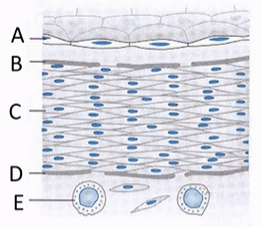
A- endothelial cells (single layer of cells in contact with the blood)
B- internal elastic lamina
C-smooth muscle
D-external elastic lamina
E-mast cell (WBC)
space between endothelium and internal elastic lamina
sub-intimal space
adventitia
mast cell
endothelium and sub intimal space
intima
media
internal elastic lamina, smooth muscle cells, external elastic lamina
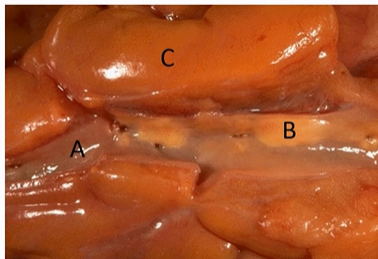
A- coronary artery
B-fatty streak
C-adipose tissue
what is fatty streak
buildup of cholesterol in the wall of the artery
how early can you start to see fatty streaks in the walls of arteries
10-12 years old
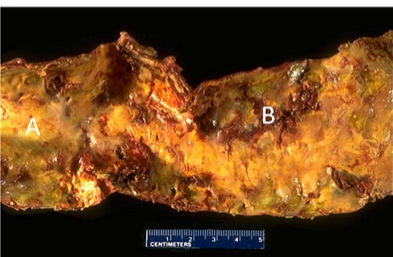
aorta with an atheromatous plaque
A-fatty streak
B-thrombus (dark red) or adipose tissue (lots of cholesterol deposits)
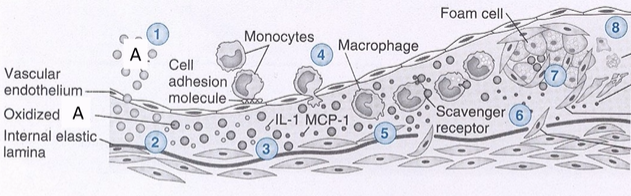
1-LDL
2-Oxidised
3-Cytokines IL-1 and MCP-1 attract myocytes
4-macrophages
5-foam cells
6-smooth muscle cells
7-plaque
8-plaque with fibrous capsule
A- LDL cholesterol
describe thrombus formation in a blood vessel
circulating LDL gains access to endothelial space where it is oxidised
cytokines IL-1 and MCP-1 attract circulating monocytes
monocytes cross intima to become macrophages
macrophages phagocytose LDL to form foam cells
Smooth muscle cells migrate and proliferate under the influence of smooth muscle mitogens
a primitive plaque is formed of foam cells, smooth muscle, lipid, and necrotic cells
the plaque enlarges, develops a fibrous capsule and protrudes in vessel lumen
LDL being a lipoprotein can
navigate past endothelial cells and gets underneath endothelial cells and accumulates between the internal elastic lamina and endothelial cells
fatty things find it easy to move across tissues (membrane permeable)
what is the cause of primary dyslipidaemia
familial hypercholesterolaemia (too much cholesterol in the blood) - genetic predisposition
what is primary dyslipidaemia
an inherited genetic disorder causing abnormally high cholesterol or triglycerides, independent of lifestyle factors, often leading to premature cardiovascular disease
what are the causes of secondary dyslipidaemia
alcoholism
diabetes
renal disease
thyroid disease
what percentage of males with familial hypercholesterolaemia will have symptomatic heart disease by the age of 50?
50%
build up of cholesterol examples
tendon xanthomata
lipaemia retinalis
serum in chylomicronaemia