Unit 4 Packets and Practice
 Call Kai
 Learn
Learn Practice Test
 Spaced Repetition
 Match
Match Flashcards
 Knowt Play
1/159

There's no tags or description
Looks like no tags are added yet.
Name | Mastery | Learn | Test | Matching | Spaced | Call with Kai |
|---|
No analytics yet
Send a link to your students to track their progress
160 Terms
What are some of the sites normally colonized by human microbiota?
Skin, Nose, Eye, Urethra, Vagina, Ear, Stomach, Oropharynx, Large intestine, and small intestine
What does the human body use to move microbes out of the respiratory tract?
Mucociliary escalator
What makes the stomach a hostile environment for microbes?
Acidic nature
How does the human body prevent bacteria from colonizing the small intestine?
(Jejunum/Ileum)
Bile from the gall bladder and pancreas increase the pH making it alkaline
How does the vagina discourage the growth of many microbes?
Acidic secretions
What are some of the benefits of a microbiome?
Digesting food
Synthesizing compounds - Like vitamin B 12
Training and enhancing function of the immune system
Interfering with colonization by pathogens by
competing for attachment sites
competing for food sources
synthesizing antimicrobial compounds
Describe what microbial dysbiosis is.
Dysbiosis occurs when the balance of members of the gut microbiome is altered
An organism that is part of normal microbiota but can cause infection of an immunocompromised host is called a/an _____.
Opportunistic pathogen
What are three examples of tight junctions in the human body that help keep microbes in
their place?
a. Epithelial barriers
b. Blood-brain barrier
c. Materno-fetal (placental) barrier
True/False: Bacteria can cause changes in host gene expression.
True
Compare / contrast probiotics and prebiotics
a. Probiotics – actual, living microbes
b. Prebiotics – food for microbes
c. Both can support a healthy microbiome
Phage therapy was originally used to help fight infections using bacteriophage. What are
bacteriophage again? And how would they help fight infections?
Bacteriophage are bacterial viruses and they kill bacterial cells by lysing them
Which area of the human body is NOT likely to be a site of colonization with microbiota
bacteria?
a. skin
b. mouth
c. brain
d. intestine
e. nose
brain
A bacterial species that can survive in the stomach is likely able to tolerate ________
conditions.
a. alkaline
b. basic
c. dry
d. acidic
e. neutral
acidic
Which of the following would be able to cross the blood-brain barrier under normal
circumstances?
a. bacterial cells
b. glucose molecules
c. toxin proteins
d. protozoa
e. fungi
glucose molecules
The improvement in hygiene practices over the past century has been associated with
_____.
a. increased cases of intestinal infections
b. increased cases of allergies
c. decreased life span
d. an increase in antibiotic-resistant organisms
e. increased microbiota
increased cases of allergies
Which of the following is true regarding bacteria and host hormones?
a. There are no interactions between bacteria and the host endocrine system.
b. More than 50 different types of bacteria respond to host neuroendocrine
hormones.
c. Bacteria secrete hormones that affect the confidence levels of the host.
d. It is well understood that the bacterial response to host hormones causes host cell
death.
b. More than 50 different types of bacteria respond to host neuroendocrine hormones
Why would an individual be given a fecal transplant?
a. The person has a stomach virus.
b. The person has a severe gastrointestinal bacterial illness that is not
responding to antibiotics.
c. The person is constipated.
d. The person needs a new colon.
e. The person has nausea and vomiting
The person has a severe gastrointestinal bacterial illness that is not
responding to antibiotics
What is a possible advantage to phage therapy over antibiotics?
a. Phage therapy kills a wider range of organisms.
b. Bacteria do not become resistant to phages.
c. There are more side effects to phage therapy.
d. Phages evolve while antibiotics do not.
e. There are a limited number of phages available.
phages evolve while antibiotics do not
What are the three responsibilities of a healthy, functioning immune system?
a. Surveillance of the body
b. Work together to differentiate between self and non-self
c. As well as destroy the non-self substances
The first line of defense includes…
a. Physical barriers – skin, mucosal membranes, skin secretions
b. Chemical barriers – nonspecific: lysozyme, free radicals, Salt concentration, pH
c. Human microbiota – train immune system, prevent pathogens from establishing
The second line of defense includes…
a. Phagocytic leukocytes
b. Inflammation
c. Fever
The third line of defense includes…
Specific host defenses – Lymphocytes: B cells, T cells, antibodies and memory cells
What do natural killer cells secrete and how to do they work to destroy invaders?
Perforins; poke holes in cell membranes
skin - briefly describe the components that help with protection
i. Protective layer of keratinocytes
ii. Oily substance that covers skin – sebum
iii. Acidic pH inhibits bacterial growth
iv. Microbiota – prevent colonization of pathogens
v. SALT - Skin-associated lymphoid tissue (SALT) recognizes microbes that
may slip past the physical barrier
vi. Langerhans cells (specialized dendritic cells) can phagocytize microbes
mucosal membranes - briefly describe the components that help with protection
i. Mucus coats surface and traps microbes
ii. Lysozyme – attacks peptidoglycan
iii. Lactoperoxidase – superoxide radical
iv. Mucosa-associated lymphoid tissue (MALT)
v. Gut-associated lymphoid tissue (GALT): Peyer’s patch, Tonsils, Adenoids
lungs - briefly describe the components that help with protection
. Respiratory mucociliary elevator: expel invaders with cilia movement
ii. Alveolar macrophages: Ingest and kill most bacteria, then send out messages
to the immune system
what causes redness
increased blood flow to area – vasodilation
what causes heat
increased blood flow
edema
swelling from fluid escaping into the tissues
what causes pain
stimulation of nerve endings
what causes loss of function
generally caused by the other symptoms of inflammation and/or other immune responses
what are the first leukocutes on the scene after an invasion
macrophages
cytokines
what are the role of cytokines
regulate immune response
How do chemokines (an example of a cytokine) work?
Form a concentration gradient for cells to follow
Examples of microbial MAMPs include:
Peptidoglycan, lipopolysaccharides, teichoic acid, flagellin, dsRNA
What are on the surface of host cells that are used to detect MAMPs?
PRRs – pattern recognition receptors
What are the benefits of a fever?
a. Inhibits growth of microbes
b. Activate immune system
Any foreign substance that stimulates a specific immune system response is called a(n):
Antigen
The blood cells that function in allergic reactions and inflammation, contain peroxidase and
lysozyme, and particularly target parasitic worms and fungi are
eosinophils
The least numerous of all white blood cells that release histamine during inflammation and
allergic reactions are
basophils
The white blood cells that comprise 20% to 30% of the circulating WBCs and are the cells that function in the body's specific immune system
Lymphocytes
The most numerous WBCs that have multilobed nuclei and are very phagocytic are
Neutrophils
The white blood cells that comprise 3-7% of circulating WBCs, are phagocytic, and can migrate out into body tissues to differentiate into macrophages
Monocytes
Substances that cause a fever are called:
Pyrogens
Microbes have markers called _____ that host cells recognize
with ____
MAMPs, PRRs
The movement of leukocytes out of blood vessels is called…
Extravasation
What cell component do defensins destroy?
Cytoplasmic membranes
Hematopoiesis is the
a. production of only red blood cells.
b. loss of blood due to hemorrhaging.
c. migration of white blood cells from the blood out to the tissues.
d. production of white blood cells, red blood cells, and platelets.
e. plugging of broken vessels to stop bleeding.
d. production of white blood cells, red blood cells, and platelets.
After loading wood into a fireplace, you realize you have gotten a splinter in your finger.
Within a short period of time, your finger is painful, red, and swollen, and is warm to the
touch. This is an example of ______.
a. nonspecific resistance
b. specific resistance
c. acquired immunity
d. adaptive immunity
e. reactive immunity
a. nonspecific resistance
Components of the first line of defense include all of the following, except:
a. the tough cell sheet of the upper epidermis of the skin.
b. the flushing action of tears and blinking.
c. nasal hairs.
d. phagocytic white blood cells.
e. the flushing action of urine.
d. phagocytic white blood cells.
when monocytes migrate from the blood out to the tissues, they are transformed by
inflammatory mediators to develop into ______.
a. macrophages
b. primary phagocytes
c. neutrophils
d. killer T cells
e. cytotoxic T cells
a. macrophages
The five classic signs and symptoms of inflammation include all of the following except ______.
a. Pain
b. Redness
c. Warmth
d. Loss of function
e. Chills
f. Swelling
e. Chills
Draw out the relationship between the following words. Also provide a short description of what they do.
a. Stem cells, Eosinophil, Basophil, Erythrocytes, Monocytes, Neutrophils, Dendritic cells,
Macrophages, Granulocytes, Agranulocytes
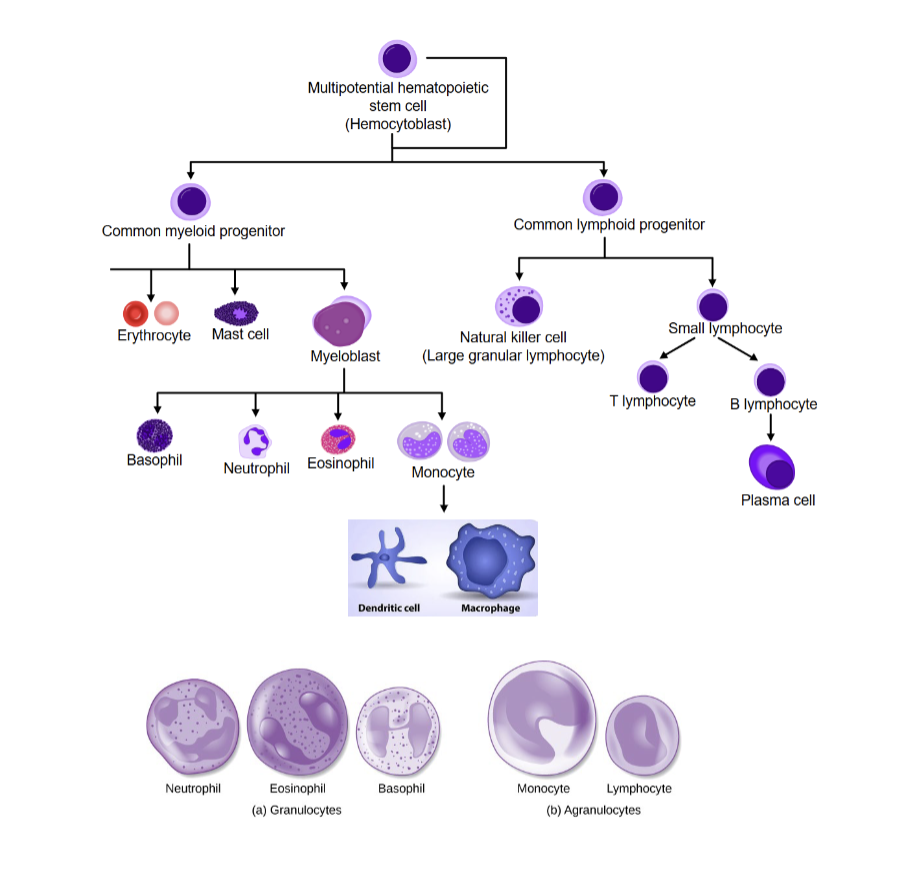
neutrophils
function/role: phagocytosis and release of granules to induce inflammation
agranulocyte or granulocyte: granulocyte
part of innate, adaptive, or both: innate
eosinophils
function/role: release granules to kill parasites
agranulocyte or granulocyte: granulocytes
part of innate, adaptive, or both: innate
basophils
function/role: release granules to induce inflamamation
agranulocyte or granulocyte: granulocyte
part of innate, adaptive, or both: innate
mast cells
function/role: stay in tissues; granules rich in histamine and heparin
agranulocyte or granulocyte: granulocyte
part of innate, adaptive, or both: innate
monocytes
function/role: circulate in the blood; differentiate into macrophages and dendritic cells
agranulocyte or granulocyte: agranulocyte
part of innate, adaptive, or oth: innate
macrophages
function/role: phagocytosis, inflammation, antigen presentation
agranulocyte or granulocyte: agranulocyte
part of innate, adaptive, or both: adaptive
dendritic cells
function/role: phagocytosis, inflammation, antigen presentation
agranulocyte or granulocyte: agranulocyte
part of innate, adaptive, or both: both
lymphocytes
function/role: differentiate into B and T cells
agranulocyte or granulocyte: agranulocyte
part of innate, adaptive, or both: adaptive
B cells
humoral or cell-mediated: humoral
function/role: differentiate into plasma and memory cells
plasma cells
humoral or cell-mediated: humoral
function/role: secrete antibodies
T cells
humoral or cell-mediated: cell-mediated
function/role: differentiate into helper T and cytotoxic T cells
T helper cells
humoral or cell-mediated: cell-mediated
function/role: antigen presented on MHC II binding to the TCR, CD4 - activate B cells
Cytotoxic T cells
humoral or cell-mediated: cell-mediated
function/role: antigen presented on MHC I binding to the TCR, CD8 - kill infected or abnormal cells
IgG
• Most abundant and lasts the longest
• Can be transmitted across the
placenta
• Can carry out opsonization
• Mounts a large secondary response
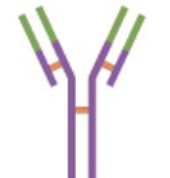
IgA
• Moves across mucous membranes
• Found in mucous, saliva, tears, and
breast milk
• Helps prevent pathogens from
getting past physical barriers
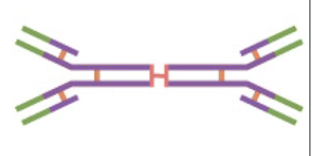
IgD
B-cell receptor
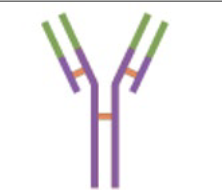
IgE
• Protects against parasitic worms
• Responsible for allergic reactions

IgM
Responsible for the early stages of immunity
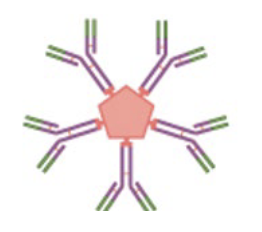
agglutination
antibodies cause invader cells to clump together, makes it easier for phagocytes to find
opsonization
antibodies attach to invader cells and make it easier for phagocytes to ‘pick up’
neutralization
Toxins
Some antibodies are ‘anti-toxins’ and neutralizes bacterial exotoxins
Bind to toxin to prevent it from working
Viruses
Antibodies bind to viral spikes to prevent it from infecting a host cell
Enzymes
This can also happen with bacterial enzymes
Antibodies block active site where substrates bind
What are the two main ways the third line of defense is different from the other host defense mechanisms?
specific, memory
B-cells divide to make what kinds of B cells?
plasma cells
regulatory B cells
Memory B cells
T-cells divide to make what kinds of T cells?
helper T cells
cytotoxic T cells
regulatory T cells
memory T cells
Describe the relationship between an antigen and an epitope:
Epitopes are the specific binding spot on an antigen. Some antigens can have
more than one epitope.
Describe the three kinds of vaccines:
a. Killed cells / inactivated viruses
b. Attenuated cells and viruses
c. Inactivated microbial products – like toxins or proteins
Describe the structure of antibodies
Two heavy chains, two light chains. Looks like a Y. The bottom part is the
constant region, the upper part that splits in two is the variable region where
antigens bind
How is the secondary antibody response different from the primary?
a. Memory cells activated in secondary; immature B cells are activated in primary
b. More IgG produced, faster
c. Primary – IgM first, IgG second; Secondary – IgG first, IgM second
What type of cells have MHC I molecules? MHC II molecules?
a. MHC I – all nucleated cells
b. MHC II – only on APCs – macrophages, dendritic cells, B cells
List the two components TC cells secrete and their function in attacking target cells:
a. Perforins – poke holes in membrane
b. Granzymes – trigger apoptosis
Where do B and T cells mature, respectively?
a. B cells: – bone marrow
b. T cells: – thymus
Programmed cell death is called…
Apoptosis
What kinds of cells are antigen presenting cells?
Macrophages, dendritic cells, some B cells
A ___________ response is when B cells respond to a foreign body.
humoral
____ _______ response is when T cells respond to a foreign body
cell mediated
The immunoglobulin class that has a dimer form found in mucus, saliva, colostrum, and
other body secretions is
IgA
The immunoglobulin class that is the only one capable of crossing the placenta
IgG
The immunoglobulin class that has an Fc region that binds to receptors on basophils and
mast cells is
IgE
The most abundant class of antibodies in serum is
IgG
Which process involves antibodies covering surface receptors on a virus or toxin
molecule, thereby disrupting their activity?
Neutralization
Which process involves antibodies cross-linking cells or particles into large aggregates?
Agglutination
Which process involves antibodies coating microorganisms in order to facilitate
phagocytosis
Opsonization
CD4 receptors bind to MHC class ____ and CD8 receptors bind to MCH class ___
II; I
True/False – T-cell receptors can be secreted.
False
Malarial parasites spend part of their lifecycle inside red blood cells. Hypothesize why
these parasites are resistant to Tc killing during this time.
a. Red blood cells do not display MHC I.
b. Red blood cells do not display MHC II.
c. Red blood cells are too small to interact with cytotoxic T cells.
d. Malarial parasites do not contain proteins that can serve as antigens.
a. Red blood cells do not display MHC I.