Lecture 6 The Problem with Diving - Temperature
 Call Kai
 Learn
Learn Practice Test
 Spaced Repetition
 Match
Match Flashcards
 Knowt Play
1/41

There's no tags or description
Looks like no tags are added yet.
Name | Mastery | Learn | Test | Matching | Spaced | Call with Kai |
|---|
No analytics yet
Send a link to your students to track their progress
42 Terms
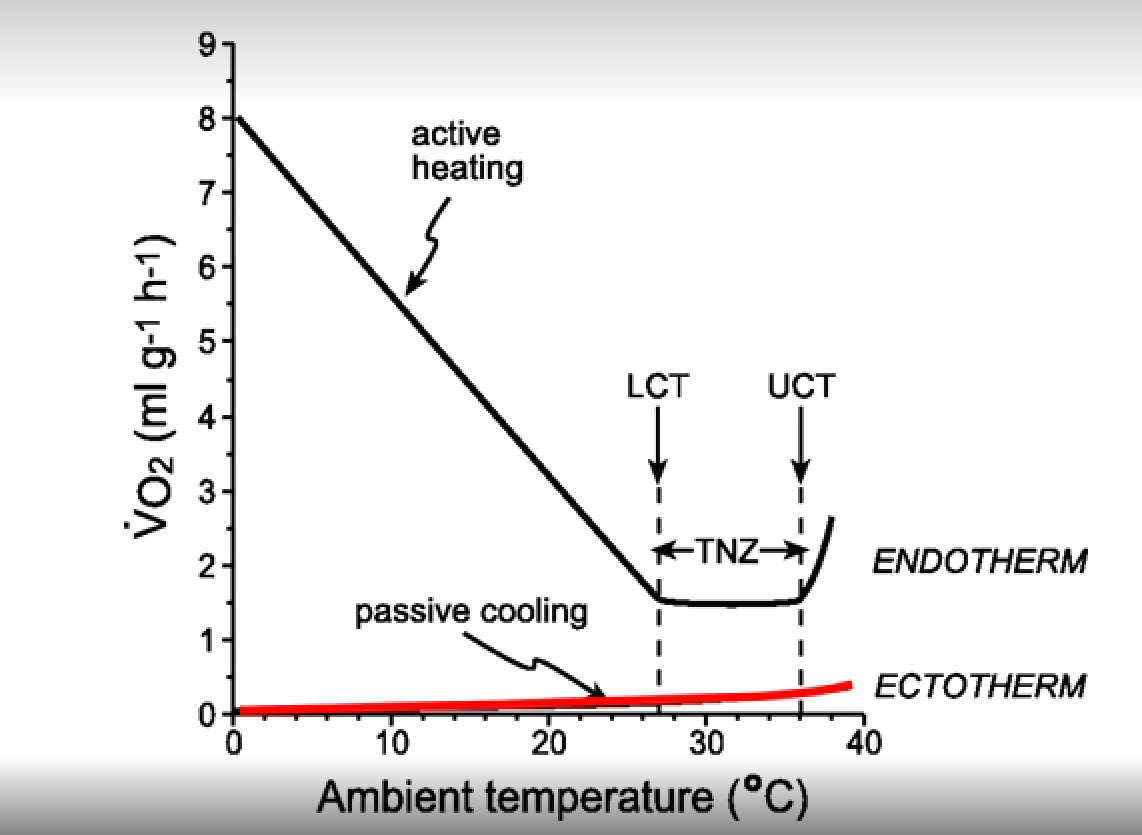
Thermoneutral Zone
Amount of heat an animal is producing is equal to the heat loss
What is the link between heat production and oxygen consumption?
VO2 = rate at which oxygen is being used
Different for endotherms and ectotherms
Ambient temperature goes up, and so does the rate of VO2
How do ectotherms (reptiles) derive temperature?
From the environment (metabolic rate depends on temperature)
What did James Gillooly conclude?
Mass and temperature compensated resting metabolic rates of all organisms are similar
What does how much oxygen you use underwater depend on?
Rate of oxygen consumption
Whether your an endotherm, exotherm or homeotherm
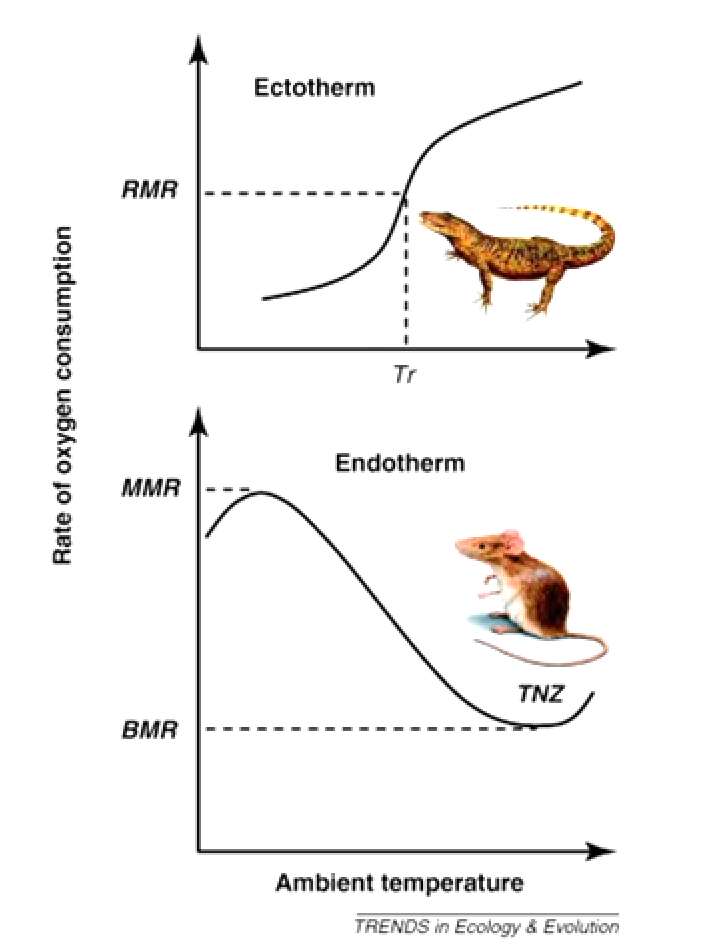
MMR = Maximum Metabolic Rate, can’t go higher
Endotherm have Thermal Neutral Zone (TNZ)
RMR = Resting Metabolic Rate, nominal temperature to operate at (ectotherm)
Ectotherm: Oxygen use goes up with temperature
Activity
What should happen to reptiles dive duration in decreasing temperatures?
Increase (use less oxygen, as they are not warming up as fast), correctly seen in turtles, sea temperature very cold = very high dive duration
How does dive duration vary between day and night?
Longer at night than during the day as they are less active (sleep)
What is the Q10 coefficient?
Describes how the rate of a biological reaction changes with a 10oC increase in temperature
Used to understand how temperatures affect metabolic rate
Reflects the degree to which the rate (how much oxygen is used) of the process accelerates/decelebrates as the temperature rises
What is the equation for Q10?
RT+10 /RT
RT+10 = rate of the process at a temperature of T = +10oC
RT = rate of the process of the initial temperature T
What happens when Q10 = 1?
Rate of the process does not change with temperature
What happens when Q10 >1 (greater than)?
Increase in the rate of the process with temperature
e.g. Q10 = 2, the rate of the reaction doubles with a 10oC increase in temp
What happens when Q10 <1 (less than)?
Decrease in the rate of the process with an increase in temperature, less common
How does gigantothermy allow Leatherback turtles to operate at cooler temperatures (crazy latitudes)?
Operate as low as 2 degrees e.g. Nova Scotia
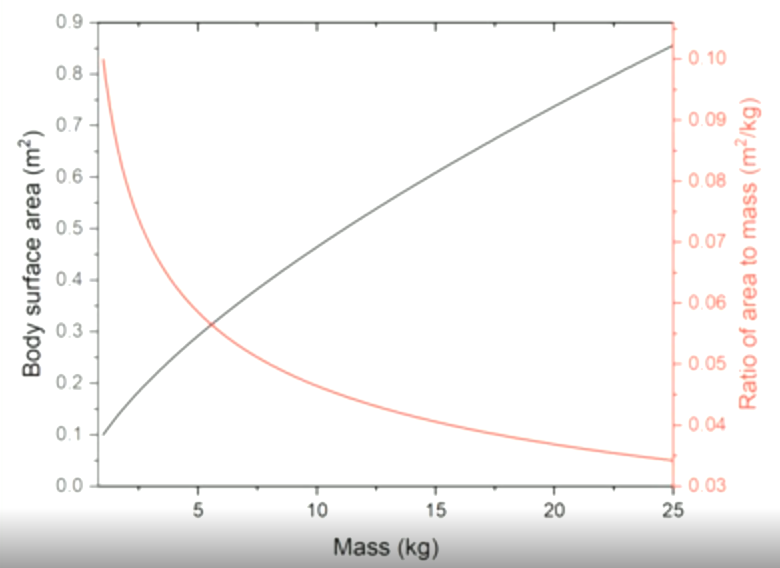
Being big gives low surface area to volume ratio
‘Volume’ produces the heat, surface area loses it
Cold-blooded animals operating in cold waters can have unusually high body temperatures
Why is body temperature more tightly controlled in Endotherms?
Temp decrease = energy loss
Need energy to keep warm
How is body temperature more tightly controlled in Endotherms?
Insulation using air, good insulation = little heat loss
Thicker the air layer = the better the insulation
Larger animals = greater air thicknesses
Colder water = more air needed
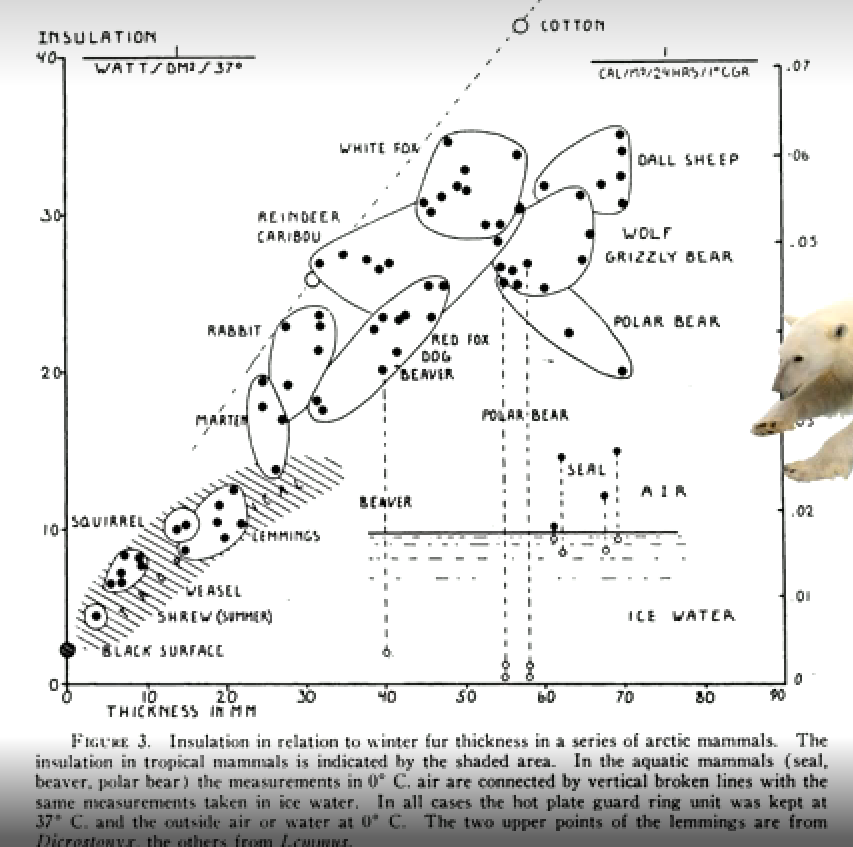
What happens to diving animals that have air as insulation e.g. birds?
Lose more heat as they go deeper, air gets compressed by water pressure
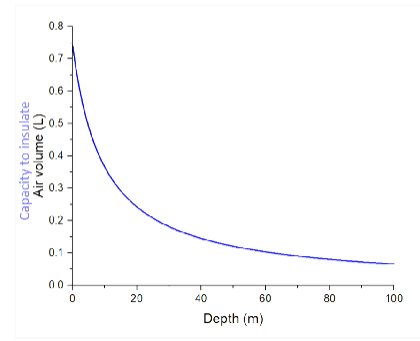
What does Archimedes’ principle and Boyle’s law mean for diving animals?
Animals with a lot of air have to fight against upthrust, but that upthrust decreases as they get deeper
Any air used for insulation gets thinner so heat is lost faster, animal gets colder
What is Archimedes’ Principle?
An object in a fluid experiences an upward force equal to the weight of the fluid it displaces, e.g. polythene bag of seawater in seawater is exposed to no force (up/down), once the upthrust has been subtracted from the weight
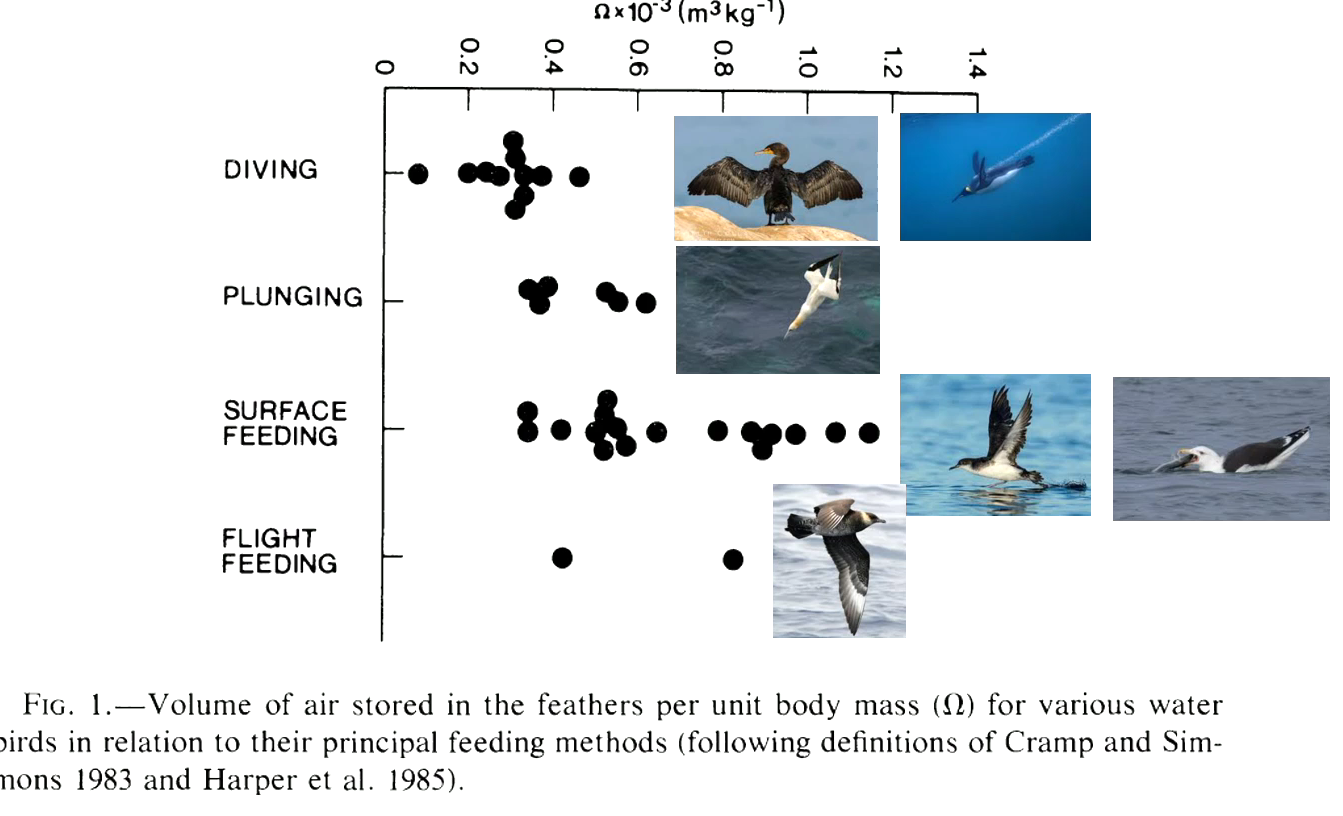
How do seabirds deal with air?
Carry little air in their plumage (diving birds)
Use gravity to penetrate water, to get to deeper depths, have more air in their plumage (plunging birds)
Broad span of air in plumage across body weight, more time spent at surface = more air they have (insulation) (surface feeding)
Flight feeding - never touch water surface
More time spent underwater = less air in plumage
Why is air not a great insulator?
Air layer thickness decreases with depth
Body density in birds
Air is a light insulator making flight easier
Guls air to body density
Lot of air and light bodies
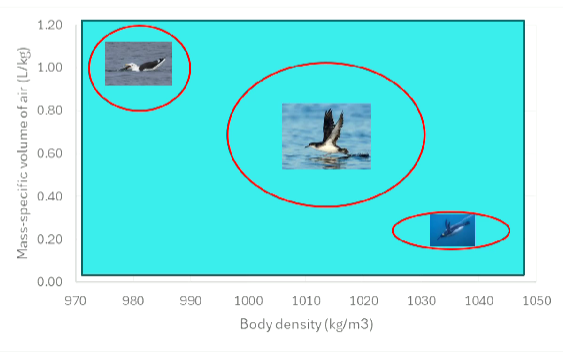
Sheerwater air to body density
Less air and higher body densities, without air would float to surface
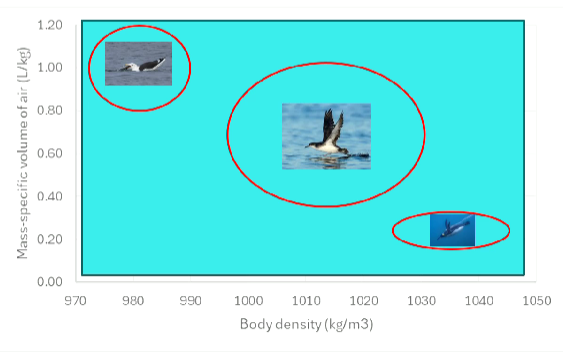
Penguins air to body density
Don’t fly, high body density, very little air
What else do animals diving at depth use as insulation?
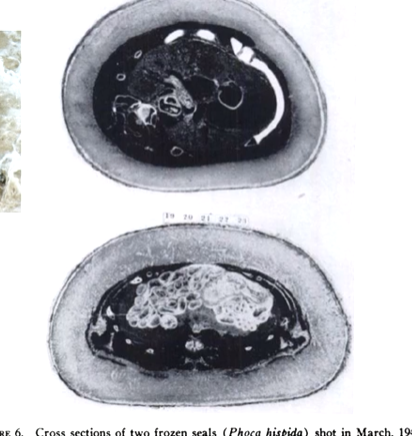
Fat: not as good as an insulator, but does not compress with depth
What’s one way animals deal with cold temperatures at depth?
Peripheral shell cooling - let the outer shell cool down more, so less heat is lost
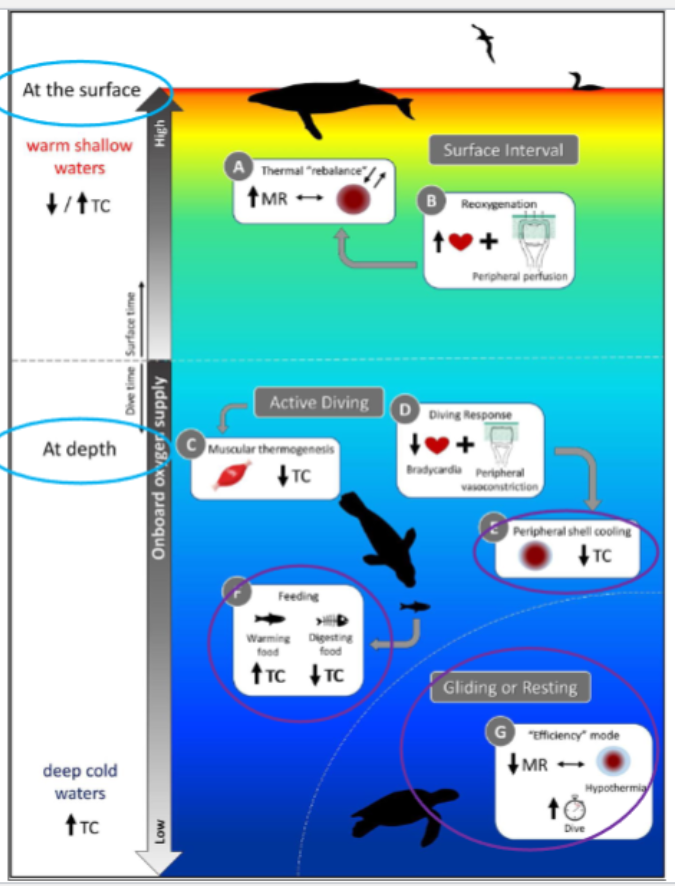
Disadvantage of gliding
Does not produce metabolic heat, so body temp can get too cold
What else can help explain the extent of blubber/air use?
Taxon/lifestyle - different thickness of blubber/fur or feather density per species
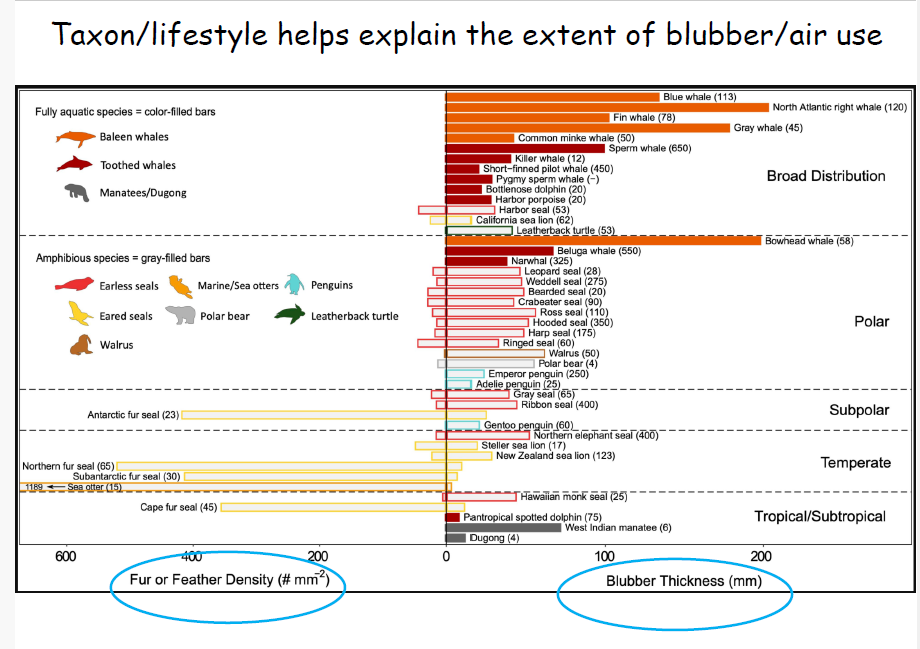
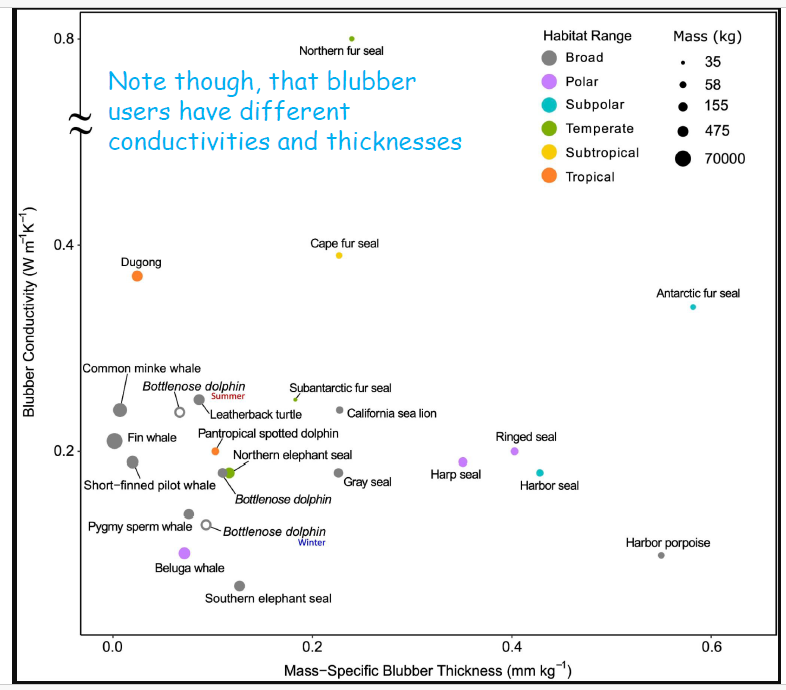
Blubber conductivity
How much heat is going through the blubber per degree
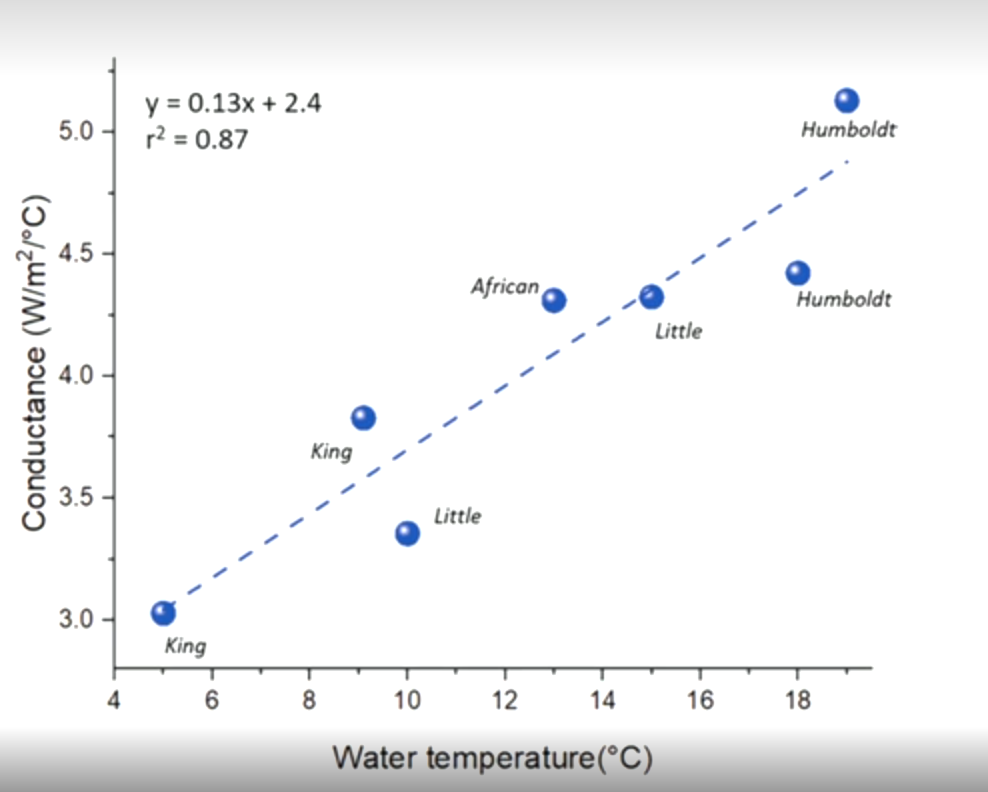
Why does the conductance/insulation vary with normal water temperature?
As water temp goes up, conductance increases, activity produces heat, so you would get too hot
Thermal substitution
Where the heat produced from an activity is used to mitigate what would otherwise be heat generated by that animal to counteract unacceptable cooling in an inactive animal
Example of thermal substitution
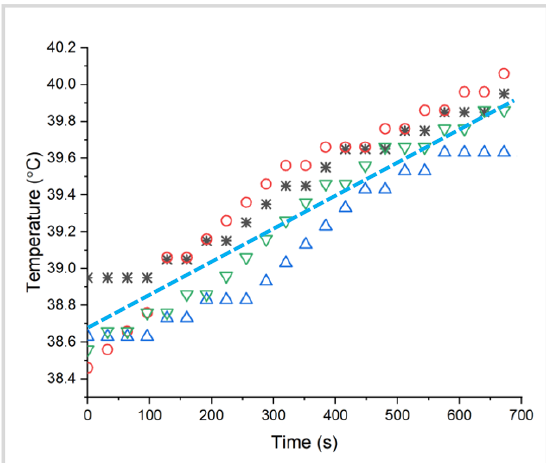
Adelie Penguins
Enter water
Body temp goes up by more than a degree
Then stop swimming, it can cool down to a particular temperature
Before then heating up again
What does the heat-gain/loss model show?
Ambient temperature changes with place, depth and season
Heat loss predicted to vary with water temperature
Heat production varies with (swim) speed
Heat loss also increases with depth because insulation decreases
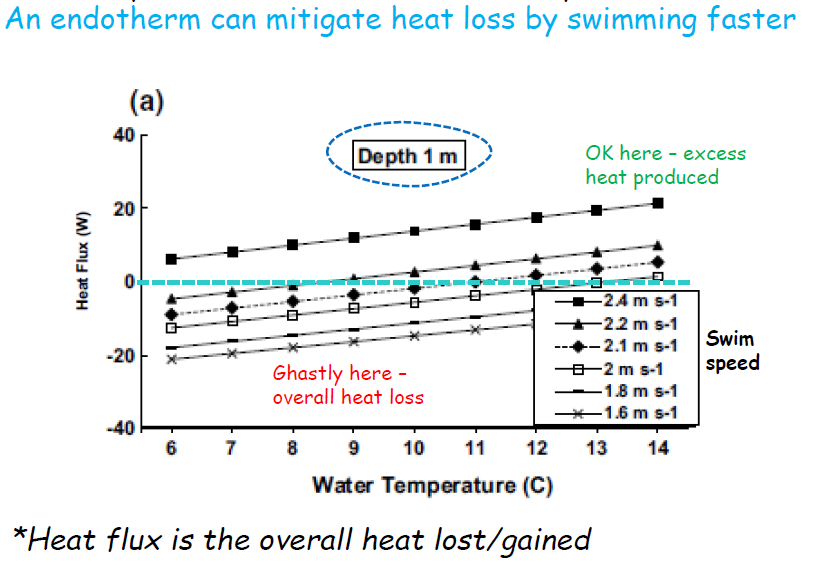
How do endotherms mitigate heat loss?
By swimming faster
Heat flux
Overall heat lost/gained
How do animals mitigate heat loss when swimming at depth?
Swim faster in colder and deeper water
Why do temperature loss problems occur?
Endotherms have a much higher body temperature than the water
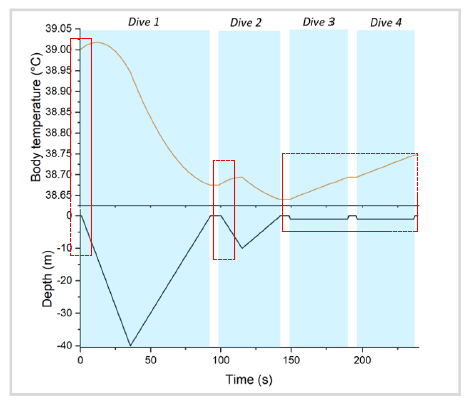
Regional hypothermia in ‘warm-blooded’ divers (homeotherms)
Solution to saving energy = to get cold
Lower the difference in temperature between animals and water = lower the heat loss
Penguins = abdominal temperature goes down when they dive, all the time, not just in bouts of foraging
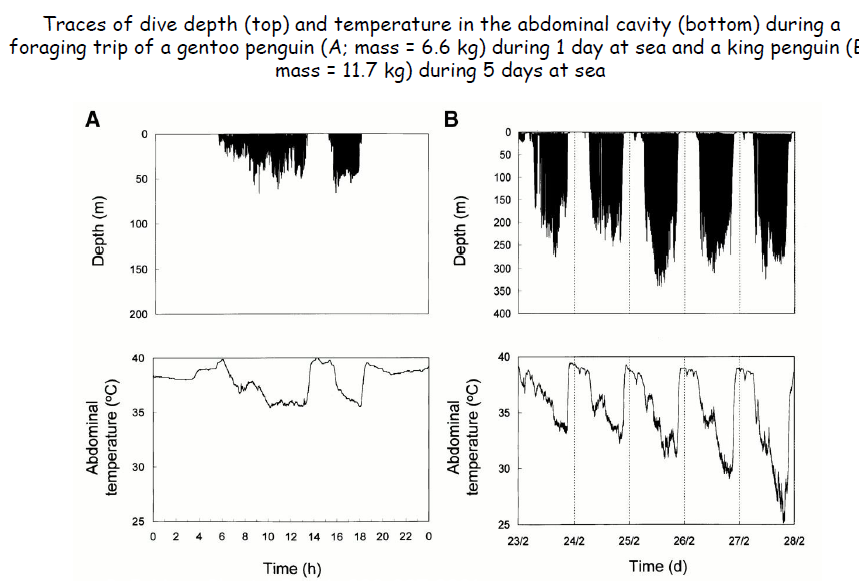
What can the ingestion of cold food lead to?
Regional hypothermia
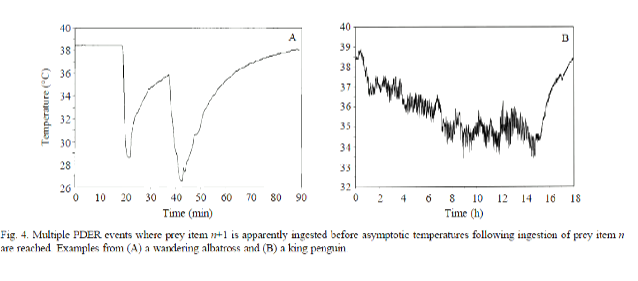
Hypothermia in foraging King penguins
Abdominal temperatures fall to as low as 11 oC during sustained deep diving
10 - 20 oC below stomach temp
Cold ingested food is not the only cause of abdominal cooling
Slower metabolism of cooler tissues resulting from physiological adjustments associated with diving could explain why they can dive for long durations
How can animals preserve oxygen supplies?
Cooling ‘unused’ tissues
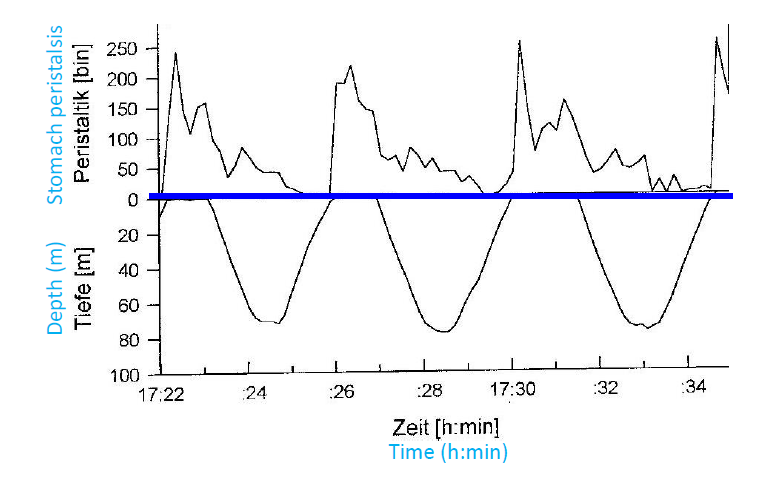
What about stomach-churning?
Heating food uses energy, which equates with oxygen
Needs to be regulated - stops when diving in penguins
Saves oxygen too - makes peripheral tissue cold