ppt 1 cranial joints
 Call Kai
 Learn
Learn Practice Test
 Spaced Repetition
 Match
Match Flashcards
 Knowt Play
1/21

There's no tags or description
Looks like no tags are added yet.
Name | Mastery | Learn | Test | Matching | Spaced | Call with Kai |
|---|
No analytics yet
Send a link to your students to track their progress
22 Terms
cranial joints are called_____ and why?
Cranial joints are called sutures because they look like they are stitched together!
there are 4 sutures of the cranium. What are they called
sagittal suture
coronal suture
squamosal suture
lamboidal suture
the sagittal suture is located bt?
the parietal bones
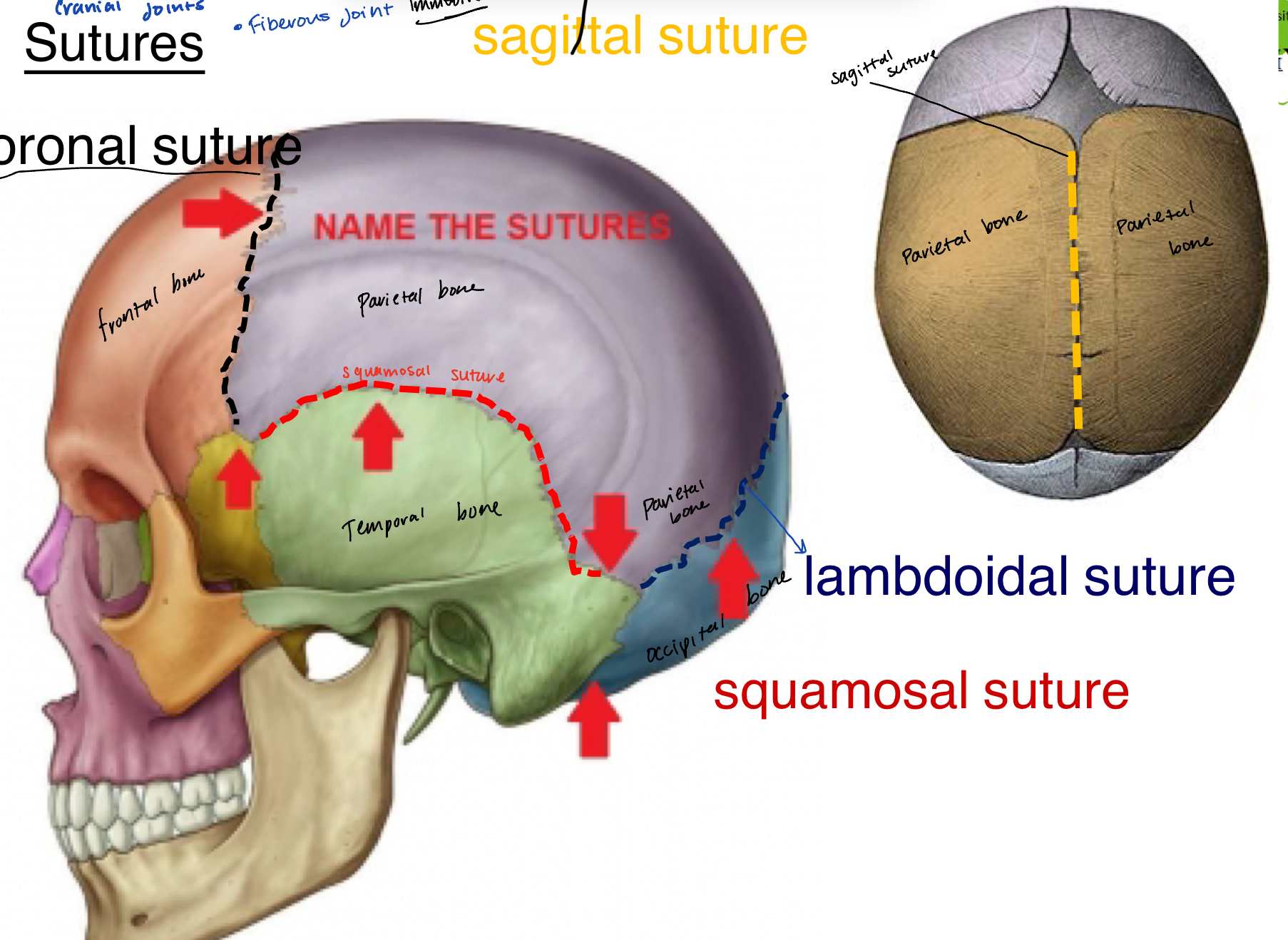
the coronal suture is located bt
frontal bone and parietal bone
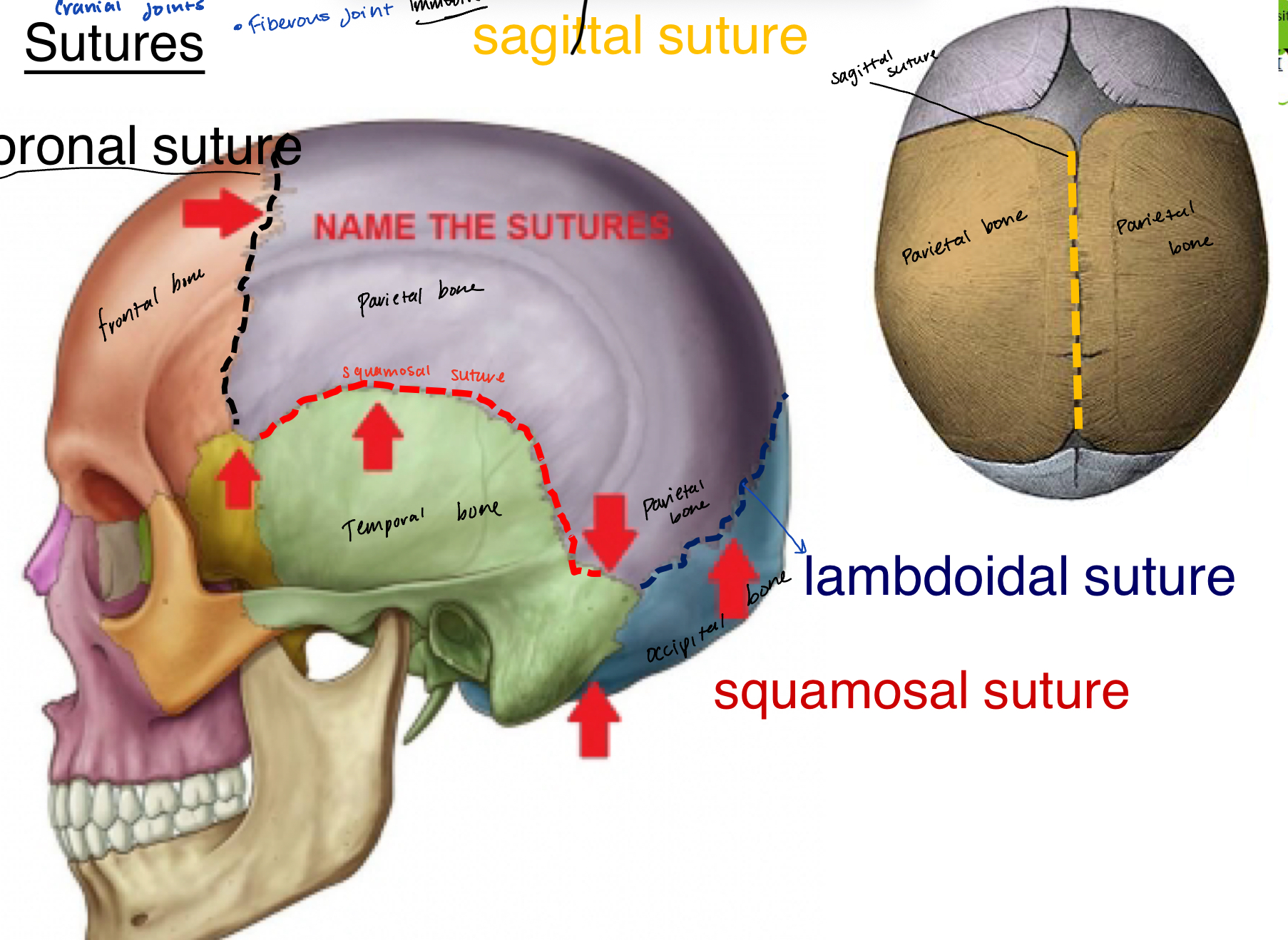
the squamosal suture is located b/t
temporal bone and parietal bone
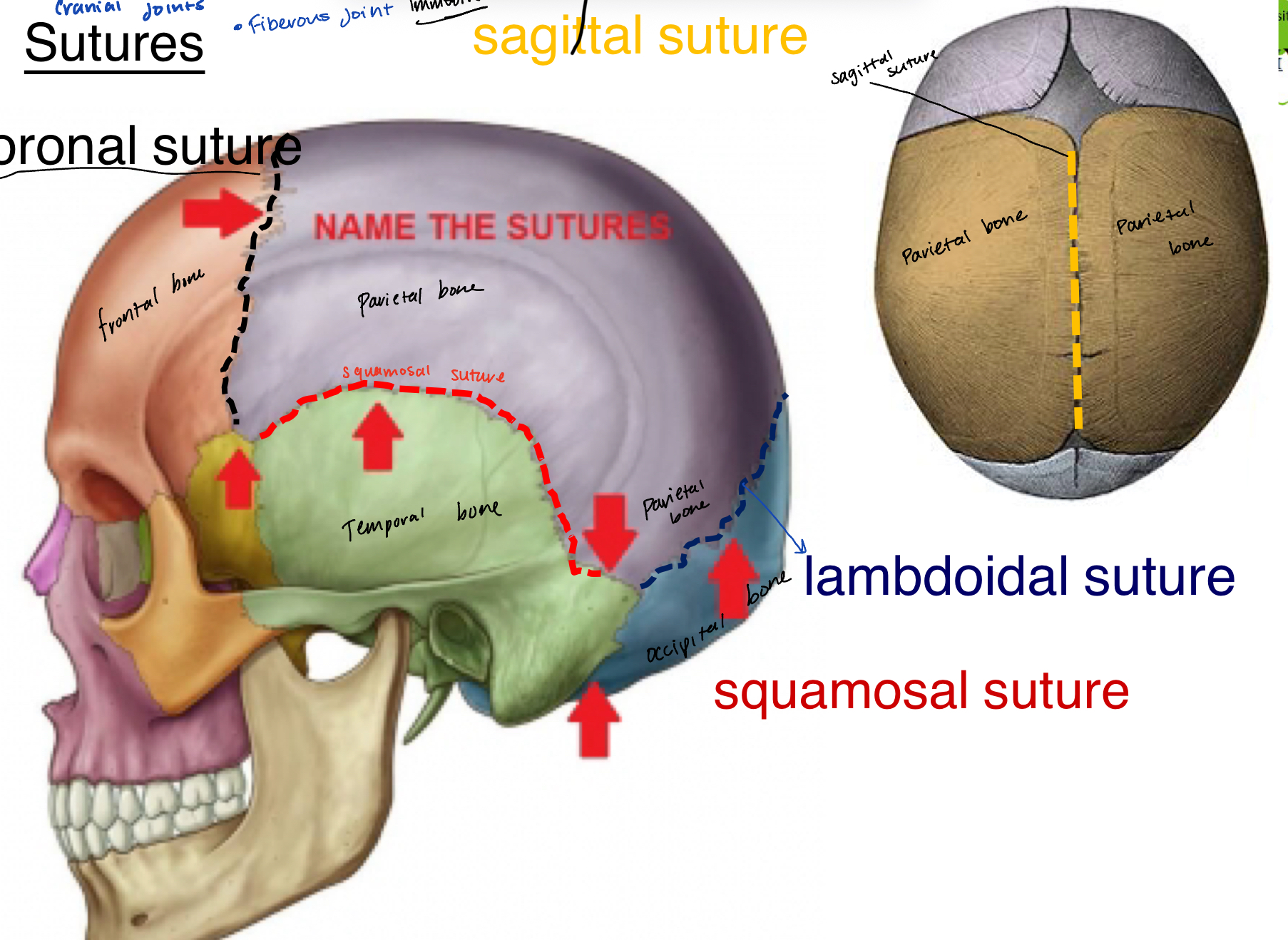
the lamboidal suture is located bt
partietal bone and occiptal bone
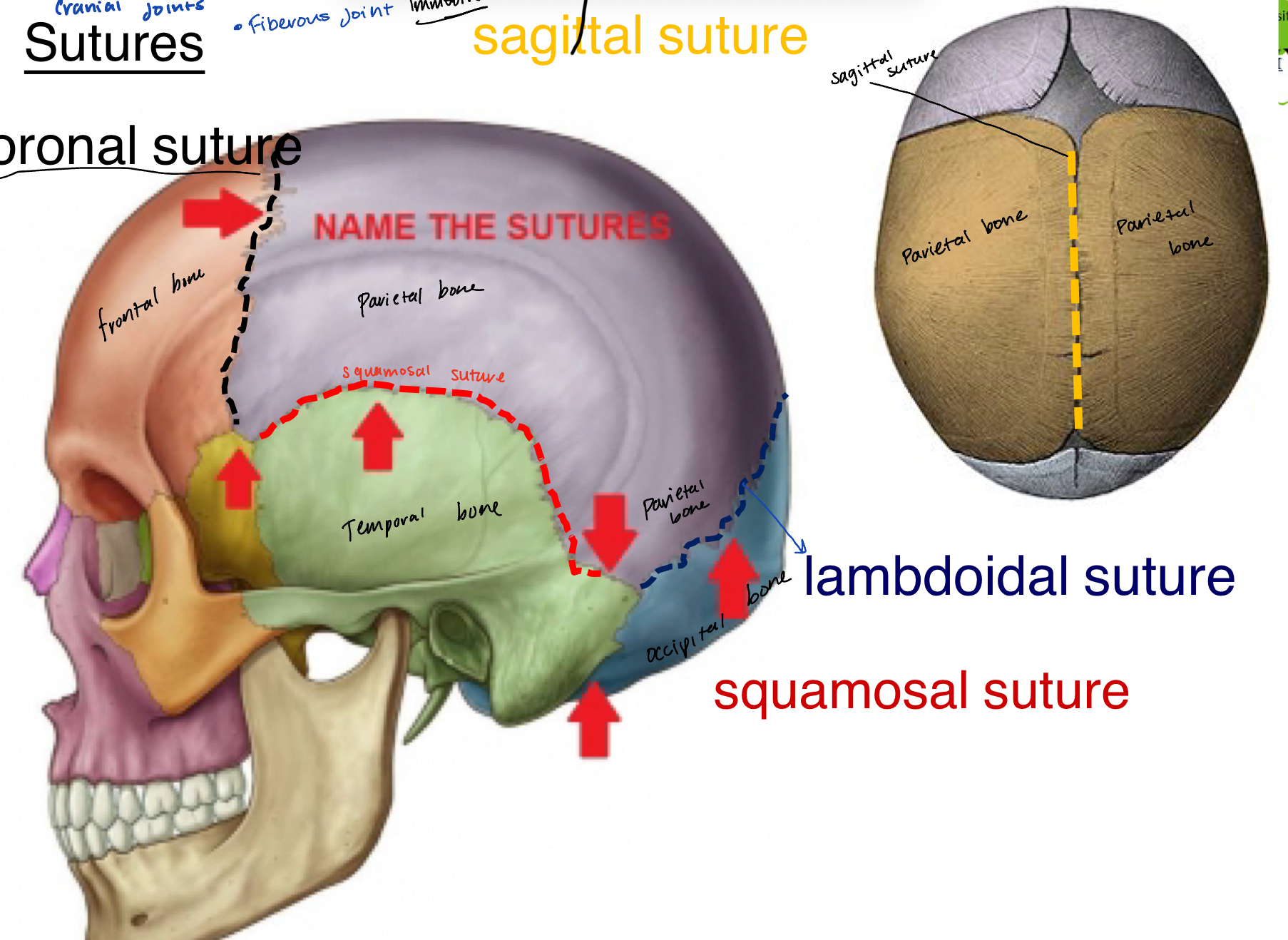
sutures are what kind of joint? are they mobile or immobile
sutures are fibrous joints
they are immobile
fontanelles are what kind of tissue? what do they allow for?
membranous soft tissue. fontanelles allow for growth of the brain
fontanelles are only found in____ when do they ossify?
fontanelles are only found in fetus/ newborn babies
fontanelles ossify later in life @ different stages of life after birth
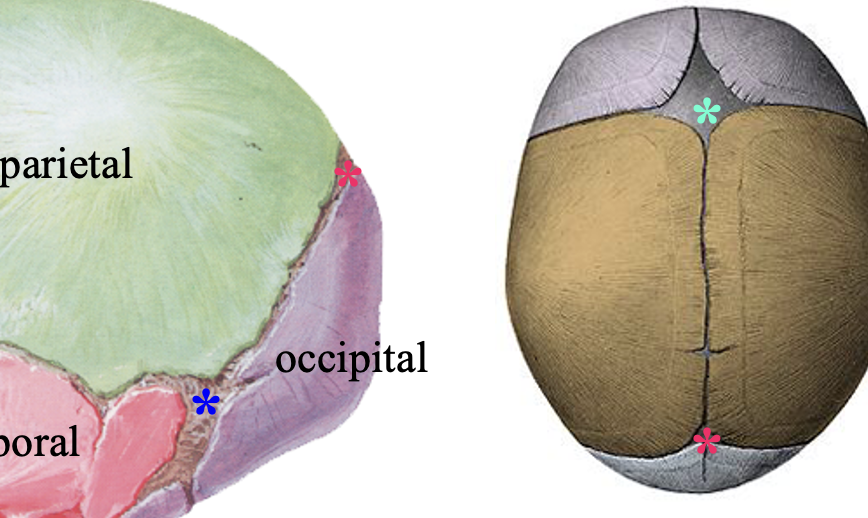
posterior fontanelle is located b/t which bones? and closes at what developmental stage?
posterior fontanelle is located between the parietal and occiptal bones
closes at 2-3 months
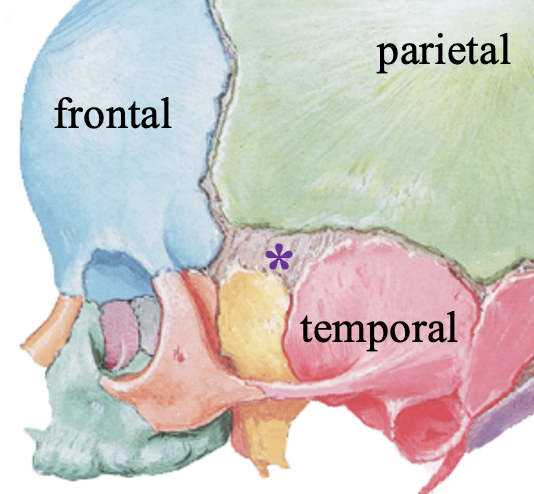
Sphenoidal fontanelle is located b/t which bones? and closes at what developmental stage?
located b/t frontal, parietal, sphenoid, and temporal bones
closes at 6 months
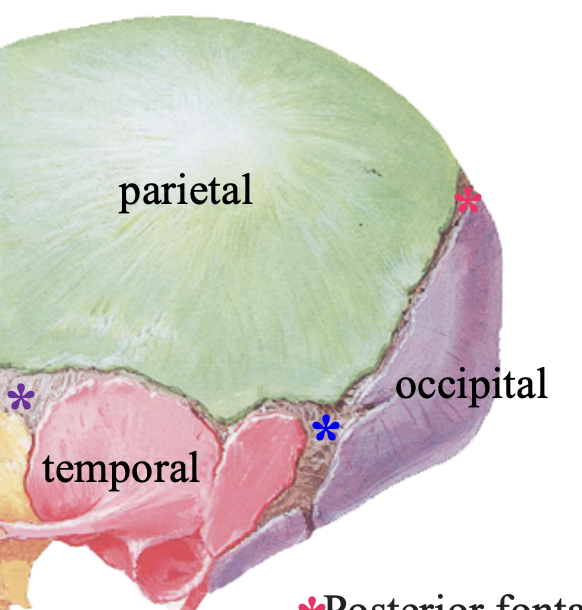
Mastoid fontanelle is located b/t which bones? and closes at what developmental stage?
located b/t temporal, parietal, occipital bones
closes at 6-18 months
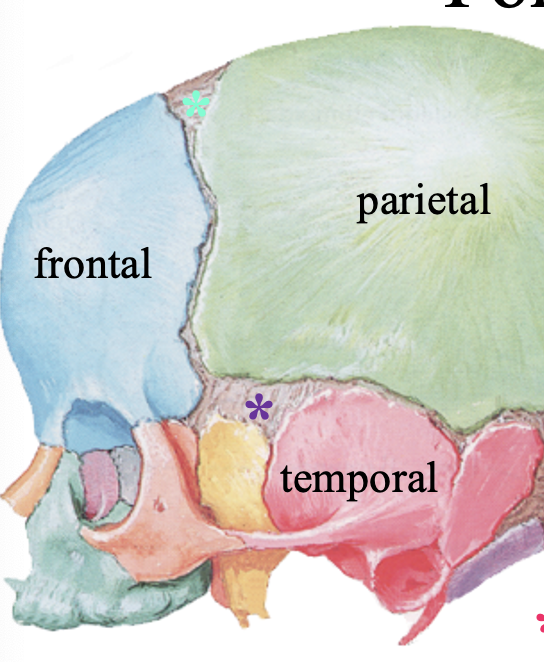
Anterior fontanelle is located b/t which bones? and closes at what developmental stage?
bt frontal and parietal bones
last to close closes at 18-24 months (2 years)
name the facial bones (8)
nasal
lacrimal
zygomatic
inferior nasal concha
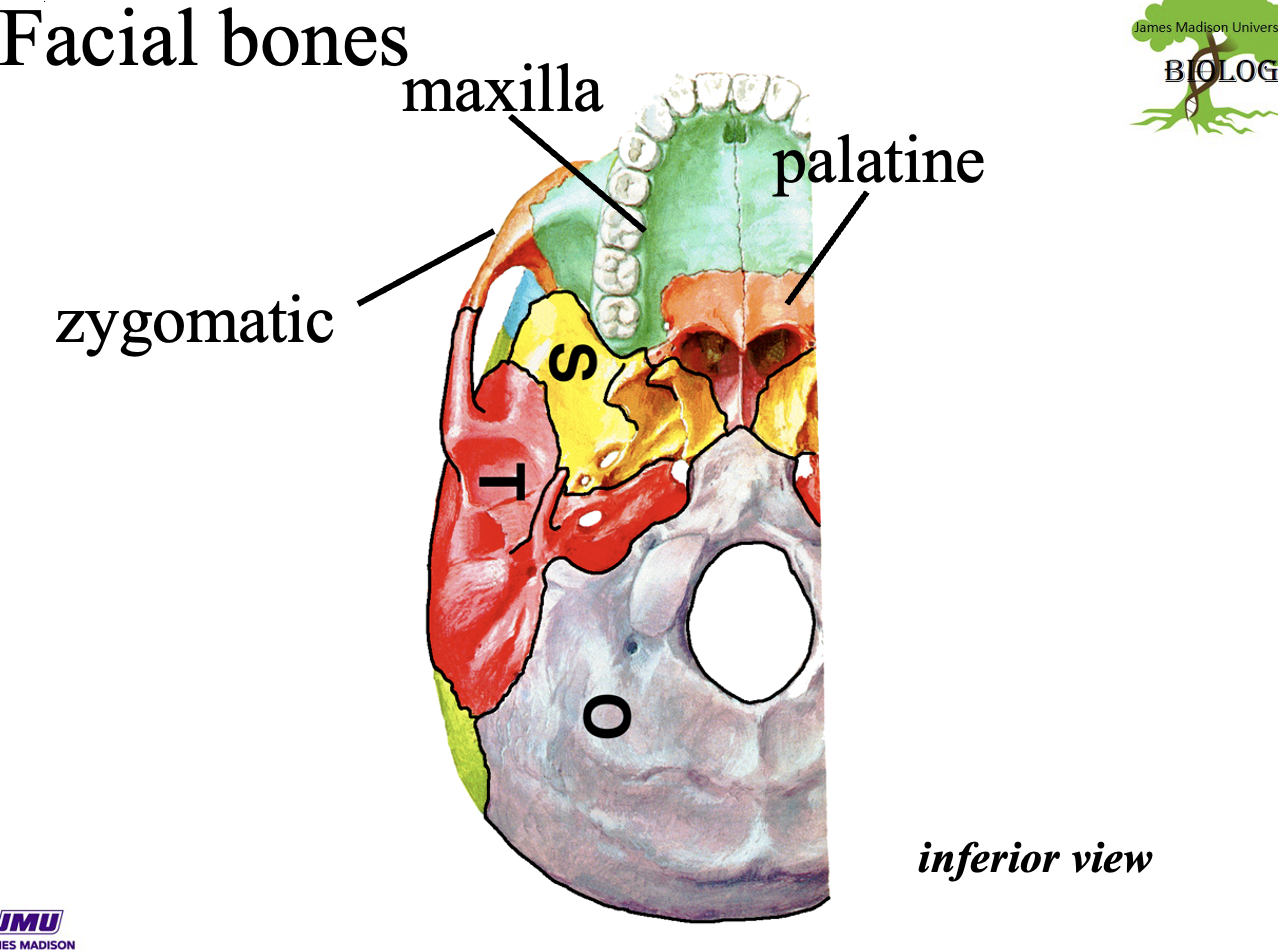
maxilla
vomer
mandible
palatine
what does the nasal bone form?
superior part of nasal cavity
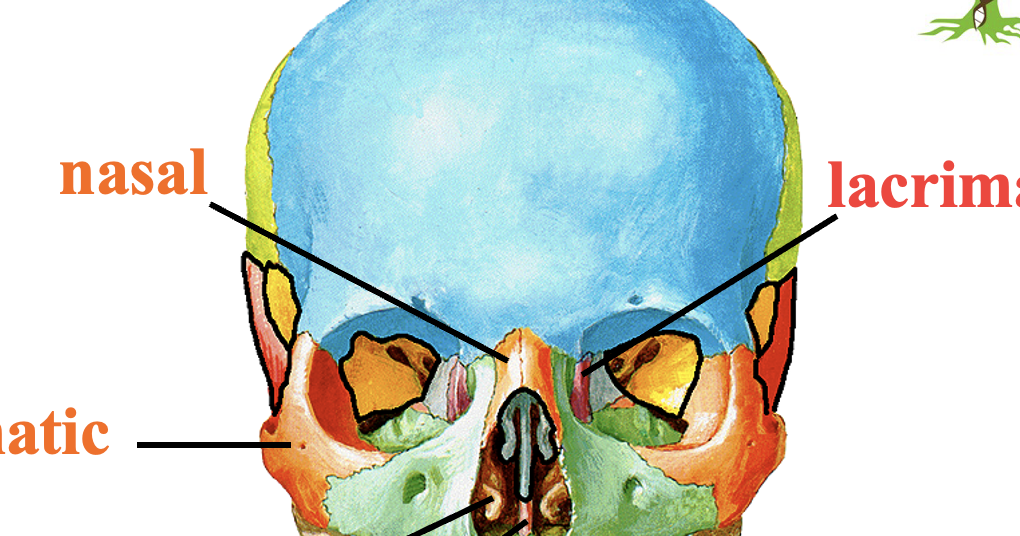
zygomatic bone is also known as?
check bone
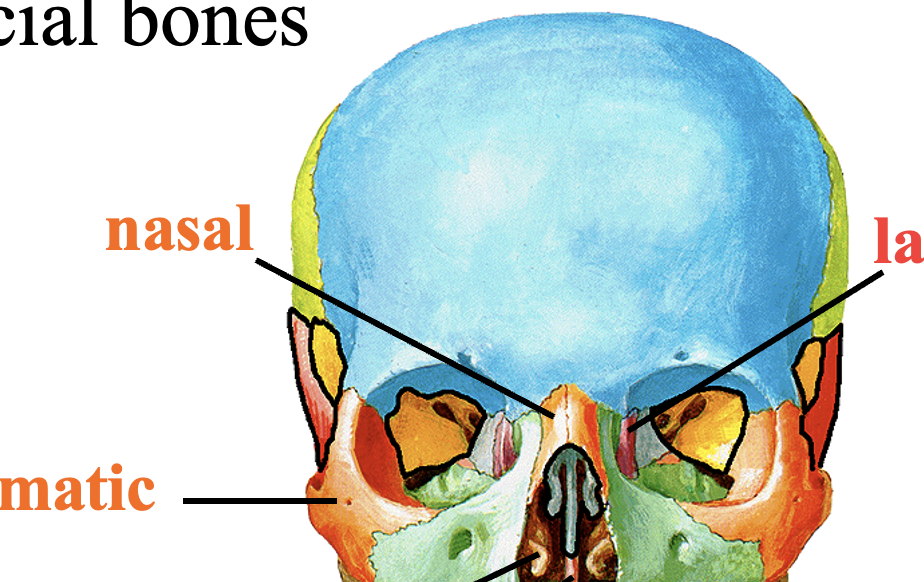
vomer bone forms?
lower part of nasal septum
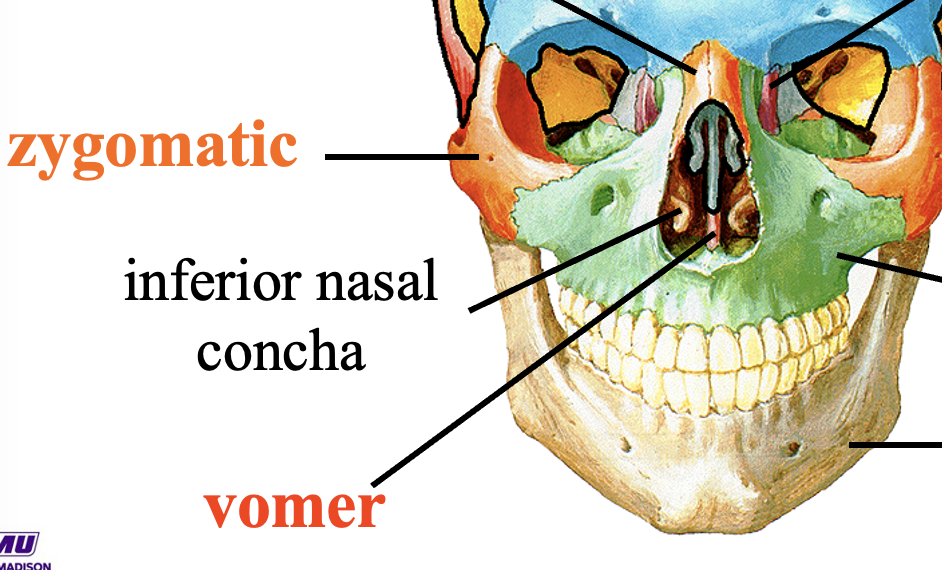
maxilla forms____ mandible forms
maxilla forms upper jaw
mandible forms lower jaw
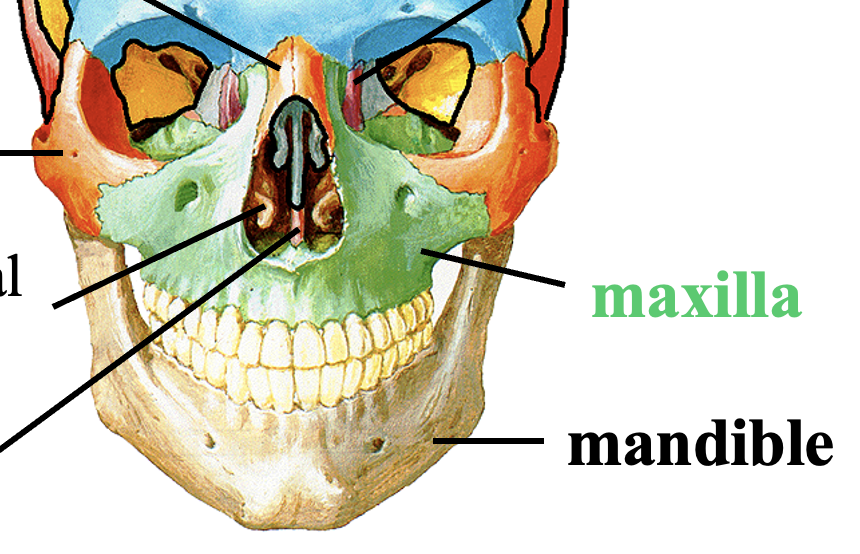
lacrimal bone is located where in relation to nasal bones?
posterior to nasal bones
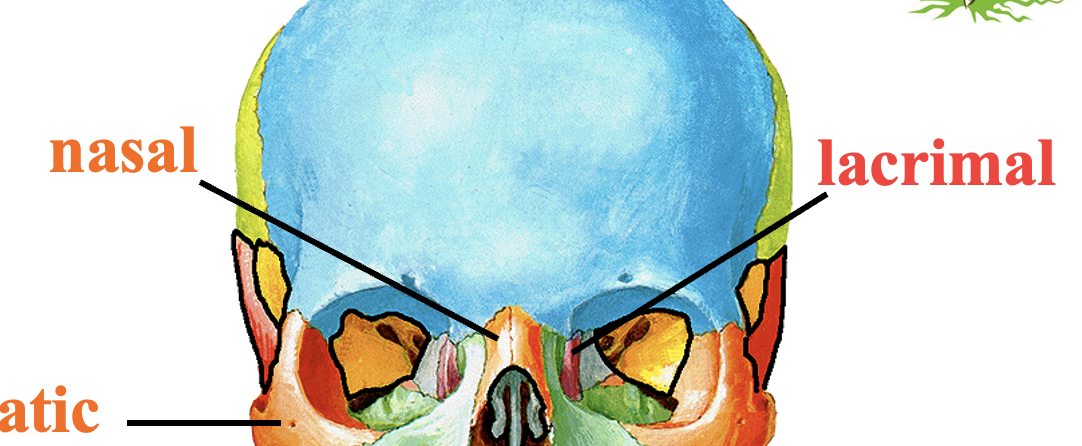
maxilla and palatine bone form?
hard palate/ roof of mouth
bone features of mandible (4)
mandibular condyles
coronoid process
mandibular foramina
mental foramina
describe the functions of the bone features in the mandible
mandibular condyles articulate with mandibular fossae to form temporo-mandibular joints
coronoid process-attachment site for mastication muscles
mandibular foramina- passageway for V3 (mandibular nerve) innervates lower teeth
Mental foramina: passageway for V3 (mandibular nerve) innervating chin