Psychology Units 1 & 2 - Role of the Brain
 Call Kai
 Learn
Learn Practice Test
 Spaced Repetition
 Match
Match Flashcards
 Knowt Play
1/10

There's no tags or description
Looks like no tags are added yet.
Name | Mastery | Learn | Test | Matching | Spaced | Call with Kai |
|---|
No analytics yet
Send a link to your students to track their progress
11 Terms
The Brain
A network of cells that plays a vital role in processing information from the body’s external and internal environment + directing responses
Meninges
Protects the brain by encasing it with 3 meninges to create a hard, bony skull
Cerebrospinal Fluid
A liquid that circulates between the membranes/meninges, providing a cushion which protects the brain from injury
Blood-brain Barrier
Formed between capillaries to limit the entry of harmful substances that may be present in our blood
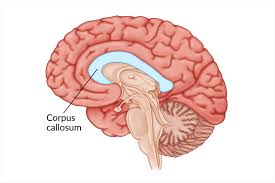
Corpus Callosum
A band of nerve tissue which connects the left and right hemispheres. It also serves as a communication pathway for neural images
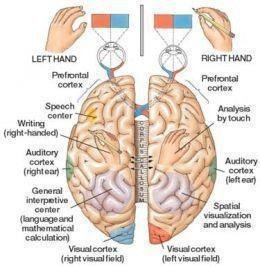
Left Hemisphere - Functions
Specialises in reading and writing, speech comprehension, mathematics, etc. It controls the right side of the body.
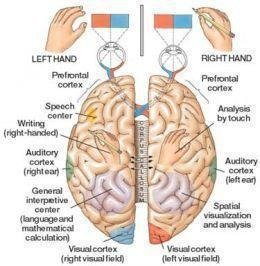
Right hemisphere - Functions
Specialises in daydreaming and fantasy, recognition of faces and patterns, judgement of rhythm and time, etc. It controls the left side of the body
Question: What is the main cause for severing the Corpus Callosum?
Answer: Epilepsy
Question: What happens if a split-brain patient is flashed an image of a house to their left visual field?
Answer: If an image of a house if flashed to the left visual field, the split-brain patient will process the information in their right hemisphere. The patient would be unable to verbalise the word ‘house’ as the left hemisphere controls speech and language, but would be able to draw a picture of a house as the right hemisphere controls creative activities.
Questions: What happens if a person with an intact corpus callosum is flashed an image of a house to their left visual field?
Answer: If an image of a house is flashed to the left visual field, the person with an intact corpus callosum will process the information in their right hemisphere. The information will then transfer through the corpus callosum to the left hemisphere of the brain, allowing the person to verbalise and point or draw a house
Question: A patient with a split-brain was shown a picture of a dog from their left visual field. The patient was unable to name what he had seen. Why?
Answer: The split-brain patient was unable to name the dog as the information was processed in their right hemisphere, which controls creative and artistic activities. The right hemisphere could not transfer this information to the left hemisphere because the patient corpus callosum is severed, meaning the patient could not verbally name what they saw