Dispersed Systems in Food Science: Gels, Sols, and Stabilizers
 Call Kai
 Learn
Learn Practice Test
 Spaced Repetition
 Match
Match Flashcards
 Knowt Play
1/15

There's no tags or description
Looks like no tags are added yet.
Name | Mastery | Learn | Test | Matching | Spaced | Call with Kai |
|---|
No analytics yet
Send a link to your students to track their progress
16 Terms
What are dispersed systems in food science?
Complex mixtures of different phases and properties that maintain food quality.
What are the two main phases in a dispersed system?
Continuous phase and dispersed phase.
What is the definition of a sol?
A solid dispersed in a liquid.
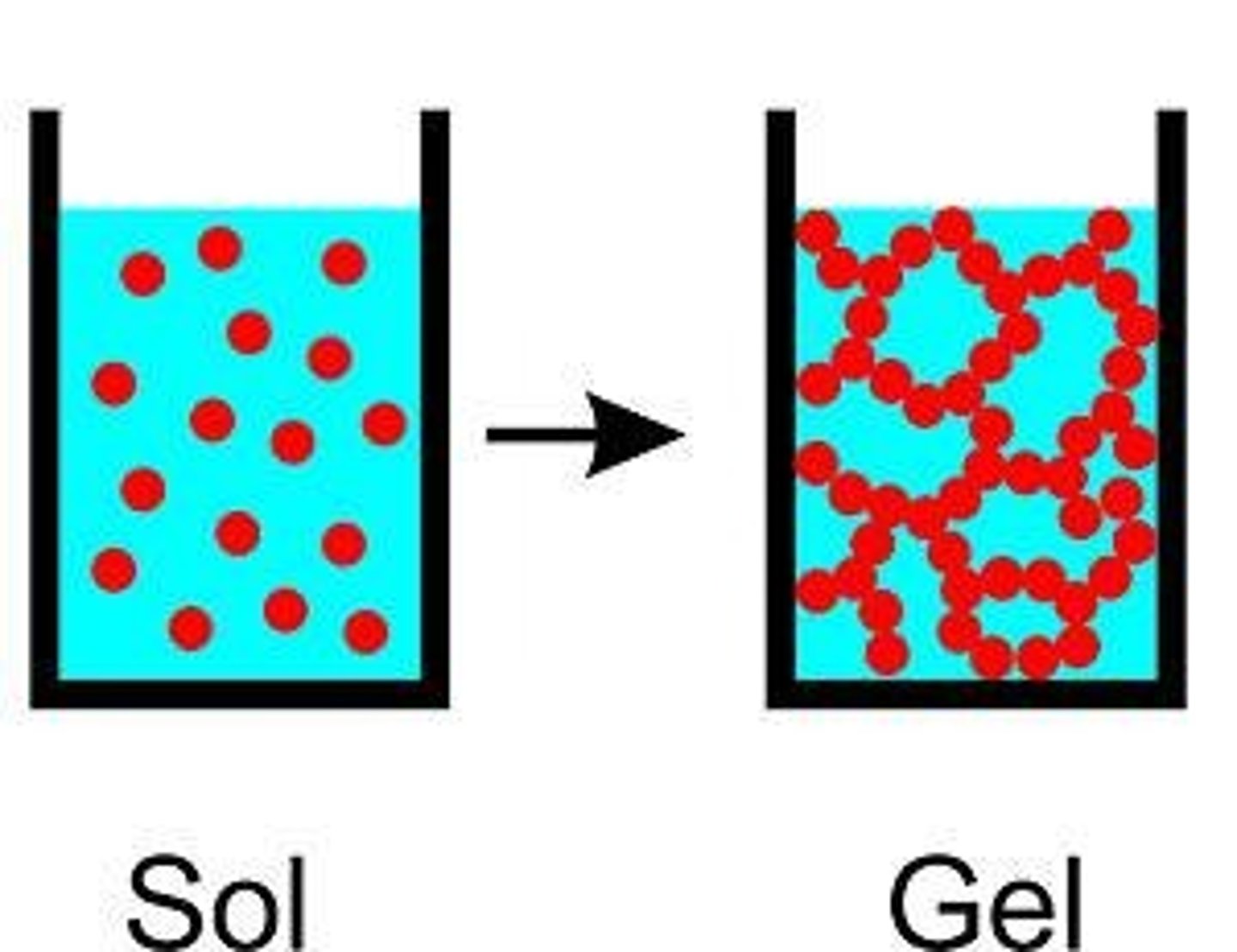
What types of foods typically fall under the category of sols?
Most beverages and fluid foods, as well as thickened foods and sauces.
How are sols classified?
By particle size: true solution, colloidal solution, and suspension.
What is a gel?
A liquid dispersed in a continuous, elastic solid network.
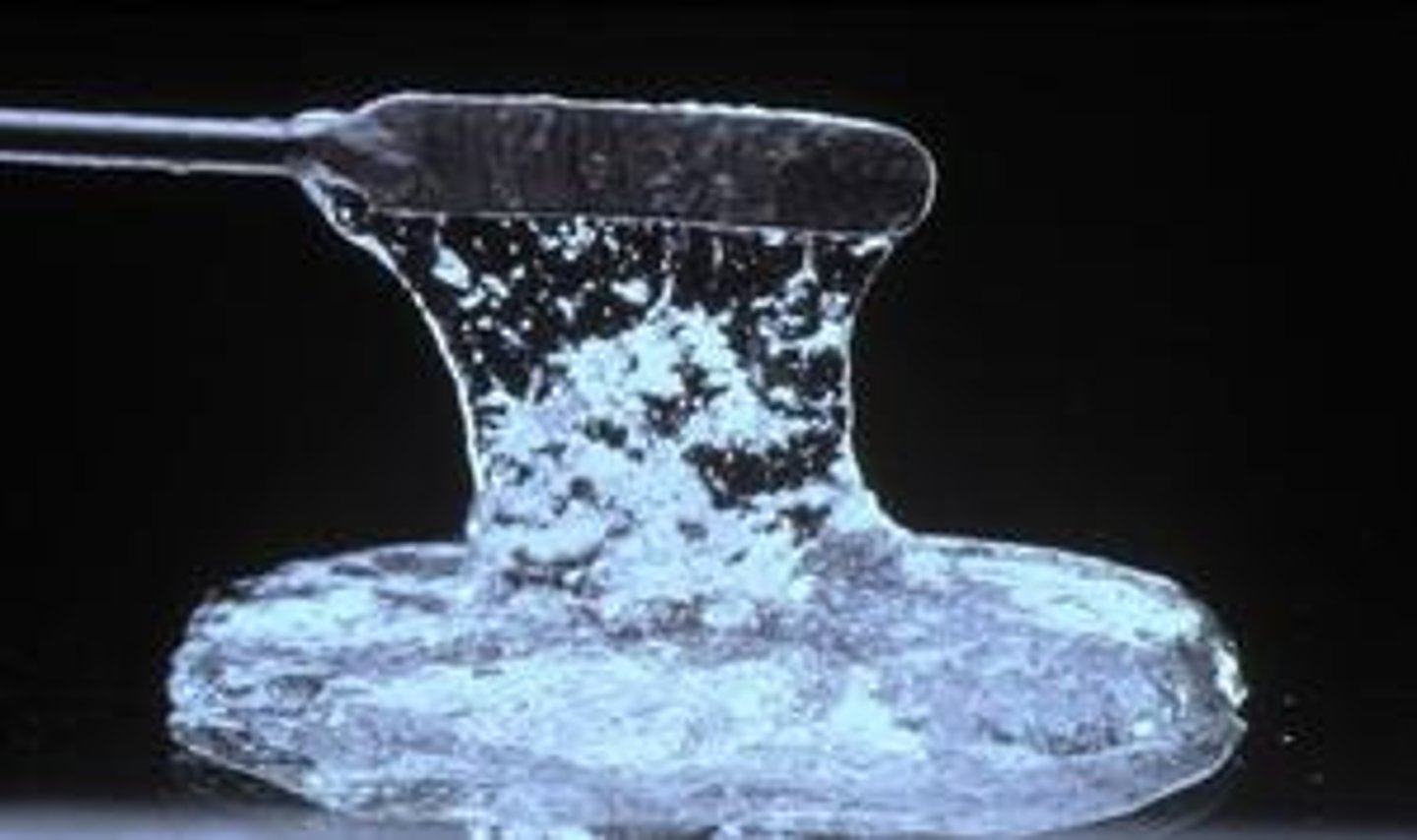
What are common examples of gelling agents?
Gelatin, pectin, starch, egg whites, and sodium alginate.
What role do gums play in food?
They act as thickeners, stabilizers, and control crystal formation.
What are the types of gums used in food science?
Seed gums, plant exudates, microbial exudates, seaweed extracts, and synthetic gums.
What is the role of pectin in gel formation?
Pectin forms gels through hydrogen bonding and ionic interactions, requiring acid for proper gelation.
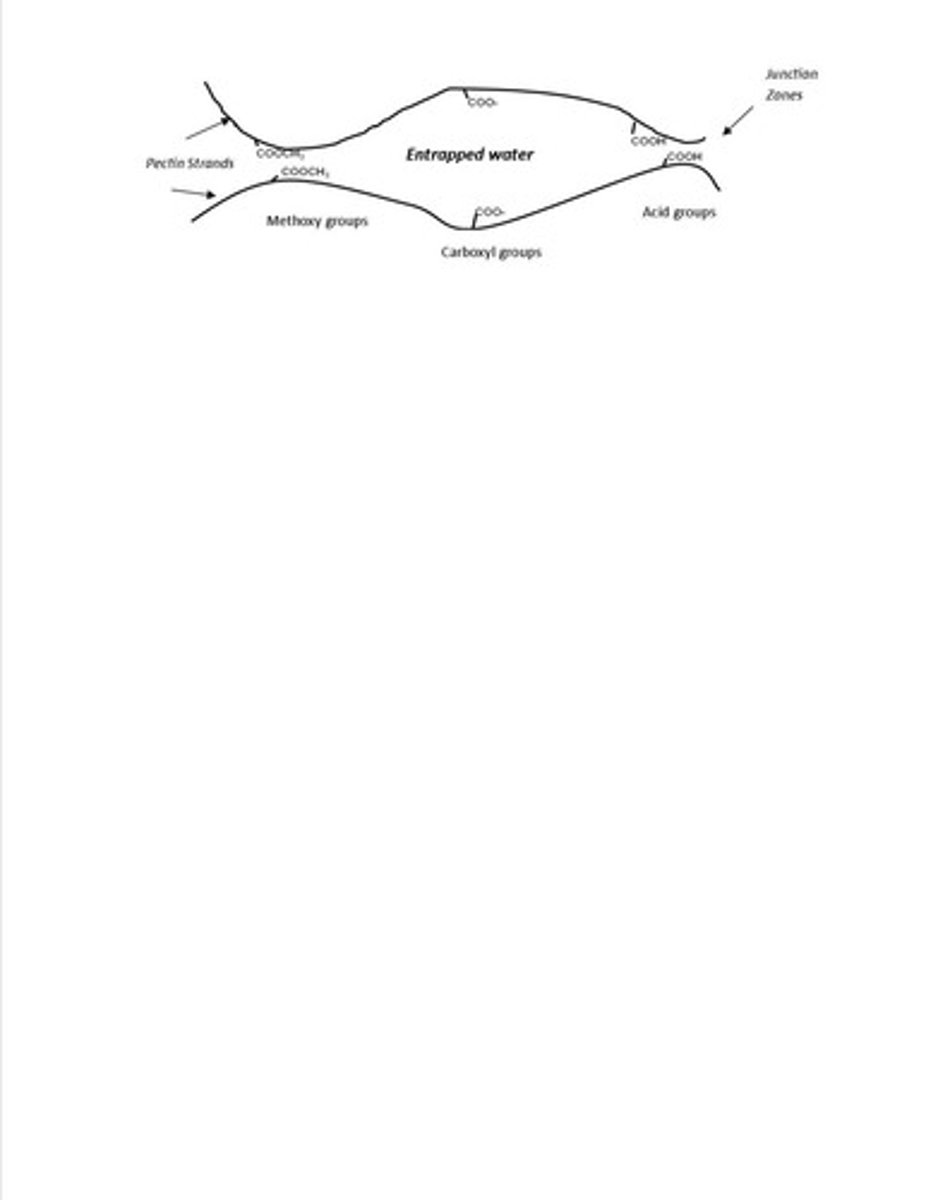
How does sugar influence pectin gel formation?
Sugar pulls water away from methoxy and acid groups, allowing junction zones to form.
What factors influence gelatin gel formation?
Hydration, dispersion, and the interaction of protein strands.
What is the process to create a gelatin gel?
Hydrate gelatin, disperse in hot liquid, and allow to cool to form a gel network.
What is the significance of junction zones in gel formation?
They trap the liquid phase within a solid network, creating a gel structure.
What is a low-methoxy pectin and its use?
It is used to create low-sugar jellies that require a divalent cation like calcium to form junction zones.