Lecture 24 - Other Specialty Diets
 Call Kai
 Learn
Learn Practice Test
 Spaced Repetition
 Match
Match Flashcards
 Knowt Play
1/17

There's no tags or description
Looks like no tags are added yet.
Name | Mastery | Learn | Test | Matching | Spaced | Call with Kai |
|---|
No analytics yet
Send a link to your students to track their progress
18 Terms
what prompted people to start doing a Mediterranean diet
Epidemiological studies report increased longevity and reduced morbidity in Mediterranean countries versus North America & Northern Europe
Attributed to dietary pattern
Adherence to these dietary patterns has started to decline as these nations have westernized (increasing prevalence of obesity)
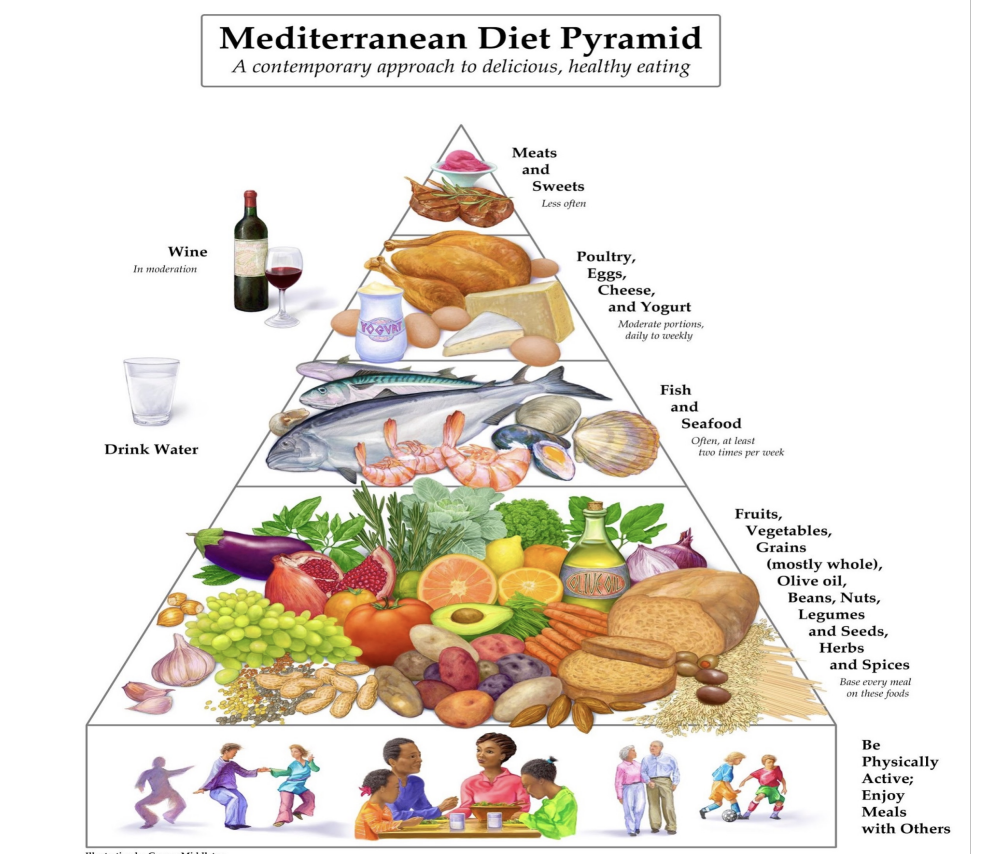
what is the Mediterranean diet
not so much a specific diet but a dietary pattern
High consumption of plant-based foods (e.g. fruits, vegetables, legumes, nuts, etc.)
Seasonally fresh and locally grown foods
Extra virgin olive oil as the primary source of dietary lipid
Moderate intake of wine (red)
Fresh fish & seafood, Low consumption of red and processed meat
Moderate consumption of dairy products, poultry, & eggs
what makes the Mediterranean diet healthy
Quality of fat (diet is low in saturated and trans fats, but high in monounsaturated fats)
Diet may increase satiety (still debated whether fat is more satiating than carbs)
High use of olive oil and legumes enhances palatability of the diet (increased consumption of foods high in dietary fibre and low in energy density)
Diets rich in monounsaturated fat improve glucose homeostasis (important in obesity/type 2 diabetes)
what is gluten
family of proteins found within grains (e.g. wheat, rye, barley)
Present in the endosperm (gliadins and glutenins)
Only gliadins have been linked to celiac disease
what are gliadins
Gliadins are alcohol soluble proteins rich in glutamine and proline
4 types of gliadins (⍺, β, g, w), with ⍺-gliadins thought to be the most damaging
what is the gluten free diet
Gluten-free dieting is simply restricting the consumption of food products containing gluten
what are examples of gluten subsitutes
Corn, Rice, Oats (often contaminated with gluten), Quinoa, Amaranth, Sorghum, Flax, Chickpeas
when is the gluten free diet used
Celiac Disease (CD, chronic inflammatory bowel disease triggered by gluten)
Non-celiac gluten/wheat sensitivity (NCGS)
Wheat allergy
what is the pathogenesis of celiac disease
Exposure to immunogenic gliadin peptides leads to a cascade of changes in both the surface epithelium and lamina propria through immune-mediated mechanisms (innate & adaptive)
Increased IL-15 increases recruitment of cytotoxic intraepithelial lymphocytes
Gliadin becomes more immunogenic once it reaches the lamina propria and is deaminated by tissue transglutaminase
how is celiac disease diagnosed
Positive Celiac Disease-specific serology
Small bowel biopsy specimens with characteristic histological features
Positive response to a gluten-free diet
is the gluten free diet associated with weight loss
While some individuals may experience weight loss due to a reduced caloric intake or elimination of highly processed foods, the gluten-free diet is not inherently a weight loss diet and can also lead to weight gain if high-calorie gluten-free products are consumed.
is the gluten associated with heart disease
increased consumption in diet associated with reduction in heart disease
what is intermittent fasting
Voluntary abstinence from food & drink
Many different forms
Striking evidence in preclinical studies suggests that intermittent fasting has numerous health benefits
what is complete alternate day fasting
involves alternating fasting days (no energy containing foods or beverages consumed) with eating days (foods and beverages consumed ad libitum)
what are modified fasting regimens
allows consumption of 20-25% of energy needs on scheduled fasting days; the basis for the popular 5:2 diet, which involves severe energy restriction for 2 nonconsecutive days per week and ad libitum eating for the other 5 days
what is time restricted feeding
allows ad libitum energy intake within specific time frames, including regular, extended fasting intervals; studies of < 3 meals per day are indirect examinations of a prolonged daily or nightly fasting period
what are the metabolic benefits associated with alternate-day fasting
When combined with exercise, alternate day fasting improved insulin sensitivity and decreased liver fat accumulation
what are potential benefits associated with intermittent fasting
Better synchronization of your body’s inherent circadian cycles/rhythms (time-restricted feeding)
Optimized gut microbiome profiles
Improved metabolic homeostasis
Decreased circulating lipids, Decreased inflammation, Decreased circulating insulin and enhanced insulin sensitivity
Intermittent fasting may promote weight loss and improve metabolic health through altering gut microbiota metabolism and subsequent browning of adipose tissue