Processing of tablets
 Call Kai
 Learn
Learn Practice Test
 Spaced Repetition
 Match
Match Flashcards
 Knowt Play
1/29

There's no tags or description
Looks like no tags are added yet.
Name | Mastery | Learn | Test | Matching | Spaced | Call with Kai |
|---|
No analytics yet
Send a link to your students to track their progress
30 Terms
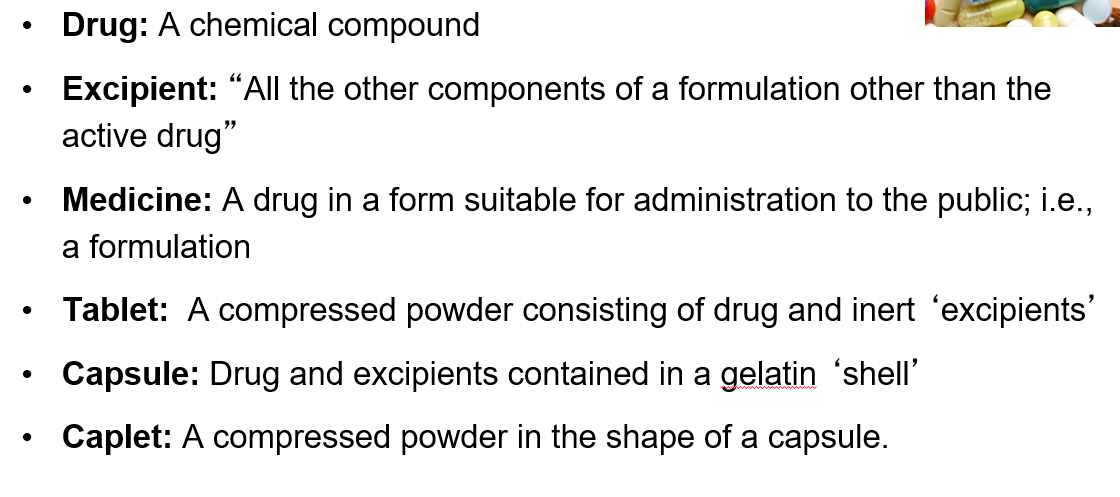
Basic definitions
What are the 8 different types of tablets?
1) Uncoated
2) Sugar-coated, film-coated, press-coated
3) Controlled release
4) Effervescent
5) Soluble
6) Chewable
7) Sublingual
😎 Lozenges
For types of tablets 1-4 why would an excipient need to be soluble?
As patients dislike the ‘grittiness’ of insoluble particulates
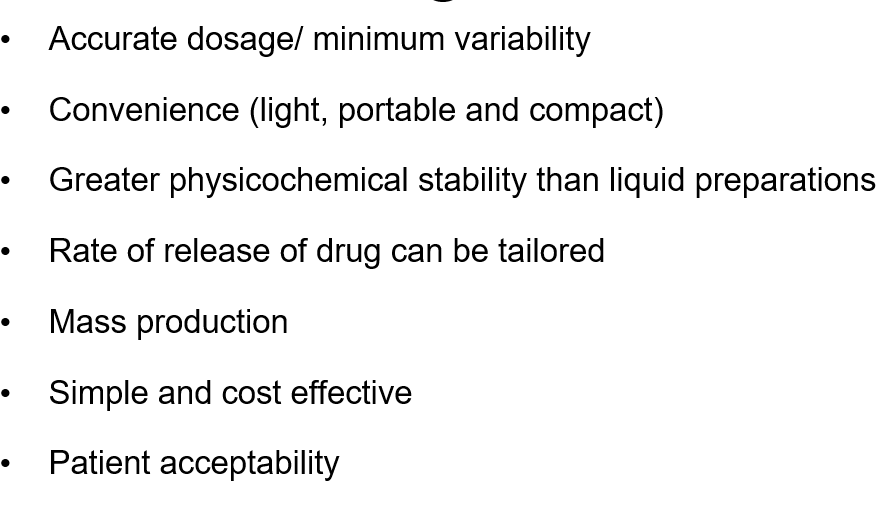
What are 7 advantages of tablets?
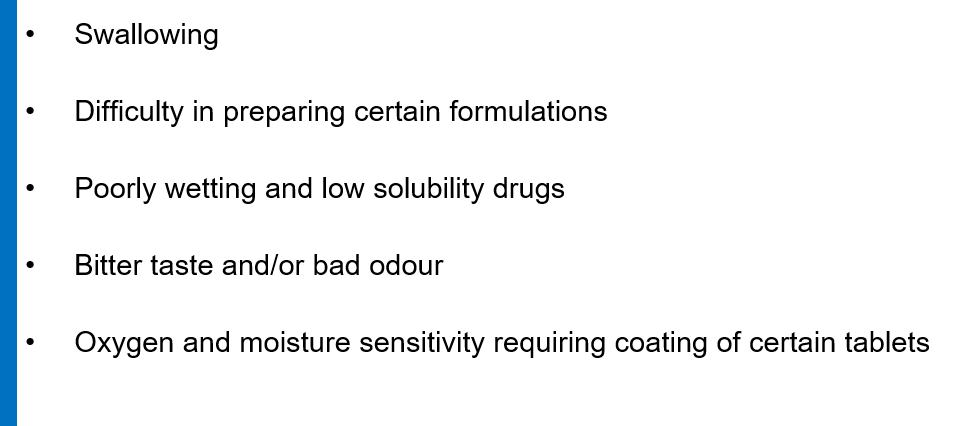
What are 5 disadvantages of tablets?
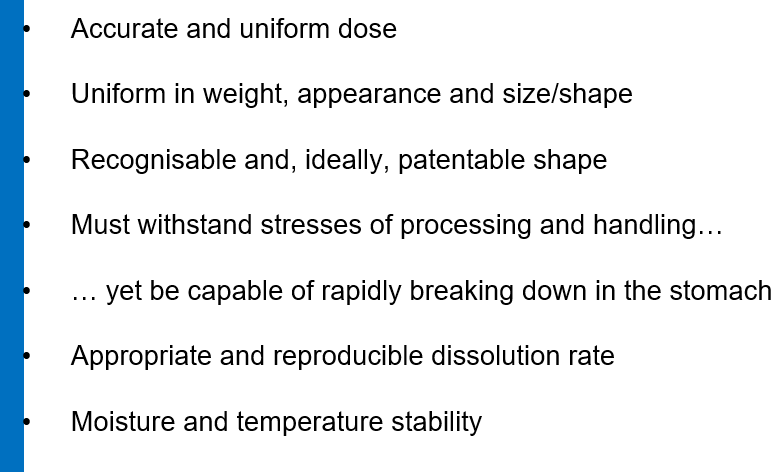
What are 7 essential properties of tablets?
For particulate systems to be made into tablets, what are 3 vital properties required?
1) The particles must be sufficiently free flowing
2) The particles, when subjected to a force, cohere to form a compact of adequate strength
3) Adhesion of the tablet must be avoided
Why are excipients therefore required?
As unfortunately relatively few active ingredients possess these essential properties
What are the 8 steps to make a tablet?
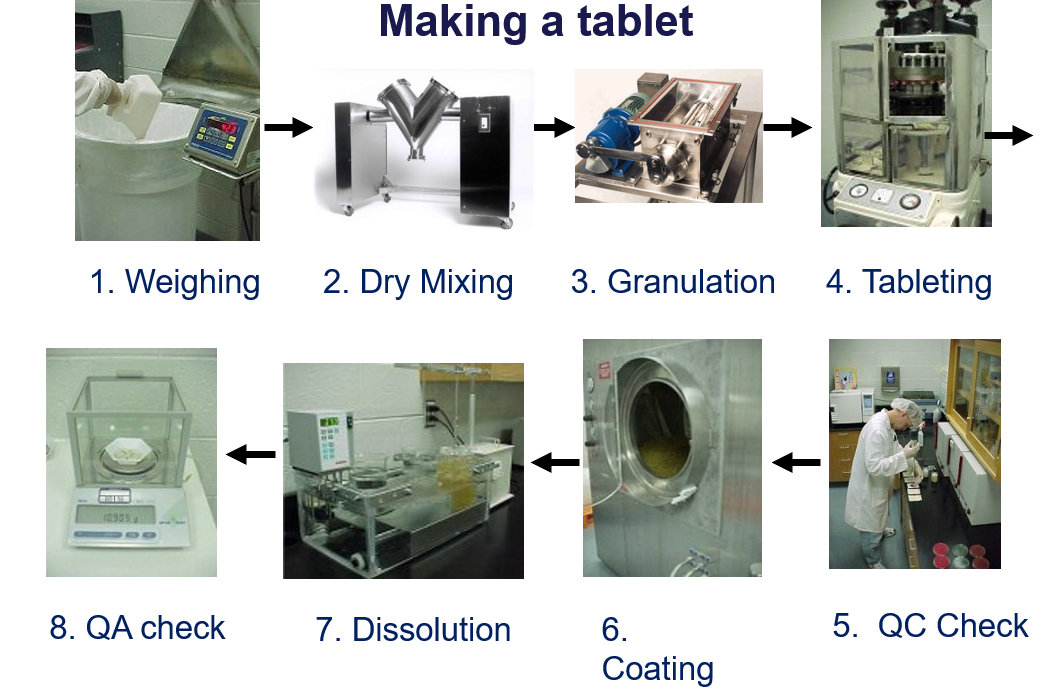
Principle of every tablet machine is the same. What are the same 4steps?
1) Powder is filled to a specific depth in a die
2) Formulation is compressed between two punches
3) Compression force is ended by the removal of the upper punch
4) Lower punch then moves upwards in the die to eject the tablet
Presses can be divided into what 2 types?
Single (or eccentric) punch presses and rotary presses
The compression of a powder bed can be defined by 3 stages
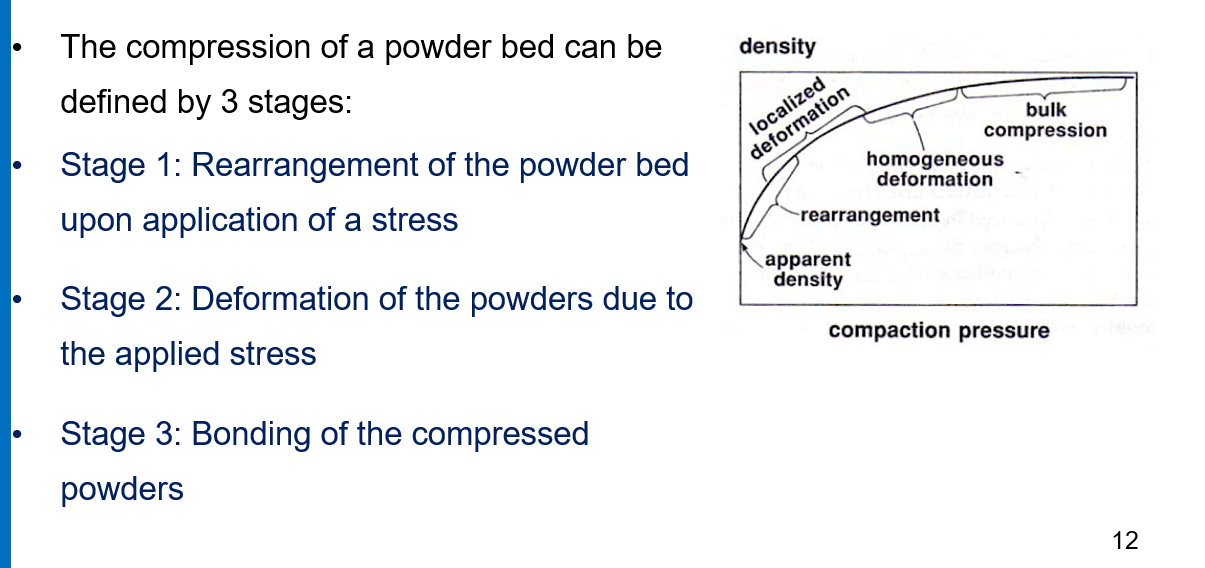
Stage 1 - Rearrangement
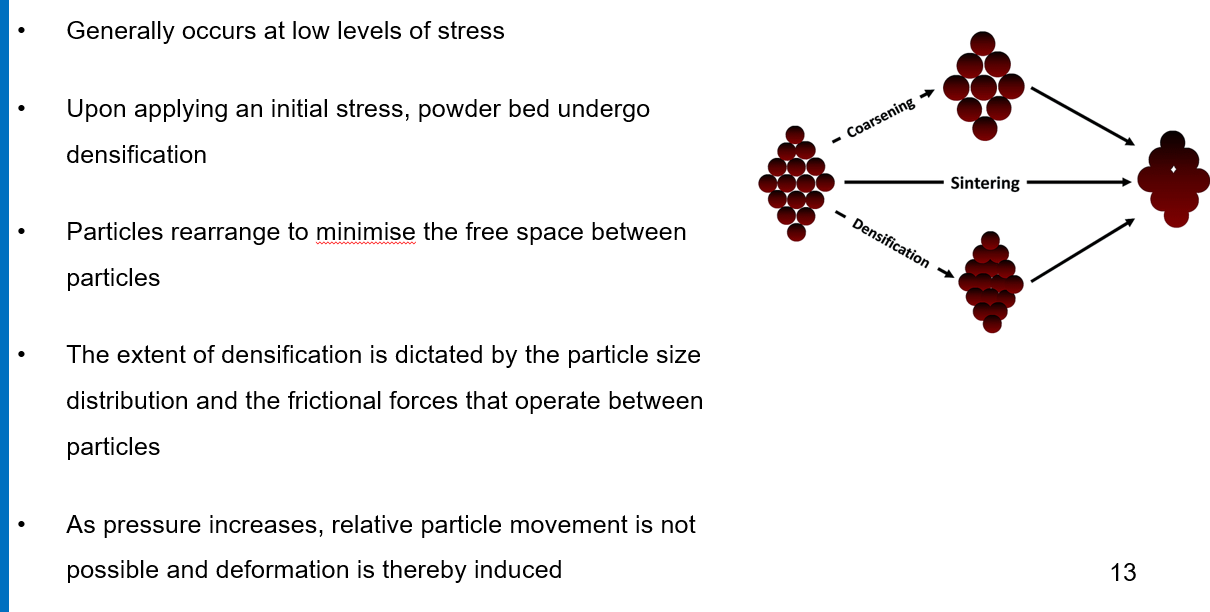
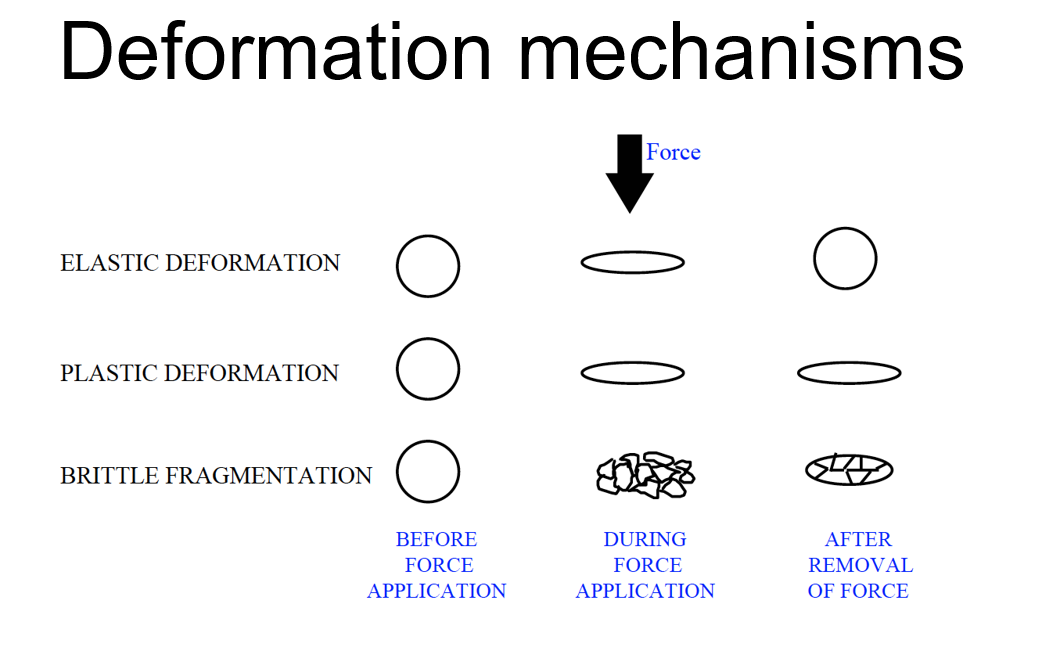
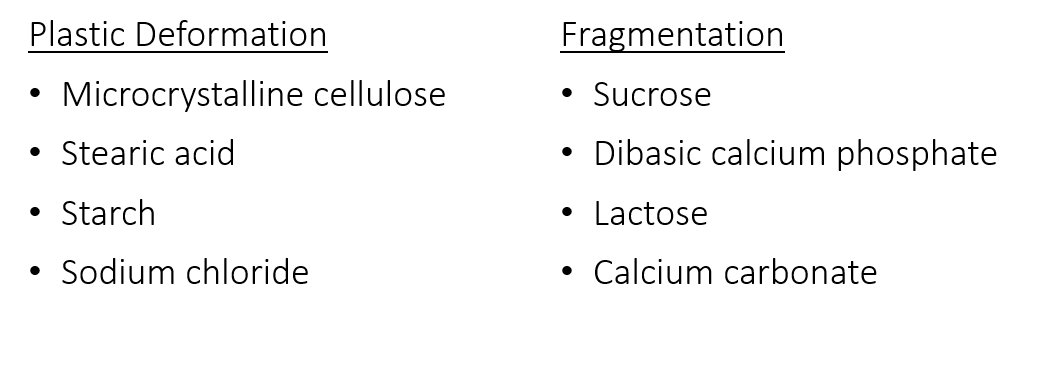
Stage 2 - Deformation
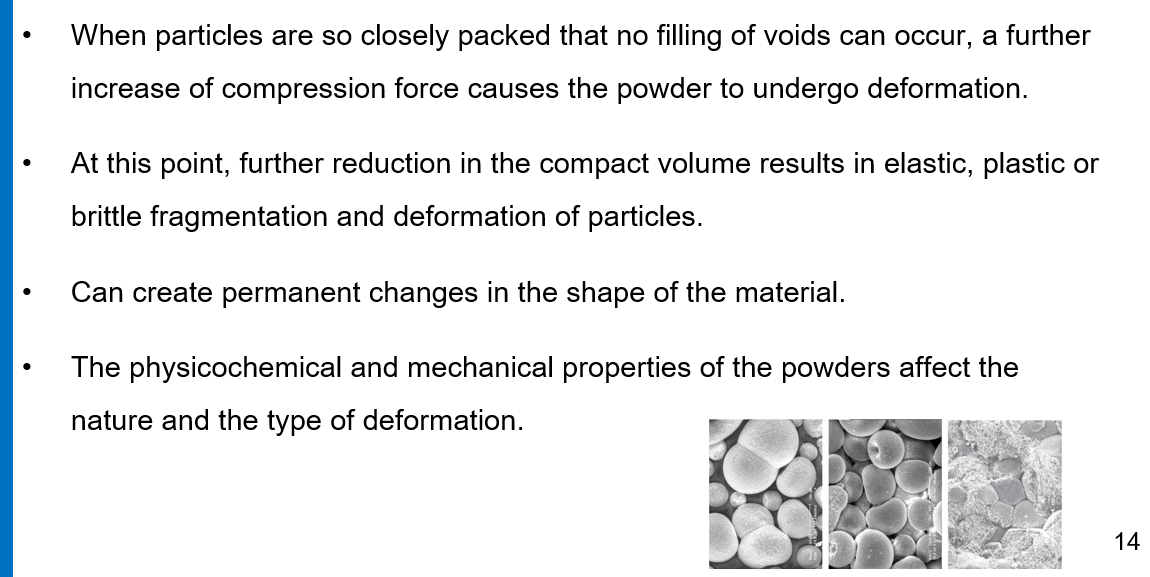
Deformation mechanisms
Picture showing material-dependent
Stage 3 - Bonding
Following application of a sufficient stress and deformation, interparticle bonding occurs resulting in the production of a tablet
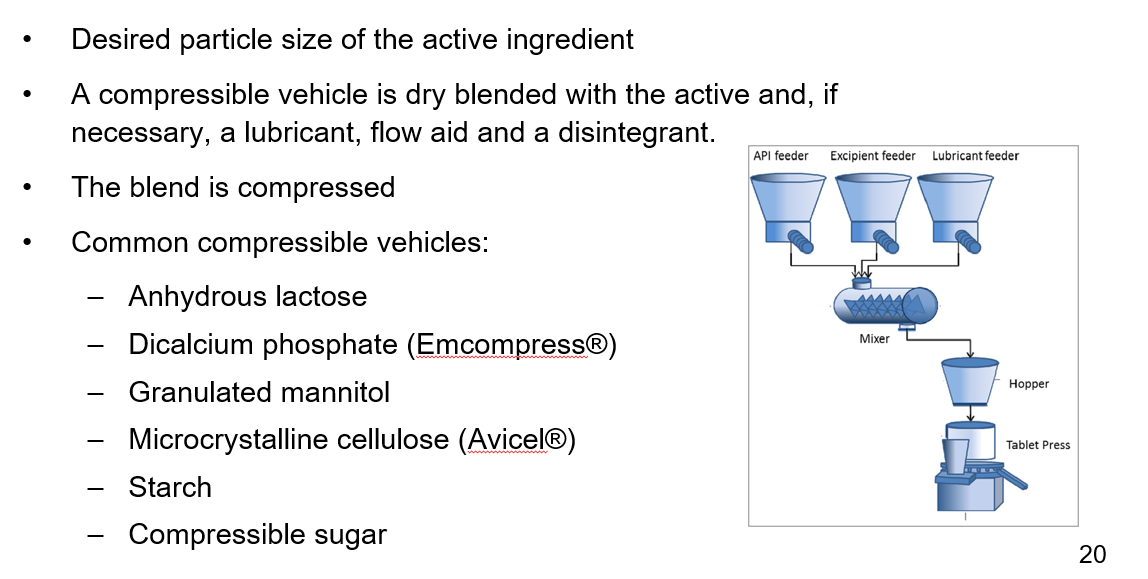
Compressed tablets - direct compression (easiest way)
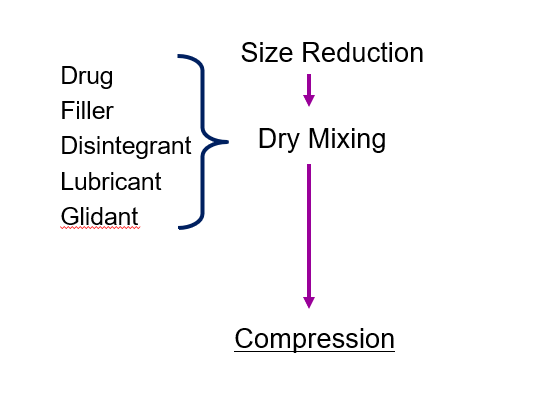
Dry mixing
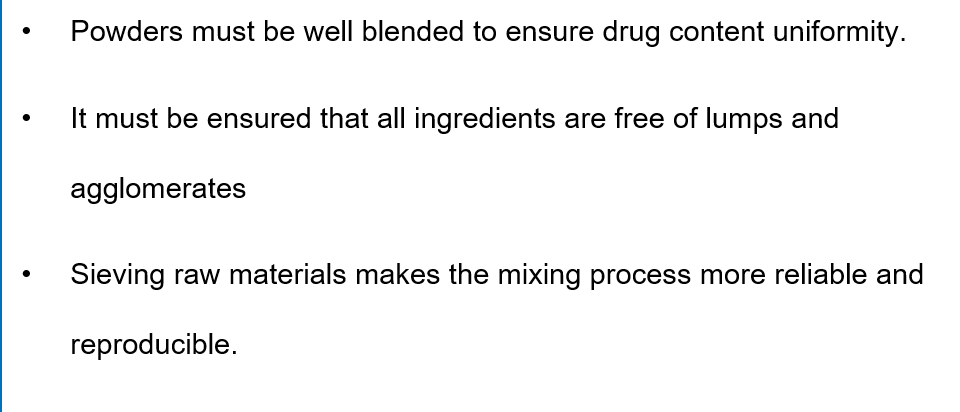
Direct compression procedure
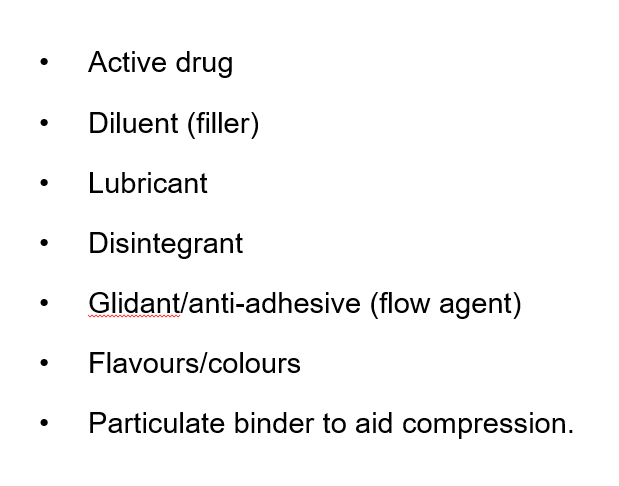
What are the 7 typical components of a direct compression tablet?
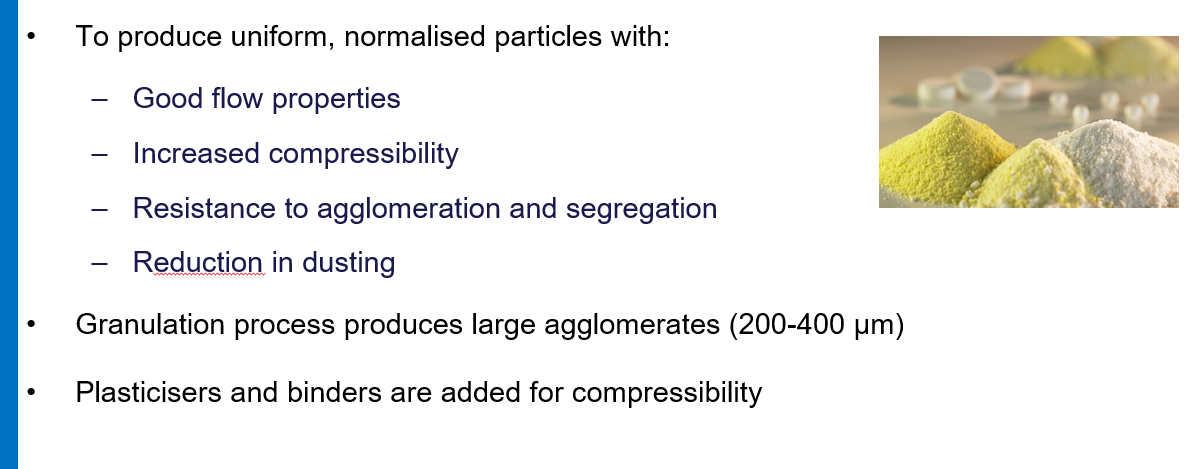
Granulation
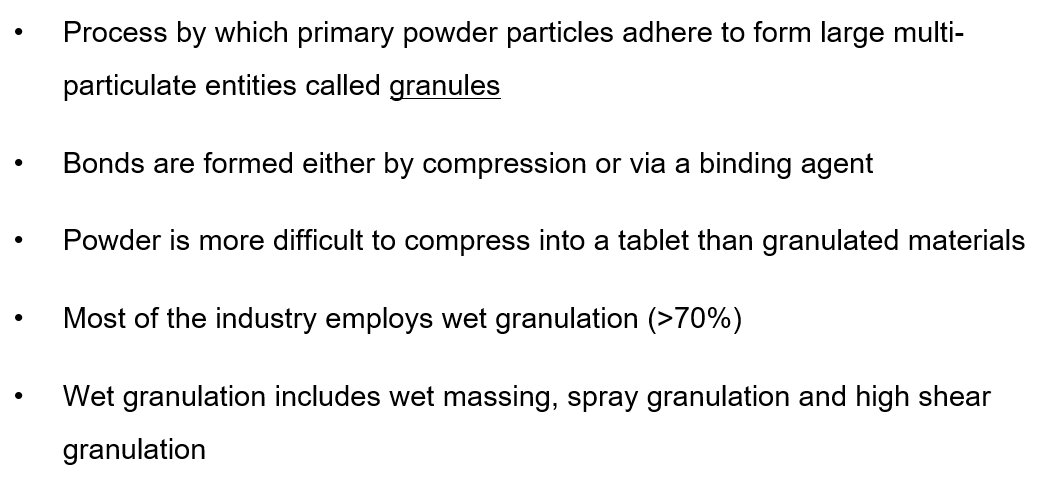
Why granulate?
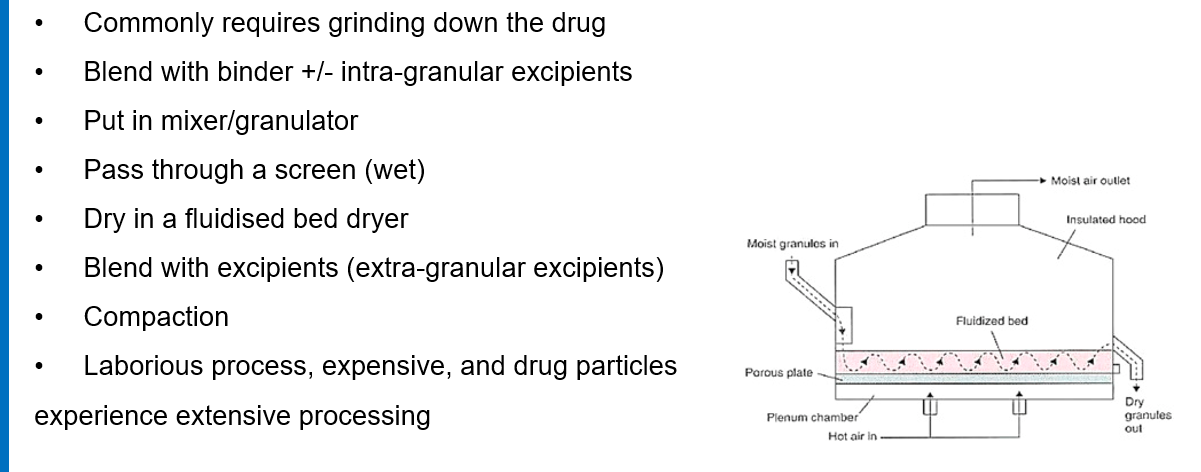
Wet granulation
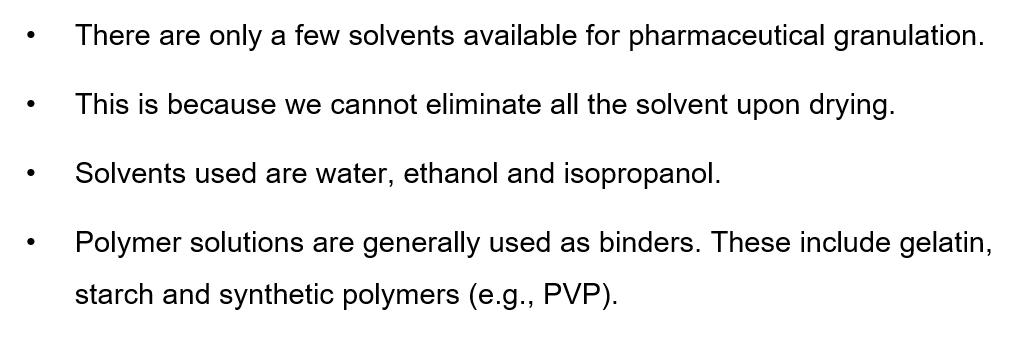
Granulating solvents
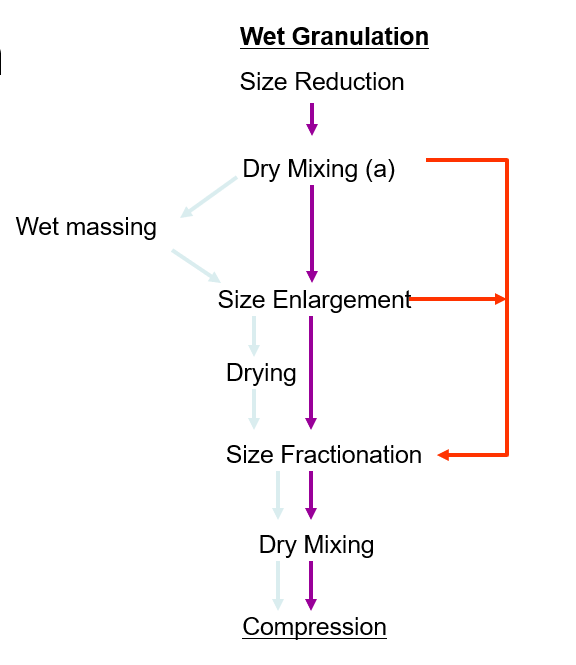
Picture showing tablet production
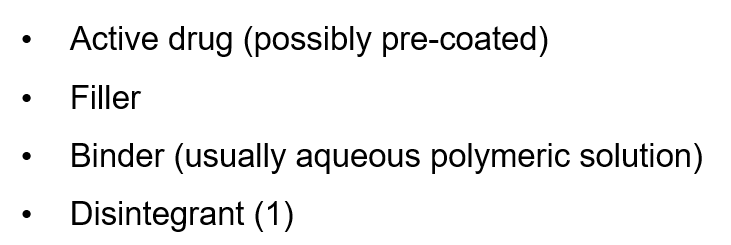
Intra-granular excipients
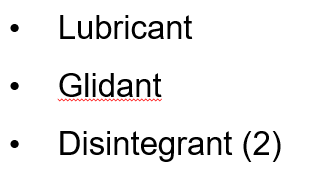
Extra-granular excipients
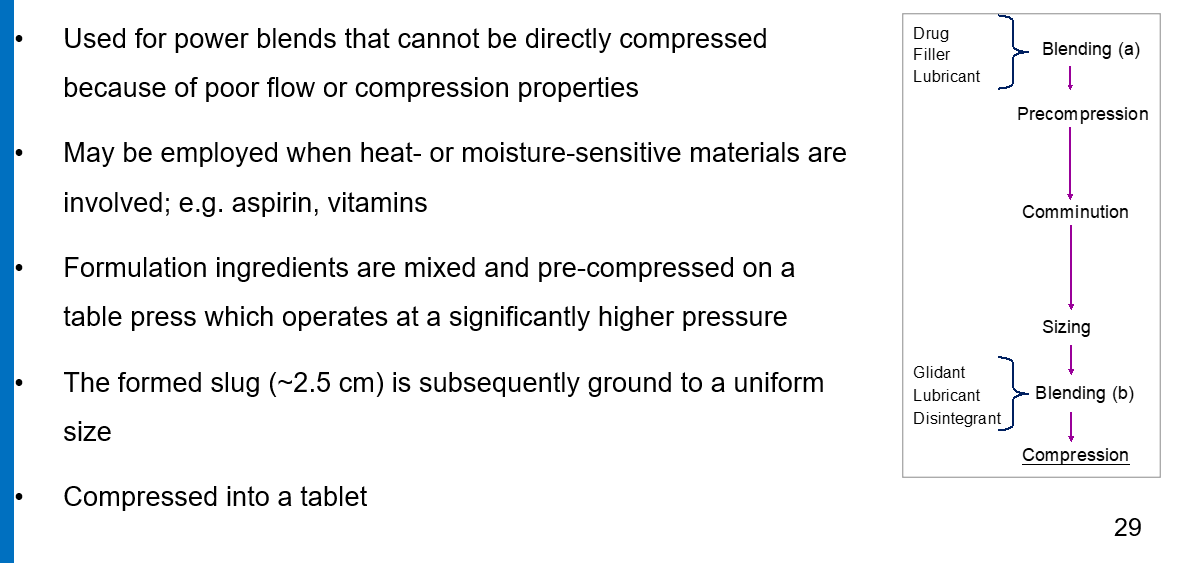
Dry granulation method (slugging)
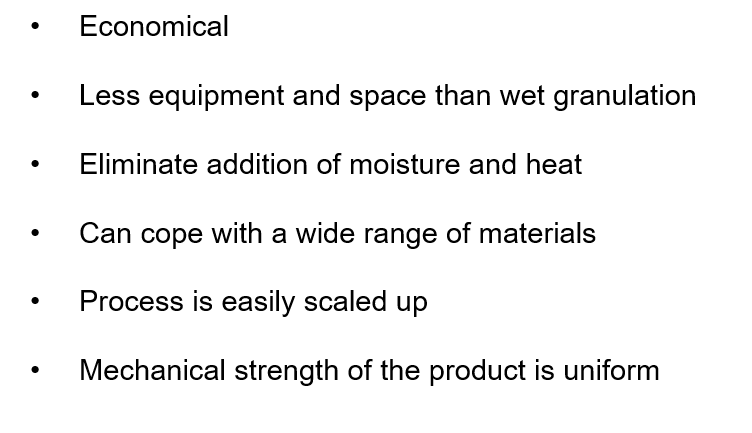
Advantages of dry granulation vs wet granulation