F5 T1 - Urban environments
 Call Kai
 Learn
Learn Practice Test
 Spaced Repetition
 Match
Match Flashcards
 Knowt Play
1/49

There's no tags or description
Looks like no tags are added yet.
Name | Mastery | Learn | Test | Matching | Spaced | Call with Kai |
|---|
No analytics yet
Send a link to your students to track their progress
50 Terms
urbanisation
the growth in the percentage of population that live in urban spaces (cities and towns)
how does urban areas differ from rural areas
economies
size
density of people and buildings are high
way of life
urban population statistic
1bn-4.75bn from 1960-2023
reason for increase in urbanisation
economic development → rural-to-urban migration (pull factors = higher paying jobs, push factors = poverty)
natural increase of population, better access to healthcare = less death rate
rural dilution
weakening of traditional rural culture and community due to the influx of urban lifestyles and residents
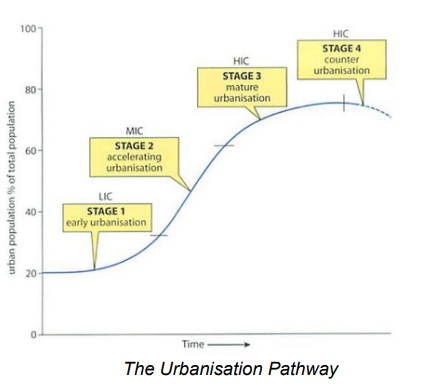
timeline of urban processes
agglomeration
suburbanisation
commuting
counter-urbanisation
urban regeneration
urban re-imaging
urbanisation of suburbs
agglomeration
definition - a collection of settlements that develop because of people and trade concentrating at favorable locations
results to urban settlements
suburbanisation
the outwards spread of urban areas creating new suburbs
→improvements in transpoert, overcrowding, congestion, migration of people from rural areas
conurbation
several towns, suburbs, cities join together into one vast continuous built-up area
counter-urbanisation
the momvement of businesses and residents from major cities to smaller cities/towns
results to rejuvanating of a city
dormitory settlements
only sleep in these settlements but commute to the same place of work in the main city and use urban services
processes of rejuvenating a city
urban re-imaging (changing look of an area)
urban rebranding (changing the way the area is know)
urban regeneration (addressing issues like housing shortages, environmental problems and economic decline within a city)
urbanisation of suburbs (surburbs of low-density development)
the urbanisation pathway
millionaire city
a city with more than 1m people
megacity
a city/urban area with a population greater than 10m
global/world cities
places of prestige, status, power and influence. critical hubs in the growing world economy (can be of any size)
megacity trends
1900 there were just 2 millionaire cities - paris and london. now, there are 400
reasons for growth of megacities
economic development attracts more migrants for work → further increases economic growth
population growth
economies of scale (shorter transport distances and communication results to financial savings which is an adv of cramming in a megacity)
multiplier effect (city prospers → more jobs, people come → development of services → more people come → more jobs needed)
Central business district (CBD)
main business center of a city or town, often referred to as “downtown”
(high conc. of buildings, offices, shops, financial institutions + oldest of the city)
why are similar land uses clustered together?
land values
a. land most expensive at center of city
b. ring roads (roads that encircle a city: form edge of city) are also high in value
c. radicle roads (roads that extend from the center of the city; like radius of circle) and ring roads cross eachother have highest accessibility
d. land sold to highest bidder, usually businesses
e. businesses able to affore same land-value so they tend to cluster togetherlocational needs
accessibility to customers and employees, availability of space for development and access to transpore therefore similar businesses share same locational needs
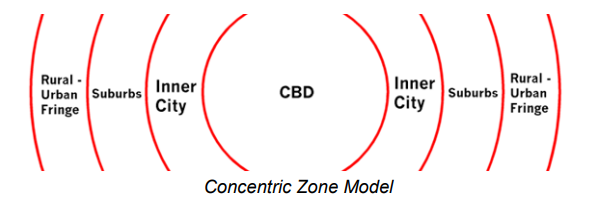
concentric zone model
core of CZM
oldest part of the city containing the CBD + earliest buildings
inner city ring of CZM
early suburbs, old housing, non-residential land use
suburban ring CZM
present suburbs with housing as dominant land use
urban urban fringe of CZM
countryside being ‘eroded’ by the outward spread of the built up area to provide new housing and some new non-residential uses
trend moving outwards from core of CZM
general age of built-up areas decrease
style of architecture changes
overal density of development changes
consequences of different land uses
people prefer to live closer to those of the same status as them, usually based on social class, type of occupation, ethnicity
wealth differences matter more as wealthiest buy large homes in best locations, poorest have no choice but to live in cramped or substandard housing in worst residential areas, many unable to buy a home and instead rent
rural-urban fringe/urban fringe
areas where the green fields and open spaces of the countryside meet the built-up parts of the towns and cities
what types of spaces are found in the rural-urban fringe
retail parks (large purpose-built superstores and shopping centres located at or just beyond urban fringe)
a. more people own cars, large car parks are free. city centre shoppers face traffic congestion and expensive parking
b. larger out-of-town centrers have well facilitated shopping malls which are pleasing for familiesindustrial estates
a. light industries, smaller and do not require much money as heavy industries
b. service industries (banking, hospitals)business parks (created by property developoers to attract firms needing office accommodation)
science parks (located close to universities or research centres, encouraging quaternary activities)
housing estates ( a group of hosues or apartments by local gov or private developer)
greenfield sites
undeveloped land that has never been built on
why are g.f sites in high demand
for housing, industry, shopping, recreation, and needs of public utilities
push factors for choosing g.f sites/ urban fringe
dissatisfaction with the city
housing old, congested, expensive
environmental pollution
shortage of land for new buildings
pull factors for g.f sites/ urban fringe
land is cheaper, houses larger
factories more spacious
closeness to main roads and motorways
developments on the outskirts favoured by personal mobility allowed by car drivers
suburban sprawl
spread of urbanized areas into rural landscape
advantages and disadvantages of greenfield sites
advantages:
cheap and rates of house building is faster
layout not hampered by previous development
healthier environment
proximity of countrysided, leisure and recreation
disadvantages
valuable farmland, recreational space and attractive scenery lost
noise and light pollution in surrounding countryside
encourages further suburban sprawl
advantages and disadvantages of brownfield sites
advantages:
reduces loss of countryside and land used for agricultural or recreational purposes
helps revive old and disused urban areas
services already in place
located near main areas of employment
disadvantages:
more expensive because old buildings need to be cleared and free of pollution
surrounded by rundown areas, not appealing for wealthier class as residential locations
higher levels of pollution; less healthy
not have good access by road
ecological footprint
impact of a person or community on the environment, expressed as the amount of land required to sustain their use of natural resources
how can urban living be more sustainable
using renewable rather than non-renewable resources
using energy more efficiently
relying on public transport
improving public infrasturcture - clean water, proper sanitation
improving social services and accessibility
improving quality of life esp for urban poor
reduce ecological footprints
stakeholders
groups of interested people and organisation involved in managing urban challenges
local stakeholders
slum residents
utility suppliers
representatives in parliament or on city councils
landowners and property developers
urban planners
national stakeholders
government
national charities
international stakeholders
international charities eg. oxfam
inter-governmental organisations igos eg the world bank
deprivation
when a persons wellbeing falls below a level which is generally thought of as an acceptable minimum
uks multiple deprivation index
income
employment
health
education
access to housing and services
crime
living environment
symptoms of deprivation and poverty
physical signs of poor housing eg. slums
unattractive living env eg. noise, graffiti
lack of quality services in the area eg. schools, sport facilities
high incidence of unemployment and single-parent families
high incidence of crime and domestic disputes, and anti social behaviour
urban regeneration
investment of capital in the revival of old urban areas by either improving what is there or clearing it away and rebuilding
urban re-imaging
changing the image and reputation of an urban area and the way people view it
rebranding
to help sell an urban area to a new target market
segregation
-of land use due to the differences in urban land values
desalination
removal of salt from sea water to produce fresh drinking water