A&P I ch. 22
 Call Kai
 Learn
Learn Practice Test
 Spaced Repetition
 Match
Match Flashcards
 Knowt Play
1/158

There's no tags or description
Looks like no tags are added yet.
Name | Mastery | Learn | Test | Matching | Spaced | Call with Kai |
|---|
No analytics yet
Send a link to your students to track their progress
159 Terms
What are the major functions of the respiratory system?
To supply the body with O2 for cellular respiration and dispose of CO2, a waste product of cellular respiration.
How are the respiratory and circulatory systems related?
They are closely coupled, with the respiratory system facilitating gas exchange and the circulatory system transporting gases.
What are the four processes involved in respiration?
1. Pulmonary ventilation (breathing) 2. External respiration 3. Transport of gases in blood 4. Internal respiration.
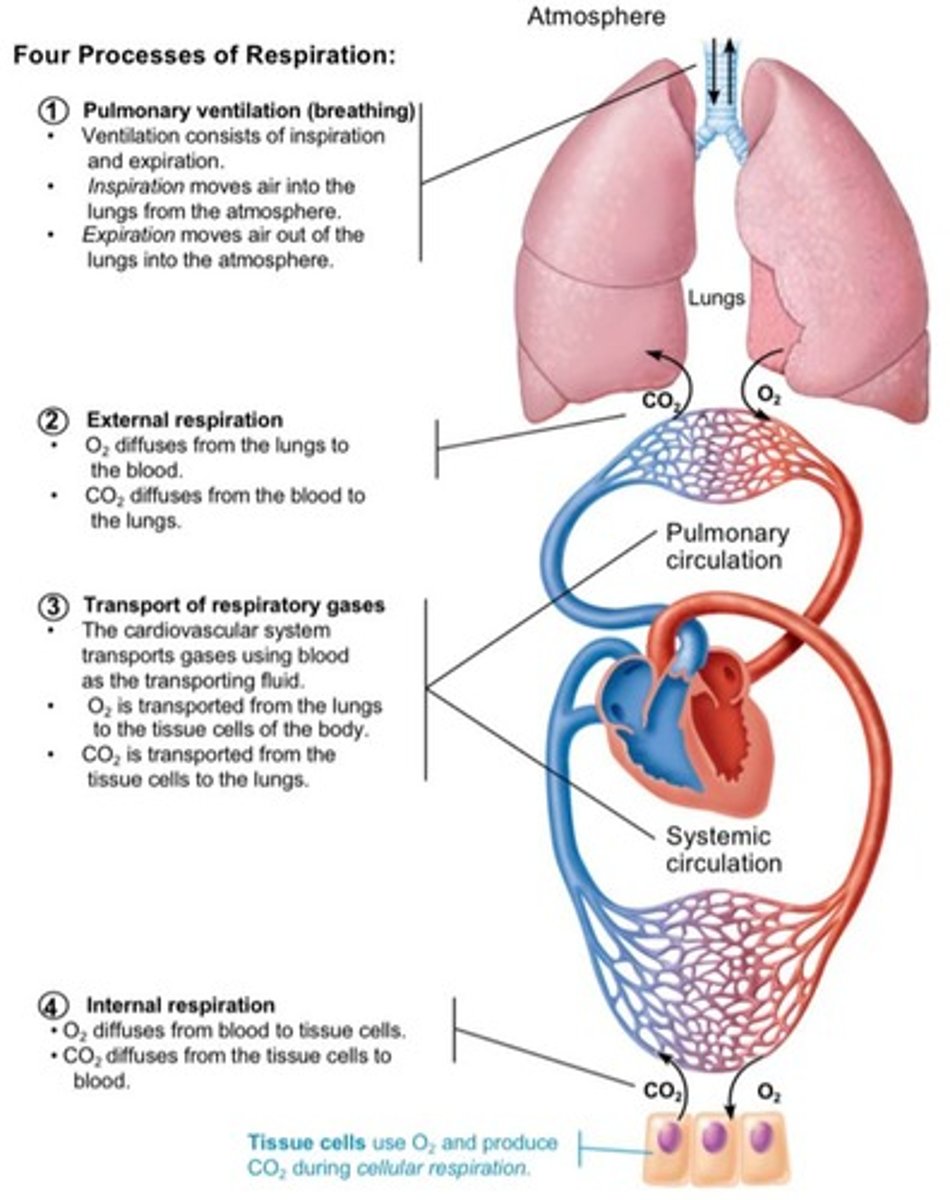
What is pulmonary ventilation?
The movement of air into and out of the lungs.
What occurs during external respiration?
The exchange of O2 and CO2 between the lungs and blood.
What is internal respiration?
The exchange of O2 and CO2 between systemic blood vessels and tissues.
What are the major organs of the upper respiratory system?
Nose, nasal cavity, paranasal sinuses, and pharynx.
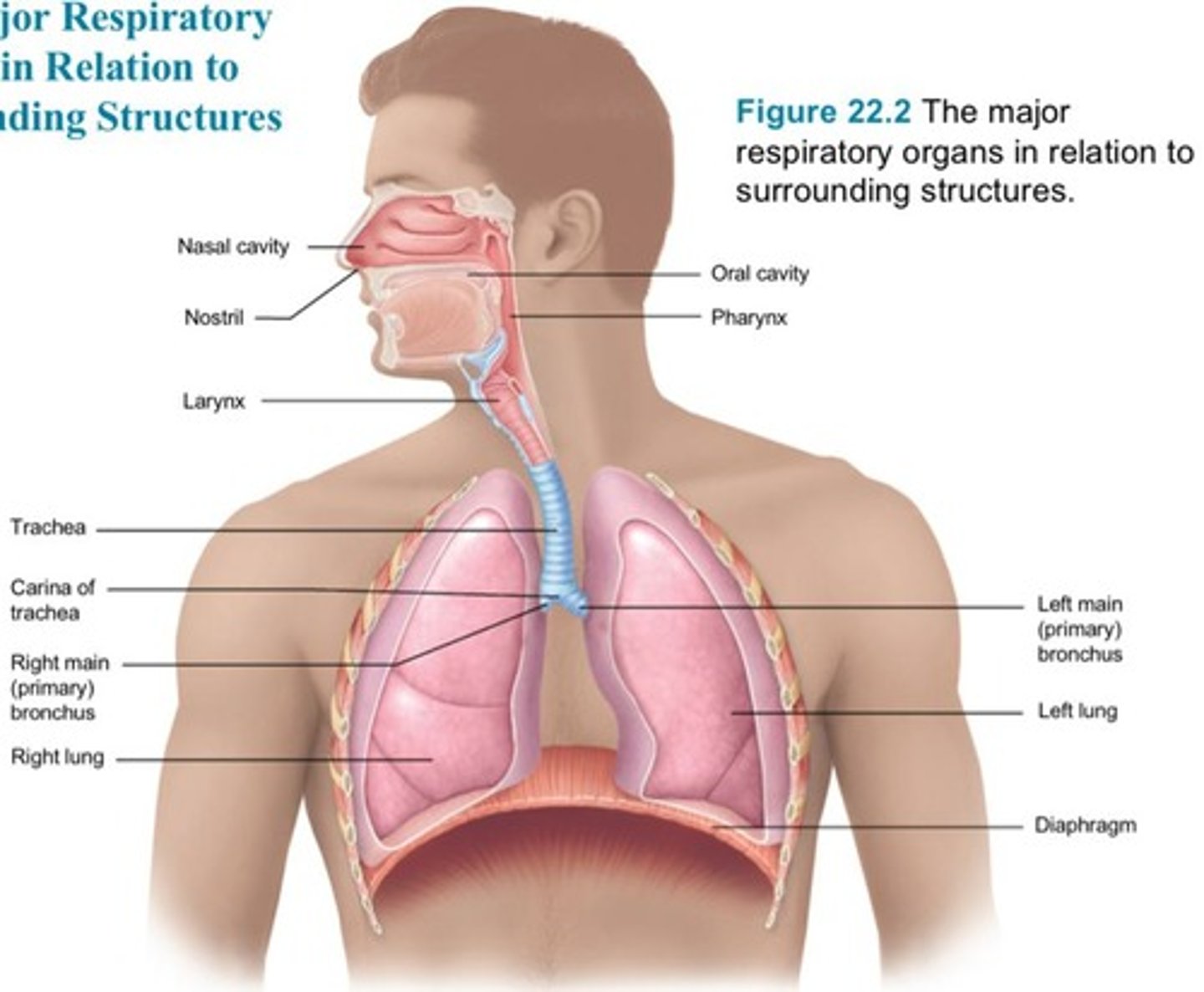
What are the major organs of the lower respiratory system?
Larynx, trachea, bronchi, and lungs.
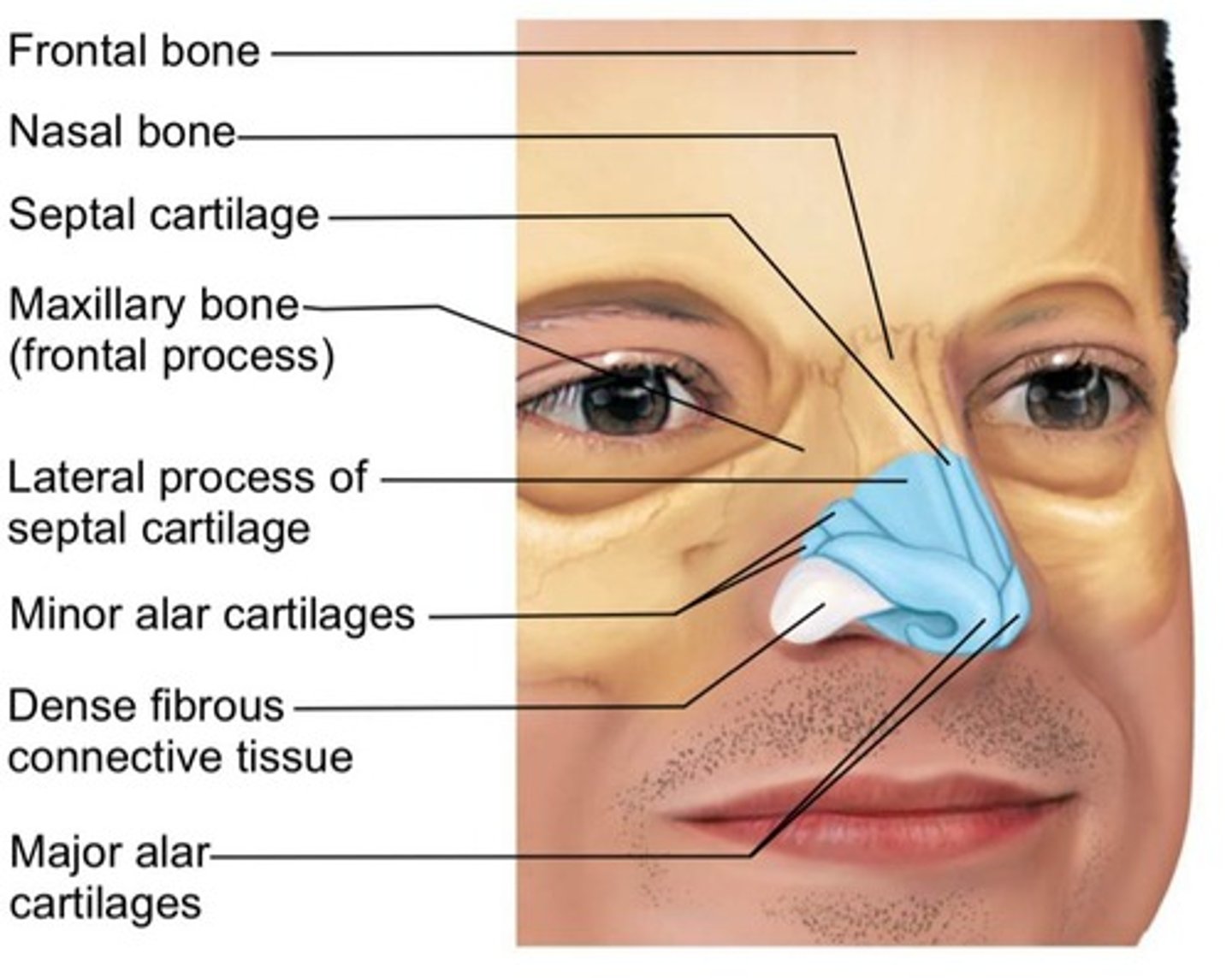
What are the functions of the nose?
Provides an airway for respiration, moistens and warms air, filters and cleans inspired air, serves as a resonating chamber for speech, and houses olfactory receptors.
What divides the nasal cavity?
The midline nasal septum.
What are the paranasal sinuses and their functions?
Sinuses located in frontal, sphenoid, ethmoid, and maxillary bones that lighten the skull, secrete mucus, and help warm and moisten air.
What is rhinitis?
Inflammation of the nasal mucosa that can lead to infections spreading to the throat and chest.
What is the pharynx?
A funnel-shaped muscular tube that connects the nasal cavity and mouth to the larynx and esophagus.
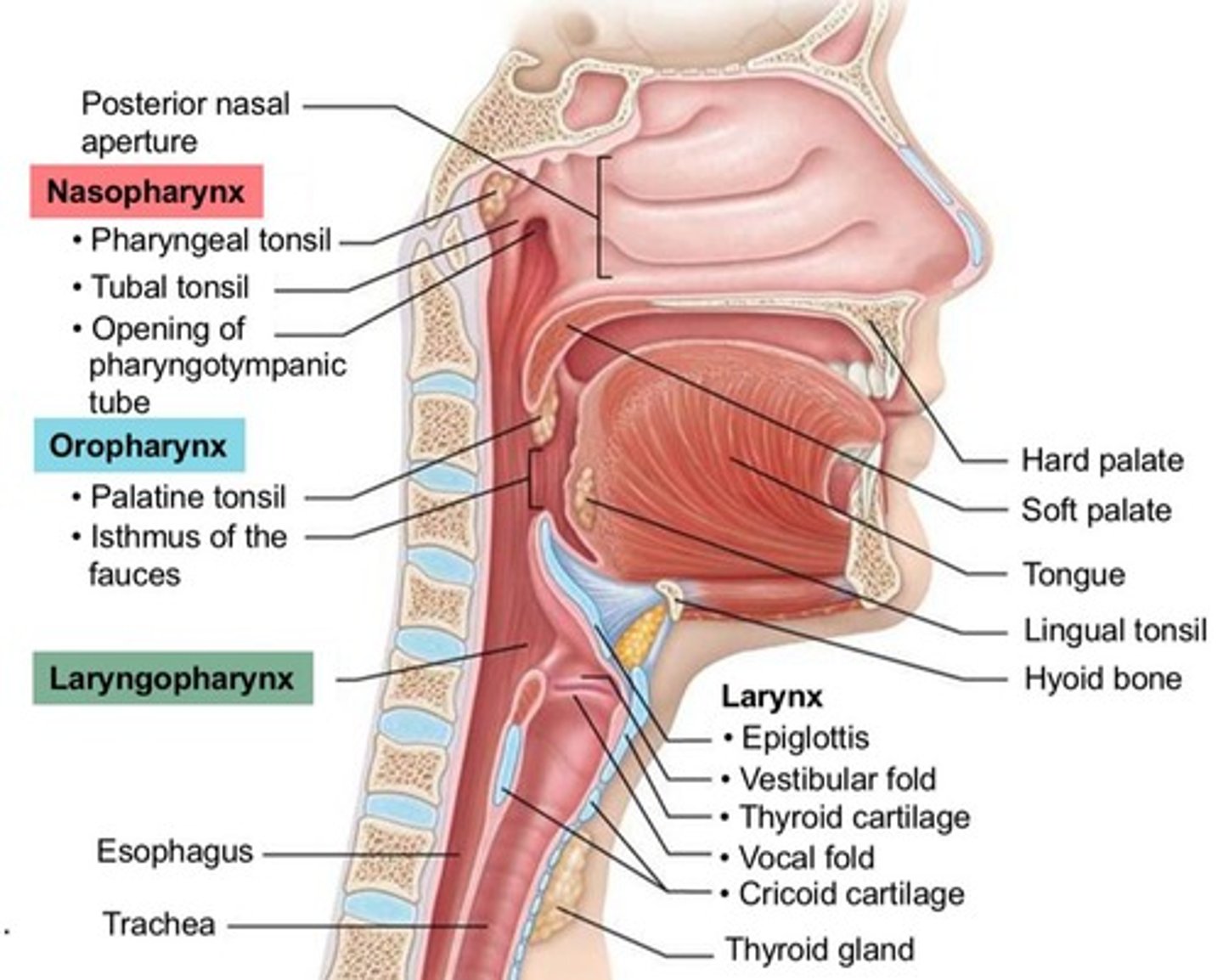
What are the three regions of the pharynx?
Nasopharynx, oropharynx, and laryngopharynx.
What is the function of the nasopharynx?
Air passageway posterior to the nasal cavity, lined with pseudostratified columnar epithelium.
What is the function of the oropharynx?
Passageway for food and air from the soft palate to the epiglottis, lined with stratified squamous epithelium.
What is the function of the laryngopharynx?
Passageway for food and air, extending to the larynx where it is continuous with the esophagus.
What is the larynx and its primary functions?
The voice box that provides a patent airway, routes air and food into proper channels, and produces voice.
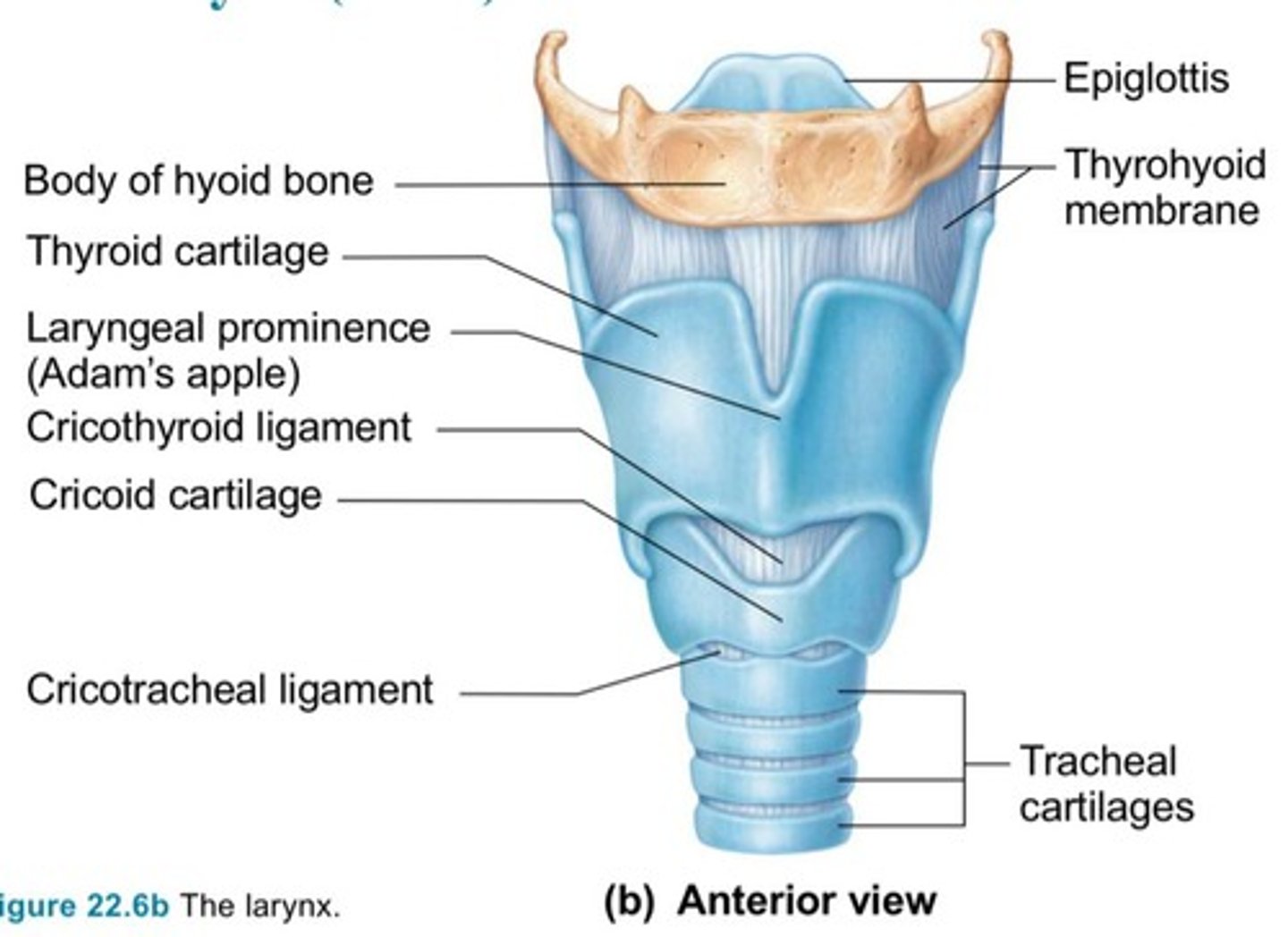
What are the two zones of the lower respiratory system?
Respiratory zone (site of gas exchange) and conducting zone (transports gas to and from exchange sites).
What structures are included in the respiratory zone?
Respiratory bronchioles, alveolar ducts, and alveoli.
What is the primary role of the conducting zone?
To cleanse, warm, and humidify air as it is transported to and from gas exchange sites.
What is the function of the epiglottis?
It covers the laryngeal inlet during swallowing.
What type of cartilage is the epiglottis made of?
Elastic cartilage.
What are vocal folds also known as?
True vocal cords.
What determines the pitch of the voice?
The length and tension of the vocal cords.
What is the glottis?
The opening between the vocal folds.
What causes laryngitis?
Inflammation of the vocal folds, often due to viral infections.
What is the trachea commonly known as?
The windpipe.
How long is the trachea?
About 4 inches long.
What are the three layers of the trachea's wall?
Mucosa, submucosa, and adventitia.
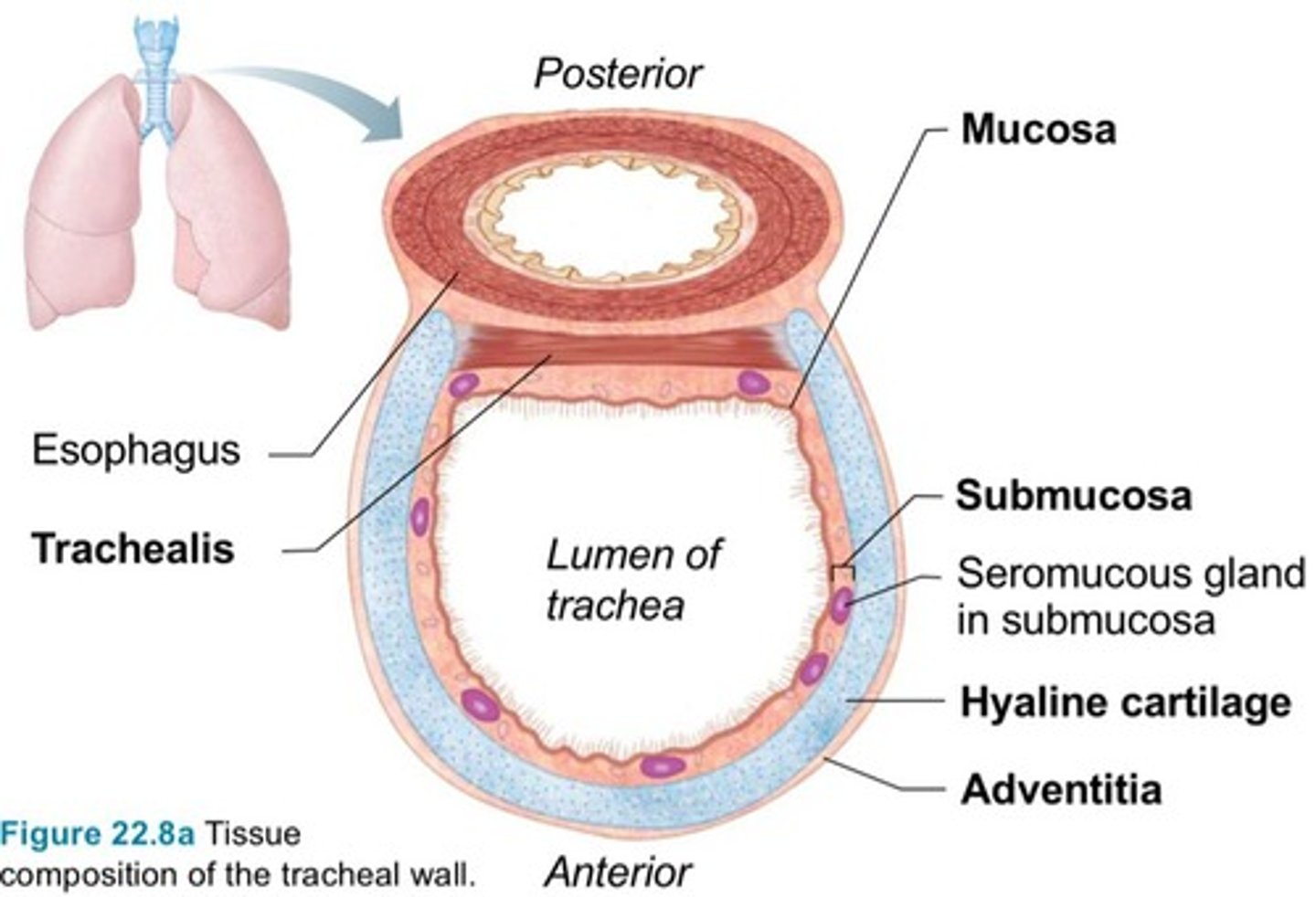
What is the function of the trachealis muscle?
It connects the posterior parts of the cartilage rings and contracts during coughing.
What is the carina?
The last tracheal cartilage that is expanded and sensitive; triggers coughing if irritated.
What is a Heimlich maneuver used for?
To expel an obstructing piece of food from the trachea.
What are the two main bronchi?
The right and left main bronchi that branch from the trachea.
How many lobar bronchi are there on the right and left sides?
Three on the right and two on the left.
What is the smallest branch of the bronchial tree?
Terminal bronchioles.
What replaces cartilage in bronchioles?
Elastic fibers.
What is the primary function of alveoli?
Sites of actual gas exchange.
What are the two circulations that perfuse the lungs?
Pulmonary circulation and bronchial circulation.
What is pleurisy?
Inflammation of the pleurae that can cause pain and breathing difficulties.
What is the role of pleural fluid?
It provides lubrication and assists in lung expansion and recoil.
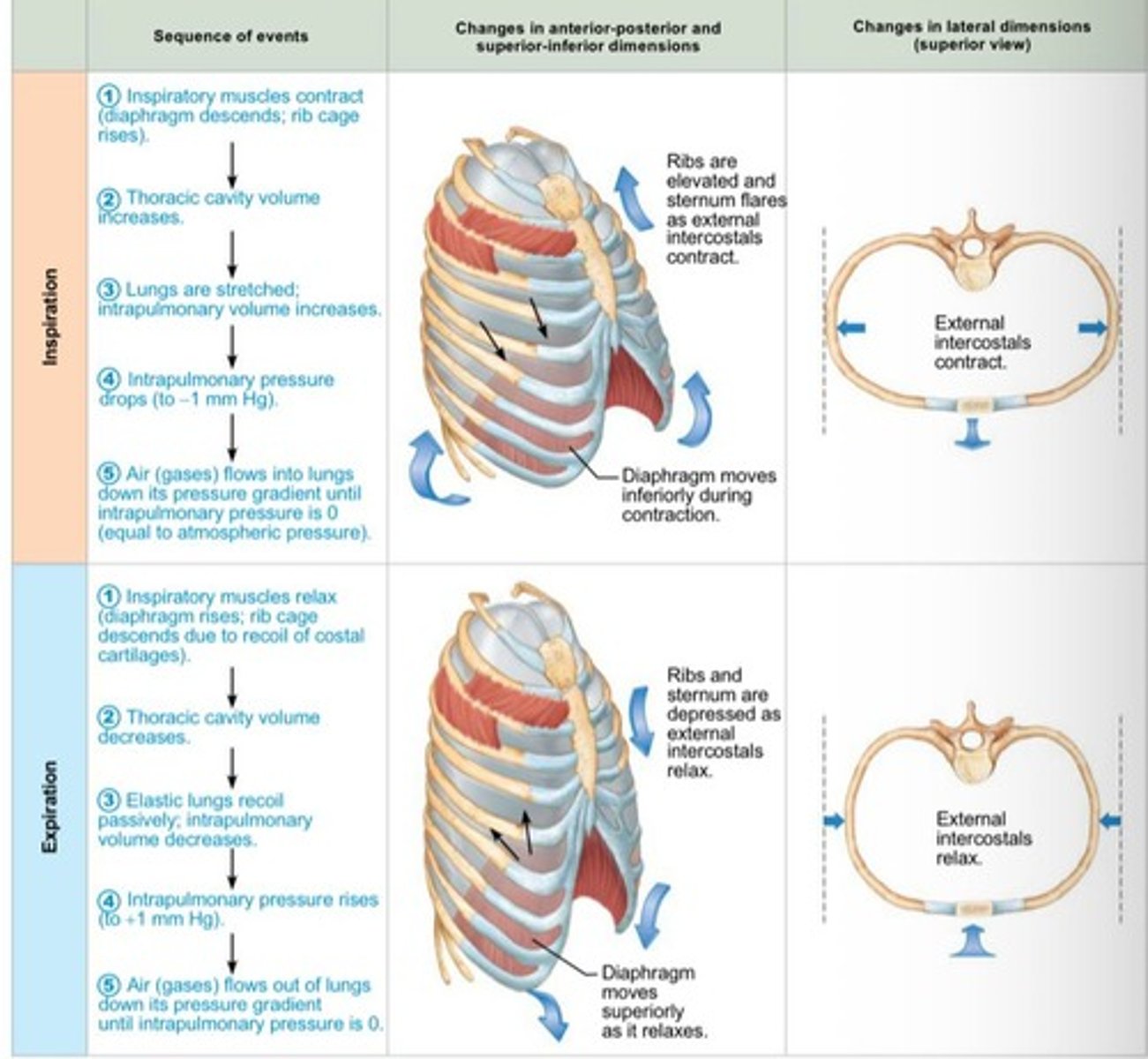
What are the phases of pulmonary ventilation?
Inspiration (gases flow into lungs) and expiration (gases exit lungs).
What is atmospheric pressure at sea level?
760 mm Hg.
What is intrapulmonary pressure?
The pressure in the alveoli that fluctuates with breathing.
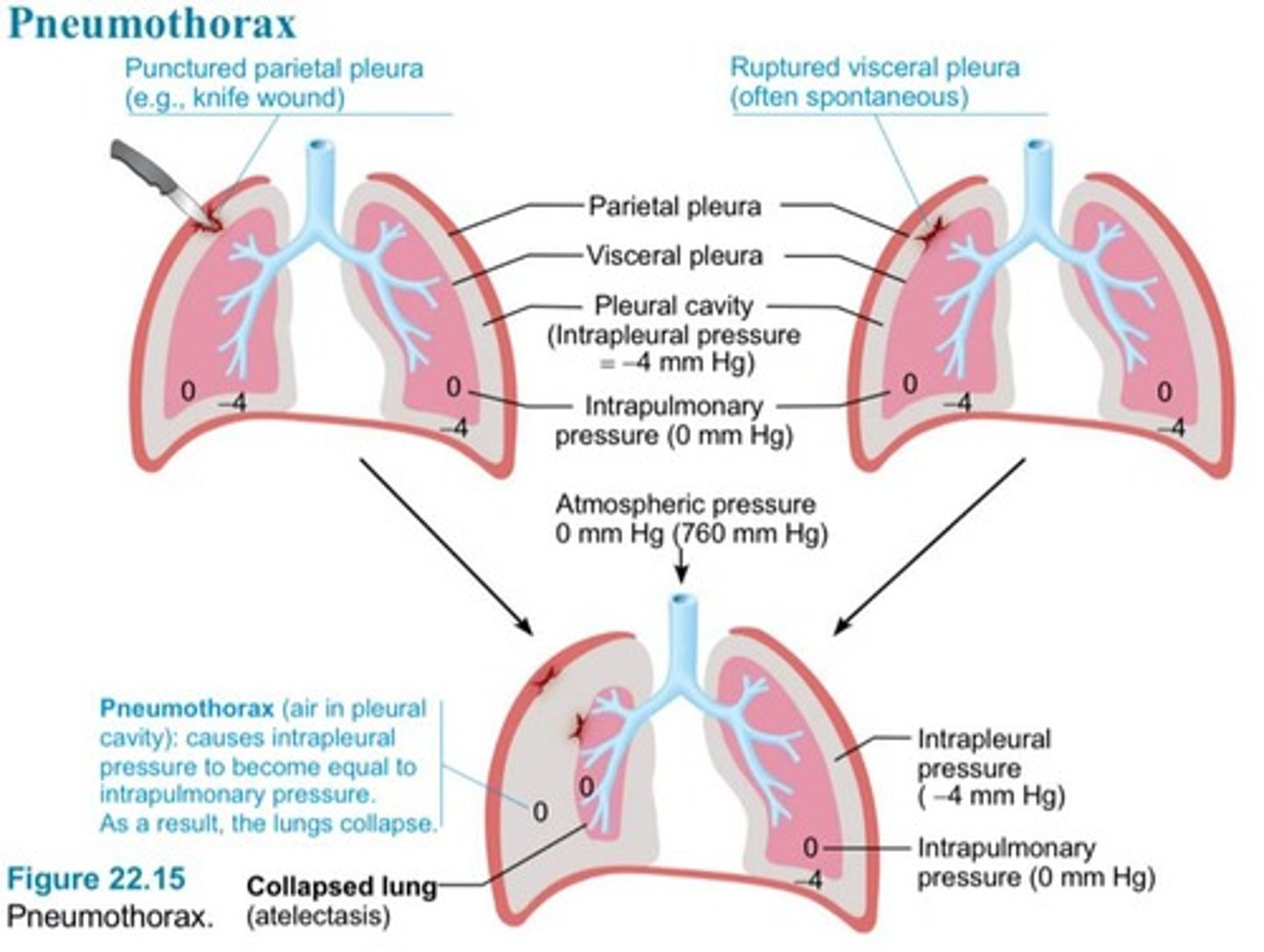
What is intrapleural pressure?
The pressure in the pleural cavity, which is always negative.
What happens if fluid accumulates in the pleural cavity?
Positive intrapleural pressure develops, potentially causing lung collapse.
What is the significance of the cardiac notch?
It is a concavity in the left lung for the heart to fit into.
How many bronchopulmonary segments are there in the right and left lungs?
10 on the right and 8-10 on the left.
What is the primary function of bronchial arteries?
To supply oxygenated blood to lung tissue.
What occurs during expiration?
Gases exit the lungs.
How is sound produced by the vocal folds?
Folds vibrate as air rushes up from the lungs.
What is laryngitis?
Inflammation of the vocal folds that causes swelling and interferes with vibrations.
What are the three layers of the trachea wall?
Mucosa, submucosa, and adventitia.
What are the two main types of bronchi?
Right main bronchus and left main bronchus.
How many lobar bronchi are there on the right side?
Three lobar bronchi.
What are bronchioles?
Air passages less than 1 mm in diameter.
What is the respiratory zone?
The area where gas exchange occurs, beginning at the respiratory bronchioles.
What is the hilum of the lung?
The site for entry/exit of blood vessels, bronchi, lymphatic vessels, and nerves.
What is the difference between pulmonary and bronchial circulation?
Pulmonary circulation delivers blood for oxygenation, while bronchial circulation supplies oxygenated blood to lung tissue.
What happens to cilia in smokers?
Smoking inhibits and destroys cilia, leading to mucus accumulation.
What is the effect of intrapleural pressure during breathing?
It is always negative and fluctuates with breathing.
What are the two inward forces that promote lung collapse?
The lungs' natural tendency to recoil and surface tension in the alveoli.
What is the function of the diaphragm in breathing?
It contracts to allow gases to flow into the lungs during inspiration.
What is the significance of the bronchial tree?
It describes the branching of air passages from the trachea to the bronchioles.
What is the role of smooth muscle in bronchioles?
It provides resistance to air passage.
What is the primary cause of laryngitis?
Most often caused by viral infections.
What is the structure of the trachea?
It is about 4 inches long, 3/4 inch in diameter, and very flexible.
What is the cardiac notch?
A concavity in the left lung for the heart.
What is surface tension of alveolar fluid?
Surface tension pulls on alveoli to try to reduce alveolar size.
What is transpulmonary pressure?
Transpulmonary pressure = (Ppul - Pip); it keeps lung spaces open and prevents collapse.
What happens when Pip equals Ppul or Patm?
The lungs will collapse.
What is atelectasis?
Lung collapse due to plugged bronchioles or pneumothorax.
How is pneumothorax treated?
By removing air with chest tubes.
What does Boyle's law state?
Pressure (P) varies inversely with volume (V); P1V1 = P2V2.
What muscles are involved in inspiration?
Inspiratory muscles include the diaphragm and external intercostals.
What happens to intrapulmonary pressure during inspiration?
It drops, causing air to flow into the lungs.
What is the normal process of expiration?
Quiet expiration is normally passive, involving relaxation of inspiratory muscles and lung recoil.
What is the role of accessory muscles during forced inspiration?
They further increase thoracic cage size, creating a larger pressure gradient for more air intake.
What is tidal volume (TV)?
The amount of air moved into and out of the lung with each breath, averaging ~500ml.
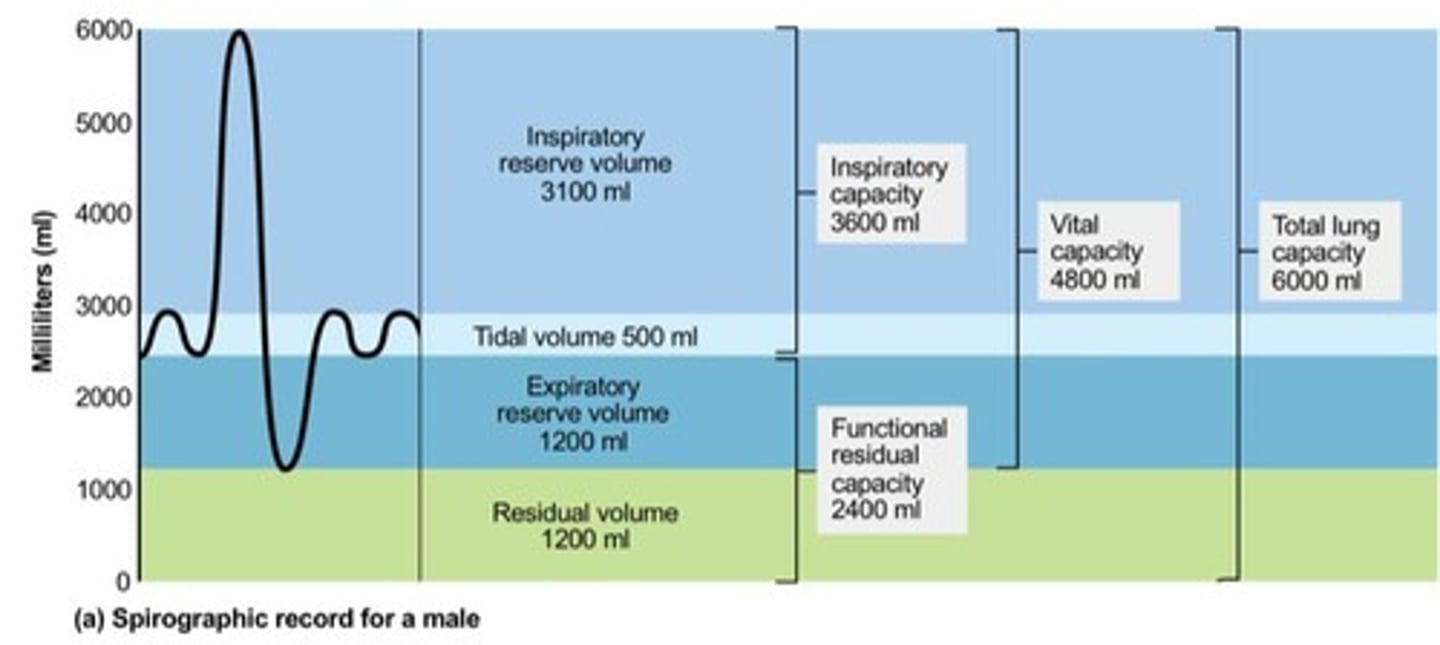
What is inspiratory reserve volume (IRV)?
The amount of air that can be inspired forcibly beyond the tidal volume (2100-3200 ml).
What is expiratory reserve volume (ERV)?
The amount of air that can be forcibly expelled from the lungs (1000-1200 ml).
What is residual volume (RV)?
The amount of air that always remains in the lungs to keep alveoli open.
What is vital capacity (VC)?
The sum of tidal volume (TV), inspiratory reserve volume (IRV), and expiratory reserve volume (ERV).
What is total lung capacity (TLC)?
The sum of all lung volumes: TV + IRV + ERV + RV.
What is anatomical dead space?
Air that remains in passageways and does not contribute to gas exchange (~150 ml out of 500 ml TV).
What is the difference between obstructive and restrictive pulmonary diseases?
Obstructive diseases increase airway resistance (e.g., bronchitis), while restrictive diseases reduce lung capacity (e.g., tuberculosis).
What is external respiration?
The diffusion of gases between blood and lungs.
What does Dalton's law of partial pressures state?
Total pressure exerted by a mixture of gases is equal to the sum of pressures exerted by each gas.
What is Henry's law?
Each gas will dissolve in a liquid in proportion to its partial pressure.
What is the significance of surfactant in the lungs?
Surfactant reduces surface tension in alveoli, preventing collapse.
What is the effect of chronic inflammation on lung compliance?
It can decrease lung compliance due to the formation of nonelastic scar tissue.
What can cause decreased compliance of the thoracic wall?
Deformities of the thorax, ossification of costal cartilage, or paralysis of intercostal muscles.
What is the purpose of pulmonary function tests?
To measure respiratory volumes and capacities, providing information on a person's respiratory status.
What happens if Pip equals Ppul?
The lungs will collapse.
What happens during expiration?
It is normally a passive process where inspiratory muscles relax and thoracic cavity volume decreases.
What are nonrespiratory air movements?
Processes that move air into or out of lungs besides breathing, like coughing and sneezing.
What is the difference between obstructive and restrictive pulmonary disease?
Obstructive disease increases airway resistance, while restrictive disease reduces lung expansion.
What is forced vital capacity (FVC)?
The amount of gas forcibly expelled after taking a deep breath.
What is forced expiratory volume (FEV)?
The amount of gas expelled during a specific time interval of FVC.
What does Dalton's law of partial pressures state?
Total pressure exerted by a mixture of gases equals the sum of pressures exerted by each gas.