Lab Practical 2 Exam Review!
 Call Kai
 Learn
Learn Practice Test
 Spaced Repetition
 Match
Match Flashcards
 Knowt Play
1/41

There's no tags or description
Looks like no tags are added yet.
Name | Mastery | Learn | Test | Matching | Spaced | Call with Kai |
|---|
No analytics yet
Send a link to your students to track their progress
42 Terms
what is the agonist and what is the antagonist muscle in flexion/ extension of the forearm?
Flexion:
agonist- biceps brachii
antagonist- triceps brachii
Extension:
agonist: triceps brachii
antagonist: biceps brachii
what are the antagonist and agonist for flexion of the arm?
Flexion
Agonist: pectoralis major
Antagonist: latissimus dorsi
Extension:
Agonist: latissumus dorsi
Antagonist: pectoralis major
what are the agonist and antagonist muscles in flexion and extension of the thigh?
Flexion
Agonist: rectus femoris
Antagonist: gluteus maximus
Extension:
Agonist: gluteus maximus
Antagonist: rectus femoris
what are the antagonist and agonist muscles in dorsiflexion and plantar flexion?
Dorsiflexion (toes go up)
agonist: tibialis anterior
antagonist: gastrocnemius
plantar flexion (toes point down)
agonist: gastrocnemius
antagonist: tibialis anterior
agonist and antagonist for flexion and extension of the neck
Flexion
agonist; sternocleidomastoid
antagonist: splenius capitis
Extension:
Agonist: splenius capitis
Antagonist: sternocleidomastoid
what’s another name for the calcaneal tendon? Where is it located?
achilles tendon
what two muscles of the cranium does the epicranial aponeurosis (connective tissue sheet) join together?
frontalis muscle
occipitalis muscle
what are the two ways to phrase a muscle action on the practical?
either:
use “of“ the body part that is moving (ex: action of biceps brachii is flexion OF the forearm)
“at“ the joint involved (ex: action of biceps brachii is flexion AT the elbow)
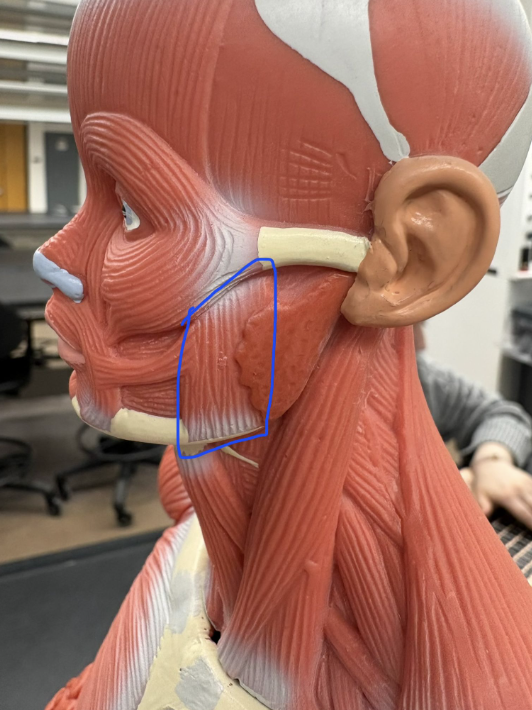
Masseter
Actions of muscle: Elevation and protraction of the temporomandibular joint
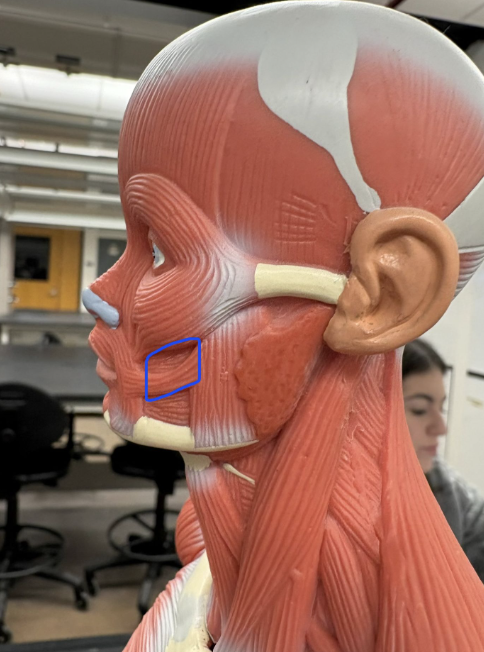
Buccinator
Action- compresses cheek during chewing
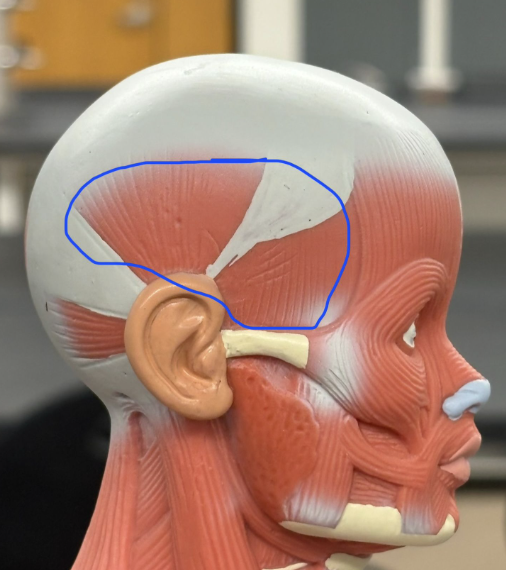
Temporalis
Action: elevation and retraction of the temporomandibular joint
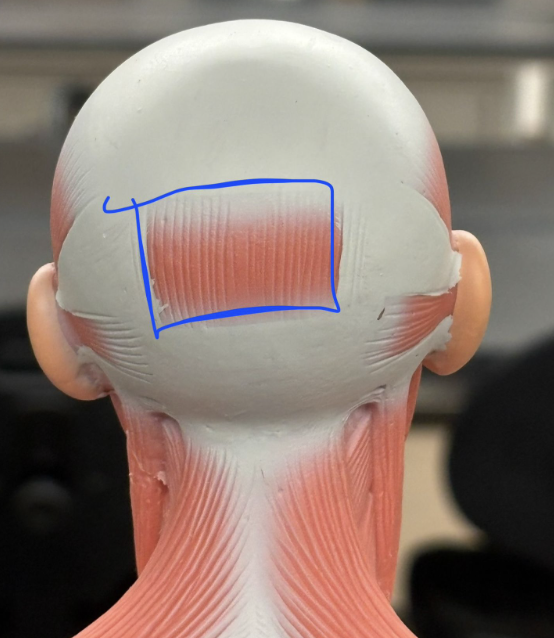
frontalis/occipitalis (occipitofrontalis) *** here is the occipitalis, the frontalis is the forehead muscle
Action: raises the eyebrows
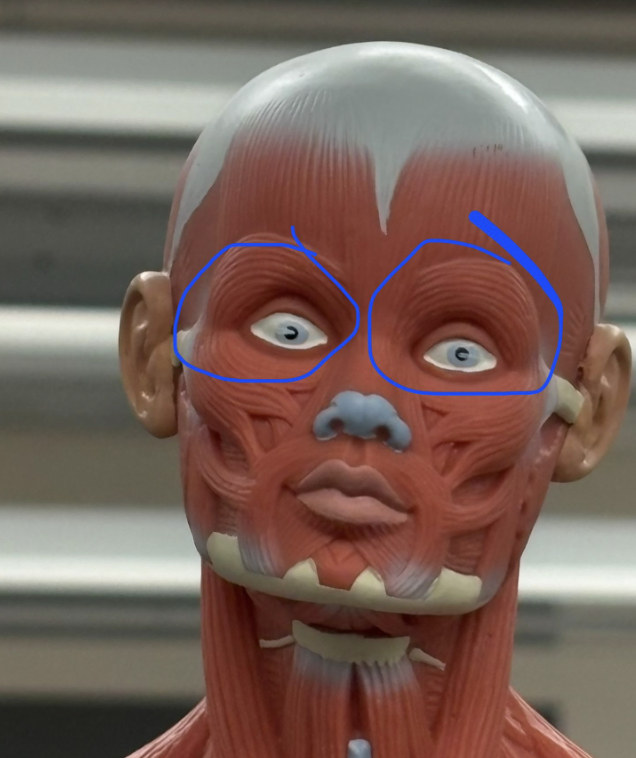
Orbicularis oculi
action: closes eyes (eyelids)
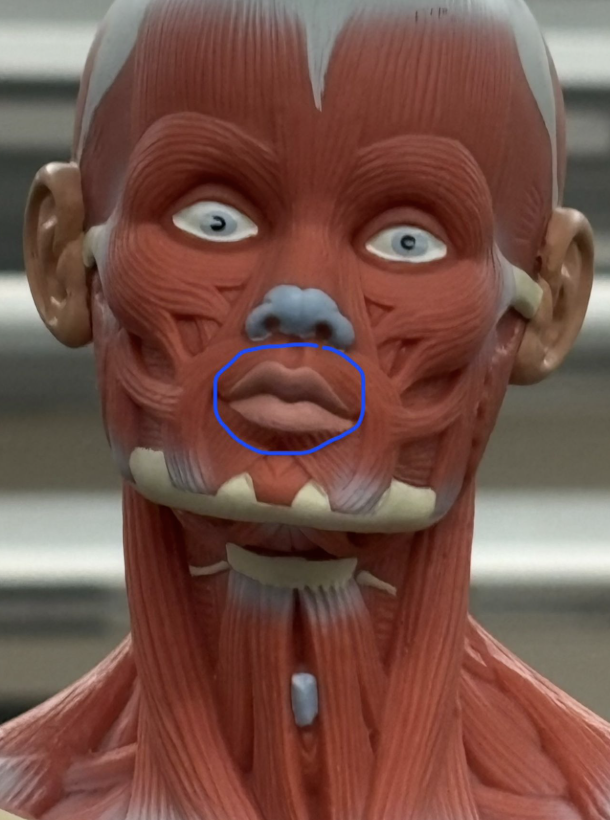
Orbicularis oris
action: closes mouth and protrudes lip
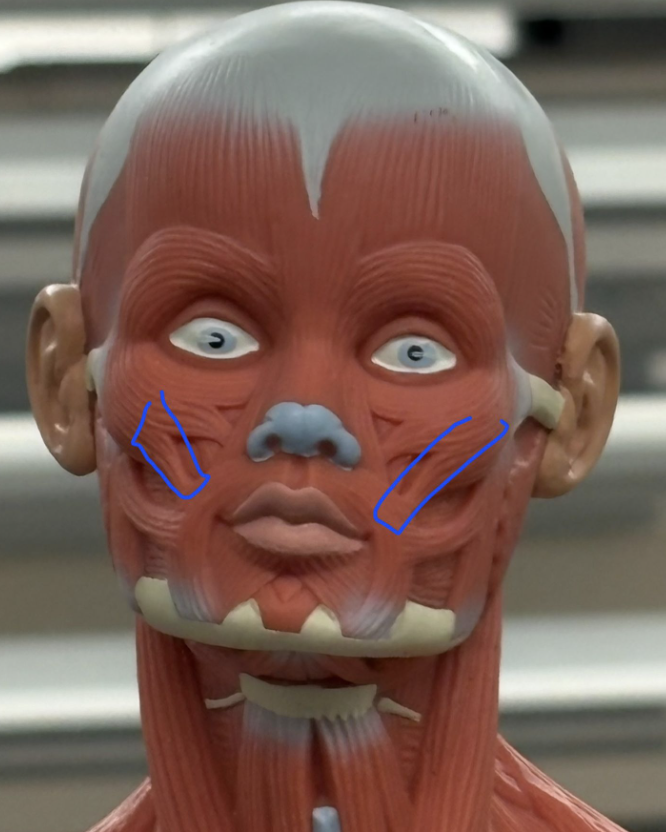
zygomaticus major
action: elevates corners of the mouth (smiling)
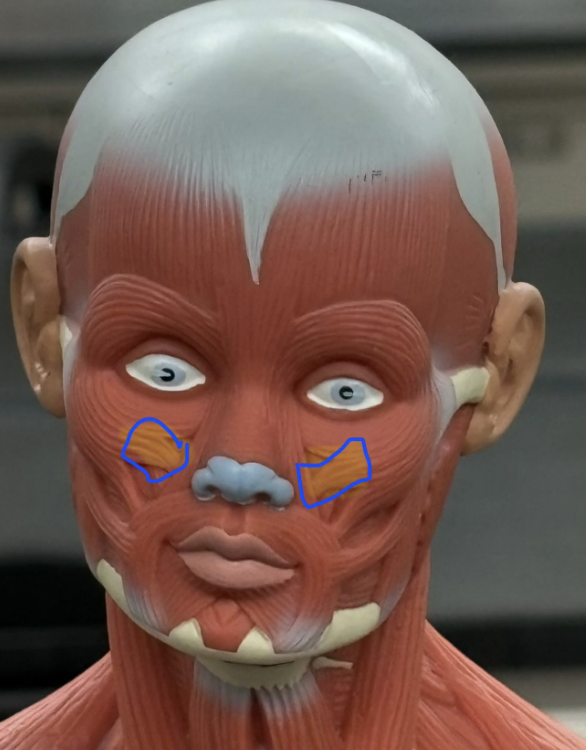
zygomaticus minor
action: elevation of upper lip
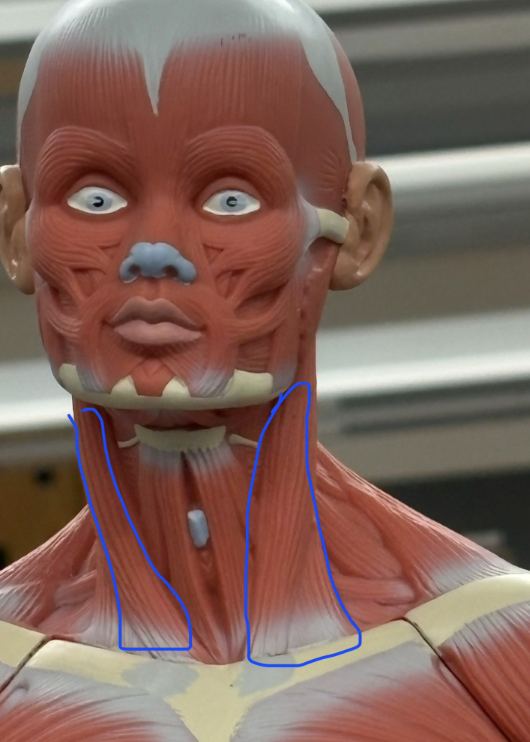
Sternocleidomastoid
origin:
Manubrium of the sternum and clavicle
insertion:
Mastoid process of the temporal bone and occipital bone
actions:
-Bilateral→ forward flexion of the neck and extension of the head
-Unilateral→contralateral rotation of the neck (rotation of the head so face turns to opposite side)
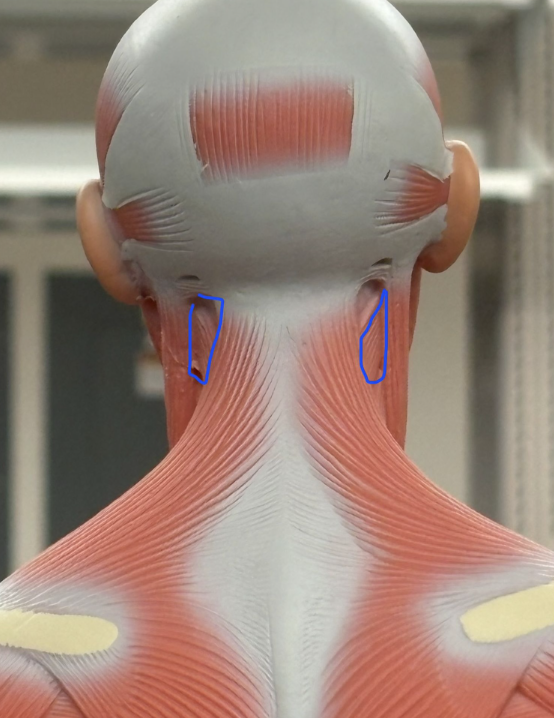
Splenius Capitis (& cervicis)
origin:
C7 to T3
Insertion:
mastoid process of temporal bone and occipital bone
Action:
-Bilateral→ extension of the neck
-Unilateral→ Ipsilateral rotation of the neck
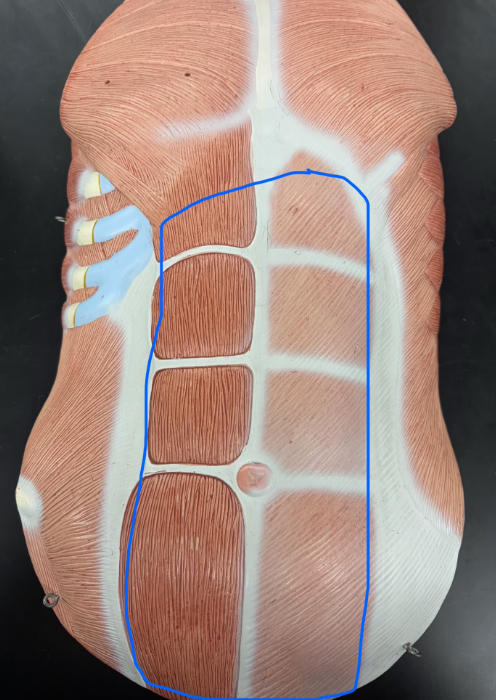
Rectus Abdominis
origin
pubis
insertion
xiphoid process of the sternum
Action:
flexion of the torso
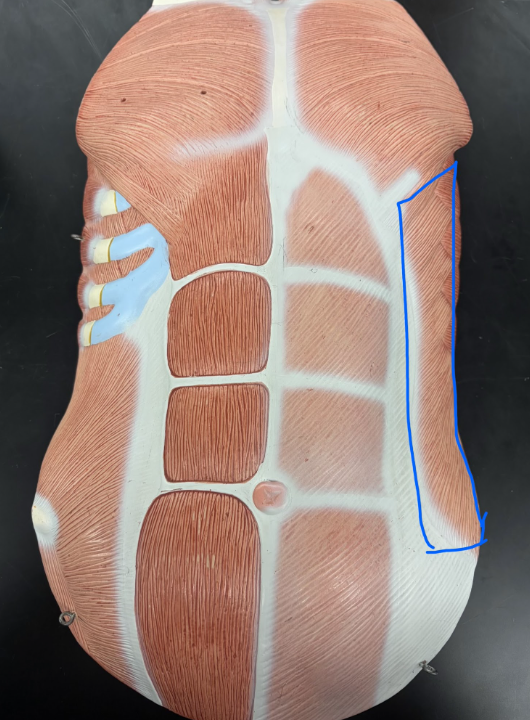
External oblique
origin
lower ribs
insertion
iliac crest of the ilium
actions:
bilateral→forward flexion of the torso
unilateral→rotation of the torso
Internal Oblique
Origin:
iliac crest of the ilium
Insertion:
lower ribs & linea alba
Action:
-Bilateral: forward flexion of the torso
-Unilateral: rotation of the torso (ispilateral)
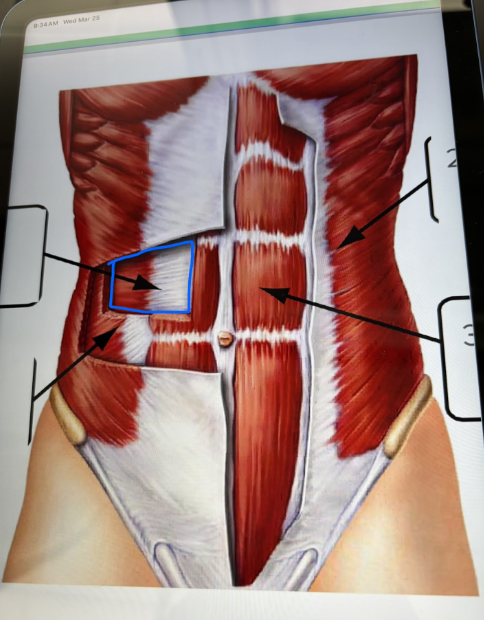
Transverse Abdominus
**will only need to identify this one
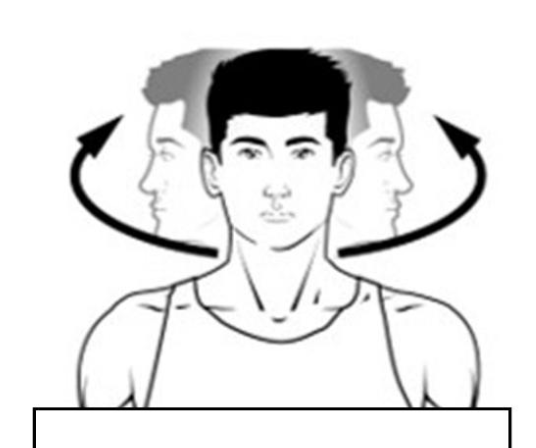
what are the muscles responsible for this movement?
-sternocleidomastoid
-splenius capitis
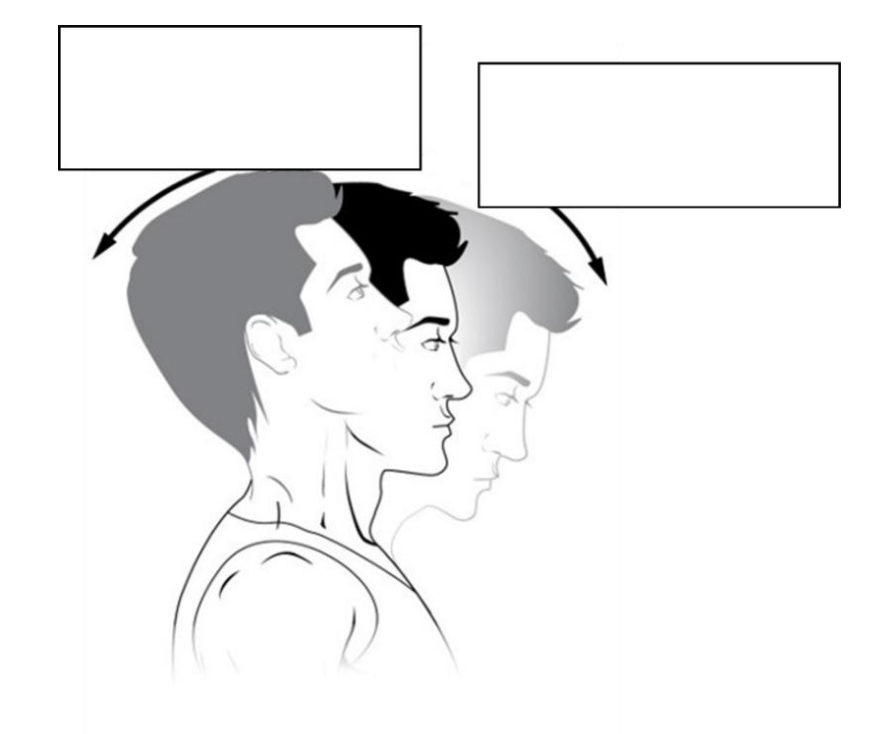
what muscles are involved in this action?
-splenius capitis (extension)
-sternocleidomastoid (forward flexion)
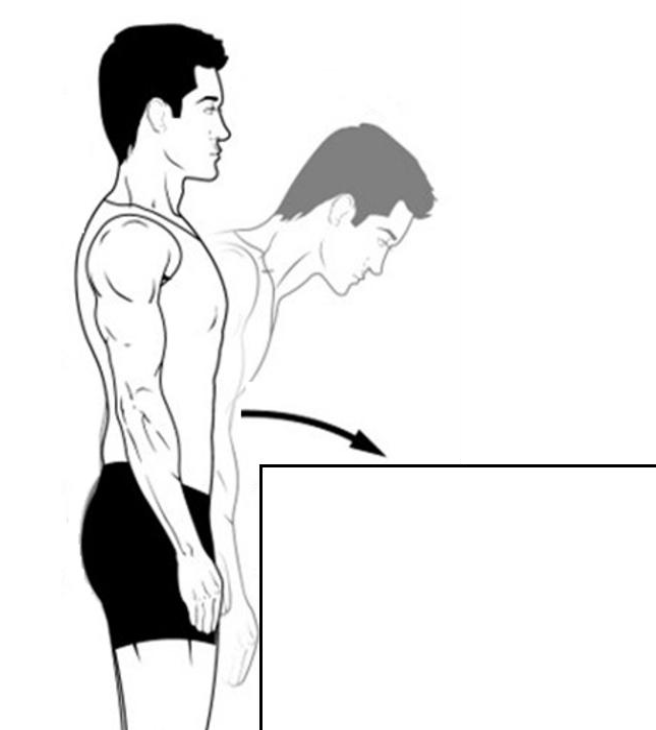
what muscles are involved in this movement?
-external and internal obliques
-rectus abdominis
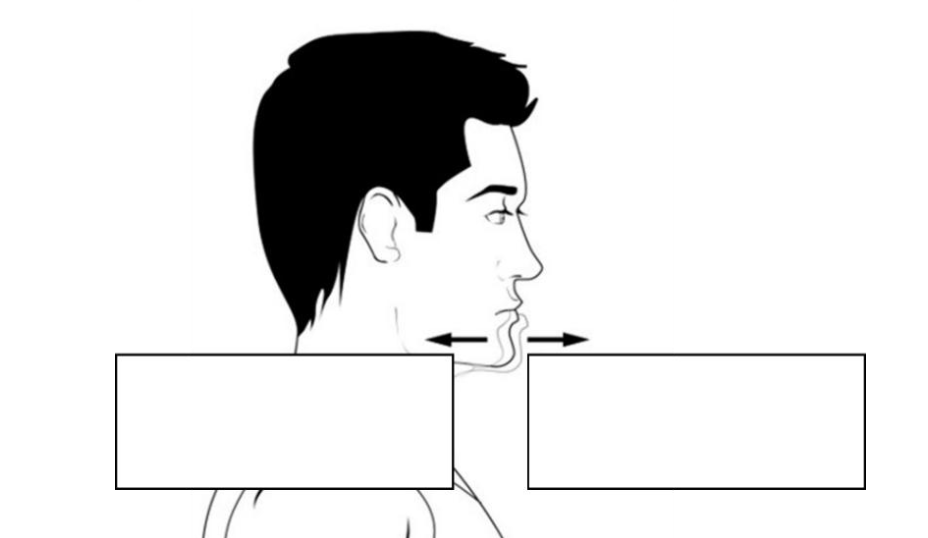
what muscles are involved in this movement?
-temporalis (retraction)
-masseter (protraction)
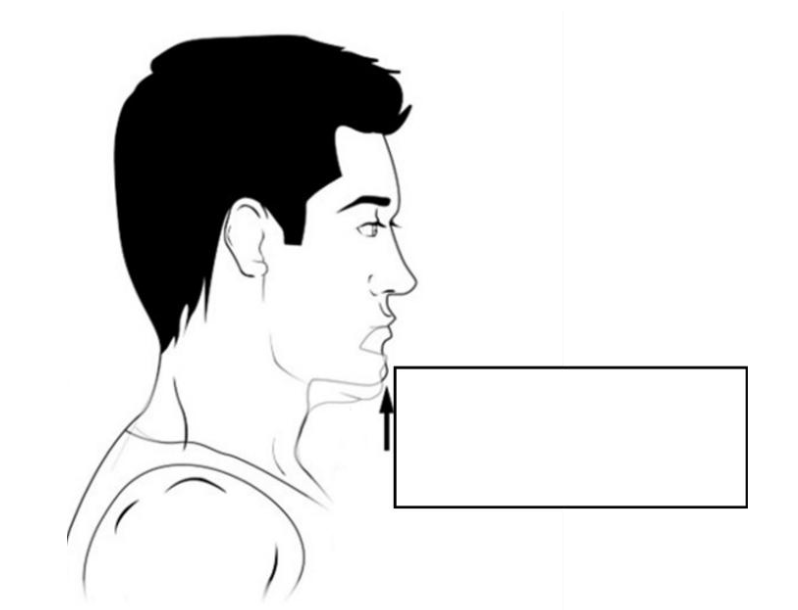
what muscles are involved in this action?
-temporalis
-masseter
(both contribute to elevation)
the epicranial aponeurosis is a tendon-like sheet of connective tissue that covers the cranium, just beneath the skin. What tissue is it made from?
dense regular connective tissue
what two muscles of the head are.attached by the epicranial aponeurosis?
-frontalis
-occipitalis
what two muscles move the temporomandibular joint? (TMJ)
-temporalis
-masseter
what direction do transverse abdominis fibers run?
horizontally
which of the abdominal muscles also function in respiration for “abdominal breathing“ and compression of the abdominal viscera?
-rectus abdominis
-transverse abdominis
-internal abdominal oblique
-external abdominal oblique
brachial vs antebrachial & femoral vs anatomical leg
brachial = arm
antebrachial = forearm
femoral = thigh
anatomical leg = knee and below
plantar vs dorsal surface of the foot
plantar: area of the foot that’s flat to the ground when standing
dorsal: area of the foot that is upwards while standing
name the opposites: Pronation and _____, Dorsiflexion and _______
Pronation and Supination
dorsiflexion and plantar flexion
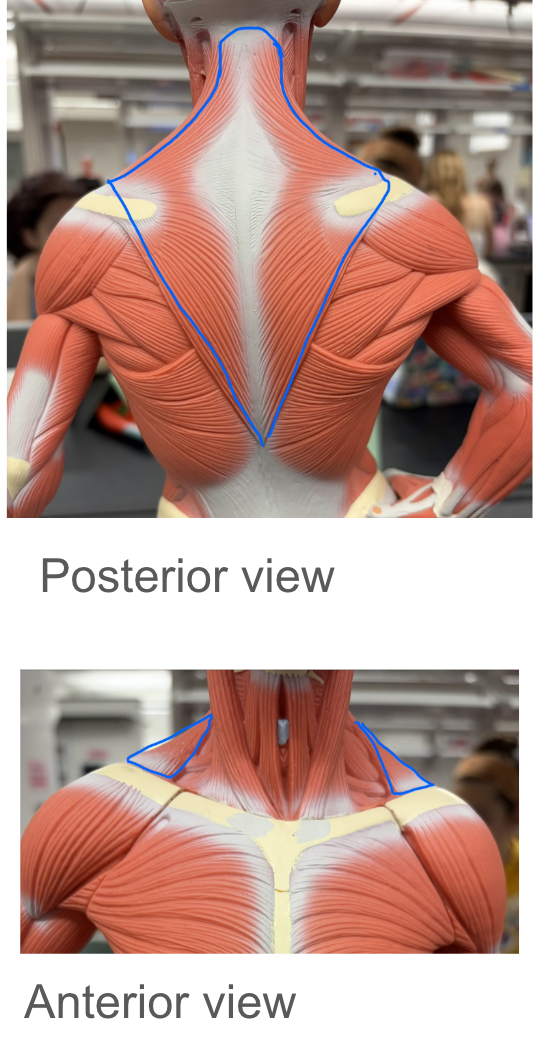
Trapezius
Origin:
-occipital bone
-all thoracic vertebrae
Insertion:
-spine
-acromion of the scapula
-clavicle
Action: stabilizes scapula
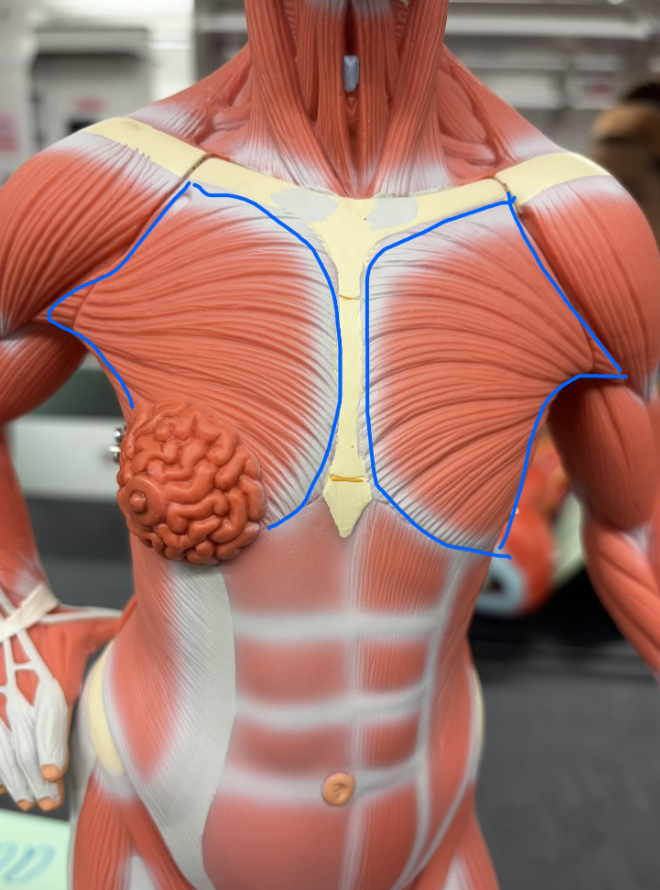
Pectoralis Major
Origin: clavicle and sternum
Insertion: intertubercular sulcus of humerus
Action: flexion, adduction and medial rotation of the arm
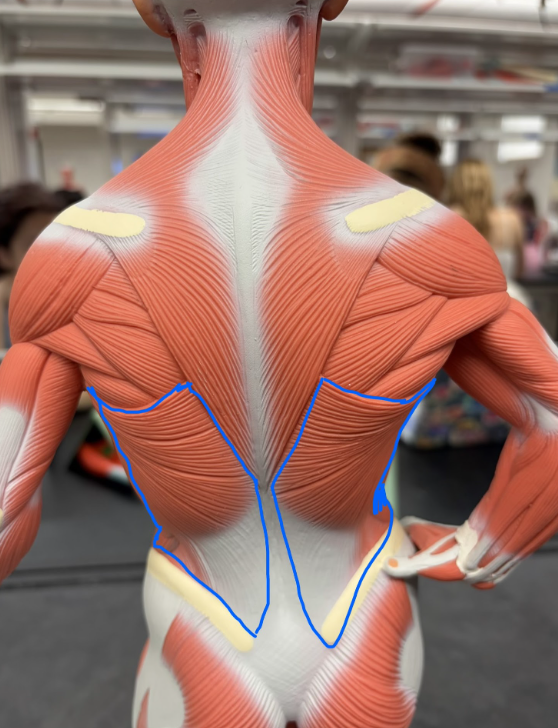
Latissimus dorsi
Origin: don’t need to know for exam!! :D
Insertion: intertubercular sulcus of humerus
Action: extension, adduction and medial rotation of the arm
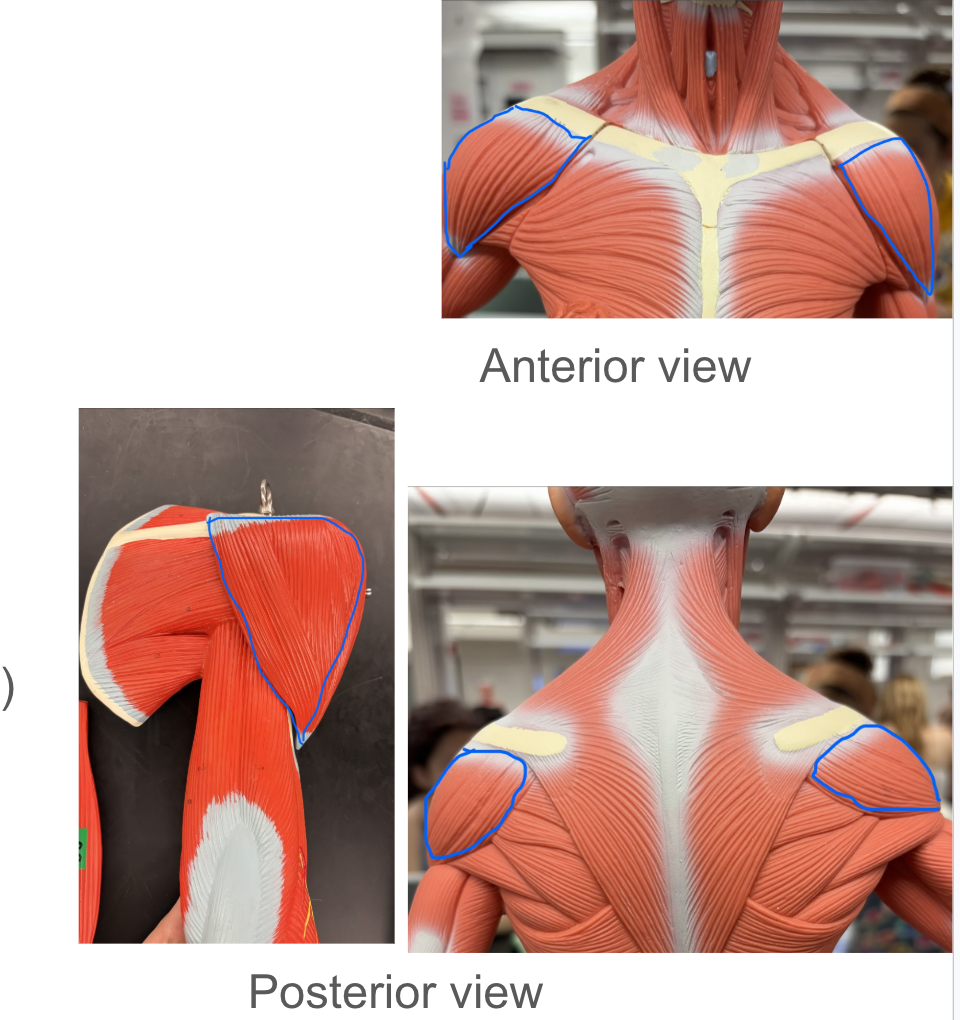
Deltoid
Origin: acromion of the scapula
Insertion: deltoid tuberosity of the humerus
Action: abduction of the arm
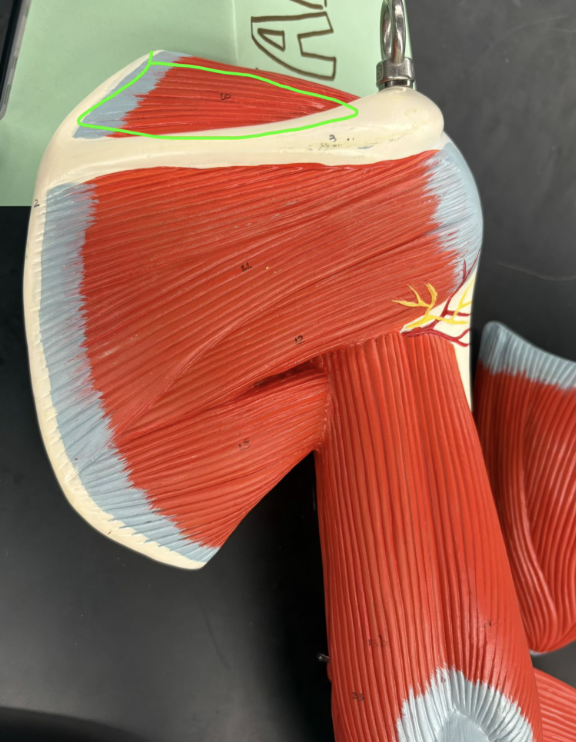
Supraspinatus
Origin: supraspinous fossa of the scapula
Insertion: greater tubercle of the humerus
Action: abduction of the arm
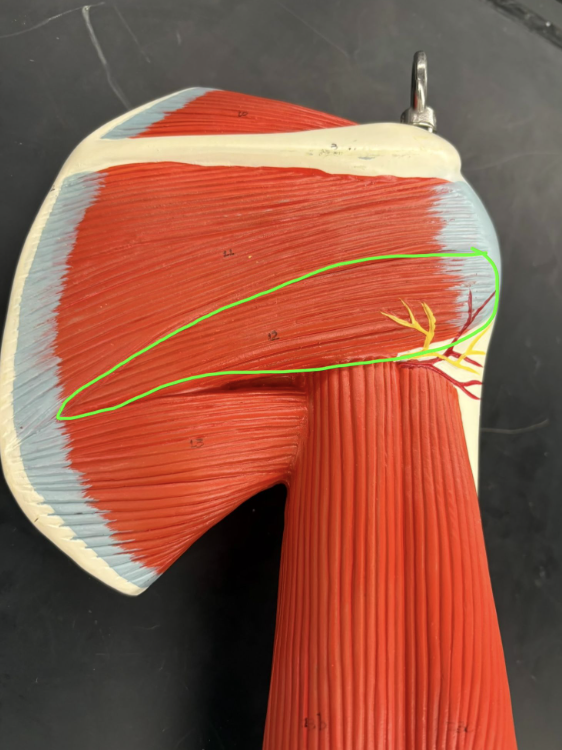
Teres Minor
Origin: lateral border of the scapula
Insertion: greater tubercle of the humerus
Action: lateral rotation and adduction of the arm
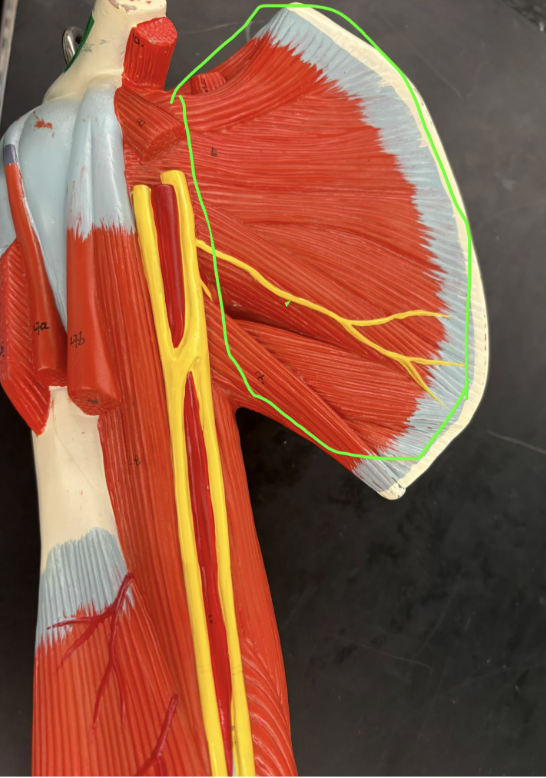
Subscapularis
Origin: subscapular fossa of the scapula
Insertion: lesser tubercle of the humerus
Action: medial rotation of the arm