Lecture 4 Intraoral Scan Teeth Setup and Denture Design
 Call Kai
 Learn
Learn Practice Test
 Spaced Repetition
 Match
Match Flashcards
 Knowt Play
1/24

There's no tags or description
Looks like no tags are added yet.
Name | Mastery | Learn | Test | Matching | Spaced | Call with Kai |
|---|
No analytics yet
Send a link to your students to track their progress
25 Terms
Implant-supported final restoration vs Conventional complete denture
which one requires more accuracy
the threhold for the accuracy value of impalnt is a lot lower. denture even if u have 500 microns, its ok but for implant, doesnt fit at all if its off by 150 um.
implants
scientific evidence regarding accuracy of comercially available noncalibrated splinting and noncalibrated ISBs methods are limited. calibrated means that the implants are connected.
The noncalibrated techniques obtained accuracy values wtihin the clincially acceptable threshold of ——um
150 um
which has more errors? splinted or nonsplinted implants?
nonsplinted - bigger errors happens no matter which scanner is used
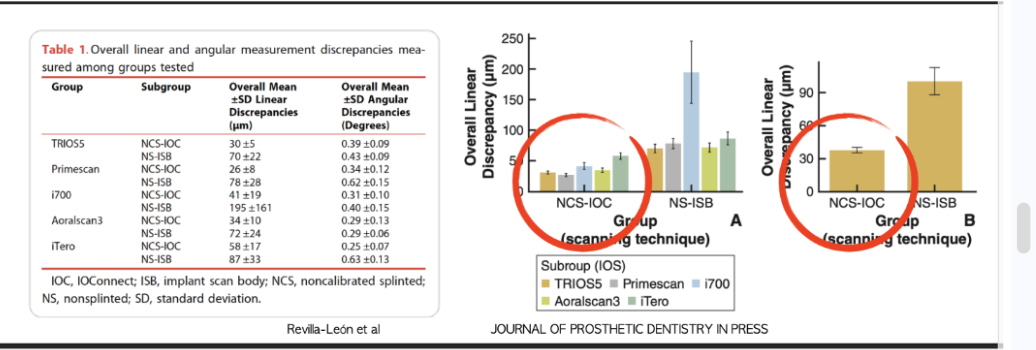
Bewteen the two groups: ncs ioc and nsisb, which one is splinted and which one is separate
splinted is the NCS = noncalibrated SPLINTED
NS is separate
the diagram is suggesting that NS-ISB (non-splinted implant scan bodies) showed greater discrepancies (more error) compared to the splinted groups (NCS-IOC).
But importantly, even though NS had more error, it was still within the 150 µm clinically acceptable range — meaning it may be less accurate, but not necessarily clinically unacceptable.
NCS-IOC = Non-Calibrated Splinted – Implant-On-Connect (implant scan bodies are connected together before/during scanning, but not precisely calibrated).
NS-ISB = Non-Splinted – Implant Scan Body (implant scan bodies are scanned individually without being connected).
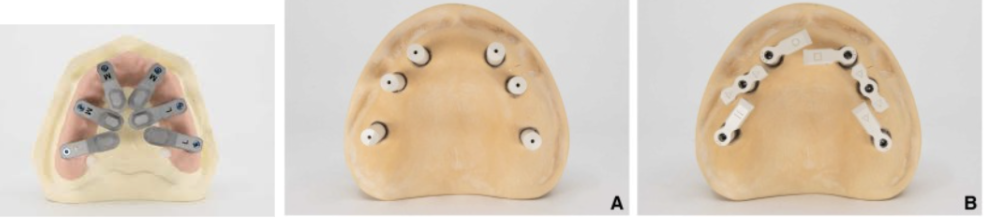
Is this NCS-IOC or NS_ISB
splinted so NCS
noncalbirated splinted
NCS-IOC = Non-Calibrated Splinted – Implant-On-Connect (implant scan bodies are connected together before/during scanning, but not precisely calibrated).
NS-ISB = Non-Splinted – Implant Scan Body (implant scan bodies are scanned individually without being connected).
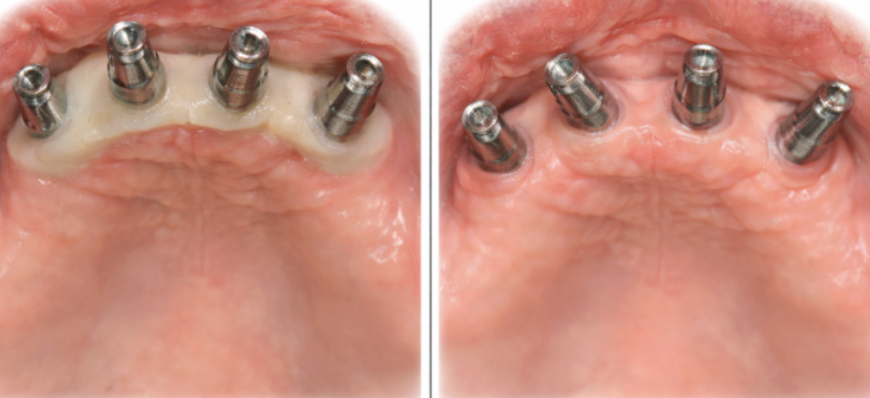
which one is ncs-ioc and which is ns-isb
ncs-ioc = left
NS-ISB = right
the —- (smaller or larger) location data scanned, the more accurate the data
smaller
the (smaller or larger) the area, the mroe error accumulate proportionate to the area
larger
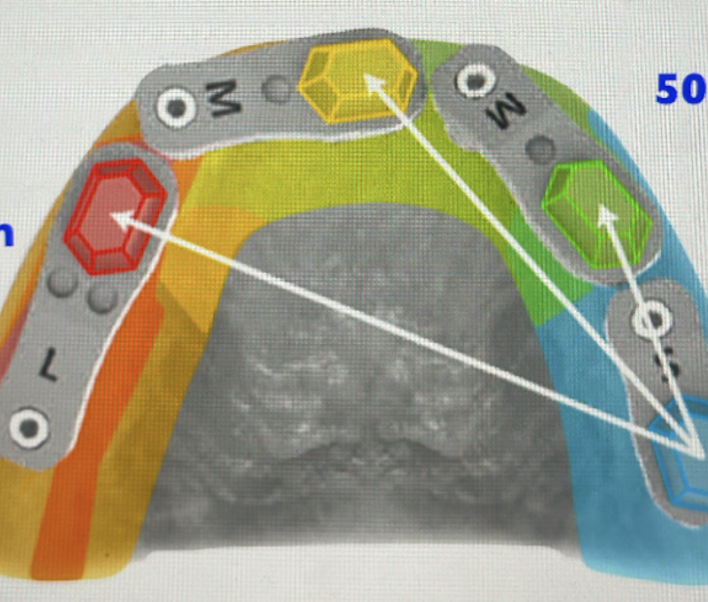
label from right to left the amount of error that accumulates
25 50 100 150
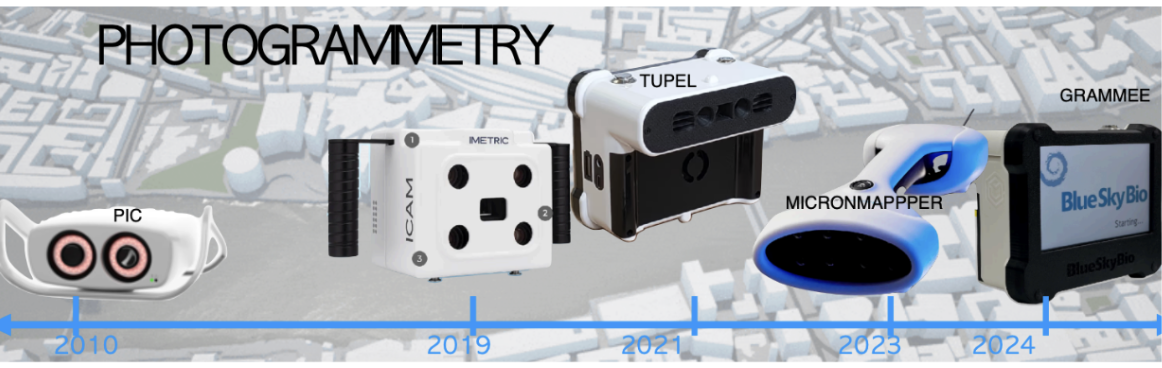
label from oldest to newest
PIC, metric, Tupel, Micronmapper, Grammee
PMTMG
pic
metric
tupel
micromapper
grammee
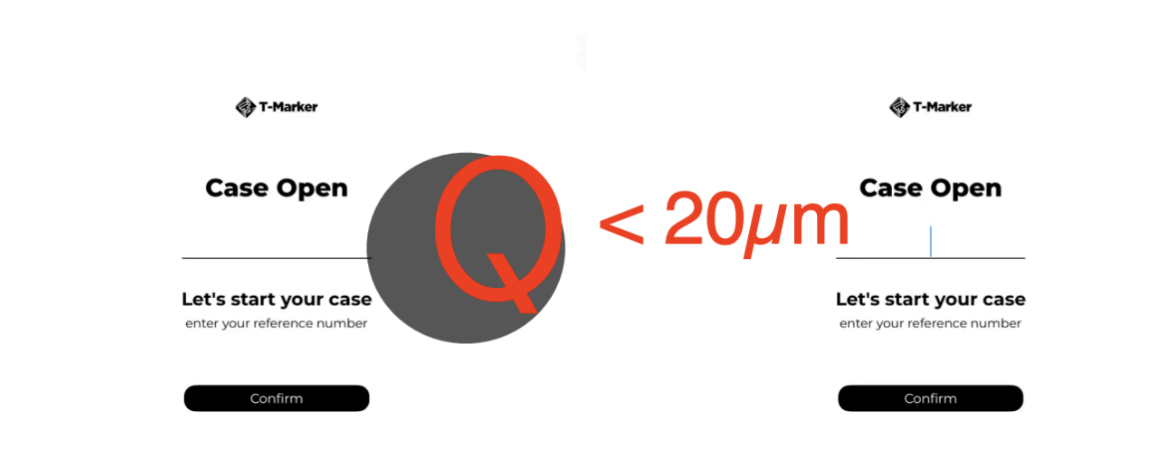
what is this lol
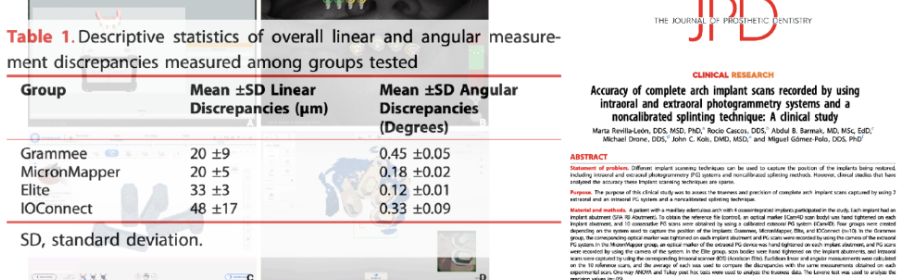
what is the data showing
All of those are making less than 50 um which makes prosthesis for your data most accurate than any other method
Teeth placement
Central Incisor
For labial palatal inclination
Class I is ——- to ridge
Class II has —— inclination
Class III has —— inclination
Class I is perpendicular to ridge
Class II has palatal inclination
Class III has labial inclination
Central Incisor
what is the Mesial distal inclination
none
Central incisor what is the rotation
Soft = follow ——
Bold = —- flare
follow arch
distal flare NEVER MEDIAL FLARE (im assuming distal part more facial)
what is the length of central incisor
same length as ——
wax rim
For lateral incisors
what is the labial palatal inclination for
soft: lateral neck —- in or out
bold: —to occlusal plane
labial palatal inclincation
soft = lateral neck in
bold = perpendicular to occlusal plane
lateral incisors rotations
soft: —- flare
bold —— flare
medial flare
distal flare
what is the length of lateral incisors
soft:
bold:
soft 1-2mm less than rim
bold same length as wax rim
What are the three canine position rules
Rule 1: neck out incisal in (less for square)
rule 2: only mesial showing
rule 3: sagittal view the canine has to be vertical, right angle to occlusal plane. small mesial tilt is ok but never distal
What are the components to evaluate for mandibular anteiors
vertical overlap
horizontal overlap
anteroposterior inclincation in proximal view
inclincation of long axis
you need —mm gap between for mandibular anteirors
1mm
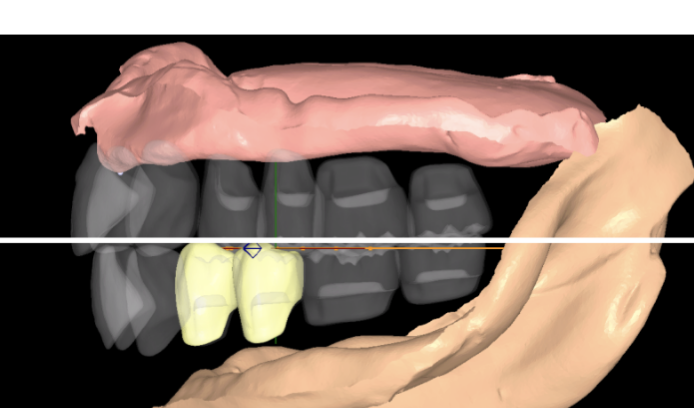
the height of the occlusal plane is —— of the pear shaped pad
½ way up
btw its 1/3 up the retromolar pad
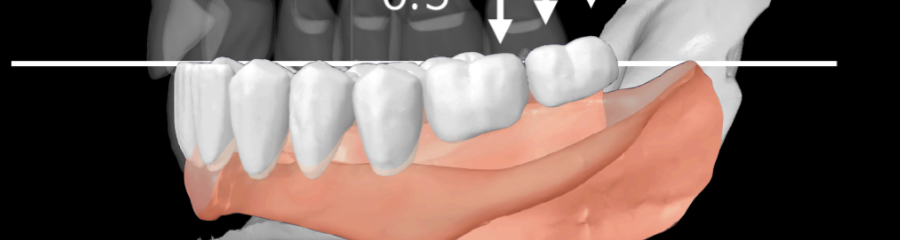
for curve of spee what are the increments it goes up.
the height increases from premolars to molars __ ___ ____
0.5
1
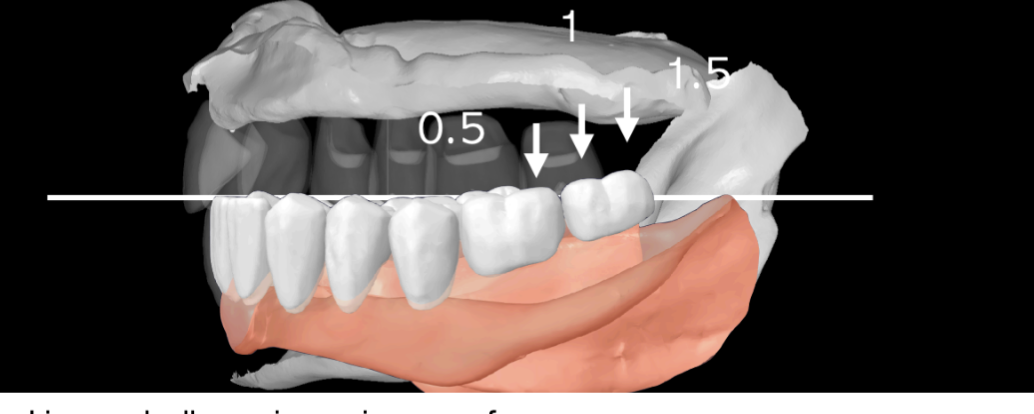
1.5