Pulmonary Disease
 Call Kai
 Learn
Learn Practice Test
 Spaced Repetition
 Match
Match Flashcards
 Knowt Play
1/18

Earn XP
Description and Tags
final
Name | Mastery | Learn | Test | Matching | Spaced | Call with Kai |
|---|
No analytics yet
Send a link to your students to track their progress
19 Terms
obstructive pulmonary diseases
Airflow into and out of lungs impeded
restrictive lung disease
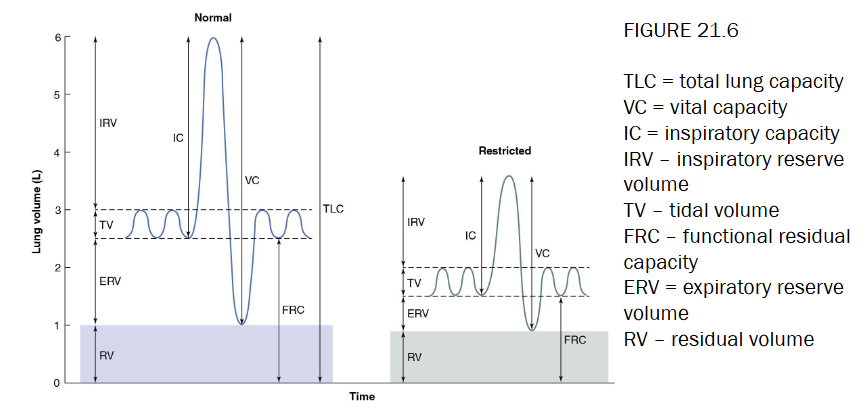
Expansion of lungs reduced due to problems in the chest cavity or lung tissue
types of chronic obstructive pulmonary diseases
Asthma
Chronic bronchitis
Emphysema
Obstructive pulmonary disorder (genetic): cystic fibrosis
asthma pathophysiology
Varies from wheezing and slight breathlessness to severe attacks resulting in suffocation
Causes: allergic reactions, emotional stress, exercise, viral infections, or unidentifiable cause
exercise induced bronchoconstriction pathophysiology
a reactive airway disease that can occur in individuals with asthma as well as in the general population
Exercise tends to cause bronchioles to constrict, especially when there is evaporative water loss, temperature change, or exposure to irritants
chronic bronchitis and emphysema pathophysiology
Common risk factor: cigarette smoking
Other risk factors: secondhand smoke, air pollution, chemical fumes, workplace or environmental dust, or genetics (rare)
bronchitis
inflammation of bronchi with sputum-producing cough
emphysema
destruction of alveolar walls and enlargement of air spaces, which reduces lung surface area for gas exchange
cystic fibrosis pathophysiology
Recessively inherited genetic disorder
Genetic mutation that impacts a mucus-producing protein found in body organs
Mucus thick and sticky, which can block airways and make infections more likely
restrictive lung disease causes
Many causes, including pulmonary edema, pulmonary embolism, exposure to inorganic or organic dust, and radiation therapy
Neuromuscular diseases including muscular dystrophy, amyotrophic lateral sclerosis, and polio potentially restrictive of lung expansion
lung volume comparison: normal vs restrictive lung disease
pulmonary rehabilitation
Comprehensive intervention: exercise, education, psychological evaluation, nutrition, and behavior change
Typically does not directly improve lung function, but offers symptom relief, enhances exercise tolerance, and provides health-related quality of life benefits
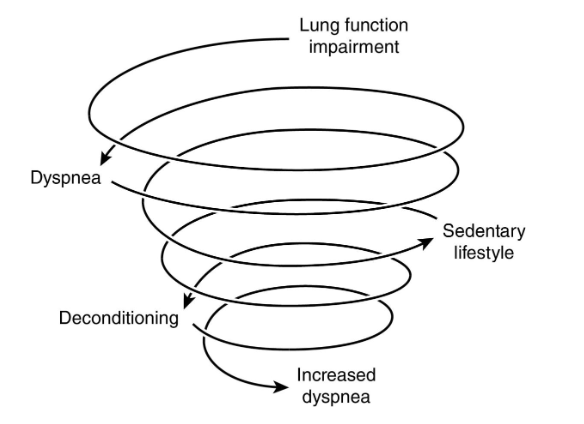
dyspnea spiral
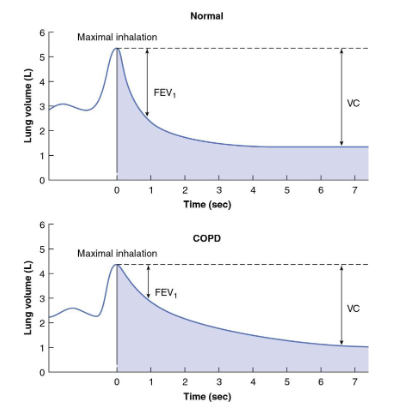
pulmonary function test: normal vs obstructive lung disease
pulmonary diseases: exercise considerations
Exercise testing
• May include standard graded exercise test
• Field tests: 6-minute walk test, shuttle walk test
Exercise capacity limited more by lungs than by the cardiovascular system
Pulse oximeter used to assess percent saturation of hemoglobin in the arterial blood
Symptom evaluation with dyspnea rating scale (ratio or visual analog)
Exercise program components:
• Aerobic exercise 3 to 5 days per week (use percentage of peak work rate or ratio scale)
• Resistance training at least 2 nonconsecutive days per week
• Flexibility daily, or at a minimum 2 or 3 days per week
Supplemental oxygen possibly required during exercise
Program individualization in consultation with health care provider
exercise prescription CODP: aerobic
F: 1-2 sessions/day; 3-5 sessions/week
I: 40-60% of Wmax cycle ergometer; 80% of 6MWT speed on
treadmill; aquatic exercise may be used – 12-14 RPE (Borg)
T: 30-60 min/session; Shorter sessions if >1 bout per day;
Shorter interval exercise if unable to complete continuous
exercise; Circuit training.
T: Walking; upper body cycle ergometry
exercise prescription COPD: RT
F: 2-3 days/week; non-consecutive
I: 30-40% of 1 RM (upper body); 50-60% 1RM (lower body)
T: 8-15 comfortable reps; 1-3 sets; build muscular endurance
T: Machine/free weights; Body weight exercises; 8-10 whole
body exercises
exercise prescriptio COPD: flexibility
F: 3-5 days/wk
I: not given, to the point of mild stretch
T: 30-60 seconds of stretching for each muscle group
T: static stretching; complete at beginning/end of the session
exercise prescription COPD: severe cases
Neuromuscular Electrical Stimulation (NMES)
F: 4-7 days/wk; 1-2 sessions/day
I: maximum tolerated by client
T: 30-60 min/session
T: NMES for major muscle groups