SLR16 - Computer related legislations
 Call Kai
 Learn
Learn Practice Test
 Spaced Repetition
 Match
Match Flashcards
 Knowt Play
1/14

There's no tags or description
Looks like no tags are added yet.
Name | Mastery | Learn | Test | Matching | Spaced | Call with Kai |
|---|
No analytics yet
Send a link to your students to track their progress
15 Terms
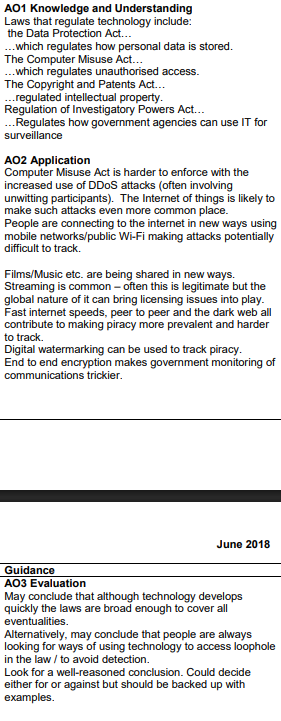
The Data Protection Act (1998 & 2018)
Regulates how personal data is stored
And used by companies & UK gov
Data Protection Act roles
Data subject: Has data stored somewhere outside of direct contact
Data controller: Determines what data an organisation can collects & how collected, processed, stored
Data commissioner: Has power to enforce Data Protection Act - independent public body that reports directly to parliament and appointed by crown
Two categories of data
Personal data e.g. Name, address, banking details, DOB
Sensitive data e.g. Nationality, Ethnicity, Political beliefs - subject to additional protection
8 main principles of DPA
Only handle for specific reason
collect and use fairly and inside law
Data kept accurate
Stores only relevant data
Only use for purpose stated
kept safe
Not kept longer that necessary
Not transferred out EEA
Rights outlined by DPA
Right of subject access
Right to prevent distress
Right to prevent automatic decisions
Right to compensation
Right of convection
Right to prevent direct marketing
Right to complain to Information Commissioner
What did the General Data Protection Regulation add
Can only collect for specified reason
Explicit legitimate reason
Not kept longer than needed
What does the Computer Misuse Act make illegal
Regulates unauthorised access
Unauthorised access to computer system e.g. hacking
Unauthorised access to digital materials with intent to commit further crimes e.g. malware
Unauthorised modification of data
Copyright
legal term used to describe the rights a creator has over won work
Patents
Exclusive right granted for invention, provide owner with the right to decide if or how their invention can be used by others
Copyright and Patents act
Regulates unauthorised access
Regulation of Investigatory Powers act (RIPA)
Regulates how government agencies use IT for surveillance
Demands that ISPs provide access to customer communication
Prevents existence of interception archives being revealed in court
allows mass surveillance of communications
Allow monitor individuals internet activities
Demand access be granted to protected information
Demand ISP equipment that facilitates surveillance
Under terms oof RIPA, ISPs must…
Provide access to digital communications, digital communication archives and internet activities when asked
Implement hardware & software systems that facilitate surveillance of digital communications
(ISP - Internet service provider)
Under terms oof RIPA, ISPs must…
Provide access to digital communications or data when asked
Implement hardware & software solutions that facilitates storage of digital communications
Concerns with RIPA
Freedom of speech
Unnecessary censorship
Invasion of privacy
Improper use of RIPA
Discuss whether technology is changing too quickly for the law to keep up