Psych Unit 3 AOS 2 2/2: Memory
 Call Kai
 Learn
Learn Practice Test
 Spaced Repetition
 Match
Match Flashcards
 Knowt Play
1/17

There's no tags or description
Looks like no tags are added yet.
Name | Mastery | Learn | Test | Matching | Spaced | Call with Kai |
|---|
No analytics yet
Send a link to your students to track their progress
18 Terms
Memory
The process of encoding, storing, and retrieving information that has been previously encountered.
an active processing system that encodes, stores, and recovers information when required.
Memories pass through many different stores to be consolidated.
They are not an exact replica of the world as memories are impacted as they pass through every different store, when they are organised, and when they are recalled.
Fundamental processes of memory
Encoding: Conversion of information into a usable form that can be manipulated and stored in the brain.
Storage: The process of retaining information in our long-term memory for future use.
Retrieval: The process of accessing information that has been stored in long-term memory and bringing it into our conscious awareness in short-term memory.

Encoding
Conversion of information into a usable form that can be manipulated and stored in the brain.
Storage
The process of retaining information in our long-term memory for future use.
Retrieval
The process of accessing information that has been stored in long-term memory and bringing it into our conscious awareness in short-term memory.
Atkinson-Shiffrin multi-store model of memory
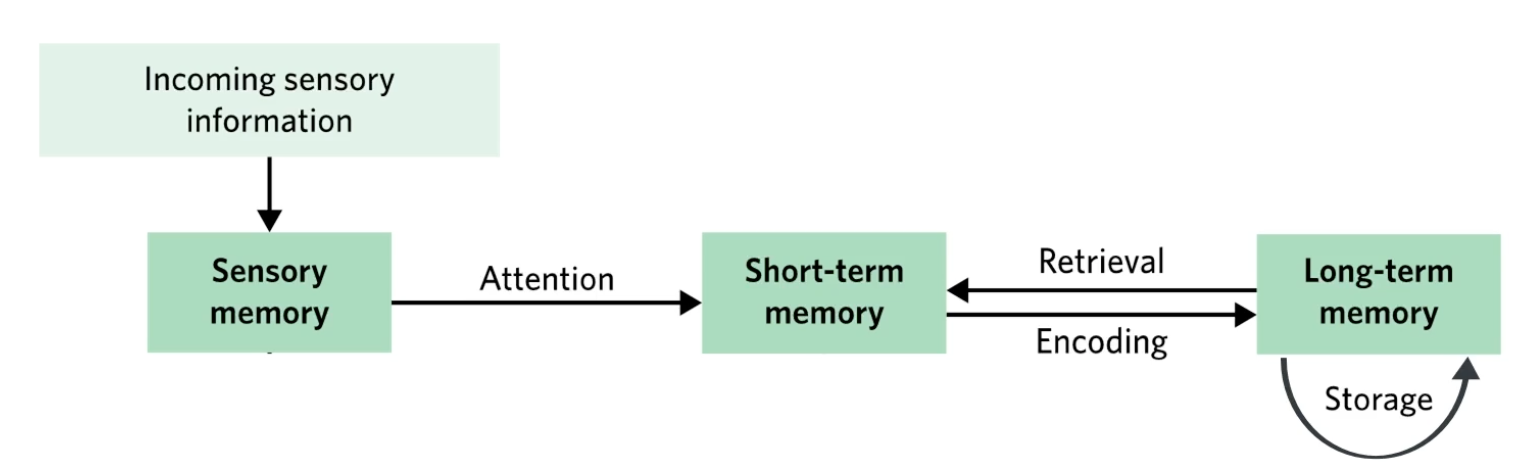
Sensory memory
A store of memory that very briefly stores raw information detected by the senses.
The entry point for memory that stores an exact replica of the real world.
Sensory memory has a duration of just 0.2-4 seconds.
Its capacity is unlimited.
Our sensory memory can be divided into iconic and echoic memory.
Iconic memory (visual)
Stores visual sensory information.
Has a duration of 0.2-0.4 seconds.
Has an unlimited capacity.
eidetic memory stores images for much longer (several months)
Echoic memory (sound)
Stores auditory sensory information.
Has a duration of 3-4 seconds.
Has an unlimited capacity.
Why is its duration longer?
Short-term memory
A store of memory that temporarily stores a limited amount of information that is consciously being attended to and actively manipulated.
Short term memory has a duration of 18-30 seconds however, this duration can be increased by rehearsing information.
It has a capacity of 5-9 items
How short-term memory can be improved
The use of chunking (a memory technique)
Memory aids and mnemonics
Brain plasticity and connections
Focused and selective attention

Long-term memory
A relatively permanent memory store where information can be stored and from which it can later be retrieved for future use.
Long-term memory is thought to have a relatively permanent duration.
Its capacity is potentially unlimited.
It is divided into a number of types, with each being responsible for storing different kinds of memories.
Explicit memory
A type of long-term memory that is formed and retrieved intentionally and with conscious effort.
Implicit memory
A type of long-term memory that is formed and retrieved without conscious effort.
Subdivisions of long-term memory
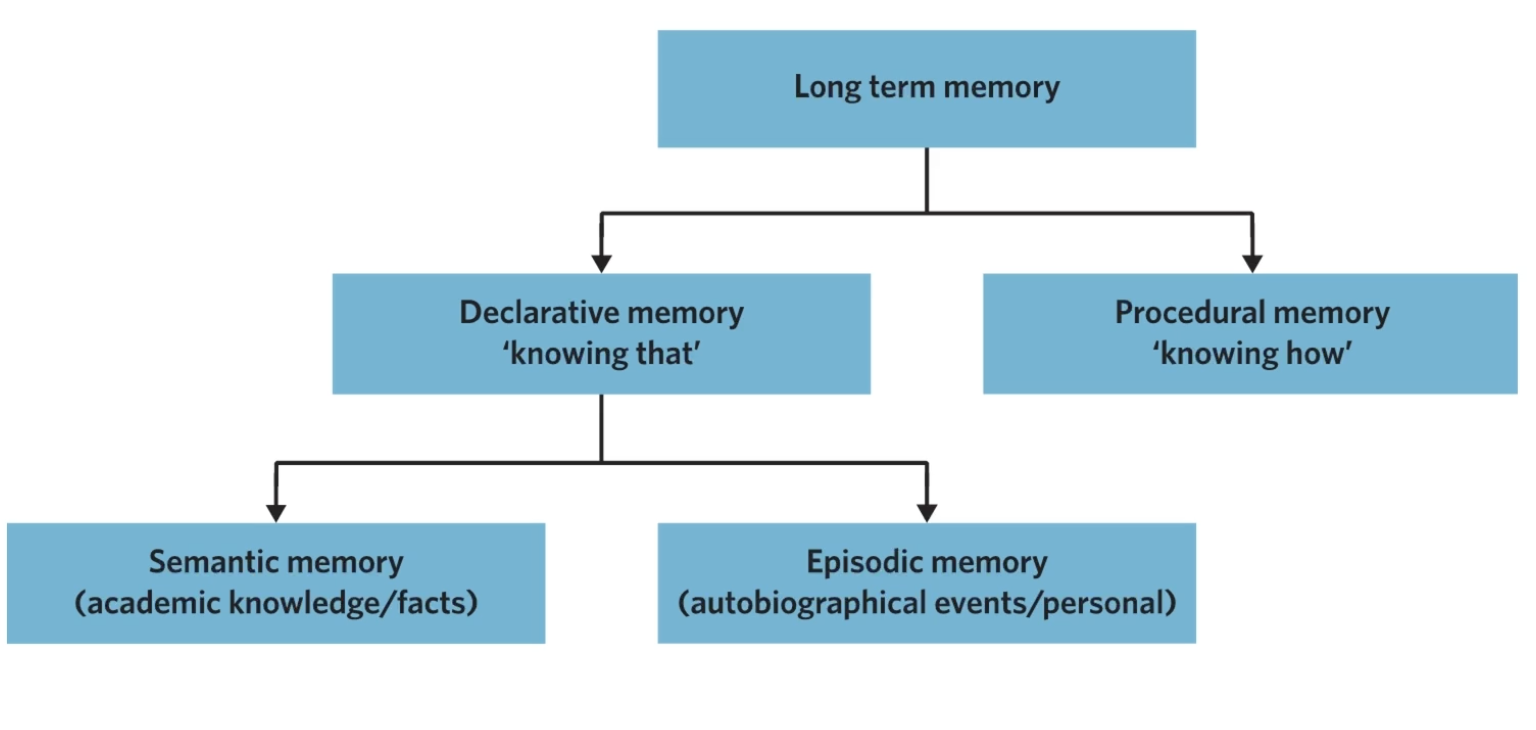
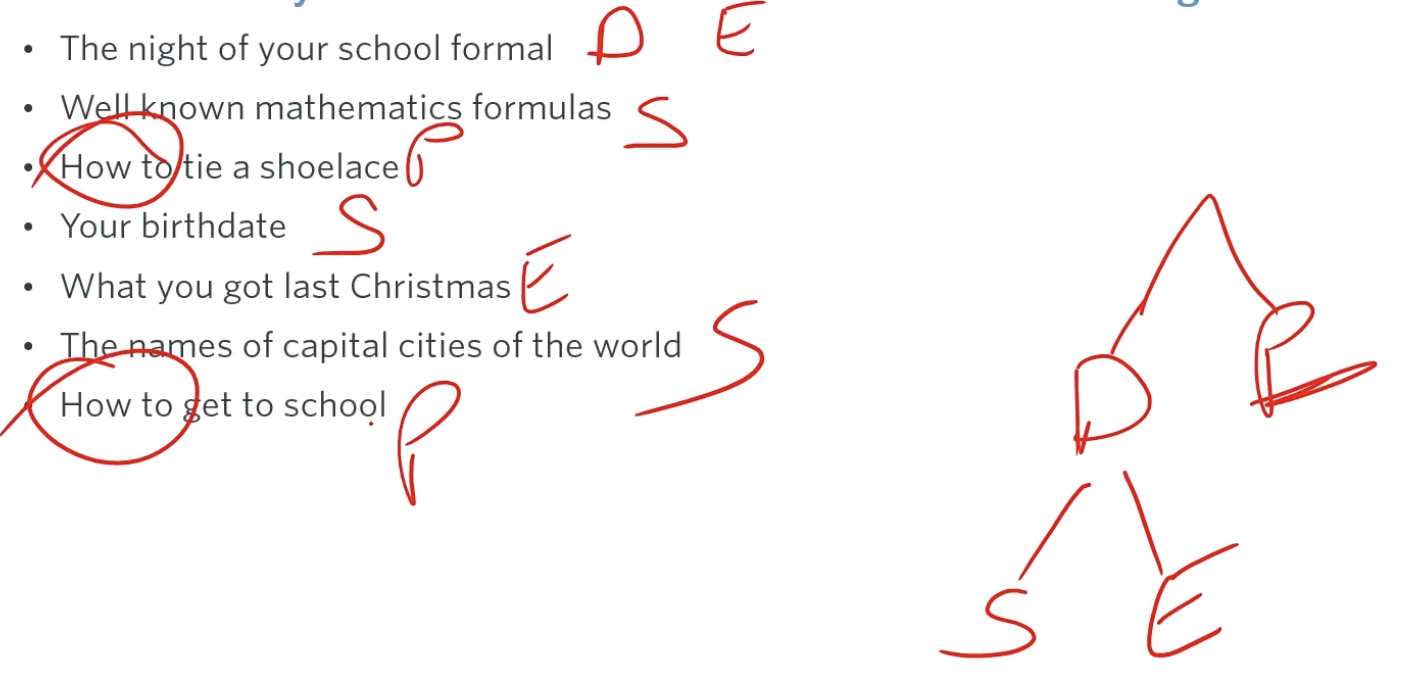
Procedural memory: ‘knowing how’ to do something examples; knowing how to ride a bike, knowing how to spell something, knowing how to get to school from your home
Procedural memory ‘knowing how’ involves the cerebellum which is responsible for motor movement and coordination because a lot of those ‘knowing hows’ involve actions and sequences.
Declarative memory: ‘knowing that’ example: knowing that my mum’s birthday is on that day, knowing that my school formal is in 2 weeks
Declarative memory: ‘knowing that’ uses the thinking and cognitive part of the brain
eg. Semantic memory: I know that the capital of Australia is Canberra (academic knowledge/facts)
eg. Episodic memory: I know that last year I was really disgusted when Jarvis licked the sauce (events/personal memories)
Procedural memories are implicit meaning they occur more naturally and take less conscious awareness
Declarative memories (including semantic and episodic memories) are explicit meaning we really engage with them, try to know them and intentionally work with them.
Examples of Semantic memory
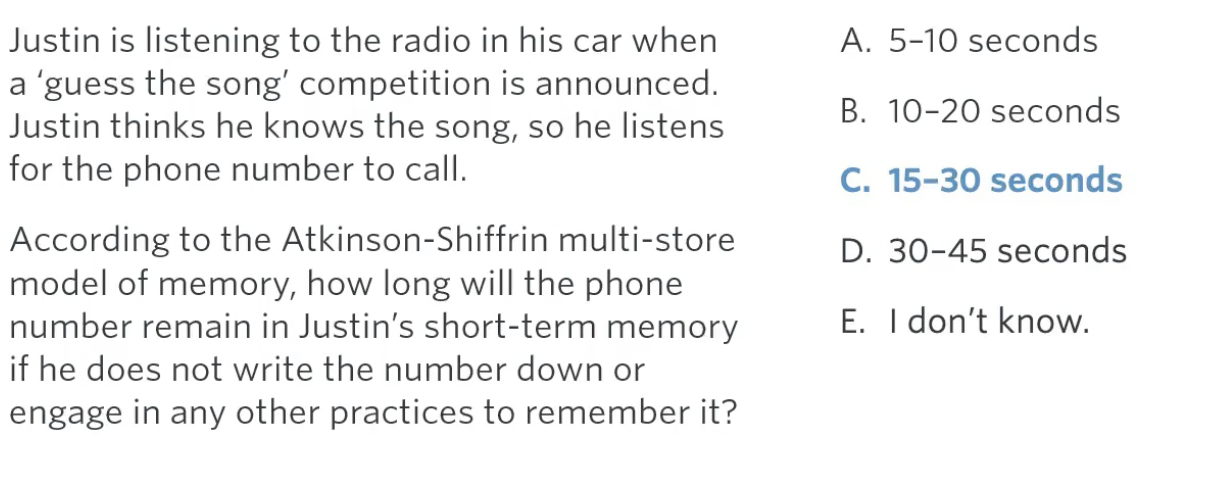
Duration and capacity of sensory, short-term & long-term memory
