16. Fraud
 Call Kai
 Learn
Learn Practice Test
 Spaced Repetition
 Match
Match Flashcards
 Knowt Play
1/32

There's no tags or description
Looks like no tags are added yet.
Name | Mastery | Learn | Test | Matching | Spaced | Call with Kai |
|---|
No analytics yet
Send a link to your students to track their progress
33 Terms
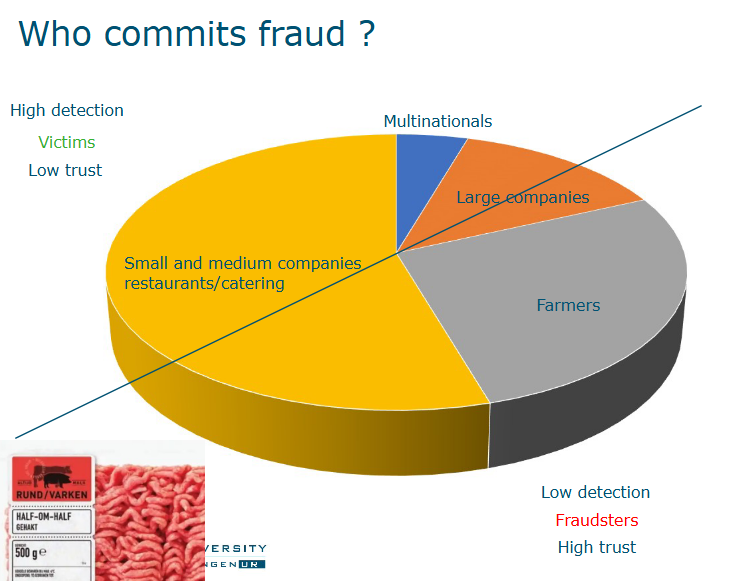
Who commits fraud?
Largely small and medium companies restaurants/catering
Farmers
Large companies
Multinationals - they have a much bigger problem
Top half of line are victims and bottom half are fraudsters
Perception from consumers is actually that small companies are less likely to commit fraud, but this is not true clearly
For multinationals, there are serious consequences if they commit fraud and are caught so they don’t do it.
Adulterant definition
A term for a substance found within other substances such as food, even though it is not allowed for legal or other reasons
Food fraud definition
Cases where there is a violation of food law, which is committed intentionally to pursue an economic, financial or other gain through consumer deception
Adulteration vs. fraud
Adulteration can be non-intentional (accident), fraud is always intentional
Food integrity
Ensuring that food which is offered for sale or sold is not only safe and of the nature, substance and quality expected by the purchaser but also captures other aspects of food production, such as the way it has been sources, procured and distributed and being honest abou those elements to consumers.
Food crime
Incidents involving food that is a violation of a criminal statute
Food terrorism
Food adulterated with an ideological rather than an economic intention, with as primary goal to scare the consumer
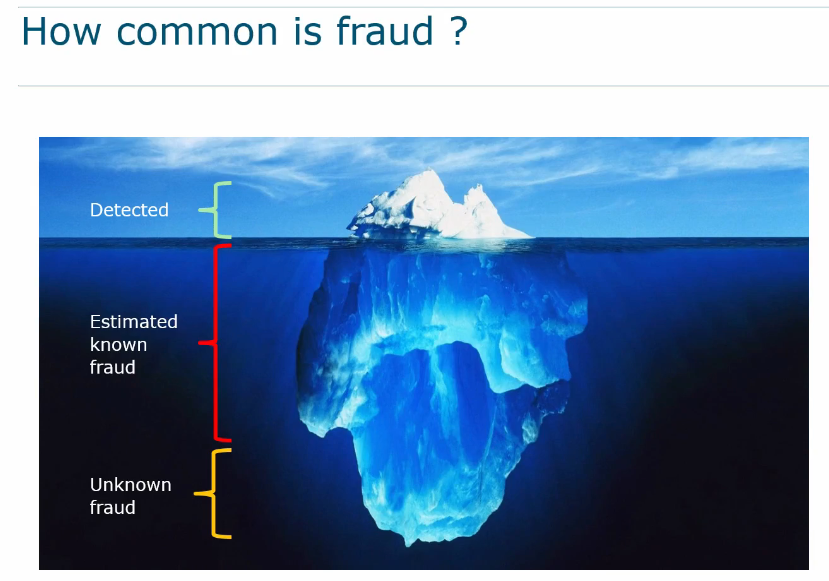
Is all fraud detected?
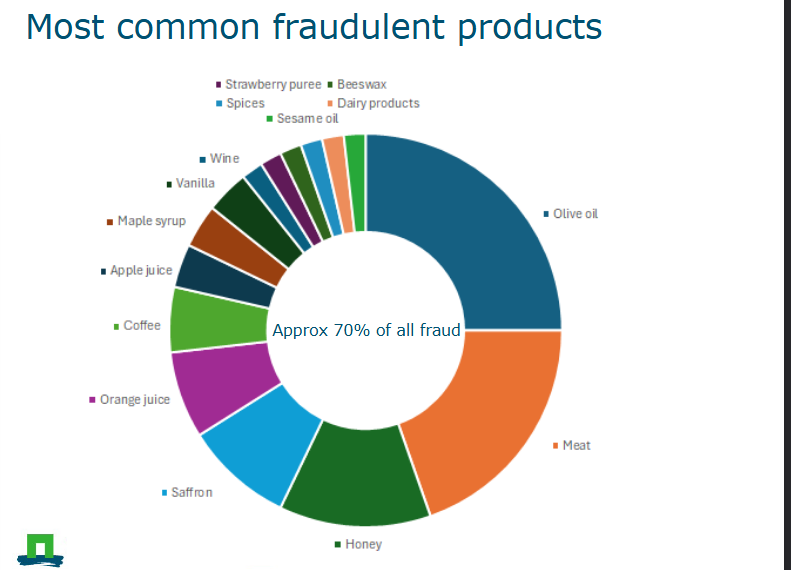
Most common fraudulent products
Olive oil
Meat
Honey
Saffron (very expensive - therefore likely to have replicates)
Orange juice
Coffee
etc
Fraud with honey
Even markets and local shops contain fraudulent honey
Increased risk of fraud due to hypes as Manuka honey and raw honey—there is more manuka honey in the EU than can be produced
How fraud with honey occurs
Added sugar
Added high fructose corn syrup
Completely artificial
Country of origin
Flower species of origin
Organic/non-organic
Olive oil and fraud
Every week there are fraud notifications about olive oil
Often diluted with sunflower oil
Meat and fraud (filet americain)
Filet americain: contained pork which cannot be sold raw
From the supermarket, it was completely beef but butchers sometimes had filet americain containing 30-40% raw pork meat
Meat and fraud (lamb)
One in five lamb takeaways contained other cheaper meats such as turkey
Some contained no lamb at all
Meat and fraud (halal)
Halal products containing pork meat were ofund
Food Fraud: meat
Replace ‘expensive’ meat with cheap meat
Replace lamb with turkey/chicken
Replace beef with horse meat or pork
Replace steak with cheaper parts of the animal
Adding volume to the meat
Add water to chicken breasts
Add glycerin to meat cuts
Combine pieces of meat (glue)
Country of origin or other labels (organic, halal, animal welfare..)
Reuse of out-of-date meat
Horsemeat scandal
Was found in 2013 but probably going on for many years
Nobody tasted the difference
Still happening, cases in spain early 2023
Why horsemeat is a problem
There is nothing wrong with horsemeat - people just are not used to eating it anymore
However, in the scandal, the slaughtering was not being checked as it was not on the radar of the EU for example
Therefore might be bad quality/not safe
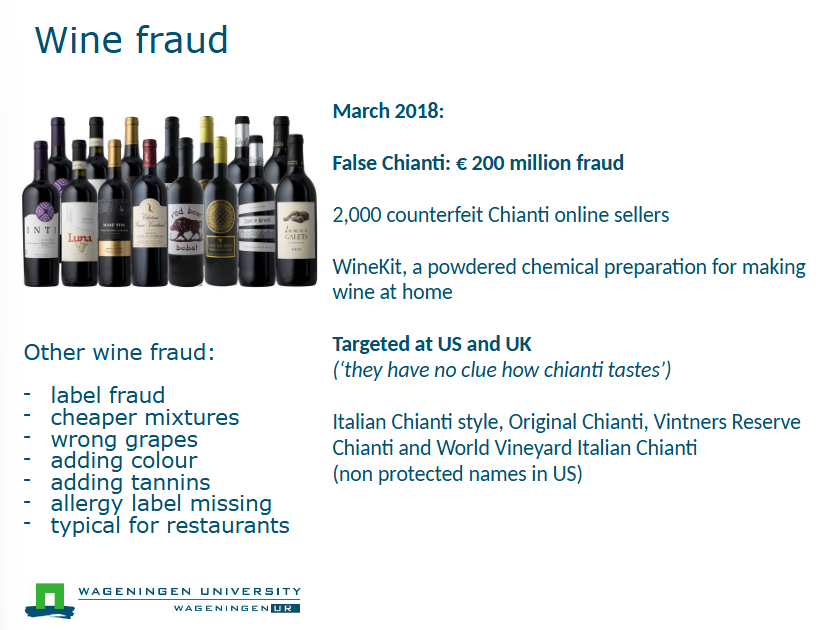
Wine fraud
Labels are always stuck on wine bottles really tightly to prevent them from being taken off.
Differences in fraud then and now
Then:
Wide variety of frauds
Use of (very) toxic materials
Around 1900 in the Netherlands, the start of food inspection services on municipal/city level
Food inspection service in 1900
Farmers delivered meat in local slaughterhouses
Meat from sick animals was slaughtered separately
Separated meat was send to Rotterdam (cheap)
In Rotterdam the meat was made into processed meat or sold on the markets
‘Well organized structure’ to get rid of contaminated meat
Food inspection service was set up around 1905 in Rotterdam specifically for meat: problem: lack of laboratory space and knowledge
Sick meat was now send to Vlaardingen or Dordrecht, as there was no food inspection there
Similar: in Leeuwarden proper marmalade was sold, whereas in neighbouring towns only fake products were sold
Major European scandals
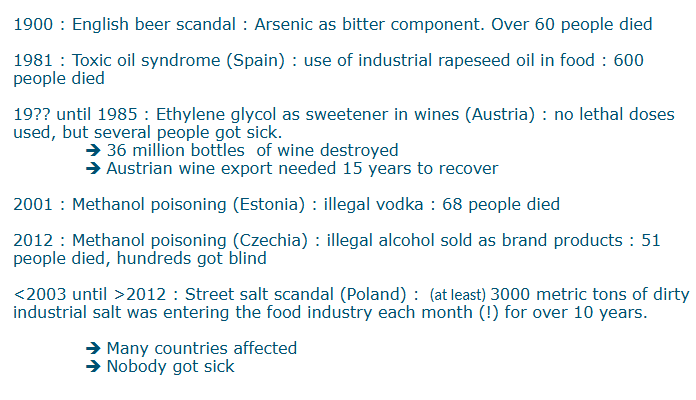
Why is food fraud increasing (again)?
Complex food chains, food comes from everywhere and is processed everywhere
Challenging economic times
Long-term fraud:
Does not seem to affect the perceived quality of the product
Consumers do not know what the original food tastes/looks like
Consumers are more focused on price
Hypes and trends (social media!!)
More education to consumers does not help? you cant taste the different
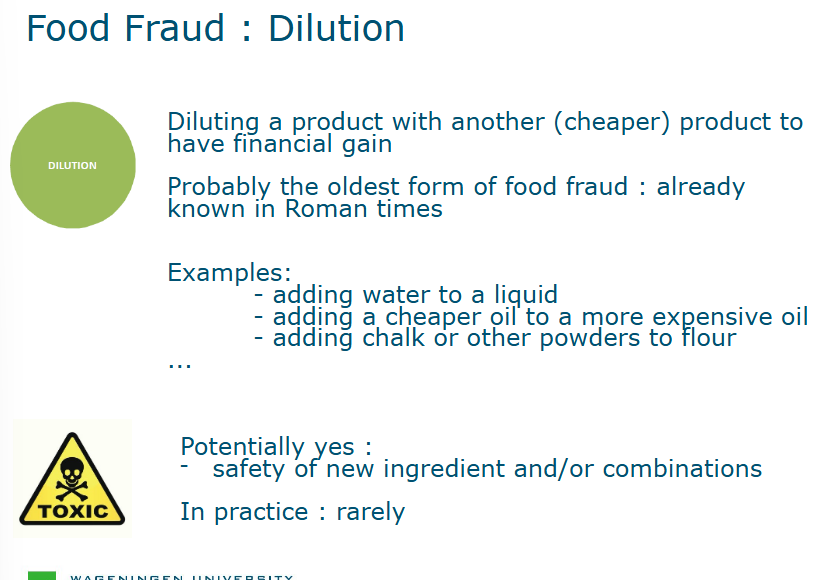
Food fraud: dilution
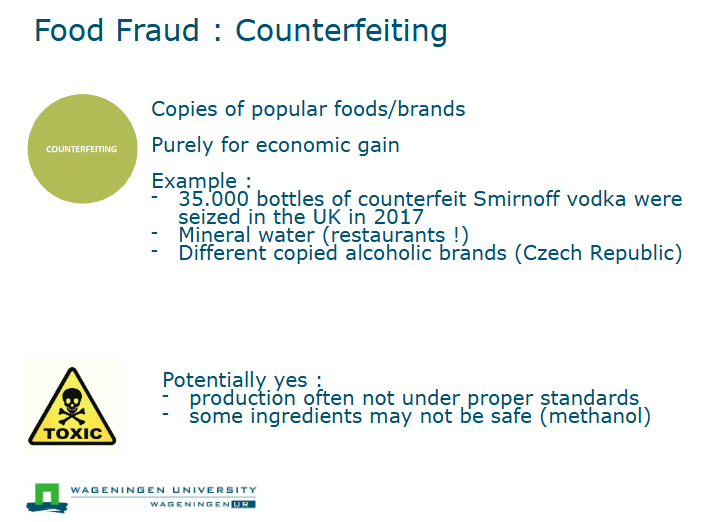
Food fraud: counterfeiting
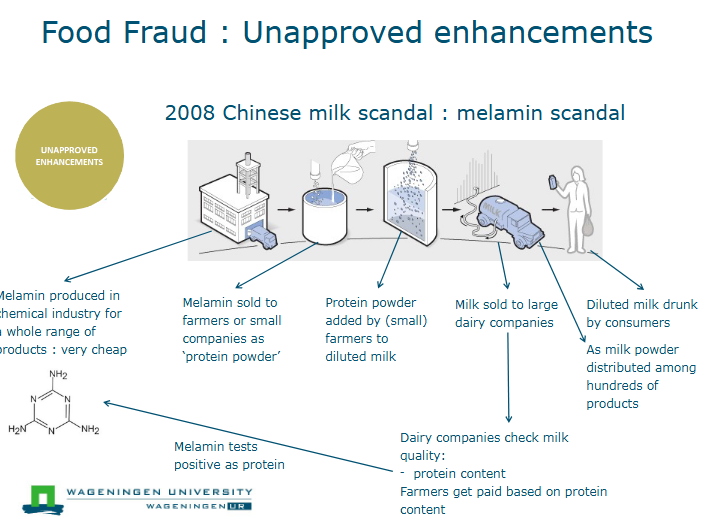
Food fraud: unapproved enhancements
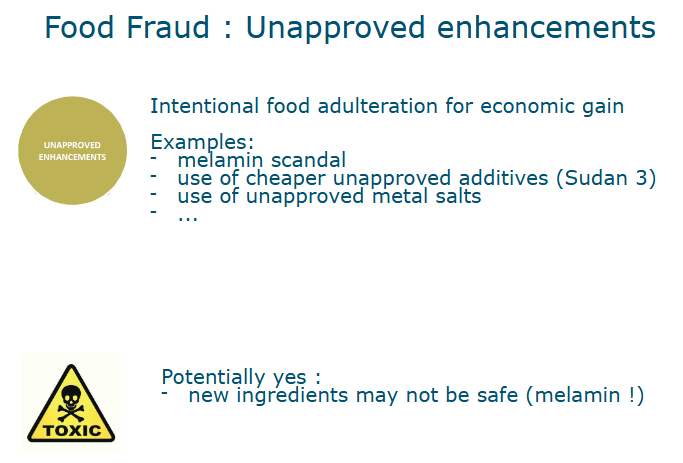
Chinese milk scandal unapproved enhancements
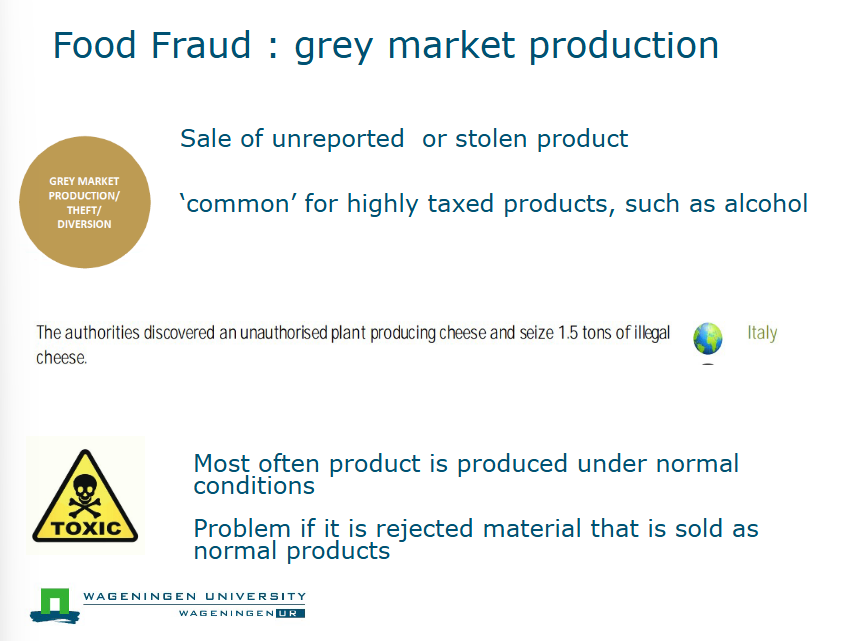
Grey market production
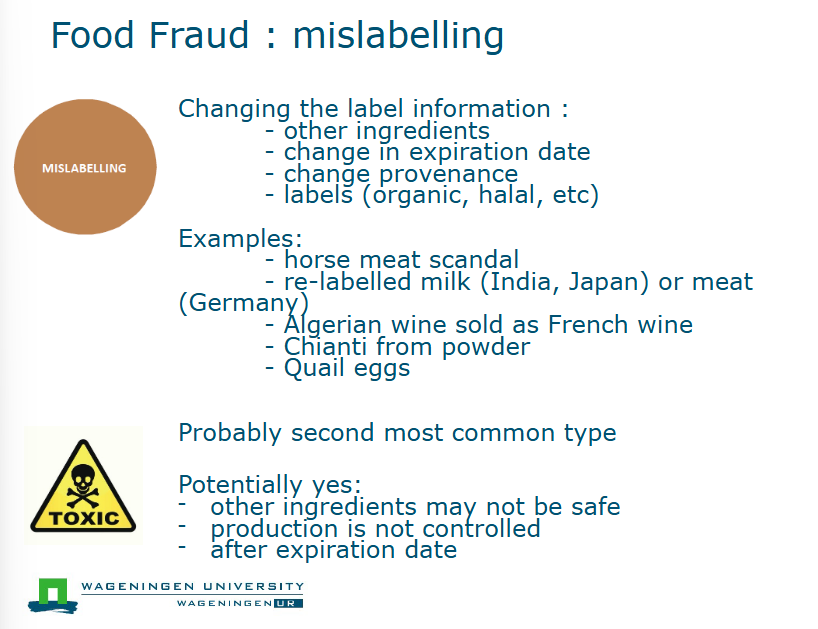
Food fraud: mislabelling
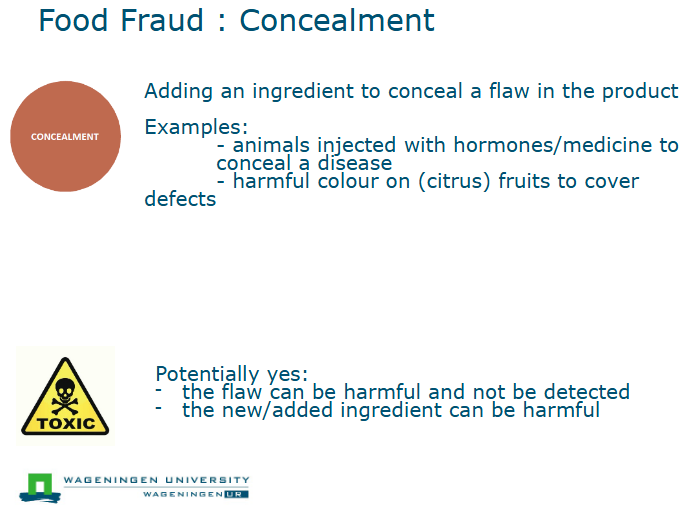
Food fraud: concealment
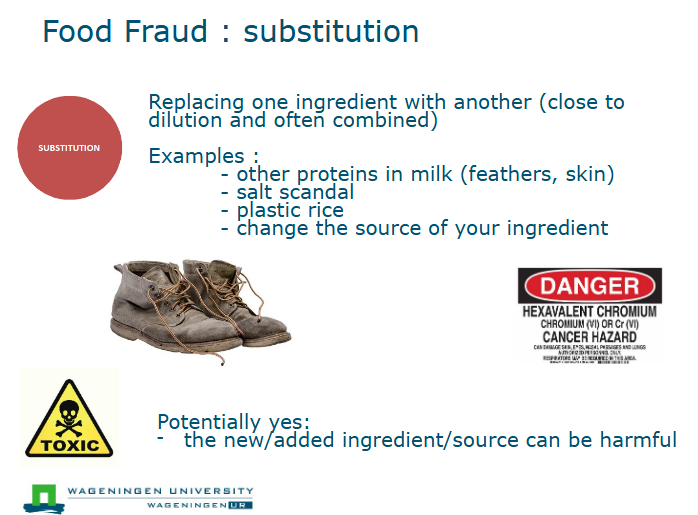
Food fraud: substitution
Prevention, detecting and management of fraud
Very difficult:
No standards
Can happen everywhere
Supply chain
Production
After production
Learn from old cases
Spot trends
Detection very difficult and expensive
Prevention is better
Parameters or origin to detect fraud
Chemical markers
(plant) origin (colors, aroma)
Source (soil elements)
Processing parameters (heating)
Genetics (DNA)
Physical markers
Color
Dispersion and other physical methods