Unit 7 AP Human Geo
 Call Kai
 Learn
Learn Practice Test
 Spaced Repetition
 Match
Match Flashcards
 Knowt Play
1/46

There's no tags or description
Looks like no tags are added yet.
Name | Mastery | Learn | Test | Matching | Spaced | Call with Kai |
|---|
No analytics yet
Send a link to your students to track their progress
47 Terms
Urban
A densely populated area with many services
Urbanization
The process of making an area more urban
Suburb
An outlying residential area of a city
Suburbanization
Movement from cities to suburbs
Metropolitan
A city and its surrounding interconnected areas
Urban Hierarchy
Ranking cities by population size
Annexation
Adding new territory to a city
Zoning Ordinance
Laws controlling land use
Exurbs
Wealthy areas beyond suburbs
Boomburbs
Fast-growing suburban cities
Edge City
Business center outside downtown
Urban Cluster
Area with 2,500–49,999 people
Megalopolis
Linked metropolitan areas
Megacities
Cities over 10 million people
Metacities
Connected megacities via infrastructure
World Cities
Global centers of trade and influence
Bid Rent Theory
Land value decreases from city center
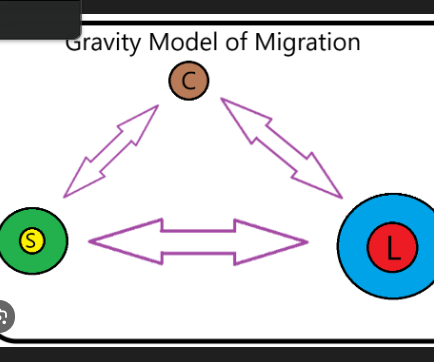
Gravity Model
Larger cities attract more people/services
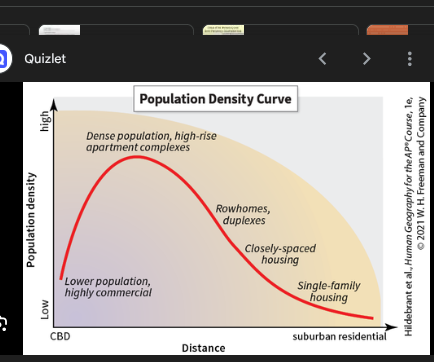
Density Gradient
Population decreases from center outward
Rank-Size Rule
City size follows a predictable ranking
Primate City
Dominant city much larger than others
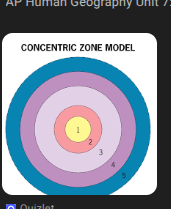
Concentric Zone Model
City grows in rings
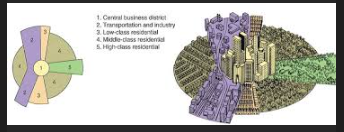
Sector Model
City develops in wedges along transport
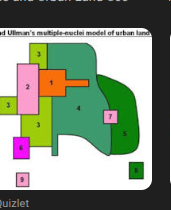
Multiple Nuclei Model
City has multiple centers
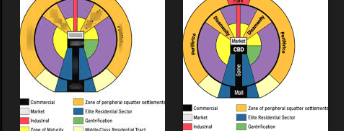
Latin American City Model
CBD with elite spine and poor outskirts
African City Model
Three CBDs (colonial, traditional, market)
Southeast Asian City Model
Grows around a port zone
Gentrification
Wealthy people move into poor areas
Food Deserts
Areas lacking healthy food access
Ethnic Segregation
Separation of groups into areas
Urban Blight
City decay due to neglect
Brownfields
Contaminated industrial land
Zones of Abandonment
Areas left due to economic decline
Sustainable Development
Meeting needs without harming future
Greenbelt
Protected land limiting city growth
New Urbanism
Walkable mixed-use communities
Slow-Growth Cities
Cities limiting expansion
Smart Growth
Efficient and sustainable planning
Sail-Wagon Epoch (1790–1830)
Slow transport, compact cities
Iron Horse Epoch (1830–1870)
Steam transport connects cities
Steel-Rail Epoch (1870–1920)
Railroads expand cities
Auto-Air-Amenity Epoch (1920–1970)
Cars/planes increase mobility
Satellite-Electronic Epoch (1970–Present)
Digital communication era
Favelas
Informal settlements due to poverty
Favela Pros
Community and creativity
Favela Cons
Poverty, crime, lack of services
Favela vs US Cities
Similarities and differences in urban life