patterns of inheritance unit 6 honors bio (copy)
0.0(0)
Studied by 2 people Call Kai
 Learn
Learn Practice Test
 Spaced Repetition
 Match
Match Flashcards
 Knowt Play
Card Sorting
1/49

Last updated 9:18 PM on 3/21/23
Name | Mastery | Learn | Test | Matching | Spaced | Call with Kai |
|---|
No analytics yet
Send a link to your students to track their progress
50 Terms
1
New cards
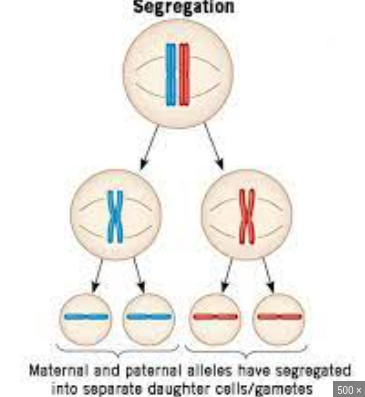
**Law of Segregation**
Allele pairs separate during gamete formation and then randomly re-form as pairs during the fusion of gametes during fertilization.
50% of a parents kids get one allele, 50% get the other
50% of a parents kids get one allele, 50% get the other
2
New cards
meiosis
A two stage cell division exhibited in sexually reproducing organisms that results in the production of gametes(sperm or egg cells).
3
New cards
asexual reproduction
one single parent passes copies of all its genes to its offspring
4
New cards
sexual reproduction
two parents produce offspring with unique combinations of inherited traits
5
New cards
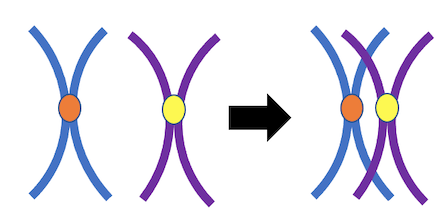
synapsis
during prophase I, homologous chromosomes pair together forming a terad (terad=set of 4)
6
New cards
mitosis
Specifically division of the nucleus during cell division in an organism. Occurs in both sexually and a-sexually reproducing organisms.
7
New cards
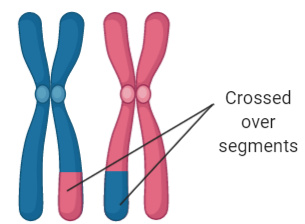
crossing over
non-sister chromatids from each homologous chromosome exchange genetic information
If two genes are closer together on the chromosome, more likely to be inherited together during the exchange between the two chromosomes.
If two genes are closer together on the chromosome, more likely to be inherited together during the exchange between the two chromosomes.
8
New cards
oogenesis
the development of egg cells via the process of meiosis in the ovary of a female.
produces one viable egg cell and 3 polar bodies
Females don’t go through meiosis II until after fertilization
Happens since egg cell needs to contain all organelles for celluar function
3 polar bodies are the result of the female rejecting the second X chromosome
produces one viable egg cell and 3 polar bodies
Females don’t go through meiosis II until after fertilization
Happens since egg cell needs to contain all organelles for celluar function
3 polar bodies are the result of the female rejecting the second X chromosome
9
New cards
**spermatogenesis**
sperm production via meiosis. produces 4 viable sperm cells
10
New cards
Through breeding, Mendel was able to…
establish eight completely dominant traits in pea plants
\
\
11
New cards
**Law of Independent Assortment**
Each allele pair segregates independently during gamete formation when genes for two different characteristics are located on different pairs of homologous chromosomes…(PUT SIMPLY: Idea that if you take two traits, it doesn’t necessarily mean they will be inherited together if they’re not on the same chromosome)
Just because someone has one trait, doesn’t mean they are automatically going to have another.
Genes are not inherited as a package deal.
Just because someone has one trait, doesn’t mean they are automatically going to have another.
Genes are not inherited as a package deal.
12
New cards
nondisjunction
When homologous chromosome pairs during Meiosis I or sister chromatids during Meiosis II do not divide correctly
13
New cards
monosomy (nondisjunction)
missing one chromosome from a pair
14
New cards
trisomy (nondisjunction)
adding one chromosome to a pair
15
New cards
aneuploid (nondisjunction)
the presence of an extra chromosome or the absence of a chromosome from a pair
16
New cards
autosomes
Any of the chromosomes not involved in determining sex (Chromosome pairs 1-22 in humans)
17
New cards
sex chromosomes
A pair of chromosomes involved in determining sex (Chromosome XY or XX)
18
New cards
karyotype
an individual’s full set of chromosomes…may be used to look for abnormalities in chromosome number or structure.
19
New cards
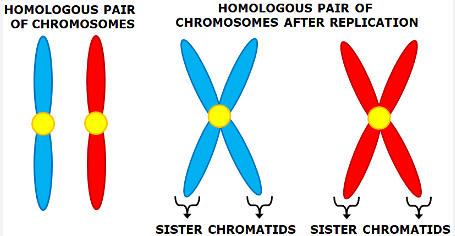
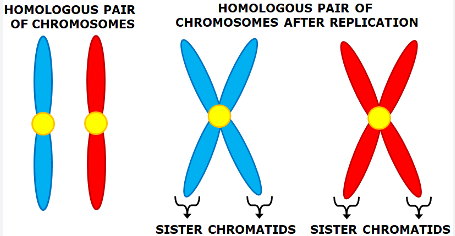
homologous chromosome pairs
Chromosome pairs that have the same genes containing variations of the same trait…one from mom and one from dad
20
New cards
sister chromatids
Replicated forms of a each homologous chromosome
21
New cards
phenotype
The traits that an organism expresses
22
New cards
alleles
Alternate versions of a gene
23
New cards
dominant allele
the allele that is fully expressed in the phenotype
24
New cards
recessive allele
the allele that is masked in the phenotype
\n
\n
25
New cards
epigenetics
Environment can turn genes on/off
Example: identical twins change after time due to certain genes being turned on and off
Example: identical twins change after time due to certain genes being turned on and off
26
New cards
genotype
The genetic makeup of an organism (ex: AA, aa, Aa)
27
New cards
**Homozygous dominant**
Having two identical dominant alleles for a given trait
28
New cards
**Homozygous recessive**
Having two identical recessive alleles for a given trait
29
New cards
heterozygous
Having a dominant and recessive allele for a given trait. The dominant allele is expressed as the phenotype.
30
New cards
**Monohybrid Crosses (Complete Dominance)**
A cross between parents which are homozygous for different alleles for the same trait (ex: AA+aa parents) (F1 gen will always be heterozygous)
31
New cards
**Incomplete Dominance**
blend of traits (ex: white+red=pink)
32
New cards
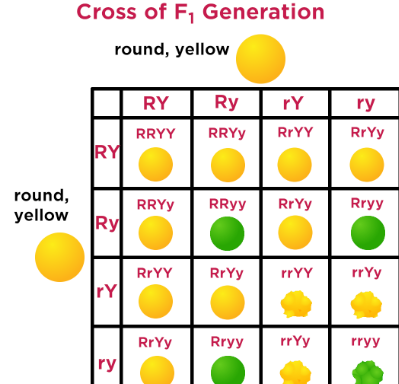
dihybrid crosses
mating between two organisms that are identically hybrid (heterozygous) for two different alleles/traits
33
New cards
sex linked traits
used to observe the inheritance patterns of the sex chromosomes, particularly the X chromosome…most common in males (XY: hemizygous)
34
New cards
**Dosage Compensation (X inactivation)**
\
\
In females only one x-chromosome is acivated in every cell. the inactivated chromosome shrivels up into a barr body. this process is random, and the x chromosome from either the mother or father may be activated
35
New cards
multiple alleles
A genetic trait that has more than three phenotypes (ex: blood types)
36
New cards
antigen
foreign substance that enters the body…can be good if they work with antibodies to “practice” a defense for future invaders (ex: vaccines)
37
New cards
antibody
a protein produced by the immune system to fight off antigens
38
New cards
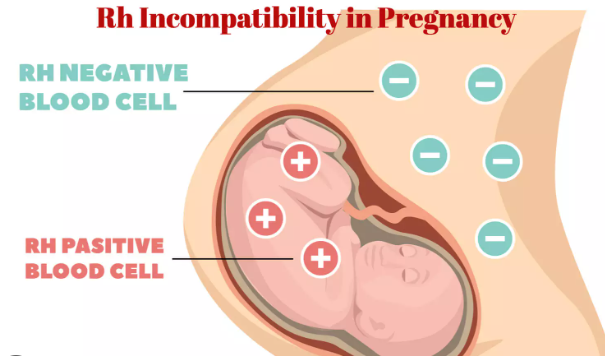
Rh factor
indicates +/- designation of blood type and whether the blood of two different people is compatible when mixed
39
New cards
multifactoral traits
**involve many genes(polygenic) and many factors (most genes are multifactorial)**
\n
\n
40
New cards
quantitative traits
measurable phenotype that depends on the cumulative actions of many genes and the environment. (ex: height and weight)
41
New cards
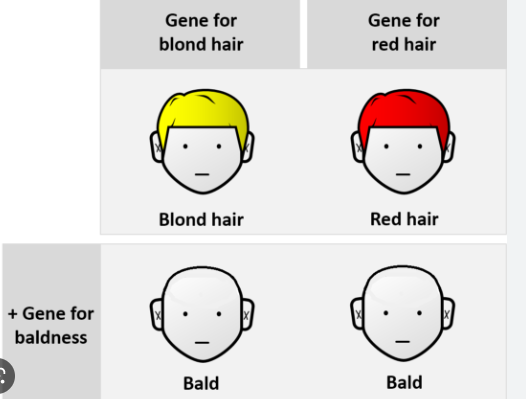
epistasis
one gene altering the expression of another gene
42
New cards
autosomal traits (pedigree)
50/50ish between men and women, can be dominant or recessive
43
New cards
sex-linked traits (pedigree)
more common in males, usually recessive (females can only have it if dad has the trait and mom is a carrier)
44
New cards
In order for mutations to be passed down to future generations, it must occur in the…
gametes (sex cells)…however, this does NOT ALWAYS affect future generations.
45
New cards
Prophase I (Meiosis)
Chromosomes condense
Crossing over occurs
Crossing over occurs
46
New cards
Steps of Meiosis
Prophase I-II, Metaphase I-II, Anaphase I-II, Telophase I-II
NO S Phases
NO S Phases
47
New cards
Zygote
Very first cell, merging of sperm and egg cell
48
New cards
Amniocentesis
Amniotic fluid is extracted by the fetus and tested for genetic abnormalities
49
New cards
Chronic Villus Screening
Used to detect anueploidy in babies
done earlier in pregnancy
takes a sample of the mother’s placenta
done earlier in pregnancy
takes a sample of the mother’s placenta
50
New cards
Law of Dominance
If you put two genes together the offspring will end up with one of them