Lecture 6
 Call Kai
 Learn
Learn Practice Test
 Spaced Repetition
 Match
Match Flashcards
 Knowt Play
1/18

Earn XP
Description and Tags
T cells
Name | Mastery | Learn | Test | Matching | Spaced | Call with Kai |
|---|
No analytics yet
Send a link to your students to track their progress
19 Terms
Thymic selection of T cells
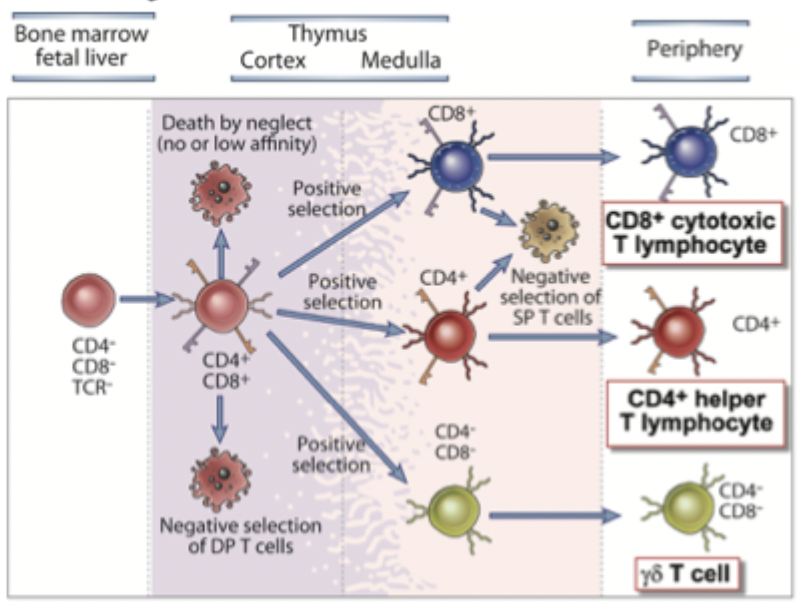
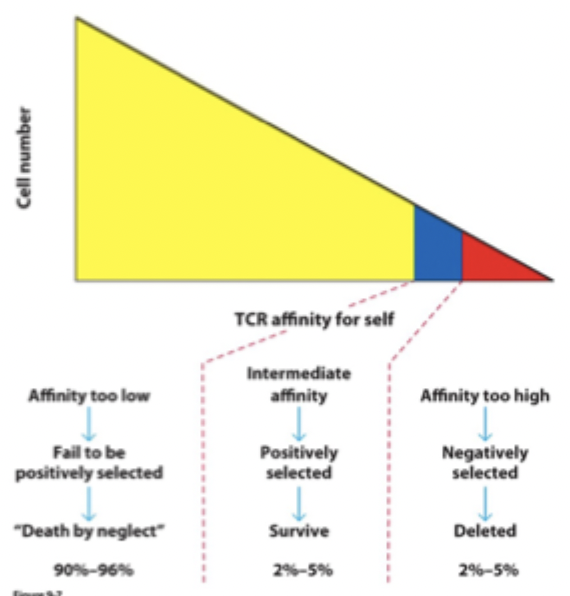
most thymocytes die by
neglect
T cell recognition of MHC/peptide (compared with antibody)
antibody must be able to recognise an almost infinite variety of shapes
TCR confined to recognising MHC plus peptide
therefore, following thymic selection TCR are less variable than antibody
TCR-alphabeta associates with
zeta, epsilon-gama and epsilon-delts CD3 chains
TCR ab transmembrane domains are negatively charged, while CD3 transmembrane regions are negatively charged which mediates association between the different TCR molecules
ITAMs
tyrosine signalling molecules
3 in the zeta CD3 chain
CDR sequences of TCR
TCR has 3 CDR
1 and 2 mainly contact MHC and are encoded in V genes
3 contacts mainly peptide and encoded by J (alpha chain) or D-J (beta chain)
TCR gene structure
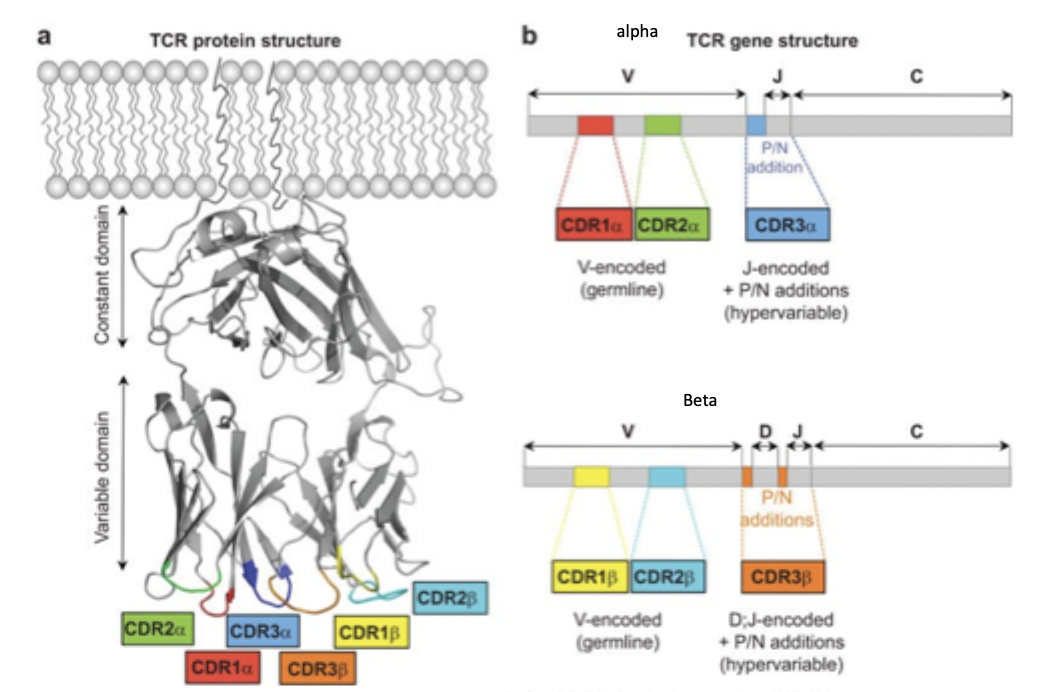
CDR3 formed at the junction of the V gene and the J gene - so very variable because there is addition randomly of nucleotides in this gap when joining occurs
Co-evolution of these genes in humans with MHC
Joining is messy which causes diversity
Alpha and beta each have 3 CDR regions
CDR3 makes the most contact with pepitde
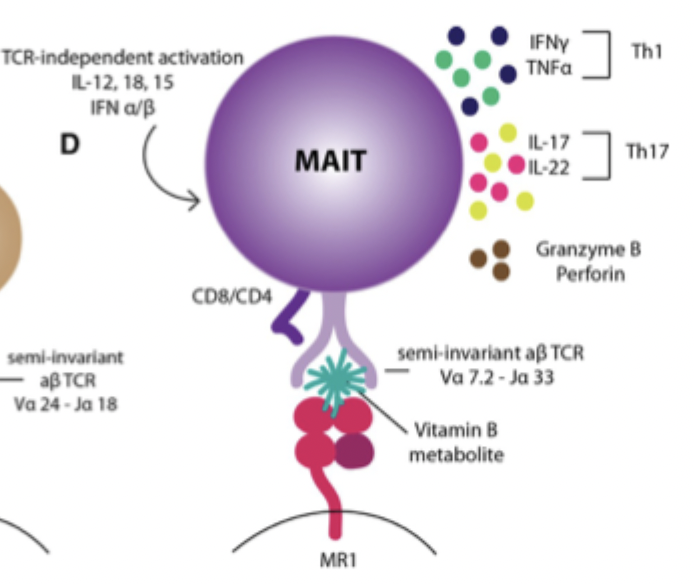
MAIT cells
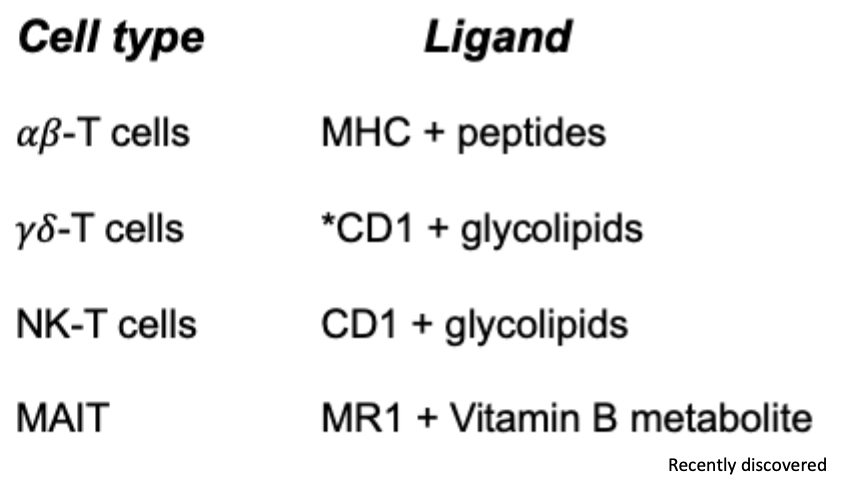
use alpha beta chain
recognise products of bacterial metabolism - vitamin B
Receptors generally look the same between all MAIT cells
Recognise a non-classical MHC - MR1
MR1 is very unstable so generally doesn’t reach surface unless has vitamin B
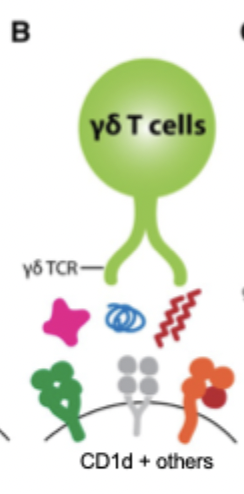
gamma-delta T cells
Gamma deltas have different chains - don’t use alpha beta
But have similar role to alpha beta TCR
Different gene set
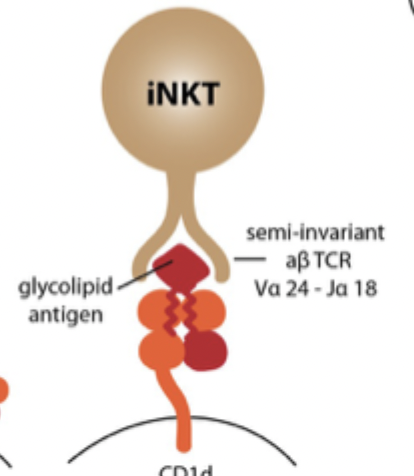
Recognise CD1d
iNKT cells
use alpha beta chain
not NK cells bind glycolipid antigens (most famously alphagal - from sea sponge
T cell types and their ligands
CAR T cell components
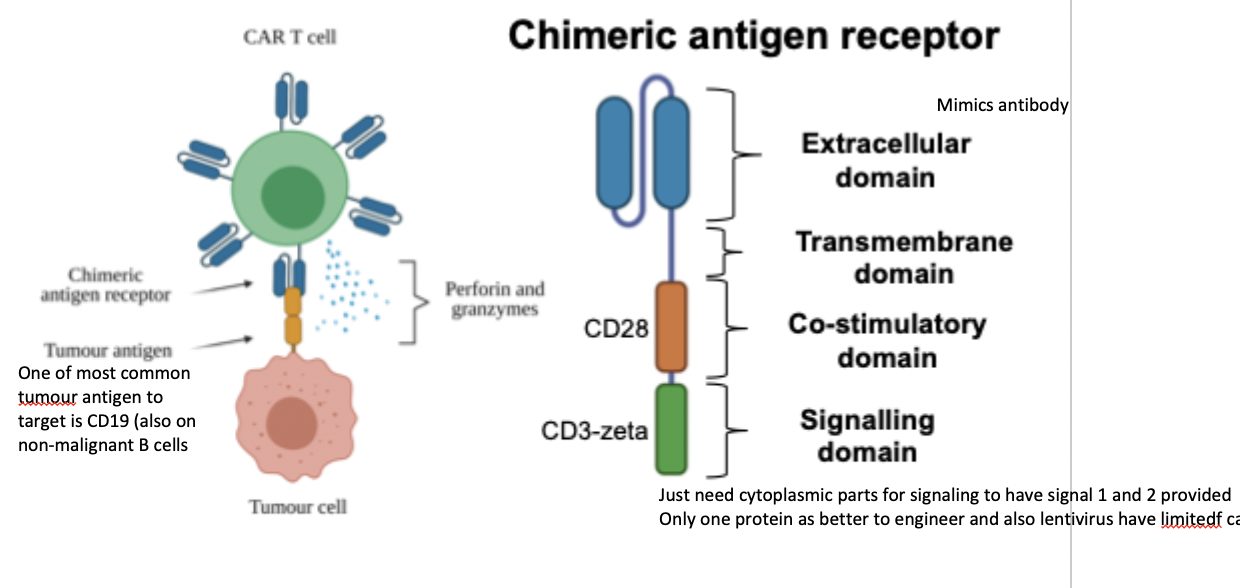
tumour binding variable antibody fragment (scFv)
scFv is fused to T cell signalling components in the cytoplasm (e.g. CD28, CD3 zeta - this has three ITAMs so can just use it as the endogenous purpose)
binding of CAR to surface tumour antigen leads to T cell activation
CAR T cell immunotherapy
extracellular domain (mimics antibody) - the two antibody chains which have been connected to become a single subunit so can be expressed and folded together
then transmembrane domain
then costimulatory domain e.g. CD28 and signalling domain e.g. CD3-zeta
CAR T cell process of cell death
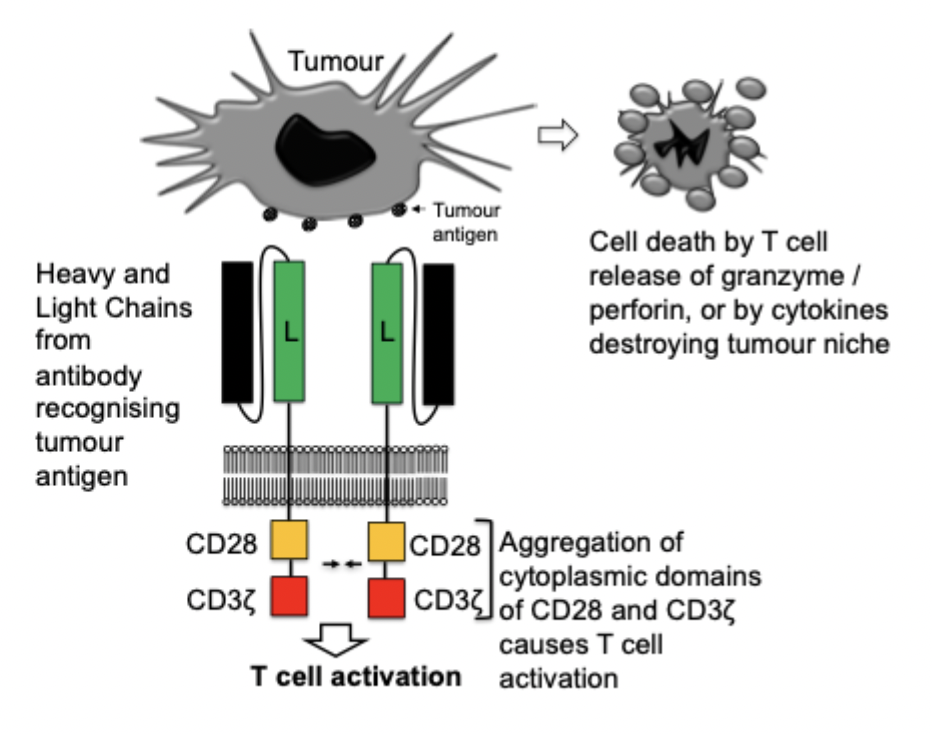
expression of CAR on T cells
splice antibody heavy an dlight chain variable domains of anti-cancer antibody onto cytoplasmic domains of CD3-zeta and CD28
transduce patient T cells with this chimeric construct
this hardwires T cells to attack the cancer
CAR T cell therapy overall
clinical process is very expensive
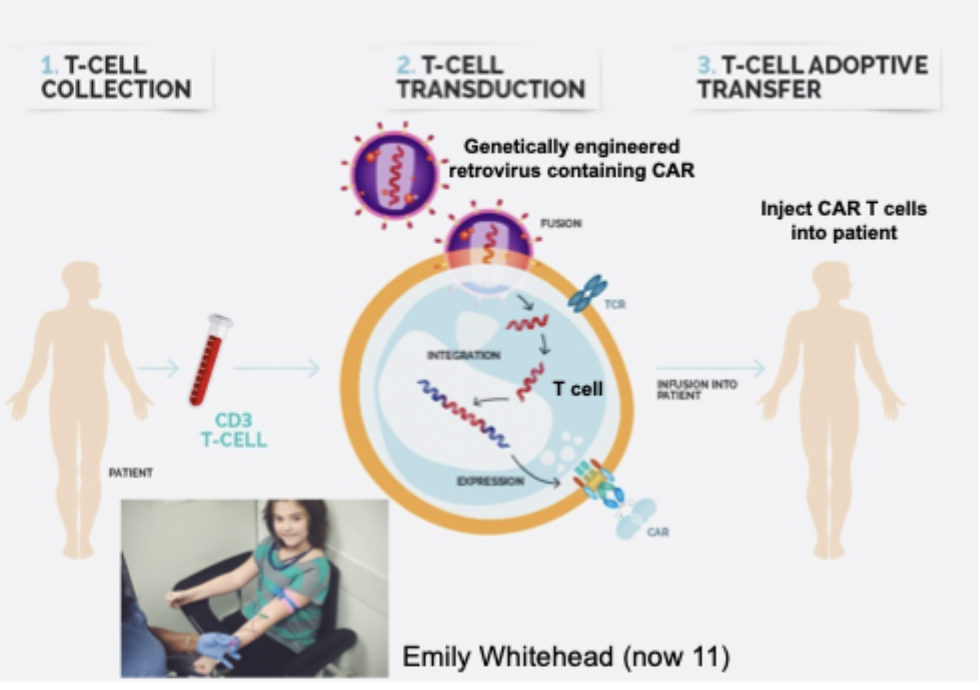
CAR permenantly integrated into the genome of the T cell
Then T cells put into the patient and they should product T cells
Concern with the CAR itself becoming a cancer because the retrovirus likes to insert into active areas of chromatin where genes are being expressed - concerning because could knock out tumour supressor genes or promote growth gene
Or could cause damage to DNA in other ways
So there are risks of deleterious effects - but this has been shown to be very low
Use less infectious viruses to deliver the gene
CAR T cells effictivenes
70-80% response rates in B cell lymphomas
effective against relpased/refractoey disease
Usually used when people have already tried and failed with conventional therapies
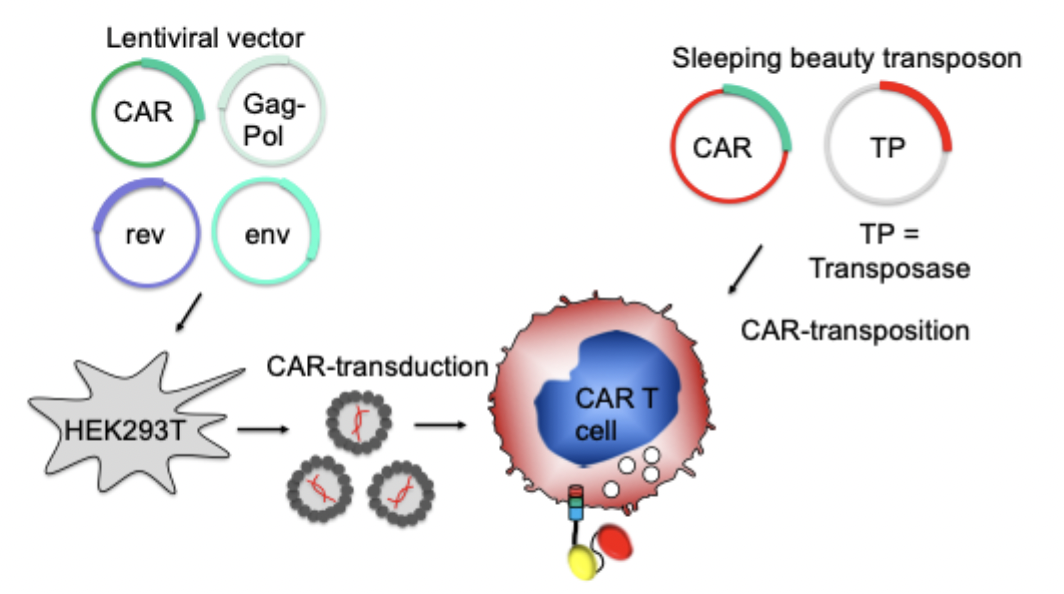
2 ways to insert the chimeric receptor into the T cell
lentiviral vector
or transposon
Transposons instead of viruses - inefficient but integrate randomly which means more likely to dinsert into a junk area rsther than an important one
Now trying to do this whole process in vivo - to make this a lot easier and cheaper
CAR signalling domains
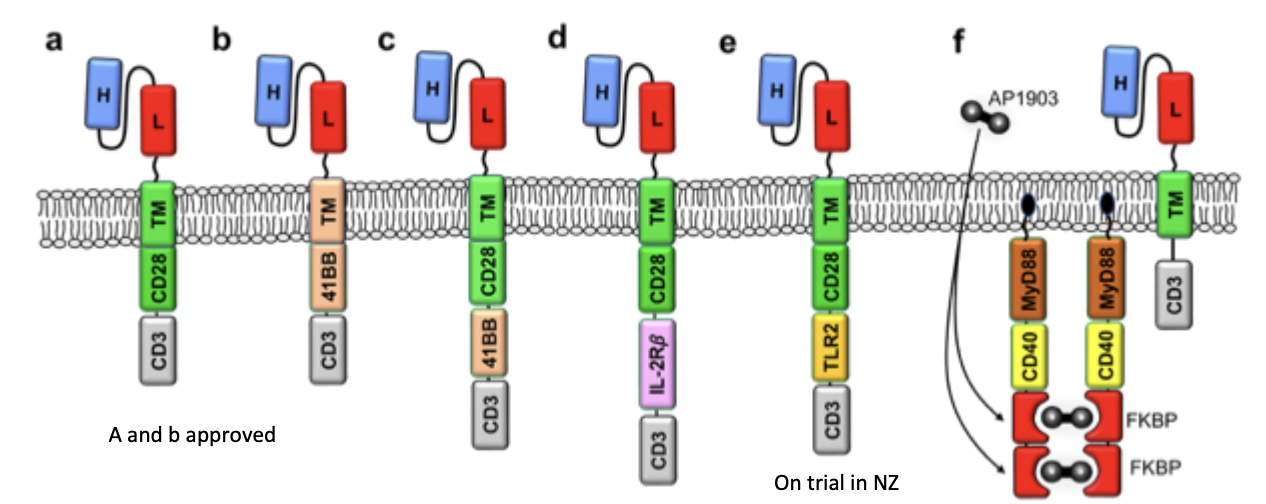
2 on left have been approved, simple ones seem to work better but some more complex ones are being developed as well
one on right is designed so that the chimeric receptor is only active when the drug AP1903 is administered and the cells lose their efficacy when the drug has been removed from the system