Module 10, 11, 12 ~ Alcohol, Coffee and Physical Activity
 Call Kai
 Learn
Learn Practice Test
 Spaced Repetition
 Match
Match Flashcards
 Knowt Play
1/58

There's no tags or description
Looks like no tags are added yet.
Name | Mastery | Learn | Test | Matching | Spaced | Call with Kai |
|---|
No analytics yet
Send a link to your students to track their progress
59 Terms
Difference between a major and trace mineral?
major: needed in over 100mg/day or > 0,01% body weight
trace: less than 100 mg/day, or less than 0,01% body weight
Which minerals are major?
calcium, phosphorus and magnesium
Which minerals are trace?
iron, zinc and fluoride
What is bone remodeling?
bones continuously being broken down and reformed
What type of cells are the bones BUILT by?
OsteoBlast cells
What type of cells are the bones BROKEN down by?
OsteoClast
How does calcium play in bone health?
low calcium in youth or adults results in lower bone density
Children have high bone formation, true or false?
True
When does the peak bone mass occur?
between 16 & 30 yrs
balance is when bone mass is constant
bone mass decreases as we age
Substances on the extracellular side of cell?
Sodium
Chloride
Calcium
Substances inside the cell, intracellular?
Potassium
Magnesium
Phosphorus
Zinc
Thiamin (B1)
Riboflavin (B2)
Niacin (B3)
Folate (B9)
Vitamin B12
Iron
Vitamin ADEK
What is caffeine and where is it absorbed?
found in coffee, tea and some soft drinks
absorbed in stomach and small intestine, goes quickly to the brain
Where is caffeine eliminated and reduced?
eliminated in the urine
4-6 hours to reduce amount in 1/2
What are the benefits of caffeine?
found to enhance performance and endurance for prolonged exercise and short term high intensity exercise
improves concentration, alertness and fatigue
Outward Side effects of too much caffeine?
anxiety
difficulty sleeping
muscle tremors
restlessness
What happens if you stop caffeine suddenly?
drowsiness
headaches
irritability
nausea
vomiting
depressed state
What happens in your body if you have too much caffeine?
stops the absorption of calcium and leads to thinning bones (osteoPorosis)
painful, lumpy breasts
can effect birth weight for baby
Chronic headaches
irregular heart or fast heart rhythm
What are the recommendations for caffeine in general adults?
moderate tea/coffee consumption
4 cups of brewed (400mg caffeine)
5 servings of tea 165 or 235mg caffeine)
What is the recommendations specifically to pregnant women?
no more than 300mg of caffeine which is 1-2 cups?
What damage can caffeine cause for a pregnant woman?
miscarriage
low birth weight
Is it legal to add caffeine to alcohol in Canada?
*NO
don’t mix energy drinks with alcohol, stimulant and depressant should NOT be mixed
What is alcohol?
common name for ethanol
a drug-like effect acting on your central nervous system
acts like depressant
True/False: alcohol has lots of nutrients?
no, amount of protein, vitamins and minerals is negligible
How much energy does alcohol provide?
7kcal/g
Where is alcohol absorbed when drank?
in the whole GI tract by simple diffusion
small amount in mouth and esophagus
How much % of alcohol is absorbed in the stomach?
20% absorbed in the stomach
Effects are immediate on an empty stomach
Food slows absorption of alcohol
majority is absorbed in the duodenum and jejunum
What happens in blood when alcohol is absorbed?
enters the blood stream as a small water-soluble
distributed throughout the body
peak blood concentrations occur 1 hour after ingestion
What are diuretics often called “water pills”?
medications or substances that help the kidneys remove excess sodium and water from the body through increased urine production
Does excessive alcohol intake cause a diuretic?
Yes
acts like it when reaches the kidney
increases water excretion and dehydration
What can affect blood alcohol level?
Weight: more water in body so its dilute
Gender: men have more body water
Food: when in stomach slows alcohol absorption
Drinking Rate: body metabolizes alcohol slowly, more = inc
Type of Drink: accompanied with tonic water or club soda = absorb quicker
What is Alcohol poisoning?
exceeds individuals’ tolerance for alcohol
What is blackout drinking?
amnesia (excess alcohol)
What is Binge Drinking?
5 or more drinks are consumed at one time
What are the long-term effects in body of excessive alcohol intake?
causes malnutrition
decreases overall nutrient intake by interfering with storage, metabolism, and excretion
increases your kcalorie intake
What are the long-term effects of excessive alcohol intake (health condition wise)?
*generates toxins and dree radicals that cause
liver damage: fatty liver, alcoholic hepatitis
hypertension, heart disease and stroke
inc risk for certain types of cancers
Can alcohol be stored in the body?
*NO
Why can’t alcohol be stored in the body?
its a toxin and needs to be eliminated quickly
broken down before carbs, fat and proteins in liver
What are the percentages of alcohol elimination in body?
90% is metabolized by liver
5% in urine
5% via lungs in exhalation
90% made into water and CO2 by liver
Flow of alcohol metabolism in liver?
liver (2 enzymes) > acetaldehyde > acetate, water and CO2
Why is breath alcohol used to measure blood alcohol levels?
• The amount of blood lost in exhaled breath is the
proportional to the amount of alcohol in the blood
• Measure breath alcohol to determine if an
individual is driving under the influence
Who should avoid drinking?
• Pregnant women
• Children and adolescents
• Individuals who plan to drive or operate machinery
• Individuals who use alcohol chronically
• Individuals taking medications that can interact with
alcohol
Are there benefits of alcohol consumption?
• No benefits to drinking for health
• Drinking alcohol increases Cancer
• Older studies said “beneficial” but in those studies there
were other lifestyle factors that made the results say it
was beneficial
What should one do with alcohol intake
• Abstain
• Set limits for yourself and stick to them
• Health Canada has low risk guidelines (not no risk)
How many adults are physically inactive?
about 55%
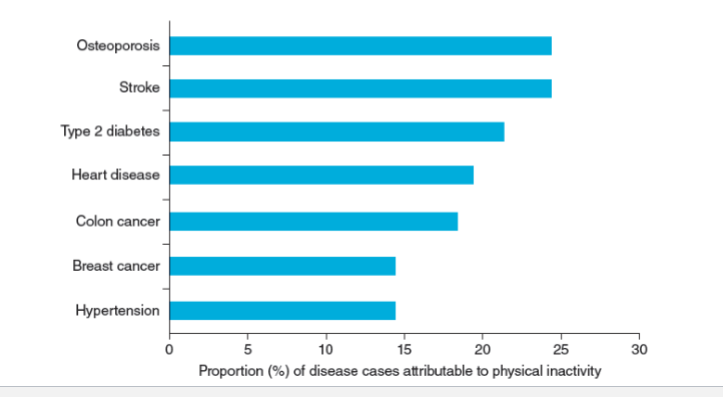
What proportion of diseases are caused by
physical inactivity
What is fitness?
the ability to perform routine physical
activity without undue fatigue
What is aerobic exercise?
includes endurance exercises such as jogging, swimming or cycling, or any exercise that increases heart rate and requires oxygen in metabolism.
Cardiorespiratory system?
includes circulatory and respiratory system, delivers oxygen and nutrient to the cell
Atrophy?
wasting and decreases size of muscle or tissue by lack of use
Hypertrophy?
increase size of muscle or organ
What is the role of exercise on the heart?
• Regular aerobic exercise strengthens the heart muscle, increase stroke volume, decreasing resting heart rate
Stroke volume
amount of blood pumped with each beat of
the heart
Resting heart rate?
rate at which the heart must beat to supply blood to the tissues at rest (measured by number of pulse per minute while at rest)
Aerobic Capacity
body’s maximum ability to generate ATP by
aerobic metabolism during exercise. Also called VO2 max
How to start and maintain an exercise program?
• Start slowly.
• Set specific attainable goals. Once you have met them, add
more.
• Make exercise fun and convenient
• Stay motivated
• Keep your exercise safe
What are the health benefits of exercise?
• increased flexibility and the ability to easily perform daily activities:
• Cardiovascular health
• Diabetes prevention or management
• Bone and joint health
• Weight management
• Possible reduction of cancer risk
• Psychological/Mental health
What fuels exercise?
*Aerobic metabolism: metabolism in the presence of oxygen
Glucose, fatty acids, and amino acids are completely broken down to form CO2 and H20 and to produce ATP
Do you need fluid with exercise?
Yes
H2O is needed to eliminate heat, transport oxygen and
nutrients to the muscles
• Water also removes waste products from the muscles (e.g.,
lactic acid)
• No water, leads to dehydration
• If heat is not lost, body temperature rises, and can affect the
person
• Dehydration reduces the body’s ability to deliver Oxygen and
nutrients to muscles
Recommendations for fluid
• Begin Exercise well hydrated
• During exercise – consume water to replace losses from
sweating
• For exercise lasting 60 minutes or less, plain water
• Longer than 60 minutes, consume fluid with some carbohydrate
may improve endurance and electrolytes
• After exercise -drink fluid
• 500-750 mL of fluid for each 0.5 kg lost weight