Semester 2 - Intro to Sustainability
 Call Kai
 Learn
Learn Practice Test
 Spaced Repetition
 Match
Match Flashcards
 Knowt Play
1/54

There's no tags or description
Looks like no tags are added yet.
Name | Mastery | Learn | Test | Matching | Spaced | Call with Kai |
|---|
No analytics yet
Send a link to your students to track their progress
55 Terms
Ocean Acidification
reduction in ocean pH, from more CO2 in atmosphere - ocean absorbing more = more acidic
Loss of coral reefs - threatened by dual stressors (ocean warming + acidification) - looking at climate-resistant corals
El Nino
Eastern Pacific heats up more than normal - creating unusually hot and stormy weather
declared when water warms up by half a degree C high than long term average
La Nina
water cools down more than usual in parts of Pacific Ocean (btwn S. America & Asutralia)
Sea surface drop 3-5 C
leads to cooler/drier weather
Global Consequences of warmer seas
LOSS OF SPP - more frequent/intense marine heatwaves = mass mortality of sea life (esp coral reefs)
MORE EXTREME WEATHER - increased heat in upper ocean surface = hurricanes/cyclones pick up more energy
SEA LEVEL RISE = warmer waters take up more space (thermal expansion) —> accelerate melting of glaciers from Greenland & Antarctica
LESS ABILITY TO ABSORB CO2 = less CO2 uptake means more accumulation in atmosphere means further warming
*at the moment oceans take up ¼ GHG emissions
Changes in fish stocks
70% spp shifting ranges/moving to shallower or deeper waters bc of changing water temps
Increase in fish spp found in higher latitudes (global waters warm)
**not always about spp loss, also about spp moving location —> due to warmer seas
keeping up with change
new opportunities presented in marine/fishing communities
Climate change impact on seafood industry
ocean acidification causing 14-28% fishery Net Present Value (NPV) by 2100
Northern England & Scotland particularly at risk — high stock sensitivity & low catch diversity
Dead Zones
develop when fertilizers and nutrients (from farmland) drain into bodies of water — creating algae bloom that dies and decomposes
decomposition depletes waters of oxygen which suffocates surrounding spp
nothing can survive in dead zones — CO2 is so low = suffocation
most hypoxic enviro’s = Denmark, English Channel, UK, USA East coast, Gulf of Mexico, Japan
Plastic Pollution
>171 trillion plastic pieces floating in ocean — from 16 trillion in 2005
microplastics consumed by plankton (bottom of food chain)
8 million metric tons of plastic/year —> to ocean
Plastic Pollution relief
average litter dropping 100m/year in UK
Scotland banning plastic cotton bud sticks 2019
Solution-oriented Science — new model for ocean science
multidisciplinary (natural science + social science + humanities)
codesign with local communities, indigenous pop’s, policymakers, NGOs
must address power imbalance and inequity of science
Bycatch
the unwanted fish and other marine creatures trapped by commercial fishing nets during fishing for a different spp
caught but not wanted - causing threat esp when spp are endangered
Overfishing
too many people & larger boats chasing too few fish
overfished stocks tripled in past 50 years
1/3 world’s fisheries being pushed beyond biological limits
Worm et al (2006) estimate we will run out of commercial fish stocks by 2048 (contested)
Newfoundland cod industry
1992 collapse of Newfoundland cod industry symbolic to end of fishing lifestyle
bc of trawling - regulations came too late despite small-scale fishers’ warnings
40,000 jobs lost
Canada govt suspended all cod fishing
User groups within fisheries
small scale (artisanal fishers) - inshore fishing w/ low-tech gears
impacts of fishing often fall onto small scale even though they are least to blame
least resilience/capable of coping
commercial mechanized sector - trawlers
less sustainable
Dependency in fisheries
90% fisheries small scale - 75% UK fleet <10m boats
important protein source - many communities rely
fishers often lack education
lack of livelihood alternatives (family biz, rural infrastructure)
Vulnerability in fisheries
poor health and accidents (death at sea)
uncertain catches/incomes
price fluctuation/exploitation by middle men
climate change/extreme weather conditions
Global importance of fishing
38 million jobs DIRECT, 100 million jobs in total
primary econ activity in low-income/coastal regions
Vit A, Omega 3
Conflict btwn economics/sustainability - KENYA
conflict between marine conservation and small scale fishers
destructive gear/juvenile fish seine bans, marine parks
illegal fishing as response
Fisheries vs Tourism
competition of coastal space/privatization of beaches that fishers can’t access
tourism = $$. Some fishers adapt to benefit but many lose out
Illegal fishing
driving out all fish spp
further threatening fish populations, fishing industry, future food security
Pirate fishing - WEST AFRICA
conflict btwn internal fishery players and “outsiders”, foreign fleets
EU allowed into waters (Brussels 2006) - sparked “How Africa is Feeding Europe”, “Stolen Fish”
1.5 billion GBP fish stolen every year by unlicensed vessels
Marine Protected Areas (MPAs)
protected area that is recognized, dedicated, and managed to achieve long term conservation & ecosystem services
actively managed by a group/organization for conservation outcome
some may be species designated, serve as habitat, nursing/feeding grounds, etc
Variation in MPAs
MPAs in many shapes/sizes
some strict only allowing research, some allowing sustainable use of natural resources
hard to determine what activities are “damaging”, ex Kayakers disturbing Northumberland seals
Large MPAs
World’s largest MPA in Antarctica
600,000 sq miles protected from commercial fishing
home to Adelie penguins, aptrels, minke whales
Europe’s largest MPA - deep sea off Western Isles of Scotland
39,000 sq miles
protecting habitats on seamounts (extinct volcanoes)
MPA Networks
collection of MPAs operating synergistically
designed for objectives that single reserve cannot achieve
Conference of the Parties (COP)
governing body of int’l convention
made of member state reps, accredited observers
Conventions with COP: Convention on Biological Diversity (Hyderabad COP 11), UN Biodiversity (Montreal COP 15), Ramsar Convention (1971)
Wetlands
area of land covered/saturated with water
defined by hydrophytes
Protect shorelines from storm/sea surges (mangroves, seagrass)
capture and store carbon
protection effort from Ramsar Convention (1971)
most threatened ecosystem
Seagrass Meadows
potential to sequester and store “blue carbon” — huge amounts of carbon dissolved in seas
if undisturbed, can store carbon in seafloor — concerns with trawling —> massive C release
Convention on Biodiversity (CBD) 2010
Negotiated in Nagoya JP - govt’s pledged to:
cut habitat loss by 1/2
expand nature reserves to 17% of global land area by 2020
COP 15 & GBF
Montreal Dec 2022 - agreed on Global Biodiversity Framework (GBF):
supports SDGs to live in harmony with nature by 2050
30 × 30 agreement
ecologically representative - rep’ing all spp and needs
pushes effective mgmt, not just designation
respecting rights of indigenous and local communities
Challenges in COP 15
language can be hard to define: ex “sustainable use” - what is sustainable/, “equitably governed” hard to uphold
“respecting rights of indigenous peoples and local communities” - conflict in Biosphere reserve sustainability and impacts on livelihoods/women involvement
MPA can = less fishing, women struggle disproportionately
Special Protection Areas (SPAs)
MPA type in the UK
areas on land/sea which protect vulnerable bird spp in the UK
SACs - Special Areas of Conservation
MPA type in UK
protect habitats and spp (esp sensitive ones) listed on Annex I and Annex II of European Habitats Directive
116 SACs w/ marine components covering 14% of UK waters
MCZs - Marine Conservation Zones
MPA type in UK
designated in England, Wales, Northern Ireland waters
protect nationally important habitats/spp in deeper waters eg coral reefs
Life Cycle Assessment
measuring/quantifying environmental impact of a product, process, service
“Cradle to grave”
assessing raw material > manufacturing > distribution > use > disposal
enables solutions based on which parts of process are most impactful - identifying “hotspots”
LCA Process
Goal and scope
Inventory Analysis (Life Cycle Inventory, LCI)
Impact Assessment
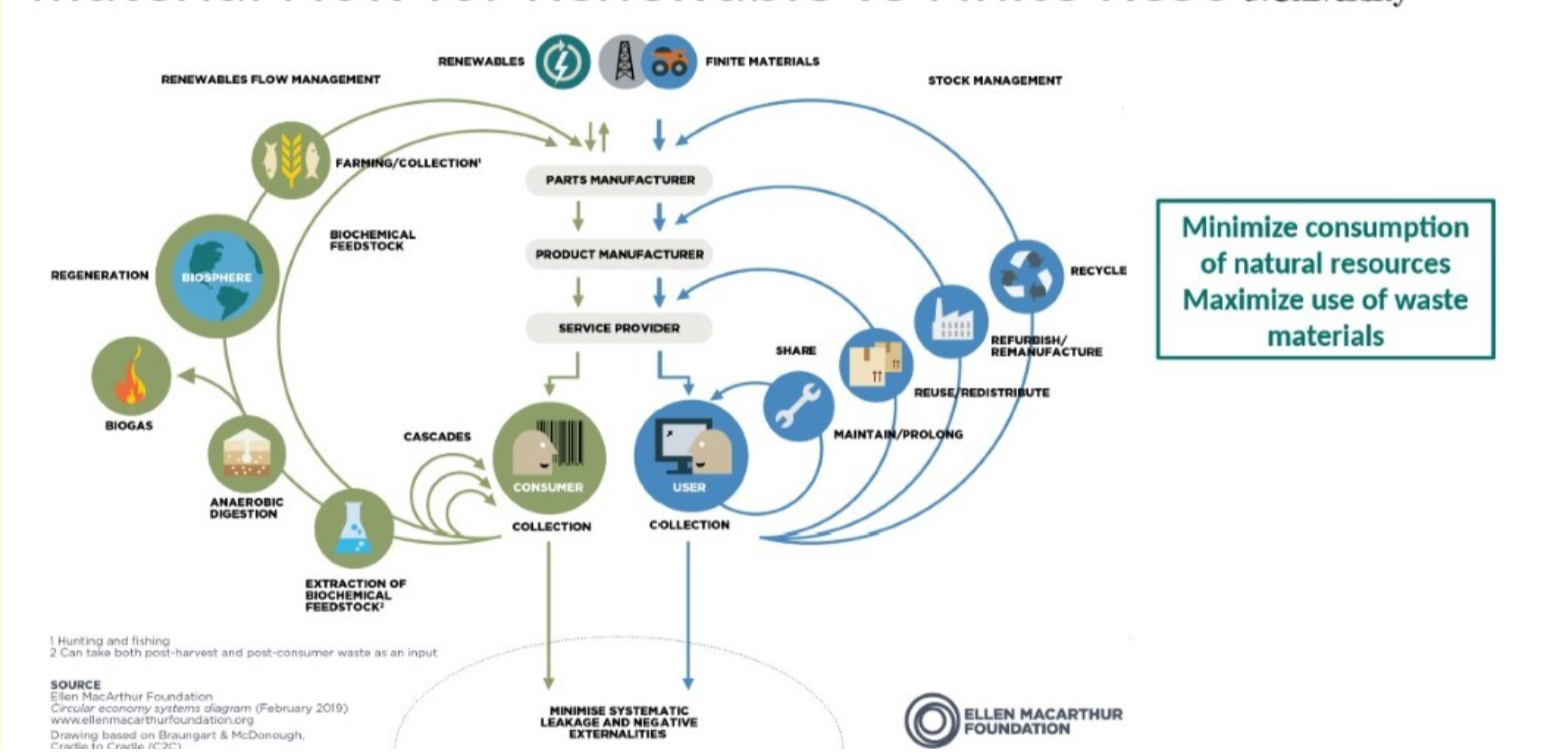
Linear vs Circular Economy
Linear: extract resources > make them into products > used > disposed after lifetime > waste
current predominant structure
Circular: components of products are reused
increasingly important as resources diminish (fossil fuels, minerals)
Material Flow
lots of opportunity for material to be recovered
finite resources: currently not designed to be repaired
LCA Limitations
SCOPE - what you include in analysis, ie leaving things out
QUALITY OF DATA - need high to prevent false estimates
SPECIFICIY - contingent to local context process/product is in
COST - expensive
Energy Demand
before 1850 - just biomass (wood)
post 1850 - coal, oil, natural gas —> FF cheap and supporting growing pop.
CO2 emissions
From fossil fuels (mostly) also land-use change
Essential to decarbonize
Current CO2 conc = 430.02 ppm. Temp currently catching up
Emissions from: Electricity/heat, Transport, Manufacturing
Energy comes from
Coal, oil, gas, nuclear, hydropower
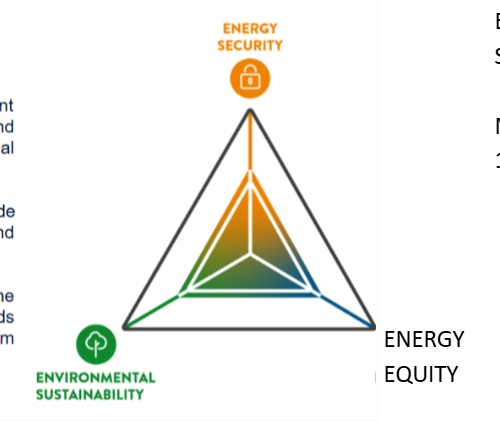
Energy trilemma
meeting energy security, energy equity, energy sustainability
energy security tends to be priority
equity & sustainability not as prioritized (bc of $)
Paris Agreement
Global climate framework
guides long term goals, measures resilience, funding assistance to developing countries
each country must submit plan every 5 years
must cut emissions by at least 45% to keep warming to 1.5C
Solar
Harnessed directly from sun (even in cloudy weather)
Solar Photovoltaic (PV) - electronic devices to convert sun to electricity
Concentrated solar power (CSP) - mirrors to concentrate solar rays. Need lots of space
Trade offs = efficiency, cost, durability
Solar cells produce waste after disposal (Not good for LCA)
Wind
converting KE of or air in motion to electricity
UK = forefront of offshore !
Energy Storage
needed to provide energy flexibility, to be deployed from minutes/hours-days/weeks
>10 hours = long duration energy storage
hydrogen - energy carrier
Carbon Capture and Storage (CCS) and Carbon Dioxide Storage (CDS)
CCS - separating CO2 at point of emission and permanently storing it elsewhere
CDR - anthropogenic activities removing CO2 and storing in reservoirs or products
Fossil fuels reserve
coal - 139 years
oil - 56 years
gas - 49 years
but energy demand still rising
Minerals
mineral - solid substance with defined chem composition
rock - 1 mineral or aggregate of 2+
mineral deposit - location of concentration of geologic process
ore deposit - Economically extractable mineral concentration
Critical mineral
Refers to:
economic importance
supply risk/disruption
Overall, “critical” = economic/geopolitical (not geological)
Which technology will drive the greatest mineral demand
EVs / batteries
Solar
lowest = least amount
Why are recycling rates low for so many critical minerals?
costs
complex product design
Water usage in minerals
mining/extraction uses significant water quantities
waste can contaminate groundwater
many mines located in countries already water-stressed (eg Subsaharan Africa)