kin 419 cognition, perception, and perceptual motor translation (SR comp)
 Call Kai
 Learn
Learn Practice Test
 Spaced Repetition
 Match
Match Flashcards
 Knowt Play
1/46

There's no tags or description
Looks like no tags are added yet.
Name | Mastery | Learn | Test | Matching | Spaced | Call with Kai |
|---|
No analytics yet
Send a link to your students to track their progress
47 Terms
reading
...
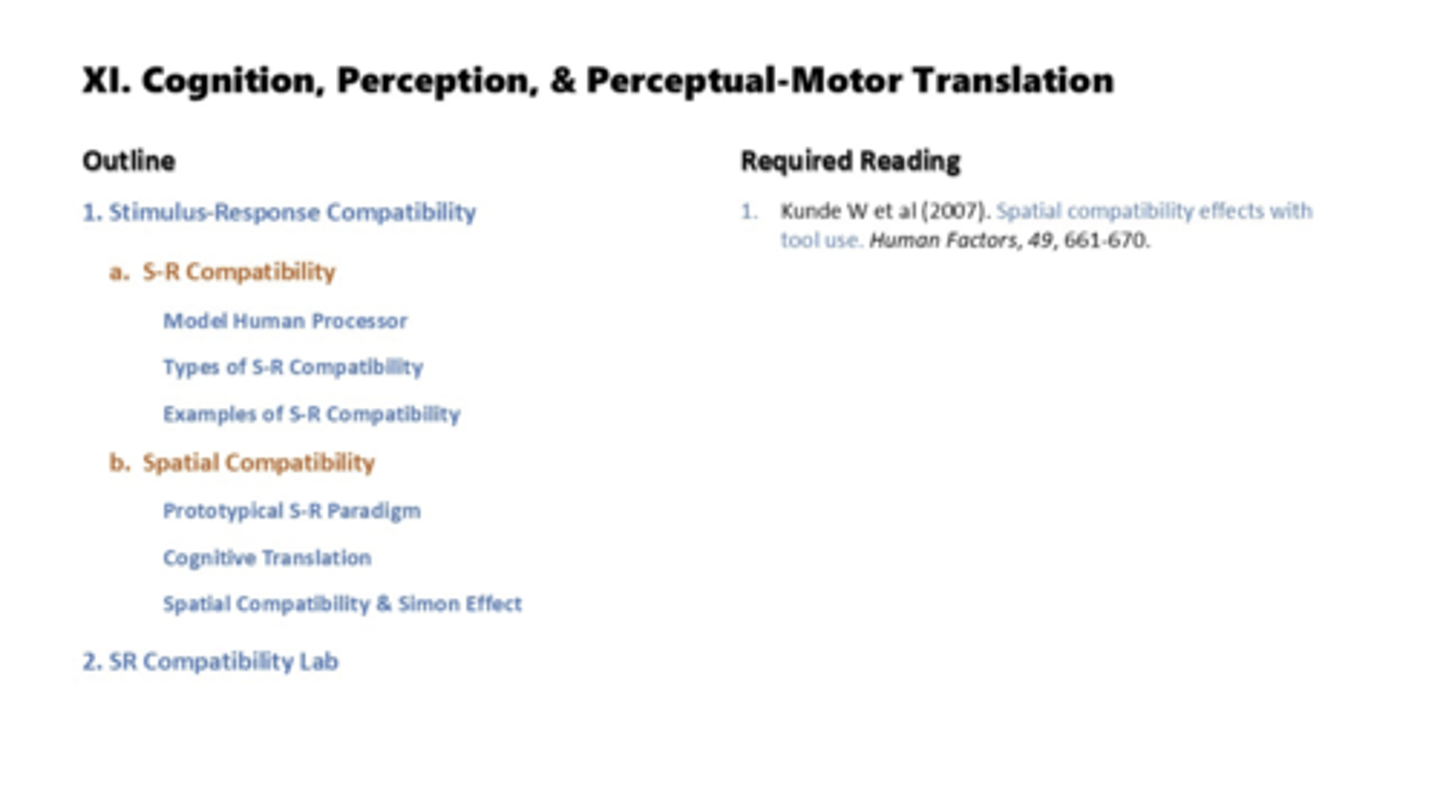
chart of cognition, perception, and perceptual motor translation
...
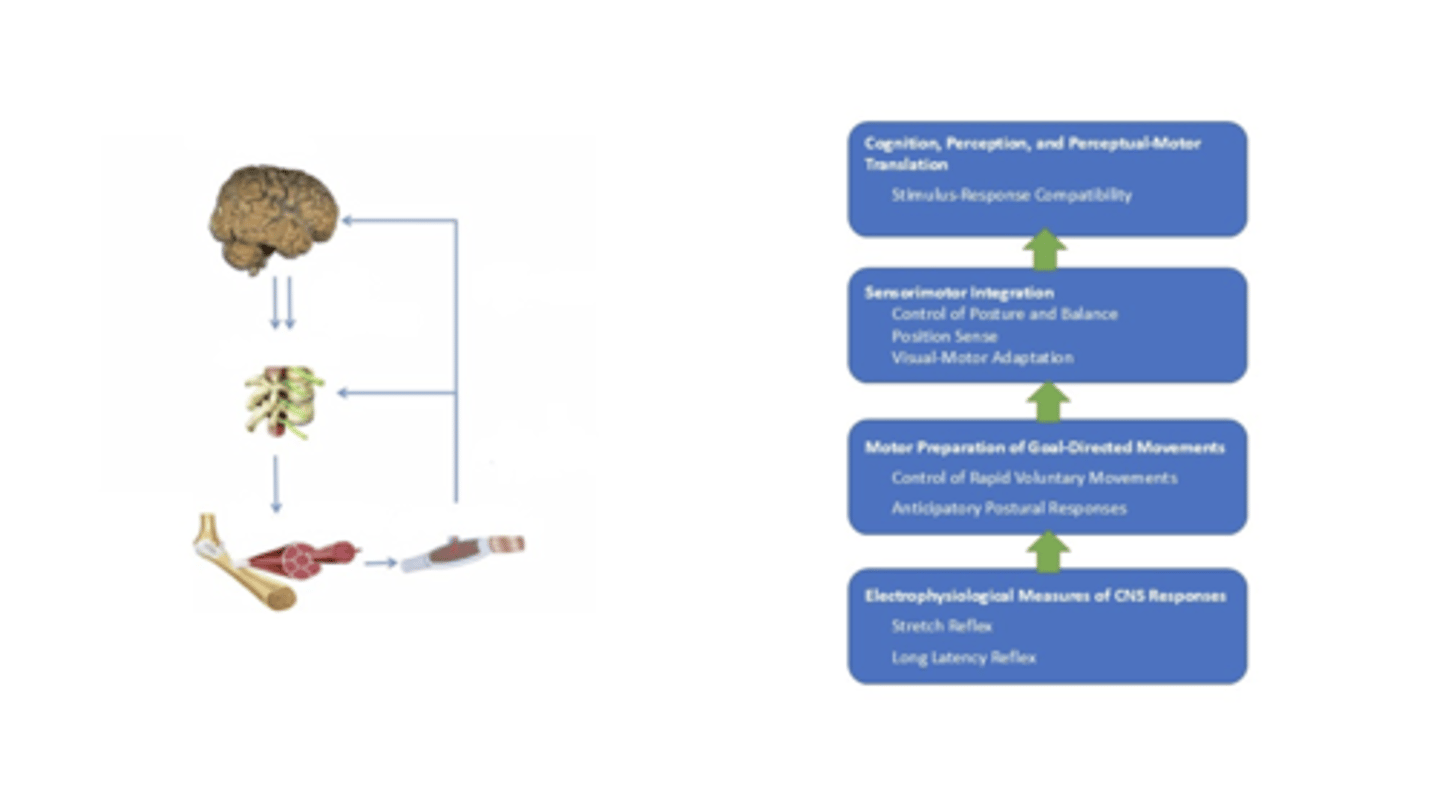
model human processor
...
3 stage information processing model
stimulus identification --> response selection --> response programming -->
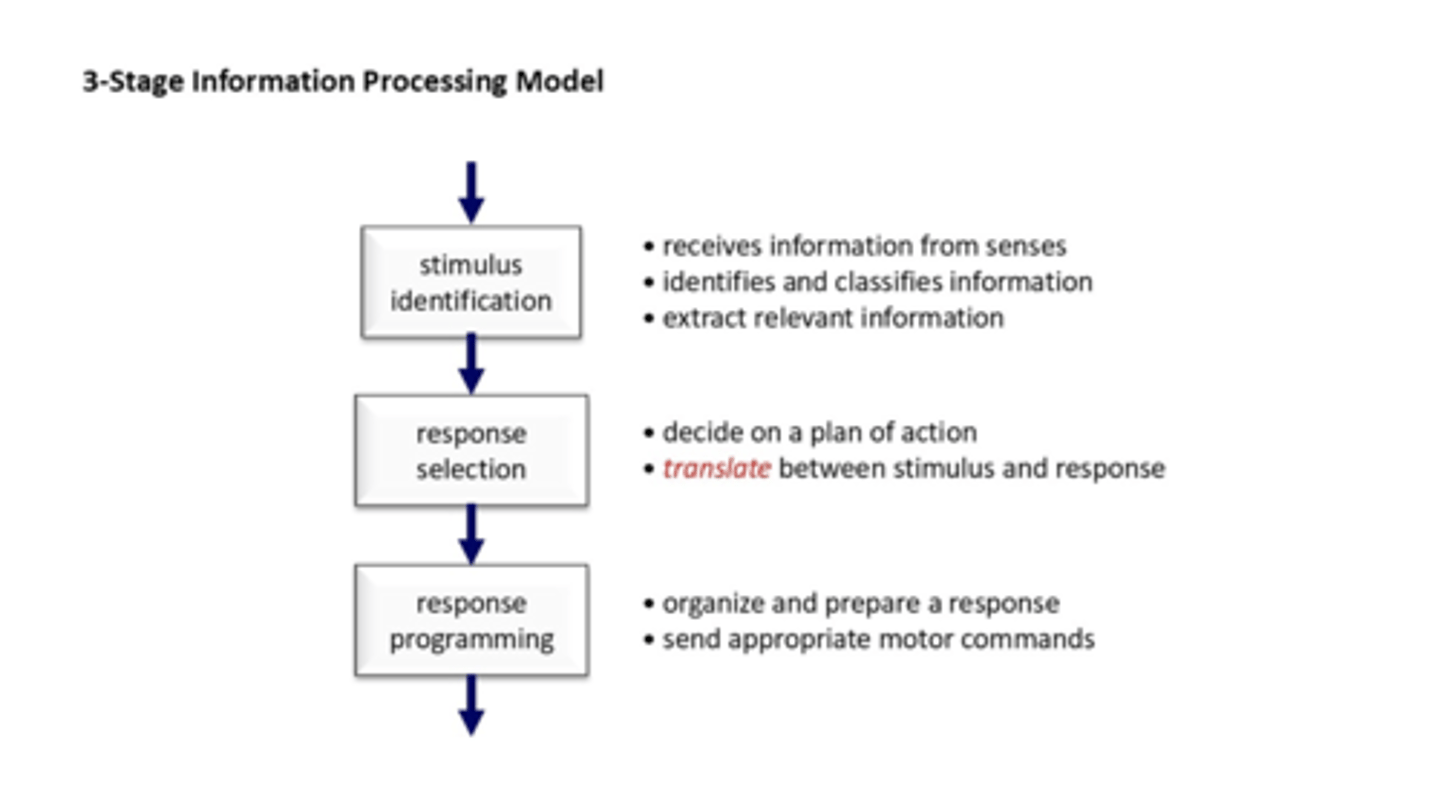
stimulus identification
receives information from senses
identifies and classifies information
extract relevant information
response selection
decide on a plan of action
translate between stimulus and response
response programming
organize and prepare a response
send appropriate motor commands
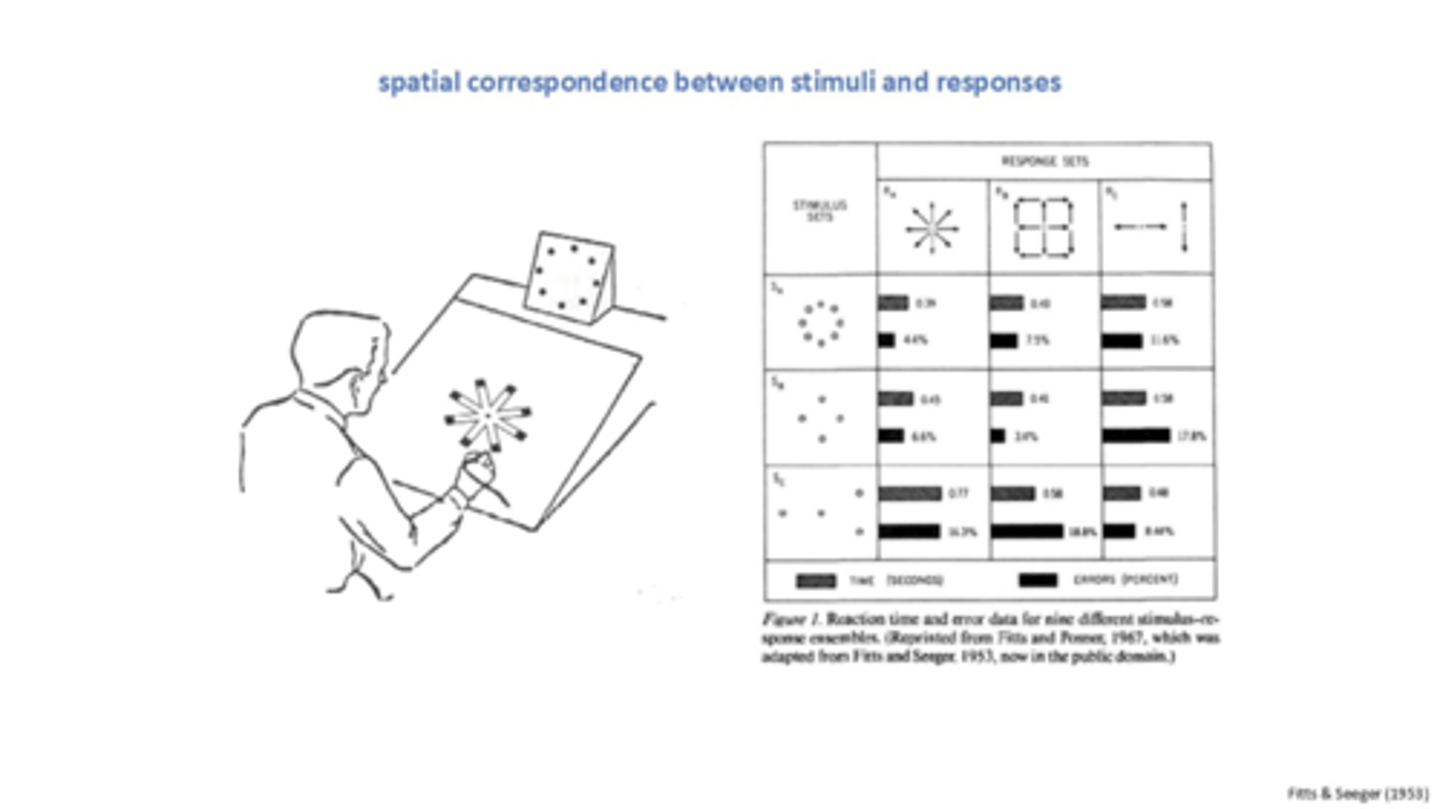
what is SR compatibility
degree of natural or learned correspondence between a stimulus and a response
affects how easy it is to translate input to the response you need to give (output)
compatibility is
the degree to which relationships are consistent with human expectations... where compatibility relationships are designed into the systems...
learning is faster, reaction time is faster, fewer errors are made, and user satisfaction is higher
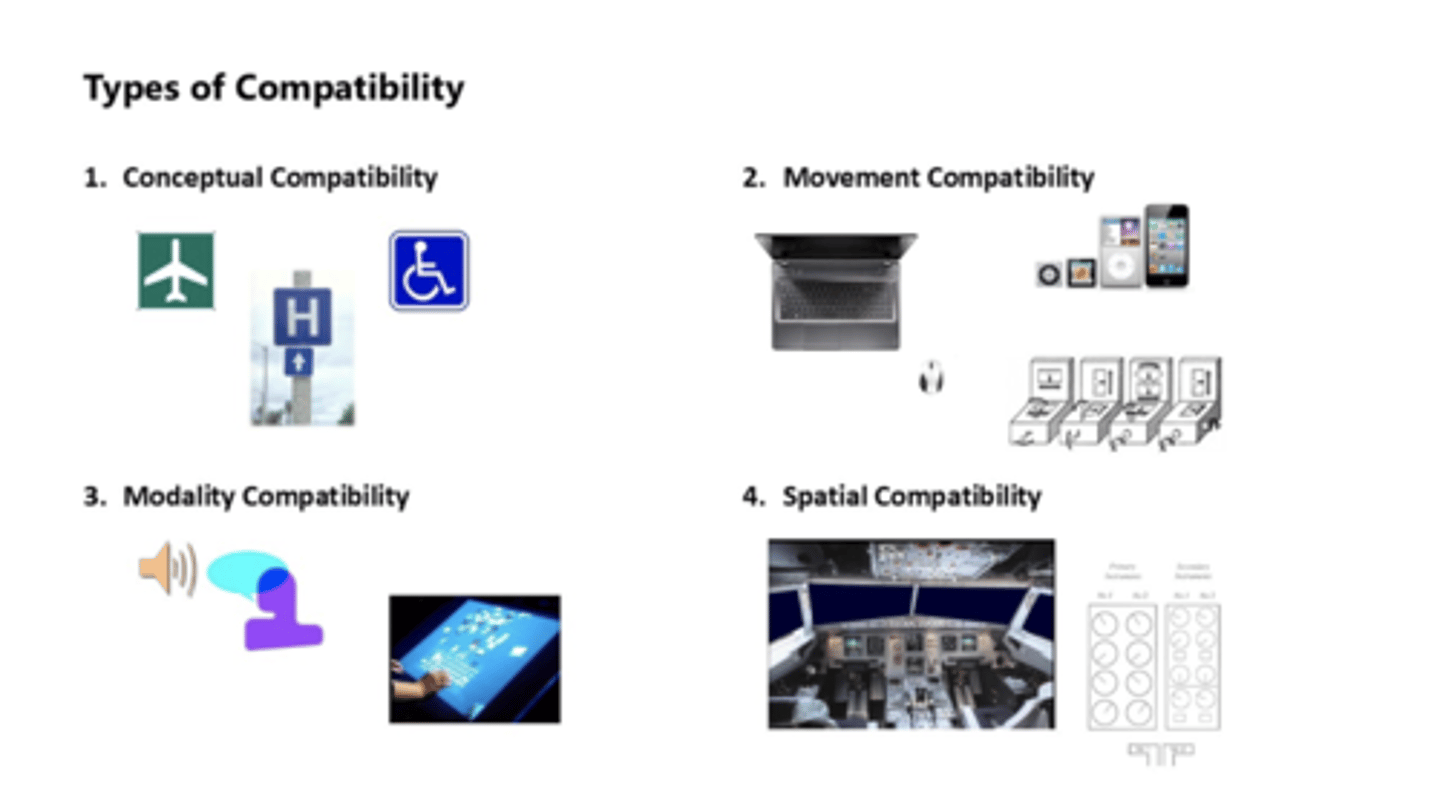
types of compatibility (4)
conceptual compatibility, movement compatibility, modality compatibility, spatial compatibility
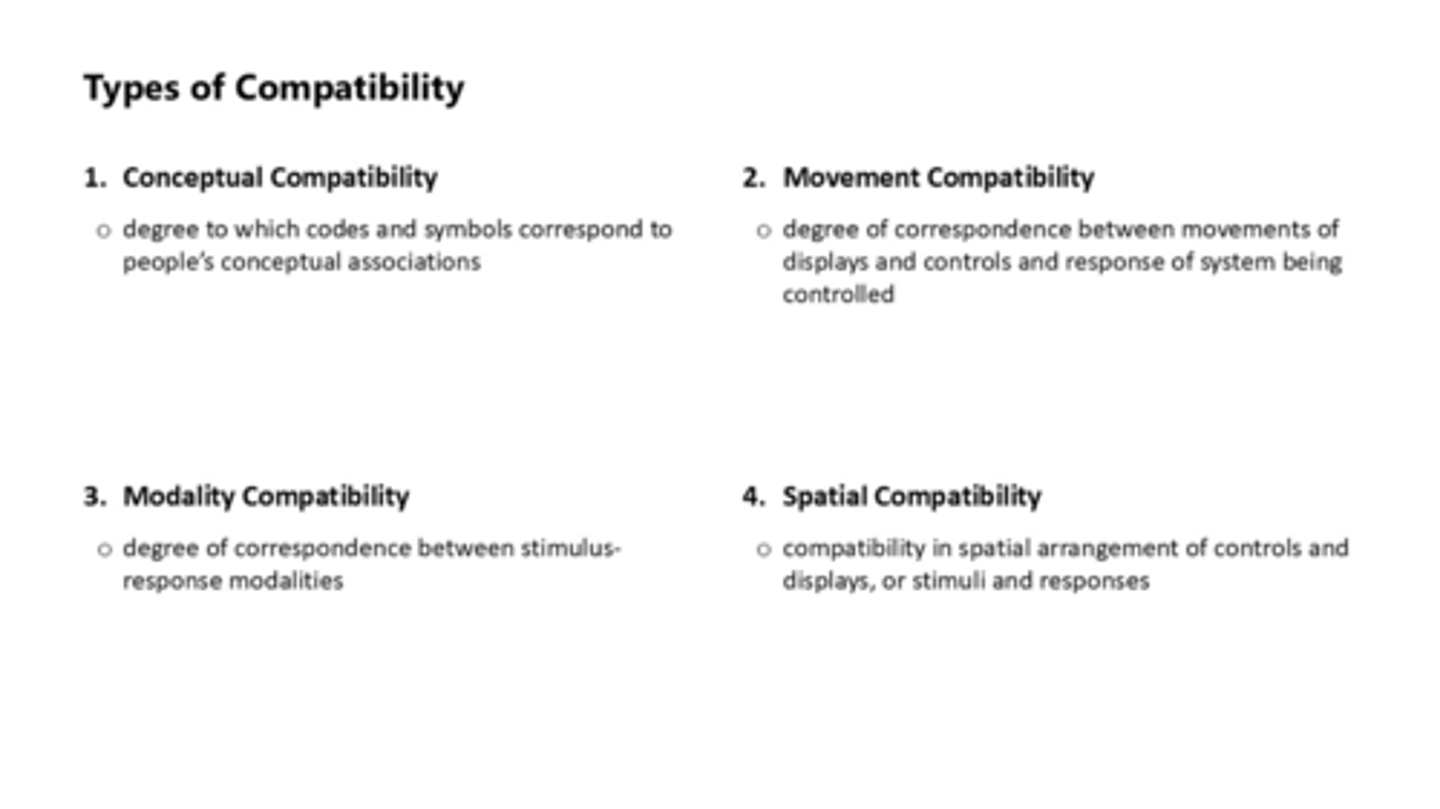
conceptual compatibility
degree to which codes and symbols correspond to people's conceptual associations
movement compatibility
degree to which correspondence between movements of displays and controls and response of system being controlled
modality compatibility
degree of correspondence between stimulus-response modalities
spatial compatibility
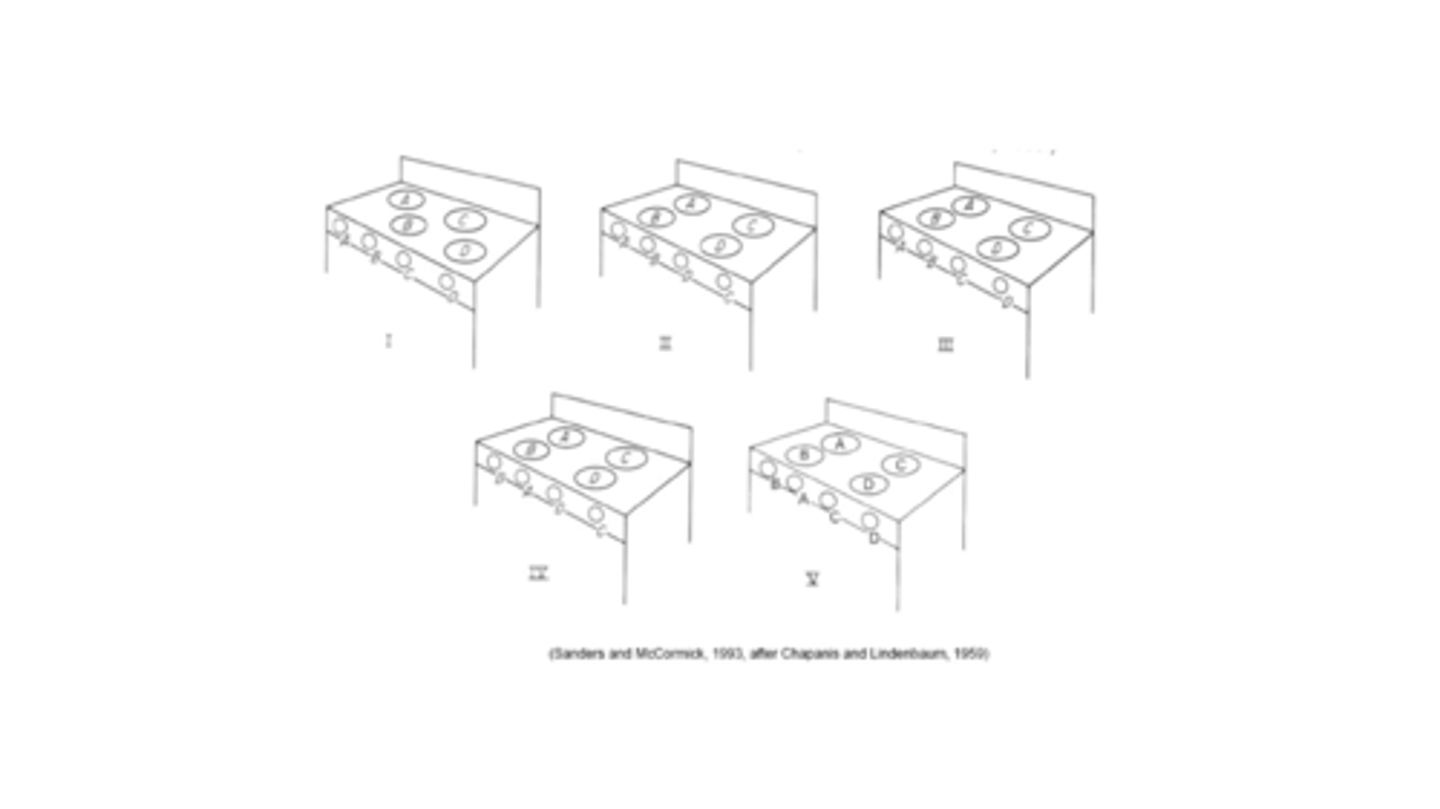
compatibility in spatial arrangement of controls and displays, or stimulus and responses
types of compatibility images
...
study
...
study continued
...
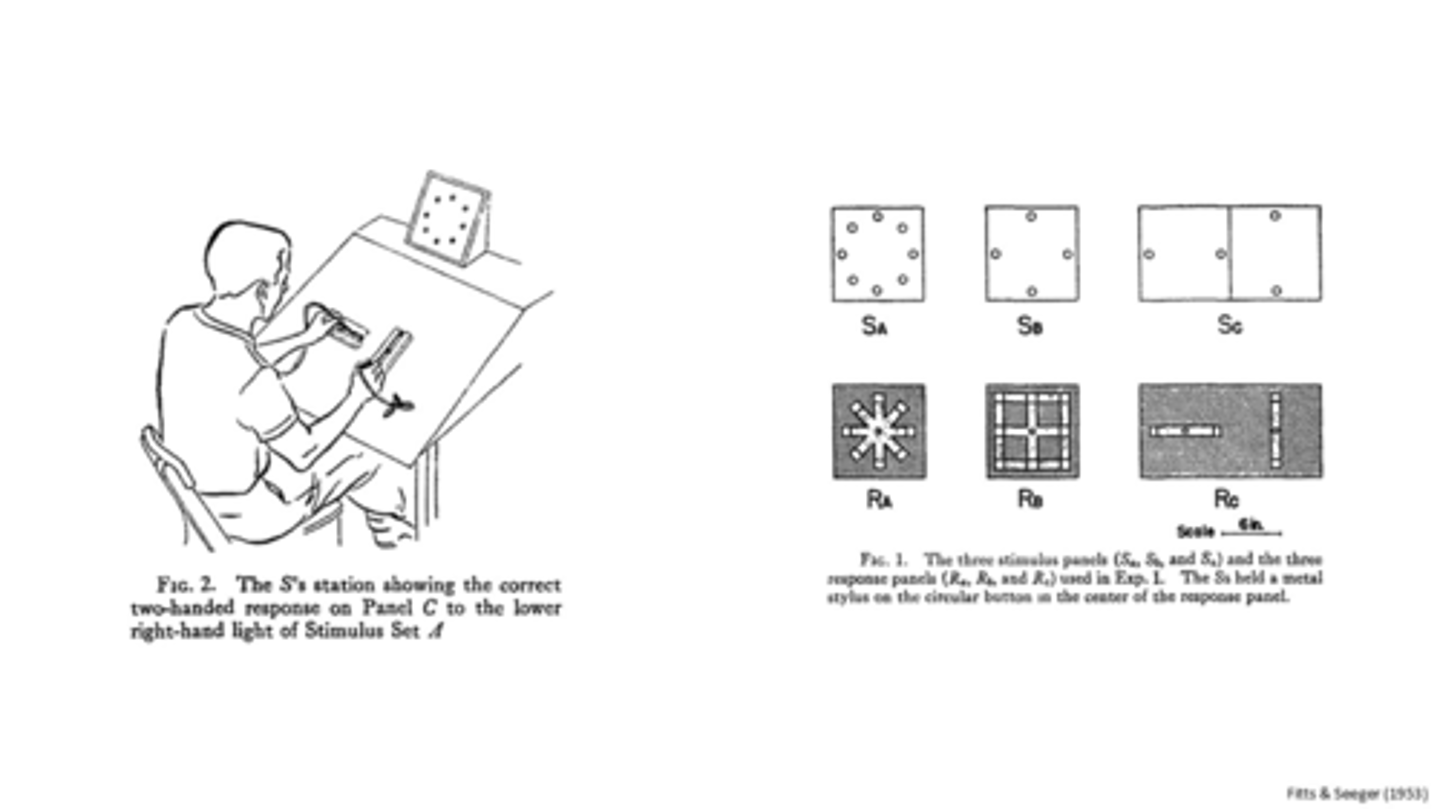
study continued .
...
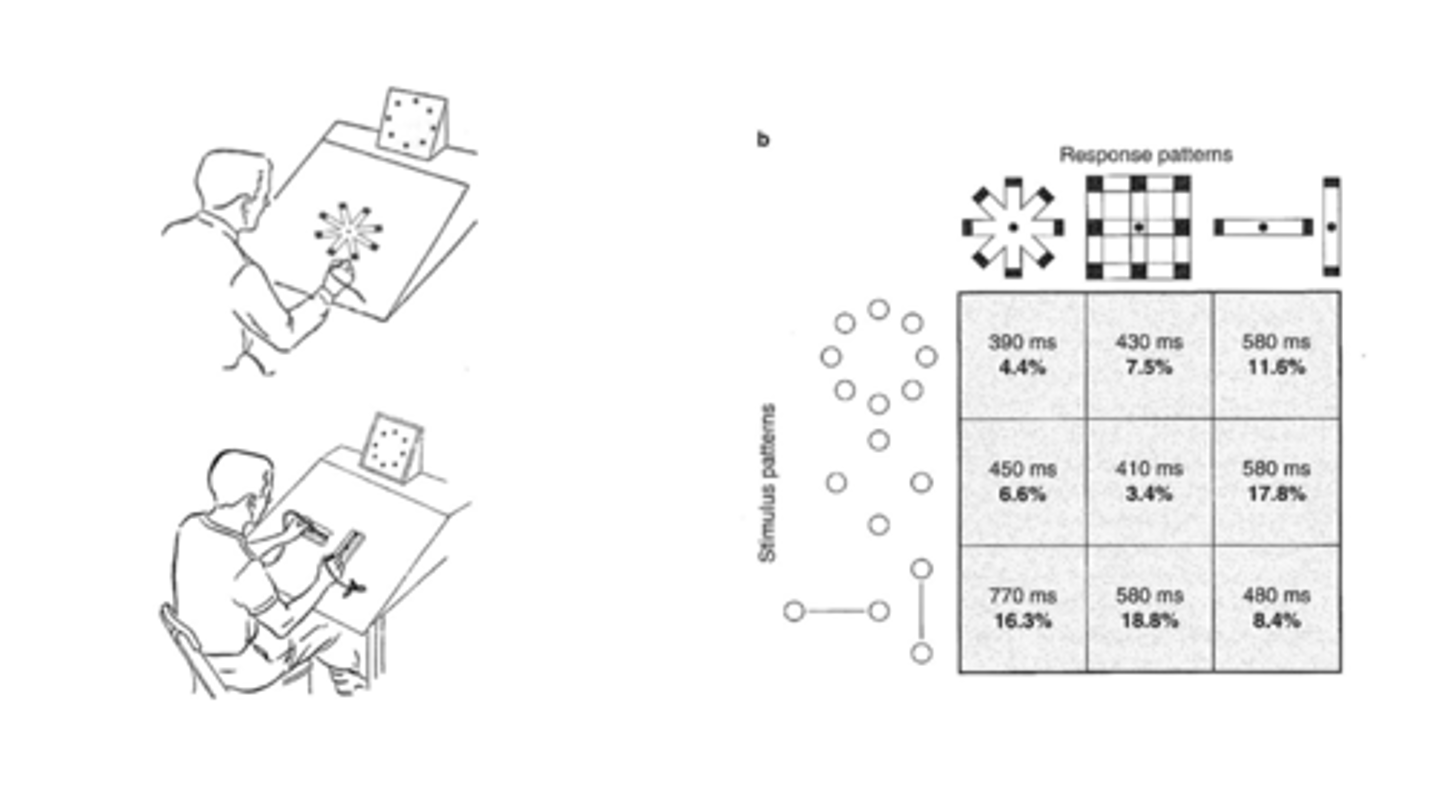
study continued ..
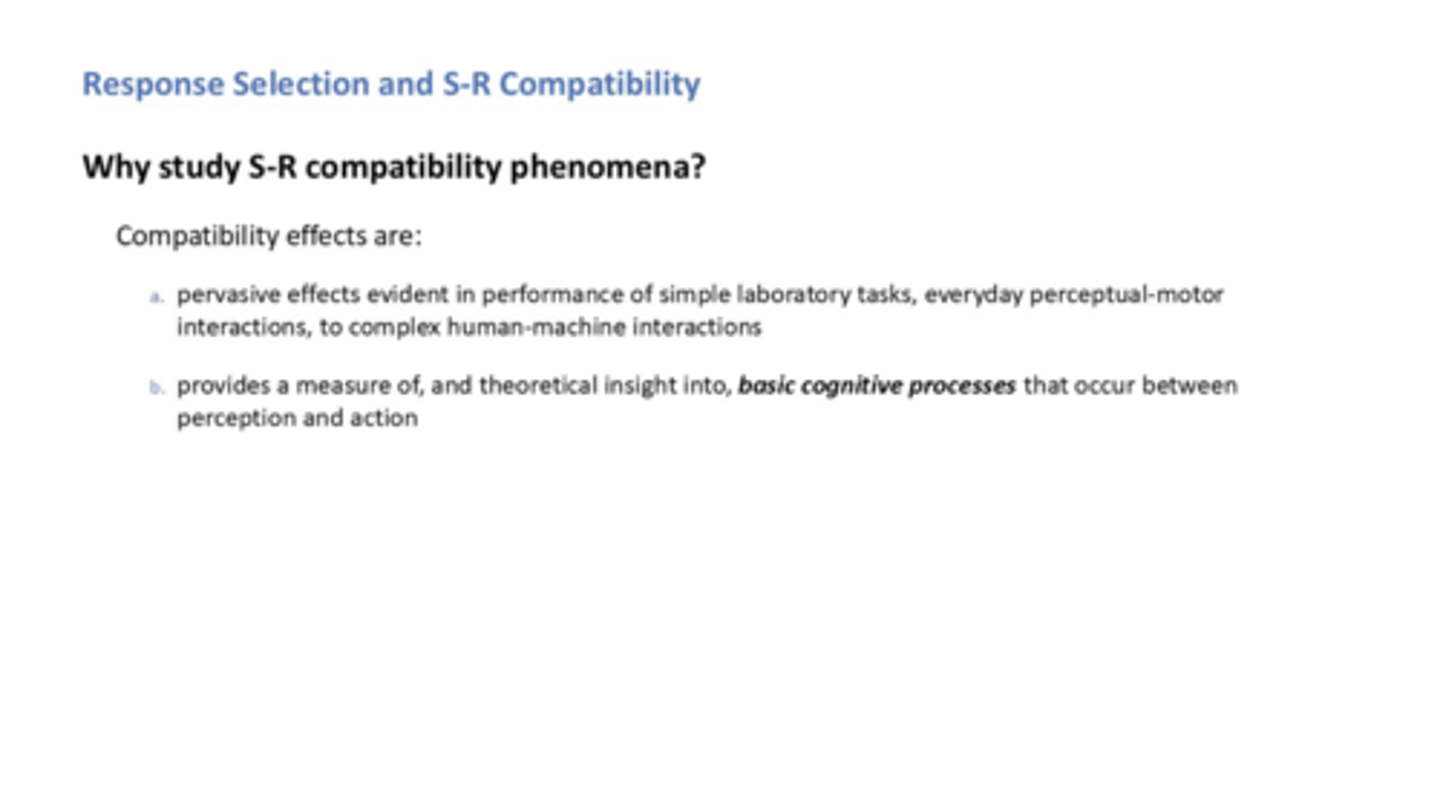
why study S-R compatibility phenomena
pervasive effects evident in performance of simple laboratory tasks, everyday perceptual-motor interactions, to complex human-machine interactions
provides a measure and theoretical insight into basic cognitive processes that occur between perception and action
information processing model (SI, RS, RP)
now onto RS part
...
prototypical 2 choice RT task
...
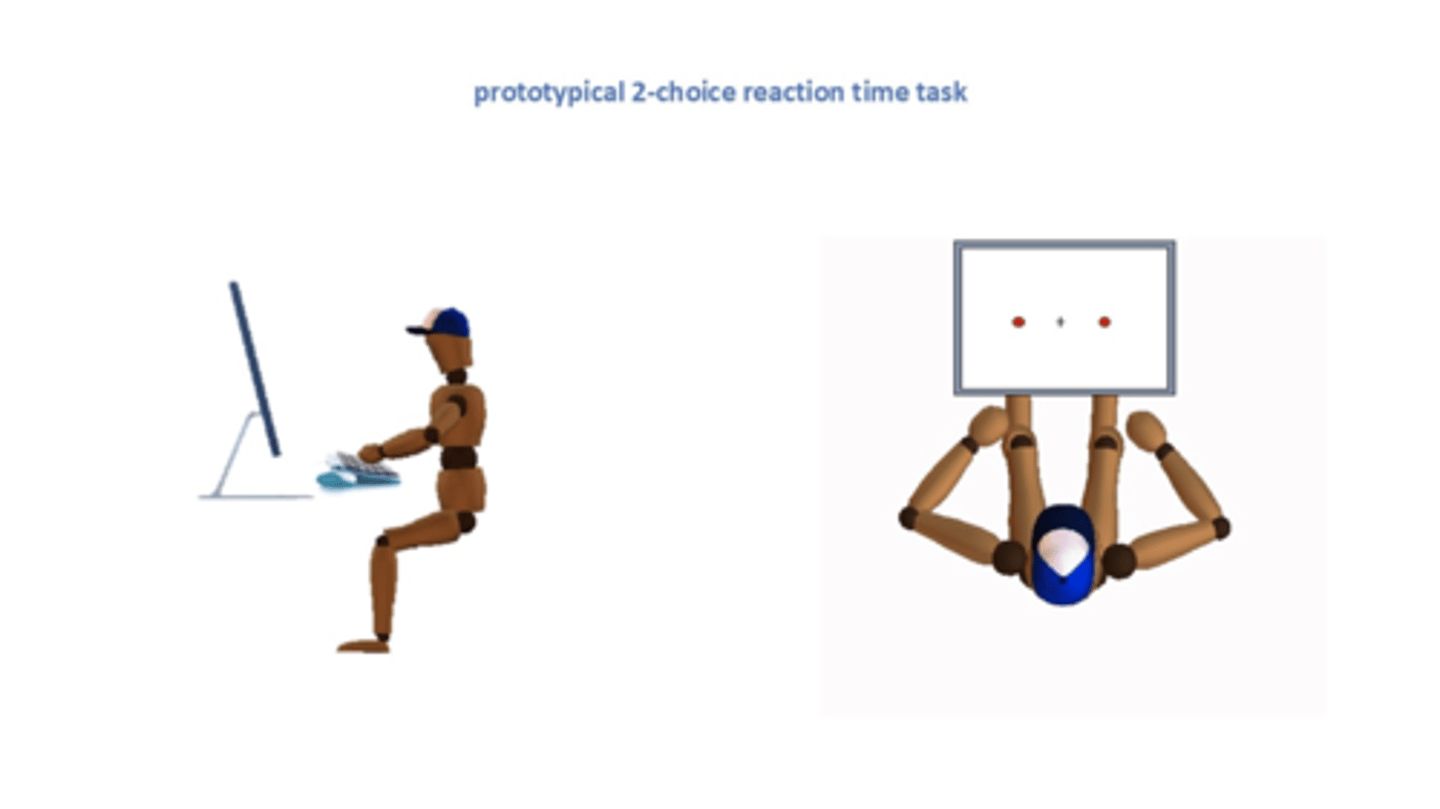
prototypical 2 choice RT task
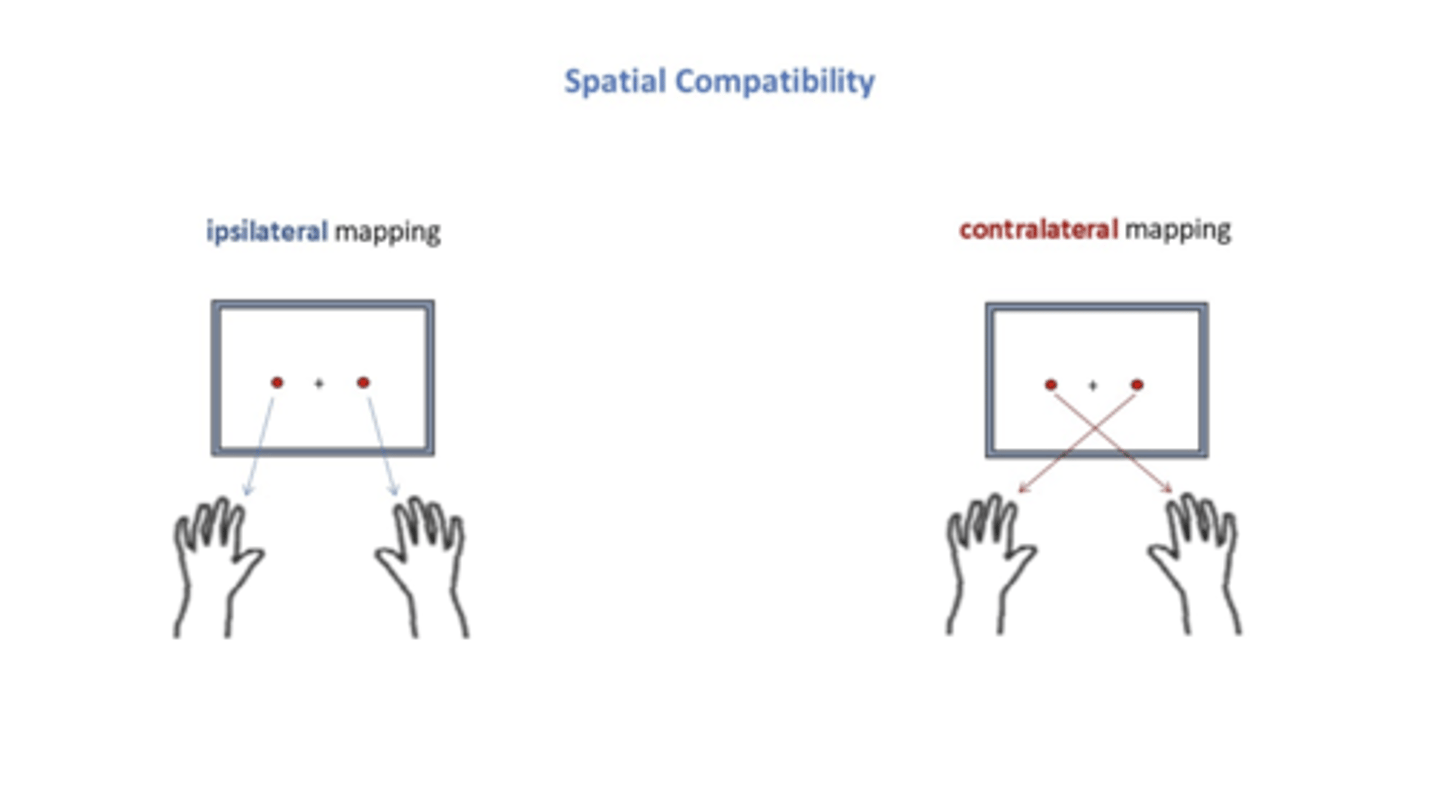
how could spatial compatibility differ here
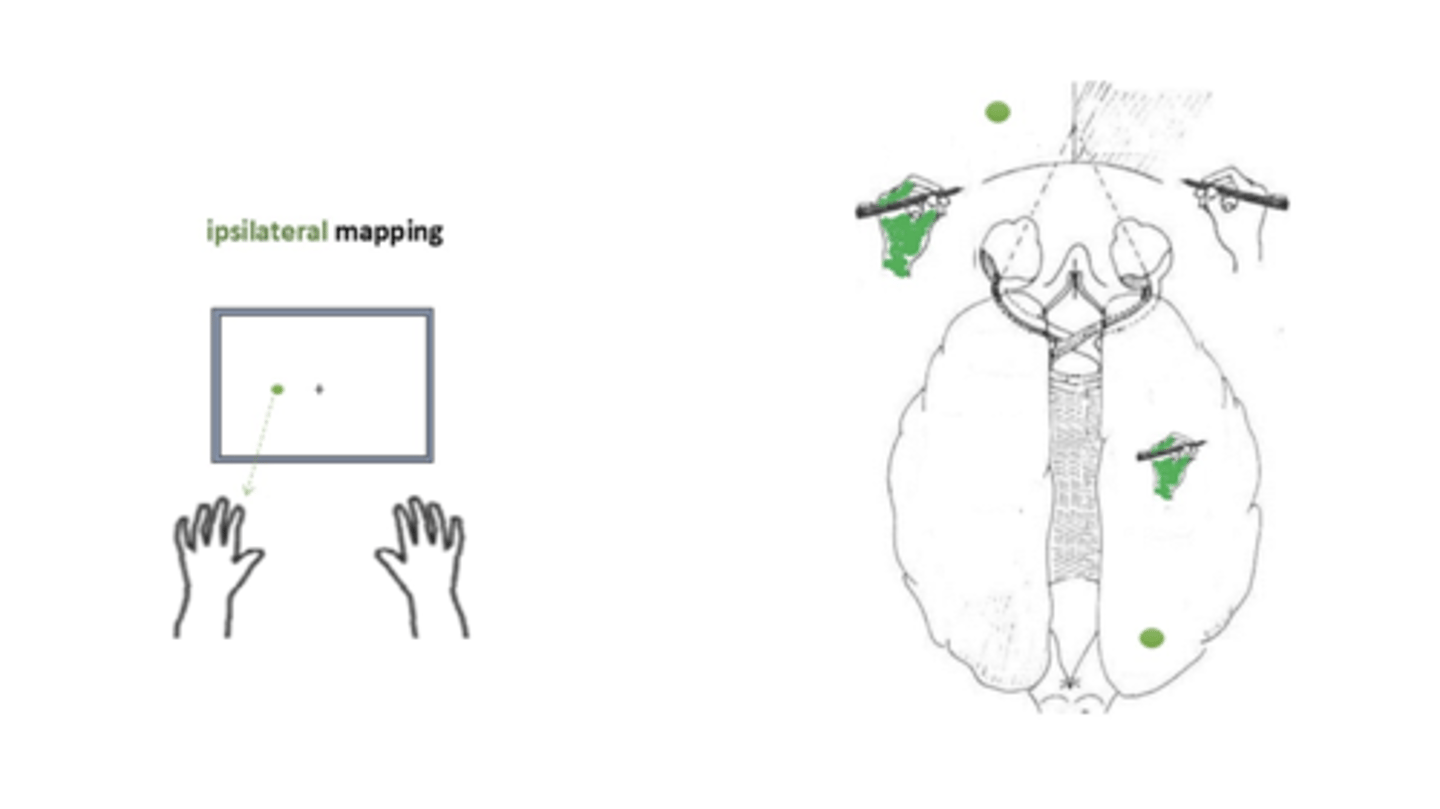
ipsilateral mapping (same)
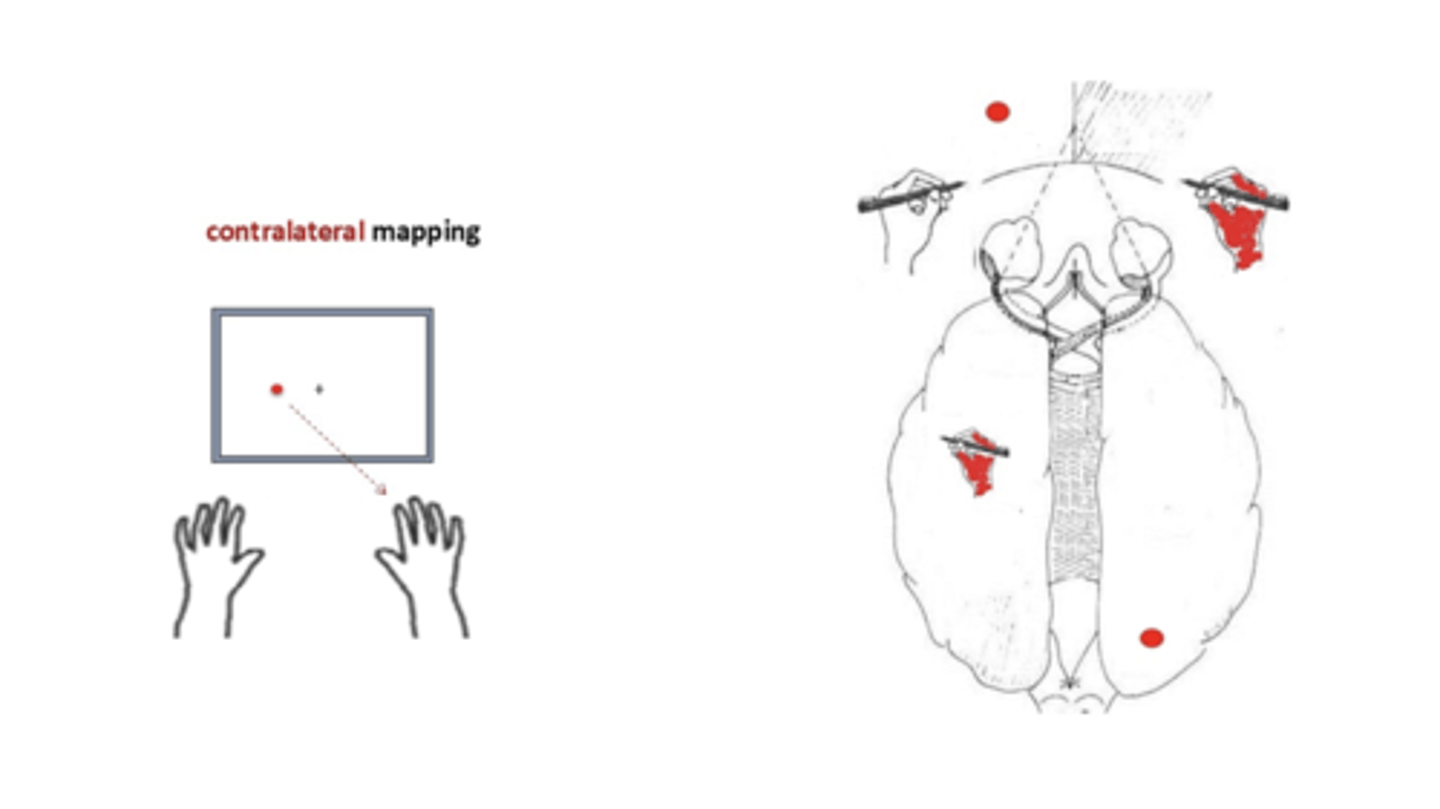
contralateral mapping (opposite)
graph of spatial compatibility effect
...
spatial coding
...
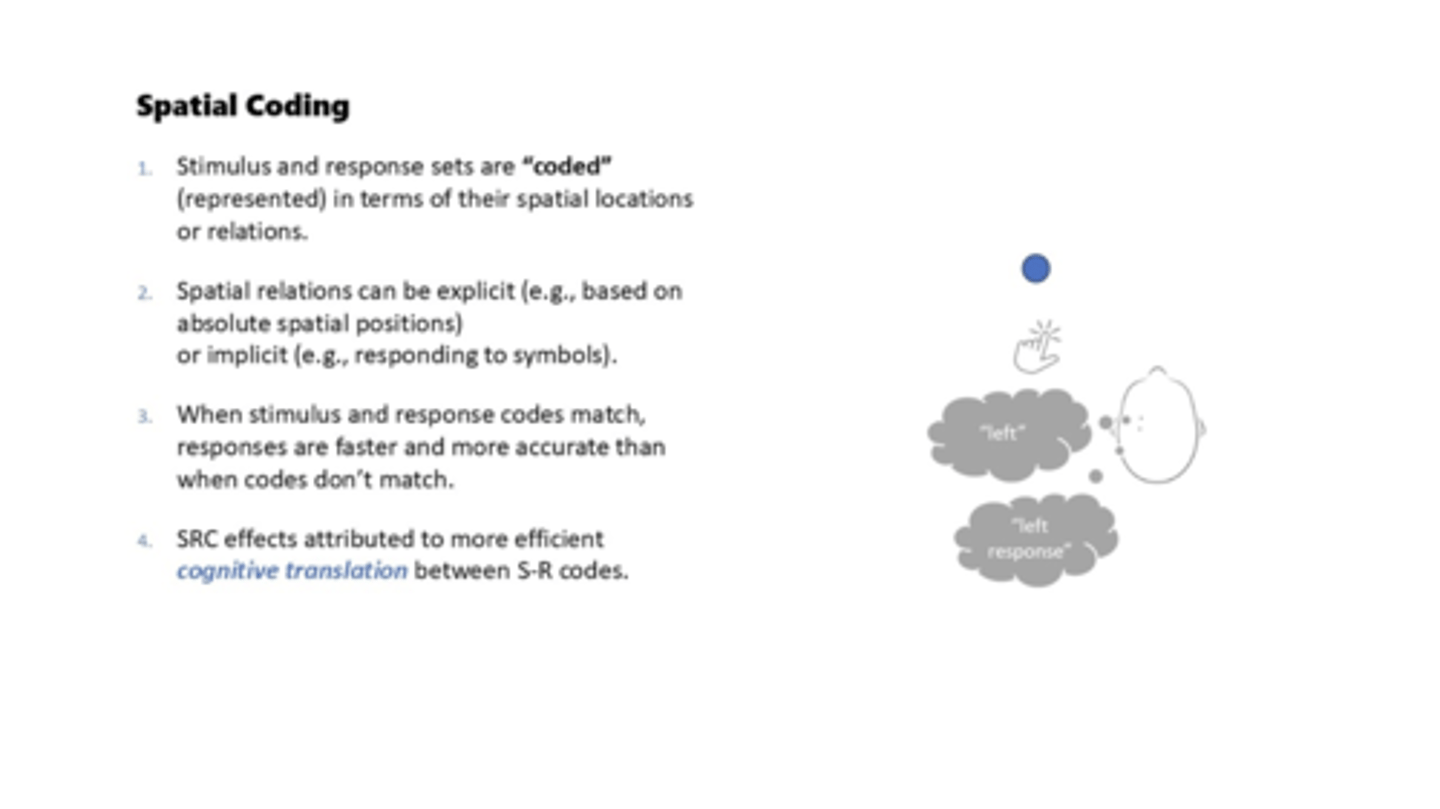
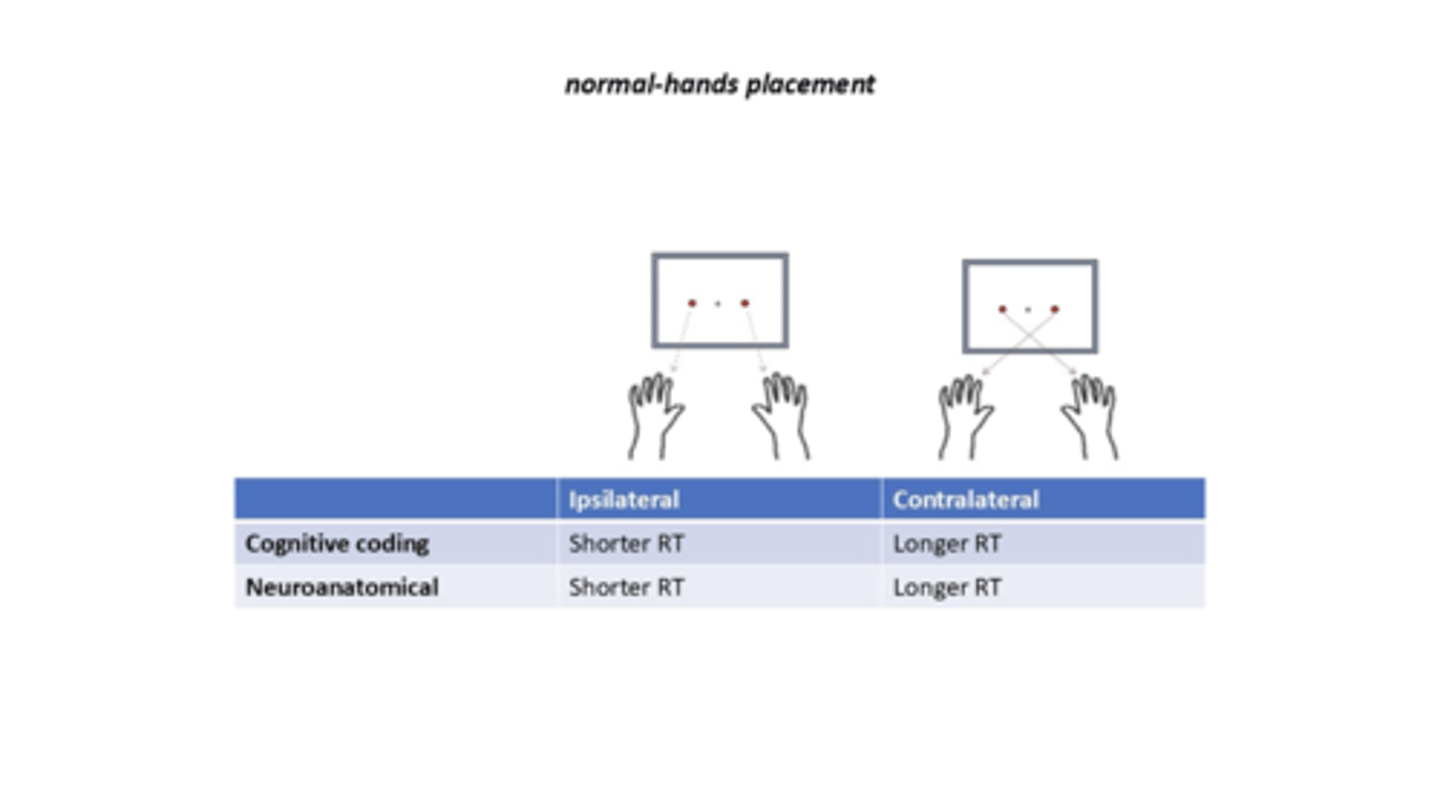
cognitive coding vs neuroanatomical correspondence
are spatial compatibility effects due to cognitive coding of stimulus and response relations?
or are they due to the anatomical relations between the cerebral hemispheres processing the stimulus and response
poffenberger paradigm
...
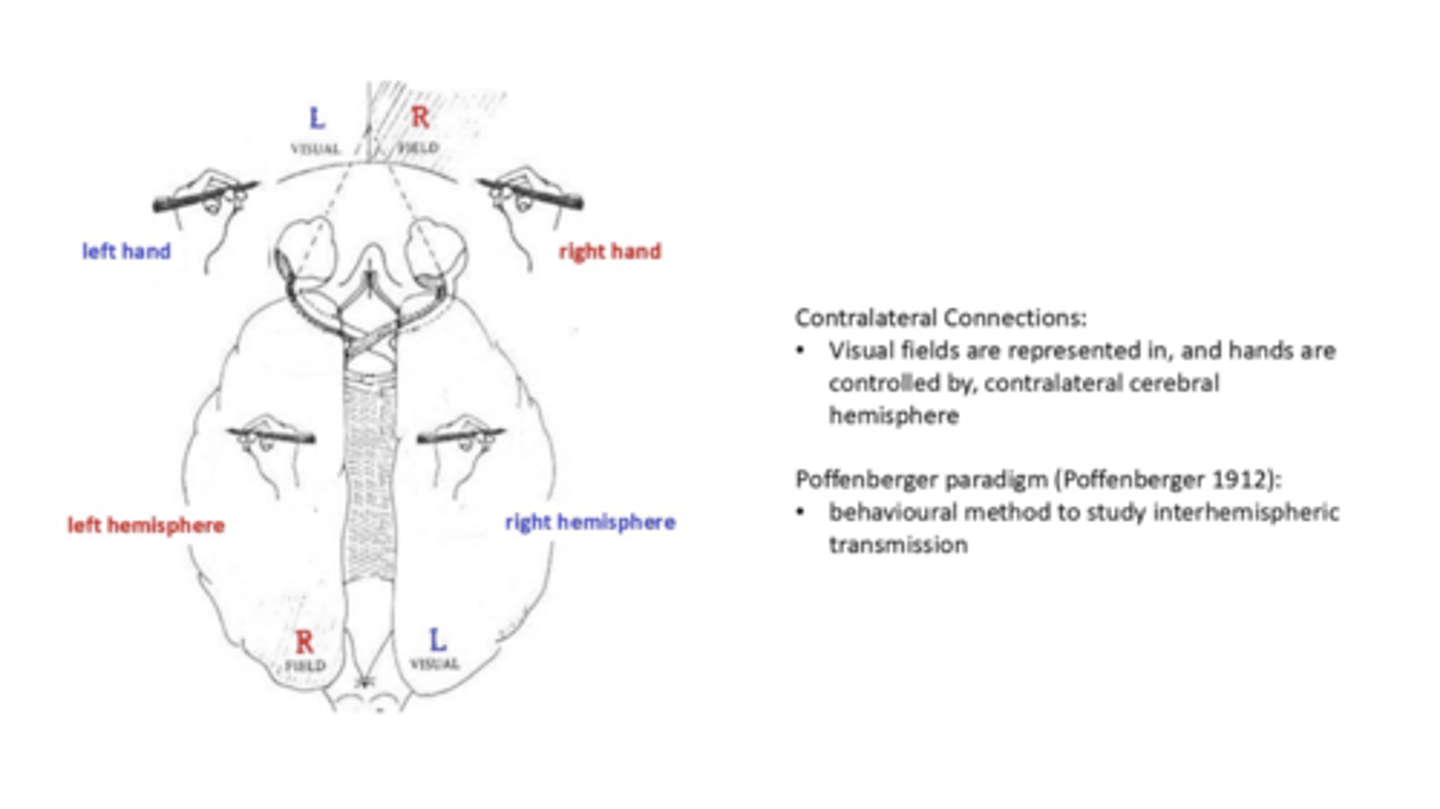
paradigm continued
...
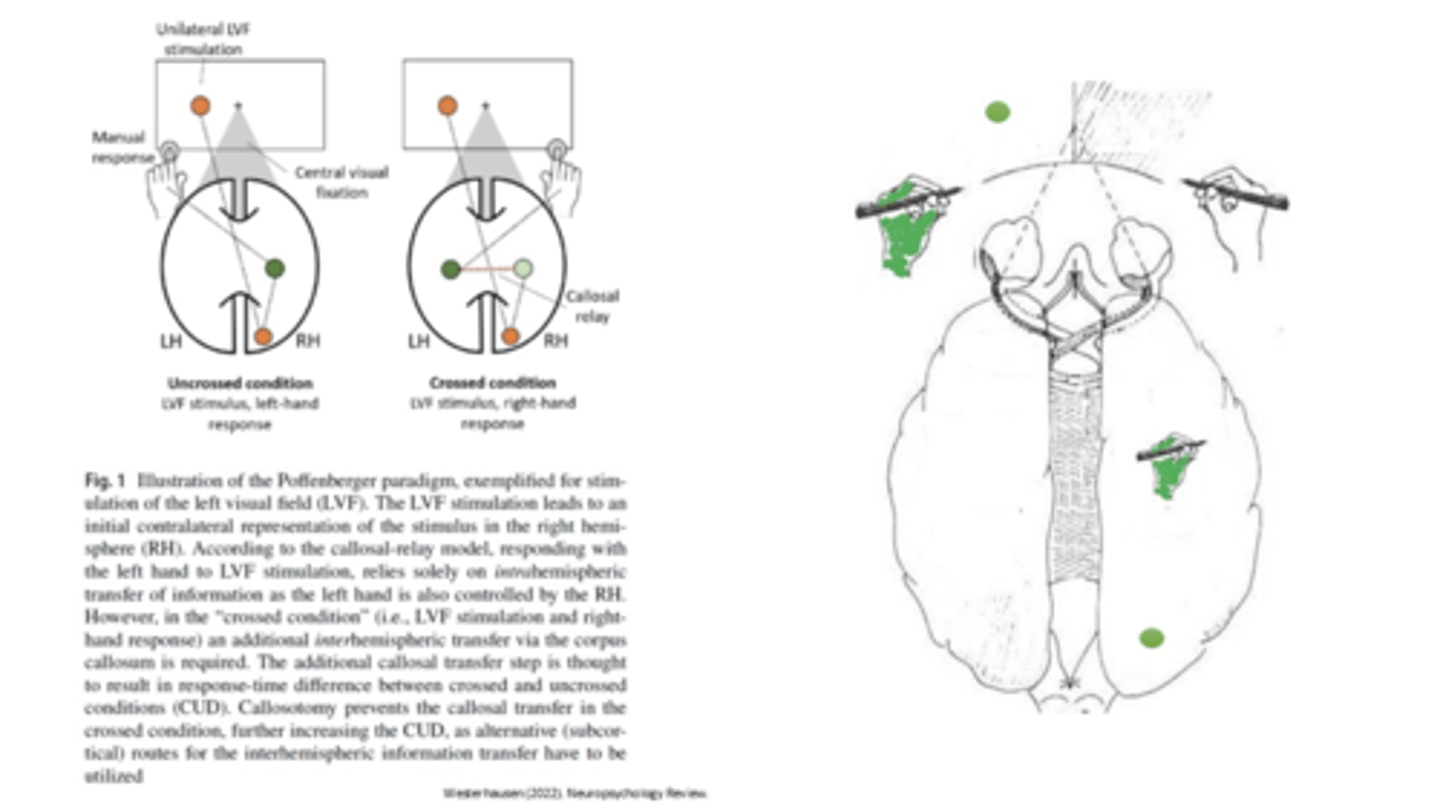
paradigm continued .
...
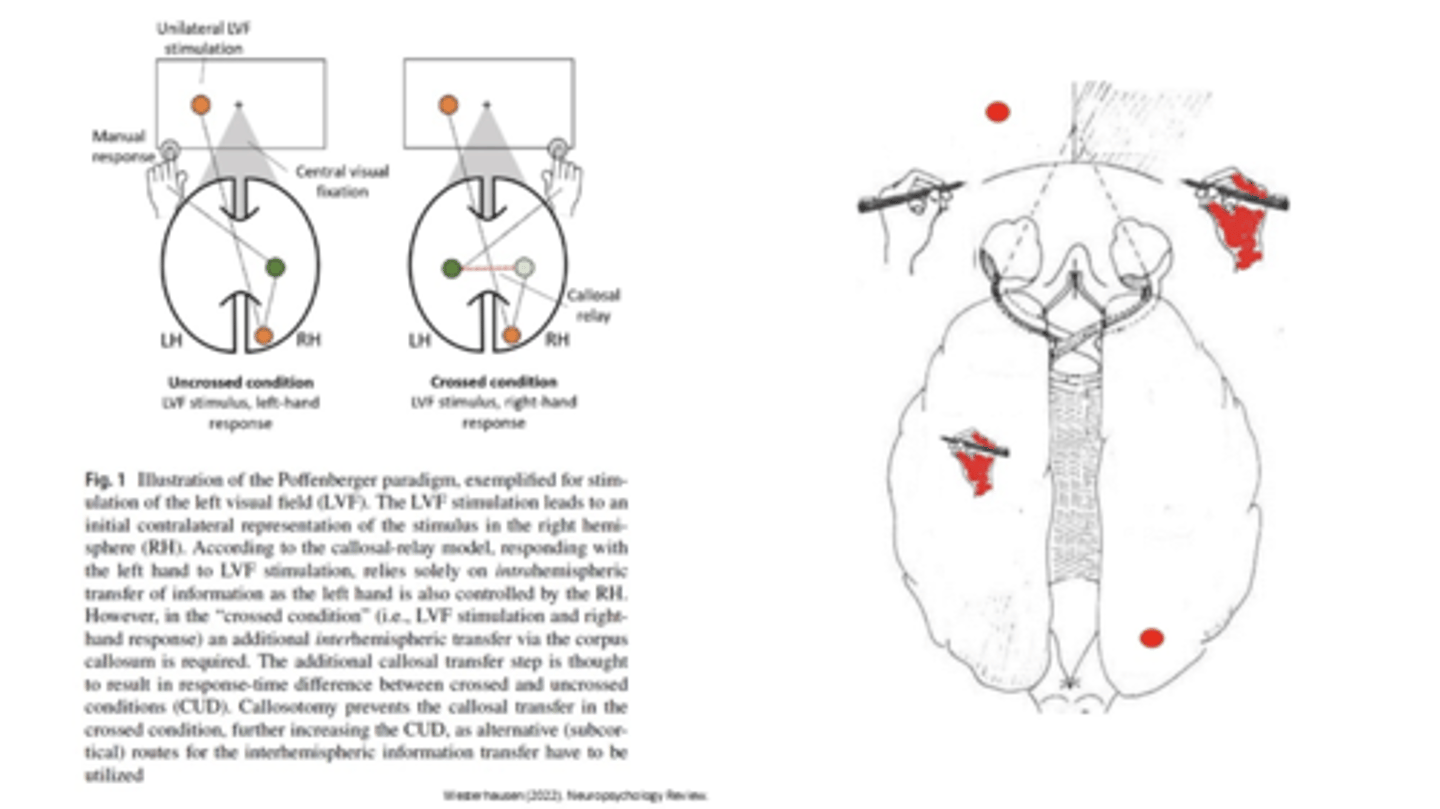
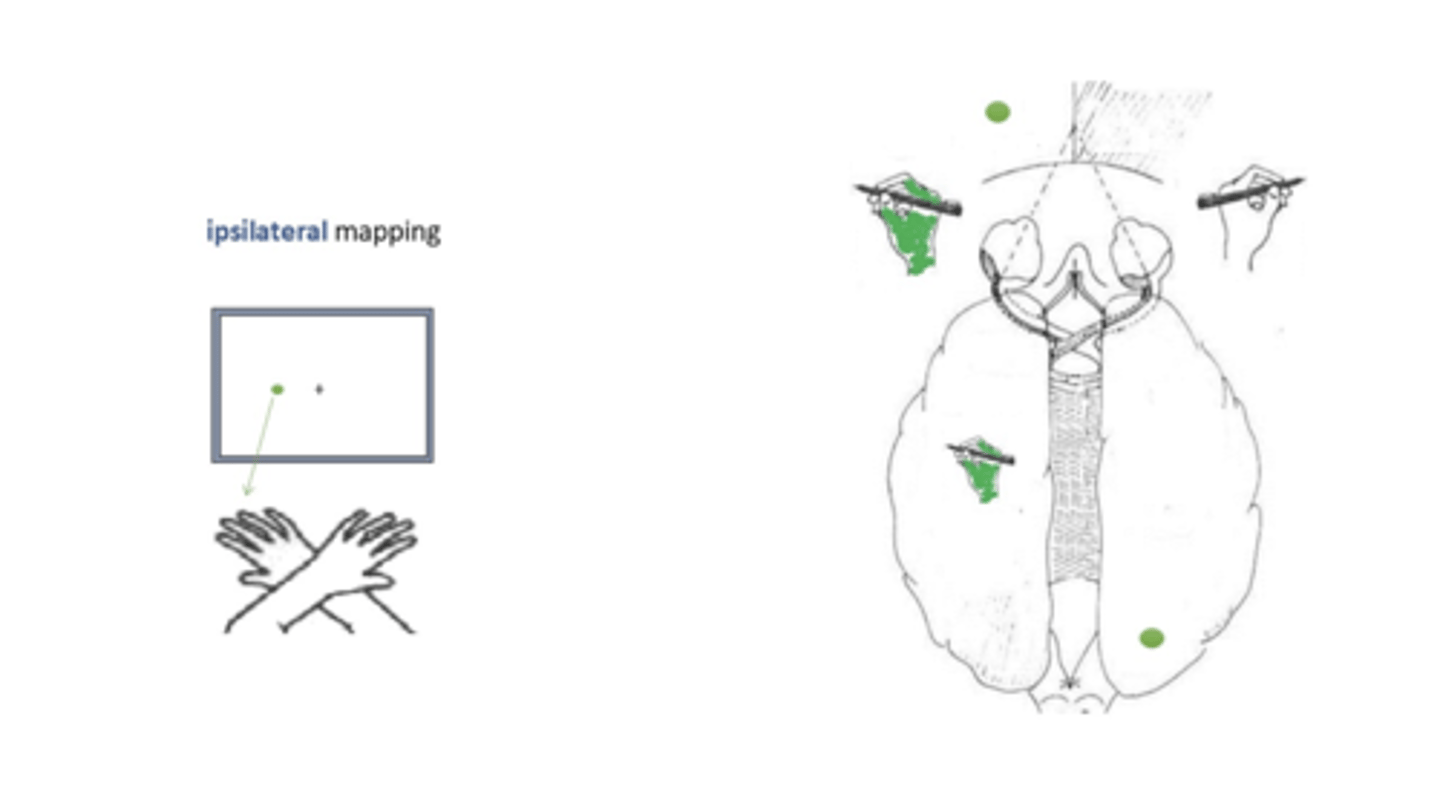
ipsilateral mapping
...
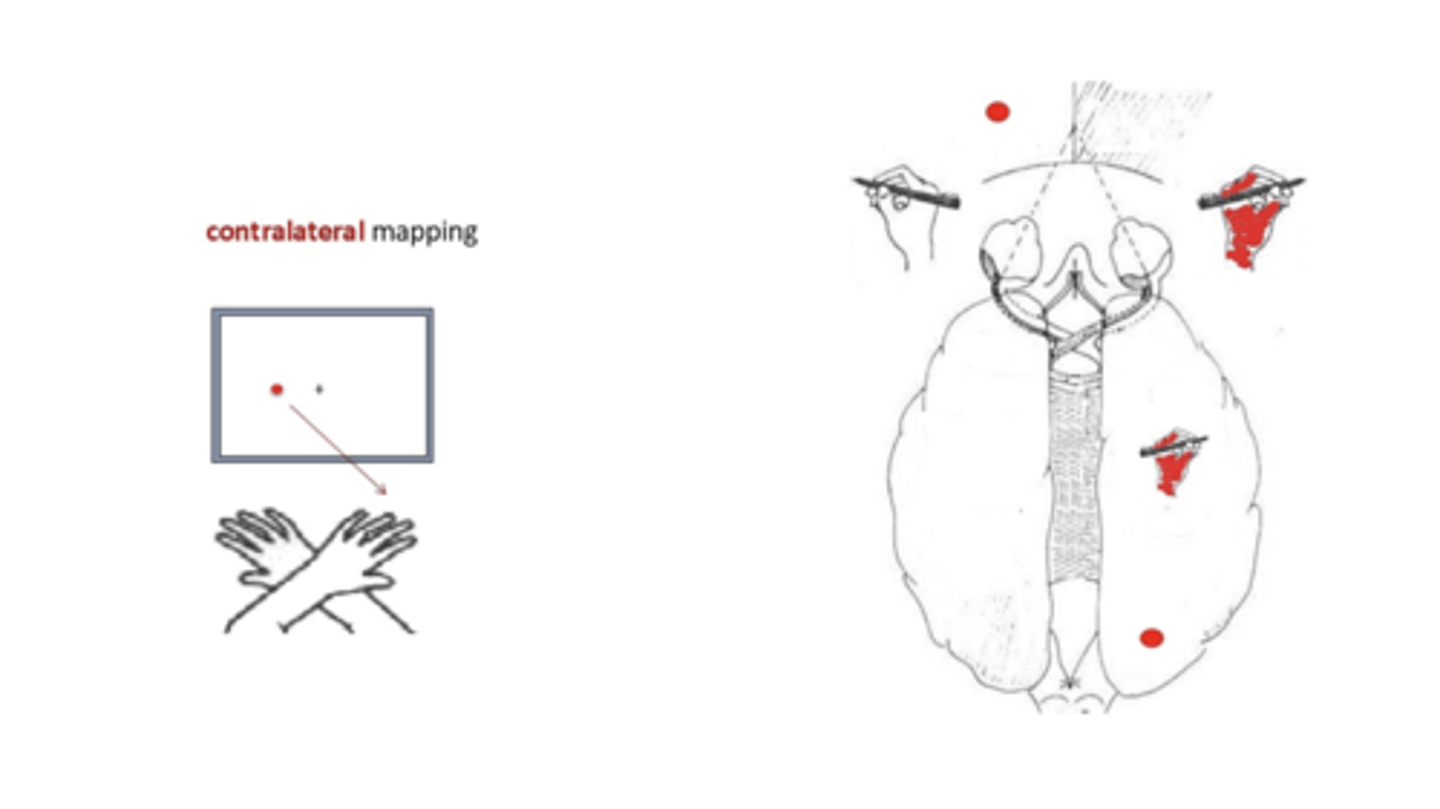
contralateral mapping
...
normal hand placement
what do we see
...
study
...
crossed hand placement
what do ipsilateral and contralateral mapping now look like
...
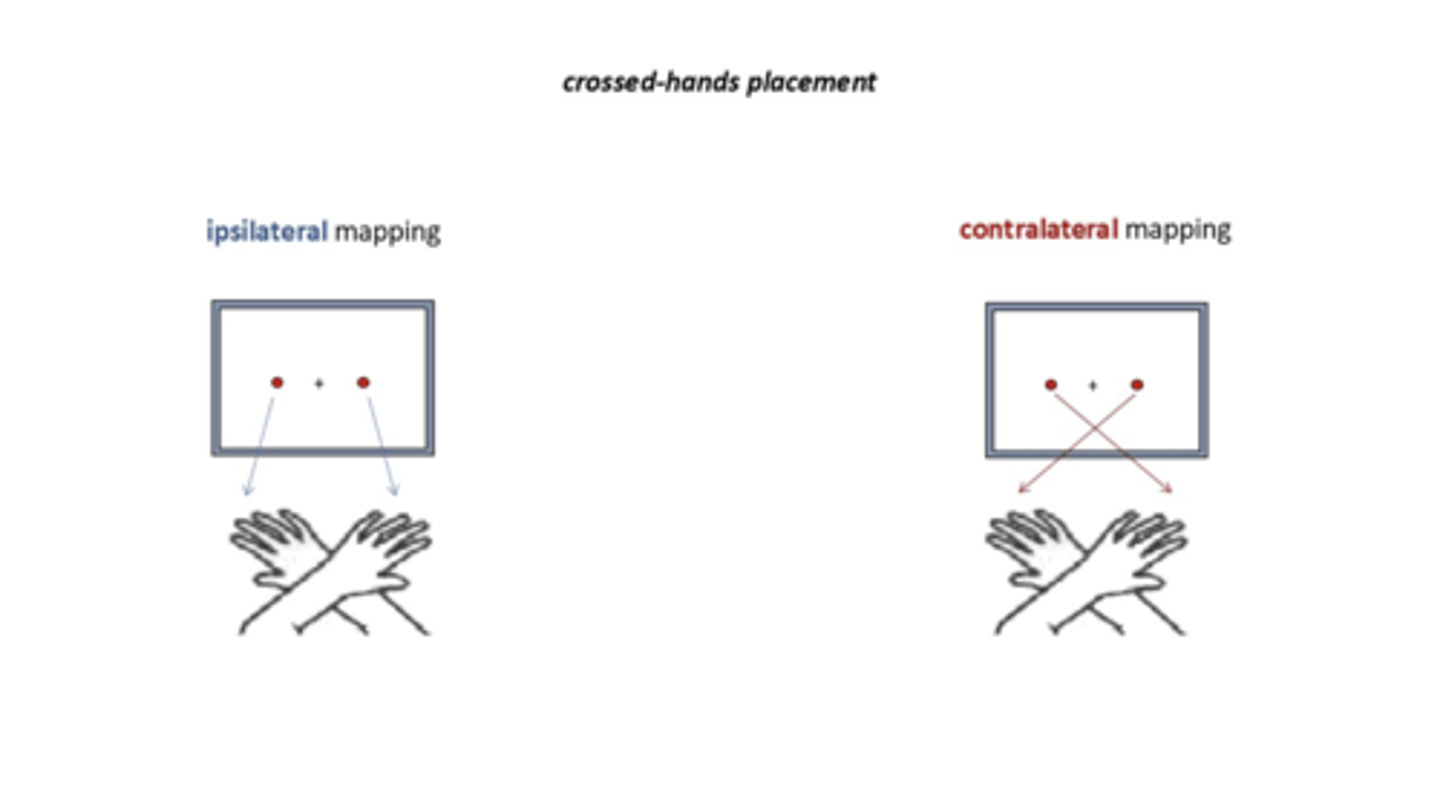
ipsilateral mapping crossed hands
...
contralateral mapping crossed hands
...
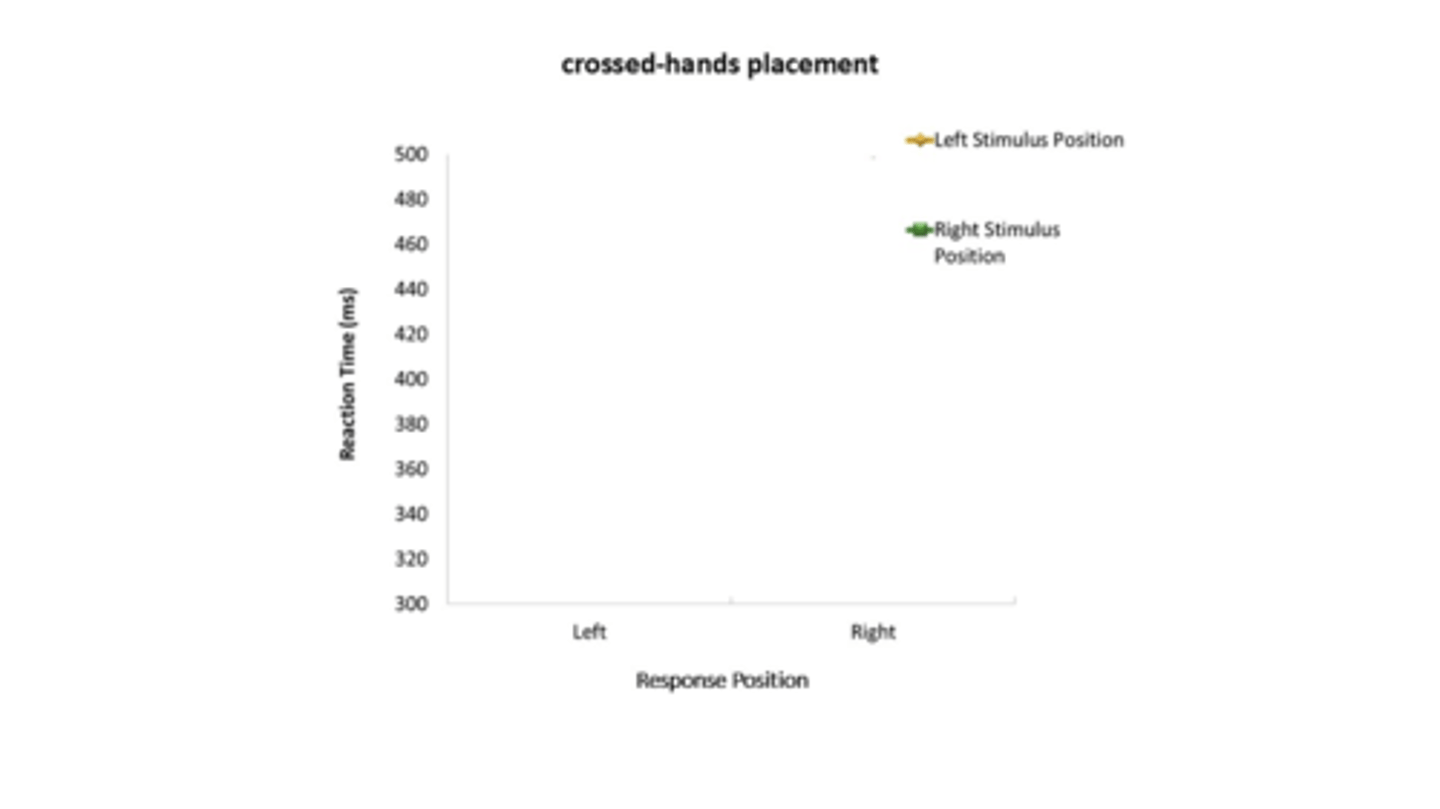
crossed hands placement. what do we see
...
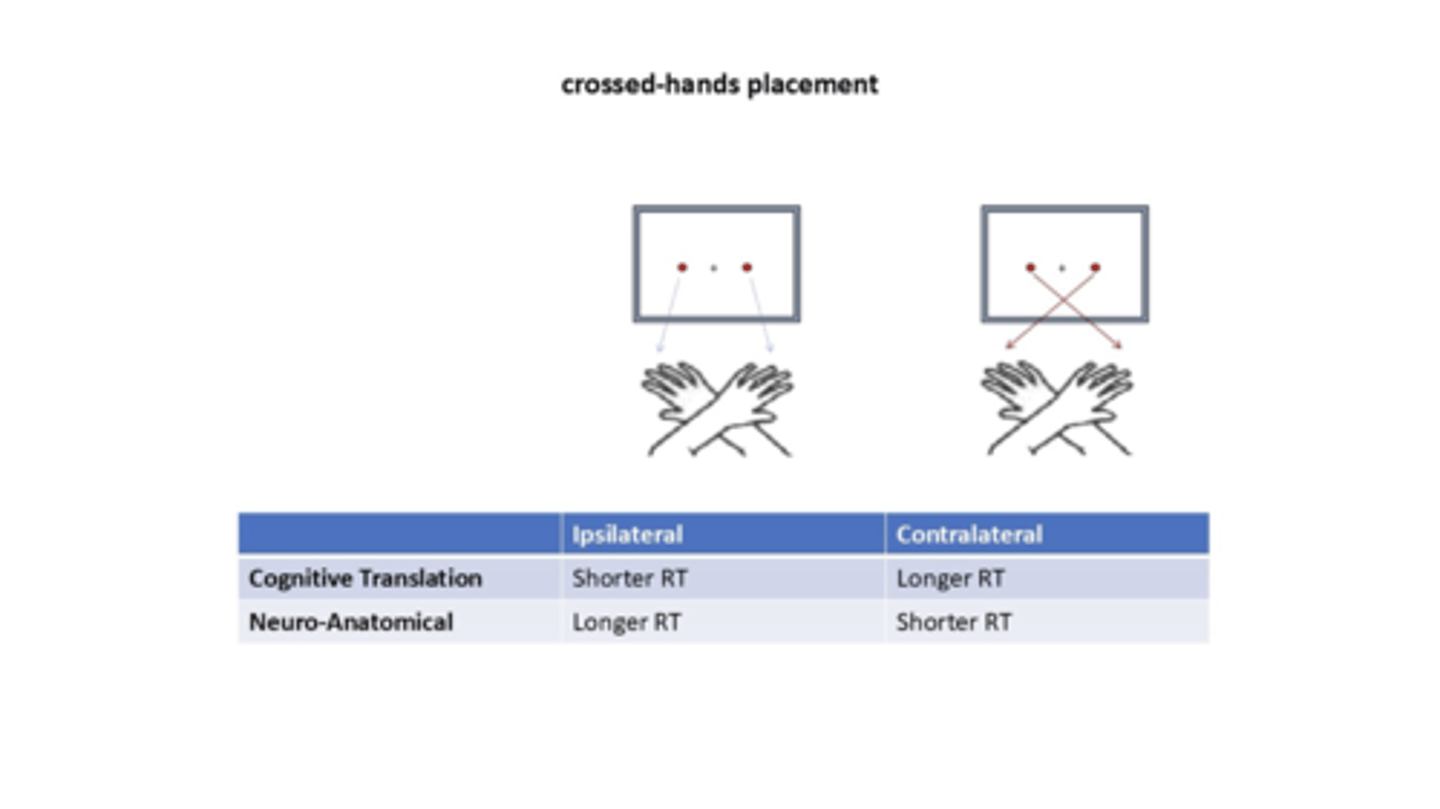
crossed hands placement graph
...
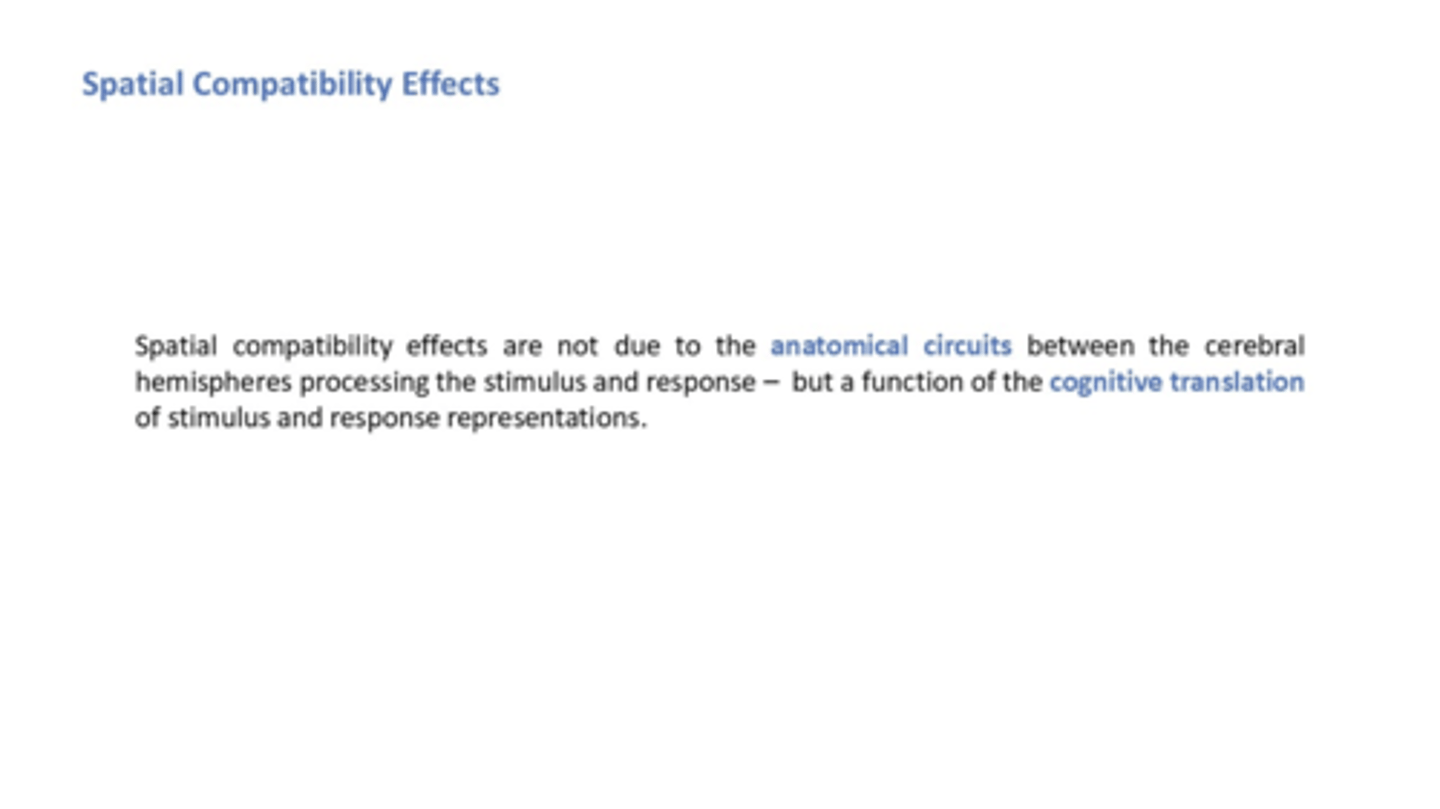
spatial compatibility effects
spatial compatibility effects are not due to anatomical circuits between cerebral hemispheres processing the stimulus and response
they are a function of the cognitive translation of stimulus and response representations
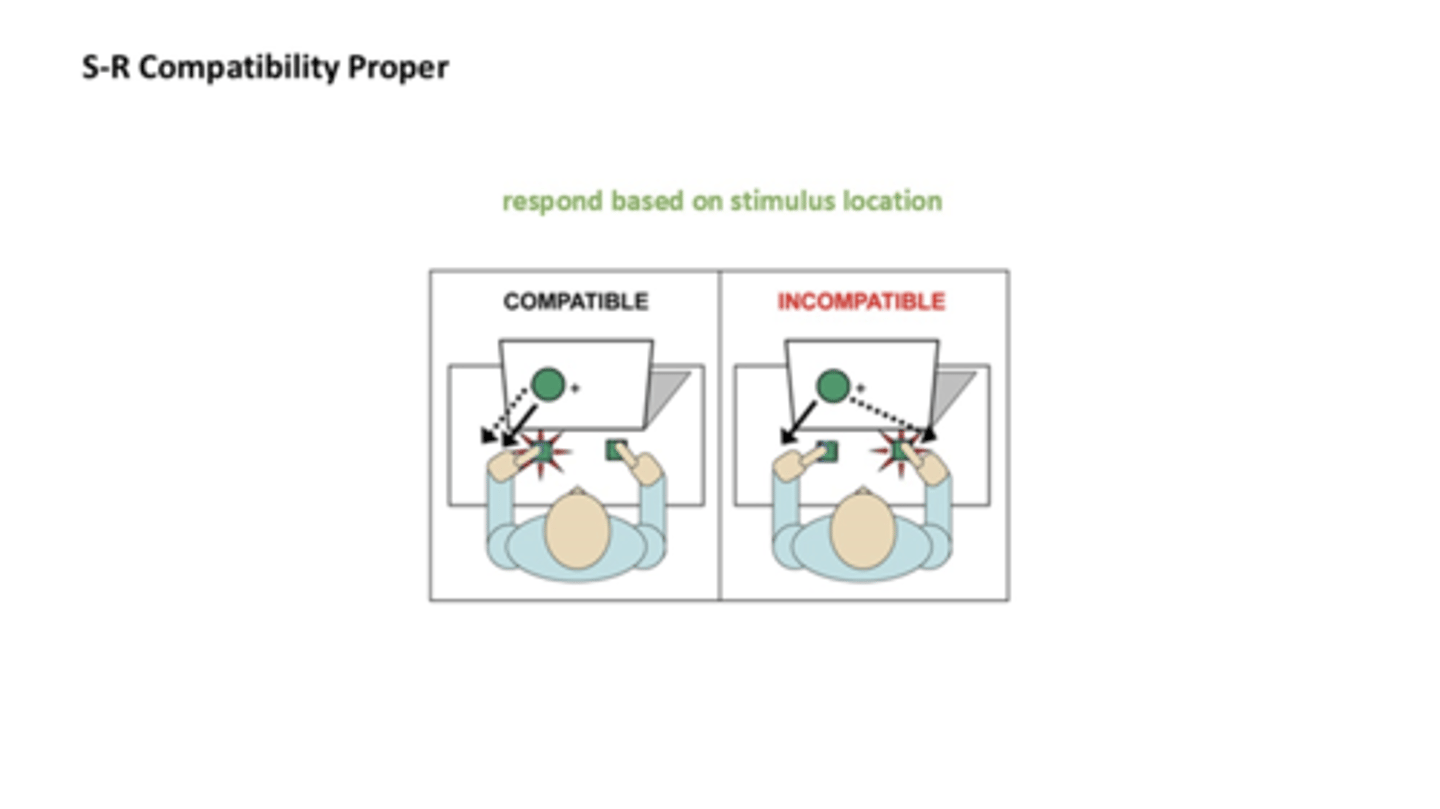
S-R compatibility proper
what would be compatible? incompatible?
...
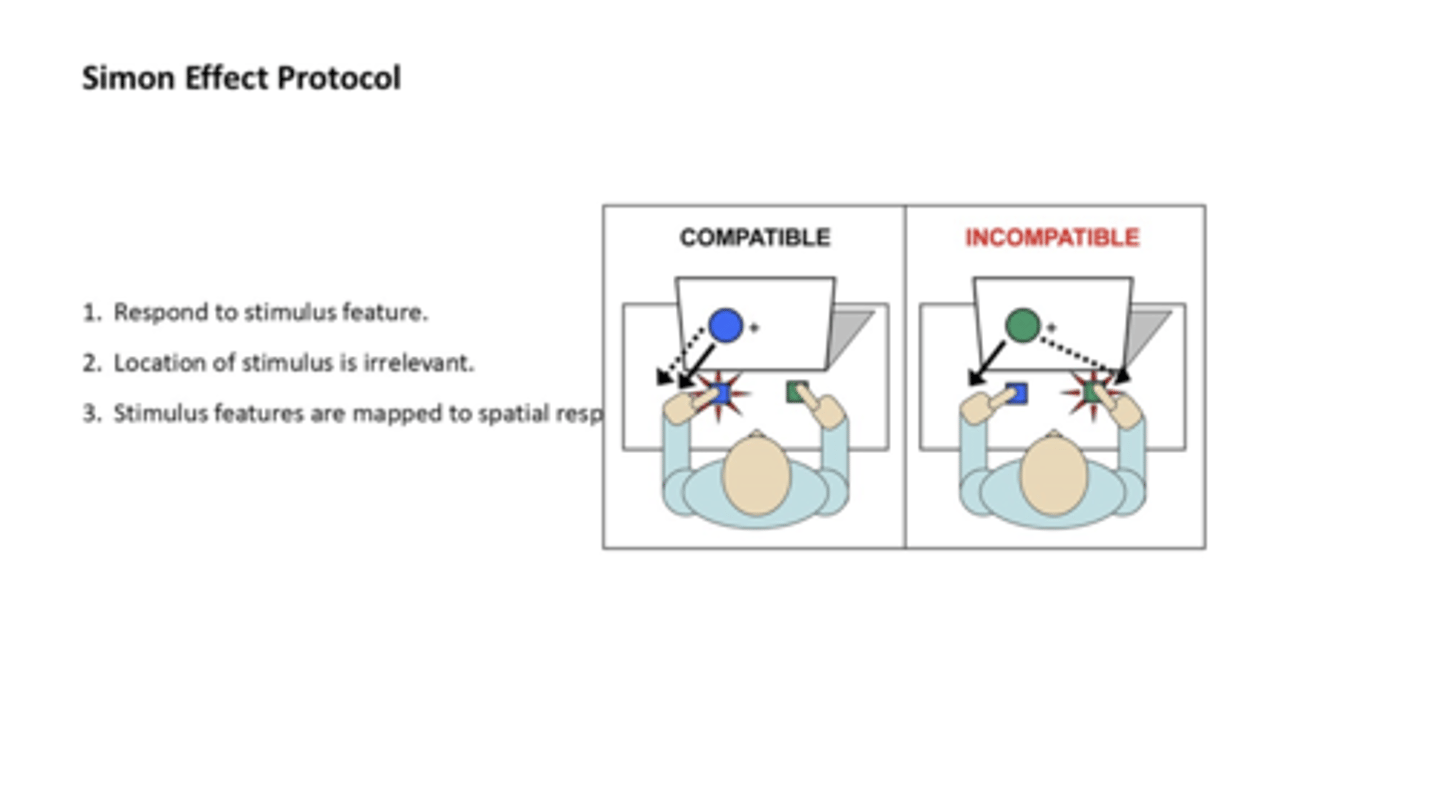
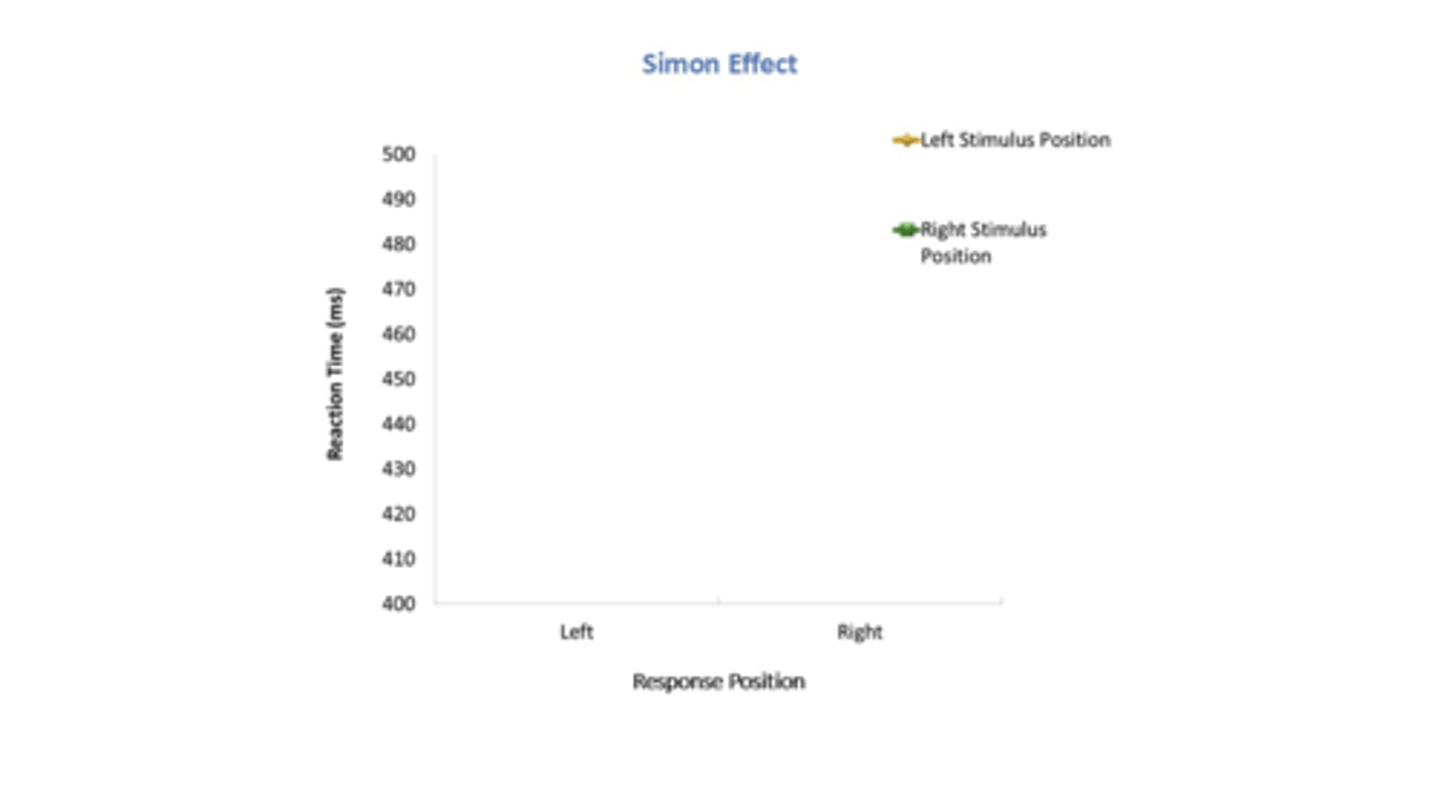
simon effect protocol
respond to stimulus feature
location of stimulus is irrelevant
stimulus features are mapped to spatial response
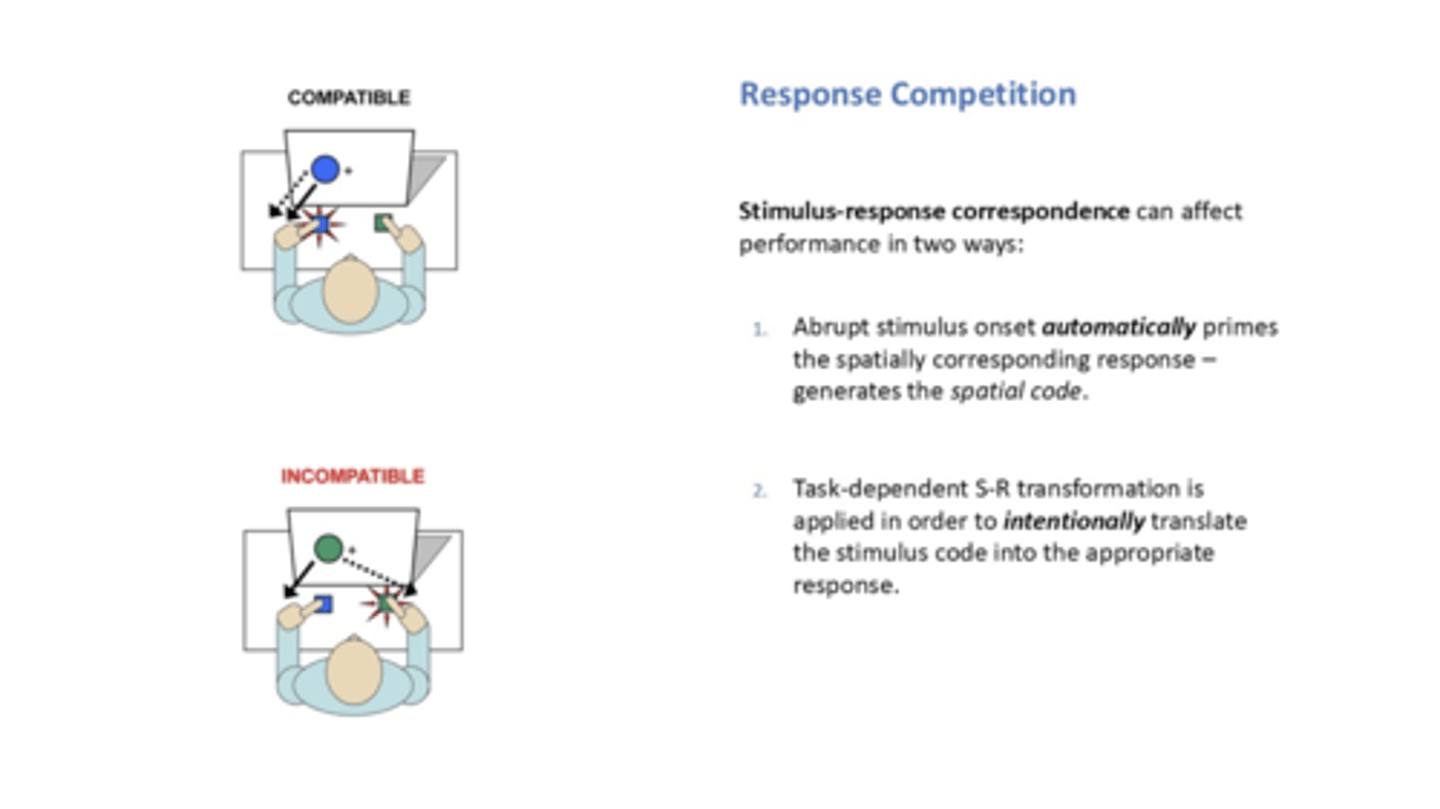
response competition
SR correspondence can affect performance in what two ways
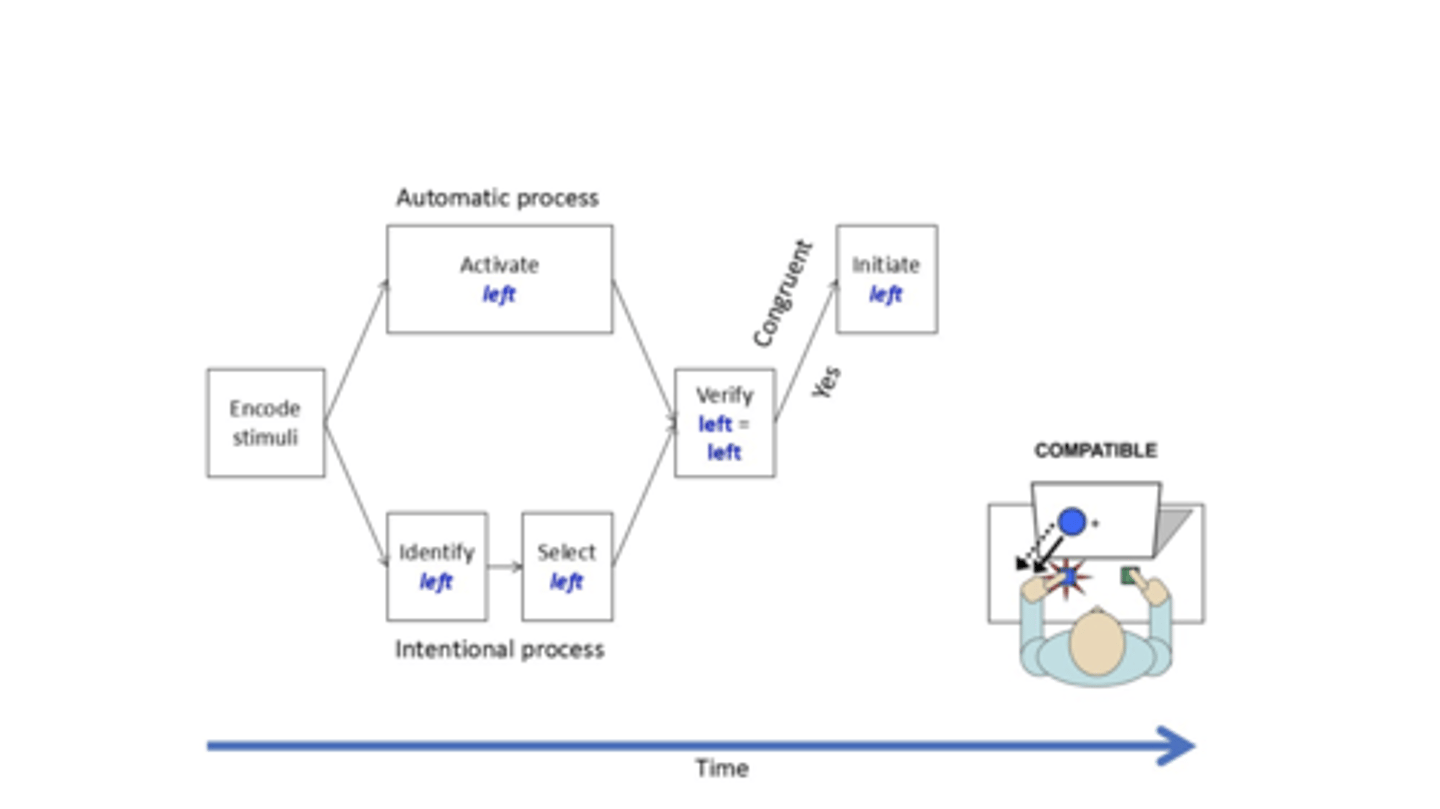
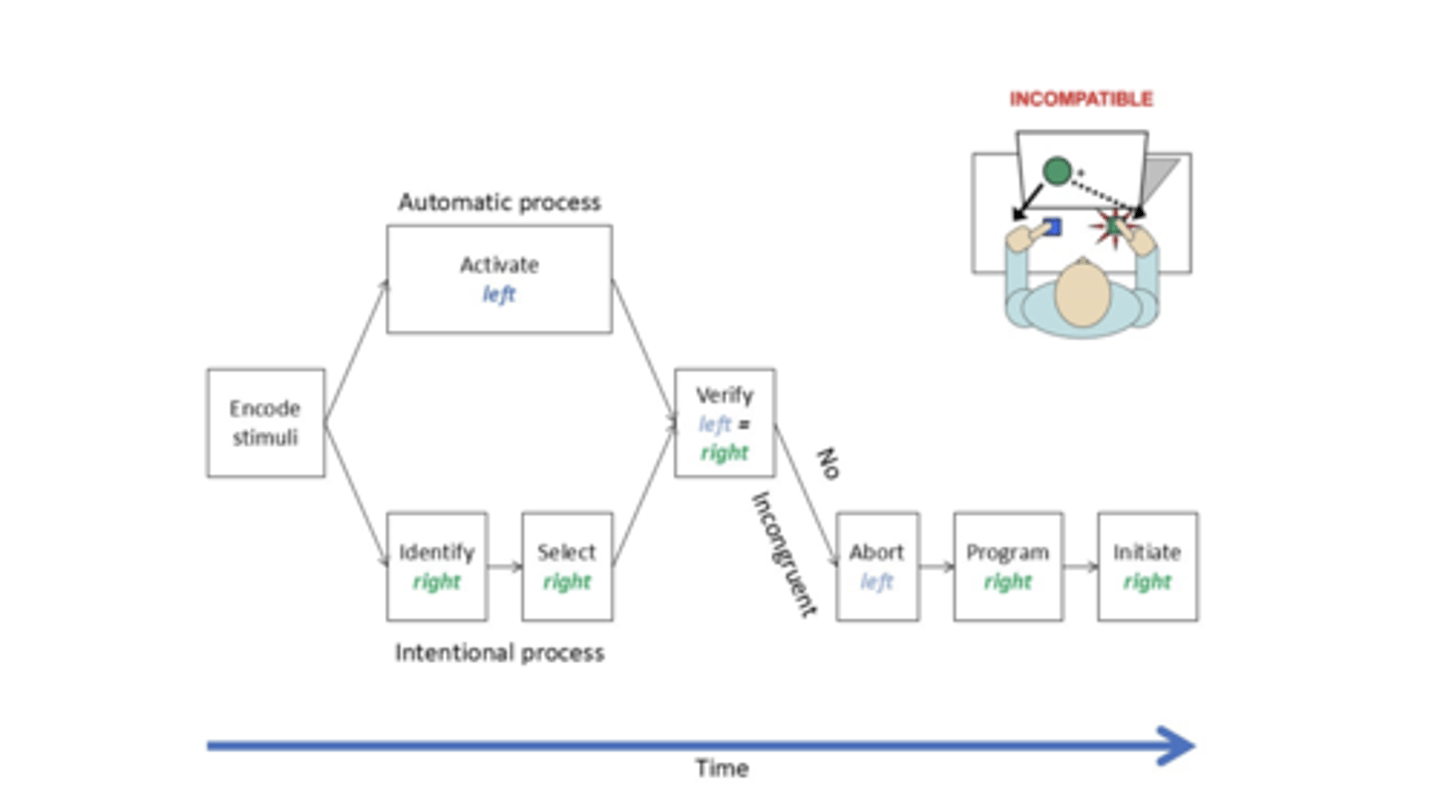
abrupt stimulus onset automatically primes spatially corresponding response - generates spatial code
task-dependent S-R transformation is applied in order to intentionally translate the stimulus code into the appropriate response
simon effect graph
...
compatible. order of events
...
incompatible. order of events
...
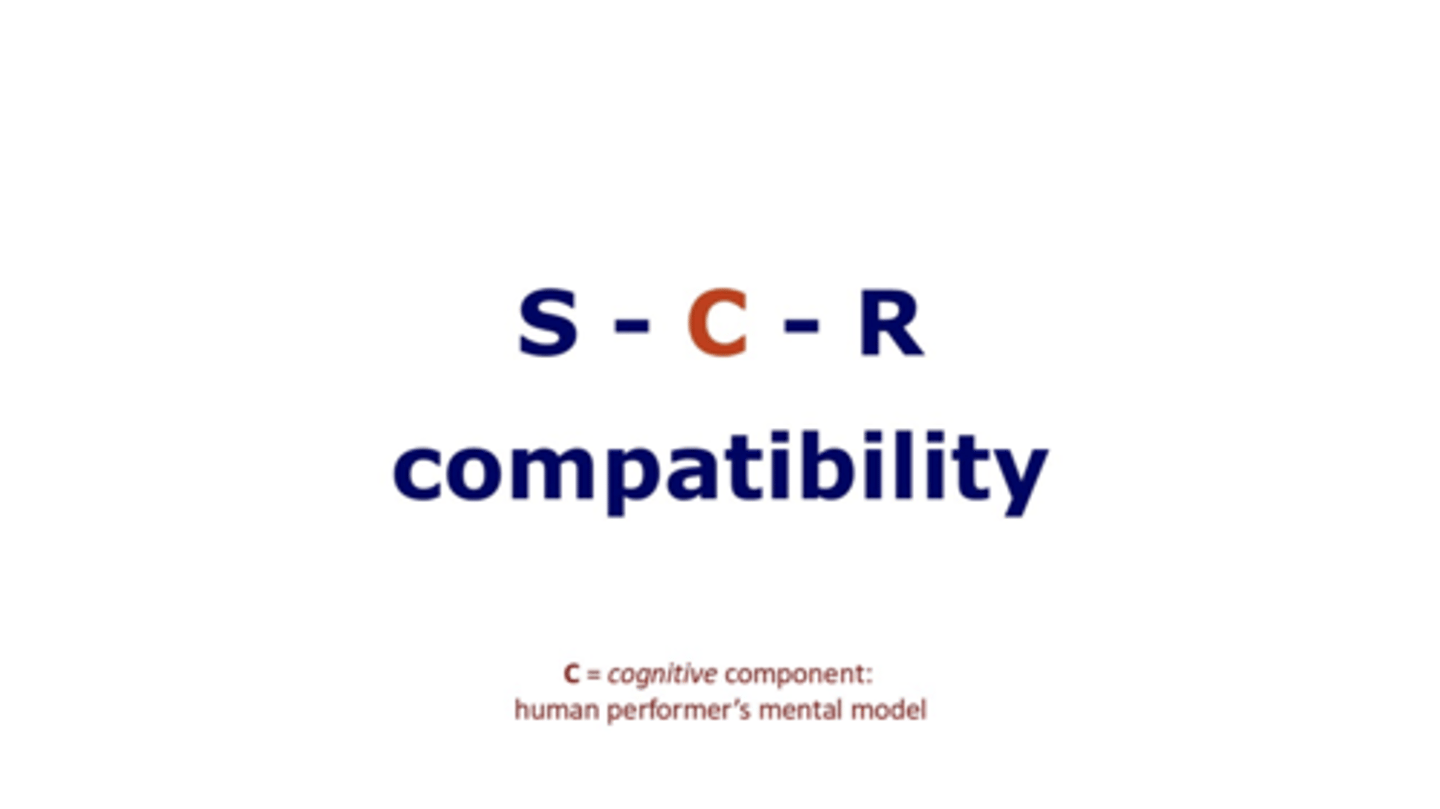
rather than SR compatibility can say
SCR comp
C = cognitive component
human performer's mental model
objectives (check graphs on lab and search)
...