PHS 1010 earth science ch. 17 terms
 Call Kai
 Learn
Learn Practice Test
 Spaced Repetition
 Match
Match Flashcards
 Knowt Play
1/36

There's no tags or description
Looks like no tags are added yet.
Name | Mastery | Learn | Test | Matching | Spaced | Call with Kai |
|---|
No analytics yet
Send a link to your students to track their progress
37 Terms
Humidity
the amount of water vapor in the air
Vapor pressure
pressure in water vapor
Relative humidity
ratio of the air's actual water vapor content compared with the amount of water vapor required for saturation at that temperature (and pressure)
Saturated air
means the water vapor content equals the capacity that air can hold at that temperature
Dew point temperature
temperature to which a parcel of air would need to be cooled down to in order to be saturated
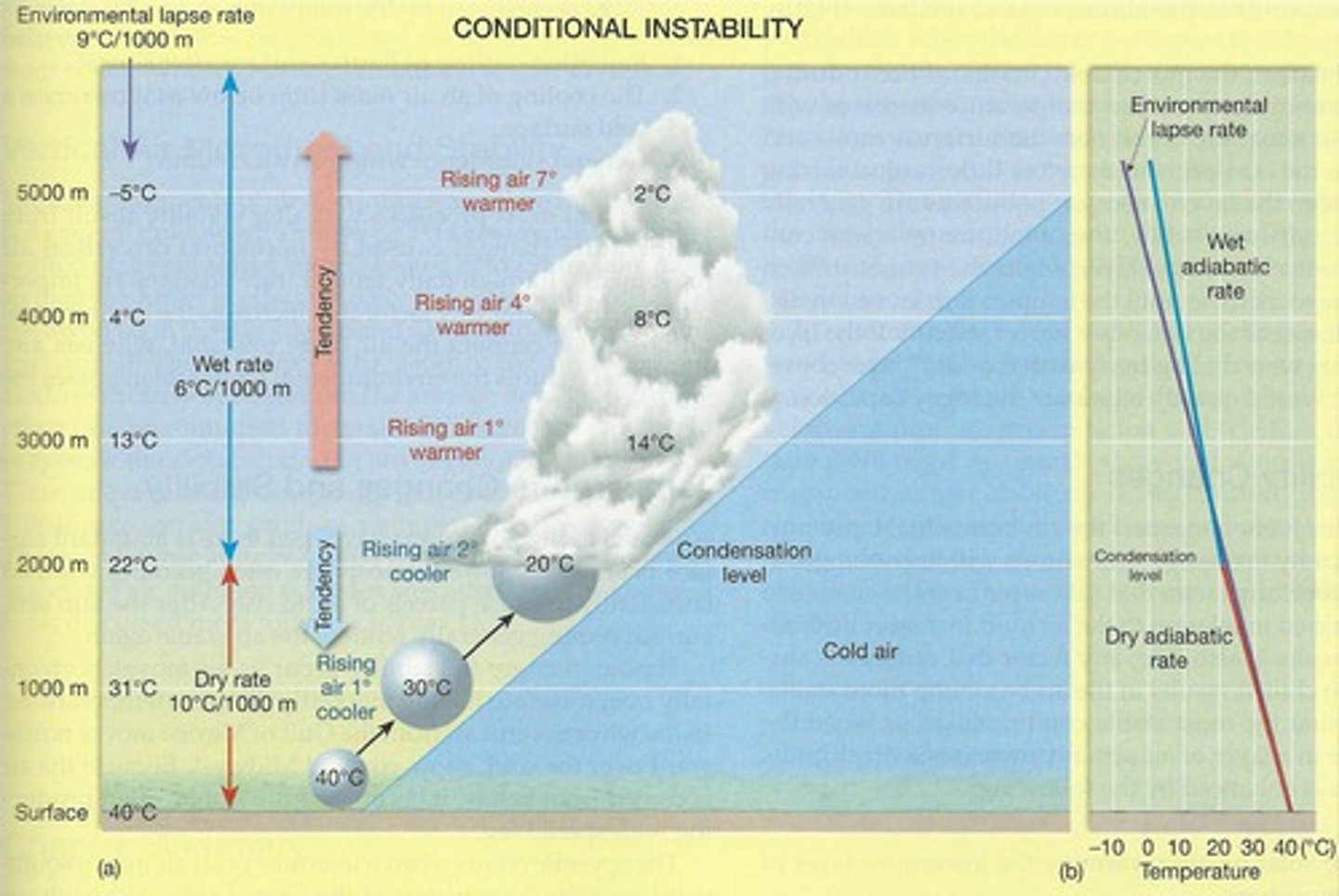
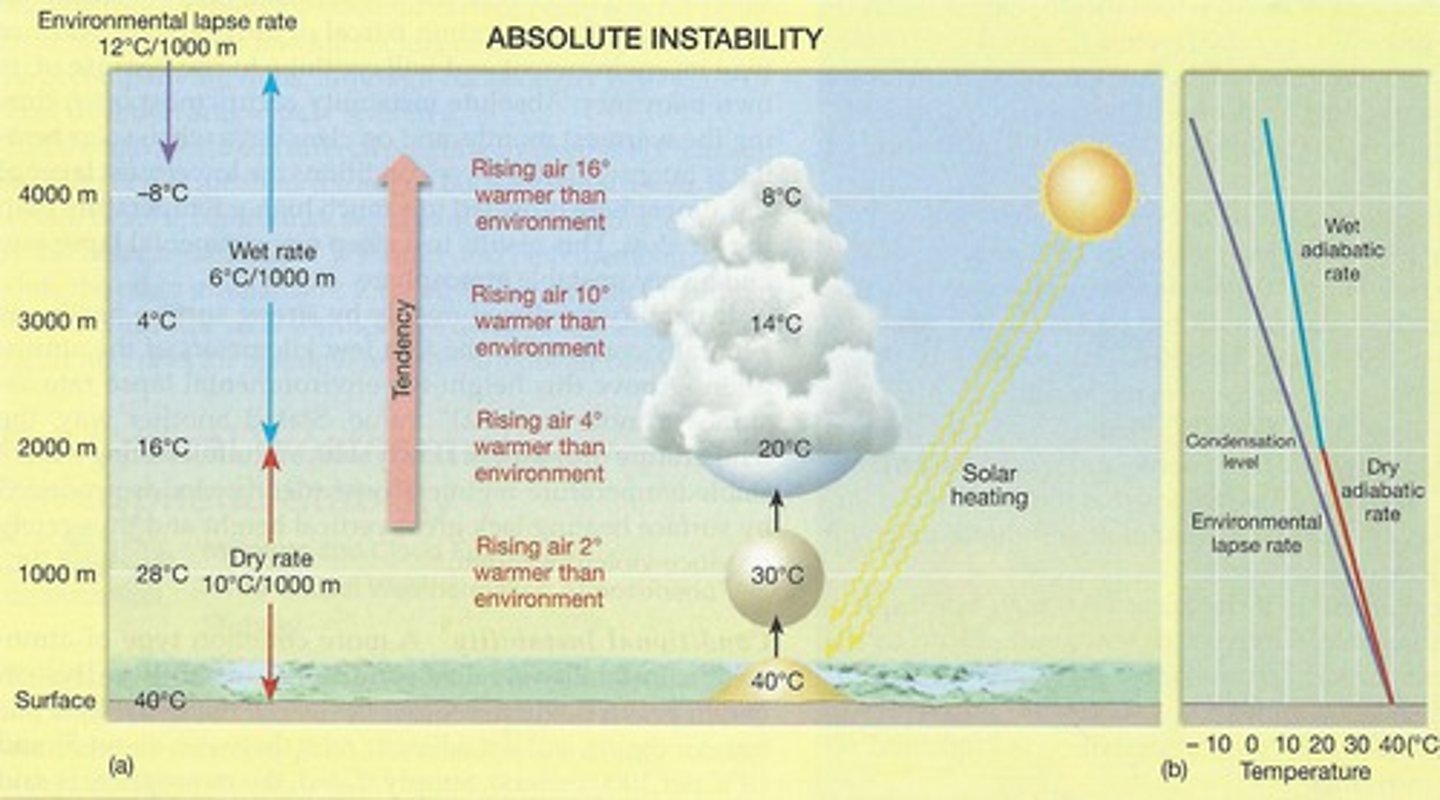
Condensation level
where the air is saturated at that temperature
Dry adiabatic rate
the rate at which air cools as it rises when the air is not saturated
Wet adiabatic rate
the rate at which air cools when the air is saturation-it only cools at this rate above the condensation
Condensation
gas to a liquid
Condensation nuclei
possible condensation surfaces in the atmosphere are tiny bits of particulate matter (dust, smoke, ash, salt, etc.)
Lifting mechanism
a process that forces warmer, less dense air to rise higher in altitude
Orographic lifting
as the air rises, it cools and condenses on the windward side of the mountain, as it goes down the opposite mountain side, the air warms but has less water vapor
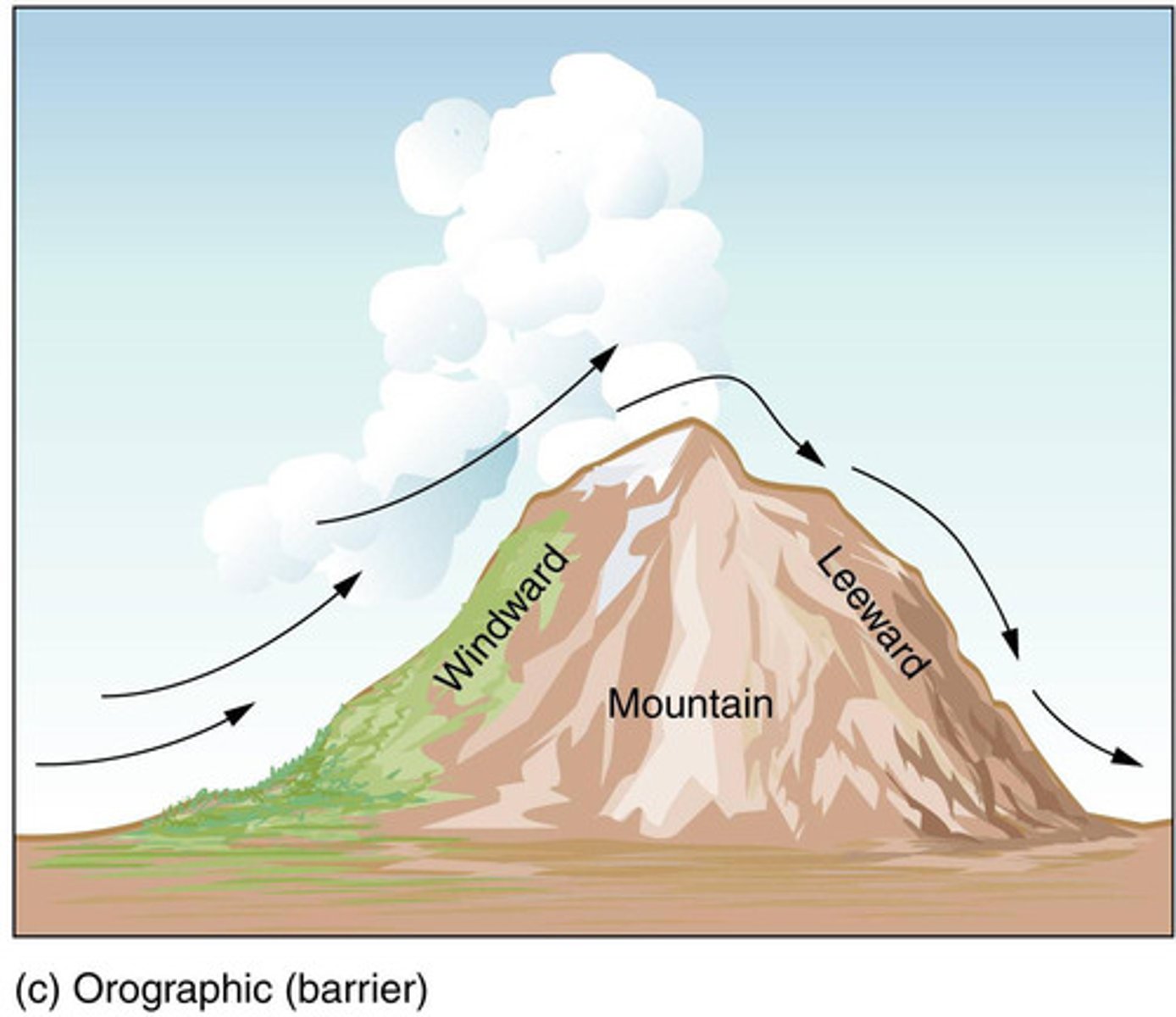
Rainshadow effect
more rainfall on the windward side of a mountain and less rain on the leeward side
1 multiple choice option
Rainshadow desert
a desert on the leeward side of a mountain range
1 multiple choice option
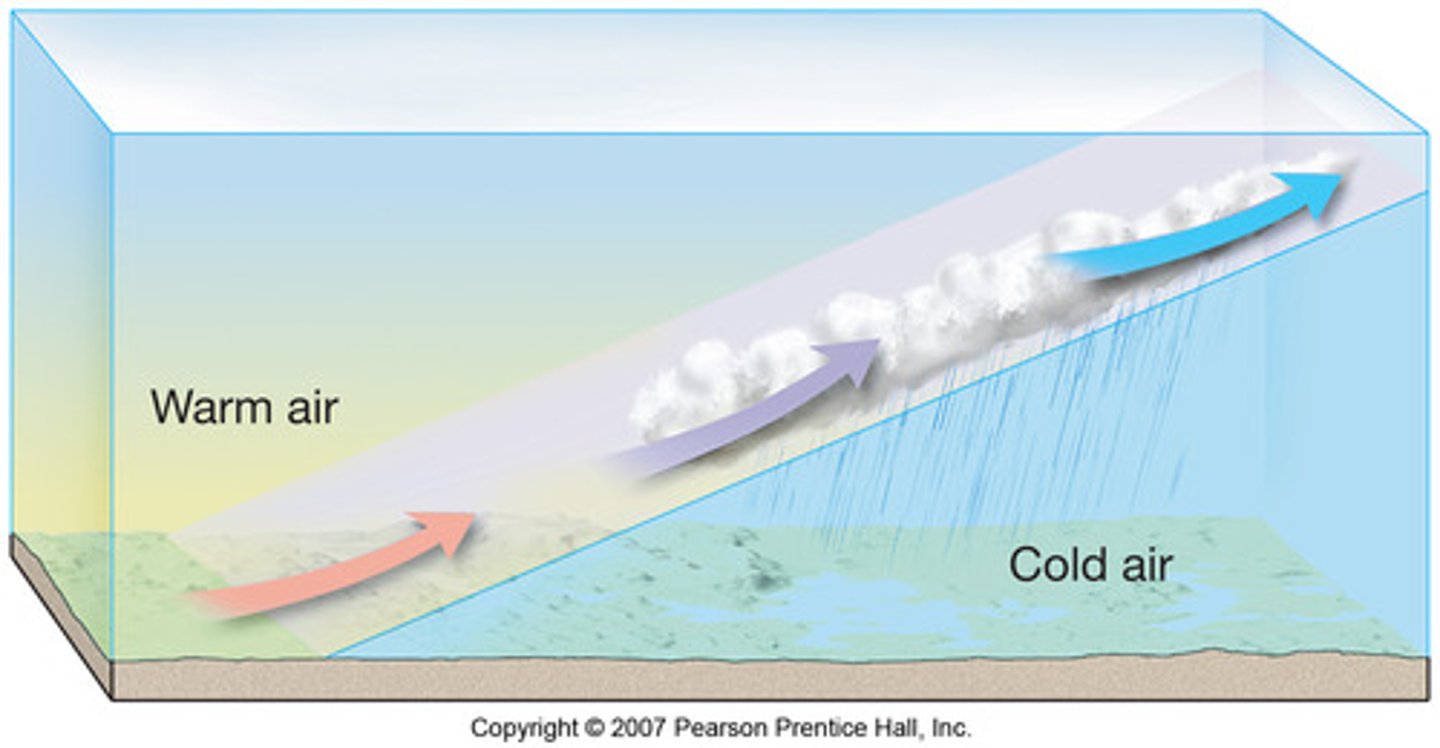
Frontal wedging
occurs along fronts where cool air acts as a barrier to warm air causing the warm air to rise (less dense)
1 multiple choice option
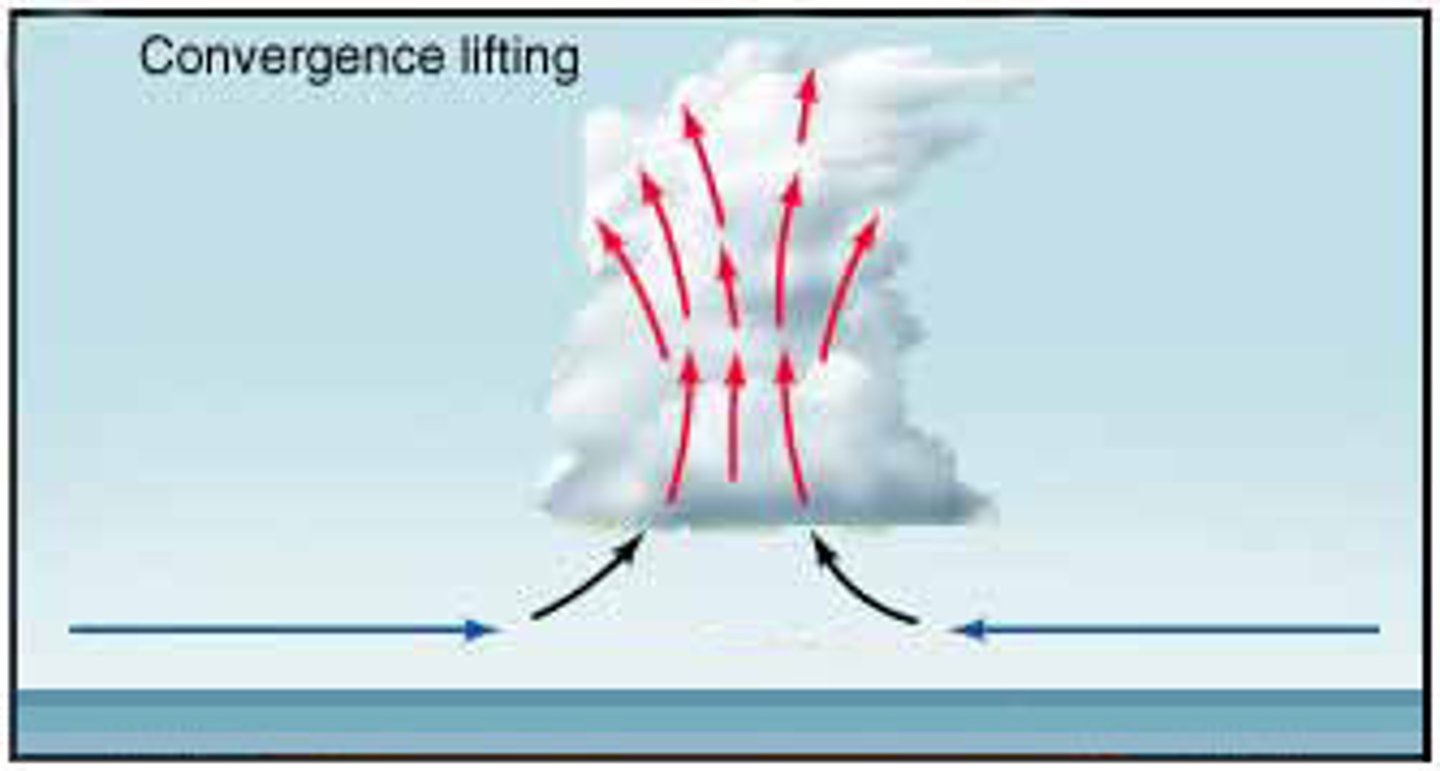
Convergence lifting
where air from different directions is flowing together and rising (happens at low pressure points in the atmosphere)
2 multiple choice options
Convective lifting
occurs where unequal surface heating causes pockets of air to rise
3 multiple choice options
Stable air
resists vertical displacement because the air is cooler and denser than surrounding air, so it wants to sink rather than rise higher in the atmosphere
3 multiple choice options
Conditional instability
occurs when the atmosphere is stable for an unsaturated parcel (dry adiabatic rate) of air but unstable for a saturated parcel (wet adiabatic rate)
1 multiple choice option
Absolute instability
Rising air acts like a hot air balloon
3 multiple choice options
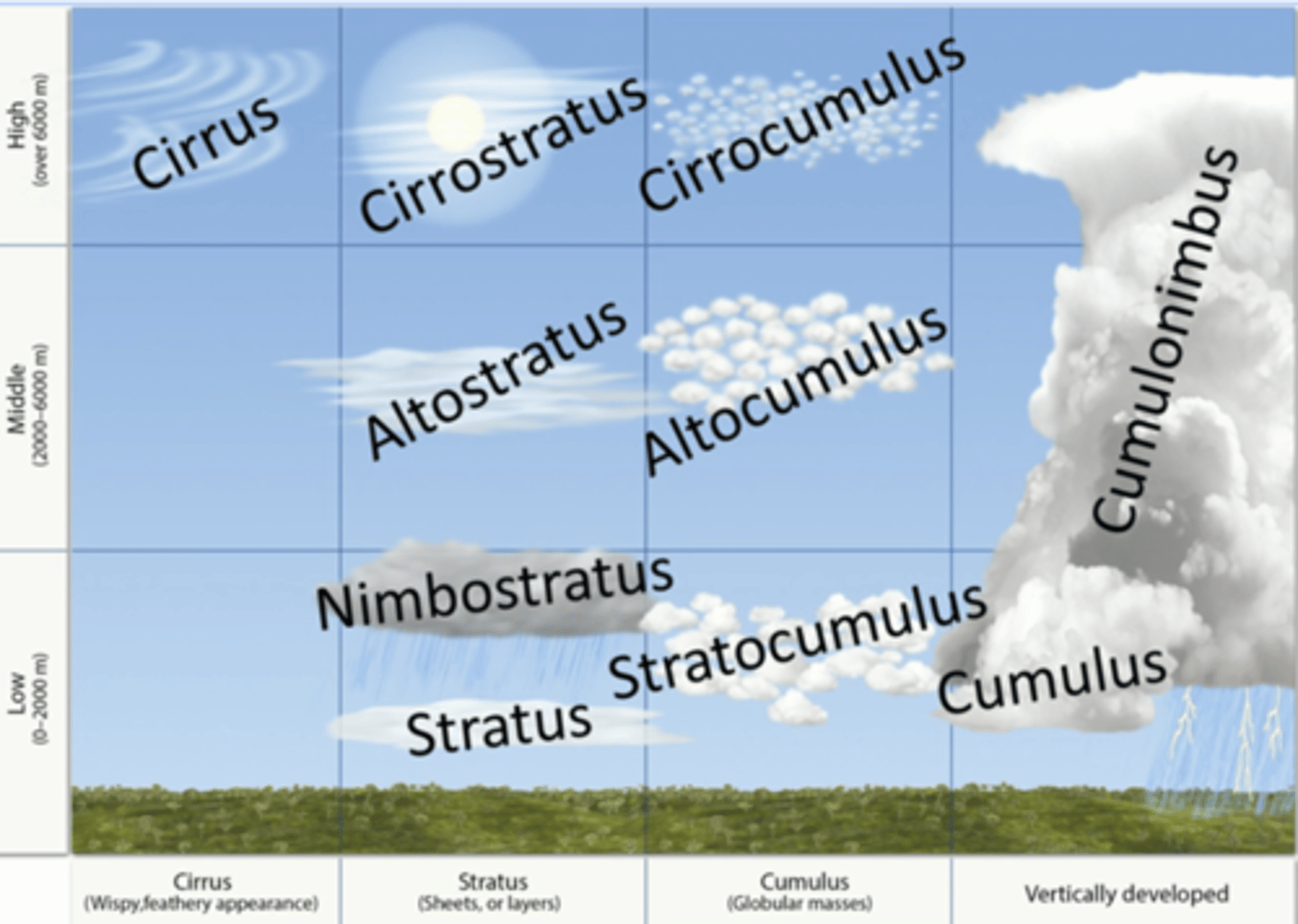
Clouds
Made of millions and millions of microscopic water droplets or ice crystals
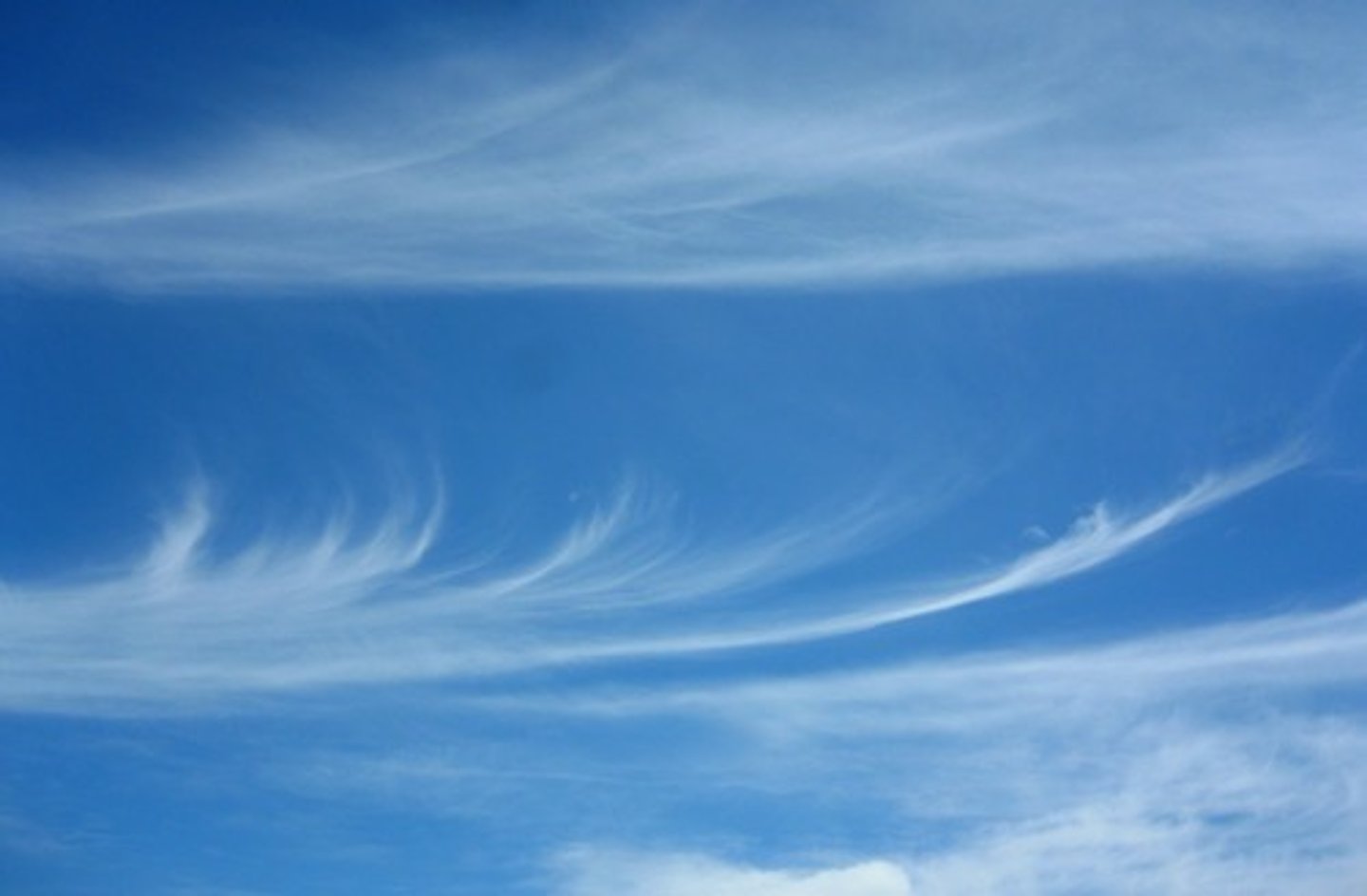
Cirrus
High clouds that are thin and/or wispy
1 multiple choice option
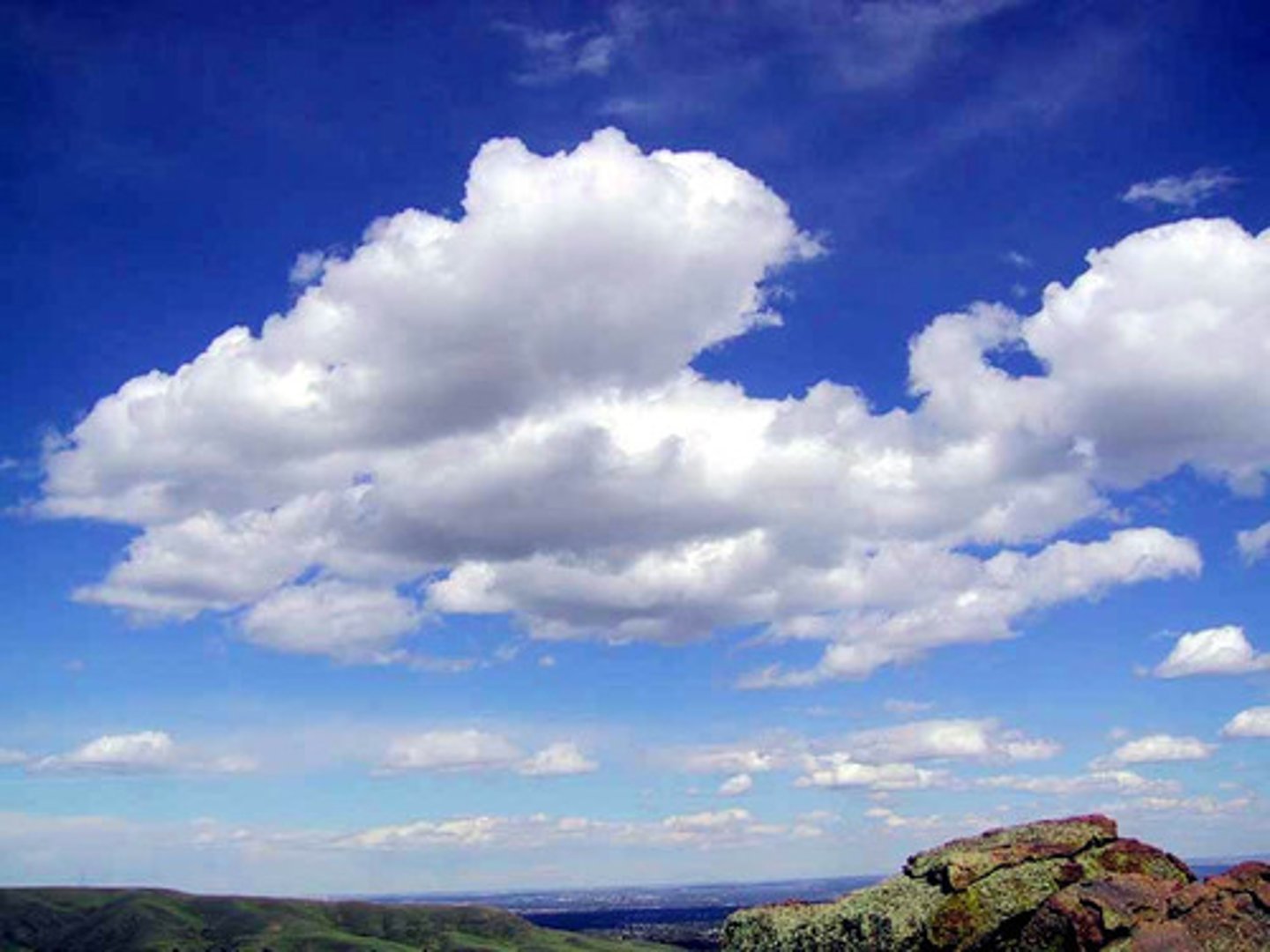
Cumulus
globular cloud masses
2 multiple choice options
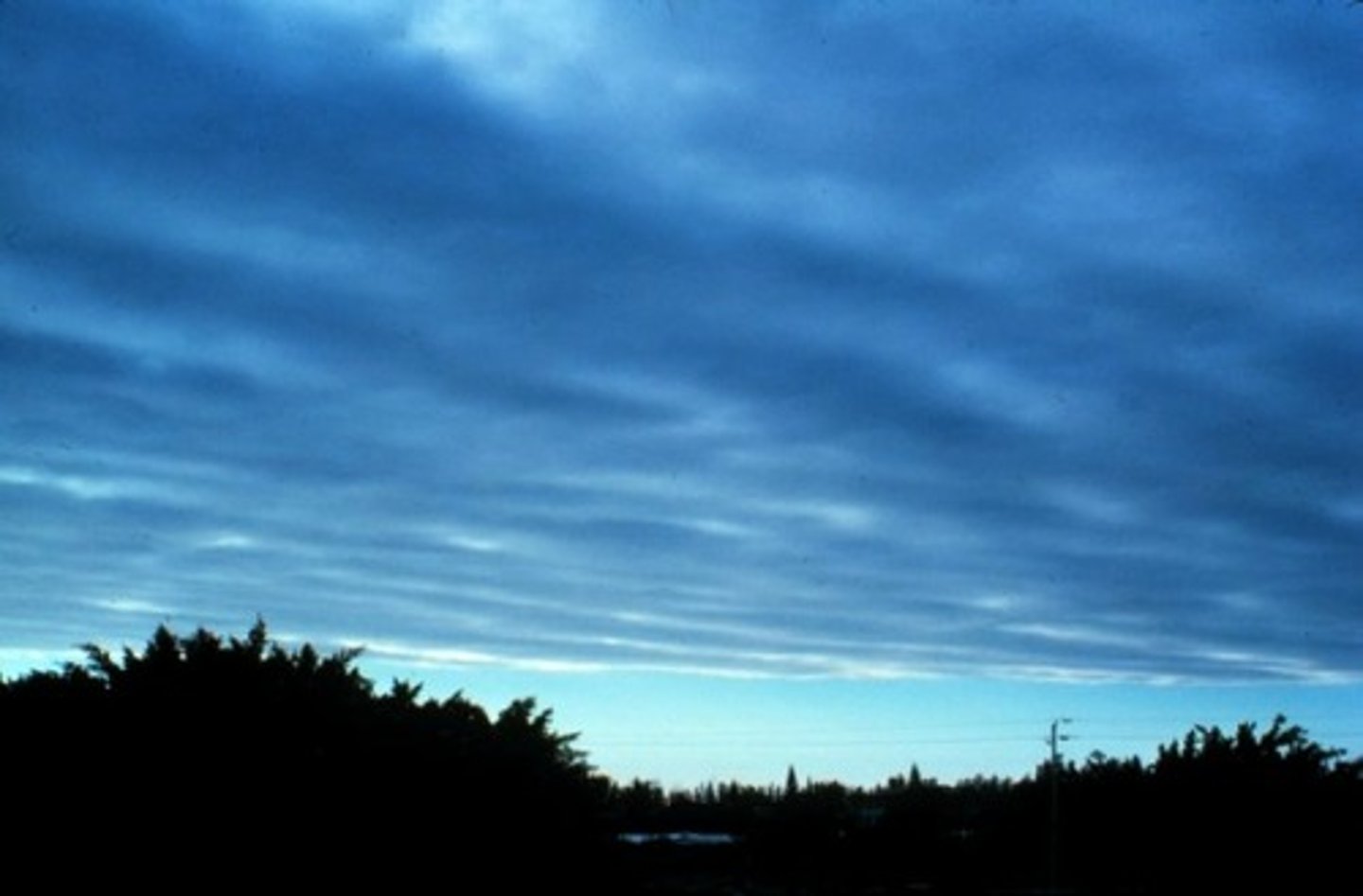
Stratus
sheets or layers that cover much of the sky
1 multiple choice option
Cirro
high clouds—above 6000 meters
3 multiple choice options
Alto
middle clouds—2000 to 6000 meters
2 multiple choice options
Nimbus
low clouds—below 2000 meters; means "rainy" and can occur at any level
3 multiple choice options
Cumulonimbus
exist in all levels of altitude simultaneously
2 multiple choice options
cloud examples
Fog
clouds with its base at or near the ground; form through radiation cooling or movement of air over a cold surface
2 multiple choice options
Rain
droplets that have at least a 0.5 mm diameter
Drizzle
droplets have less than a 0.5 mm diameter
Snow
ice crystals, or aggregates of ice crystals
Sleet
small particles of ice that fall to the ground
2 multiple choice options
Freezing rain
falls as liquid (but cold) and freezes on impact with a surface
Glaze
a very thin layer of water that has frozen, generally overnight when temperatures drop close to or below freezing
Hail
concentric shells or layers of ice; range from 1-5 cm
3 multiple choice options