Child development exam 3
 Call Kai
 Learn
Learn Practice Test
 Spaced Repetition
 Match
Match Flashcards
 Knowt Play
1/105

Earn XP
Description and Tags
Chapters 8,9,10
Name | Mastery | Learn | Test | Matching | Spaced | Call with Kai |
|---|
No analytics yet
Send a link to your students to track their progress
106 Terms
Early childhood
ages 2-6
the play years
physical growth in early childhood
growth slows
shape becomes more streamlined/ less round
new epiphyses (growth centers) where cartilage hardens into bones
brain growth in early childhood
grows very rapidly
areas for executive function see rapid growth → supports goal directed behavior
Hippocampus
memory and spacial understanding
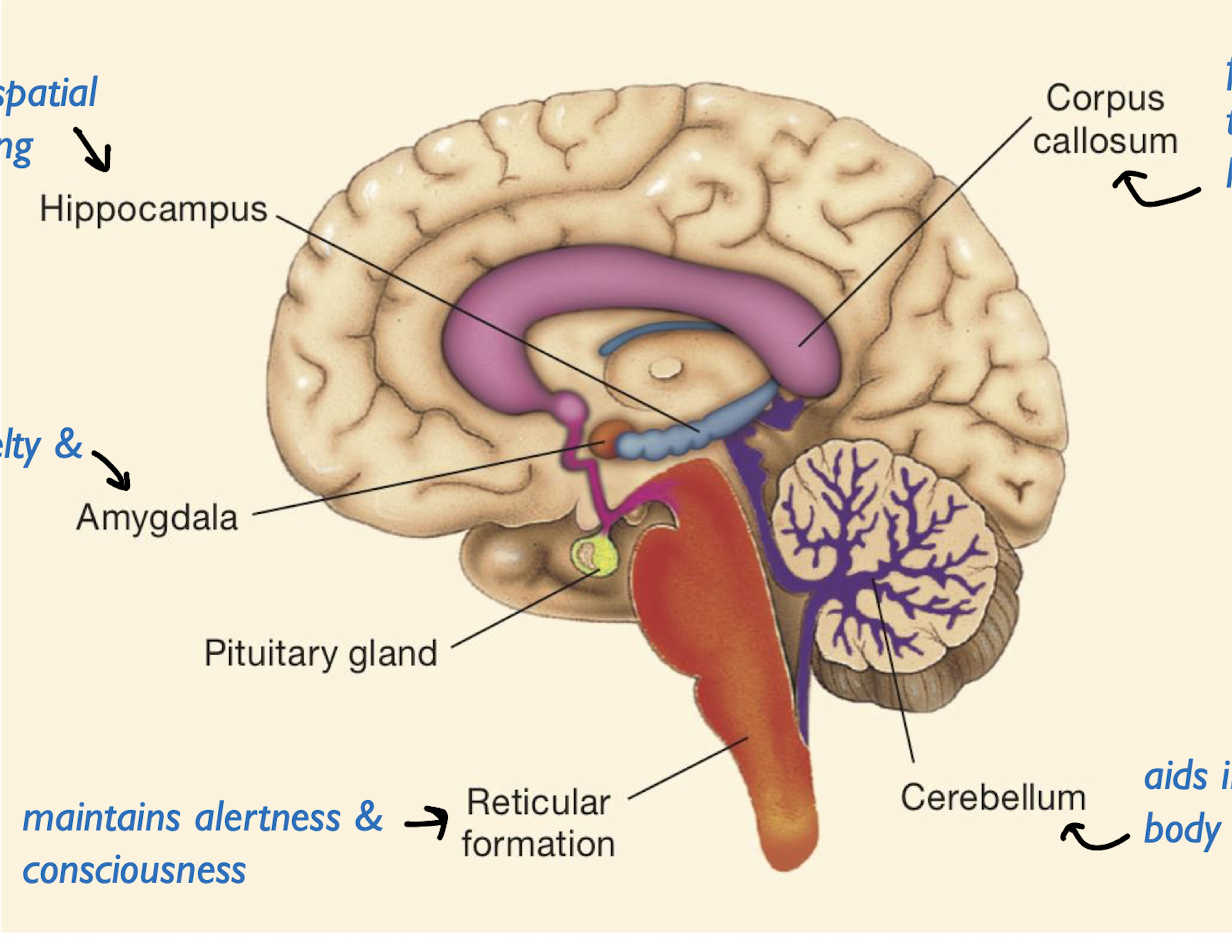
Amygdala
processes novelty and emotional information
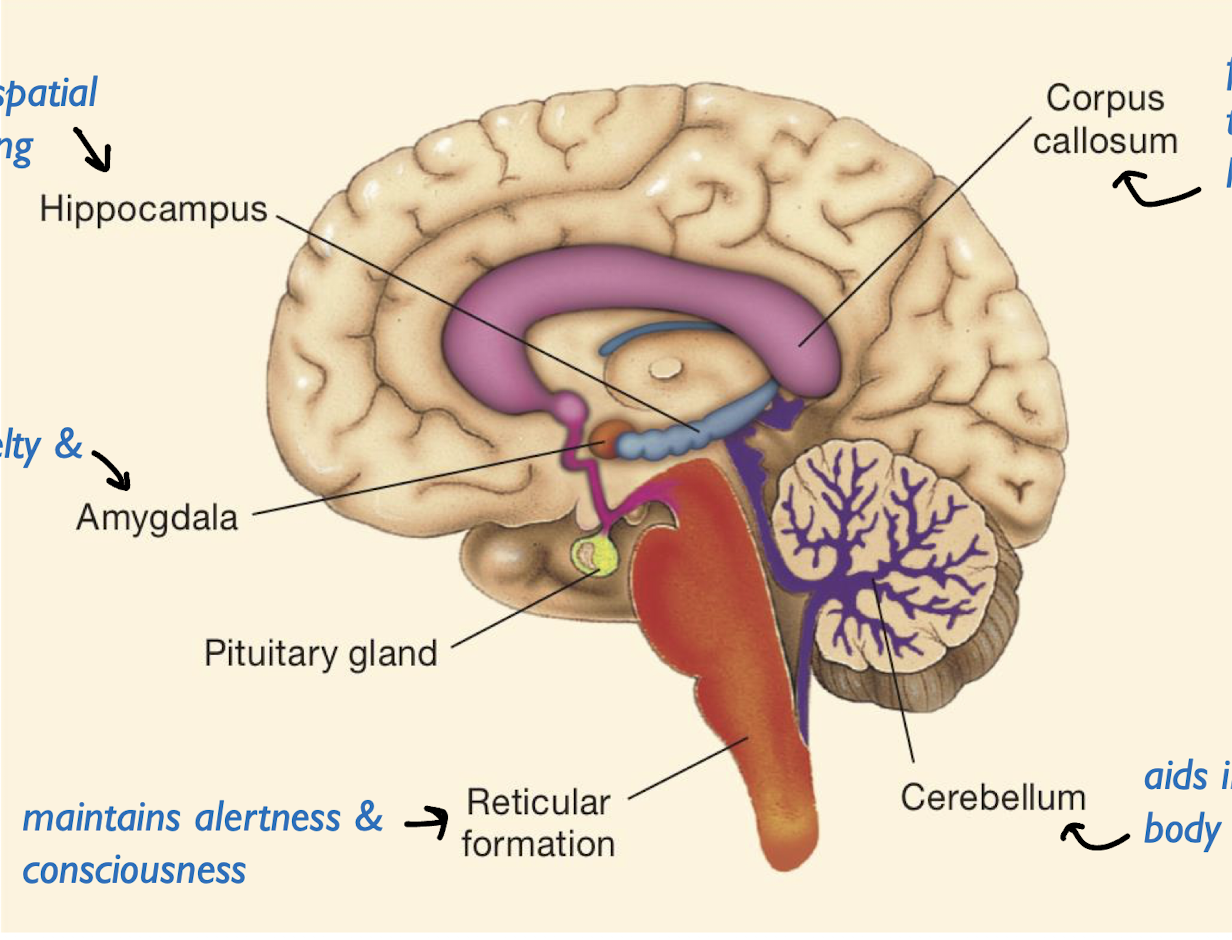
Pituitary gland
secrete hormones that control body growth
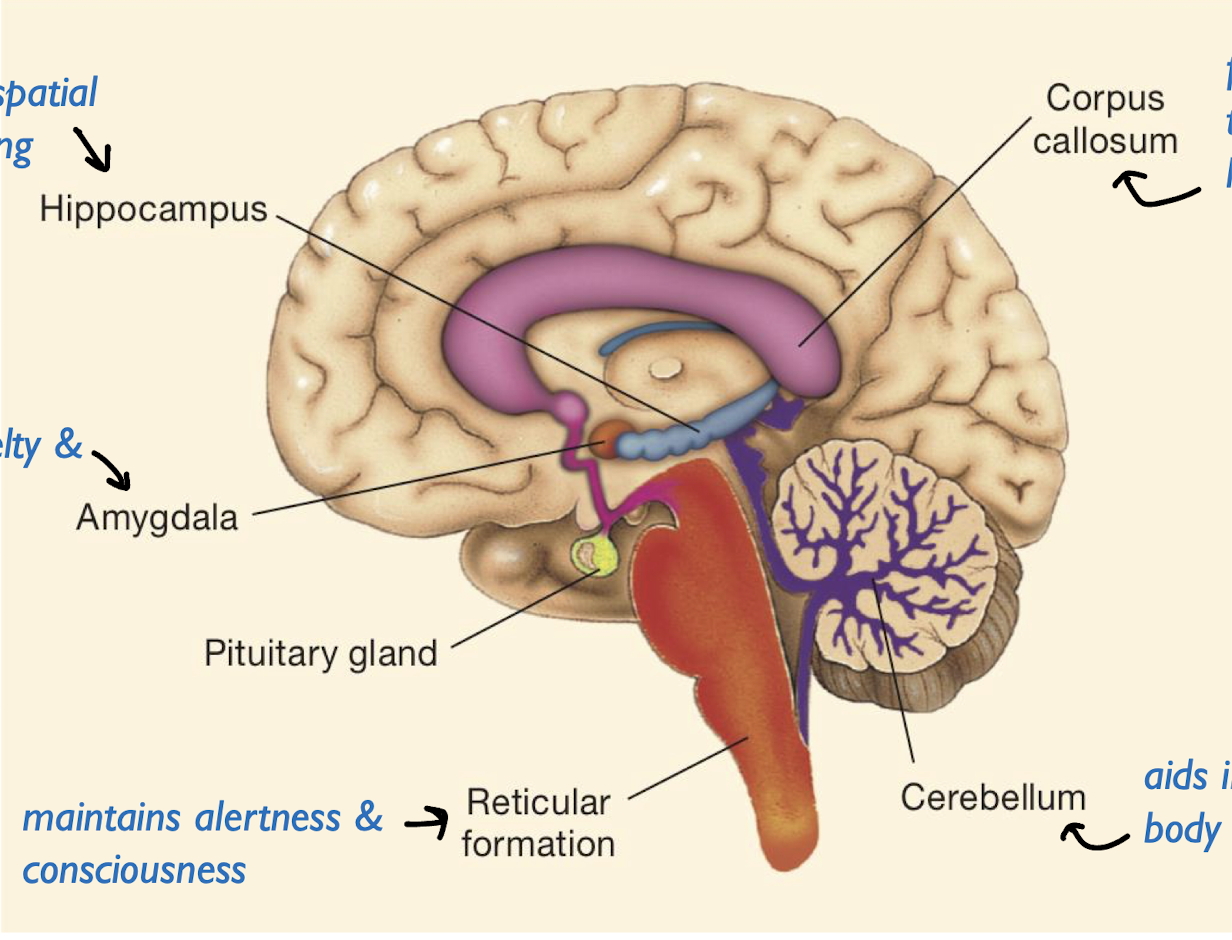
Reticular formation
maintains alertness and consciousness
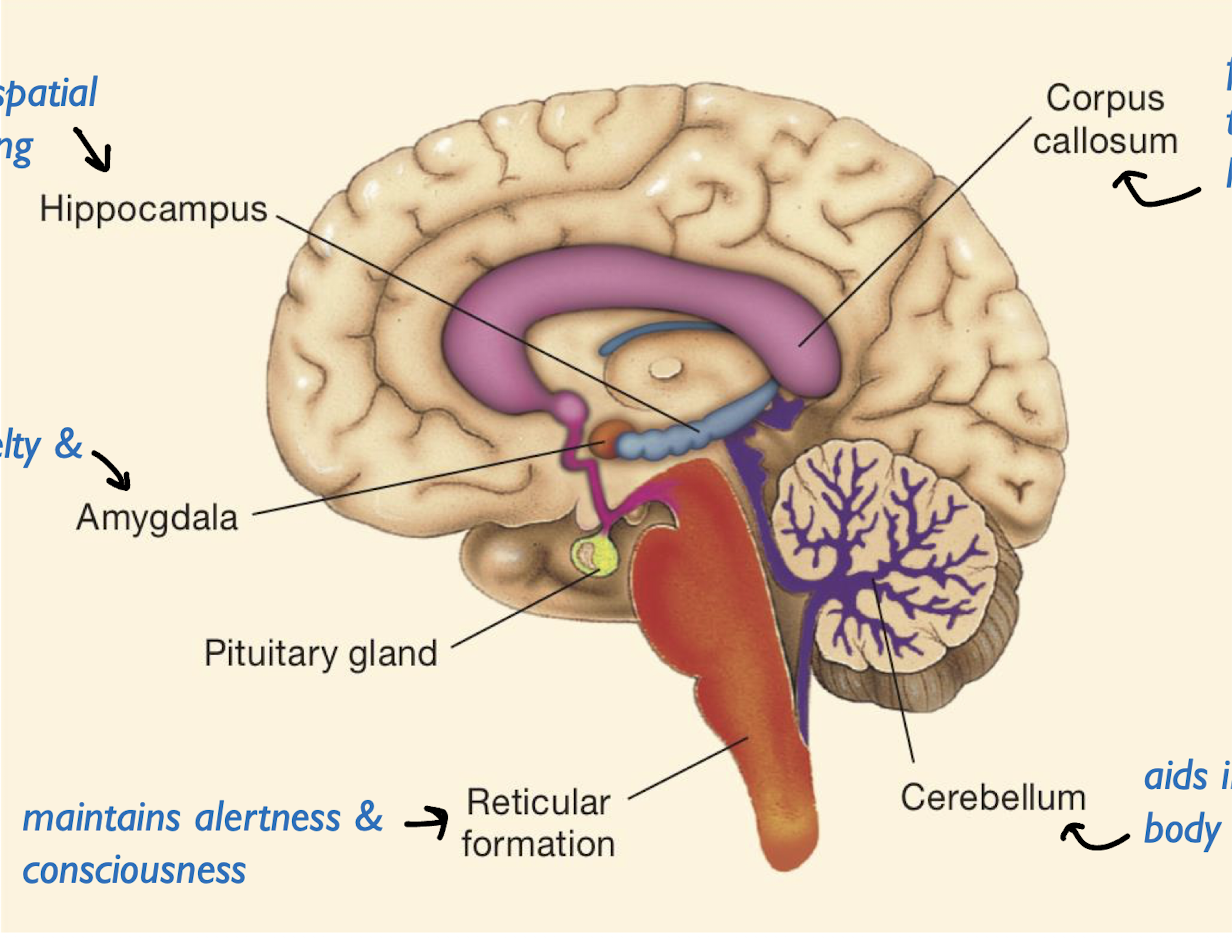
Cerebellum
aids in balance and control of body movement
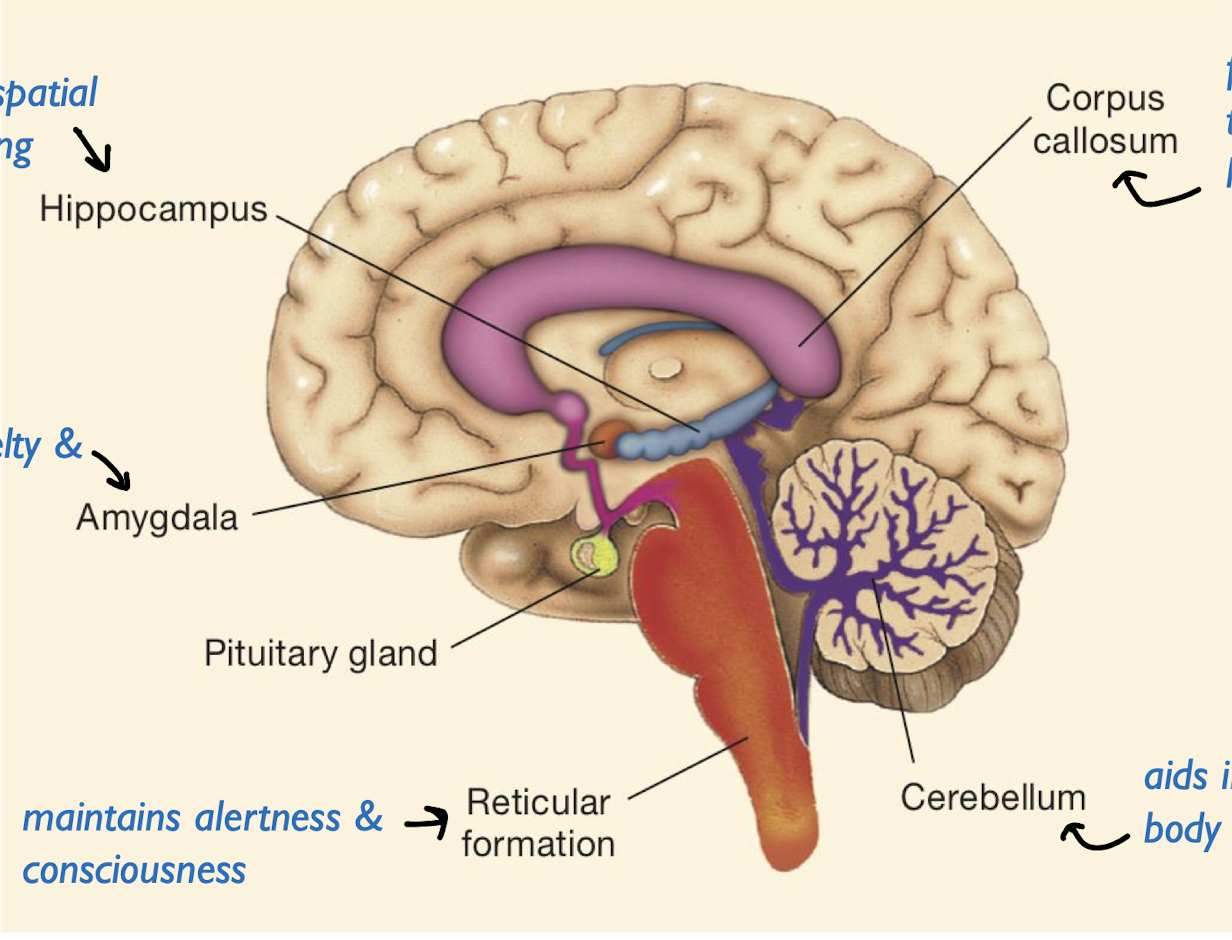
Corpus callosum
fibers connecting the two cerebral hemispheres
areas of brain development that are vulnerable in poverty
cognitive and emotional
Grey matter
processing of sensation, perception, movement, learning, speech, cogniton
Growth hormone
development of almost all body tissues
Thyroid-stimulating hormone
prompts thyroid to release thyroxine, needed for brain development and for growth hormone to take full effect
nightmares
very common
sleep terrors
affect 3% of young children
children wont remember, suddenly wake up and scream, may be triggered by stress
type of relationship between screen time and sleep disturbances
positive correlation
why does appetite decline in early childhood
growth has slowed
how to deal with a picky eater
repeated, unpressured exposure
dont restrict foods
moms who pressured their children to eat more likely had an
overweight child
moms who restricted children’s food were more likely to have a
overweight child
leading cause of childhood mortality in industrialized nations
unintentional injuries
individual factors in childhood injuries
personality characteristics
family, community, and societal factors in childhood injuries
poverty, single parenthood, low parental education
child-care shortages
teen parenthood
societal conditions in developing nations
most common injuries resulting in death
car accidents
suffocation
drowning
poisoning
parents often ________ children’s knowledge of safety rules
overestimate
as children grow their center of gravity shifts
downwards
improves balance
self help skills in ages 4-5
dress and undress
use fork well
use knife to cut soft foods
progression of drawing skills
scribbles (2)
first representational forms (3-4)
more realistic complex drawings (5-6)
early printings (4-6)
first representational forms drawings
first recognizable pictures
use lines for object boundaries
why are children in Asian cultures more advanced at drawing skills
taught methods on how to draw
US emphasizes interdependence (finding own style)
Chinese children still produce original art despite being taught to draw
boys are ahead in skills requiring _____ and _____
power and force
girls are ahead in skills requiring _____ and _____
balance and fine motor skills
how are motor skills mastered in early childhood
through play
formal lessons have little impact
piaget’s theory for early childhood
pre-operational stage
symbolic activity increases
what is the most flexible means of mental representation
language
able to combine connects in unique ways
piagets underestimation in early childhood
power of language to spur children’s cognition
how are representational schemes built
through pretending
make-believe play
play detaches from real-life conditions
play becomes less self-centered
more complex combinations of schemas
Sociodramatic play
develops coordination of roles with others
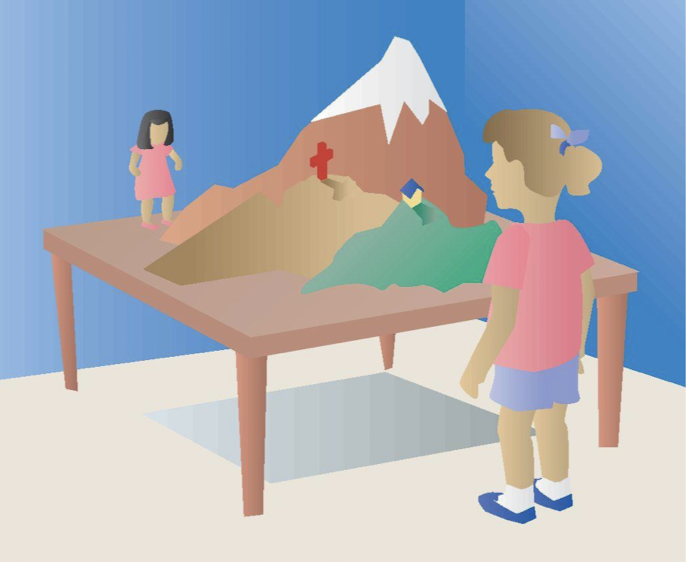
Egocenterism
preoperational thought
failure to distinguish others symbolic view points from their own
three mountain problem
animilistic thinking
inanimate objects have lifelike qualities
ex: stuffed animal having feelings
inability to conserve
preoperational thought
does not grasp that an object’s physical characteristics remain the same even when appearances changes
centration + irreversibility
Centration
inability to conserve
focus on one aspect, neglecting others
Irreversibility
inability to conserve
cannot mentally reverse a series of steps
lack of hierarchical classification
cannot organize objects into classes and subclasses based on similarities and differences
limitation of preoperational thought
Vygotskys early childhood theories
sociocultural theory
private speech
private speech
when children talk to themselves
used when tasks are more challenging
with age becomes silent inner speech
2 aspects of effective social interactions
intersubjectivity and scaffolding
intersubjectivity
two participants who begin a task with different understandings arrive at a shared understanding
Scaffolding
adjusting the support offered during a teaching lesson to fit the child’s current level of performance
Inhibition
ability to inhibit impulses and focus on a competing goal
flexible shifting of attention
improves during preschool years
gains in working memory
permits children to generate more complex play and problem solving goals
planning
thinking out a sequence of acts ahead of time and preforming them accordingly to reach a goal
memory in preschoolers
able to talk about memories (become explicit)
recognition memory is nearly perfect
recall is poorer than recognition
Episodic memory
memory for everyday experiences
recalled in context: linked to time, place, person
semantic memory
information removed from the context in which it was first learned
facts
scripts
how routine events are remembered
overlapping waves theory
when given challenging problems, children try out various strategies and observe which works best and then gradually select strategies on the basis of accuracy and speed
metacognition
thinking about thought
theory of mind
age 1 metacognition
people can influence one anothers mental states
age 2 metacognition
clear grasp of others emotions and desires
age 3 metacognition
realize thinking is internal
age 4 metacognition
both beliefs and desires determine behavior
become aware of false beliefs
Emergent literacy
childrens active efforts to construct literacy knowledge through informal experiences
phonological awareness
ability to manipulate the sound structures of spoken langugae
Ordinality
grasp order relationships between quantities
age 3 - count to 5
cardinality
understanding the next number is the last number plus 1
age 4 - use counting to solve simple arithmetic problems
why are child-centered programs better
large group teacher directed learning undermines motivation
fast mapping
connecting new words with underlying concepts after only a brief encounter
mutual exclusivity bias
assumption that words refer to entirely separate categories
syntactic bootstrapping
discovering word meanings by observing how they are used
overregularization
overextension of grammatical rules
ex: goed instead of went and tooths instead of teeth
semantic bootstrapping
children rely on semantics to figure out grammatical rules
age 2 _____ spoken words, age 6 _____ spoken words understand ______ words
250
several thousand
10,000
pragmatics
practical, social side of language
recasts
parents restoring inaccurate speech into correct form
Expansions
parents elaborating on children’s speech, increasing its complexity
initiative
eagerness to tackle new tasks, join in with peers, wanting to discover what they can do with adult help
self-esteem
judgements we make about our own worth and the feelings associate with those judgements
emotional competence
emotional understanding
emotional self-regulation
self-consious emotions and empathy
what makes fears in early childhood common
imaginations and limited grasp of fantasy-reality distinction
prosocial behavior
actions aimed at benefiting others
sympathy
feeling sorrow FOR anothers plight
empathy
feeling WITH another person and responding emotionally in a similar way
Nonsocial activity
unoccupied onlooker behavior and solitary play
parallel play
play near other children with similar toys without trying to influence them
associative play
engaging in separate activities but exchanging toys and comments\
cooperative play
oriented toward a common goal
make believe play
Functional Play
simple repetitive motor movements
during first 2 years
constructive play
creating or constructing something
3-6 years
make believe play
acting out everyday and imaginative roles
2-6 years
Moral imperatives
rules that protect peoples rights and welfare
violations deserve punishment
social conventions
customs determined solely by consensus
matters of personal choice
do not violate rights and are up to the individual
the cognitive developmental perspective
regards children as active thinkers about social rules
proactive/ instrumental anger
to fulfill a need or desire
self-initiated
Reactive/hostile anger
meant to hurt someone
devensive response to provocation
Physical aggression
physical injury
property damage
Verbal aggression
threats of physical aggression
name-calling
hostile teasing