Child Dev exam 3 flashcards
 Call Kai
 Learn
Learn Practice Test
 Spaced Repetition
 Match
Match Flashcards
 Knowt Play
1/59

There's no tags or description
Looks like no tags are added yet.
Name | Mastery | Learn | Test | Matching | Spaced | Call with Kai |
|---|
No analytics yet
Send a link to your students to track their progress
60 Terms
What are mirror neurons?
Special brain cells that fire when an individual sees or hears another perform an action, just as they would fire if the individual were performing the same action
Which statement best describes emotional development in early
childhood?
before children can verbalize emotions
When does explicit self-awareness
typically emerge in early childhood?
between 15–24 months
In the Rouge (Mark) Test, what behavior suggests that an older infant recognizes themselves in the mirror?
Older infants will recognize the self in the mirror and try to remove the rouge spot
According to John Bowlby’s
ethological explanation, what is the
primary function of attachment in
early childhood?
Attachment provides a sense of security and safe base from which to explore the world
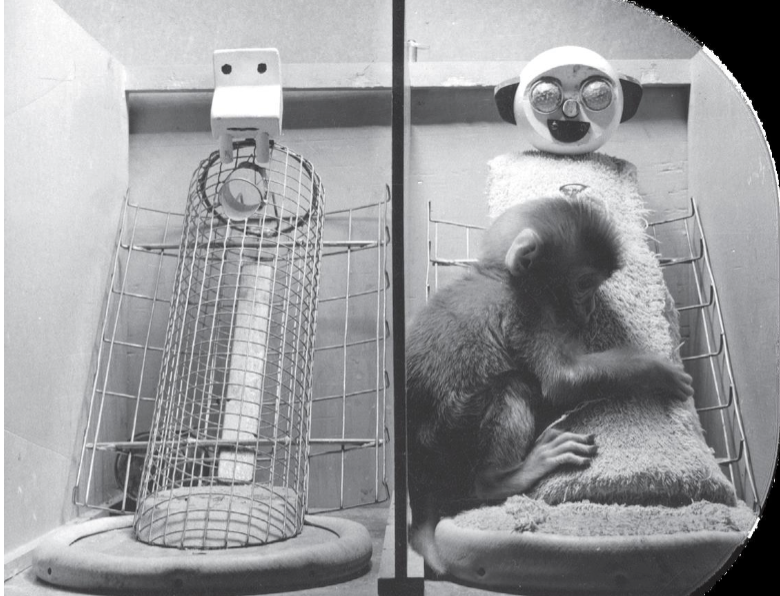
What did Harry Harlow’s studies with infant monkeys demonstrate about attachment?
Harlow’s studies demonstrated that attachments were not based on nourishment. As shown here, the monkeys preferred the cloth “mother” even though the wire “mother” provided nourishment.
During which phase of Bowlby’s
attachment theory does separation
anxiety typically emerge in infants?
Clear-cut attachment
Which of the following best describes secure attachment in young children?
using the mother as a secure base from
which to explore, when the mother is present; protest when separated; is happy when the mother returns
When children from Germany, the
USA, the Netherlands, Sweden, and
Japan are compared with each other,
which group is more likely to display
insecure-resistant (ambivalent)
attachment in the Strange Situation?
(van IJzendoorn & Kroonenberg,
1988)
Japan
During early childhood, bodily growth is characterized by:
Focus shifts from rapid size increases to refinement of body proportions
By around age 5, the brain
reaches approximately what
percentage of its adult weight, with
notable growth in areas supporting
language and social understanding?
90–95% of adult weight
What are scale errors in early childhood?
a serious attempt made by a child to perform to do something physically impossible
Frontal lobe growth in early
childhood primarily supports which of
the following functions?
emotional regulation, foresight, and planned behavior, decision making
What is infantile amnesia?
adult’s inability to remember anything that
happened prior to age 2
What does the “just right” principle refer to in early childhood?
children’s strong desire for things to feel exact, complete, or properly arranged
In developed countries, what is the leading cause of death for young children during early childhood?
accidental injuries
In Piagetian terms, what does
conservation refer to?
the understanding that quantity remains the same despite changes in appearance
In Piaget’s preoperational
stage, centration refers to:
focus on one dimension (e.g., height)
In early childhood, animism refers to:
Young children often attribute human thoughts and feelings to animals, even stuffed animals
What defines a nuclear family?
a small, self-contained household consisting of:
Parent(s) and child(ren)
Excludes extended relatives (e.g., grandparents, aunts, uncles).
May include: Two-parent households, One-parent households, Stepfamilies
According to Baumrind (1966),
which two key dimensions define
parenting style?
responsiveness and demandingness
Which of the following lists the
four patterns of parenting identified
by Baumrind?
1. Authoritative
2. Authoritarian
3. Permissive
4. Disengaged parents
According to Alfred Adler (1870–
1937), why are children in the same
family considered to experience
different environments?
Each child is born into a unique position and experiences the family differently
Which factor is the most powerful
predictor of children’s intellectual
development when they enter
school?
their family’s social economical status - poverty
Which statement best describes
how poverty affects brain
development in children?
• Poverty did not impact brain development in its entirety.
• Poverty affects some brain regions more than others. - memory, language processing, and decision-making
and self-control
Project Head Start, which began
in 1965, has shown which of the
following outcomes?
Head start programming is able to improve IQ score but often disappears in two years; the effect is unclear
According to Freud’s view on
gender-role development, young
children:
are caught in hidden conflicts between their fears and desires
According to Social Learning
Theory, children develop gender roles
primarily by:
observing and imitating others
In the context of Social Learning
Theory on gender-role development,
reinforcement refers to:
Praise or rewards for gender-appropriate behaviors, criticism for nonconforming behaviors
According to Kohlberg’s theory of
gender development, which stage
occurs between ages 5–7?
Gender Constancy
What is a gender schema?
A mental model containing with information about males and females that are used to process gender-relevant information
In many Western cultures, which
statement about gender stereotypes
is true?
The stereotype of males is often more rigid than that of females in many Western cultures.
According to Freud’s view of
moral development, when does the
superego begin to develop?
during the phallic stage (ages 3–6)
Which of the following best
describes heteronomous morality
(ages ~4–7)?
morality is determined by objective consequences and authority in adults/parents
Instrumental aggression refers to:
wants something and uses aggression to get it
Relational aggression refers to:
damaging someone’s social status (gossip)
Which of the following statements is true regarding children’s television programs?
Children’s programs are 3x more violent than adult programs
(think tom and jerry)
Which statement is true about body composition in middle childhood?
Middle childhood is the time of life when people are most likely to be slim
The relationship between BMI and
percentage of body fat in children
depends on:
- age
- sex
- differs across ethnic groups
By what stage of development do
children typically reach adult-level
fine motor skills?
by the end of middle childhood
In early and middle childhood,
girls tend to outperform boys in which
of the following gross motor
activities?
Gross motor skills that combine balance and foot movement (skipping, hopping, gymnastics)
According to Piaget’s theory,
children in middle childhood (6–12
years) are in the concrete operational
stage. Which of the following best
describes their cognitive abilities
during this stage?
Manipulation of symbols and internalized mental operations that
combine, separate, and transform information logically
Which statement best illustrates
the concept of transitivity in cognitive
development?
A is greater than C
Which of the following best describes Theory of Mind?
the ability to understand that others have
thoughts, feelings, intentions, and perspectives different from one’s own
What does a false belief test assess in children?
assesses the theory of mind; children must infer that another person does not possess knowledge that they possess
What is metacognition?
our ability to think about thinking
What does emergent literacy refer to?
the skills, knowledge, and attitudes that develop before formal reading and writing instruction
According to Piaget’s sensorimotor stage (birth–2 years), which activities best support early literacy development?
books with bright colors and pictures; books with sound, things to touch, or smell
What is Stage 0 in reading development?
Pseudo Reading (pretend reading)
What is emergent numeracy?
the early skills and understandings that support later mathematical learning
What evidence supports the Innatist Hypothesis regarding intelligence?
our IQ is primarily driven by genetics
What does the Environmental Hypothesis of Intelligence propose?
Intelligence is shaped primarily by experience and learning; it is changeable
Which statement best reflects findings from behavioral genetics research (e.g., Brant et al., 2009)?
The closer the genetic relationship, the higher the correlation in IQ.
Which statement best reflects
Charles Spearman’s theory of
intelligence?
Intelligence has a common underlying factor, “g” (general intelligence), which represents broad reasoning and problem-solving abilities
Which statement best describes Howard Gardner’s theory of multiple intelligences?
proposes we have 9 different types of intelligences
Which statement best describes
self-concept development in children
aged 6–12?
• More organized and realistic
• Based on social comparison
Which set of factors is most
directly associated with the
development of baseline self-
esteem?
• Value
• Parents
• Social Comparison
• Culture
Which statement best describes
self-esteem in children aged 2–6?
Self-esteem is high and inflated
Which statement best reflects
Carol Dweck’s findings on types of
praise?
it is better to praise their effort rather than intelligence
Which statement best describes
Lawrence Kohlberg’s theory of moral
development?
proposed we have 3 levels of moral reasoning, each with 2 stages for a total of 6 stages