SOL-MS: Solving Multi-Step Equations (29)
 Call Kai
 Learn
Learn Practice Test
 Spaced Repetition
 Match
Match Flashcards
1/28

There's no tags or description
Looks like no tags are added yet.
Name | Mastery | Learn | Test | Matching | Spaced | Call with Kai |
|---|
No analytics yet
Send a link to your students to track their progress
29 Terms
2 (x + 2) = 2
x = -1
3 (5x - 2) + 2 = 26
x = 2
5 (n + 2) = 3n
x = -5
5 (5 - x) = -5
x = 6
1+ 4 (2x + 1) = 5
x = 0
x + 3 = 3 (11 - 3x)
x = 3
2x - 4 = -4 (x - 5)
x = 4
3x = 2 (7 + 5x)
x = -2
2 (3x + 1) = 7x - 5
x = 7
2 (x + 1) = 6x - 46
x = 12
7 (2 - x) - 5= 30
x = -3
5 (x - 6) = 3 + 8 (x + 9)
x = -35
245 = -5 (4x - 17)
x = -8
17 (3x + 2) = -272
x = -6
5 (7x - 13) = -30
x = 1
12 (-2x - 9) = -12
x = -4
-10 (-4x + 7) = 130
x = 5
-210 = -7 (9x - 60)
x = 10
12 (-x + 5) = 144
x = -7
9 (-4x - 29) = 99
x = -10
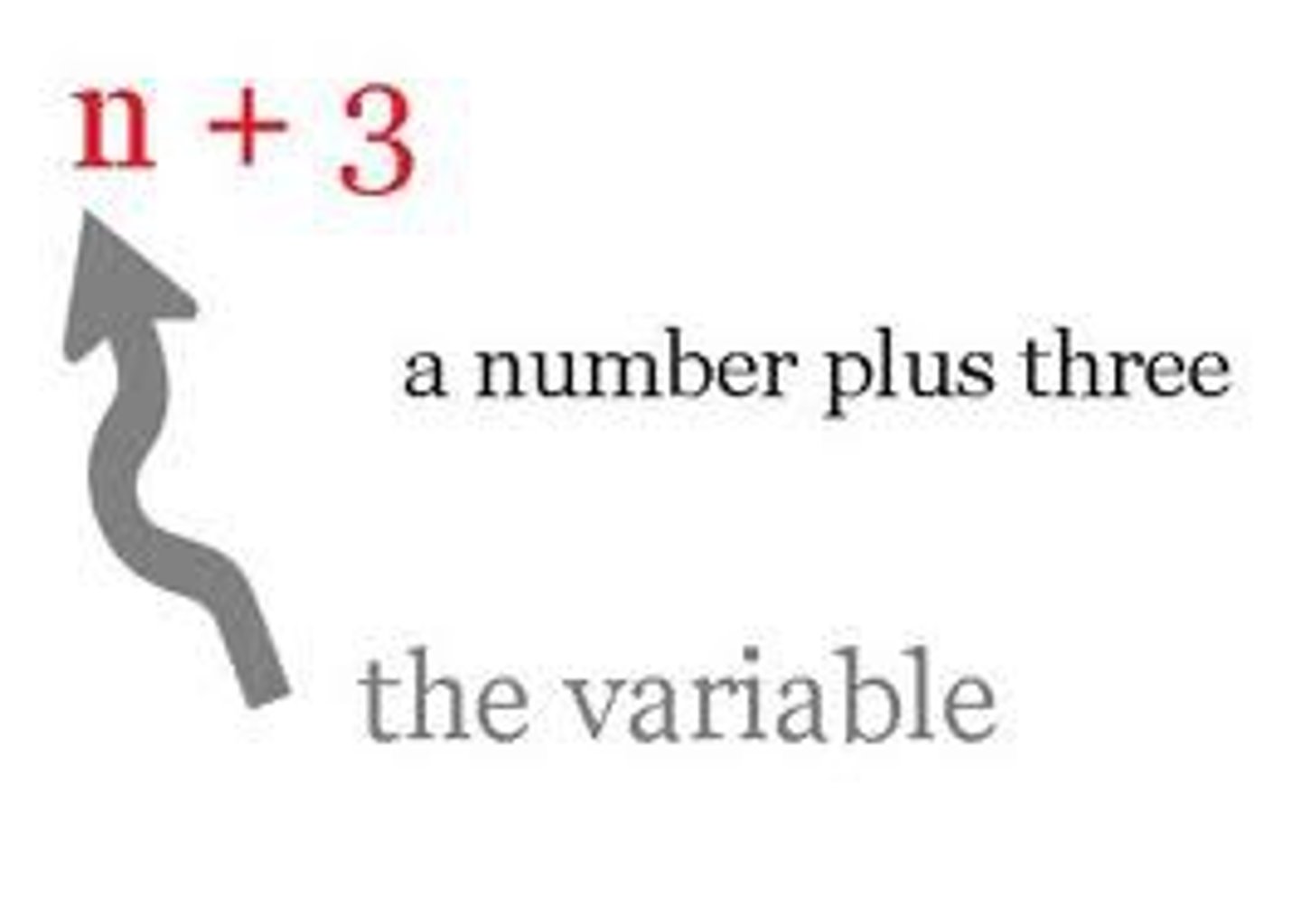
variable
A letter used to represent one or more numbers
equation
Uses an equal sign to show that two expressions are equal

coefficient
number in front of a variable
inverse
opposite
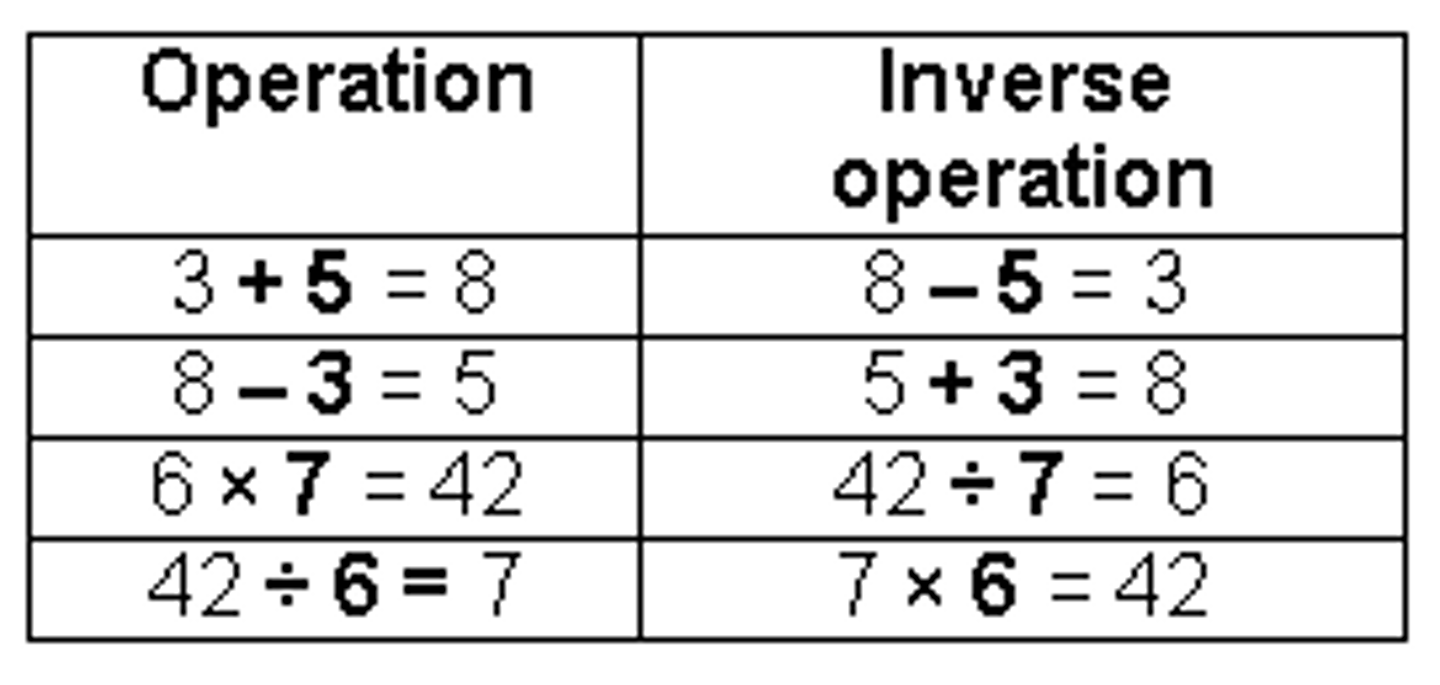
inverse operation of multiplication
division
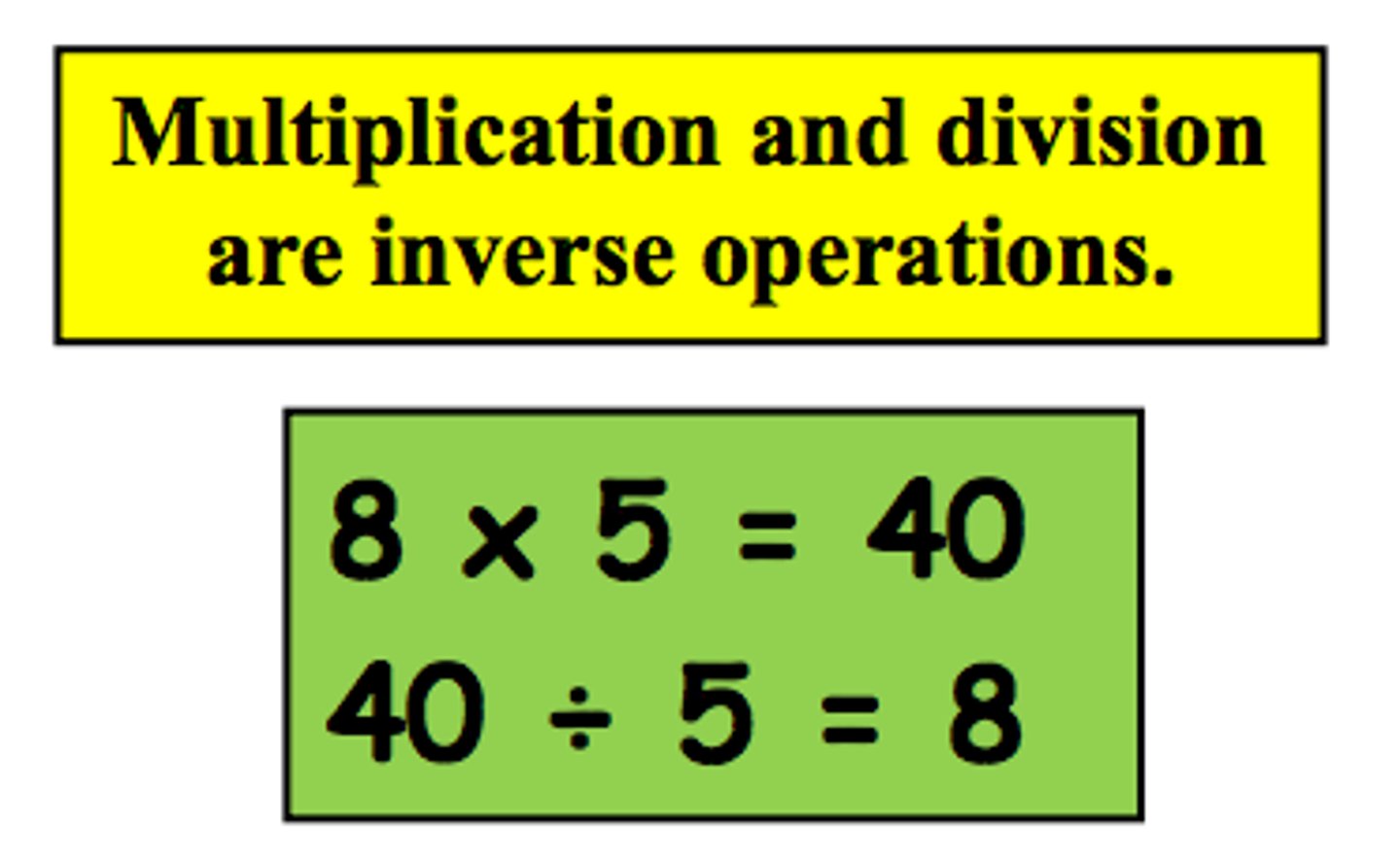
inverse operation of division
multiplication

inverse operation of addition
subtraction
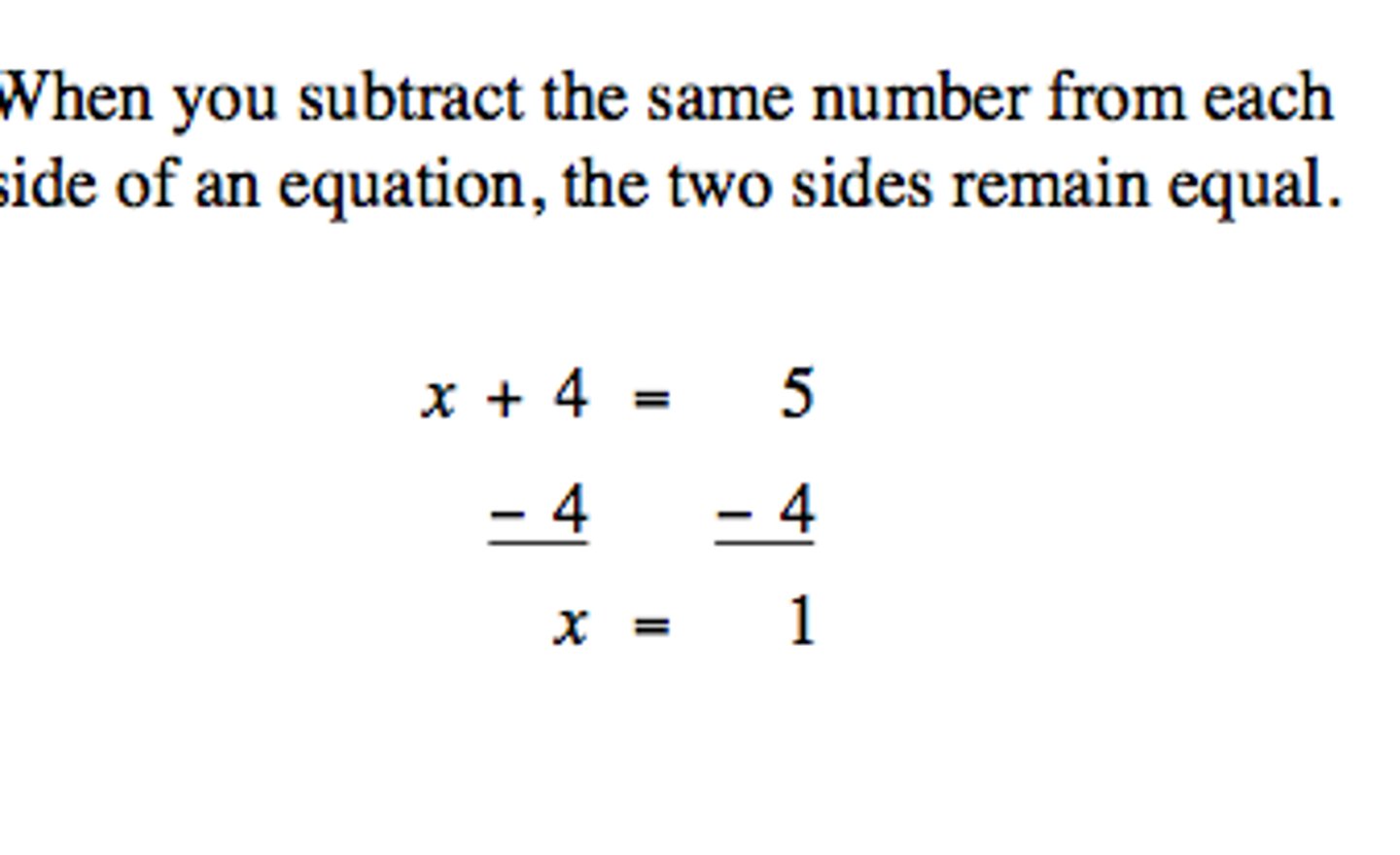
inverse operation of subtraction
addition

constant
a term without a variable
a number that doesn't change