Deserts
 Call Kai
 Learn
Learn Practice Test
 Spaced Repetition
 Match
Match Flashcards
 Knowt Play
1/50

There's no tags or description
Looks like no tags are added yet.
Name | Mastery | Learn | Test | Matching | Spaced | Call with Kai |
|---|
No analytics yet
Send a link to your students to track their progress
51 Terms
A desert may form along a coastline because a ________.
cold current cools and dries the air
A salt-rich flat lake bed in called a
playa.
Areas with relatively scarce sand and constantly shifting winds will develop ________ dunes.
star
Conversion of productive land to desert is known as ________.
desertification
Fine-grained sediments such as dust and silt can stay in the air and be transported by wind as ________.
suspended load
Isolated mountains that stick up above large expanses of desert alluvium are called
inselbergs
Most of the erosion in desert environments is caused by ________.
surface water
Over time, alluvial fans may merge to form a ________.
bajada
Much of the land area north of the Arctic Circle is considered to be a desert because
it is extremely arid.
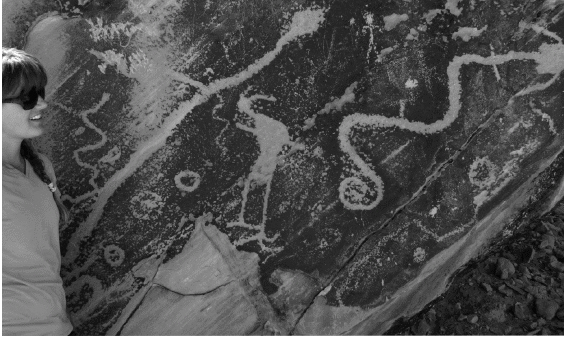
The petroglyph in the image below is carved into _______, revealing the lighter-colored bedrock underneath.
desert varnish
can desert be cold
yes
are antartica and greenland deserts
yes
Material that is too large or heavy to be carried in suspension by water or wind
Particles move along the surface by saltation (bouncing), rolling, or sliding
bed load
Material that can be carried in suspension by water or wind
Composed of small (silt- and clay-sized) particles
Can be carried thousands of kilometers
suspended load
Material is ______ by wind either through abrasion or deflation
eroded
is the impact of saltating sand grains on an object. Its effect is similar to sandblasting
abrasion
are rocks whose surfaces have been polished, pitted, grooved, or faceted by the wind abrasion
Ventifacts
is the removal of loose surface material by wind
deflation
are common features of deserts resulting from differential erosion by deflation
desert pavement and deflation hollows
a series of geoglyphs in the desert pavement of Peru created between 500BC and 500AD
Nazca lines
wind erosion is
slow
Mix of slow-growing bacteria, lichen, fungi, and mosses.
soil crust
Grow slowly, but cover much of the surface in deserts.
One footprint breaking through can take decades, centuries to recover
soil crust
mounds or ridges of wind-deposited sand
dunes
Most dunes have an ______- profile
asymmetric
crescent-shaped dunes whose tips point downwind
Barchan dunes
long, parallel ridges of sand aligned generally parallel to the direction of the prevailing winds, which alternate
Longitudinal dunes
long, parallel ridges of sand aligned generally perpendicular to the direction of the prevailing winds
Transverse dunes
– common in coastal areas
parabolic dune
huge pyramidal hills of sand
star dune
wind-blown silt and clay deposits composed of angular quartz grains, feldspar, micas, and calcite
Loess
in desert ______ weathering is the dominate form
mechanical
the thin red (Fe) to black (Mn) coating found on exposed rock surfaces in arid regions caused by oxidation.
desert varnish
almost exponential slope coming out of mountains
•Grows as an alluvial fan/Bajada reaches an equilibrium and begins to erode back into the mountains.
pediments
Isolated, steep-sided erosional remnants that rise above desert plains
inselbergs
flat-topped erosional remnants with steep slopes
buttes and mesas
receive more precipitation, yet they are moderately dry and support grasslands.
semiarid
generally described as deserts, are dry and receive less than 25 cm of rain per year (very little vegetation, if any).
arid
The winds are deflected _______ in the northern hemisphere
clockwise
The winds are deflected _________ in the southern hemisphere
counter clockwise
The winds are deflected as the earth rotates due to the
Coriolis effect
mountain ranges block the flow of moist marine air creating a
rain shadow
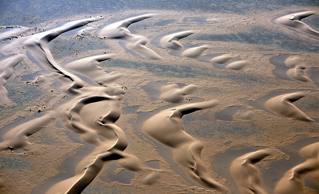
barchan dunes
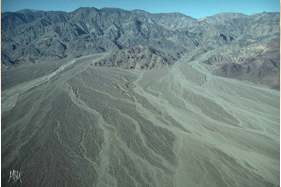
bajadas
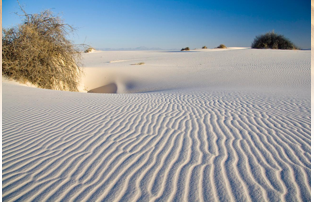
longitudinal dunes
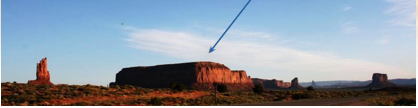
mesa
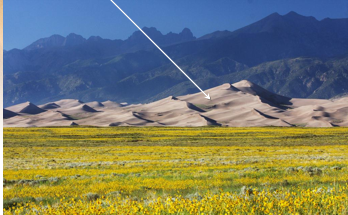
transvers dune
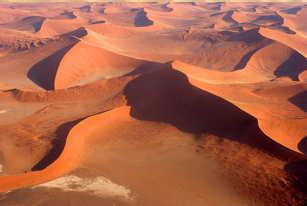
star dune
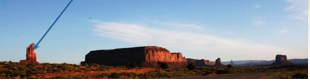
butte
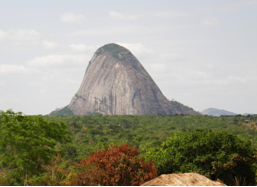
inselberg
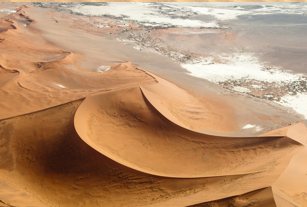
parabolic dunes