Voice Disorders Chapter 6
 Call Kai
 Learn
Learn Practice Test
 Spaced Repetition
 Match
Match Flashcards
 Knowt Play
1/26

There's no tags or description
Looks like no tags are added yet.
Name | Mastery | Learn | Test | Matching | Spaced | Call with Kai |
|---|
No analytics yet
Send a link to your students to track their progress
27 Terms
What is the primary biological function of the larynx?
To protect the airway and ensure survival.
What are the non-biological functions of the larynx?
Linguistic, emotional, and artistic expression.
What is voice?
Sound made by vocal fold vibration.
What are the three vocal characteristics?
Frequency, intensity, and quality.
What does fundamental frequency (F0) refer to?
The actual rate of vibration of the vocal folds.
What is the typical fundamental frequency for adult men?
125 Hz.
What is the typical fundamental frequency for adult women?
250 Hz.
What is intensity in terms of voice?
Sound power per unit area, measured in decibels (dB SPL).
What psychological correlate is associated with intensity?
Loudness.
What does voice quality refer to?
The character or distinctive attributes of a voice.
What are some symptoms of dysphonic voices?
Harsh, breathy, hoarse, or creaky voices.
What is the lifetime prevalence of voice disorders in the general US population?
29%.
What is the point prevalence of voice disorders in the US?
7% (about 20 million people).
What are the most frequent diagnoses for adults with voice disorders?
Functional dysphonia, acid laryngitis, and polyps.
What is phonotrauma?
Misuse or abuse of the voice leading to vocal fold abnormalities.
What are vocal nodules?
Localized growths on the vocal folds, often bilateral and common in professional voice users.
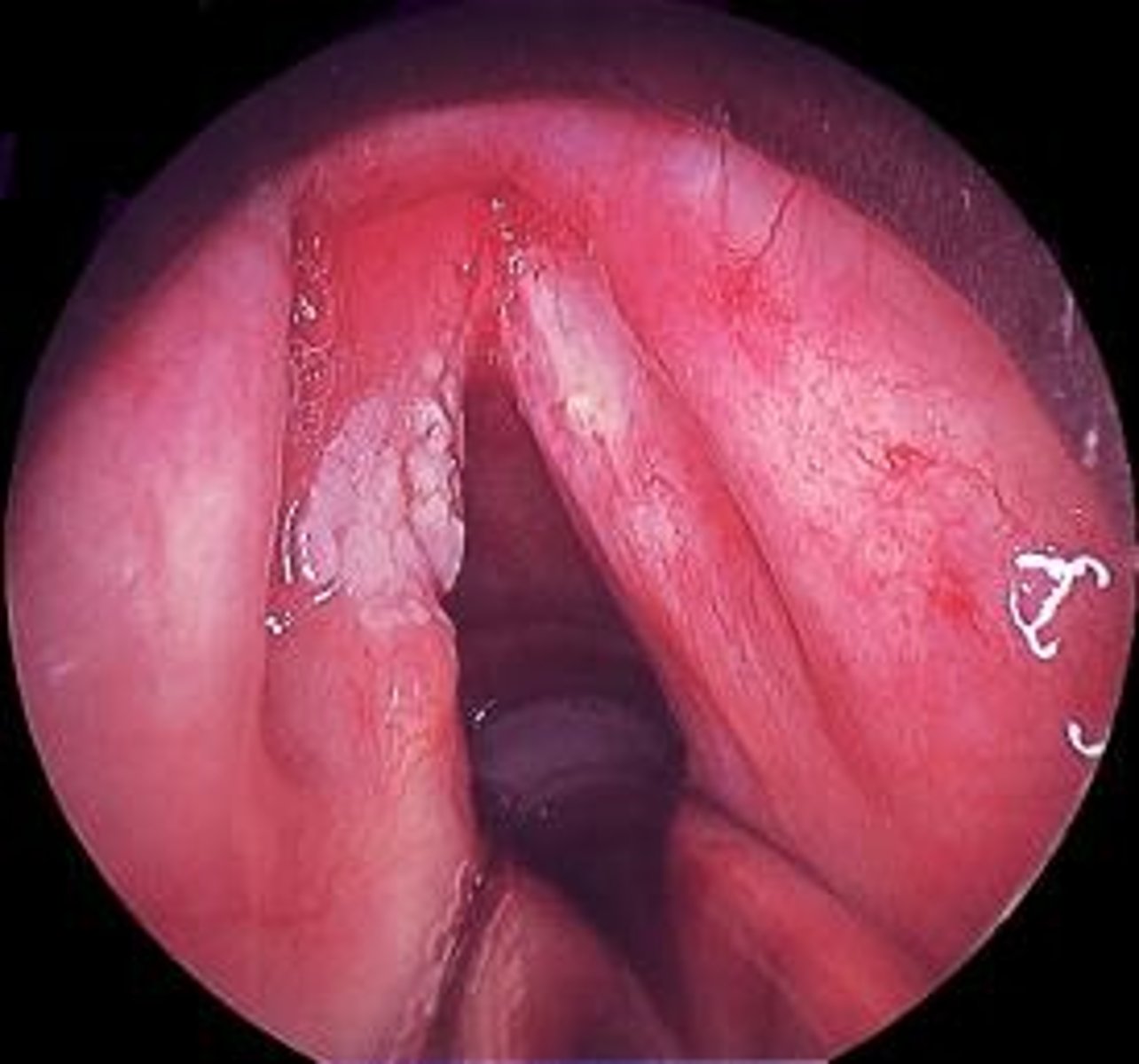
What is a common treatment for newly formed vocal nodules?
Vocal rest and voice therapy.
What are vocal polyps?
Fluid-filled lesions on the vocal folds, larger than nodules and can be unilateral or bilateral.
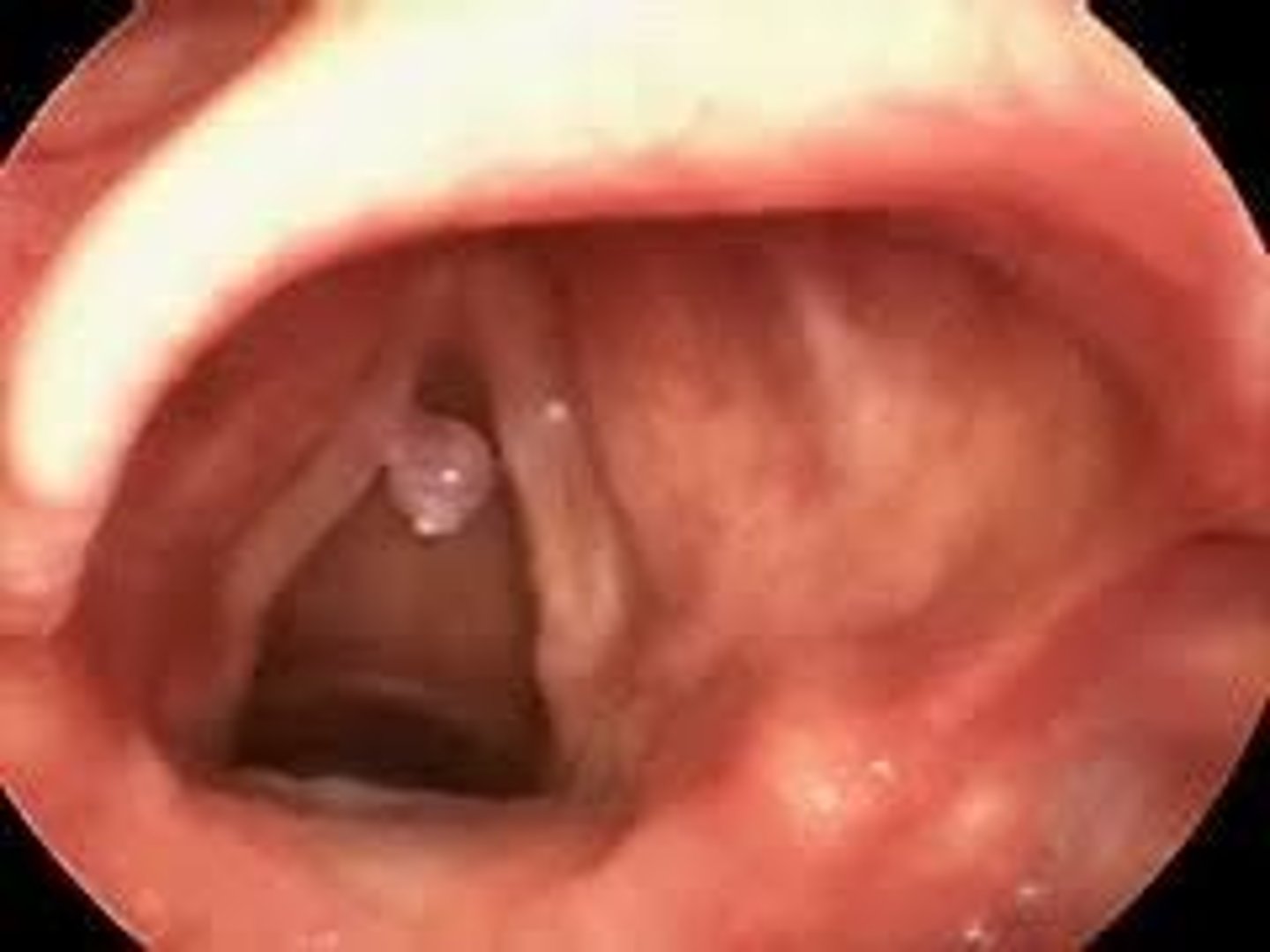
What is the primary cause of contact ulcers on vocal folds?
Gastric reflux or intubation trauma.
What is laryngitis?
Inflammation of the vocal folds due to various factors like vocal abuse or allergies.
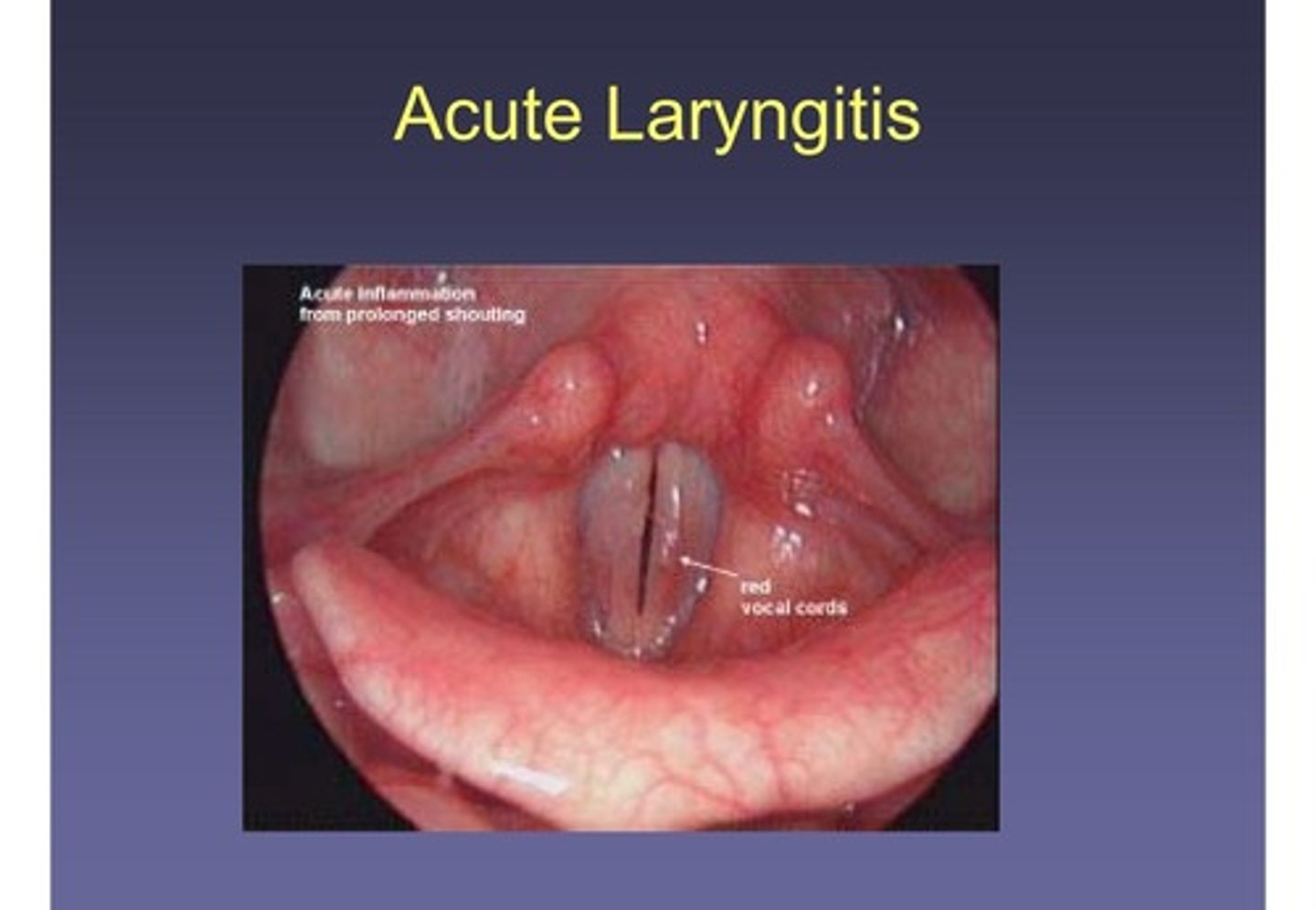
What is the treatment for chronic laryngitis?
Voice therapy may be necessary.
What causes papilloma on the vocal folds?
Human papillomavirus (HPV).
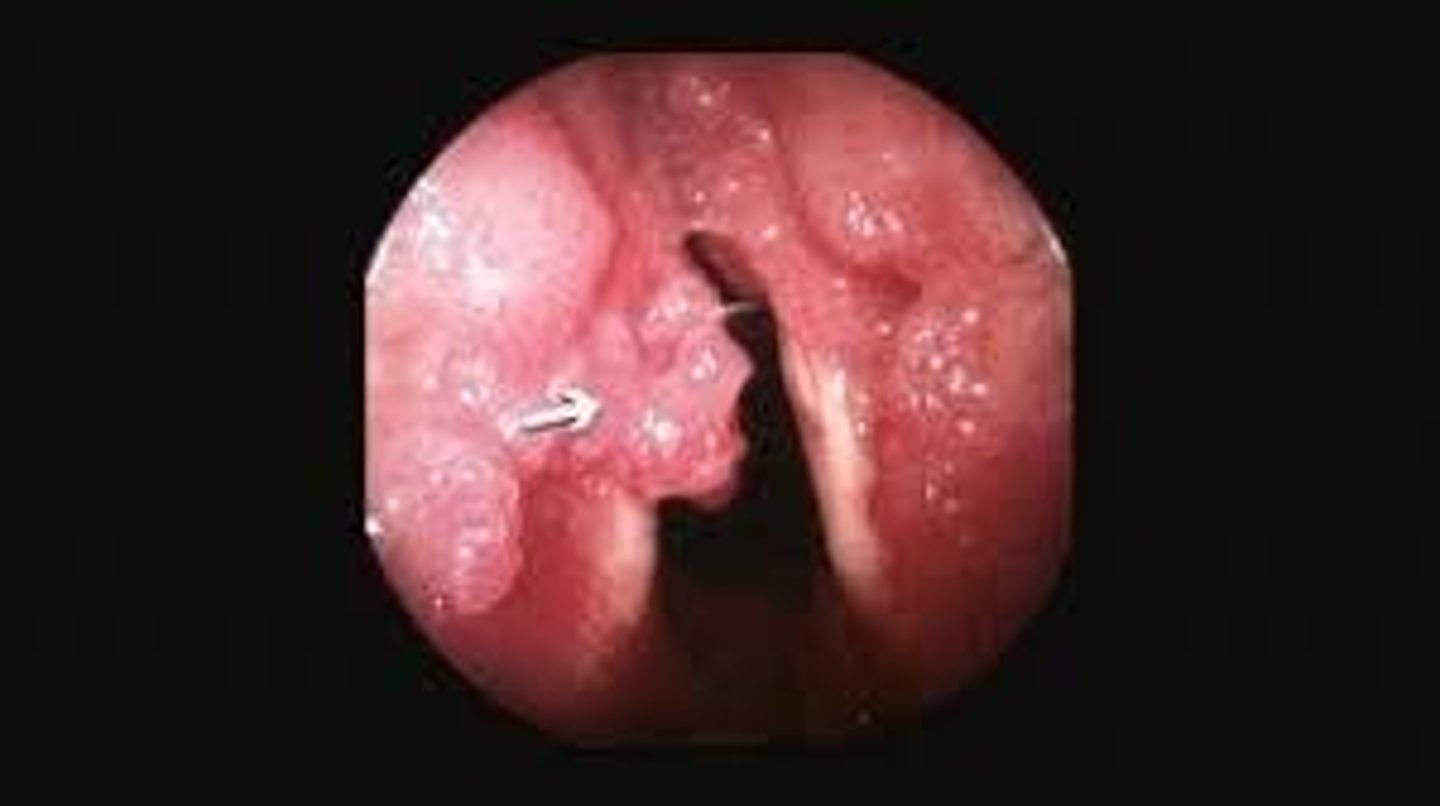
What is the treatment for laryngeal cancer?
Surgery and radiation; laryngectomy may be necessary.
What is esophageal speech?
A method of speech where air is trapped in the throat to produce sound after a laryngectomy.
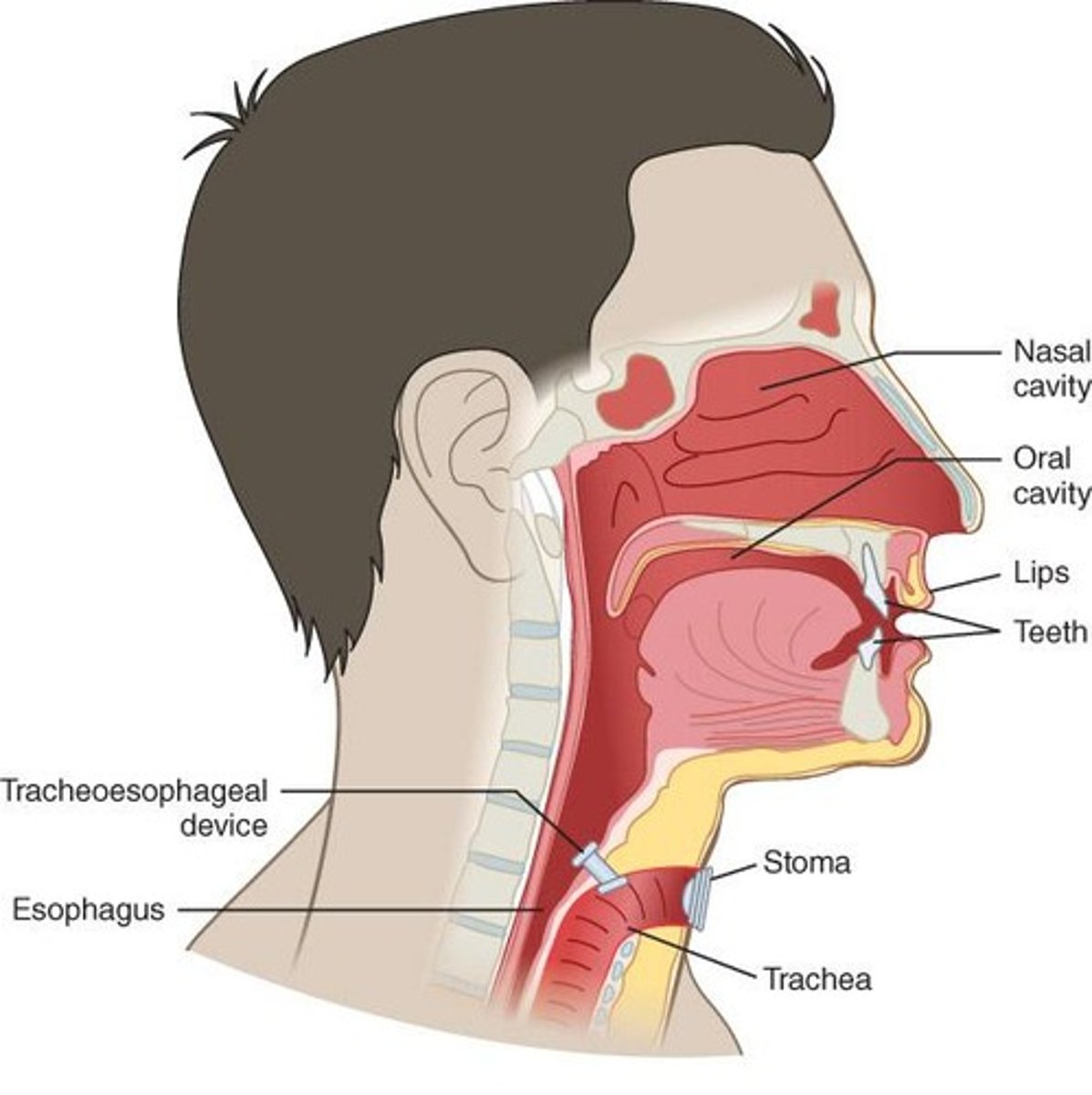
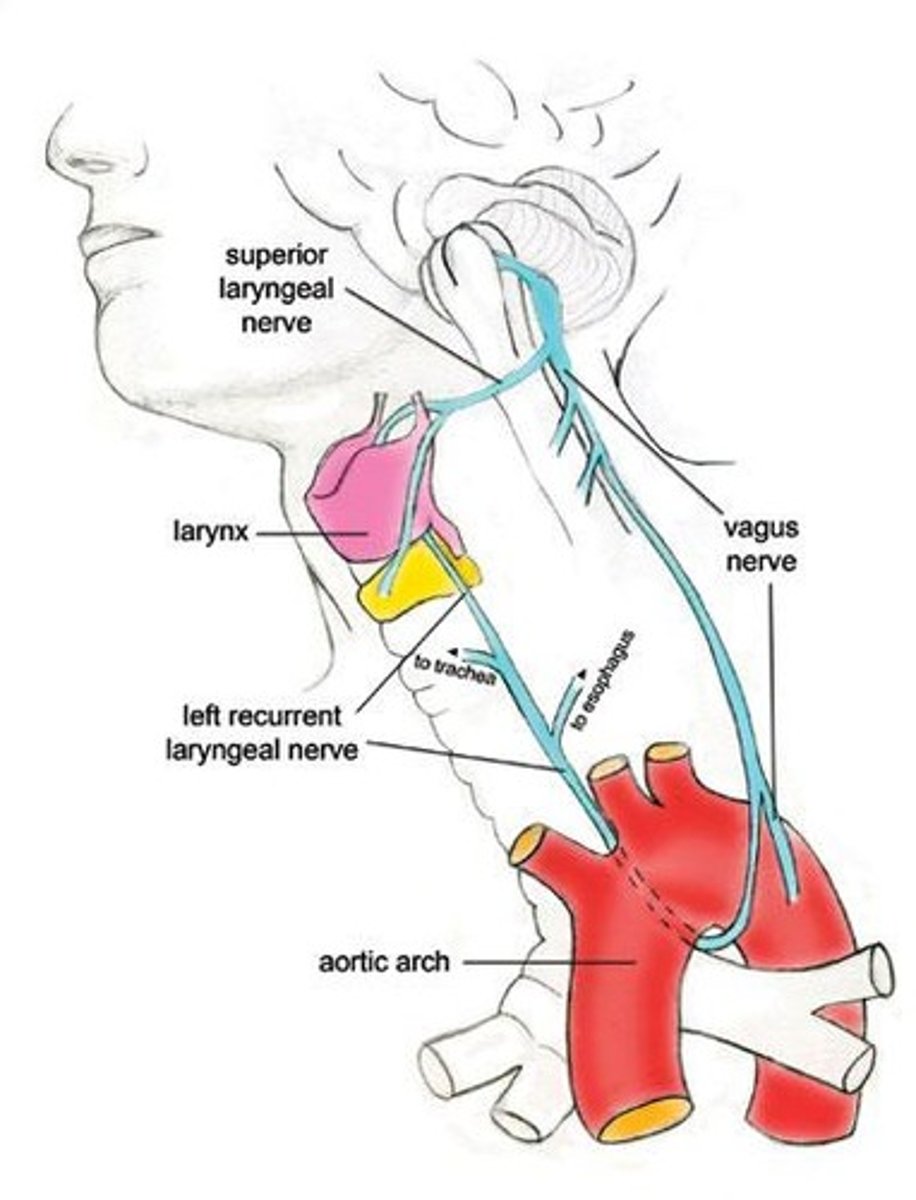
What causes vocal fold paralysis?
Damage to the recurrent branch of cranial nerve X (CN X).
What is spasmodic dysphonia?
An abnormal laryngospasm affecting voice quality.
What is the treatment for adductor spasmodic dysphonia?
Botulinum toxin injection (BOTOX).