Exam 4: Extensor Expansion (Module 8 Pt. 2)

0.0(0)
Studied by 0 people
call kaiCall Kai
learnLearn
examPractice Test
spaced repetitionSpaced Repetition
heart puzzleMatch
flashcardsFlashcards
GameKnowt Play
Card Sorting

1/23

encourage image

There's no tags or description

Looks like no tags are added yet.

Last updated 9:47 PM on 5/6/26
Name
Mastery
Learn
Test
Matching
Spaced
Call with Kai

No analytics yet

Send a link to your students to track their progress

24 Terms

1
New cards

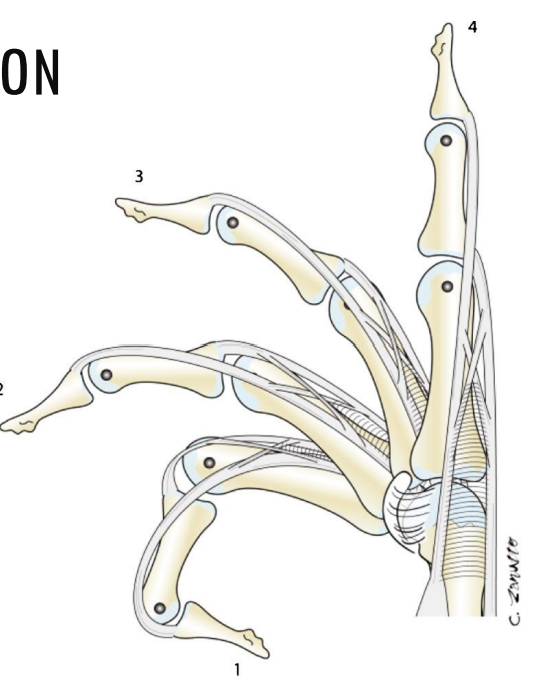
Finger Extension: Which joint seems to move the most in the initial stage of finger extension from a full fist?

PIP initiates, DIP joint follows

2
New cards

Stages of Digit Extension

  1. PIP joint initiates digit extension

  2. DIP joint follows into extension as the PIP joint continues to extend

  3. Intrinsic muscles help to bring PIP & DIP joints into full extension

  4. Finally, MCP joints fully extend w/ the digit
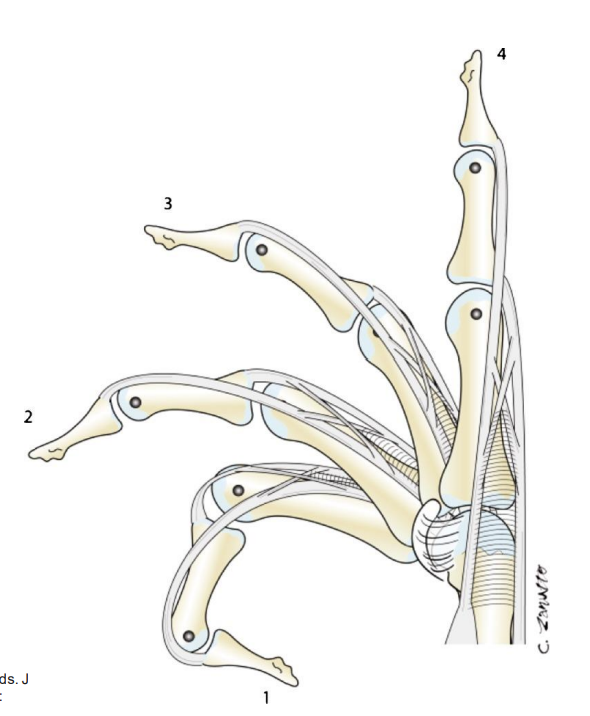
<ol><li><p>PIP joint initiates digit extension</p></li><li><p>DIP joint follows into extension as the PIP joint continues to extend</p></li><li><p>Intrinsic muscles help to bring PIP &amp; DIP joints into full extension</p></li><li><p>Finally, MCP joints fully extend w/ the digit</p></li></ol><p></p>
3
New cards

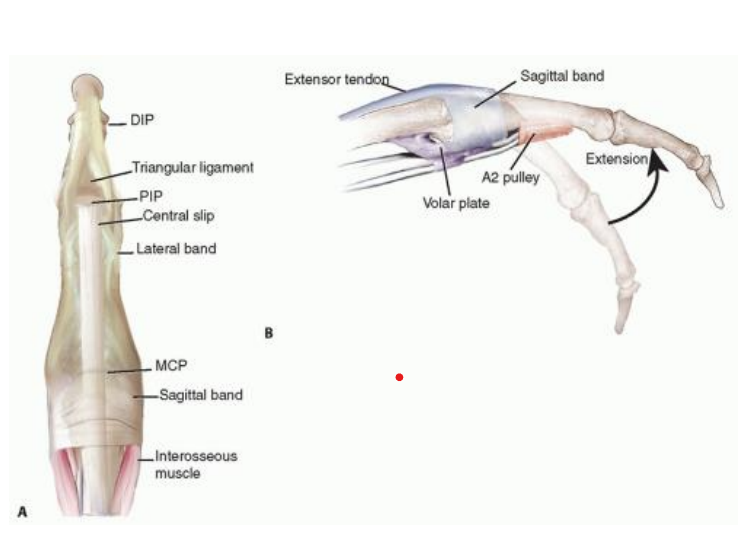
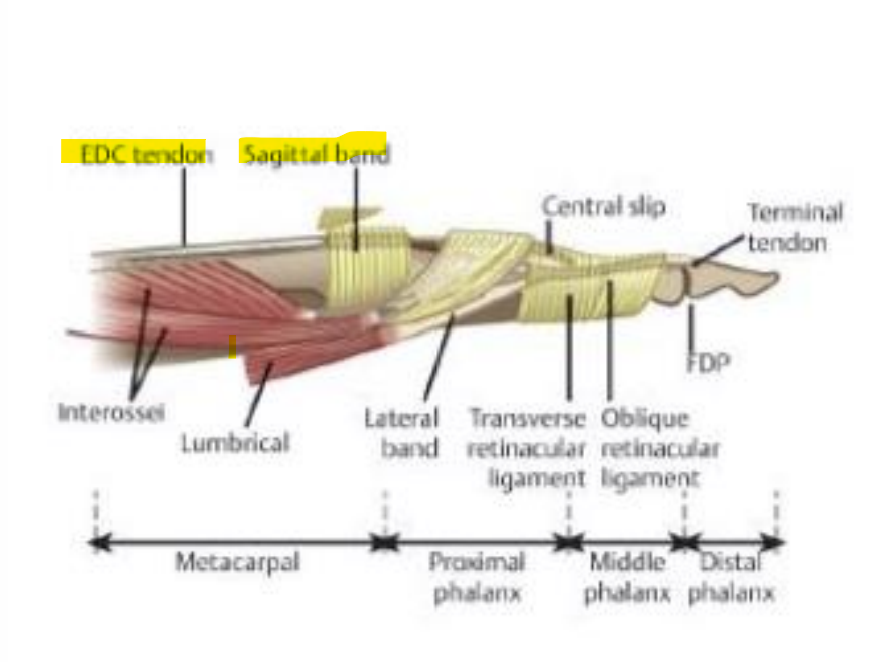
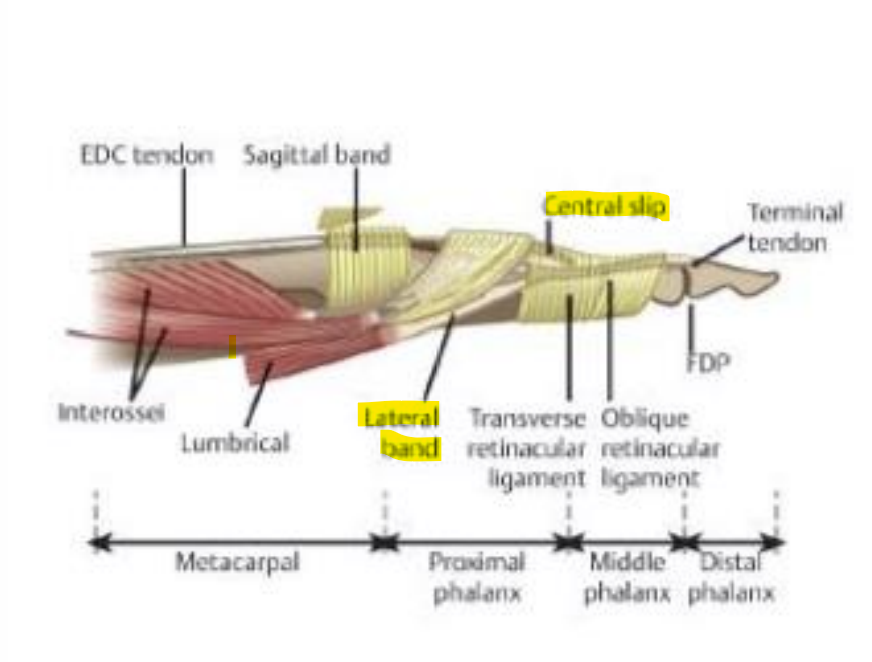
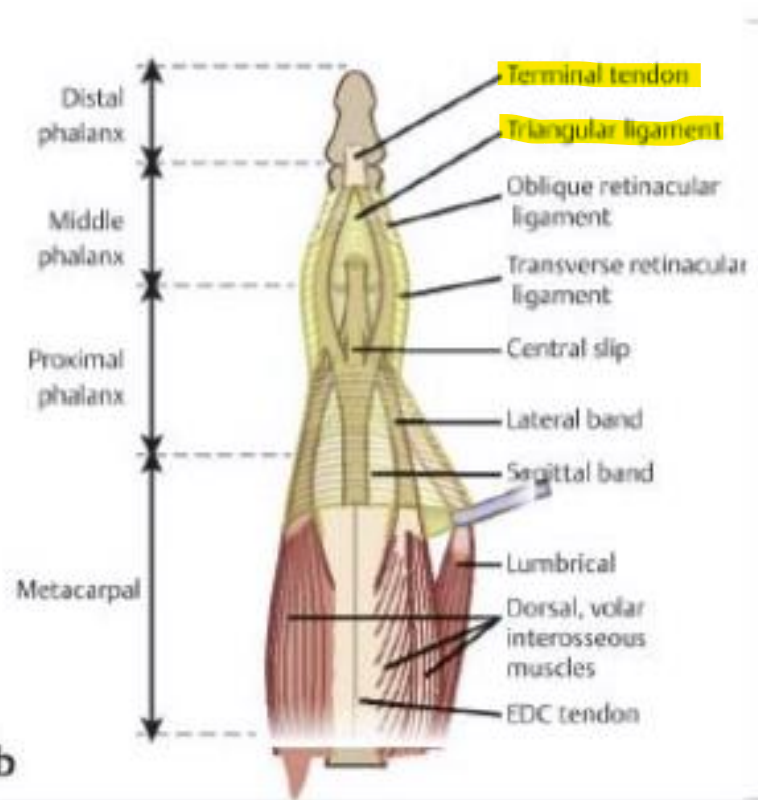
Components of the Extensor Expansion: finger extension at (3) joints…

  1. MCP extension: EDC tendon & sagittal band

  2. PIP extension: Central slip & lateral bands

  3. DIP extension: Terminal tendon (bands become 1) & triangular ligament
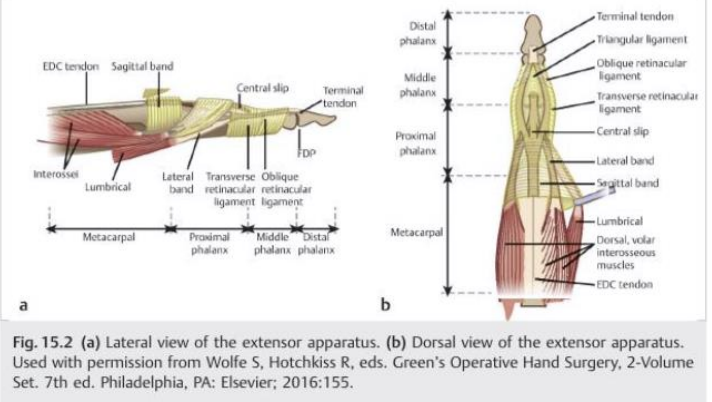
<ol><li><p><strong>MCP extension: </strong>EDC tendon &amp; sagittal band</p></li><li><p><strong>PIP extension: </strong>Central slip &amp; lateral bands</p></li><li><p><strong>DIP extension:</strong> Terminal tendon (bands become 1) &amp; triangular ligament</p></li></ol><p></p>
4
New cards

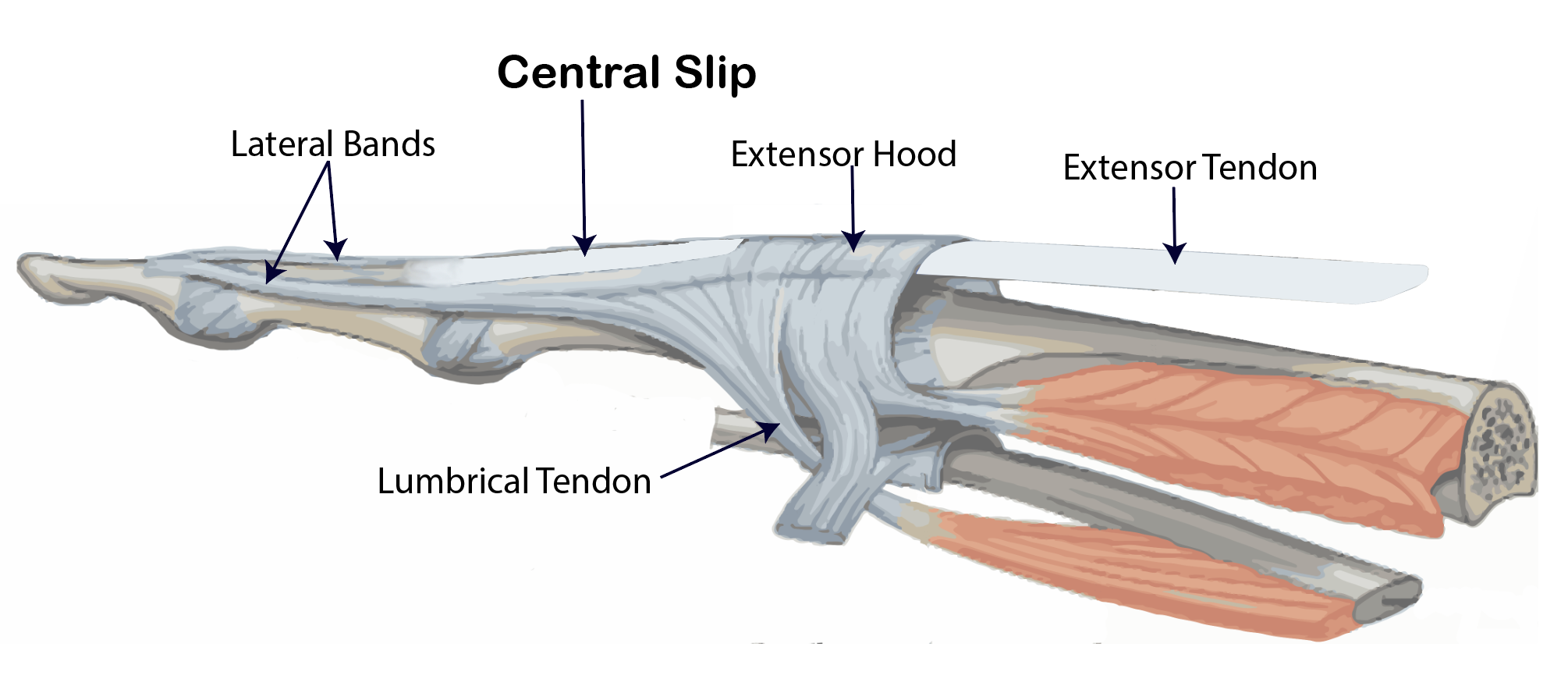
Extensor/Dorsal Hood

Triangular shaped web of CT structure that the EDC tendon & intrinsics (interossei & lumbricals) insert into

  • Facilitates & completes finger extension

  • Located between dorsum of MCP joint & dorsum of the proximal phalanx
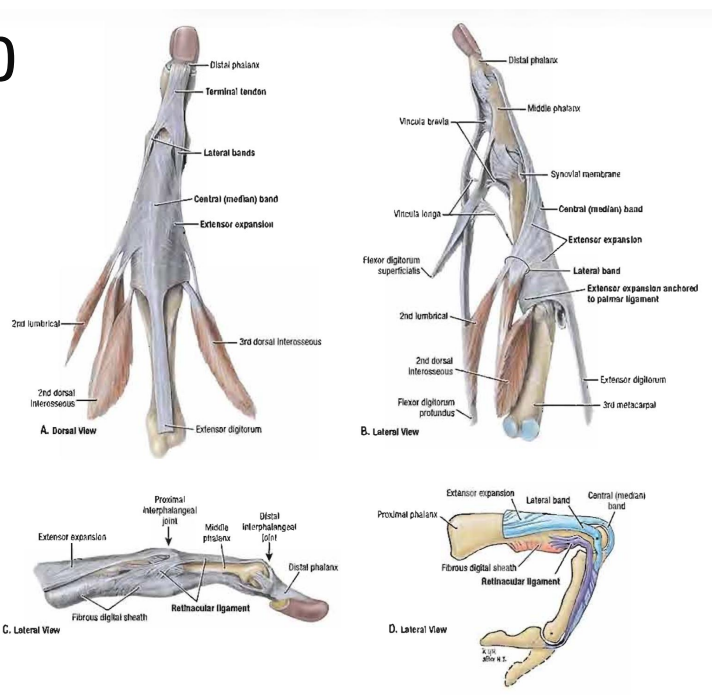
<p>Triangular shaped web of CT structure that the EDC tendon &amp; intrinsics (interossei &amp; lumbricals) insert into</p><ul><li><p>Facilitates &amp; completes finger extension</p></li><li><p>Located between dorsum of MCP joint &amp; dorsum of the proximal phalanx</p></li></ul><p></p>
5
New cards

MCP Joint: EDC Tendon & Sagittal Band

Sagittal bands: Originate from volar plate; wrap around MCP joint

  • Function: centralize EDC tendon

<p><strong>Sagittal bands:</strong> Originate from volar plate; wrap around MCP joint</p><ul><li><p><span style="color: blue;">Function:</span> centralize EDC tendon</p></li></ul><p></p>
6
New cards

PIP Joint: Central Slip & Lateral Bands transfer force from the EDC tendon & intrinsic muscles to…?

Extend the PIP & DIP joints

  • After leaving MCP joint, the EDC tendon splits into the central slip & 2 lateral bands
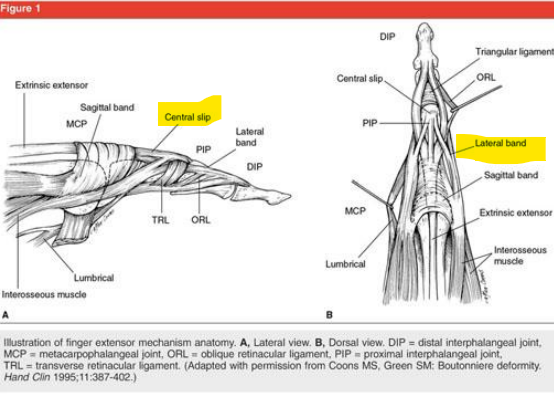
<p><span style="color: blue;"><strong>Extend the PIP &amp; DIP joints</strong></span></p><ul><li><p>After leaving MCP joint, the EDC tendon splits into the central slip &amp; 2 lateral bands</p></li></ul><p></p>
7
New cards
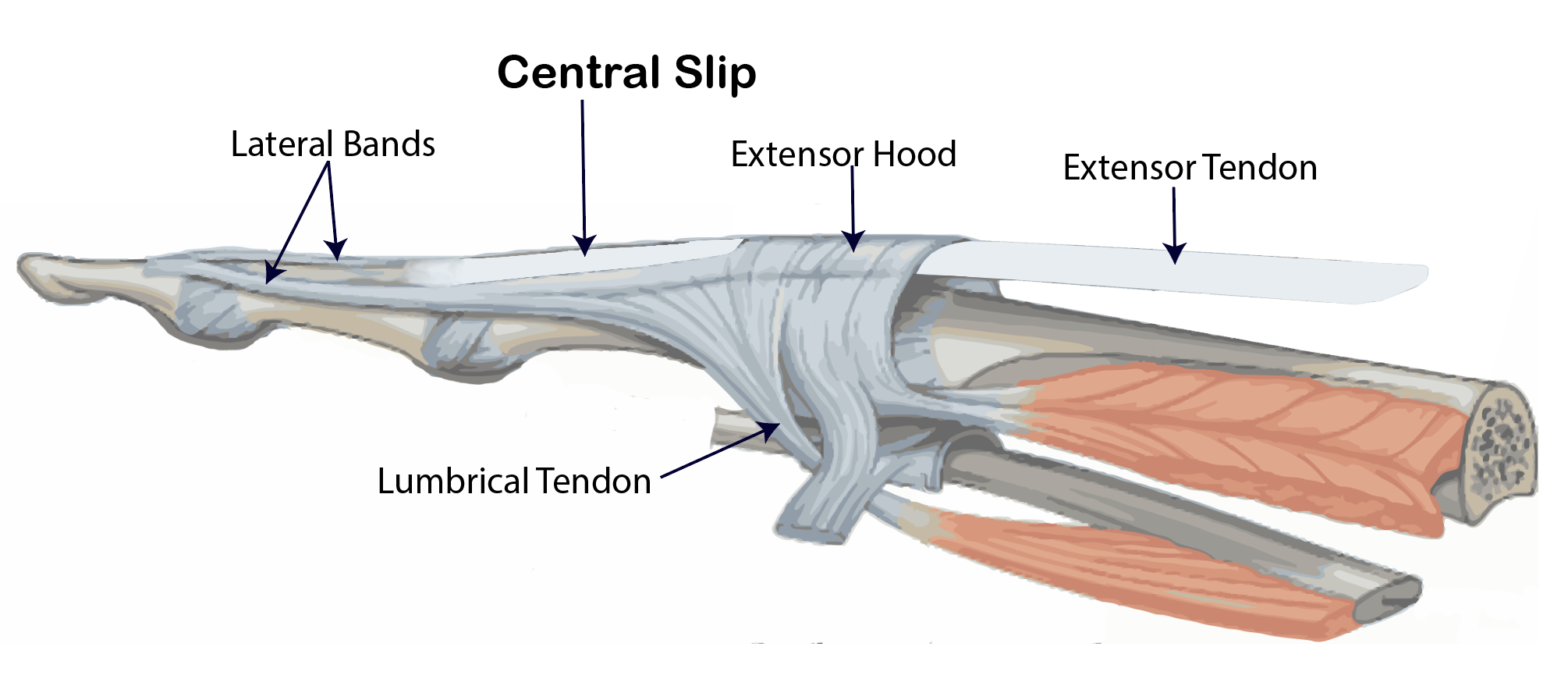
<p><strong>PIP Joint:</strong> Central Slip Function</p>

PIP Joint: Central Slip Function

PIP extension
8
New cards
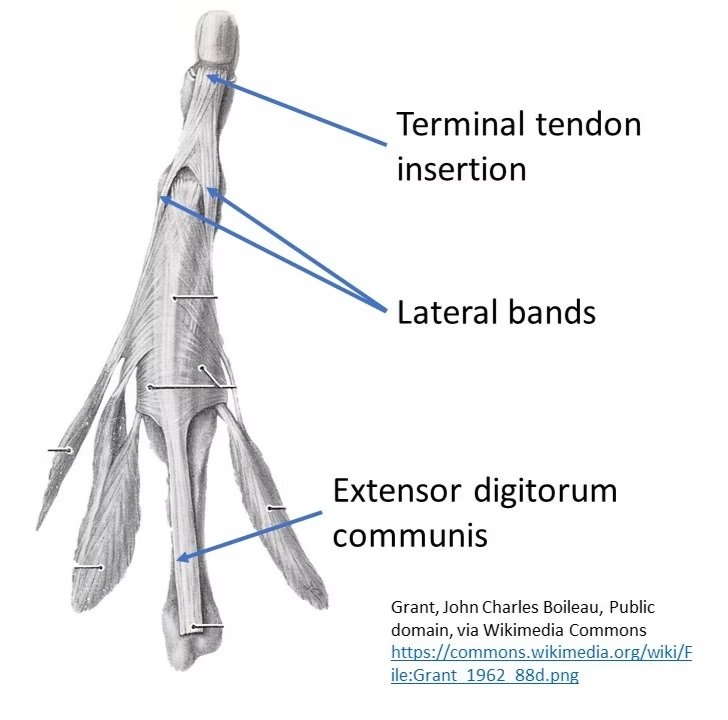
<p><strong>PIP Joint:</strong> Lateral Bands Function</p>

PIP Joint: Lateral Bands Function

DIP extension

  • Transition between volar position (in flexion) to dorsal position (extension)
9
New cards
<p><strong>DIP Joint</strong>: Terminal Tendon</p>

DIP Joint: Terminal Tendon

Lateral bands converge to form the terminal tendon @ dorsum of DIP joint

  • Function: DIP extension

10
New cards
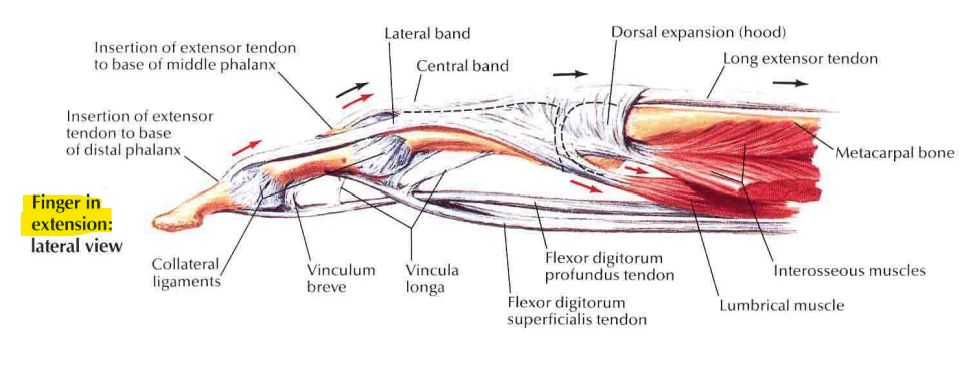
<p><strong>Digit Extension</strong> Mechanics</p>

Digit Extension Mechanics

  1. Central slip @ PIP joint initiates digit extension

  2. Lateral bands dorsally migrate & extend DIP joint

  3. Intrinsic muscles continue to extend both DIP & PIP joints through their insertions on the lateral bands

  4. Sagittal bands extend the MCP joints as the EDC tendon migrates proximally
11
New cards
<p><strong>Lateral bands rest dorsally in extension</strong> (lateral view), and drops… </p>

Lateral bands rest dorsally in extension (lateral view), and drops…

volar in flexion
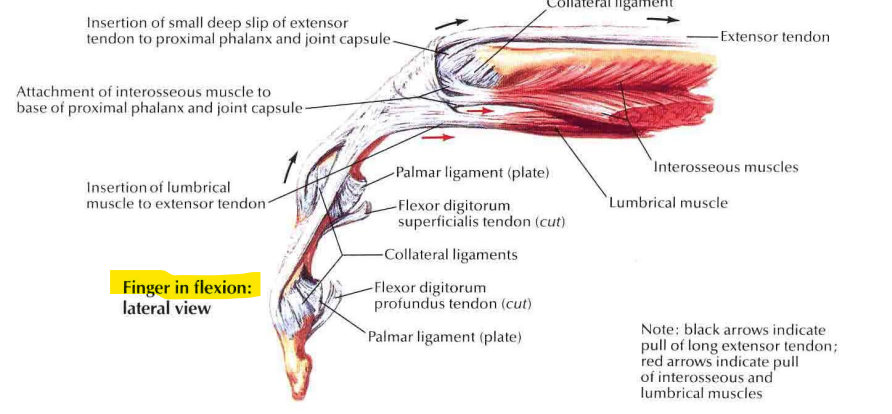
<p>volar in flexion</p>
12
New cards

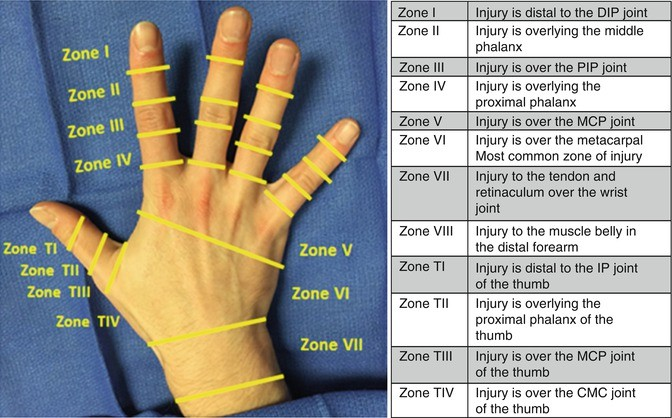
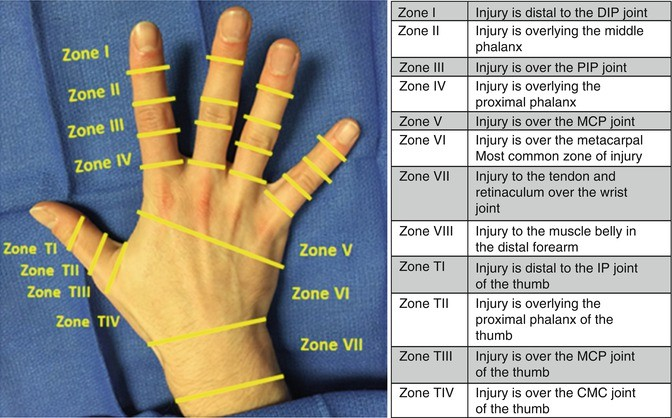
Zones of extensor injuries are used to describe the area of…?

extensor injury (treatment & protocols differ)
13
New cards
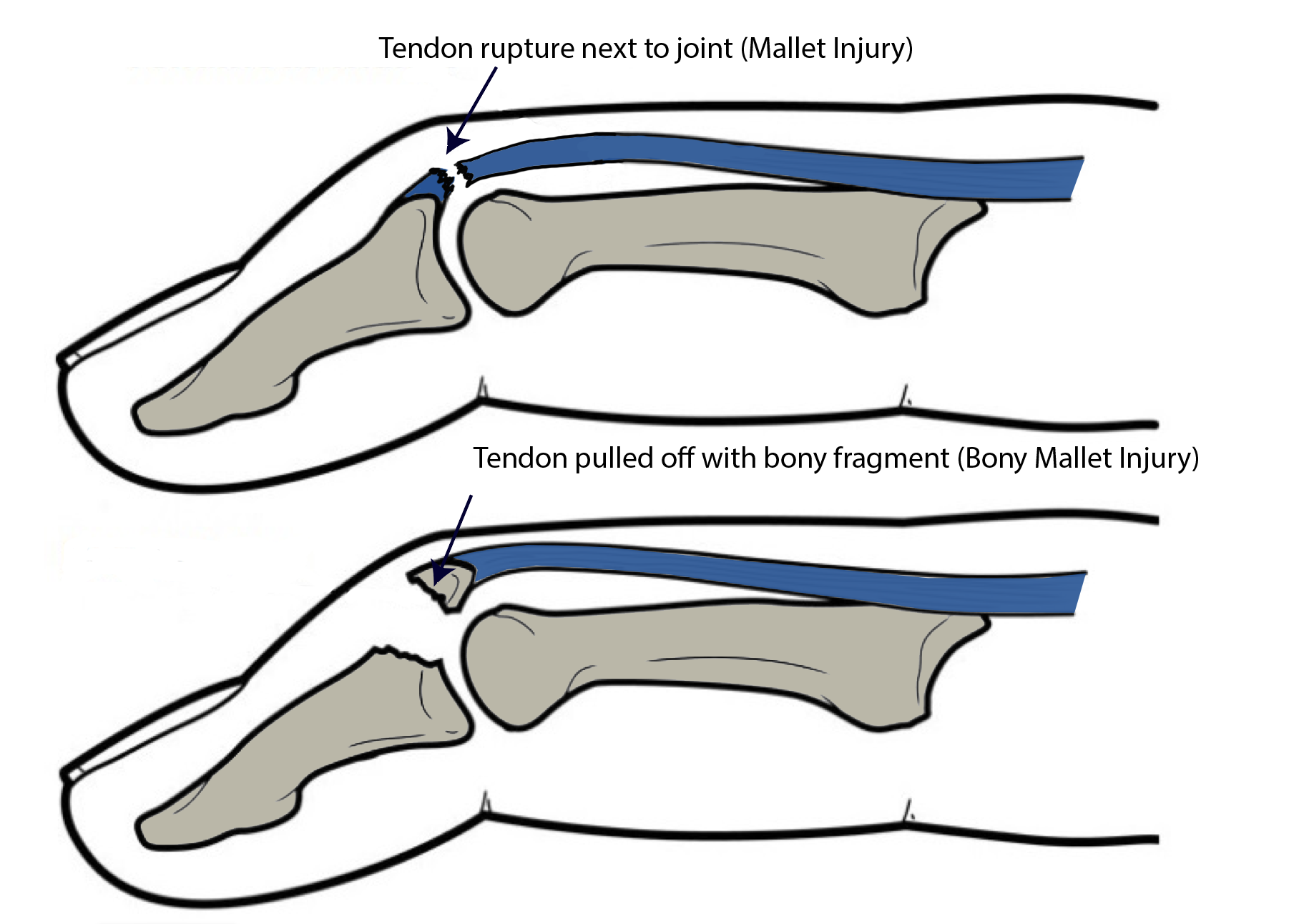
<p><span style="color: red;"><strong>Zone I/1</strong></span> Extensor Injury <strong>“Mallet Finger” </strong></p>

Zone I/1 Extensor Injury “Mallet Finger”

Distal to or @ DIP joint

  • MOI: direct trauma to fingertip, causing abrupt, forceful DIP joint flexion

  • Soft mallet: terminal tendon tear

  • Bony mallet: terminal tendon tear associated w/ avulsion fracture
<p>Distal to or @ DIP joint</p><ul><li><p><strong>MOI:</strong> direct trauma to fingertip, causing abrupt, forceful DIP joint flexion</p></li><li><p><strong>Soft mallet:</strong> terminal tendon tear</p></li><li><p><strong>Bony mallet:</strong> terminal tendon tear associated w/ avulsion fracture </p></li></ul><p></p>
14
New cards
<p><span style="color: blue;"><strong>Zone II/2</strong></span><span style="color: red;"><strong> </strong></span>Extensor Injury </p>

Zone II/2 Extensor Injury

Middle phalanx
15
New cards
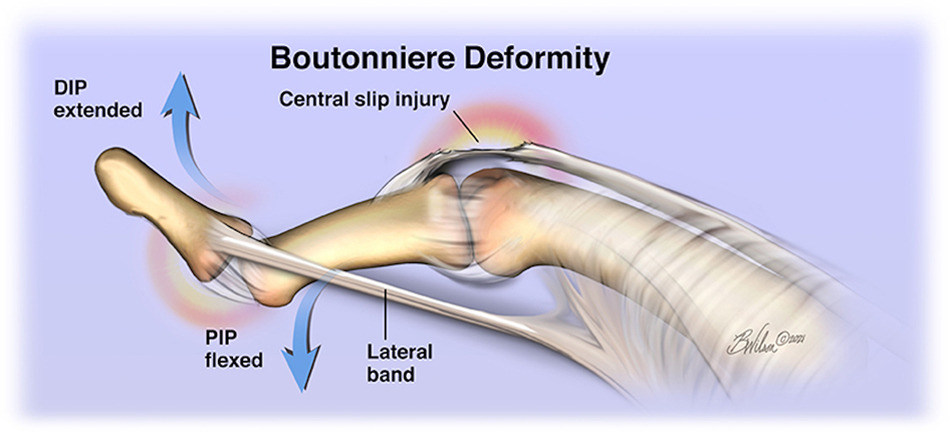
<p><span style="color: green;"><strong>Zone III/3</strong></span> Extensor Injury<strong> “Boutonniere” </strong></p>

Zone III/3 Extensor Injury “Boutonniere”

PIP joint area

  • MOI: Blunt trauma to PIP joint, causing abrupt, forceful PIP flexion

  • Central slip tear

  • Lateral bands stay volar: pull PIP into flexion & DIP joint hyperextension

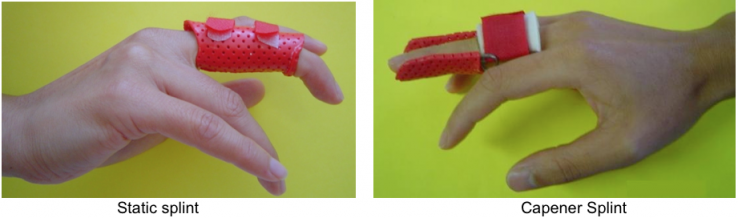
  • Wear static splint

<p>PIP joint area</p><ul><li><p><strong>MOI:</strong> Blunt trauma to PIP joint, causing abrupt, forceful <strong>PIP flexion</strong></p></li><li><p>Central slip tear</p></li><li><p>Lateral bands stay volar: <span style="color: red;">pull PIP into flexion &amp; DIP joint hyperextension</span></p></li><li><p><span style="color: rgb(0, 0, 0);">Wear</span><span style="color: red;"> static splint</span></p></li></ul><p></p>
16
New cards

Zone IV/4 Extensor Injury

Proximal phalanx
17
New cards
<p><span style="color: rgb(242, 154, 0);"><strong>Zone V/5</strong></span> Extensor Injury: <strong>Sagittal Band Injury</strong></p>

Zone V/5 Extensor Injury: Sagittal Band Injury

MCP joint area

  • If injured/attenuated, sagittal band no longer effective @ keeping EDC tendon centralized on dorsum of MCP joint in MCP flexion

18
New cards

Mallet Finger Conservative Management (Zone 1)

24/7 DIP joint extension orthosis for 6-8 wks, then gradual splint weaning & gentle AROM

  • If patient removes orthosis & starts moving fingertip, 6 wk wear time restarts!
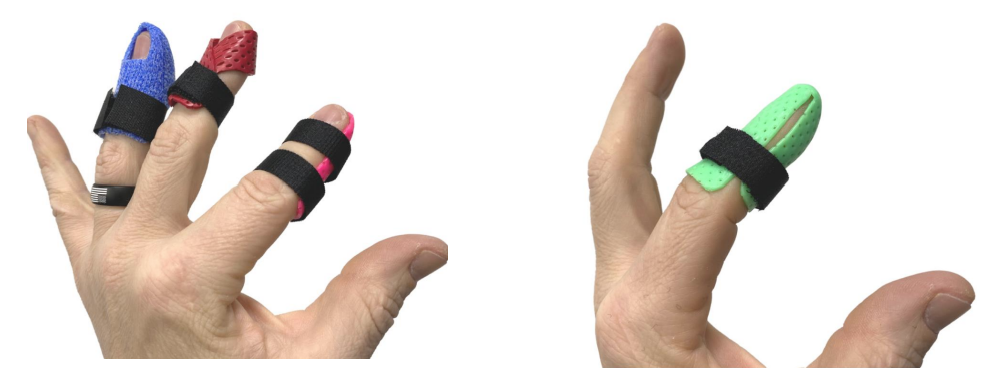
<p><span style="color: blue;"><strong>24/7 DIP joint extension orthosis for 6-8 wks, </strong></span>then gradual splint weaning &amp; gentle AROM</p><ul><li><p>If patient removes orthosis &amp; starts moving fingertip, <span style="color: red;"><em>6 wk wear time</em><strong><em> restarts! </em></strong></span></p></li></ul><p></p>
19
New cards

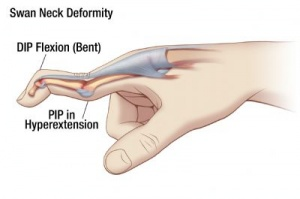
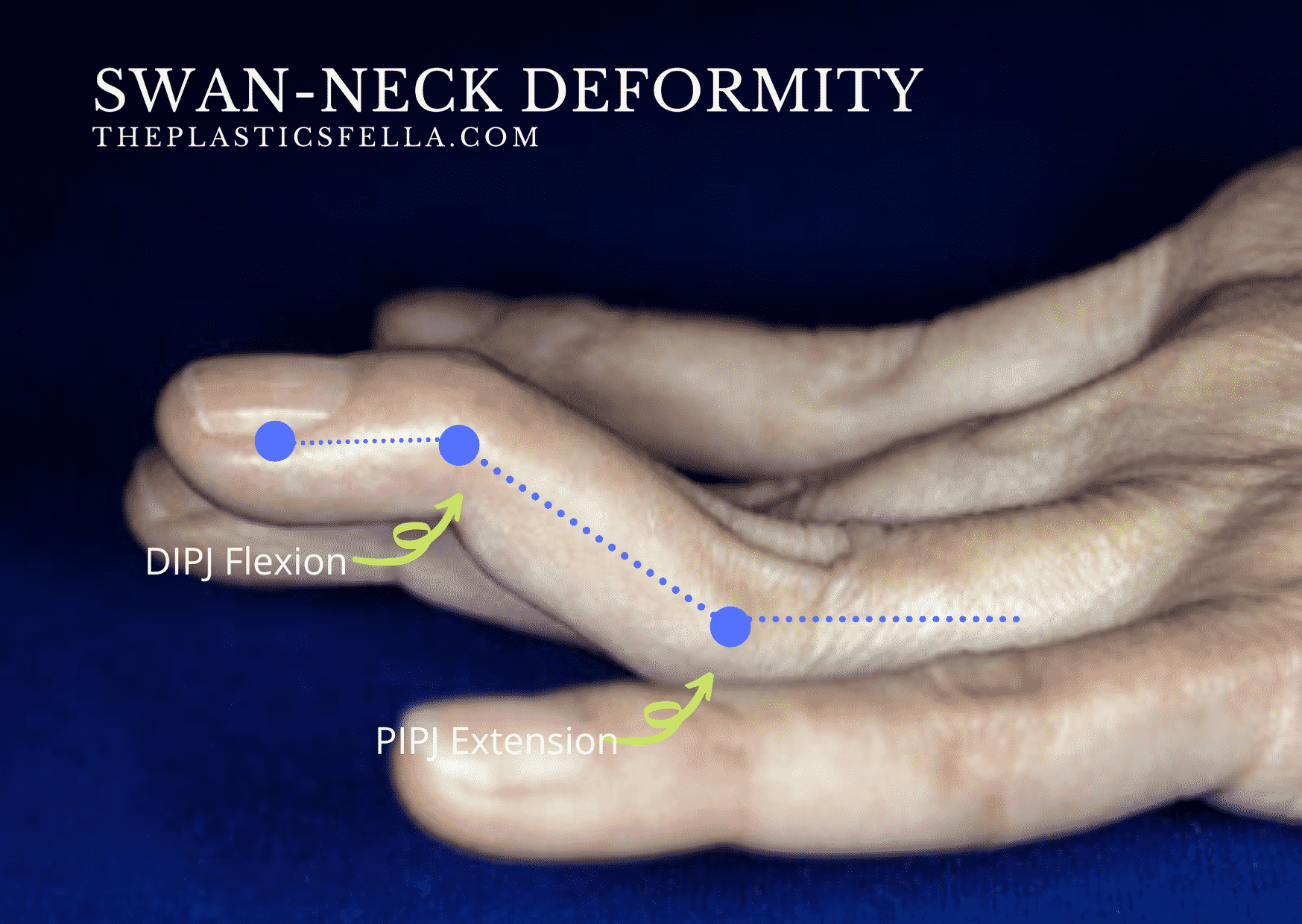
Zone III/3 Extensor Injury “Swan Neck Deformity”

PIP joint area

  • In people w/ joint hypermobility

  • Can occur after PIP dorsal dislocation

  • Volar plate insufficient @ limiting PIP joint hyperextension

  • Lateral bands sublux dorsally & become ineffective @ extending DIP joint

  • DIPJ flexion, PIPJ extension

<p><strong>PIP joint area</strong></p><ul><li><p>In people w/ joint hypermobility</p></li><li><p>Can occur after PIP dorsal dislocation</p></li><li><p>Volar plate insufficient @ limiting PIP joint hyperextension</p></li><li><p>Lateral bands sublux dorsally &amp; become ineffective @ extending DIP joint</p></li><li><p>DIPJ flexion, PIPJ extension </p></li></ul><p></p>
20
New cards
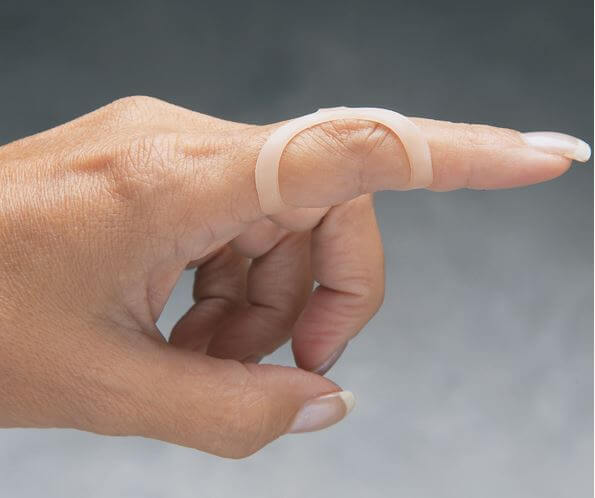
<p><span style="color: green;"><strong>Zone III/3</strong></span> Extensor Injury<strong> “Swan Neck” - Oval-8 ring splints manage this deformity by… </strong></p>

Zone III/3 Extensor Injury “Swan Neck” - Oval-8 ring splints manage this deformity by…

  • providing 3-point pressure system: prevents PIP (middle) joint from hyperextending

  • By positioning the oval band on top of the finger, they restrict backward bending + allows flexion & maintaining DIP joint extension.
<ul><li><p>providing 3-point pressure system: prevents PIP (middle) joint from hyperextending</p></li><li><p>By positioning the oval band on top of the finger, they restrict backward bending + allows flexion &amp; maintaining DIP joint extension.</p></li></ul><p></p>
21
New cards
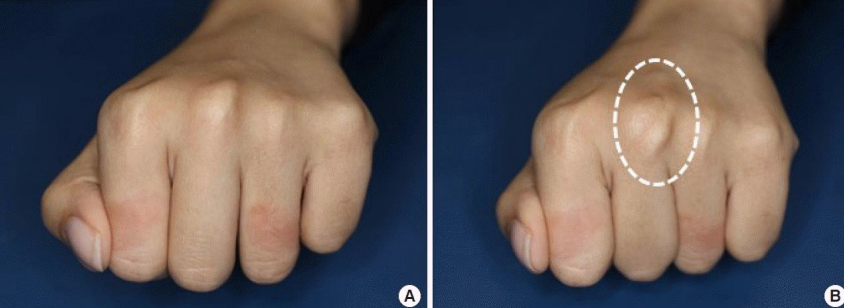
<p><span style="color: rgb(242, 154, 0);"><strong>Zone V/5</strong></span> Extensor Injury: <strong>Sagittal Band Injury “Boxer’s Knuckle” - What do you observe?</strong></p>

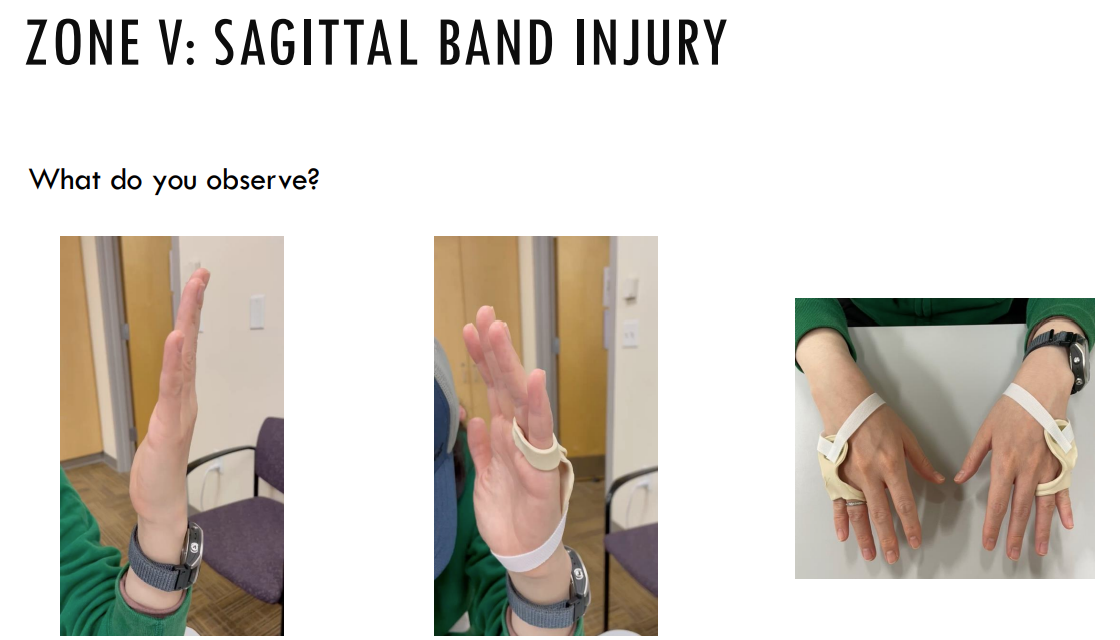
Zone V/5 Extensor Injury: Sagittal Band Injury “Boxer’s Knuckle” - What do you observe?

Present w/ pain, swelling, ecchymosis over MCP joint following trauma

  • Visible or palpable "snapping" or subluxation of the extensor tendon into the intermetacarpal space during flexion

  • Tendon typically deviates ulnarly during active extension
22
New cards
<p>What structures are responsible for<strong> MCP extension?</strong></p>

What structures are responsible for MCP extension?

EDC tendon & sagittal band
23
New cards
<p>What structures are responsible for<strong> PIP extension? </strong></p>

What structures are responsible for PIP extension?

Central slip & lateral bands
24
New cards
<p>What structures are responsible for<strong> DIP extension?</strong></p>

What structures are responsible for DIP extension?

Terminal tendon & triangular ligament