exam Q - amino acids
 Call Kai
 Learn
Learn Practice Test
 Spaced Repetition
 Match
Match Flashcards
 Knowt Play
1/11

There's no tags or description
Looks like no tags are added yet.
Name | Mastery | Learn | Test | Matching | Spaced | Call with Kai |
|---|
No analytics yet
Send a link to your students to track their progress
12 Terms
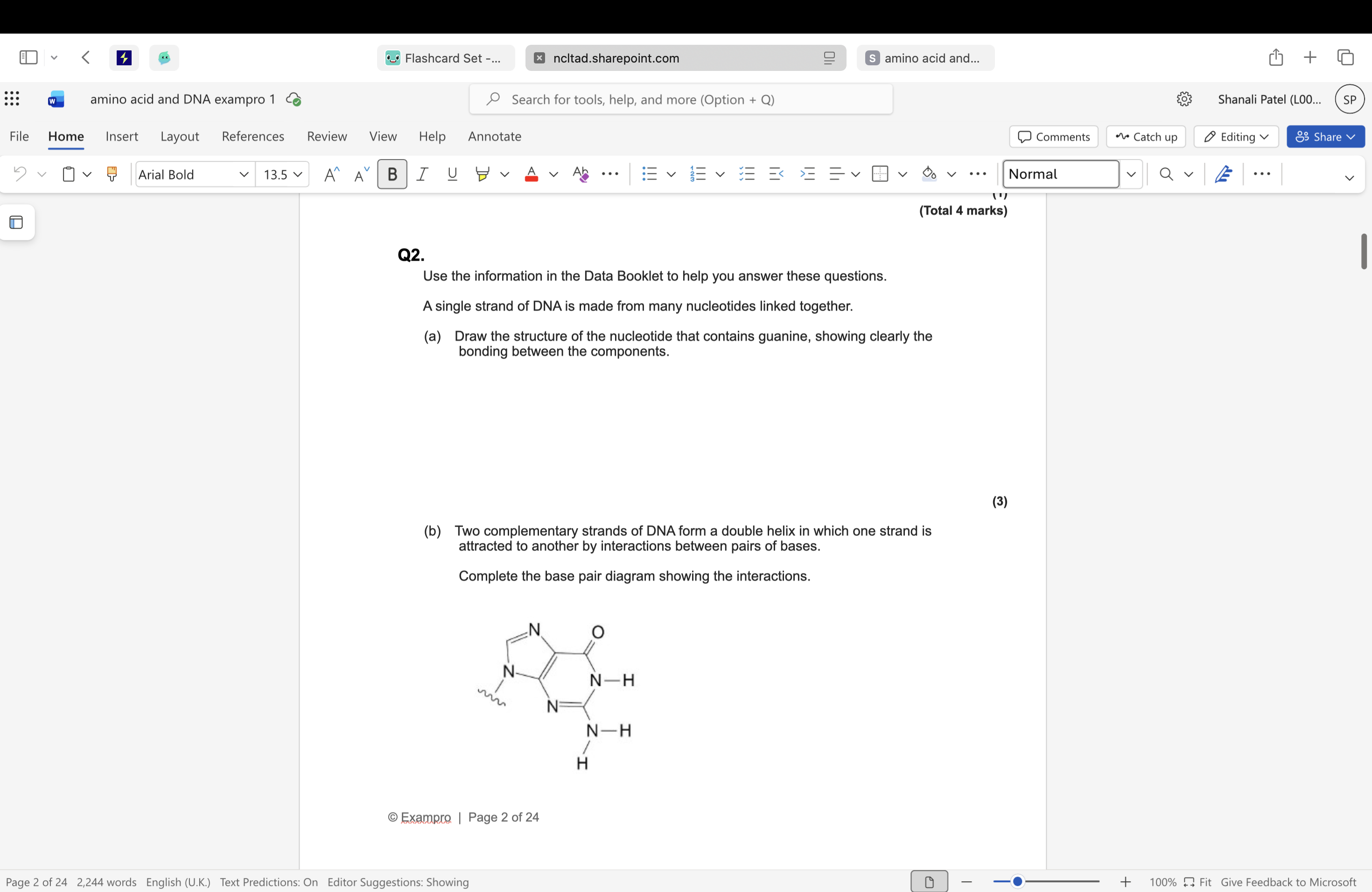
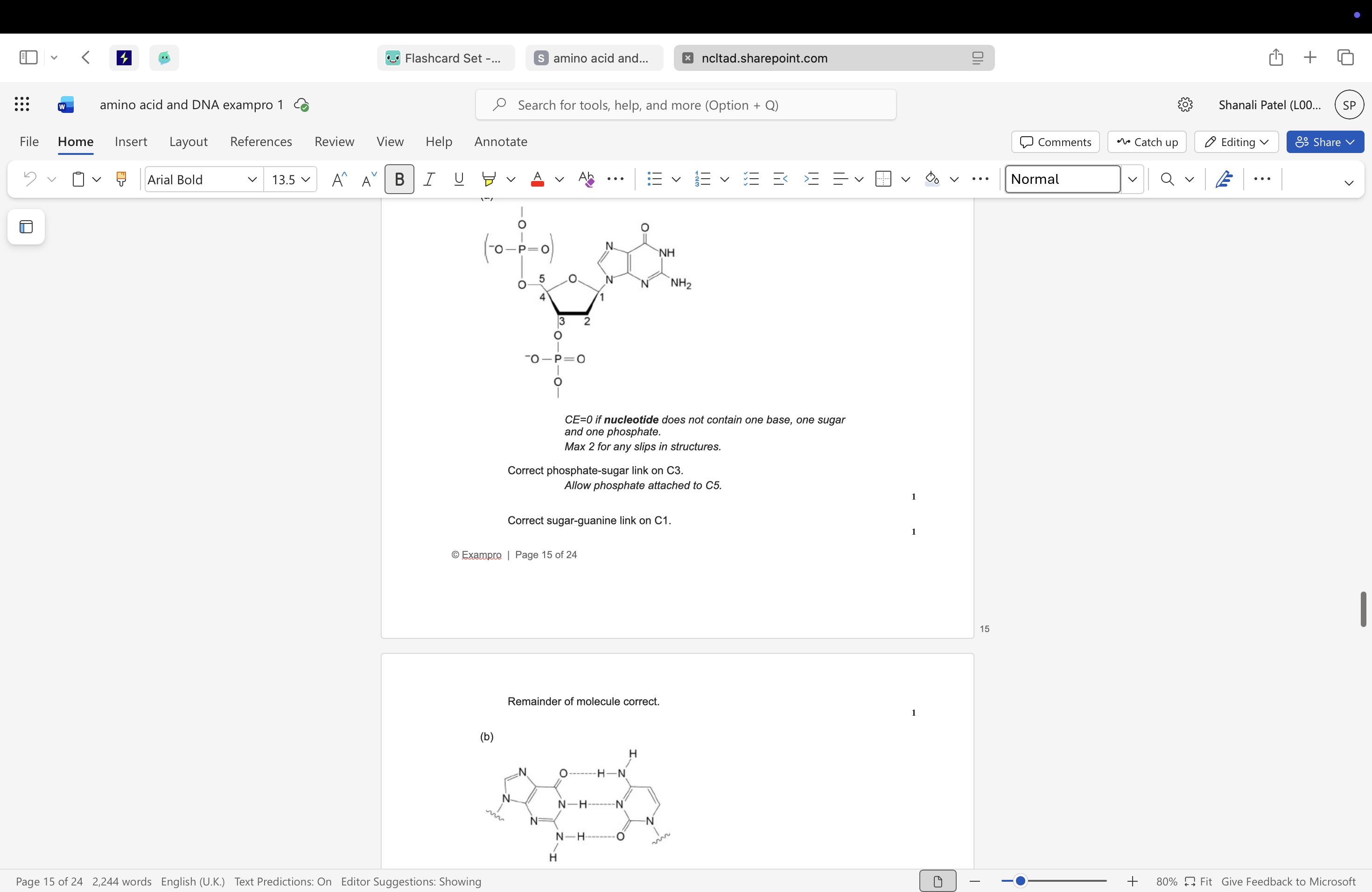
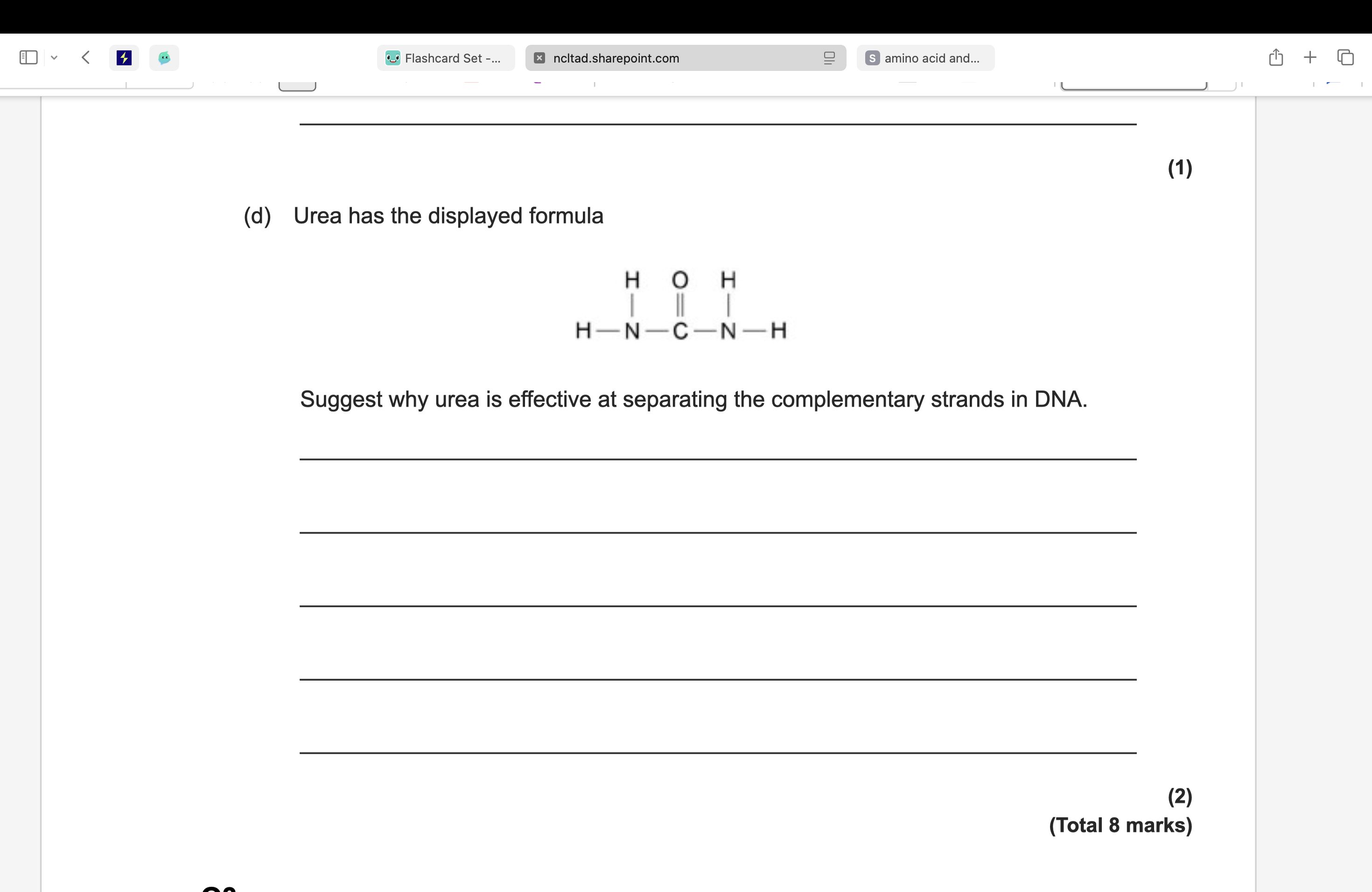
The amino/-NH2 groups in urea
1
are able to substitute for the H–bonds in the double helix.
Allow H bonds will form between the urea and the DNA strands.
An experiment is done to investigate the rate of reaction in part (b).
(d) During the experiment the concentration of cisplatin is measured at one-minute intervals.
Explain how graphical methods can be used to process the measured results, to confirm that the reaction is first order.
M1 plot concentration (y-axis) against time (x-axis) and take tangents / (calculate the) gradients (to calculate rates)
Allow concentration-time graph
NOT time-concentration graph (unless clarified in words or sketch) but mark on
1
M2 Plot rate/gradients against conc
1
M3 straight line through origin / directly proportional confirms first order
allow first order if rate halves/doubles when conc halves/doubles
1
Alternatives to M2 and M3:
M2 Plot a graph of log rate vs log conc
M3 (Straight) line of gradient = 1
M2 measure (at least) two half-lives (in this case, tangents not required for M1)
M3 constant half-life means first order
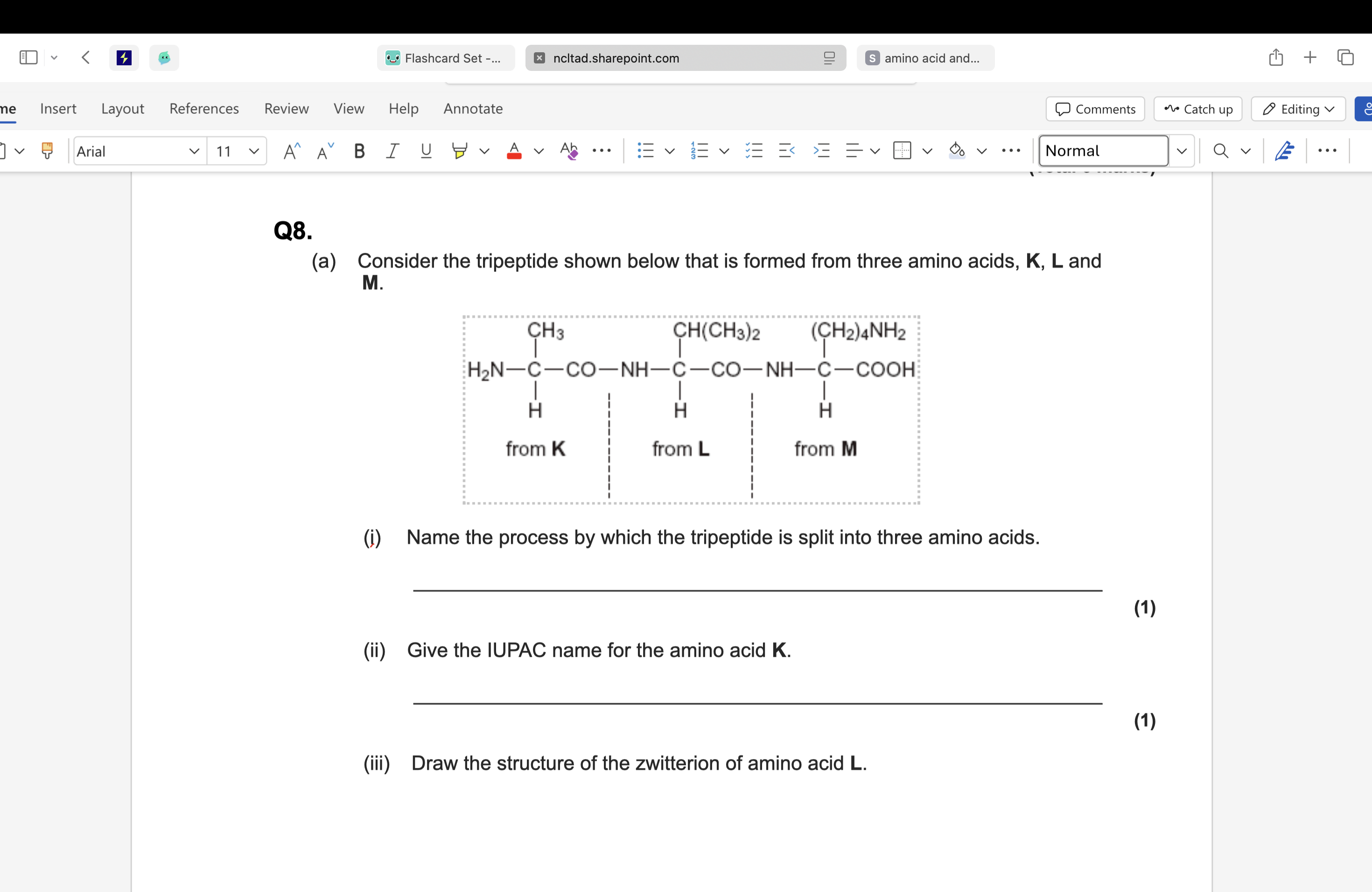
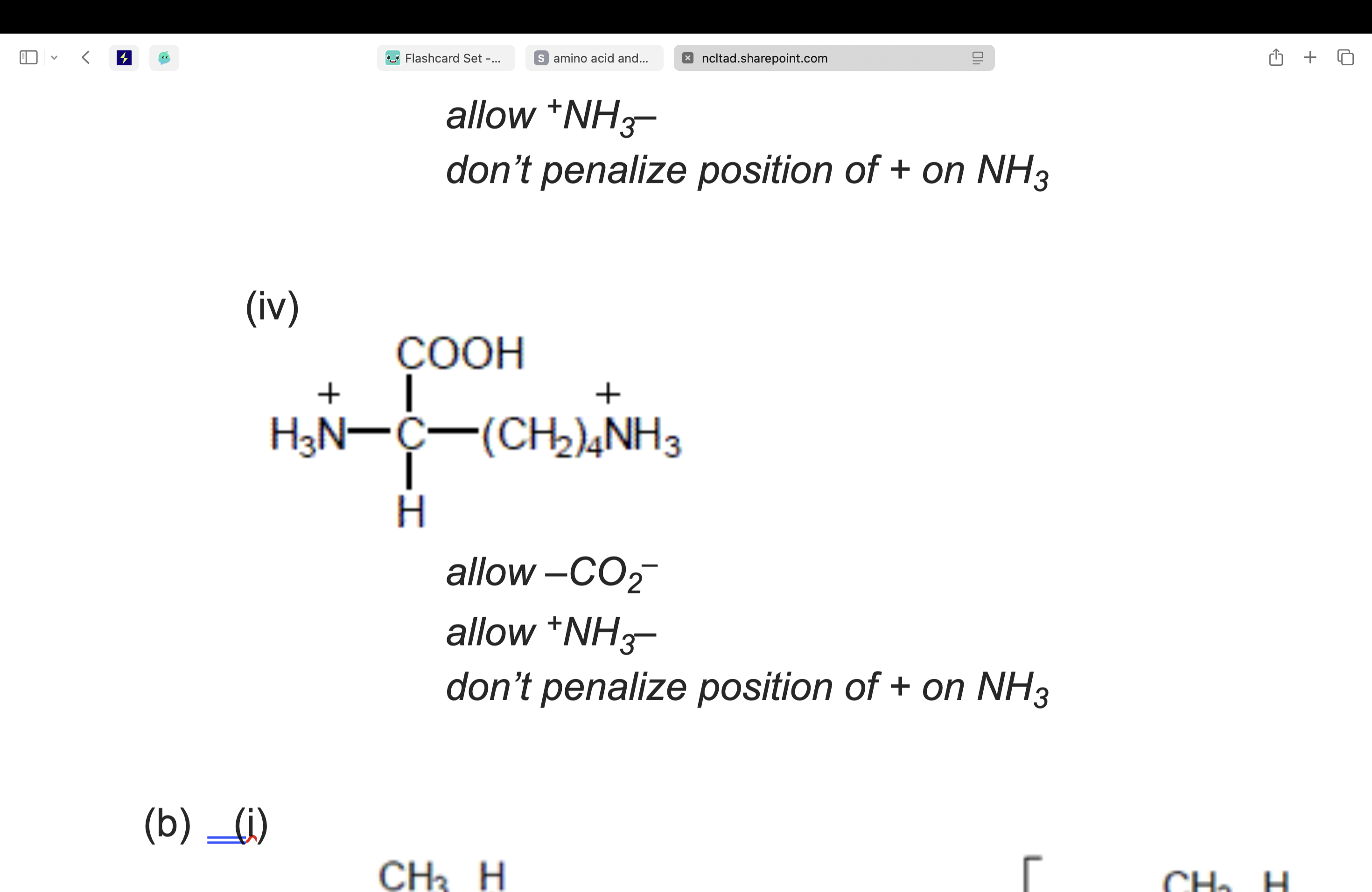
Draw the structure of the species formed by amino acid M at low pH.
hydrolysis
not hydration
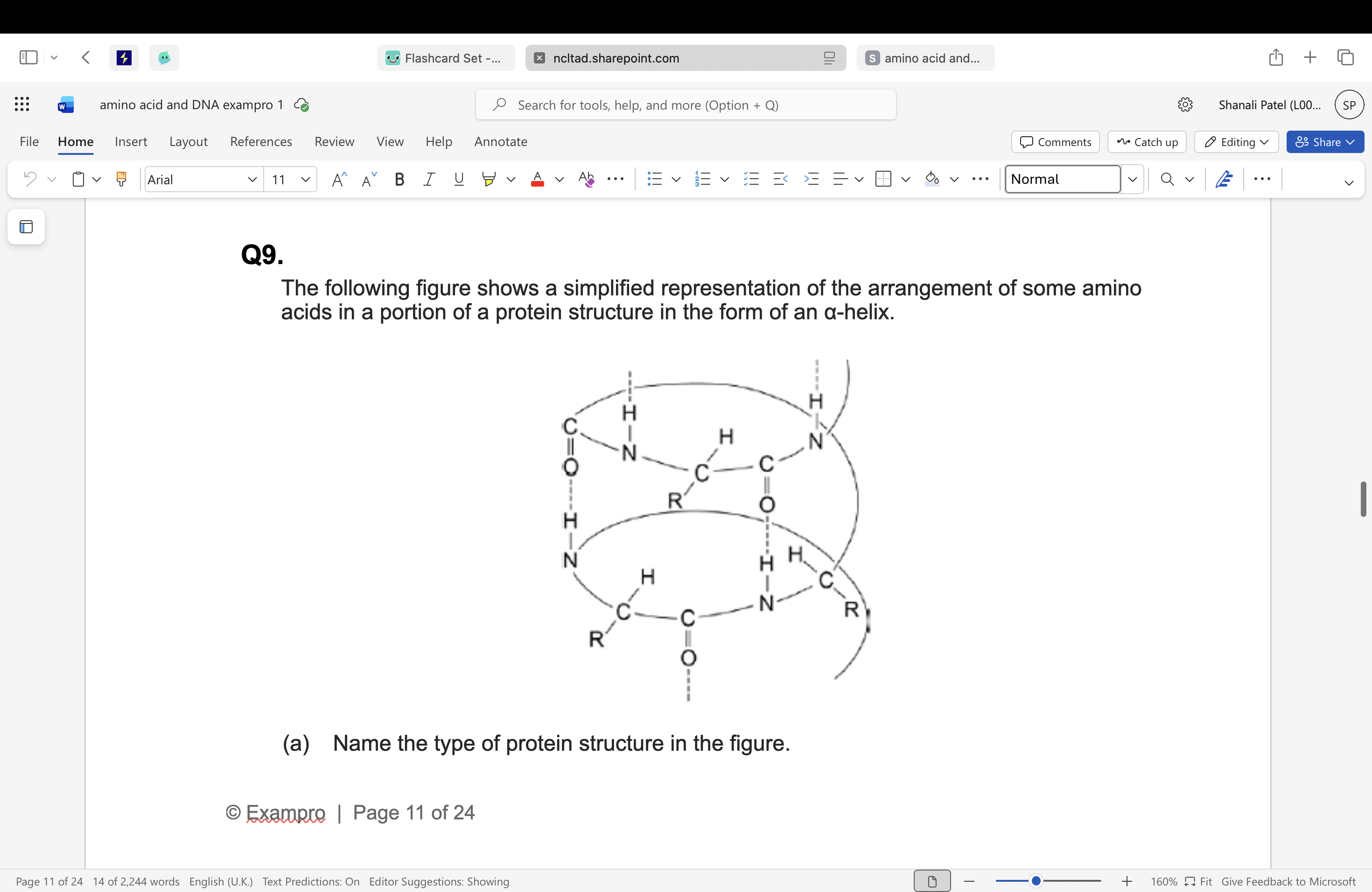
(b) Explain the origin of the interaction represented by the dotted lines in the figure above.
secondary
Nitrogen and oxygen are very electronegative
1
Therefore, C=O and N–H are polar
1
Which results in the formation of a hydrogen bond between O and H
1
In which a lone pair of electrons on an oxygen atom is strongly attracted to the δ+H
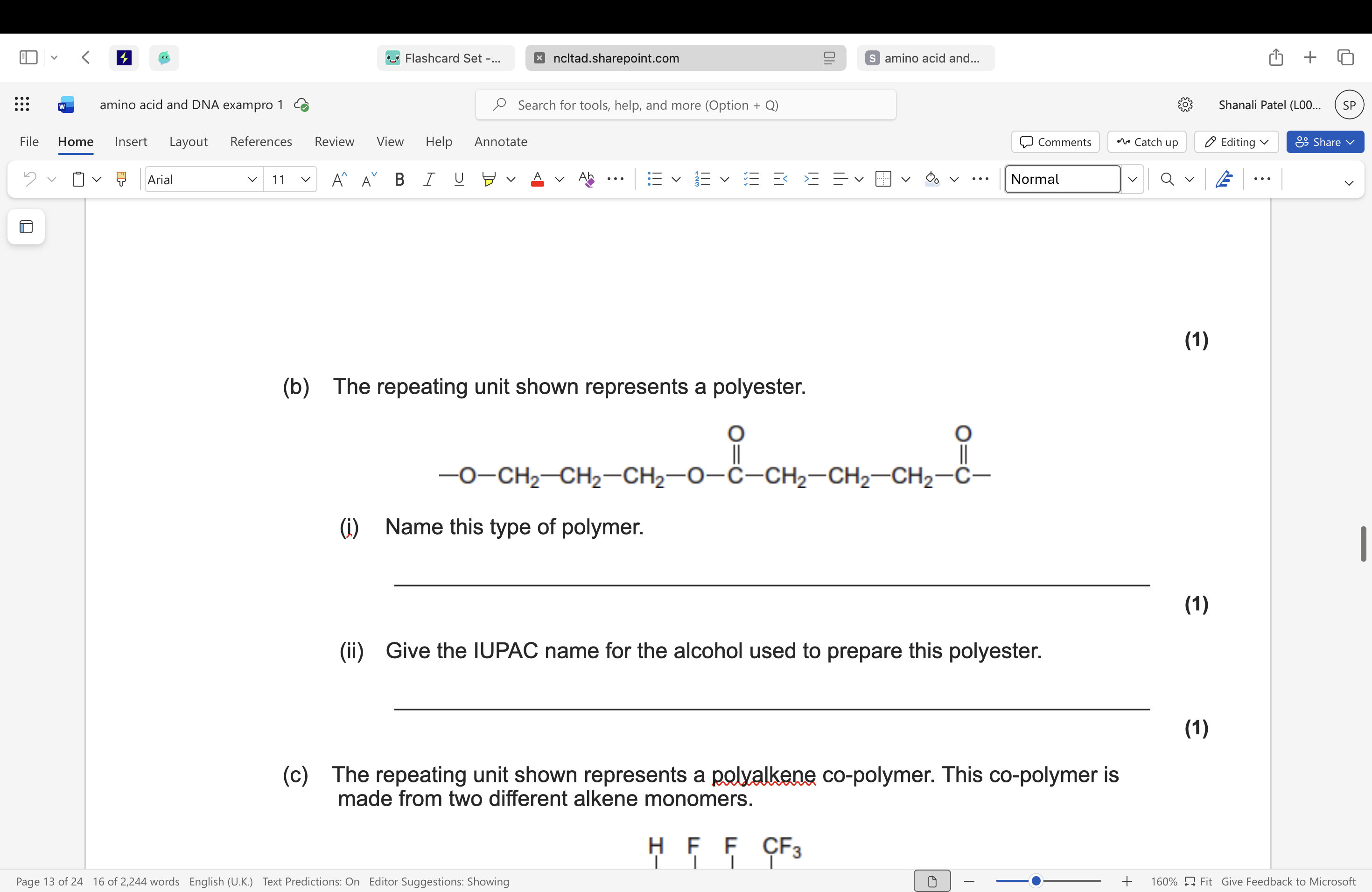
b) (i) Condensation
Allow polyester
1
(ii) propane-1,3-diol
Must have e
Allow 1,3-propanediol
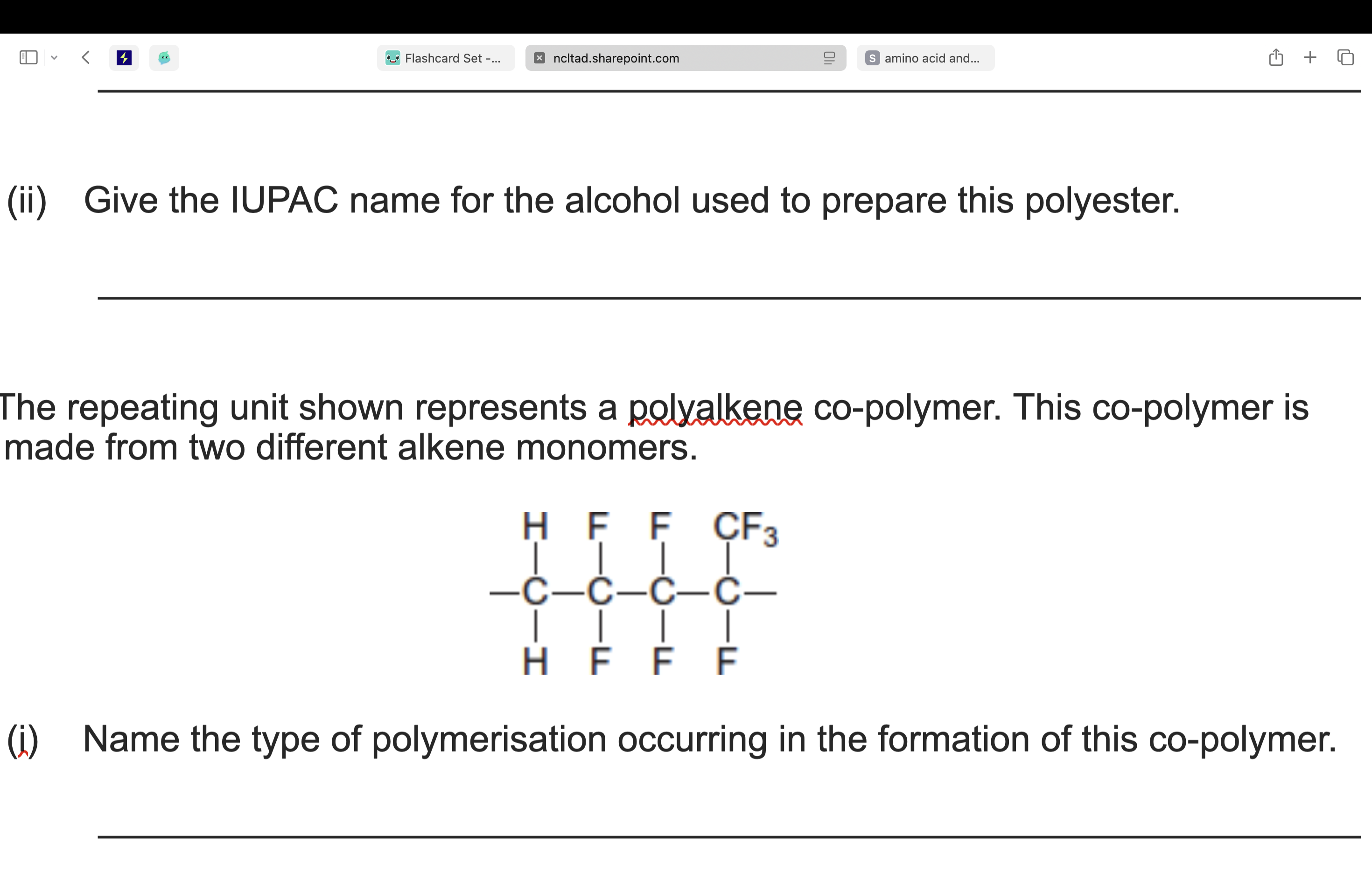
One of the three compounds shown in parts (a), (b) and (c) cannot be broken down by hydrolysis.
Write the letter (a), (b) or (c) to identify this compound and explain why hydrolysis of this compound does not occur.
A = tripeptide shown is formed from the amino acids alanine, threonine and lysine.
B = polyester.
C = see pic
c
c
If wrong, CE = 0
1
C-C or C-F bonds too strong
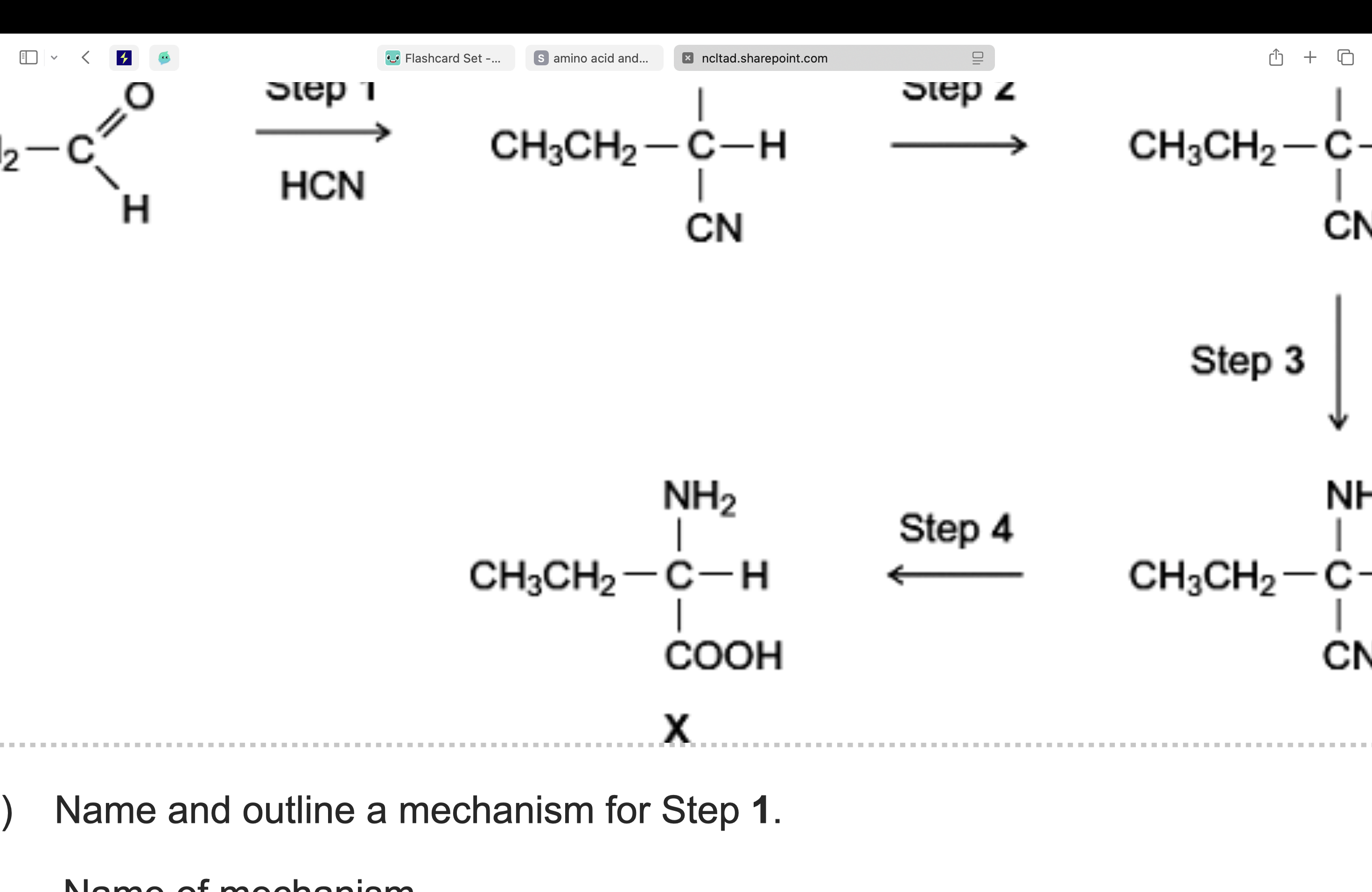
At room temperature, the amino acid X exists as a solid.
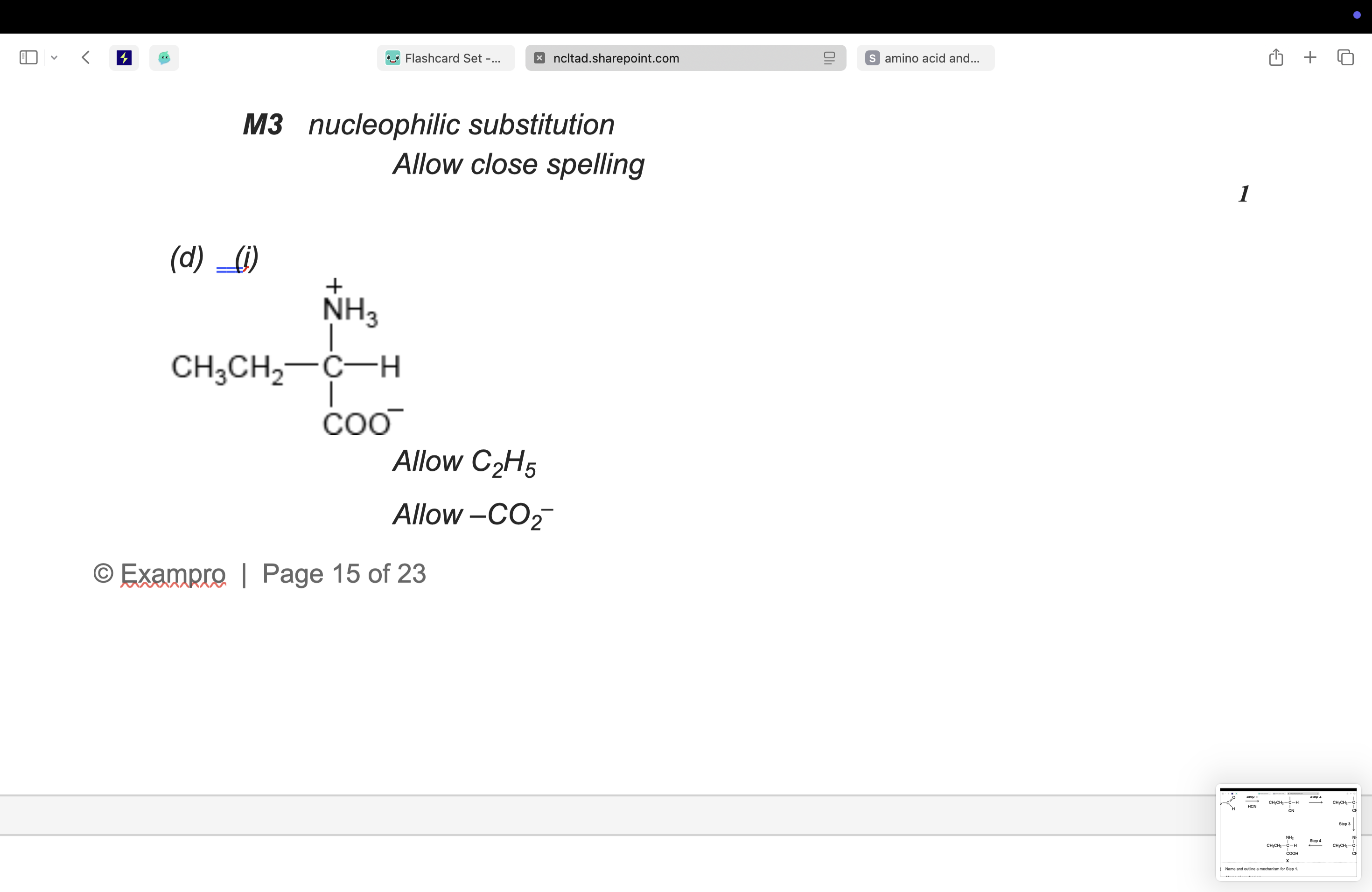
(i) Draw the structure of the species present in the solid amino acid.
(ii) With reference to your answer to part (d)(i), explain why the melting point of the amino acid X is higher than the melting point of CH3CH2CH(OH)COOH.
(ii) M1 electrostatic forces between ions in X QOL
Allow ionic bonding.
1
Marks independent
M2 (stronger than) hydrogen bonding between CH3CH2CH(OH)COOH
CE mention of molecules of X or inter molecular forces between X loses both marks
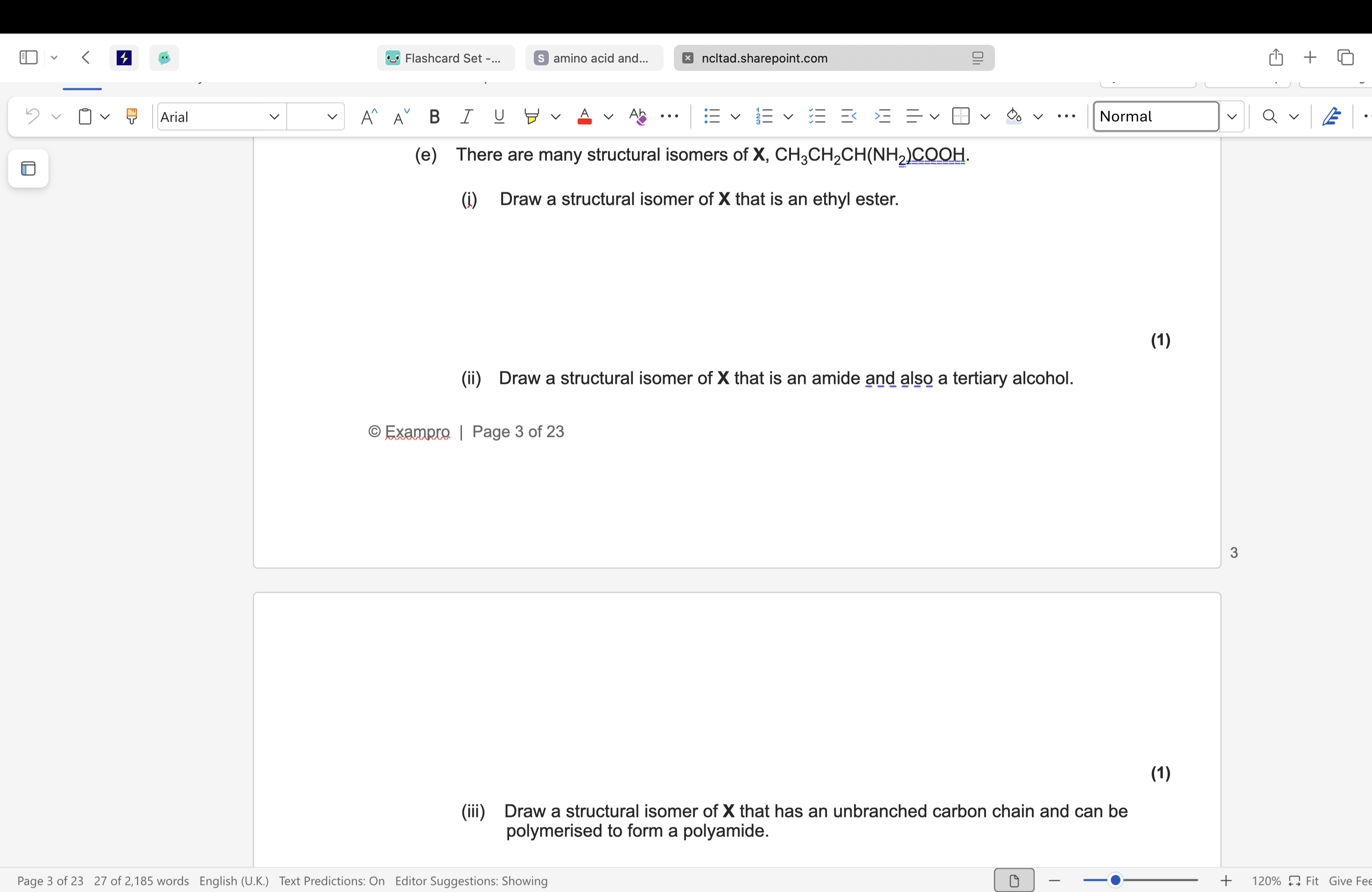
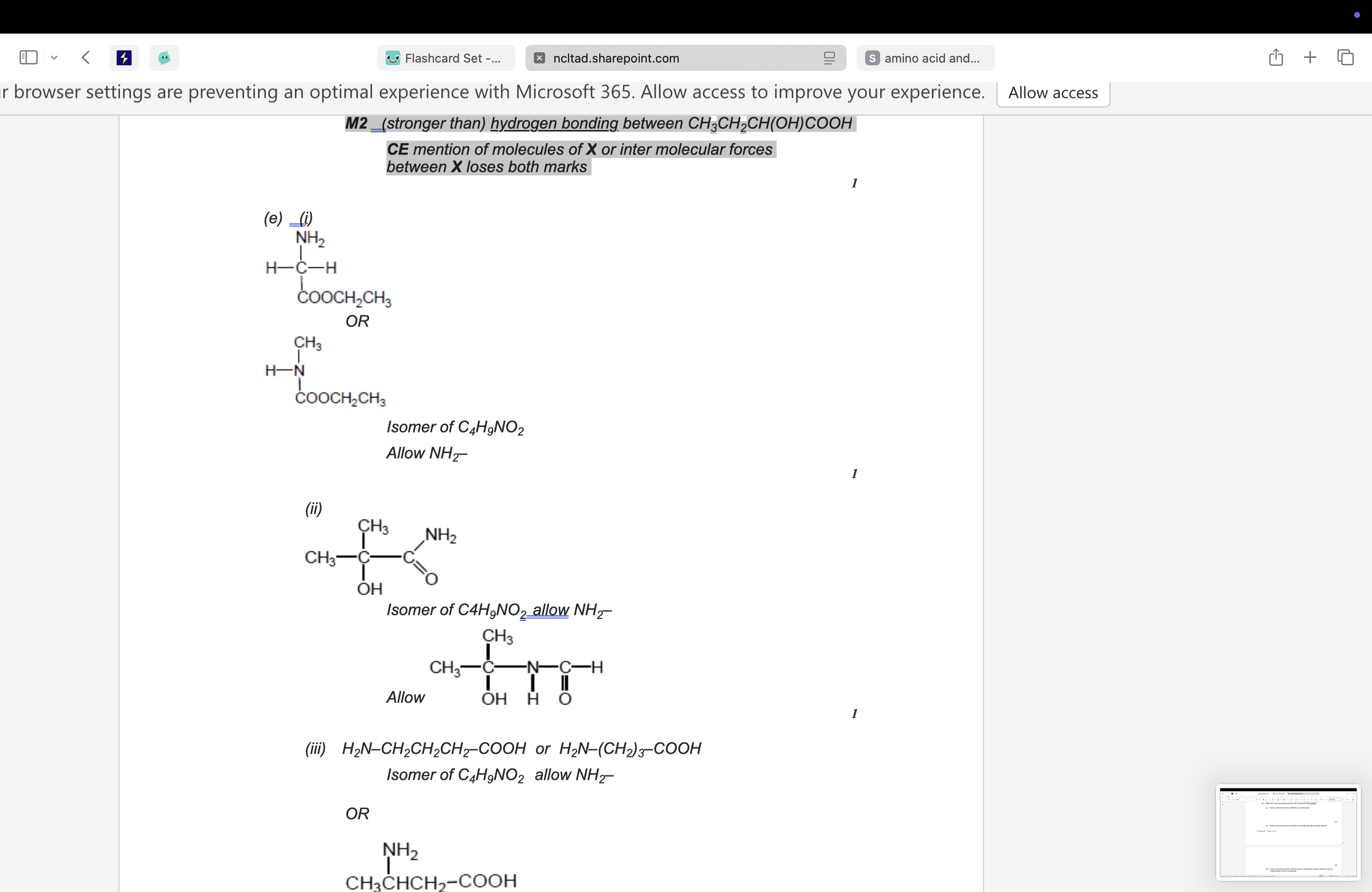
(c) State the meaning of the term complementary when it is used to refer to DNA strands.
(c) (Complementary means the two strands must have base sequences) that match (all) A to T and C to G
Ignore reference to (hydrogen) bonding
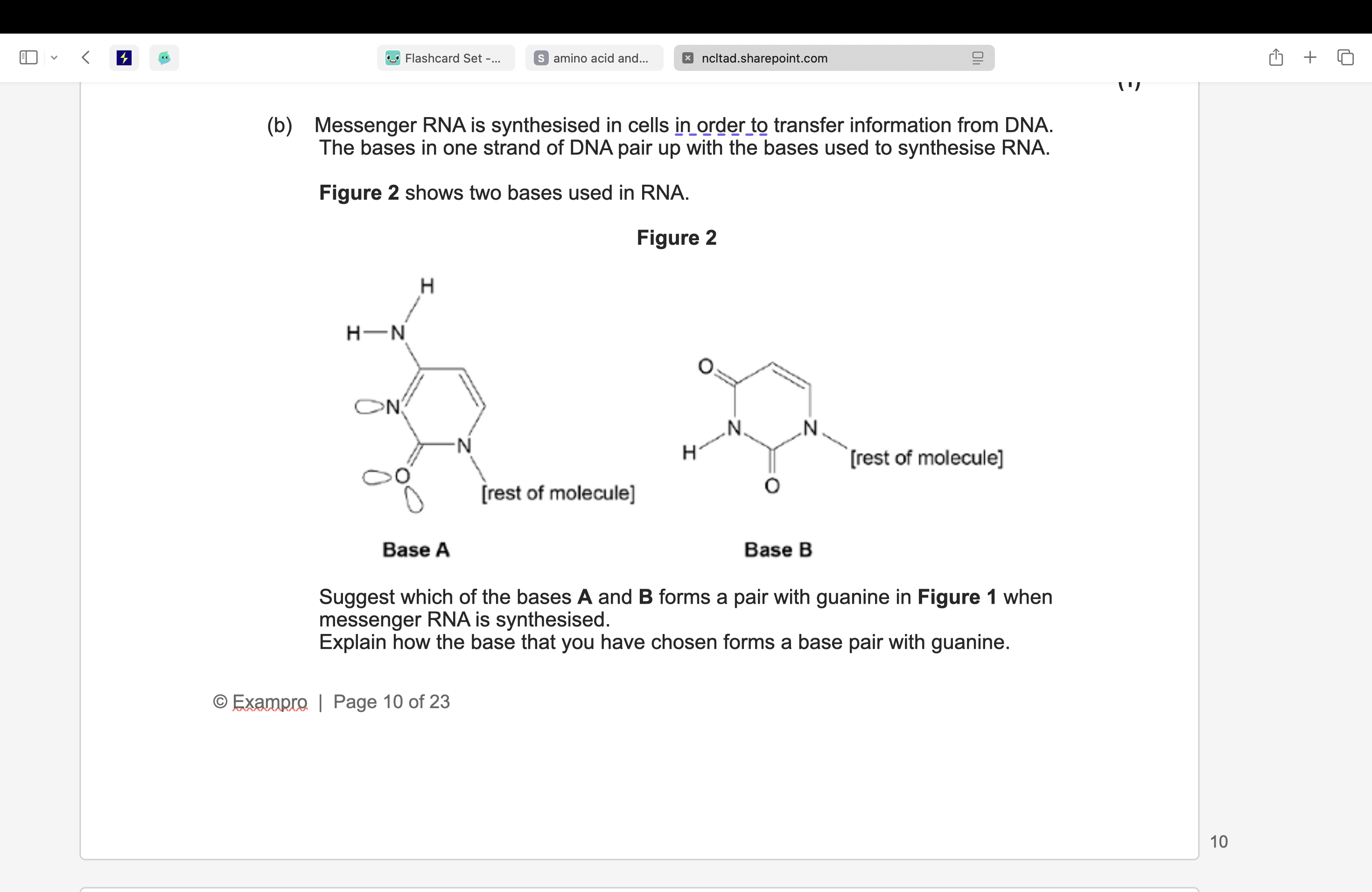
A
Top N–H forms hydrogen bonds to lone pair on O of guanine
1
The lone pair of electrons on N bonds to H–N of guanine
1
A lone pair of electrons on O bonds to lower H–N of guanine
Allow all 4 marks for a correct diagram showing the hydrogen bonding
Students could also answer this question using labels on the diagram
(d) An adverse effect of cisplatin is that it also prevents normal healthy cells from replicating.
Suggest one way in which cisplatin can be administered so that this side effect is minimised.
(d) Use in very small amounts / target the application to the tumour