AP Psychology 5.4-5.5 Benchmark Practice
 Call Kai
 Learn
Learn Practice Test
 Spaced Repetition
 Match
Match Flashcards
 Knowt Play
1/106

There's no tags or description
Looks like no tags are added yet.
Name | Mastery | Learn | Test | Matching | Spaced | Call with Kai |
|---|
No analytics yet
Send a link to your students to track their progress
107 Terms
Symptom Types
Positive (Added Behaviours) or Negative (Deficit Behaviours)
Neurodevelopmental Disorders (NDD)
Disorders that begin in childhood, affecting how the brain develops and functions and impacting everything from social skills to learning.
- Influenced by prenatal environment and genetics
NDD Symptoms
Focus on whether the person is exhibiting behaviours appropriate for their age or maturity range.
(NDD) Autism Spectrum Disorder / ASD
A condition in which a person shows persistent communication deficits as well as restricted and repetitive patterns of behaviours, interests, or activities
(NDD) Attention Deficit Hyperactivity Disorder / ADHD
A condition marked by extreme inattention and/or hyperactivity and impulsivity.
Schizophrenic Spectrum Disorders (SDD)
Severe disorders in which there are disturbances of thoughts, communications, and emotions (I.e. delusions, hallucinations).
- Possible genetic/biological link
Acute Schizophrenia
Form of schizophrenia that can begin at any age; frequently occurs in response to a traumatic event, and from which recovery is much more likely.
Chronic Schizophrenia
Form of schizophrenia in which symptoms usually appear by late adolescence or early adulthood. As people age, psychotic episodes last longer and recovery periods shorten.
Psychosis
Loss of contact with reality
Hallucinations
Positive symptom of sensory experiences without stimulus
Delusions
Positive symptom of holding strong beliefs despite being untrue or unreal.
Disorganized Thinking/Speech
Positive symptom in which individuals string together words in nonsensical ways.
Catatonia
A state of unresponsiveness to one's outside environment/disordered movement.
- If experienced as excitement can be a positive symptom, if catatonic stupor a negative symptom.
Flat Affect
Negative symptom characterized by a lack of emotional expression.
Dopamine Hypothesis
The idea that schizophrenia involves an excess of dopamine activity.
Depressive Disorder
Psychological disorder marked by persistent sadness, emptiness, or loss of interest; affects one's ability to function.
- Biological, genetic, social, cultural, behavioural, and cognitive sources causes.
Major Depressive Disorder (MDD)
Psychological disorder involving a significant depressive episode and depressed characteristics for at least two weeks.
Persistent Depressive Disorder (PDD)
a chronic form of depression that is milder in intensity but longer in duration (atleast 2 years).
Bipolar Disorders
Disorders marked by alternating or intermixed periods of mania and depression.
Biological, genetic, social, cultural, behavioural, and cognitive sources causes
Mania
A period of extremely elevated mood and energy.
Hypomania
A milder version of mania.
Bipolar I Disorder
Defined by at least one extreme, week lasting manic episode, often alternating with depressive periods.
Bipolar II Disorder
A type of bipolar disorder marked by mildly manic (hypomanic) episodes and major depressive episodes
Anxiety Disorders
Disorders characterized by excessive fear and/or anxiety with related disturbances to behavior. Caused by learned associations, maladaptive thinking, emotional responses and biological sources.
Specific Phobia
Fear or anxiety towards a specific object or situation, including (CED REQUIRED) acrophobia (fear of heights) arachnophobia (arachnophobia).
Agoraphobia
intense fear of specific social situations, including using public transportation, being in open spaces, being in enclosed spaces.
Panic Disorder
Involves the experience of panic attacks (unanticipated and overwhelming experiences of fear/anxiety).
Ataque De Nervios
A cultural syndrome derivative of Panic Disorder primarily seen in Latin Americans, involving intense emotional upset, acute anxiety, fear, or anger.
Social Anxiety Disorder
involves the intense fear of being judged or watched by others. Distinct from but may include agoraphobia.
Taijin kyofusho
Japanese fear of offending or embarrassing others.
Generalized Anxiety Disorder
Prolonged experiences of nonspecific anxiety or fear.
Obsessive-compulsive disorder (OCD)
Characterized by the presence of obsessions and/or compulsions. Caused by learned associations, maladaptive thoughts/emotional responses, and biological sources.
Obsessions
Persistent ideas, thoughts, or impulses that are unwanted and inappropriate, causing marked distress
Compulsions
Repetitive behaviors or mental acts that are performed to prevent or reduce anxiety.
Hoarding Disorder
A disorder related to OCD in which individuals feel compelled to save items and become very distressed if they try to discard them, resulting in an excessive accumulation of items.
Dissociative Disorders
Characterized by dissociations from consciousness, memory, identity, emotion, motor control, and behavior. Caused by experiences of trauma or stress.
Dissociative Amnesia
The mind causes gaps in memory as protection from traumatic experience.
Dissociative Fugue
A rare condition where individuals lose their sense of selves and flee from their homes or work. Difficult to diagnose.
Dissociative Identity Disorder
Two or more separate personalities that interfere with everyday behavior.
Trauma and Stressor-Related Disorders
Characterized by exposure to a traumatic or stressful event with subsequent psychological distress. Caused by experiences of trauma or stress.
Posttraumatic Stress Disorder (PTSD)
A disorder characterized by haunting memories, nightmares, social withdrawal, jumpy anxiety, numbness of feeling, and/or insomnia that lingers for four weeks or more after a traumatic experience.
- Symptoms include hypervigilance, flashbacks, and hostility
Feeding And Eating Disorders
Characterized by altered consumption or absorption of food that impairs health or psychological functioning. Attributed to biological, sociocultural, behavioural, or cognitive sources.
Anorexia Nervosa
An eating disorder where people try to keep their weight as low as possible, leading to: intense fear of gaining weight, distorted body image, severe restriction of food intake, or significantly low body weight.
Bulimia Nervosa
An eating disorder where you eat a lot at once then try to get rid of it, focusing on a loss of control during binge, compensatory behavior, and shame or secrecy about eating.
Personality Disorder
Characterized by enduring patterns of internal experience or behavior defiant of one's culture; begins in adolescence or early adulthood and is stable, leading to personal distress and impairment.
Cluster A Personality Disorders
Considered odd or eccentric (social difficulty)
(Cluster A) Paranoid
Consistently distrusting and suspicious of others' motives.
(Cluster A) Schizoid
Often avoiding close relationships; negative symptoms.
(Cluster A) Schizotypal
Eccentric behavior like believing you have special powers or unusual perceptions; positive symptoms
Cluster B Personality Disorders
Dramatic, emotional, erratic behaviours
(Cluster B) Antisocial Personality Disorder
Pattern of disregard for and violation of the rights of others without sense of guilt.
(Cluster B) Histrionic Personality Disorder:
Pattern of strong need for attention, being easily influenced, and dramatic emotional behavior.
(Cluster B) Narcissistic Personality Disorder
Sense of self importance and need for admiration; lack of empathy but some guilt.
(Cluster B) Borderline Personality Disorder
Characterized by unstable relationships, fear of abandonment, and extreme emotional swings; suicidal tendencies.
Cluster C Personality Disorders
Anxious or fearful behaviours.
(Cluster C) Avoidant Personality Disorder
Persistent fear of criticism, social situations, etc.
(Cluster C) Dependent Personality Disorder
Excessive need to be taken care of, struggle to make individual decisions.
(Cluster C) Obsessive-Compulsive Personality Disorder (OCPD)
Focused on order and perfection, need for control, rigid thinking.
OCPD vs OCD
OCPD has to do with personality traits, while OCD has to do with intrusive thoughts.
Psychotherapy
Treatment involving an ongoing dialogue between a patient and a mental health professional.
Biomedical Therapy
prescribed medications or medical procedures that act directly on the patient's physiology.
Psychotropic Medication
Drugs that are prescribed to treat mental health disorders; effectiveness caused hospitals and asylums to deinstitutionalize many people in the late 20th century.
Eclectic Approach (Treatment)
An approach to psychotherapy that uses techniques from various forms of therapy based on the patient's needs.
Ethical Principles of Therapy
1. Strive to benefit clients and care to do no harm (nonmaleficence)
2. Establishing trust with clients (fidelity)
3. Promoting honesty and accuracy (integrity)
4. Seeking fairness in treatment by avoiding bias
5. Respecting the dignity and worth of all people
Evidence-Based Practice
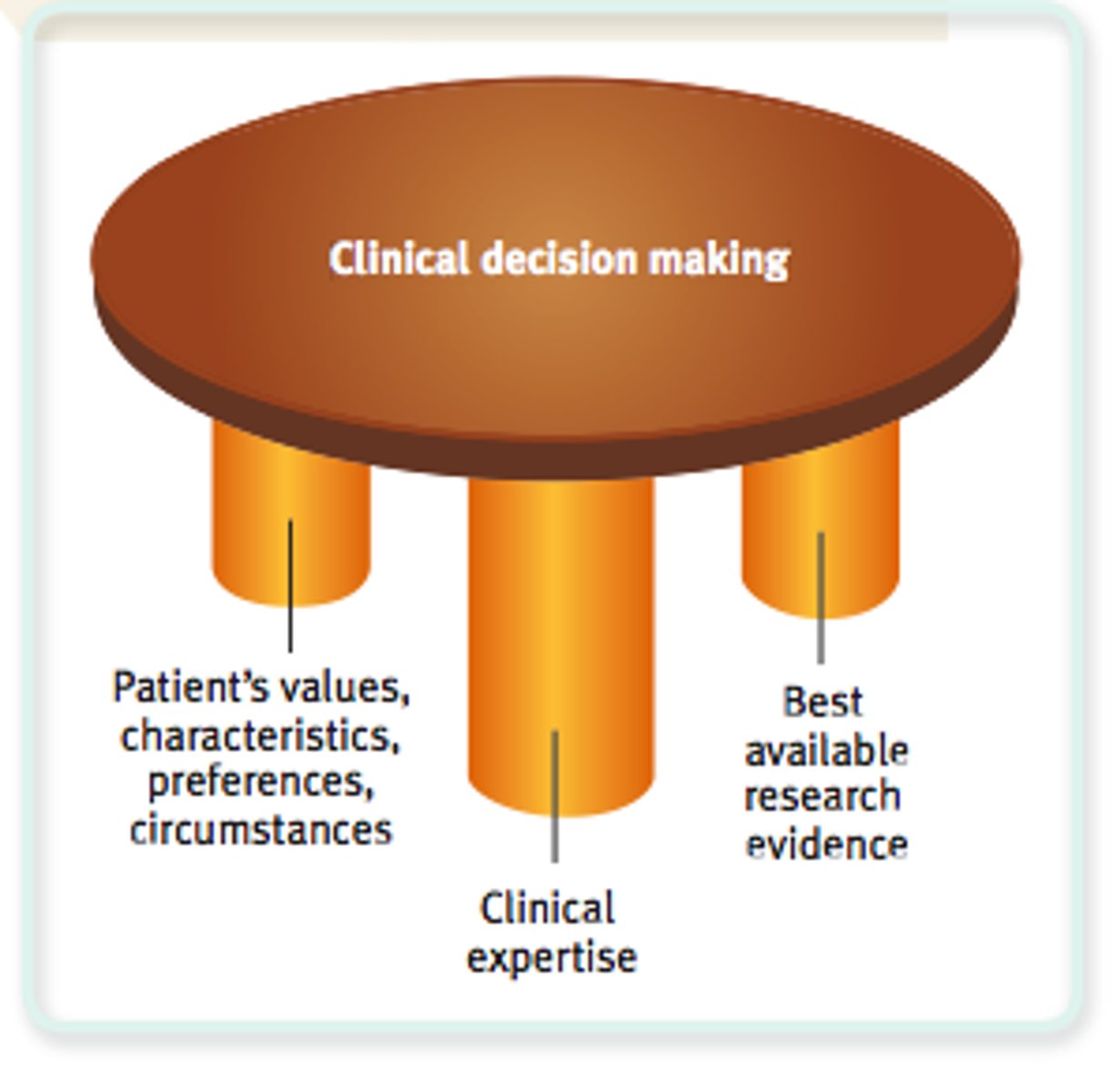
Clinical decision making that integrates the best available research with clinical expertise and patient characteristics and preferences
Cultural Humility
An acknowledgement of one's own barriers to true intercultural understanding; important for therapists.
Therapeutic Alliance
Collaborative relationship between therapist and client.
Psychodynamic Therapy
Therapy developed from Freud's psychoanalysis; Focused on current symptoms and their connection to relationships and events both in childhood and in the present to uncover the unconscious mind.
Free Association
In psychodynamic theory, a method of exploring the unconscious in which the person relaxes and says whatever comes to mind, no matter how trivial or embarrassing.
Dream Analysis
A psychodynamic theory technique in which the therapist interprets the symbolic meaning of the client's dreams.
Cognitive Therapy
Combats maladaptive thinking by teaching new, more adaptive ways of thinking.
Cognitive Perspective on Disorders
The person's emotional reactions are produced by the person's thoughts in response to the event.
Cognitive Triad
The three forms of negative thinking that according to cognitive therapy lead people to feel depressed.
Parts of the Triad
1. Negative thoughts about ourselves.
2. Negative thoughts about the world.
3. Negative thoughts about the future.
Cognitive Restructuring
A therapy that strives to help replace the patient's maladaptive thoughts (mentioned in triad) with more realistic perspectives.
Fear Hierarchies
List of feared situations from least to most anxiety-inducing.
Applied Behavior Analysis
Applying principles of conditioning to address mental disorders and developmental disabilities.
Behavior Modification
A systematic approach to changing behavior through the application of the principles of conditioning.
Exposure Therapy
Therapy that confronts clients with what they fear with the goal of reducing the fear, often gradually; employed by applied behavior analysis.
Systematic Desensitization
Type of exposure therapy that associates a pleasant relaxed state with gradually increasing anxiety stimuli; employed by behavior therapists.
Aversion Therapy
A behavior therapy that associates an unpleasant state with an unwanted behavior as a form of counterconditioning.
Token Economy
An operant conditioning procedure in which people earn a token of some sort for exhibiting a desired behavior and can later exchange the tokens for various privileges or treats.
Biofeedback
Uses visual and or auditory feedback to teach clients to control their physical reactions.
Cognitive-Behavioural Therapy (CBT)
A popular integrative therapy that combines cognitive therapy (changing self-defeating thinking) with behaviour therapy (changing behaviour).
Dialectical-Behavioral Therapy (DBT)
A type of CBT that identifies and changes negative thought patterns to create a positive change in behavior by balancing acceptance and change; made for Borderline PD and suicidal behavior patterns.
Rational-Emotive Behavior Therapy (REBT)
A confrontational cognitive therapy that vigorously challenges people's illogical, self-defeating attitudes and assumptions
Humanistic Perspective Therapy
Therapeutic methods that aim to boost people's self-fulfilment by helping them grow in self-awareness and self-acceptance.
- Employs active listening and unconditional positive regard.
Person-Centred Therapy
Therapy centring on the client's goals and ways of solving problems
Active Listening
Empathic listening in which the listener echoes, restates, and clarifies. A feature of Rogers' client-centered therapy.
Unconditional Positive Regard
A caring, accepting, non-judgmental attitude to help clients to develop self-awareness and self-acceptance.
Group Therapy
Therapy conducted with groups rather than individuals, providing benefits from group interaction.
Family Therapy
Therapy that treats people in the context of their family system, viewing their unwanted behavior as influenced by/directed to family members.
Hypnosis
A social interaction in which a hypnotist suggests to the subject that certain perceptions, feelings, thoughts, or behaviours will spontaneously occur
Affect of Hypnosis
Found effective in treating pain and anxiety; research doesn't support its use for retrieving accurate memories or regress in age.
Psychopharmacology
Studies the effects of drugs on the mind and behavior.
Antianxiety Medication
Drugs used to control anxiety and agitation.
Barbituates
Drugs that are used to induce sleep or reduce anxiety. Act as depressants.
Antidepressants
Drugs that combat depression by affecting the levels or activity of neurotransmitters, such as norepinephrine or serotonin, in the brain.
- Treats depression, anxiety, OCD and PTSD.
Selective Serotonin Reuptake Inhibitors (SSRIs)
Antidepressant drugs that achieve their agonistic effect on serotonin by selectively blocking its reuptake.
(I.e, prozac, lexapro)
Lithium
The most widely used and studied medications for bipolar disorders, leveling emotional highs and lows.