Sex Chromosomes and chromosome mutatons
 Call Kai
 Learn
Learn Practice Test
 Spaced Repetition
 Match
Match Flashcards
 Knowt Play
1/39

There's no tags or description
Looks like no tags are added yet.
Name | Mastery | Learn | Test | Matching | Spaced | Call with Kai |
|---|
No analytics yet
Send a link to your students to track their progress
40 Terms
Meiotic nondisjunction
-Chromosomes don’t split
Monosomies
-missing chromosomes
trisomies
-extra chromosomes
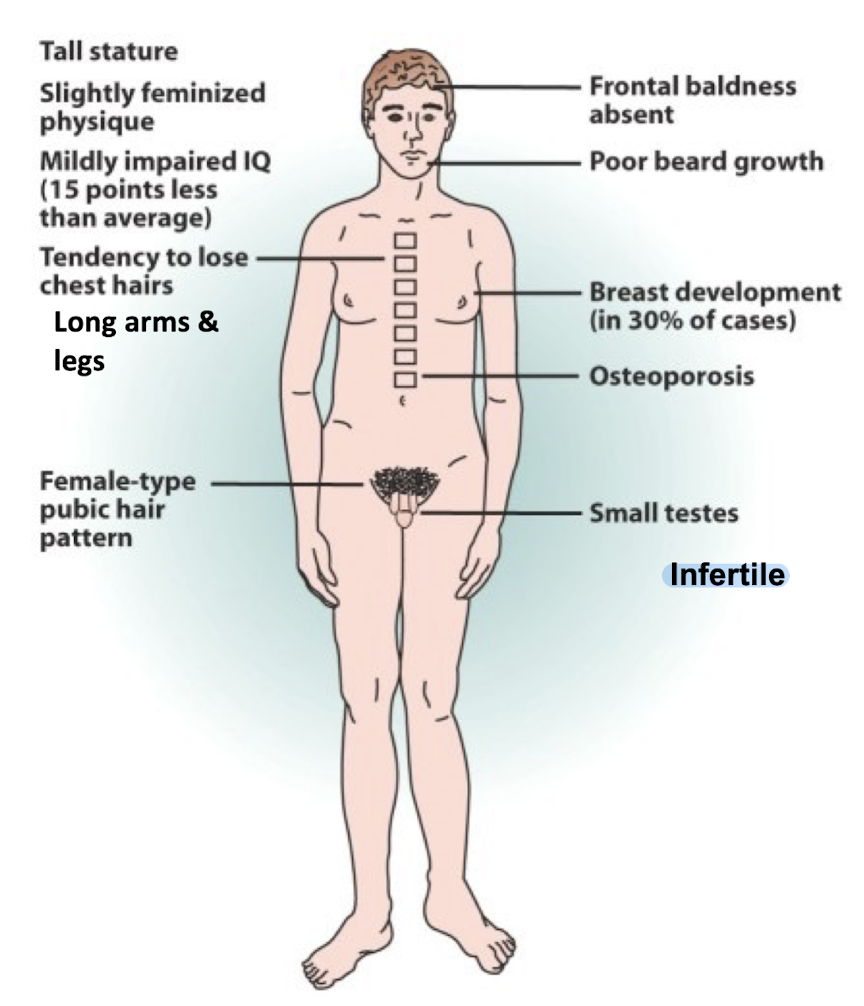
Klinefelter Syndrome
-47, XXY
-has an extra X
-Tall stature, slightly feminized physique, osteoporosis, small testies, long arms and legs
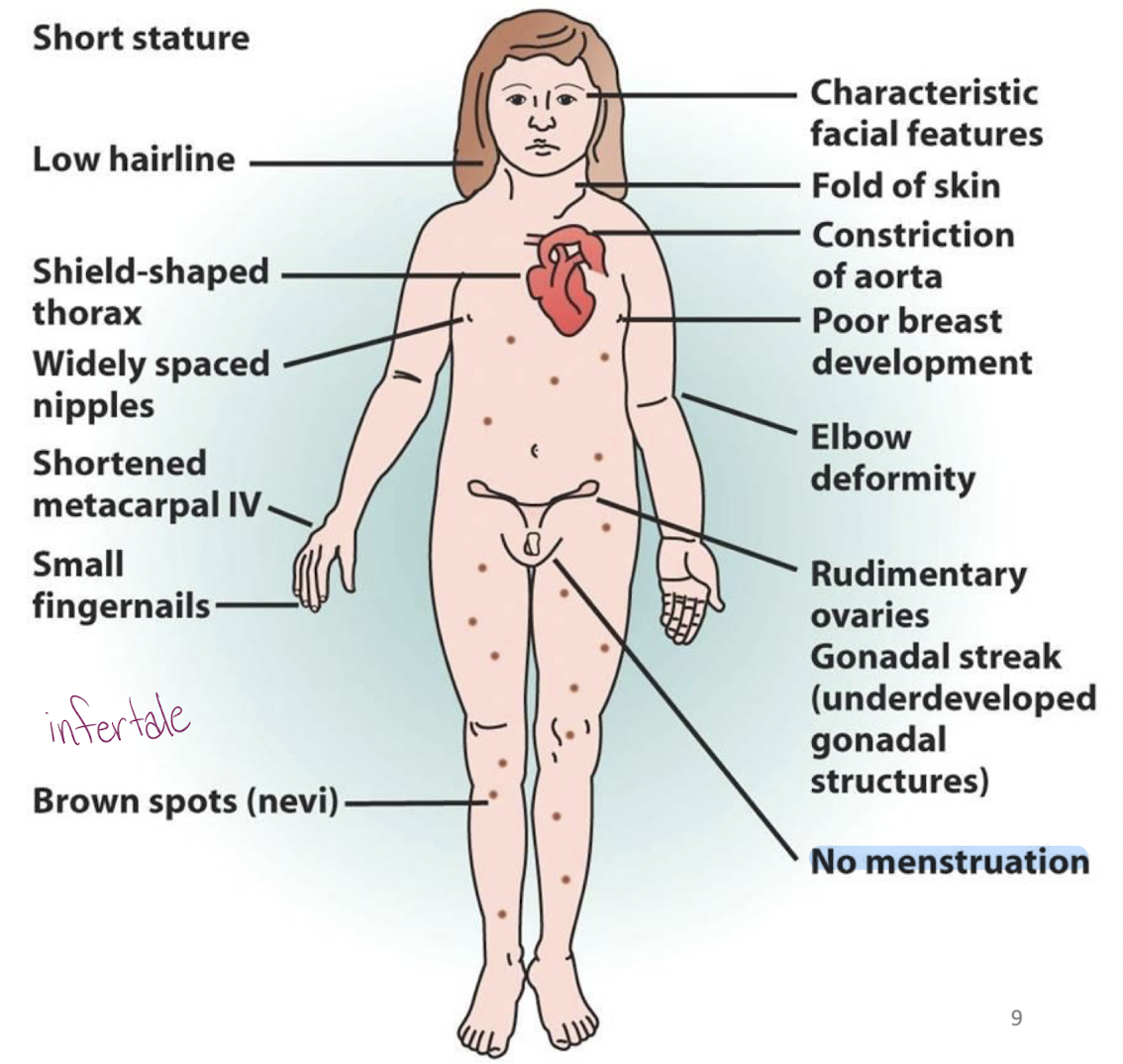
Turner Syndrome
-45, X
-Only monosomy that is viable
-Short stature, low hairline, elbow deformity, no menstruations, etc
Trisomy X
-47, XXX
-Occurs in about 1/1000 live females birth
-Occasionally affected individuals have learning disabilities but no major physical anomalies, basically normal
-Associated with menstrual irregularities or infertility, most are diagnosed in fertility clinicals
-With increasing number of XX chromosomes, phenotype is more severe (mental and physical abnormalities)
47, XYY syndrome
-Occurs in about 1/1000 live male births
-Men are very tall and have lower IQ but few physical problems
-Increased incidence of minor behavioral disorder
Y chromosome contains _____ genes than the X chromosome
-fewer
-Y chromosome has at least 75 genes, X chromosome has 900-1400 genes
Pseudoautosomal regions (PARS)
-at both ends of the Y chromosome share homology with regions on the X chromosome
-They synapse and recombine during meiosis
-Critical to segregation of the X and Y chromosomes during male gametogenesis
Male-specific region of the Y (MSY)
Non-recombination region makes up 95% of the Y chromosome
Euchromatin
DNA is open and expressed
Heterochromatin
DNA is tightly wound, not expressed
Sex-determining region Y (SRY) gene
-encodes the testis-determining factor (TDF) and is highly conserved among mammals
Testis-determining factor (TDF)
-is a protein that causes the non-differentiated gonadal tissue of the embryo to form testes
-If SRY has translocated to another chromosome in an XX individual, they will develop into a male
-Individuals who are XY, but are missing SRY develop into females
-TDF is likely a transcription factor that directly interacts with the regulatory sequences of other genes that determine sexual differentiation
Primary sex ratio
-reflects the proportion of males:females conceived in a population
-1.2-1.6 is the current estimation for the US caucasians
-Many more males than females conceived
-Y-bearing sperm may be more motile than X-bearing sperm because the Y chromosome is smaller
Secondary sex ratio
-reflects the proportion of males:females born in a population
-Male embryos have higher fetal mortality, more likely to die during development
Dosage compensation
-a genetic mechanisms that balances the dose of X chromosomes in males and females
-Males only have one X while females have 2, but males and females have similar expression pattern for genes on the X chromosome
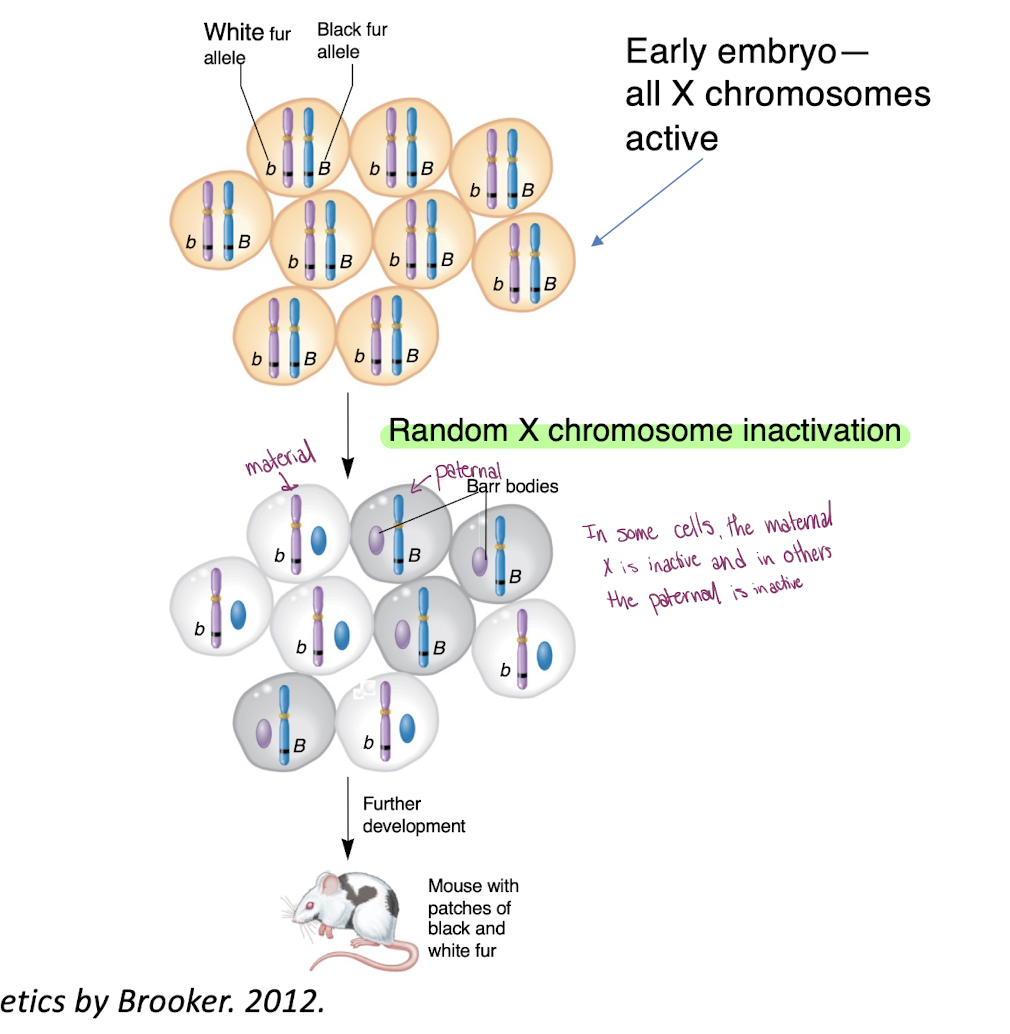
-Females have 1 inactive X chromosome in each cell
X chromosome inactivation
-occurs during embryogenesis
-X chromosome remains active or inactive in future mitosis
-Inactive X chromosome appears as a Barr body
-X inactivation reverses in the female germline so all oocytes contain active X chromosomes
Lyon’s Hypothesis
-stating that only one of the two X-chromosomes in a female is functional, the other having become inactive early in development
-Either the maternal or the paternal X-chromosome may be inactivated in any given cell
-Mosaic patterns of black and yellow-orange patches in female calico and tortoiseshell cats are due to random X inactivation
-Genes for coat color are on the X chromosome, Males are hemizygous and have only 1 allele for coat color
X-inactivation center (Xic)
-involved in inactivation of X chromosome
-is expressed only on the inactive X chromosome, contains 4 genes, including the X-inactive specific transcript (XIST) gene, which is critical to inactivation, mRNA transcribed from XIST coats the inactive X, causing transcription silencing
-Inactivation of X chromosome occurs very early in embryogenesis
-Inactive X is maintained as a Barr body during future cell divisions
Euploidy
-refers to having 1 or 2 sets of haploid chromosomes
-Haploid gametes and diploid somatic cells are euploid
-Complete haploid sets are present
Polyploidy
-refers to having more than 2 sets of haploid chromosomes (Ex: triploid)
Only viable human trisomies are: (PED)
-Trisomy 13→ Patau syndrome
-Trisomy 18→ Edward syndrome
-Trisomy 21→ Down syndrome
-Only trisomy 21 can survive into adulthood
Patau syndrome
-Trisomy 13
-Mental and physical deficiencies, wide variety of defects in organs, large triangular nose, early death
Edward syndrome
-Trisomy 18
-Mental and physical deficiencies, facial abnormalities, extreme muscle tone, early death
Down Syndrome
-Trisomy 21
-Mental deficiencies, abnormal pattern of palm creases, slanted eyes, flattened face, short stature
-75% are due to nondisjunction in meiosis I, 95% are maternal in origin, recurrence risk is extremely low
-Incidence increases with maternal age
20-30% of all conceptions among humans are aborted spontaneously
-many of these have chromosome abnormalities
-trisomies for all chromosomes have been observed
most monosomies are 45,X, very few autosomal monosomies
-normal embryonic development requires 23 maternal and 23 paternal chromosomes
Variation and chromosome composition and arrangement
-are due to chromosome breaks
-Chromosomal breaks can spontaneously rejoin
-Sticky ends can alter chromosome structure
-genotype loss, cause a phenotype change
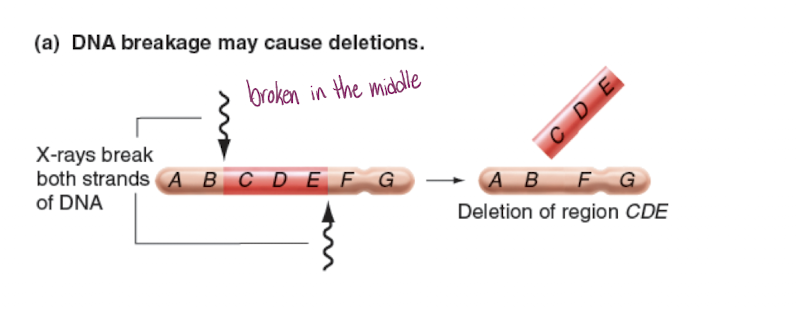
Deletions
-results in chromosomal loss
-Terminal deletions occur at chromosomal ends
-Intercalary (interstitial) deletions occur internally
-Portions with the centromere are usually maintained when the cell divides
-those without centromeres are usually lost during subsequent divisions
-creates imbalance in gene dosage
-microdeletions are sub-microscopic deletions that are often associated with abnormal phenotypes that can manifest as syndromes
-Compensation loops can appear during synapsis and compensates for loss of alleles
Cri-du-chat syndrome
-caused by a deletion in chromosome 5p (46,5p-)
-associated with cognitive impairment, unique facial anomalies, catlike cry in infancy, GI and cardiac complications
-severity of phenotype depends on the size of the deletion, which occurs sporadically in gametes
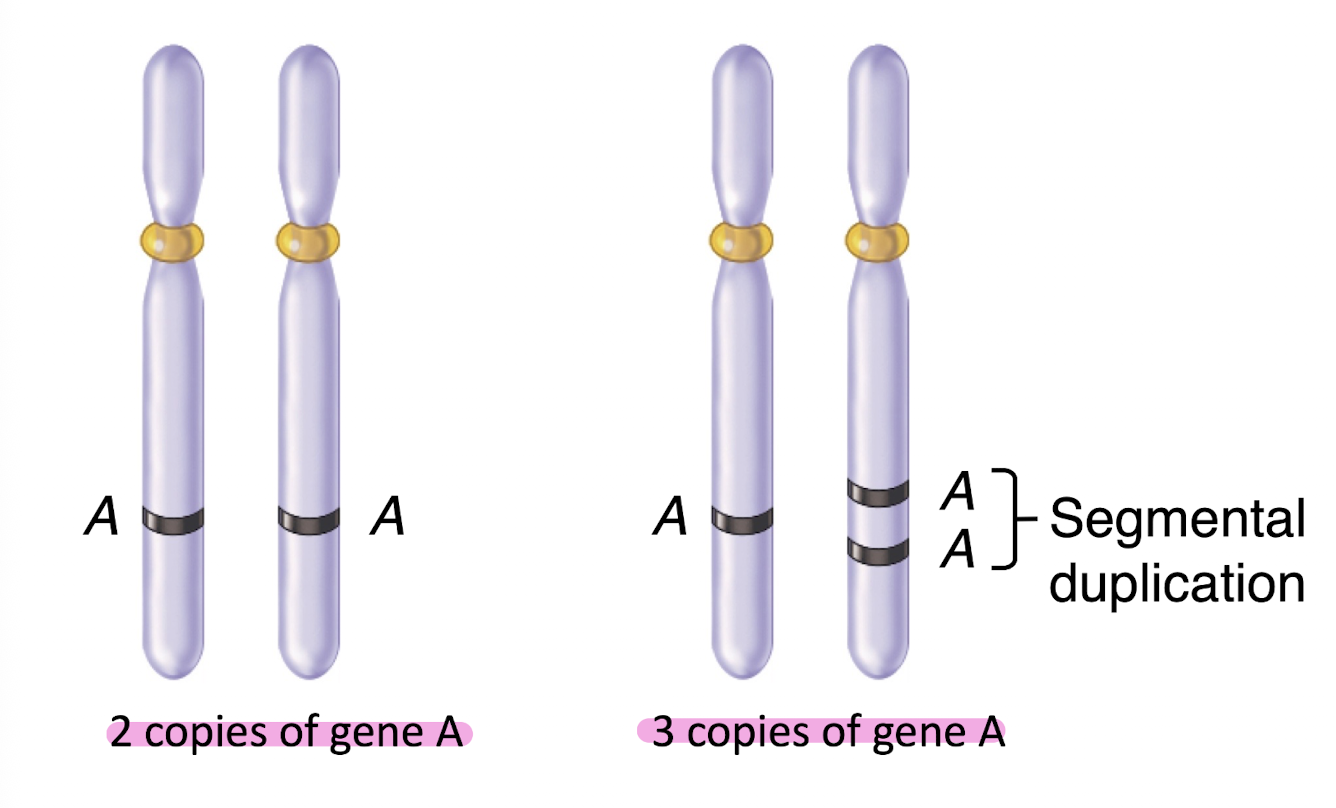
Duplications
-tend to be less harmful than deletions
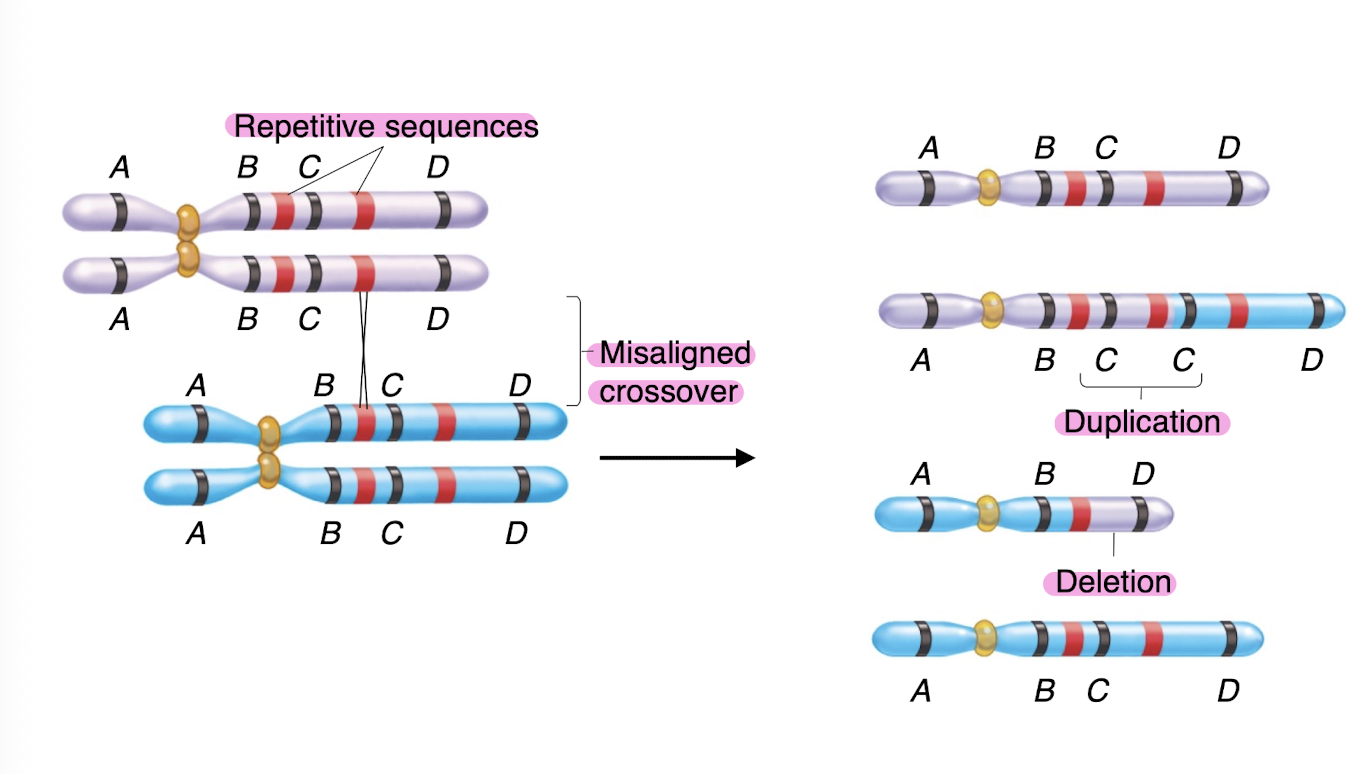
-often caused by unequal crossing over (recombination)
-in this situation, it results in a duplication and a deletion, but no gain or loss of genetic material
-also caused by DNA replication errors prior to meiosis
-depends on location for severity
-Genome contains many repetitive sequences that can misalign during synapsis
Charcot-Marie Tooth disease
-caused by a duplication of PMP22 on chromosome 17
-1/2,500 individuals are affected; leads to progressive atrophy of limb muscles
-PMP22 encodes component of peripheral myelin
-overproduction of protein prevents normal processing
-leads to reduced functional protein that impairs myelin formation and slows nerve conduction
-causes muscle weakness, claw toes, reduced function
Gene amplification
-can be a normal phenomenon
-multiple copies of genes encoding ribosomal RNA (rRNA) in metabolically active cells to support protein synthesis, called rDNA
-rRNA is synthesized in the nucleolus→ are formed around loci called nucleolar organizing regions on chr. 13,14, 21, 22
Copy number variants (CNVs)
-are found throughout the genome
-comprise about 12% of the human genome
-are regions at least 1000 base pair in length with 90% sequence identity
-Some CNVs have no phenotypic consequences
-others have been associated with disease (autism, schizophrenia)
-higher CNVs of CCL31 slows the progression of AIDS in HIV positive individuals
-can be caused by unequal recombination or errors in DNA replication
Inversions
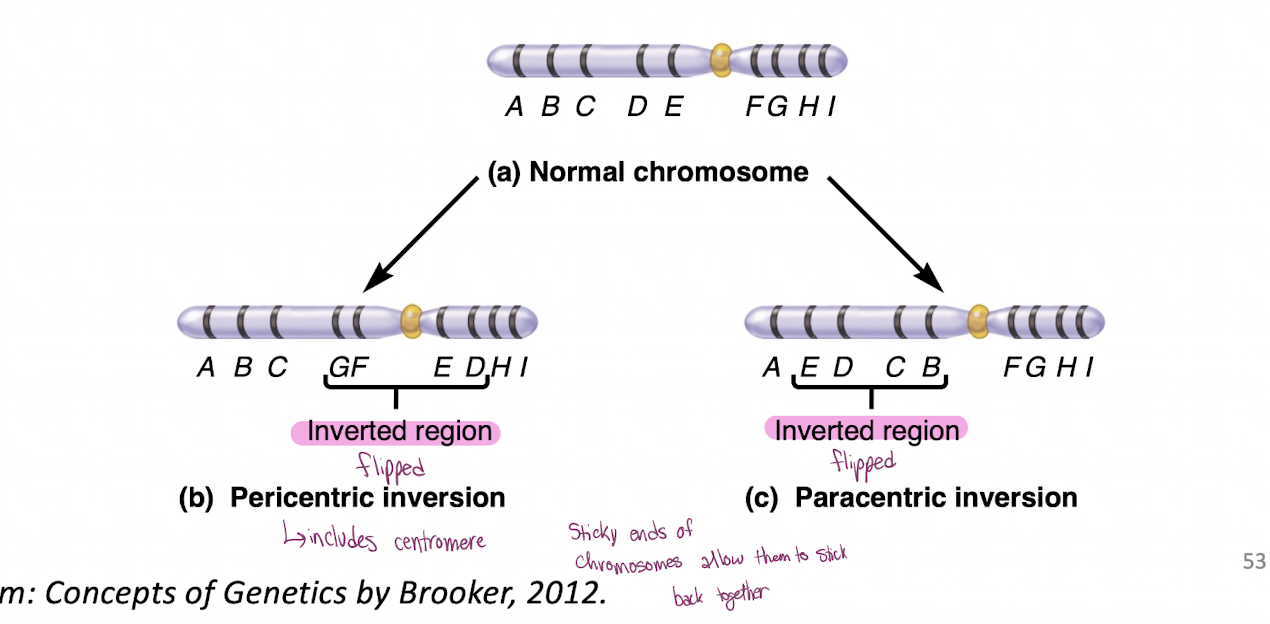
-requires 2 breakpoints and rearrange genetic sequences
-No gain or loss of genetic material
-Phenotypic effect depends where the breaks occur
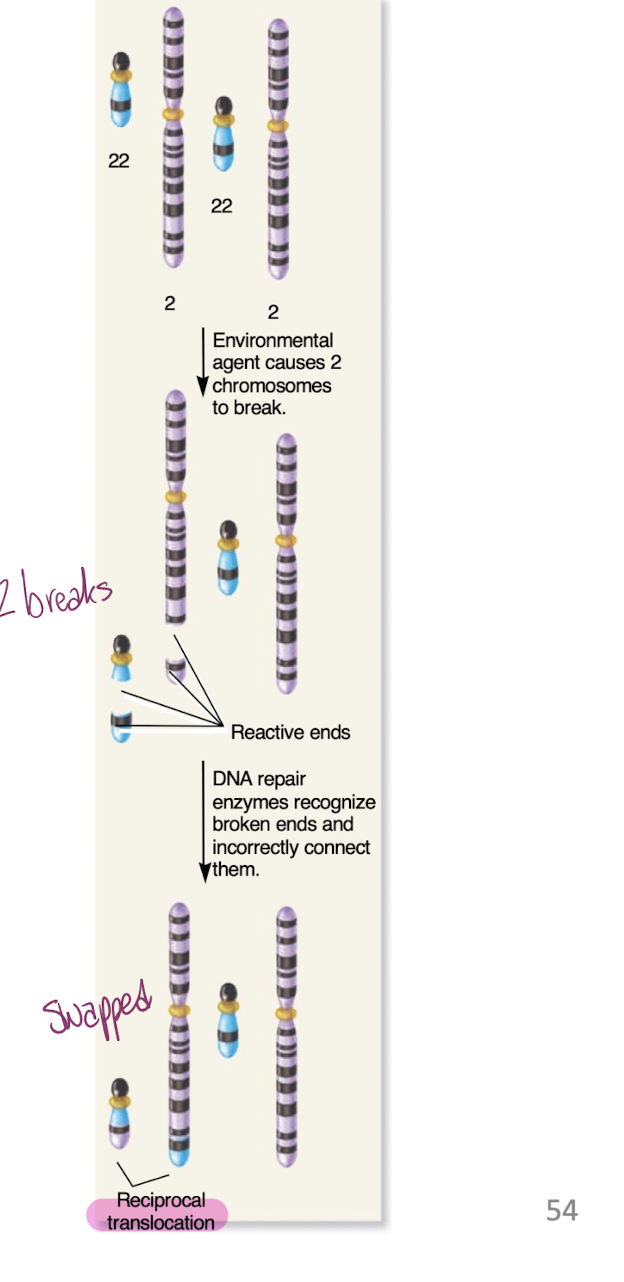
Transactions
-involve exchanges between non-homologous chromosomes
-can occur if sticky ends are recognized by DNA repair enzymes, which attempt to reattach them
-if 2 chromosomal breaks occur simultaneously a translocation can occur
-Reciprocal or balanced translocations result in no gain or loss of genetic material
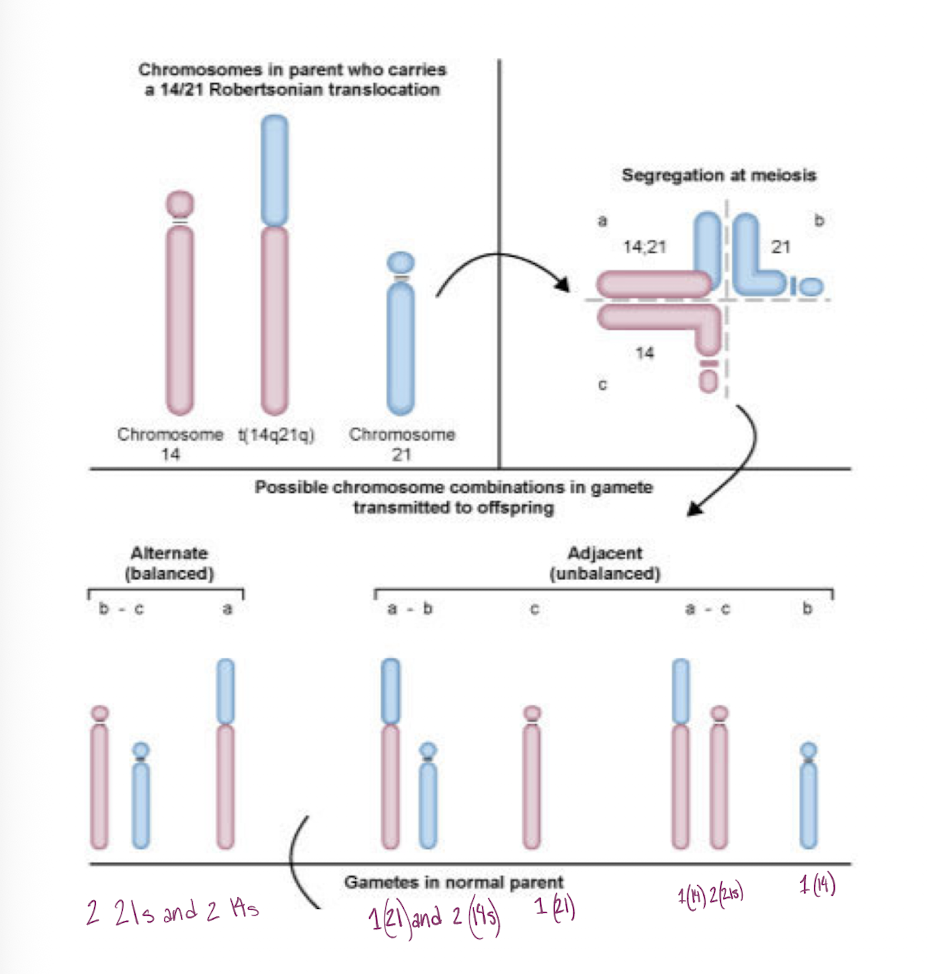
Robertsonian translocation
-involves acrocentric chromosomes 13, 14, 15, 21, and 22
-pair during meiosis and different chromosome combinations occur in genes
-gametes fertilized from a normal parent will lead to down syndrome in 15% of maternal translocation carriers and 2% of paternal translocation carriers
-Can have a balanced translocation
Fragile X syndrome
-most common form of inherited mental retardation
-X-linked dominant trait with incomplete penetrance
-distinct facial appearance, large ears, long, face, hypermobile joints, macro-orchidism
-caused by an expanded CGG repeat in an untranslated region of the FMR-1 gene
Anticipation
occurs in transmitting females but not males with a premutation and risk increases with number of repeats, increased number by generation
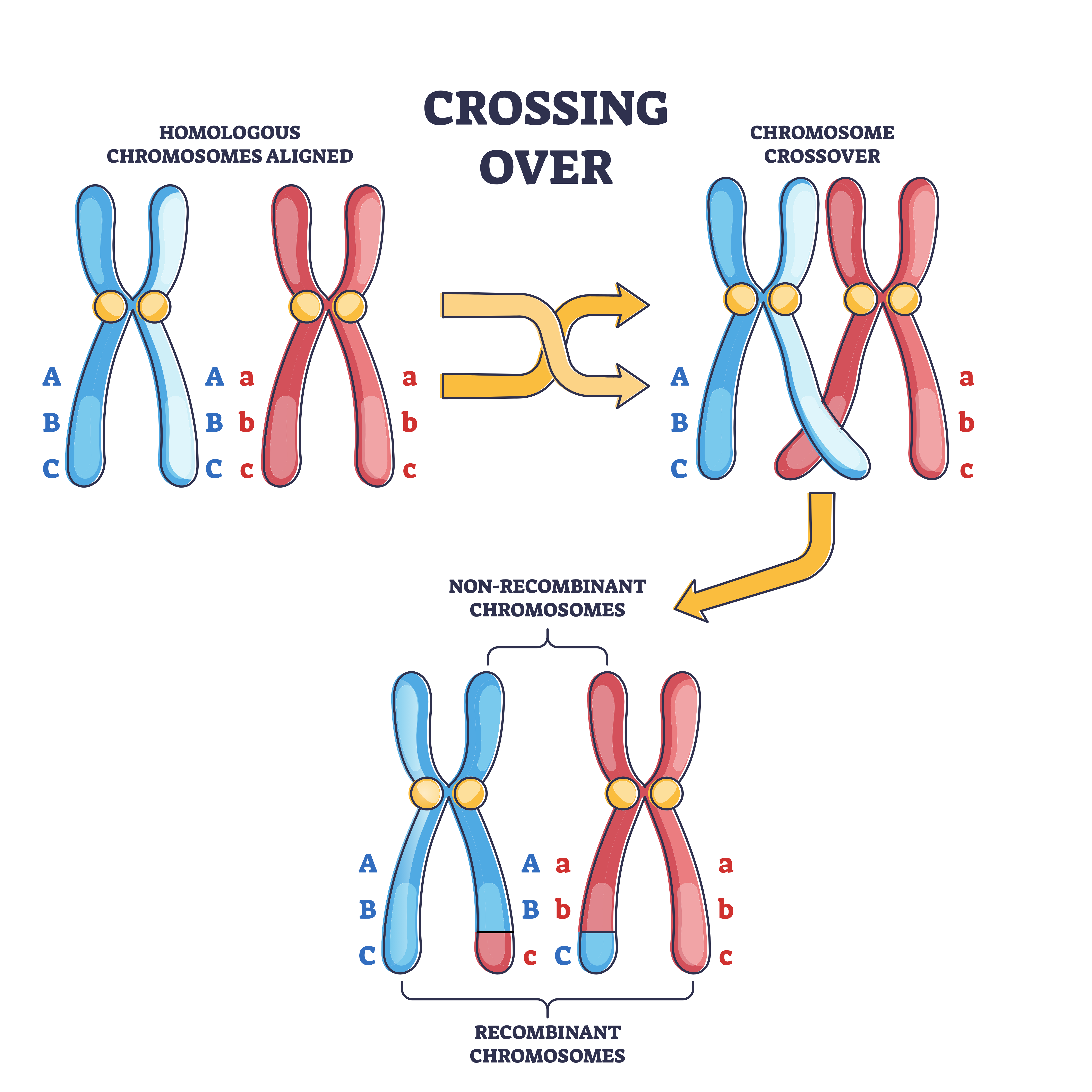
Cross over
a cellular process that happens during meiosis when chromosomes of the same type are lined up. When two chromosomes — one from the mother and one from the father — line up, parts of the chromosome can be switched.