PSYC 105 Midterm 1
 Call Kai
 Learn
Learn Practice Test
 Spaced Repetition
 Match
Match Flashcards
 Knowt Play
1/51

There's no tags or description
Looks like no tags are added yet.
Name | Mastery | Learn | Test | Matching | Spaced | Call with Kai |
|---|
No analytics yet
Send a link to your students to track their progress
52 Terms
Cognitive Development
The study of how and why thinking changes across the lifespan.
What is Cognitive Development interested in?
What is the starting point (what do infants know at birth)
Mechanisms of change (what causes development), and
Variability in these processes (why do some children acquire skills faster, slower, or in different ways than others)
Quantitative changes
Developmental continuities, where someone makes small changes, increase over time.
Qualitative changes
Discontinuous (in stages), where there is little change within a stage, but drastic changes between stages.
What did Piaget focus on?
Interviewing children, especially his four children, about mathematical and science topics
Structure of Children’s Thinking
Argued that children were scientific problem solvers and that development was active
Piaget’s Stages of Development Rules
Children experience the stage the same way and order.
Children use new ways of thinking to solve problems
Each stage builds on the previous one → cannot go back to the previous stage
Sensorimotor Stage (0-2 yrs)
Action on the physical works
Figuring out how the physical world operates using their senses + motor
What is innate according to Piaget?
Senses and motor reflexes
learn cause and effect and physical properties
learn to control body + act on the world
Object Permanence
Objects continue to exist across time and space
You still know something exists even when you cannot experience it
Object Decentration
Awareness that the object and the self are different
“I am different than objects”; kids have to figure this out
Object Internalization
Objects are represented mentally
the ability to hold objects in mind
Deferred Imitation
Toward the end, infants could be able to imitate other human beings
A sign that they can remember actions and do them after the fact.
A-Not-B Error
1st trial → Child sees toy, then hides it, but remembers the toy exists
Child has an object permanence
2nd trial → Task changes, two different hiding spots, object is hidden in A,
Child still has object permanence
3rd trial → Hidden in A again
Able to create a mental representation
4th trial → you switch places under B
Cannot update mental representation
Pre-operational Stage (2-7 yrs)
Able to make static internal representations
Ability to hold things in their mind
cannot update the representation → doesn’t change often
Where symbolic thought starts
Piaget’s Egocentrism
Part of the pre-operational Stage (2-7 yrs)
Inability to take another perspective
Focused on their point of view
Focuses on one dimension when categorizing or solving problems
Concrete Operation Stage (7-12 yrs)
Ability to manipulate internal representations
Have a static image, but also update the image from different points of view
Perform mental operations: reversible change, organizing things into large systems
Solve conservation tasks, class inclusion, & multiple classification problems
Formal Operation Stage (12+)
Abstract thought
“What is good or bad?”
Reversible operations are organized into elaborate systems
Have scientific reasoning → Control of variable
“Why do I spend more on gas than you do?”
executive functioning: planning
Piaget’s Mechanisms of Change
Children are constructing more schemas
Perceptual + senses-based → Become more abstract
Equilibration
The process of balancing assimilation and accommodation to regain a stable schema.
Assimilation
Adding new information to a schema that already exists
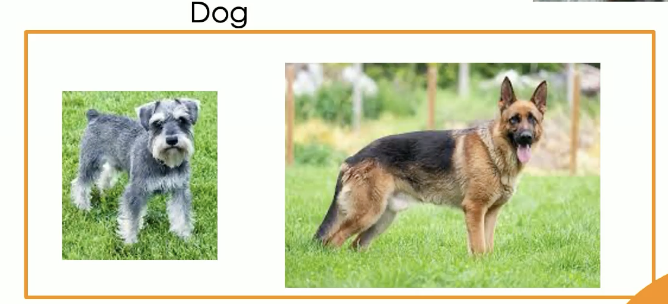
Accommodation
Creating a new schema to accommodate new information
Disequilibrium
Occurs when children encounter new information
Ex. child sees a cow but says it is a dog because this is the most accessible schema. Parents correct them, and this creates a disequilibrium, making kids think that everything they knew about dogs is wrong. They must make a new schema for the new concept.
Criticisms of Piaget
Not all adults reach the formal operational stage
Too dependent on Western schooling
Small changes to questions change the results
Equilibration is vague
Stages are not accurate
Not enough attention to culture and environment.
Why do we still learn about Piaget today?
Set the foundation of children’s thinking
Children actively construct new knowledge and advance their own development
Still widely used in many areas
“How do we talk and explain things to children?”
Vygotsky’s Theory of Cognitive Development
Focused on the child in context
Social world promotes development
Knowledge happens in different contexts, tied to experiences
Highlighted the importance of cultural tools
According to Vygotsky, what is innate?
Very little that is innate, mostly the environment
What we are born into is what is going to dictate how we think and behave
According to Vygotsky, what is the mechanisms of change?
Socialization and social experience
Social word is PART of change
interalization of external shared processes
As you repeat certain things over and over, you’ve going to become better at them.
Example of Interalization
Guided participation in cultural activities
Scaffolding with Zone of Proximal Development
According to Vygotsky, what is change like?
Continuous
Microsystem
Direct, immediate relationships, interactions
Mesosystem
Interrelated microsystem
school microsystems
Larger policies by teachers
Exosystem
Larger societal focuses
Ex. The type of media you were exposed to
Macrosystem
Broader cultural context
Specific culture, traditions, and language you speak
Guided Participation
Behavior guided by more experienced others.
Typically happens for activities within a culture
Example of Guided Participation
Adults provide explicit instruction
Children observe & participate
Scaffolding
Construction scaffold is what people in their environment are using to help children develop.
Transfer of responsibility from adult to child - slowly guided by adults
Intersubjectivity
The shared understanding between people that emerges through processes of mutual attention and communication.
Part of scaffolding
Intersubjectivity Requirements
Imitative learning
Instructed learning
Collaborative learning
Zone of Proximal Development
The difference between what a child can do alone vs. with an adult or peer
Measure of dynamic development state
Scaffolding is involved
Created by learning
Why did Child A do better than Child B?
The influence of context is why there was the big jump.
Cultural tools
Tools created passed down by members of a cultural group
Technical tools
tools for acting on the environment, a cultural tool
Hammer, pencil
Psychological tool
tools for thinking, cultural tool
Numbers, language
Language as a Cultural tool
According to Vygotsky, this is the most important tool because it is a means of social participation that helps us think
Tool for thinking
According to Vygotsky, why is language a tool for thinking?
Conversation → private speech → verbal thought
The infant’s need to communicate needs
Conversation develops into private speech
Private speech scaffolds verbal thought
How did researcher study Sociocultural approaches?
Cross-cultural work
Comparing children growing up in the US to children growing up in the Philippines
Ethnographic studies
Researchers immerse themselves in a particular culture and try to understand processes
Analyses of learning processes + episodes
How a parent is reading books with their kid
Nativism
Type of theories that place heavy emphasis on innateness
Interested in what is present from birth and how is that different for humans (vs. animals)
Domain-general Nativism
There are some learning mechanisms that are innate, and those are used for many things.
Ex. we come to the world with the tools to acquire language
Domain-specific Nativism
People are born with specific knowledge about certain things.
Ex. you come into the world knowing numbers, behavior, and actions
Core Knowledge
Domain-specific nativist theory
Humans are born with specific knowledge about objects, actions, numbers, and space → the four domains
What are each domain of the Core Knowledge theory’s key principles?
Cohesion
Objects should hold together across time and space rather than disintegrating.
Continuity
Objects should move along continuous paths across time and space rather than disappearing randomly
Contact
Objects should only start to move when something else touches them
Infants expect these objects to behave according to these principles.
Approximate Number
By 6-months children are able to do tasks like approximating numbers even thought they cannot count or know what numbers are yet.
Adults from Piraha communities, who don’t have numbers greater than 2 can also do this
It doesn’t represent quantities precisely
Evidence of Domain-specific Nativism