Compare and contrast prokaryotic and eukaryotic cells
 Call Kai
 Learn
Learn Practice Test
 Spaced Repetition
 Match
Match Flashcards
 Knowt Play
1/9

There's no tags or description
Looks like no tags are added yet.
Name | Mastery | Learn | Test | Matching | Spaced | Call with Kai |
|---|
No analytics yet
Send a link to your students to track their progress
10 Terms
Cells can be….
grouped according to their similarities and differences. All cells can be divided into two categories – prokaryotes and eukaryotes.
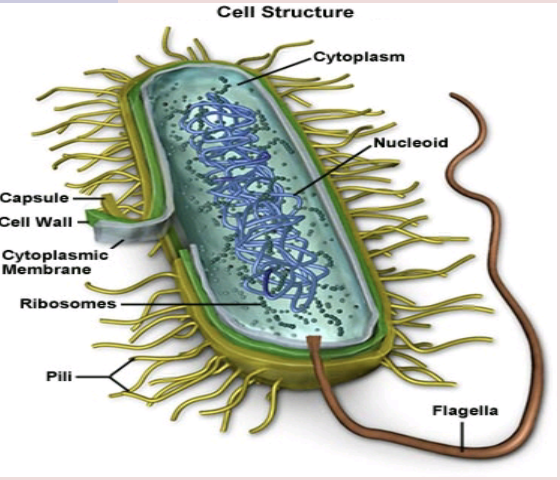
Prokaryotic cell
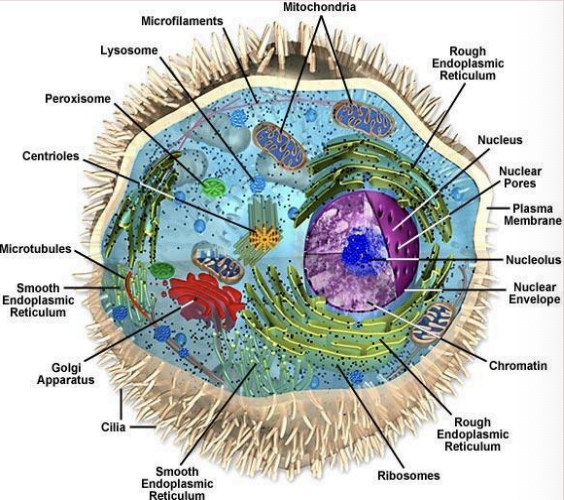
Eukaryotic cell
Prokaryotic cell
-Lacks a true nucleus
-Does not have membrane bound organelles
-DNA in a prokaryote is a single circular molecule
-Have no mitochondria, chloroplasts, Golgi bodies, lysosomes, vacuoles, or endoplasmic reticulum
-Have a cell wall and a cell membrane
Eukaryotic cell
-Has a well-defined nucleus surrounded by a nuclear membrane
-DNA is in the form of complex chromosomes
-More complex
-Cells are found in plants, animals, fungi, and protists.
two most common examples of eukaryotic cell
Animal and Plant cell
Eukaryotic cells also differ between plants and animals.
Plant cells contain three structures not found in animal cells – cell walls, large central vacuoles, and plastids. Centrioles are found in some, but not all types of plant cells. They are found in all animal cells.
Do prokaryote have a cell membrane, cytoplasm, ribosomes, nucleus, and or organelles? in order
Yes,Yes,Smaller,No,No
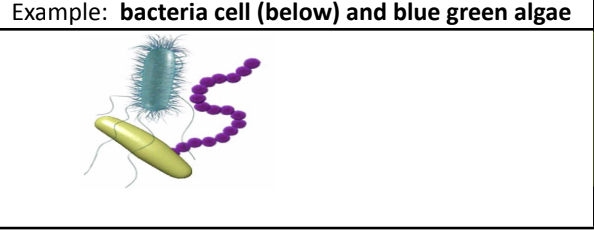
2 most common example of prokaryote
Bacteria and Blue green algae
Do eukaryotic have a cell membrane, cytoplasm, ribosomes, nucleus, and or organelles? in order
Yes,Yes,Larger,Yes,Yes