memory
 Call Kai
 Learn
Learn Practice Test
 Spaced Repetition
 Match
Match Flashcards
 Knowt Play
1/37

There's no tags or description
Looks like no tags are added yet.
Name | Mastery | Learn | Test | Matching | Spaced | Call with Kai |
|---|
No analytics yet
Send a link to your students to track their progress
38 Terms
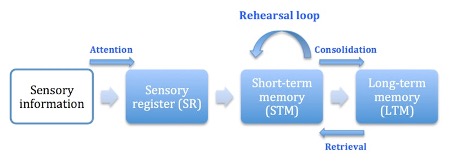
memory
a set of storage systems and processes for encoding, storing and retrieving info acquired through our senses and relating this info to previously acquired knowledge.
encoding
attending to and acquiring information from experiences and mental processes
storage
what happens when we encode information. info not encoded is not stored, memory traces are stored in networks of neurons
retrieval
remembering, doing, knowing. retrieval is constructive.
short term memory
temporary storage system (7±2) and brief duration (15-30s)
long term memory
brain's system for storing, managing, and retrieving information over extended periods, ranging from days to a lifetime.
transfer into ltm
information needs to remain active in stm
maintenance recall
recalling things over and over
serial recall
recall in order it was presented
free recall
recall in any order
primary effect
we can easily recall first few items → can be rehearsed many times
recency effect
we can easily recall the last few items → still in stm
middle info tends to be least recalled, why?
too long ago
so many items came before and after → little opportunity for rehearsal into ltm
meaningful encoding into ltm
ltm traces. ‘shallow’ traces are less effective
levels for processing
memory retention is directly determined by how deeply you process incoming information, rather than by rote repetition.
suggests that stm is a multi-component system that supports meaningful encoding + active reasoning and problem solvign
perceptual present
the brief temporal window during which the brain actively integrates and interprets sensory information
cognitive past
concerns how the brain processes, stores, and is influenced by prior experiences and intellectual history
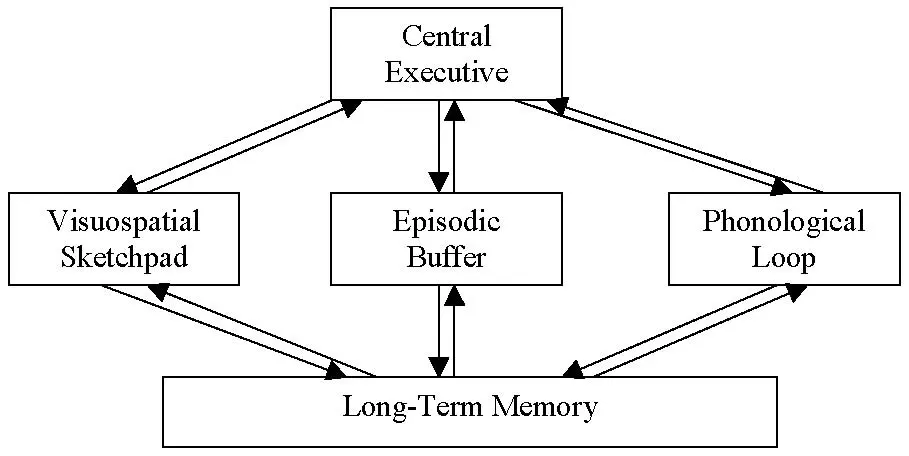
working memory model - central executive
processes used in planning + coordinatng complex behaviour. PRE-FRONTAL CORTEX, DORSA LATERAL CORTEX
working memory model – visuospatial sketchpad
responsible for temporarily storing and manipulating visual and spatial information
working memory model - episodic buffer
a limited-capacity, temporary storage system. It acts as a bridge, integrating information from the model's specialised slave systems and long-term memory into cohesive, chronological "episodes" under conscious awareness.
working memory model – phonological loop
temporarily stores and manipulates auditory and verbal information.
sensory memory
temporary sensory-based representation of input received through sensory channel. only some info retained. iconic and echoic
brief duration (decays quickly)
large capacity (relative to short term memory)
iconic memory
visual memory
echoic memory
auditory memory
declarative memory
explicit memory. facts, events, locations, autobiographical knowledge. HIPPOCAMPUS
three types of declarative memory
episodic, semantic, spatial
episodic memory
vivid first-person recall of personally experienced events ‘mental time travel’
semantic memory
general knowledge of facts about the world and yourself
non-declarative memory
implicit. motor skills, habits, cognitive skills, NON-HIPPOCAMPUS-DEPENDENT. Improvement in performance does not require conscious recollection of prior learning experience.
procedural memory
learning and peformance of motor and cognitive skills
priming
exposure to one stimulus influences how you respond to a subsequent stimulus without conscious awareness.
classical conditioning as implicit memory
learning to attend to formerly neutral stimulus because it is associated with a meaningful stimulus
operant conditioning as implicit memory
learning to produce/avoid behaviour because it has become associated with rewarding/punishing concequences
examples of non-associative learning
habituation and sensitisation
amnesia
loss of memory caused by brain damage, disease, drug abuse or psychological trauma
retrograde amnesia
inability to remember events or knowledge from before brain injury
anterograde amnesia
inability to consolidate declarative memory from events or knowledge experienced after time of brain injury
role of hippocampi
severe anterograde amnesia that results from the removal of the hippocampus bilaterally indicates that these structures must be crucial for the consolidation of new declarative information. non-declarative memory remains intact.