Health & Abnormal Psych
 Call Kai
 Learn
Learn Practice Test
 Spaced Repetition
 Match
Match Flashcards
 Knowt Play
1/66

There's no tags or description
Looks like no tags are added yet.
Name | Mastery | Learn | Test | Matching | Spaced | Call with Kai |
|---|
No analytics yet
Send a link to your students to track their progress
67 Terms
decreased health
What is increased stress associated with?
(Hint: immune suppression, headaches, hypertension)
eustress
positive and motivating stress (ex: exercise, starting a new job)
distress
debilitating and negative stress (ex: financial difficulties, failing a test)
traumatic stress
type of stress that comes from a major life event
ex: death of a loved one
daily stress
type of stress that comes from daily life and can build up
ex: tight deadlines from work
general adaptation syndrome
identified by Hans Selye; our stress response system defends then fatigues
alarm reaction
Phase 1 of GAS - stressor occurs, stress resistance briefly lowers then increases
resistance phase
Phase 2 of GAS - stress resistance remains high (fight, flight, freeze)
exhaustion
Phase 3 of GAS - stress resistance decreases
tend and befriend theory
under stress, people support and bond with others
problem-focused coping
type of coping - actually solving the problem that stresses you out
ex: work on time management, asks for support, etc.
emotion-focused coping
type of coping - dealing with or distracting yourself from the stress
ex: exercise, listening to music, journaling
psychological disorder
a syndrome marked by a clinically significant disturbance in an individual’s cognition, emotion regulation or behavior
must be maladaptive
must cause distress
Dysfunction, distress, and deviation
Psychologists often use three key criteria to determine if a behavior is considered a psychological disorder:
_____ – When thoughts, feelings, or behaviors interfere with daily functioning (like school, relationships, or basic tasks).
_____ – When a person experiences significant emotional suffering (such as anxiety, sadness, or pain).
_____ – When behavior or thinking differs greatly from societal norms or expectations.
International Classification of Diseases/ICD
a regularly updated and comprehensive system used to classify and code various medical conditions, including psychological disorders. It serves as a standardized diagnostic tool for healthcare professionals worldwide, providing a common language to identify, study, and treat different types of disorders.
Diagnostic and Statistical Manual of Mental Disorders/DSM
Made by the American Psychiatric Association; national diagnostic tool which describes disorders, discusses possible causes, predicts prognosis, and implies appropriate treatment
biopsychosocial model
focuses on the combination of factors (biological, social-cultural, psychological) that leads to psych. disorders
diathesis stress model
this model focuses on how the combination of predispositional factors (inherited biology and early environmental), stress and neurological changes leads to disorders
psychodynamic perspective
unresolved childhood conflicts and unconscious thoughts
humanistic perspective
lack of social support and the inability to fulfill one’s potential
behavioral perspective
maladaptive learned associations
cognitive perspective
maladaptive thoughts, beliefs, attitudes, or emotions
biological perspective
genetic or physiological predispositions
evolutionary perspective
maladaptive forms of behaviors that enabled human survival
sociocultural perspective
problematic social and cultural contexts
self-fulfilling prophecies
dangers of labeling; what we think will happen can change the way we act
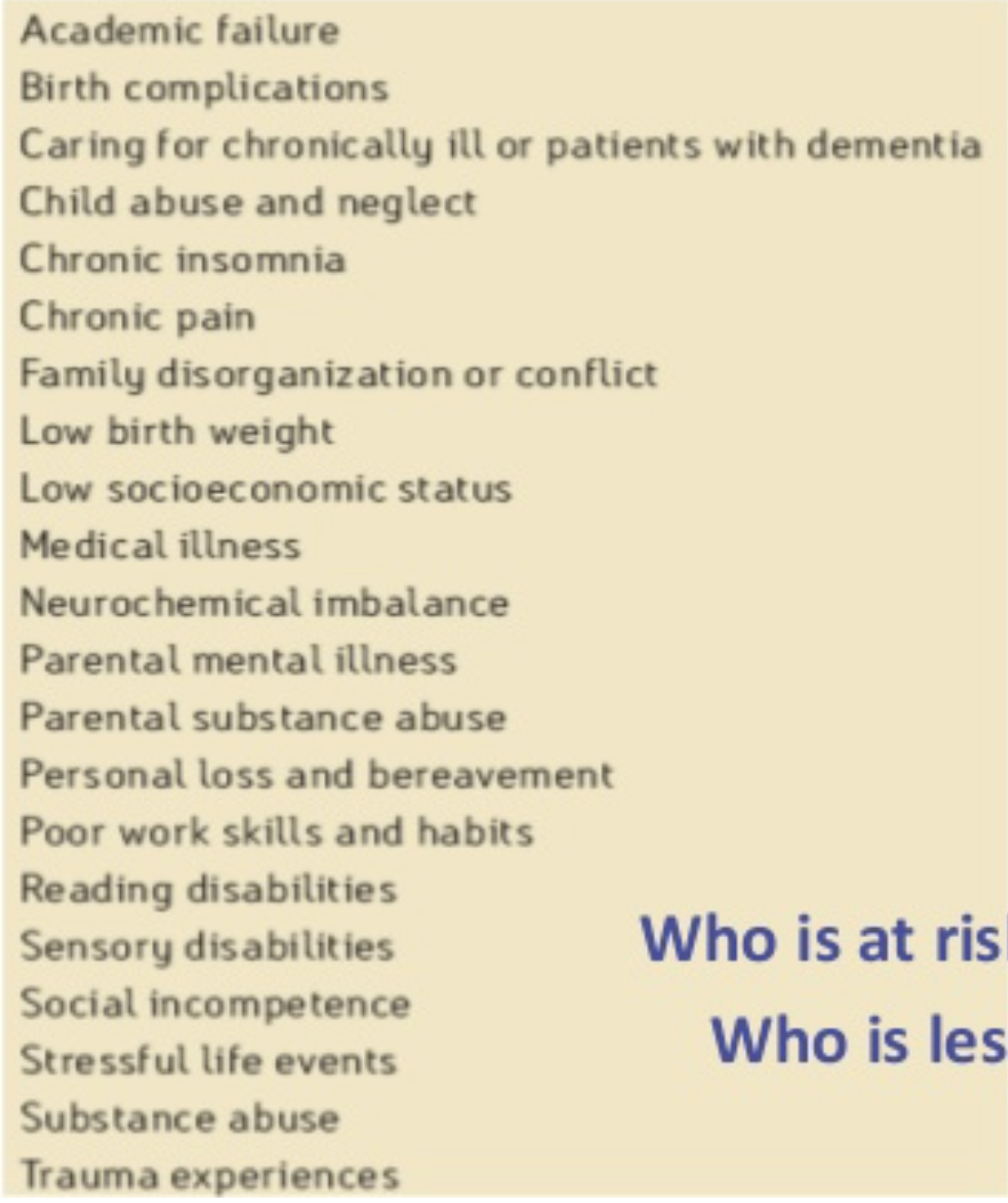
risk factors
characteristics that may increase the likelihood of experiencing adverse childhood experiences (ACEs)
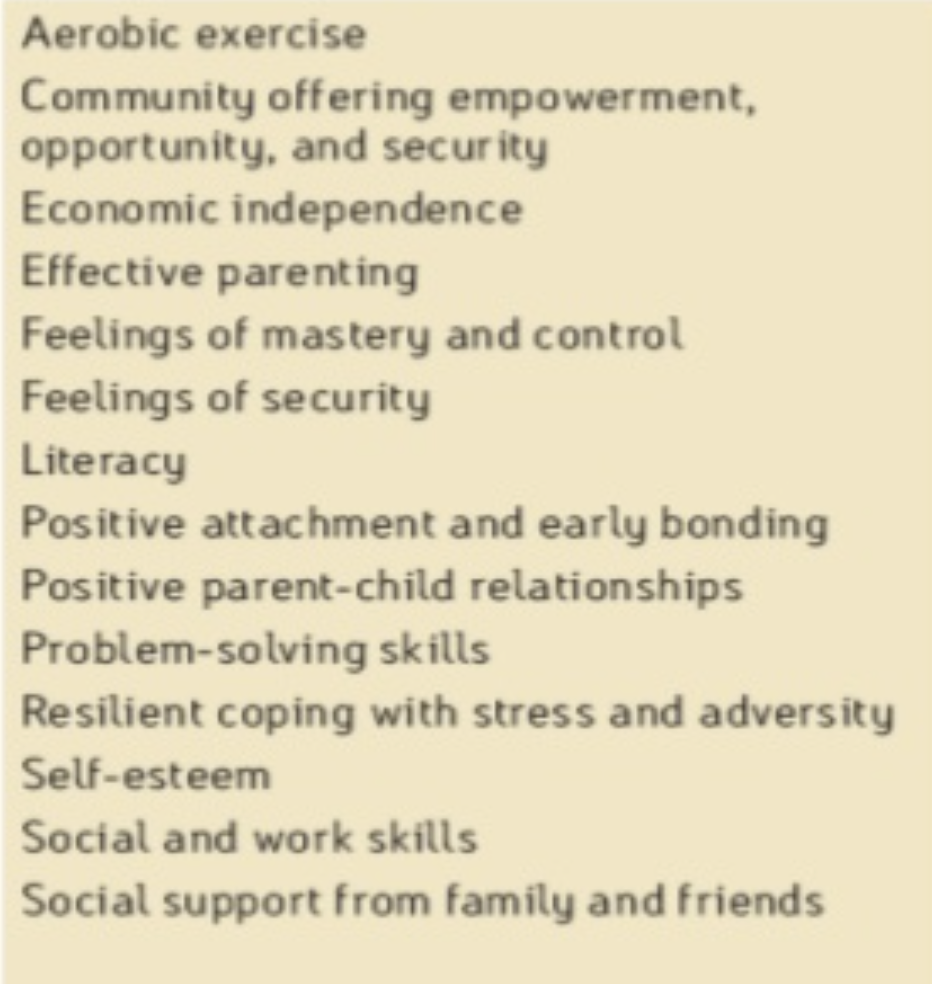
protective factors
characteristics that may decrease the likelihood of experiencing adverse childhood experiences.
neurodevelopmental disorders
Autism Spectrum disorder, ADHD, Tourettes
causes of neurodevelopmental disorders
environmental, physiological, genetic
anxiety disorders
psychological disorders characterized by distressing, persistent anxiety, or maladaptive behaviors that reduce anxiety (such as vaping)
phobias
a person is intensely and irrationally afraid of an object or situations
agoraphobia
fear of open or crowded places, being trapped and not able to get to safety
panic disorder
a person experiences sudden episodes of intense dread
example of cultural bound anxiety disorder: ataque de nervios, which is present in Latin & Carribbean cultures
social anxiety disorder
distinct disorder but can include agoraphobia; everyday interactions cause significant anxiety, self-consciousness and embarrassment because you fear being scrutinized or judged negatively by others
Taijin Kyofusho - Japanese; fear others are judging one’s body as undesirable/offensive
generalized anxiety disorder
person is unexplainably and continually tense and uneasy
Obsessive Compulsive Disorder/OCD
a disorder characterized by unwanted repetitive thoughts and actions
related disorders: hoarding, body dysmorphic disorder. body focused repetitive behavior disorders
causes of OCD
learned associations, maladaptive thinking or emotion, genetic/biological
PTSD/Post Traumatic Stress Disorder
a disorder characterized by haunting memories, nightmares, social withdrawal, anxiety, numbness, and/or insomnia that lingers after traumatic experience
intensity of trauma, stress, catastrophic thinking
causes of PTSD
major depressive disorder/MDD
need at least 5 signs of depression lasting two weeks or more (includes problems regulating appetite and sleep, low energy, difficulty concentrating and making decisions, feelings of hopelessness)
pervasive depressive disorder/PDD
at least 2 symptoms of depression lasting 2 yrs or more; longer period of depression but less intense symptoms
bipolar 1
(type of bipolar disorder) characterized by mania and depression
bipolar 2
(type of bipolar disorder) characterized by hypomania (less severe mania) and more frequent & debilitating depressive episodes
suicidal warning signs
isolation/feeling alone
aggressiveness and irritability
giving things away
substance abuse
engaging in risky behaviors
frequently talking about death
drastic changes in mood and behavior
schizophrenia
a psychological disorder characterized by delusions, hallucinations, disorganized speech and/or diminished or inappropriate emotional expression. also can include catatonia.
psychosis
When losing contact with reality → experiencing irrational ideas and distorted perceptions. This is part of schizophrenia as well as other disorders/medical conditions
positive symptoms of schizophrenia
hallucinations
delusions
paranoia
disorganized speech/thinking
word salad
catatonic exper
increased repetitive movements
agitated behaviors
negative symptoms of schizophrenia
flat affect
lack of emotion or emotional expression
catatonic stupor
lack of movement/speech
causes of schizophrenia
high genetic linkage, flu during 2nd trimester of pregnancy, excess dopamine receptors
paranoid
Cluster A - suspicious, hypersensitive, secretive
schizoid
Cluster A - reclusive, indifferent, passive
schizotypal
Cluster A - odd thinking, bizarre fantasies, peculiar language
antisocial
Cluster B - rule breaker, aggressive, callous, lack of empathy
borderline
Cluster B - impulsive, self-mutilative, manipulative
narcissistic
Cluster B - excessive self-admiration, egocentric, sense of grandiose importance
histrionic
Cluster B - attention seeker, flamboyant, provocative
avoidant
Cluster C - withdrawn, fears, criticism, overly serious
dependent
Cluster C - clingy, indecisive, submissive
obsessive-compulsive
Cluster C - compulsive, perfectionist, passive aggressive
causes of personality disorders
genetic predispositions, family instability, abuse, poverty, adaptive value of fearlessness
dissociative amnesia
loss of memory of a traumatic event
dissociative fugue
loss of identity and travel to a new location (with a new identity)
dissociative identity disorder
two or more distinct personalities
causes of dissociative disorders
trauma and stress
anorexia nervosa
an eating disorder in which a person (in most cases, an adolescent female) maintains a starvation diet despite being significantly (15% or more) underweight
bulimia nervosa
an eating disorder in which a person alternates binge eating