MLS 407 Pre-Analytical Process
 Call Kai
 Learn
Learn Practice Test
 Spaced Repetition
 Match
Match Flashcards
 Knowt Play
1/53

There's no tags or description
Looks like no tags are added yet.
Name | Mastery | Learn | Test | Matching | Spaced | Call with Kai |
|---|
No analytics yet
Send a link to your students to track their progress
54 Terms
The pre-analytical phase of the laboratory testing process is
Before patient specimen testing
What does the Pre-analytical Phase include?
Patient test ordered
Specimen collection
Specimen handling and transport
Specimen processing
Specimen acceptability and rejection criteria
When looking for information regarding specimen collection criteria, handling and transport, processing, and rejection criteria you should utilize
Test procedures
Online laboratory testing directory
Package inserts
When determining the suitability of a specimen for testing you must examine
Test ordered
Labeling and source
Quality and quantity
A specimen label must contain:
Patient name (Last, First)
Second identifier (DOB, MRN, etc)
Collection date and time
Initials of collector
MAY include
Test ordered
Source
Pertinent additional information
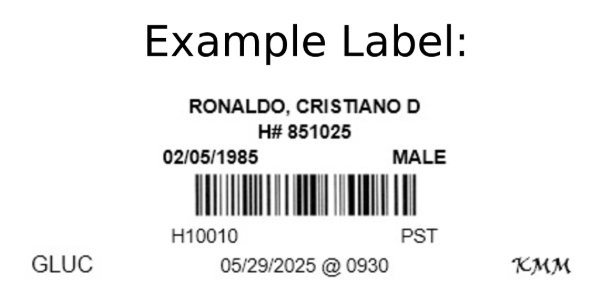
What does this label contain?
Name
Gender
DOB
PST (plasma separator tube)
Date
Time
Test ordered
Collector initials
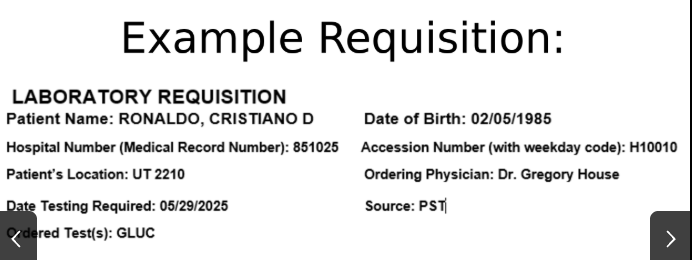
Requisition
A piece of paper, like a test order/request form
Can be used as a cross-reference for a specimen label
Includes: name, MRN, patient location, date, ordered test, test status, DOB, accession number, physician, time testing required, source, special precautions
A urine specimen for culture is placed in preservative immediately following collection (transferred from sterile urine cup). This is considered appropriate specimen ____
handling and transport
T/F: You can tell if a centrifuged specimen contains serum or plasma by visual inspection
True and false
You cannot differentiate between the two without a label/designated tube, or when it has been poured off
A specimen in a heparin/green/PST tube has been centrifuged. This specimen now contains
plasma
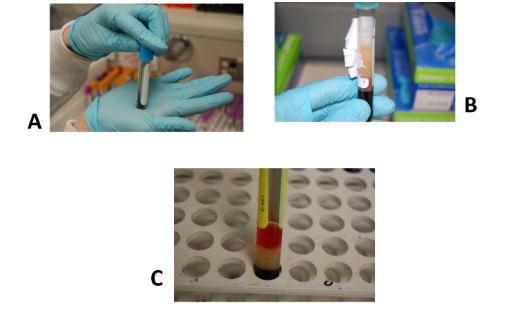
Which is the hemolyzed specimen?
C
Hemolysis: pink to red appearance of plasma or serum, due to red cell trauma which causes errors in many tests
A: Normal (plasma/serum is a translucent yellow color)
B: Lipemic (milky turbid appearance of plasma/serum, result of non-fasting state)
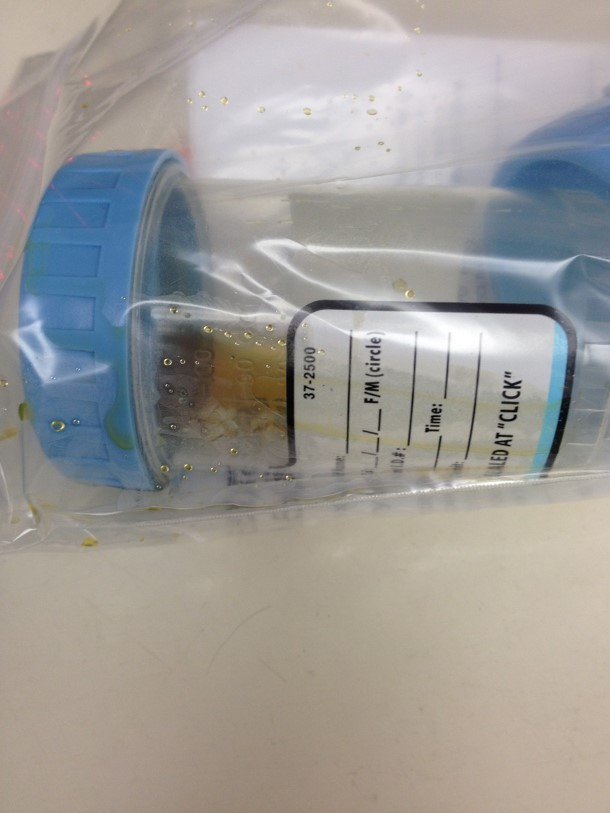
T/F: This specimen is acceptable for culture
False
Low quantity
No labels
Spills = contamination
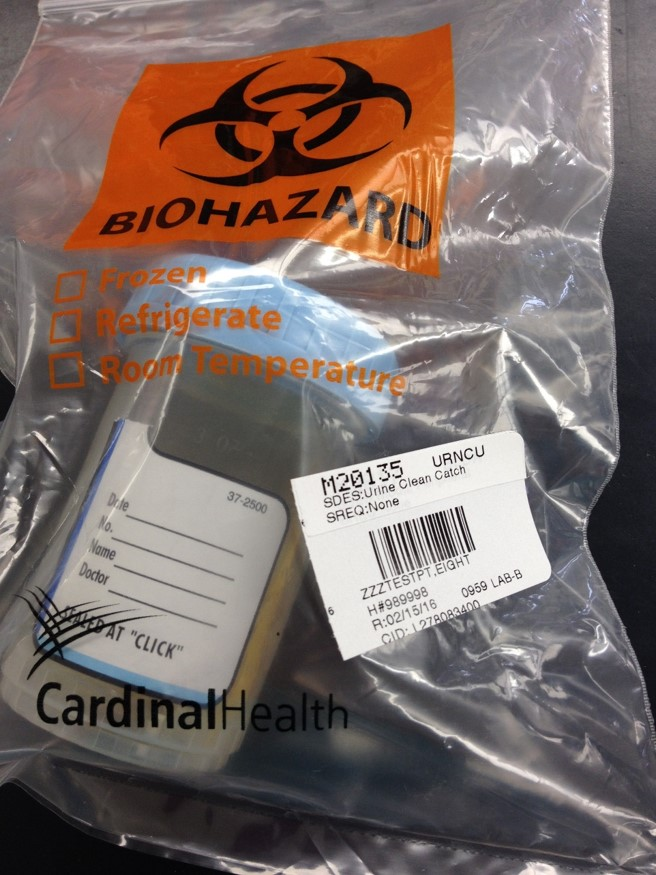
T/F: This specimen is acceptable for urinalysis testing
False
Label needs to be put on specimen directly (on the side), cannot be on the bag
Place the following in order of priority of testing: ASAP/urgent, routine, timed, STAT
STAT specimen (immediate, critical)
ASAP/Urgent
Timed specimen (must collect sample at a specific time)
Routine specimen (collected in timely manner, no urgency)
An EDTA tube (purple top) is submitted for CBC analysis. When mixing, the MLS noticed small clumps rolling back and forth in the tube. The next course of action for this patient specimen includes:
Reject the specimen and request a redraw due to the clot
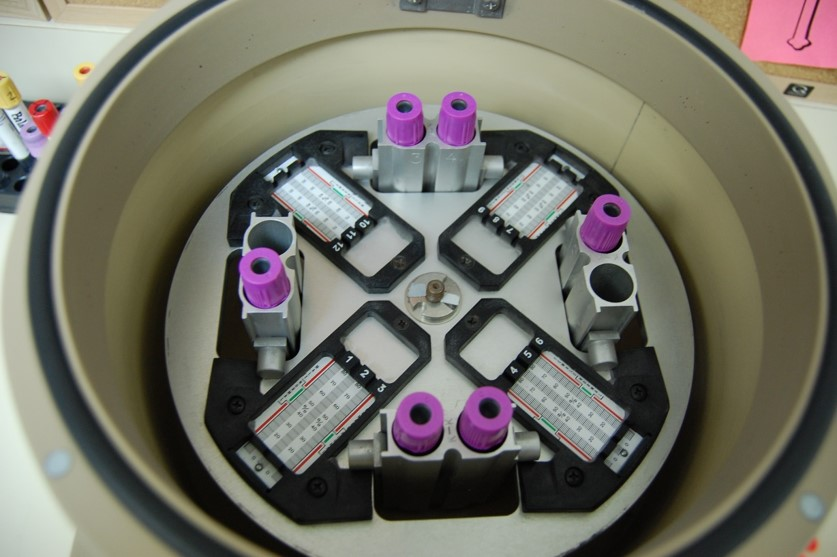
T/F: This centrifuge is balanced correctly
True; tubes (of similar volume/weight) must be placed on opposite side of each other
T/F: A red top tube is submitted for analysis. The specimen can be placed in the centrifuge immediately after collection for processing
False
A red and gold top have to be clotted for 30 minutes before centrifugation. They do not contain anticoagulants but clot activators. These produce serum after centrifugation.
A lipid panel which requires 12-16 hours fasting should be drawn:
12-16 hours after last food intake
Reasons for recollection of a specimen include
Specimen submitted quantity not sufficient (QNS)
Improperly labeled specimen
Wrong specimen type/container for test ordered
Outside of stability time for testing
Compromised specimen (clotted, hemolyzed)
Do not have to recollect if there is no order with specimen submitted, just request for an order
Which fluid is associated with the lungs?
Pleural
If a specimen handling requirement is to keep proper storage conditions at 4-6C, the specimen should be placed in which environment?
Refrigerator
Instructions on appropriate patient preparation for specimen collection for a specific laboratory test can be found on/in the:
Test procedure
Test directory

This is an example of:
Blood bank armband placed on patient
Armband usually has stickers (the YGJs) for extra labeling
Labeled at patient’s bedside
2 unique patient identifiers, collection date, ID of PB (phlebotomist)
What are the three phases of the laboratory testing process?
Pre-analytical phase (occurs prior to analysis)
Analytical phase (during analysis)
Post-analytical phase (after analysis)
What is the most fundamental responsibility of the laboratory?
To ensure the quality of test results
Accurate patient values and results are used to rule out disease, diagnose, and monitor treatmetn
What is the pre-analytical phase?
Begins when test is ordered and ends when testing begins
Most errors occur in this phase
What types of specimens are analyzed by the laboratory ?
Blood (most common) - venous, capillary, arterial
Urine (second most common) - voided, clean-catch, catheterized
Other bodily fluids - cerebrospinal, synovial (joints), pleural (lungs), pericardial (heart), amniotic, semen
Tissue, sputum, feces, bone marrow, saliva, nails, hair
Culture: all of the above specimen types using sterile collection devices (except feces)
What types of collection tubes/containers/methods are used?
Blood collection tubes for whole blood, plasma, or serum
Leak-proof and screw-cap containers for non-blood specimens (may be sterile)
Others: swabs, syringes
Transport media or preservatives are used if necessar
T/F: For each test ordered, the required tube or container type, specimen volume, and handling requirements can be reviewed after the specimen is collected
False, it should be reviewed BEFORE collection
Does the laboratory collect all patient specimens? Who is responsible for specimen collection?
Can be collected by
lab personnel
other healthcare professionals
patients
The lab is responsible no matter who collects the specimen
A critical part of specimen collection is correct patient ____ and proper ____
identification; labeling
What is the order of specimen prioritization?
STAT
ASAP
Timed
Fasting
Routine
T/F: Information on requisition and label MUST match
True
Why is proper handling and transport of specimens to the laboratory important?
It maintains specimen integrity
Handling and transport requirements may include
Time limits for testing
Specific temperatures
Avoiding light exposure
Transport systems or preservatives
T/F: Processing of the specimen prior to testing usually does not require centrifugation and preparation of aliquot tubes
False, may include these
What happens after centrifugation?
Specimens are examined for errors/conditions that may cause invalid results
Prior to testing, each specimen is evaluated for acceptability based on
Test ordered and procedure
Labeling and source
Quantity and quality
If testing will be delayed, the specimen may be
stored per conditions stated in procedure
What are examples of unacceptable specimens?
Improperly labeled specimen
Wrong specimen/container
QNS
Outside of stability time for testing
Compromised specimen (clotted, hemolyzed)
What does “Labile” mean?
Analytes or organisms that are time or environment sensitive
What are the temperature ranges for
Room
Refrigerator
Freezer
Incubator
Room = 20 to 25C
Refrigerator = 2 to 8C
Freezer = -10C or below
Incubator = 35 to 37C and humidified
Aliquot
a portion of a specimen transferred into one or more aliquot/transfer tubes, labeling is critical!
Lipemic
milky, turbid appearance of plasma/serum, result of non-fasting state
Icteric
dark yellow/amber appearance of plasma, serum, or urine. Due to bilirubin
What are the types of specimens analyzed in the laboratory?
Blood
venous
capillary
central line or “PICC” line port (from peripherally inserted central catheter)
arterial
Urine
midstream/clean-catch
catheter
suprapubic (aspiration from bladder via needle)
voided (skin not cleansed before collection)
Percardial fluid (heart)
cerebral spinal fluid (CSF)
Synovial fluid (cavity of synovial joints: elbow, knee, shoulder)
Pleural fluid (lungs)
Peritoneal fluid (abdominal organs)
Bone marrow
Bronchoalveolar lavage (BAL) (lungs)
Sputum
Nasopharyngeal (pharynx, upper throat)
Stool/feces
Genital
Abcess
Tissue
Wound
Saliva
Factors that occur during the _____ phase are the most common source of erroneous laboratory results.
Pre-analytical
Who can collect specimens?
Patient
Nurse/health professionals
Lab personnel
The most common type of specimen submitted to the clinical laboratory for analysis is:
Blood
Which of these tests are most affected if the patient is not fasting?
A. Blood count
B. Glucose
C. Pregnancy Test
D. Urinalysis
B
Which of the following urine specimens would be suitable for microbial analysis or culture and sensitivity testing?
A. Midstream clean-catch
B. Regular voided
C. First morning urine specimen
D. 24-hour urine specimen
A
Blood specimen tubes are typically placed in ________ for transportation to the laboratory.
Biohazard plastic bag
If a specimen is of insufficient quantity for testing, the medical laboratory scientist should:
Reject specimen
Increased levels of bilirubin in the blood will cause plasma or serum specimens to be:
Icteric