Chapter 36: Plant Nutrition
 Call Kai
 Learn
Learn Practice Test
 Spaced Repetition
 Match
Match Flashcards
 Knowt Play
1/24

There's no tags or description
Looks like no tags are added yet.
Name | Mastery | Learn | Test | Matching | Spaced | Call with Kai |
|---|
No analytics yet
Send a link to your students to track their progress
25 Terms
What are essential nutrients in plants?
Elements that a plant cannot complete its life cycle without and cannot synthesize on its own
Must be obtained from the environment
Most often in the form of ions dissolved in soil water
What are macronutrients required for plant growth?
Elements required in relatively large amounts for plant growth
*Nitrogen, phosphorus, potassium, calcium, magnesium, and sulfur
N, P, and K are often limiting factors
Scarcity in the environment significantly reduces growth/reproduction of plants
Other essential nutrients: carbon, oxygen, and hydrogen that are obtain by absorbing CO2 from the atmosphere
Makes up approx. 96% of dry mass of the plant (vast majority of the plant’s mass)
What are micronutrients required for plant growth?
Elements required in small amounts
*Iron, manganese, zinc, copper, boron, molybdenum, and nickel
Often function as enzyme cofactors
Needed in small quantities, but still essential for normal plant development.
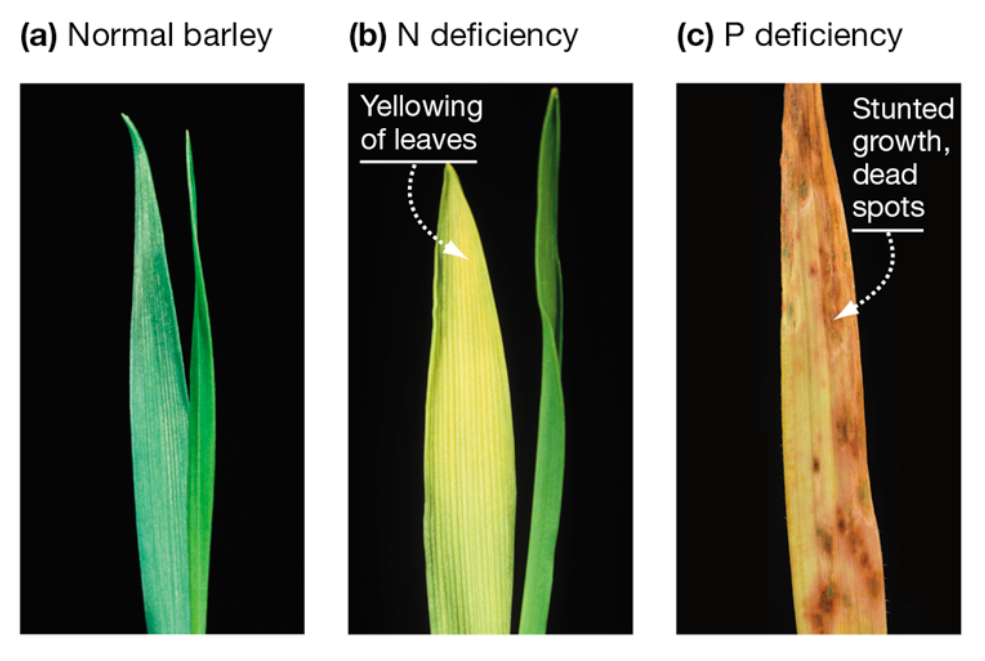
Compare mobile and immobile nutrients and the effect of their deficiencies.
Mobile: N, K, P, and Mg can be readily transferred from older to younger tissues when in short supply
When these nutrients are scarce, older leaves deteriorate first
Immobile nutrients: Ca and Fe remain tied up in older tissues
When scarce, younger leaves show deficiency first
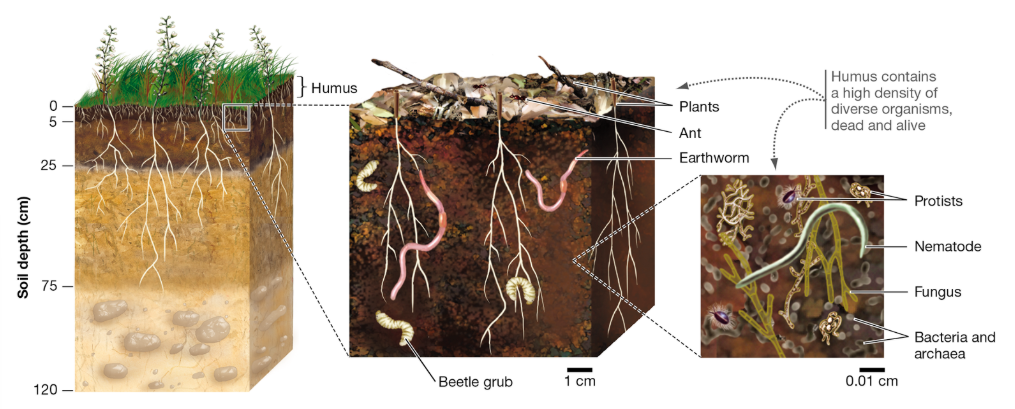
How does soil composition affect nutrient availability?
Texture (gravel, sand, silt clay), organic matter, and pH influence how nutrients are stored and released to plant roots
Clay-rich soils retain nutrients better
Water tends to adhere to clay and silt, but runs through sand and gravel
Sandy soils are prone to nutrient loss through leaching
Why is soil conservation important?
Prevents erosion caused by wind and water, which can remove nutrient-rich topsoil and reduce agricultural productivity. Techniques such as windbreaks and contour farming help maintain soil quality.
How does soil pH affect nutrient availability?
Influences nutrient solubility and cation exchange
Acidic soils: promote release of cations
Alkaline soils: limit the availability of some nutrients
Most plants grow best in near-neutral pH conditions.
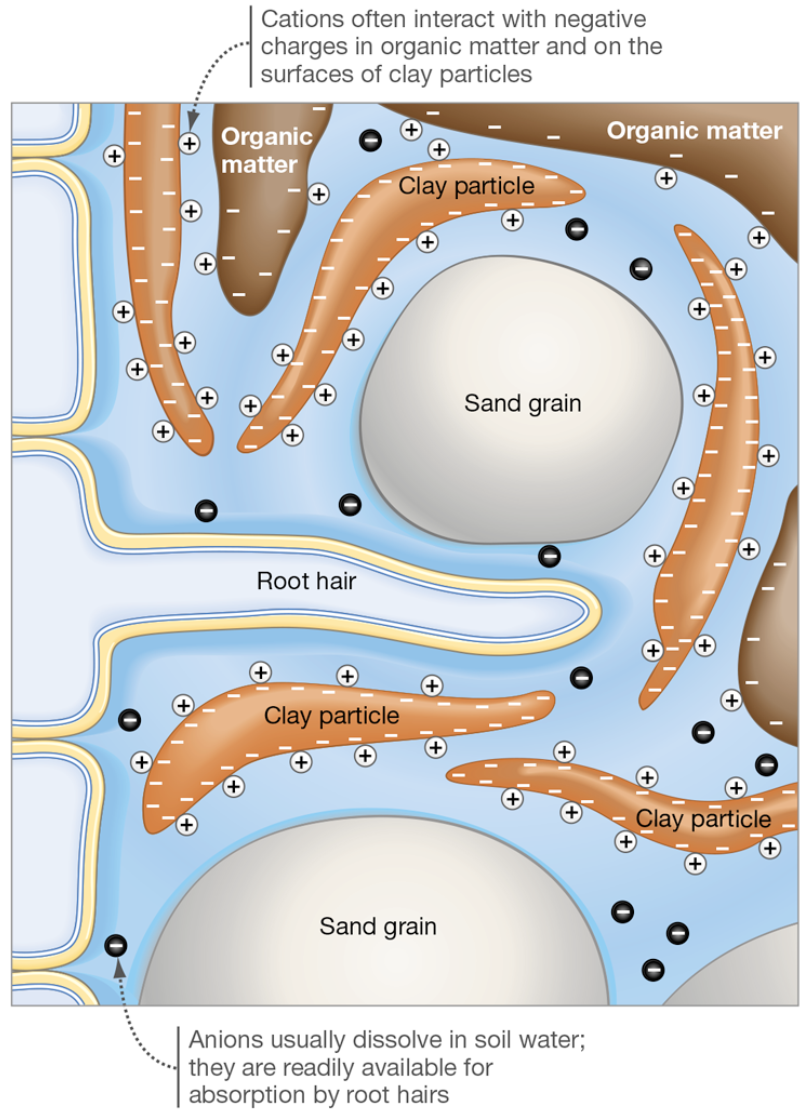
What is the role of ionic charge and soil texture?
Anions: usually dissolve in soil water → readily available for absorption (but prone to leaching)
They interact with water molecules via hydrogen bonding
Exception: phosphate ions (can form insoluble compounds)
Cations: dissolve in soil water but interact with negative charges on organic matter and clay particles
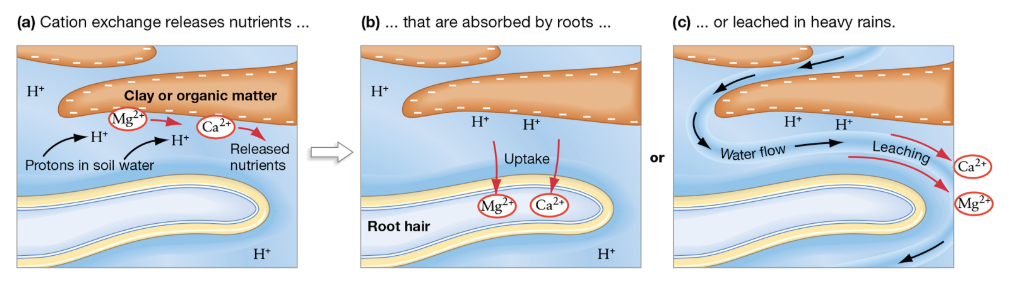
What is cation exchange and why is it important?
Occurs when protons (H+) released by roots displace positively charged ions that are bound to soil particles, making them available for uptake. This process is essential for accessing nutrients like calcium and magnesium.
How do roots influence soil pH to absorb cations?
Roots release CO₂ that forms carbonic acid → releases H⁺ ions → lowers soil pH → promotes cation exchange
These protons displace cations from soil particles, making them available for absorption.
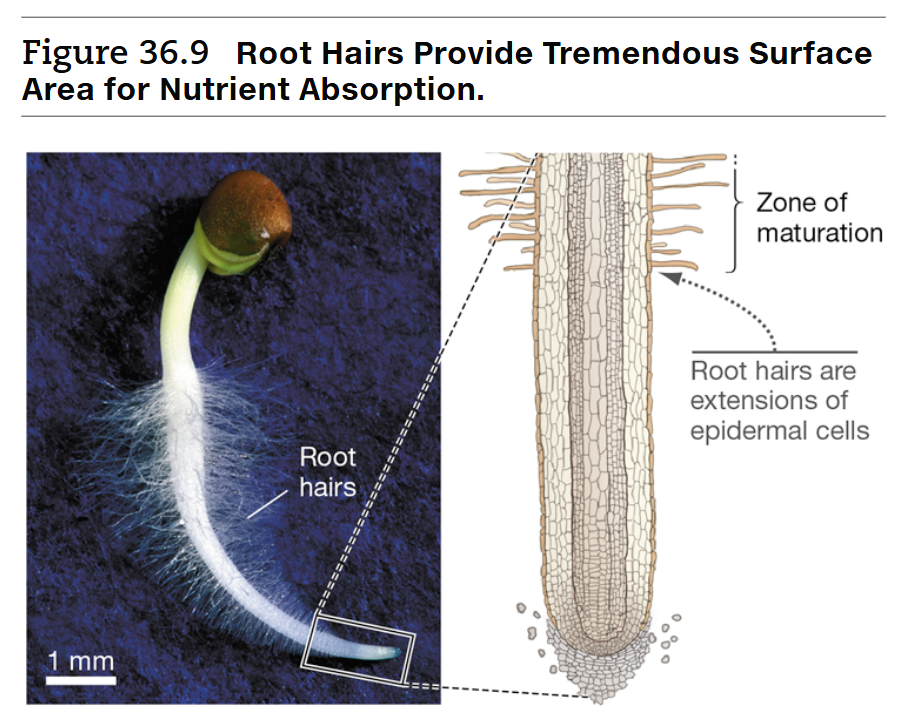
How do plants absorb nutrients at the root level?
Absorption of water/ions occurs primarily in the root hair zone
Increased surface area allows efficient uptake
Root cells contain transport proteins that facilitate movement of nutrients into the plant.
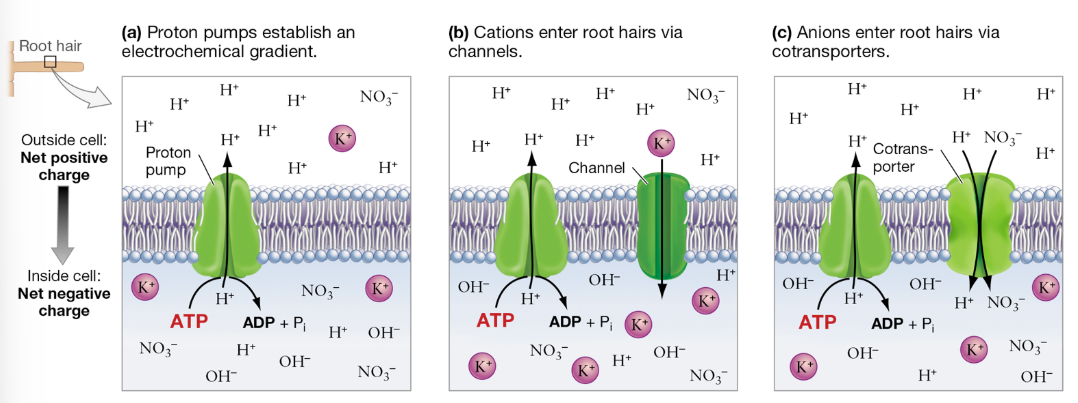
How do proton pumps drive nutrient uptake?
Root cells use proton pumps to export H⁺ ions, creating an electrochemical gradient with a negative interior that attracts cations into the cell
Cations like K+ enter through channels
This gradient also powers cotransport of anions with H⁺ back into the cell
Anions like NO3- move through cotransporters, allowing them to be taken up against their [ ] gradients
How do plants prevent toxins from entering the shoot system?
Use selective membrane transporters to limit entry of unwanted ions
Rely on the Casparian strip (impermeable material) in the endodermis to block passive flow into the xylem/force ions to pass through cell membranes
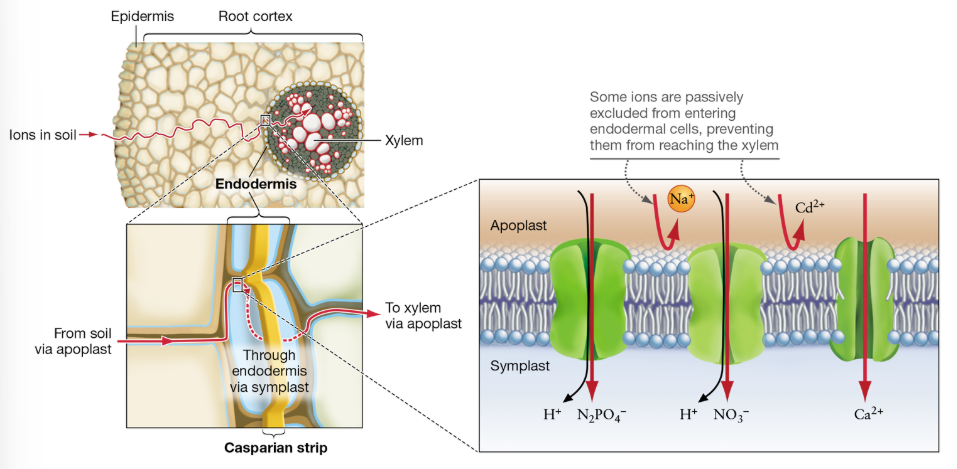
How do plants use passive exclusion to limit toxins?
Occurs at the plasma membrane when plant cells lack transport proteins for certain ions, preventing them from entering the root symplast
Prevents these ions from reaching the xylem
Reduces uptake of harmful substances without energy expenditure
How do plants use active mechanisms to remove toxins?
Use proteins such as metallothioneins and phytochelatins (short peptide) to bind toxic metal ions and neutralize them
Production of these proteins requires energy
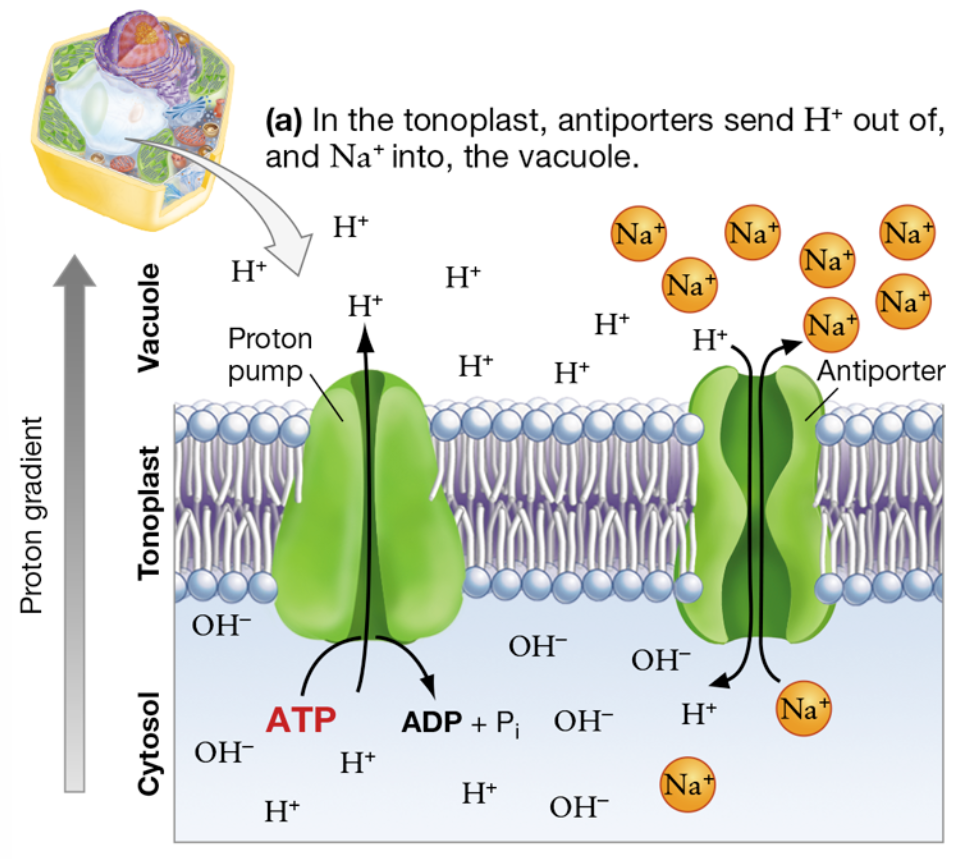
How do antiporters help detoxify plant cells?
Transport proteins located in the tonoplast (membrane surrounding the vacuole) actively remove toxic substances from cytosol → store them in the vacuole
Uses proton pumps, creating a gradient that favors movement of protons back out of the vacuole
Antiporters use that proton gradients to move toxic ions (i.e. Na⁺) into vacuoles against their gradient
Prevents toxic accumulation in the cytosol
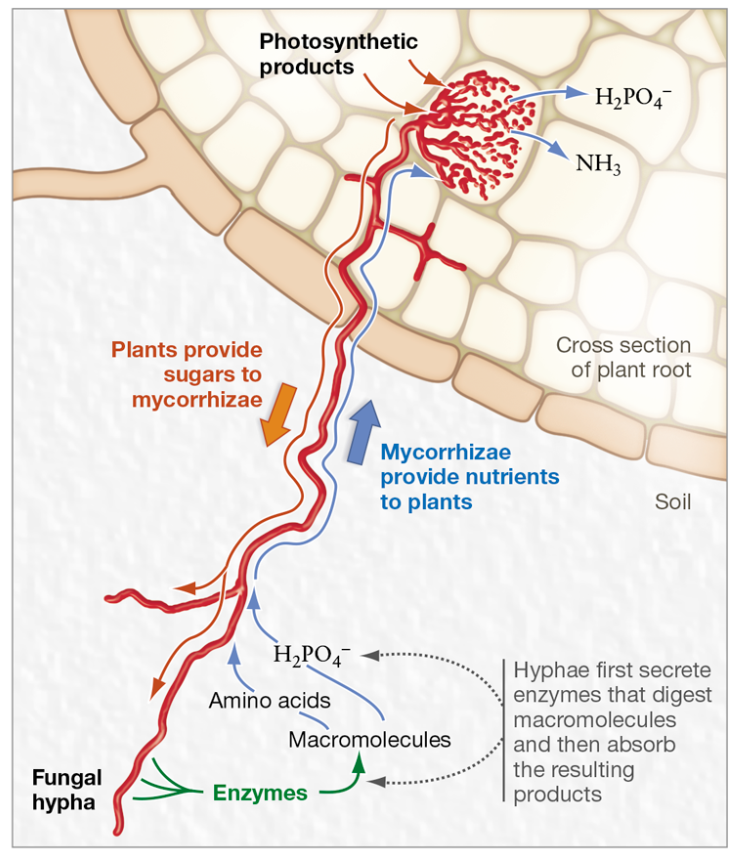
How do mycorrhizal fungi enhance nutrient absorption?
Mycorrhizae = ‘fungus-root’
Form symbiotic relationships with plant roots and extend hyphae into the soil → increasing surface area for nutrient absorption
Fungi can acquire nutrients from macromolecules in the soil that are unavailable to non-mycorrhizal plants
Help plants access nutrients like N and P in exchange for sugars.
How do plants obtain nitrogen?
Absorb nitrogen mainly as nitrate (NO₃⁻) or ammonium (NH₄⁺)
Often produced by nitrogen-fixing bacteria
Necessary because atmospheric N₂ is chemically inert and unusable by plants.
What is nitrogen fixation?
Conversion of atmospheric nitrogen gas (N₂) into ammonia (NH₃) or related compounds by specialized bacteria
Requires series of specialized enzymes and cofactors, specifically nitrogenase
Extremely energy demanding process
How do legumes regulate nodule formation?
Legumes regulate nodule growth based on nitrogen availability, investing more in nodules only when nitrogen is scarce. This helps balance the energy cost of maintaining symbiotic bacteria.
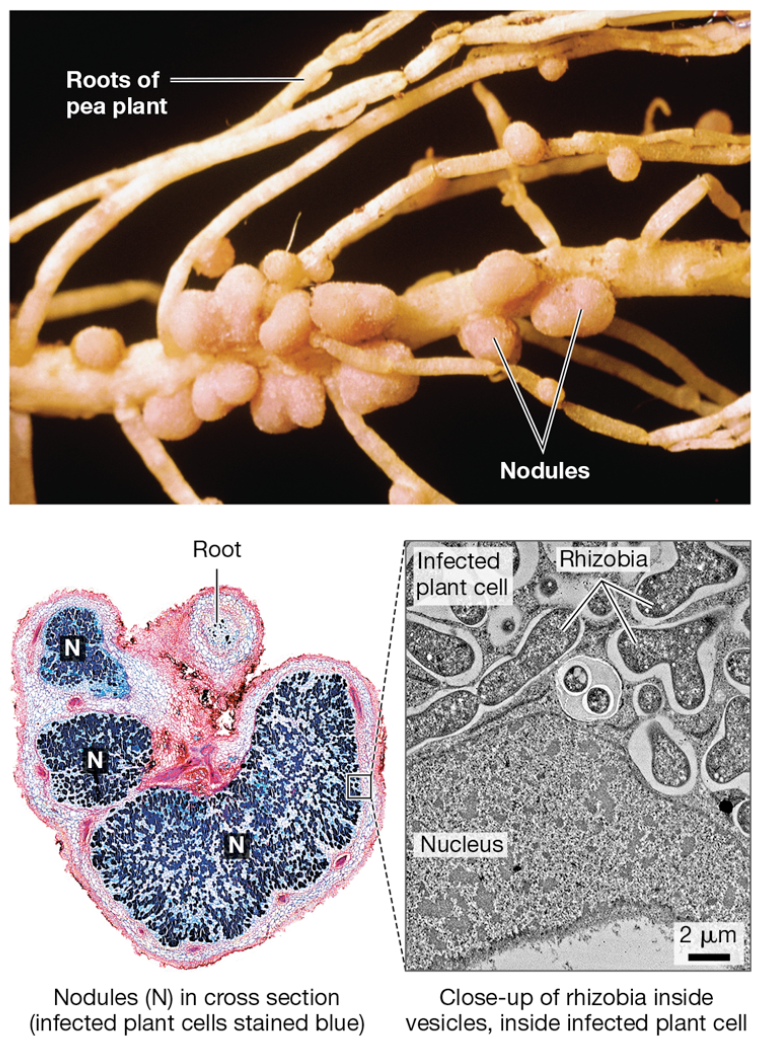
What is the function of leghemoglobin in root nodules?
Nodules: where nitrogen-fixing rhizobia are found
Pink in color b/c they contain iron-containing leghemoglobin
In root nodules: oxygen binds to leghemoglobin instead of binding to nitrogenase
Leghemoglobin helps maintain low free oxygen levels needed so that nitrogenase can properly function while still allowing respiration
Step-by-step: how do nitrogen-fixing bacteria infect roots?
Legume roots release flavonoids that attract rhizobia
Rhizobia contact flavonoids → produce Nod factors that trigger root hair deformation and infection thread formation
Bacteria enter the root cortex → multiply → form nodules where nitrogen fixation occurs
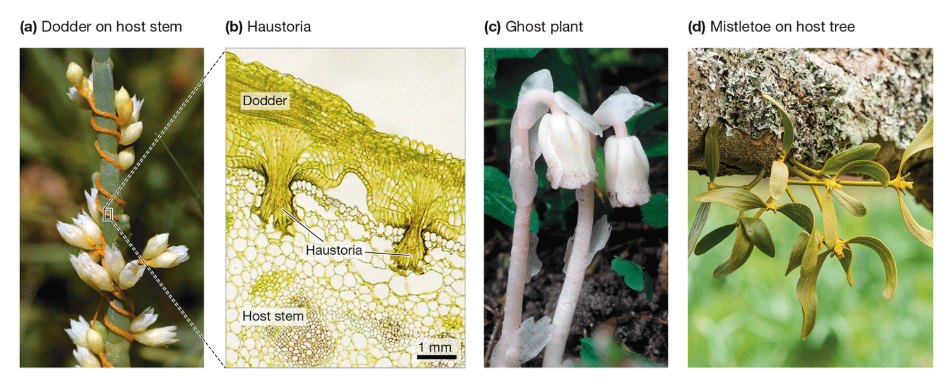
How do parasitic plants obtain nutrients?
Use structures called haustoria to penetrate host vascular tissue and extract water and nutrients
Some are partially photosynthetic, while others rely entirely on their host
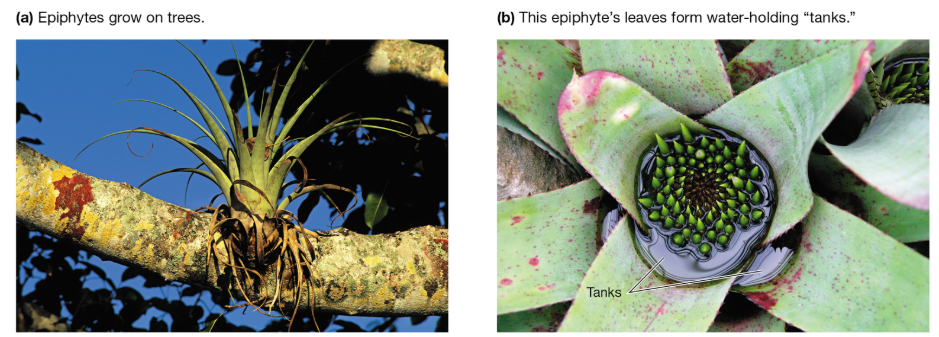
How do epiphytes obtain nutrients?
Grow on other plants but are not parasitic
Adapted to grow without soil
Obtaining nutrients from rainwater, dust, and organic debris
Some have specialized leaves that can absorb nutrients directly
How do carnivorous plants obtain nutrients?
Trap and digest insects using modified leaves with sensory hairs
Absorb nutrients such as nitrogen from their prey
Allows for survival in nutrient-poor soils