Federal Budget & Fiscal Policy

0.0(0)
Studied by 0 people
call kaiCall Kai
learnLearn
examPractice Test
spaced repetitionSpaced Repetition
heart puzzleMatch
flashcardsFlashcards
GameKnowt Play
Card Sorting

1/20

encourage image

There's no tags or description

Looks like no tags are added yet.

Last updated 7:31 PM on 10/2/23
Name
Mastery
Learn
Test
Matching
Spaced
Call with Kai
Chat

No analytics yet

Send a link to your students to track their progress

21 Terms

1
New cards
Pocket Veto
The President's decision to take no action on a bill within 10 days, resulting in the bill being vetoed.
2
New cards
Expansionary Fiscal Policy
A policy that involves increasing government spending and cutting taxes to stimulate the economy and prevent or end a recession or depression.
3
New cards
Stimulus
Financial aid or support provided by the government to stimulate economic growth and boost consumer spending.
4
New cards
Contractionary Fiscal Policy
A policy that involves reducing government spending and increasing taxes simultaneously in order to slow down the economy.
5
New cards
Spending + Revenue
The difference between government spending and revenue, which affects the amount of interest the government has to pay.
6
New cards
Fiscal Policy
The use of government spending and taxation to influence the economy, either by slowing it down or speeding it up, involving increased government interference in supply and demand.
7
New cards
Entitlements
Programs such as Social Security, Medicare, and Medicaid that guarantee certain benefits to individuals, which are increasing due to the aging population and require increased taxes or borrowing to sustain, subject to political pressures.
8
New cards
House of Cards
A situation where a small event or factor can cause the collapse of a larger system or structure.
9
New cards

John Maynard Keynes

General Theory of EMployment; advocated for government involvement in the economy, promoting the use of fiscal policies to boost the economy in the short run, rather than solely relying on long-term measures.

10
New cards
Multiplier Effect
The impact of government injecting a large sum of money into the economy, which trickles down to different groups and individuals, contributing to government interest payments.
11
New cards
Deficit Spending
When government expenditures exceed revenues, resulting in a consistent deficit in the government's budget.
12
New cards
Milton Friedman
An economist who promoted laissez-faire policies, emphasizing individual freedom in the economy.
13
New cards

Step 1 (Federal Budget)

agencies submit spending proposals

14
New cards

Step 2 (Federal Budget)

Exec. Branch draws up the budget

15
New cards

Step 3 (Federal Budget)

Congress debates the budget (House and Senate, 2/3 must vote for it)

16
New cards

Step 4 (Federal Budget)

goes back to the White House (Sign it, Veto, or Pocket Veto)

17
New cards

Step 5 (Federal Budget)

Congress can override a veto by 2/3 majority or it can compromise w/ the President

18
New cards

Classical Economics (Economic School of Thought)

free market; the economy regulates itself, supply/demand always returns to the equilibrium; no gov’t influence

19
New cards

Keynesian Economics (Economic School of Thought)

gov’t should buy goods/services when necessary to encourage full productive capacity, stimulate the economy, and increase employment

20
New cards

Supply-side Economics (Economic School of Thought)

the supply of goods drives the economy; lower taxes encourage economic activity

21
New cards

Laffer Curve

the less you tax the more people spend (less gov’t revenue), and the more you tax the less people spend (less income for citizens)
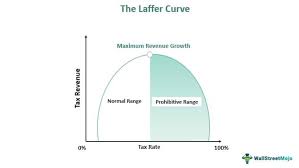
<p>the less you tax the more people spend (less gov’t revenue), and the more you tax the less people spend (less income for citizens)</p>



