Federal Budget & Fiscal Policy
Definitions:
Pocket Veto - the President doesn’t do anything; if they don’t sign or veto w/in 10 days it is vetoed
Expansionary Fiscal Policy - increases spending + cutting taxes to prevent/end a recession/depression, speeds up the economy
Stimulus - given out by the gov’t to stimulate the economy
Contractionary Fiscal Policy - reduces spending + increases taxes simultaneously, slows down the economy
Spending + Revenue - the larger the difference, the more interest you have to pay
Fiscal Policy - the use of gov’t spending and taxation to influence (slow down or speed up) the economy; increases gov’t interference in supply + demand
Entitlements - SS, Medicare, Medicaid; programs people are guaranteed, increasing since pop. is aging; gov’t must increase taxes or borrow money to maintain; subject to political pressures
House of Cards - one thing can collapse it
John Maynard Keynes - General Theory of Employment; promoted gov’t involvement in the economy; wanted to give the gov’t a tool to boost the economy in the short run, instead of only in the long run
Multiplier Effect - gov’t puts a lg. sum of money into the economy that trickles down to dif. groups/people in the economy; adds to gov’t interest payments
Deficit Spending - expenditures exceed revenues; consistent in the gov’t
Milton Friedman - promoted laissez-faire policies (individual freedom in the economy)
Notes:
Federal Budget - 5 Steps
Step 1 - agencies submit spending proposals
Step 2 - Exec. Branch draws up the budget
Step 3 - Congress debates the budget (House and Senate, 2/3 must vote for it)
Step 4 - goes back to the White House (Sign it, Veto, or Pocket Veto)
Step 5 - Congress can override a veto by 2/3 majority or it can compromise w/ the President
Economic Schools of Thought
Classical Economics - free market; the economy regulates itself, supply/demand always returns to the equilibrium; no gov’t influence
Keynesian Economics - gov’t should buy goods/services when necessary to encourage full productive capacity, stimulate the economy, and increase employment
Supply-side Economics - the supply of goods drives the economy; lower taxes encourage economic activity
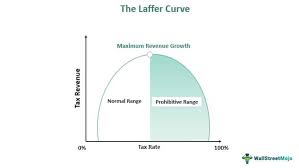
Laffer Curve - the less you tax the more people spend (less gov’t revenue), and the more you tax the less people spend (less income for citizens)