Ducks Unlimited iCEV Exam
 Call Kai
 Learn
Learn Practice Test
 Spaced Repetition
 Match
Match Flashcards
 Knowt Play
1/31

Earn XP
Description and Tags
general vocabulary for the ducks unlimited iCEV Exam
Name | Mastery | Learn | Test | Matching | Spaced | Call with Kai |
|---|
No analytics yet
Send a link to your students to track their progress
32 Terms
Ecology & Biology (The Science)
ok
Abiotic vs. Biotic:
Non-living (water, soil, sun) vs. living (plants, animals, bacteria) components of an ecosystem.
Bioaccumulation
The buildup of substances, such as pesticides or heavy metals, in an organism.
Ecotone
A transition area between two biological communities (e.g., where a forest meets a grassland). This area usually has the highest biodiversity.
Bag Limit
The maximum number of a specific animal a person is legally allowed to harvest in a single day.
Photoperiodism
The functional response of an organism to the length of day or night (this is what tells ducks when to migrate)
Habitat Management (The Work)
ok -_-
Sustained Yield
The amount of a resource that can be harvested without reducing the base stock (harvesting only the "interest," not the "principal").
Prescribed Burning
A controlled fire applied to a specific area to improve habitat health and reduce "fuel" for wildfires.
Mitigation:
The process of creating, restoring, or enhancing an ecosystem to make up for an area that was destroyed by development.
Basal Area:
Measurement used in forestry to determine the density and "crowding" of trees in a stand.
Invasive Species
A non-native species whose introduction causes economic or environmental harm (e.g., Nutria or Phragmites in wetlands).
Law & History (The Specifics)
ok :,<
George Bird Grinnell
Known as the "Father of American Conservation"; he founded the Audubon Society. and co-founded the Boone and Crockett Club (1887) with Theodore
Theodore Roosevelt
The "Conservation President" who established the first National Wildlife Refuge (Pelican Island). MAde boon and crocket club
Weeks-McLean Act (1913)
An early attempt to give the federal government power to regulate hunting of migratory birds (later replaced by the MigratoryBirdTreatyAct).
Pesticide Control Act (1947)
Important for understanding how bird populations (like eagles and ducks) were protected from chemicals like DDT
Species Identification Details
k }:(
Sexual Dimorphism
When males and females of the same species look different (e.g., a bright green-headed Mallard drake vs. a brown hen).
Lamellae
The comb-like structures inside a duck’s bill used for straining food from the water. kind of looks like tiny little teeth
Drake vs. Hen
Male vs. Female waterfowl.
Juvenile
A bird that has not yet reached adult plumage or sexual maturity.
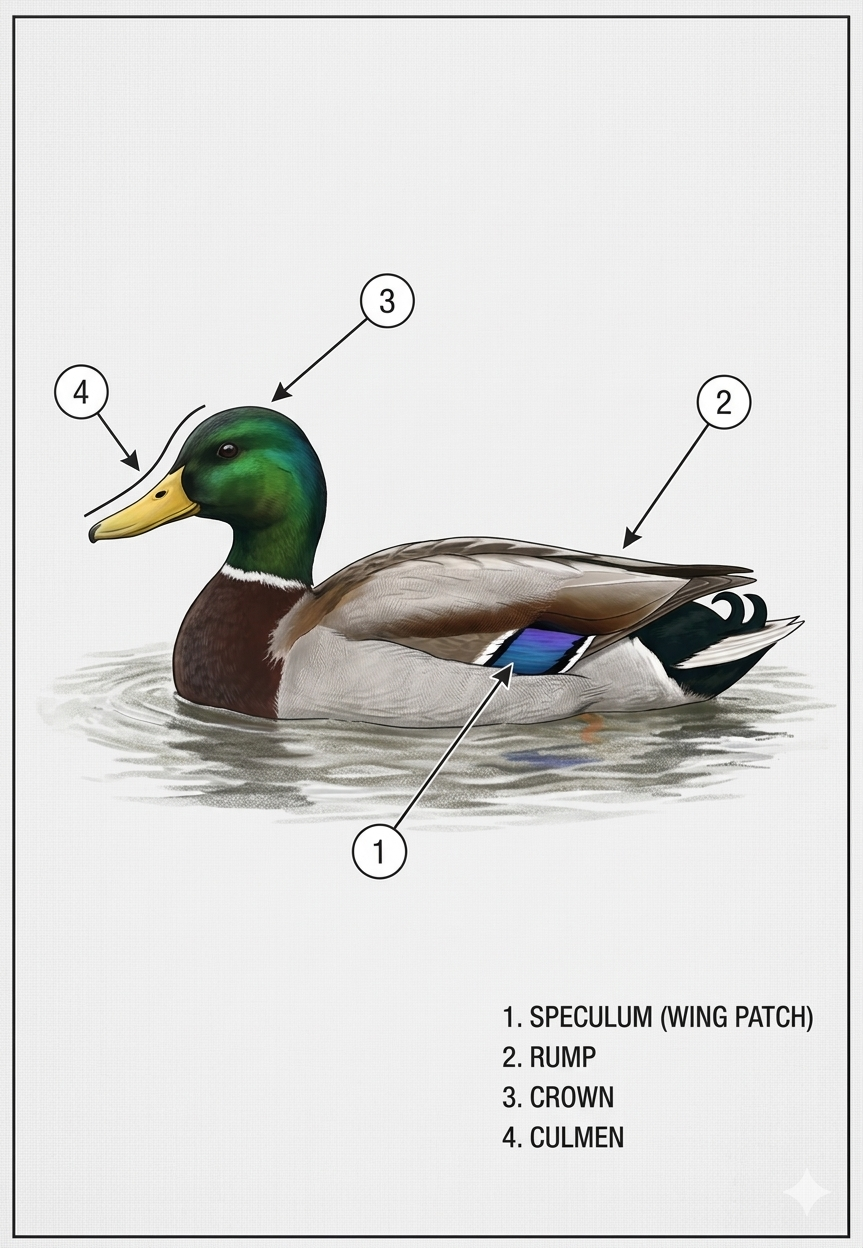
1?
Speculum (Wing patch)
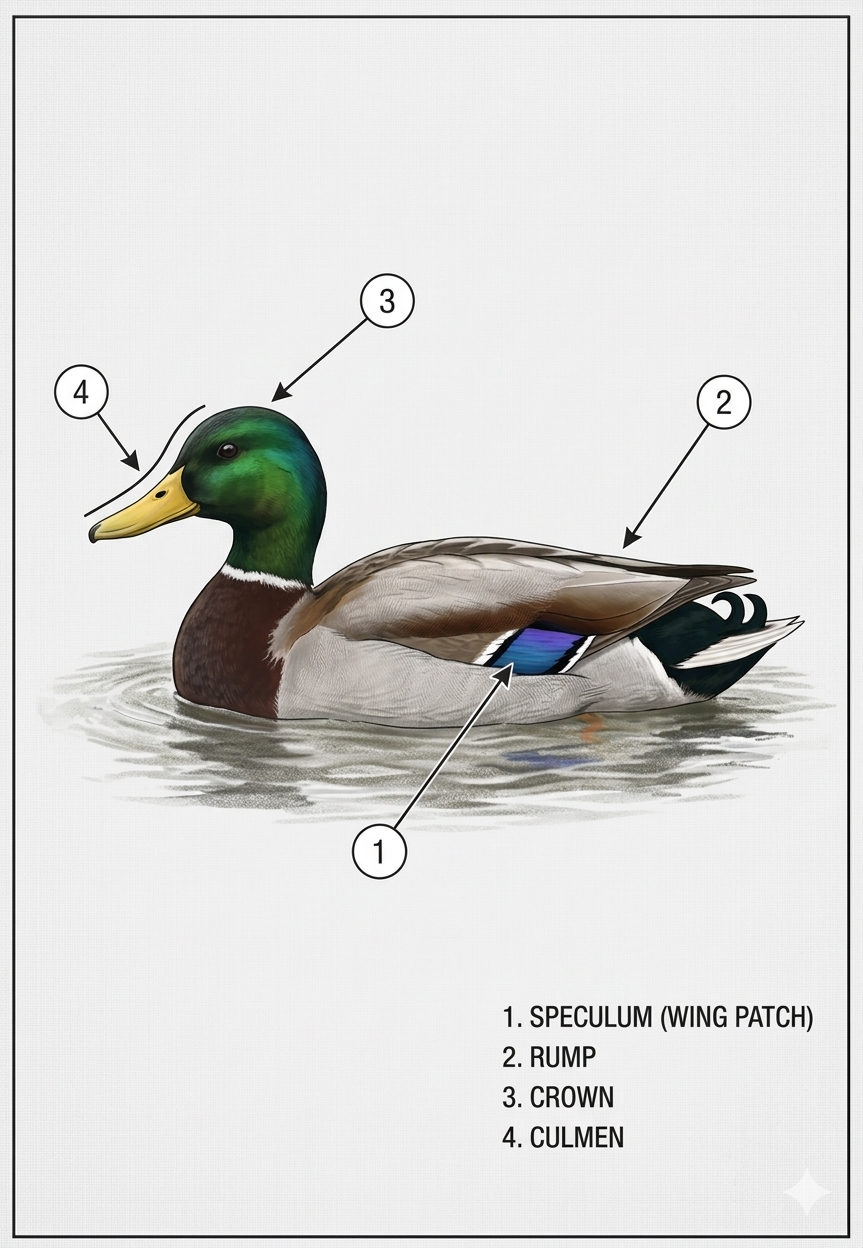
2?
Rump
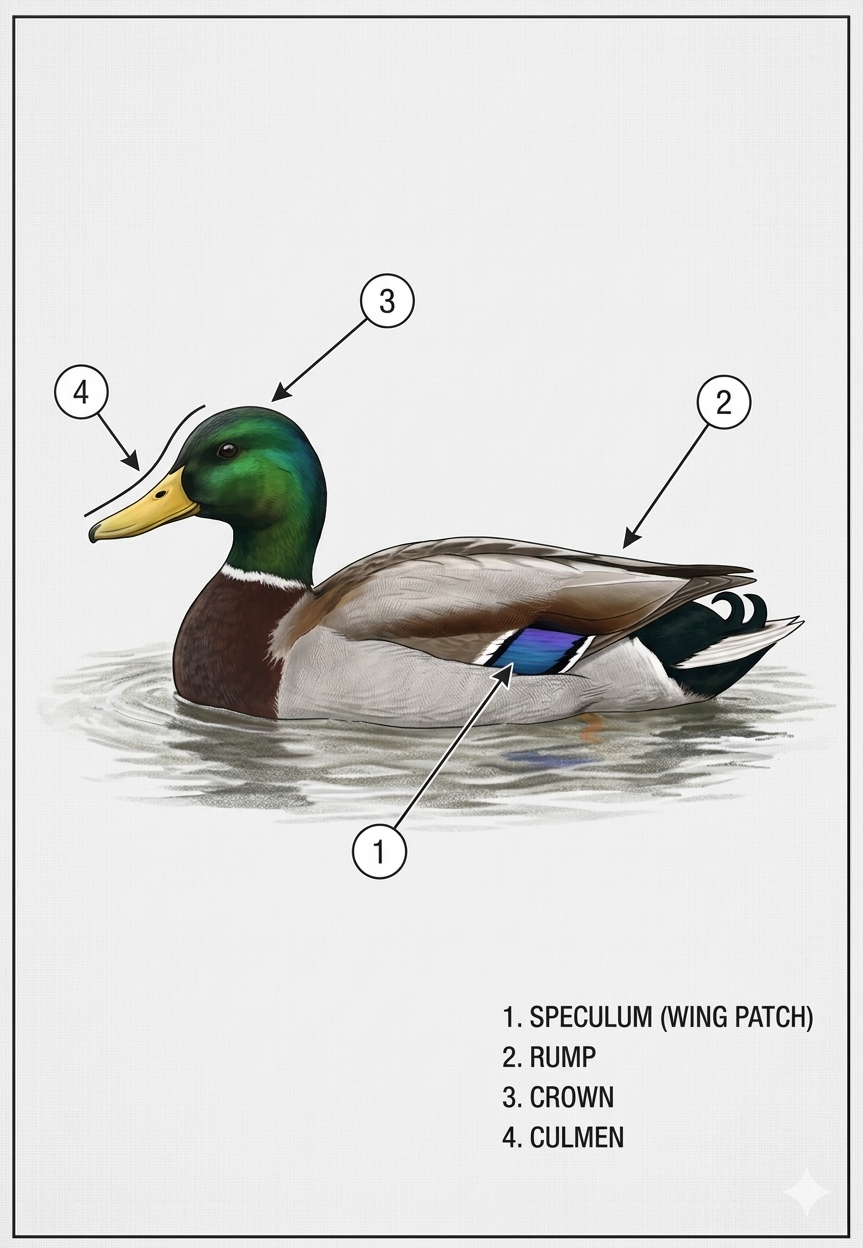
3?
Crown (top of head)
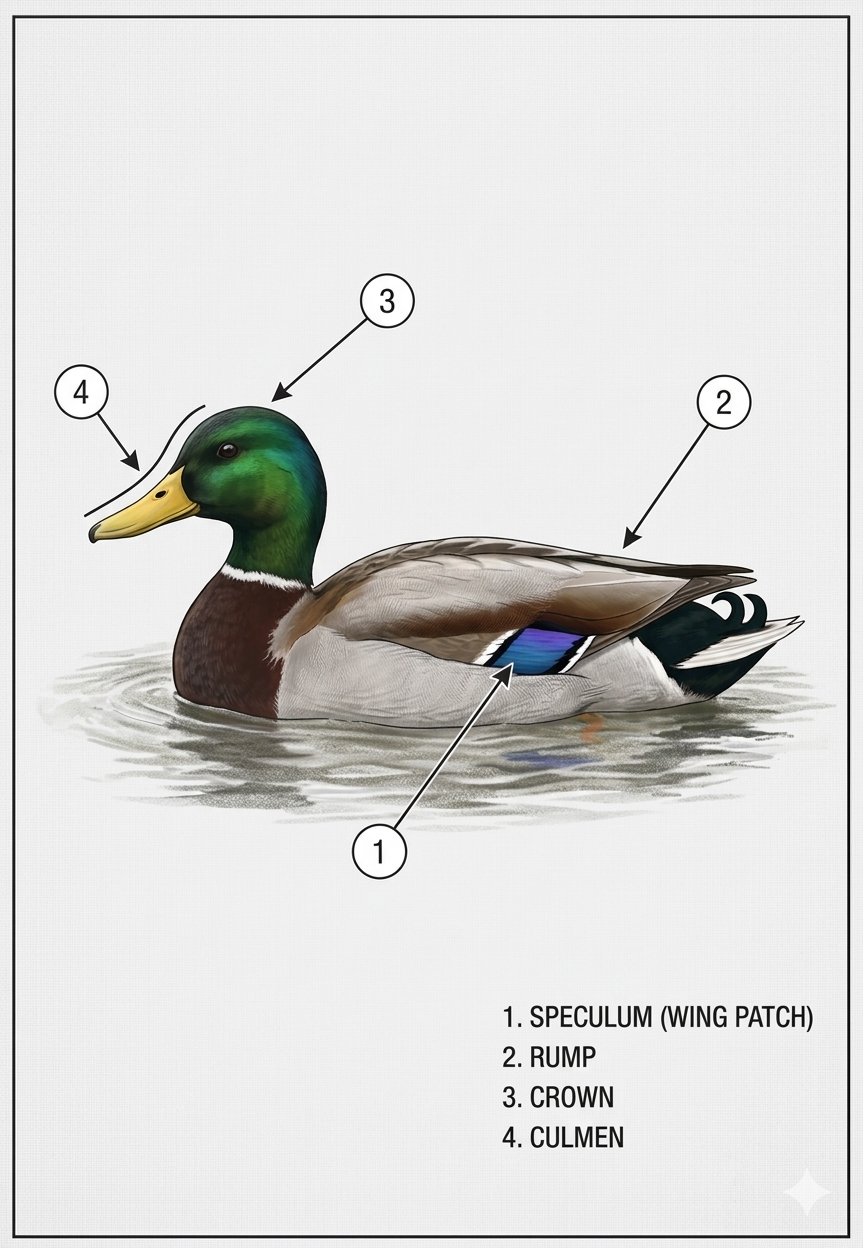
4
culumen (top ridge of the bill)
Anatidae
Ducks, Geese, Swans | All belong to the order Anseriformes. |
Cervidae
Deer, Elk, Moose | They grow and shed antlers every year. |
Falconidae
Falcons, Kestrels, Caracaras | Diurnal birds of prey with notched beaks; known for speed. |
Canidae
Coyote, Fox, Wolf | Non-retractable claws; social hunters. |
Mustelidae
Otter, Mink, Weasel | Known for being carnivorous and having musk glands. |
Phasianidae
Turkey, Pheasant | Ground-nesting birds; high reproductive rates. |