NCSU BIO 183 Exam 3
 Call Kai
 Learn
Learn Practice Test
 Spaced Repetition
 Match
Match Flashcards
 Knowt Play
1/103

There's no tags or description
Looks like no tags are added yet.
Name | Mastery | Learn | Test | Matching | Spaced | Call with Kai |
|---|
No analytics yet
Send a link to your students to track their progress
104 Terms
photoautotrophs
self-feeders using light
ex: plants, algae, cyanobacteria
heterotrophs
must rely on the sugars produced by photosynthetic organisms for their energy needs
ex: animals, fungi
chemoautotrophs
bacteria that synthesizes sugars, but not by using sunlight’s energy, but by extracting energy from inorganic compounds
photosynthesis powers…
99% of Earth’s ecosystems
mesophyll
middle layer of leaf cells where photosynthesis occurs
stomata
-area where gas exchange of carbon dioxide and oxygen occurs through small, regulated openings, which also play roles in the regulations of gas exchange and water balance
-typically located on the underside of the leaf, which helps to minimize water loss due to high temperatures on the upper surface of the leaf
chloroplasts
the organelle where photosynthesis takes place (in all autotrophic eukaryotes)
thylakoids
stacked, disc—shaped, structures in chloroplasts
pigment
molecule that absorbs light
chlorophyll
responsible for the initial interaction between light and plant material, and numerous proteins that make up the ETC
thylakoid lumen
thylakoid membrane that encloses an internal space
granum
a stack of thylakoids
stroma
liquid-filled space surrounding the granum
photosynthesis
-6CO2 + 12H2O ------> C6H12O6 + 6H2O + 6O2
-two parts: light dependent reactions and calvin cycle
light-dependent reactions
-energy from sunlight is absorbed by chlorophyll and that energy is converted into stored chemical energy (ATP and NADPH)
-z scheme
-takes place in thylakoid membrane
light-independent reactions (calvin cycle)
-the chemical energy harvested during the light-dependent reaction drives the assembly of sugar molecules from carbon dioxide
-takes place in the stroma
-although the light-independent reactions do not use light as a reactant, they require the products of the light-dependent reactions to function
wavelength
the distance between consecutive crest points of a wave
reds and deep reds (wavelengths)…
are mainly used in photosynthesis
electromagnetic spectrum
the range of all possible frequencies of radiation
different kinds of pigements exist…
and each absorbs only specific wavelengths (colors) of visible light
-pigments reflect or transmit the wavelengths they cannot absorb, making them appear a mxiture of the reflected or transmitted light colors
main pigment in plants
chlorophyll a
secondary (accessory) pigments in plants…
chlorophyll b, carotenoid, xanthophylls, phycobiliproteins
-aid with antioxidant defense
abscission
-leaves fall off trees
-accessory pigments help with uptake of light energy and storage of chemical energy BEFORE this happens
carotenoids
function as photosynthetic pigments that are very efficient molecules for the disposal of excess energy
absorption spectrum
each type of pigment can be identified by the specific pattern of wavelengths it absorbs from visible light
overall function of the light-dependent reactions is to convert solar energy into chemical energy in the form of NADPH and ATP…
this chemical energy supports the light-independent reactions and fuels the assembly of sugar molecules
antenna complexes
made up of accessory pigments and chlorophyll a (reaction center)
photosystem
a multiprotein complex where the actual step that converts light energy into chemical energy takes place
photosytem II and photosystem I
two types of photosystems embedded in the thylakoid membrane
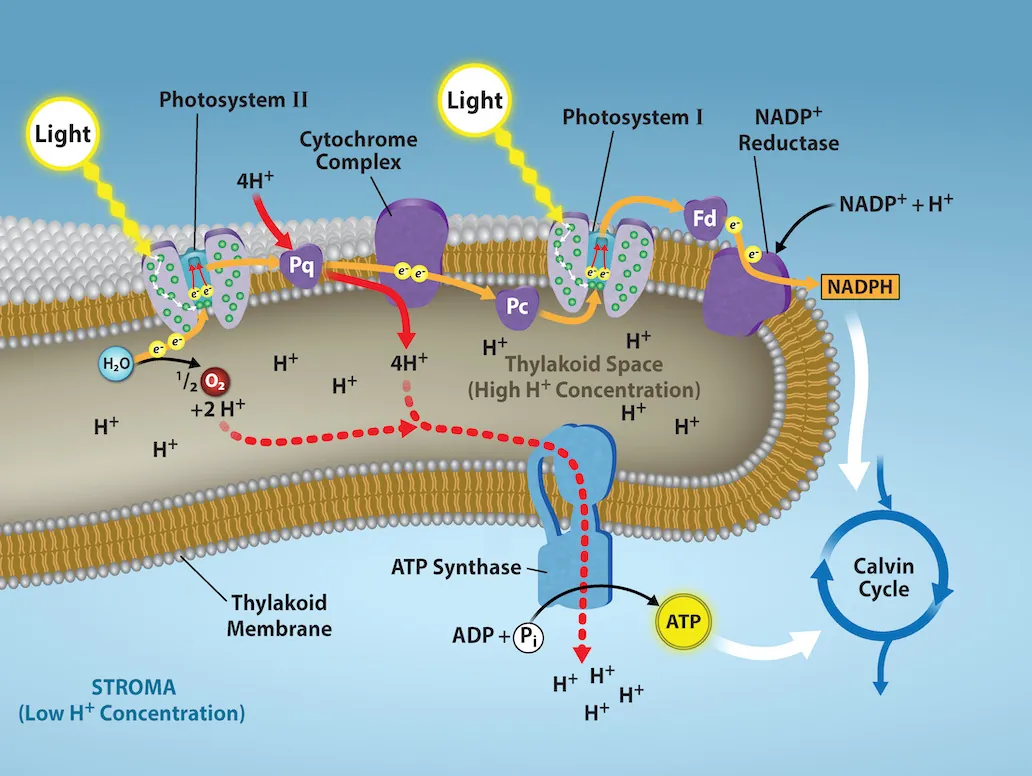
Key events of photosystem II
-reaction center P680 absorbs light at 680 nm
-accessory pigments receive photons of light and cause them to vibrate
-a little of photon light energy is converted from light to mechanical (vibration) energy
-all those vibrations amplify right in the reaction center
-chlorophyll a takes the energy to excite an electron (increase energy level); takes mechanical energy and converts it into chemical energy
-excited electron is donated to electron carriers (the b6-f complex)
-electron carriers pump H+ protons from the stroma to the lumen to build up a proton gradient
-use ATP synthase and proton gradient to produce ATP
-electron continues to lose energy and makes its way to P700 antenna complex
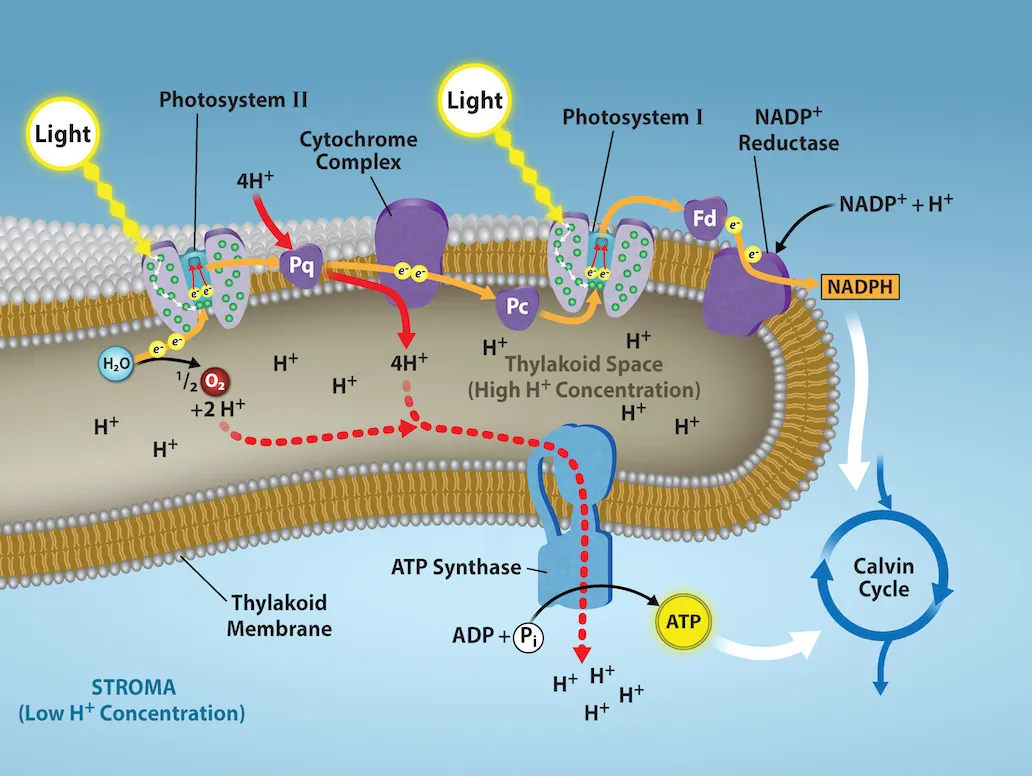
P680 reaction center loses an electron in PS II…
-and needs to get more from water to continue working
-water splits (oxygen is a waste product) and reduces P680 to start process over again with new electron from hydrogen
Key events of photosystem I
-P700 antenna complex excites electron again (gets even more electrons than in P680)
-electron goes through series of reactions which leads to electron reducing NADP+ to NADPH (final electron acceptor of light dependent reactions)
-NADPH now ready to do work (redox reactions)
light-independent reactions (calvin cycle)
-takes place in the stroma
-takes carbon dioxide and fixes it into an organic molecule
-ATPand NADPH from light-dependent reactions used to build carbohydrates
three phases of calvin cycle
fixation, reduction (of 3-PGA), regeneration
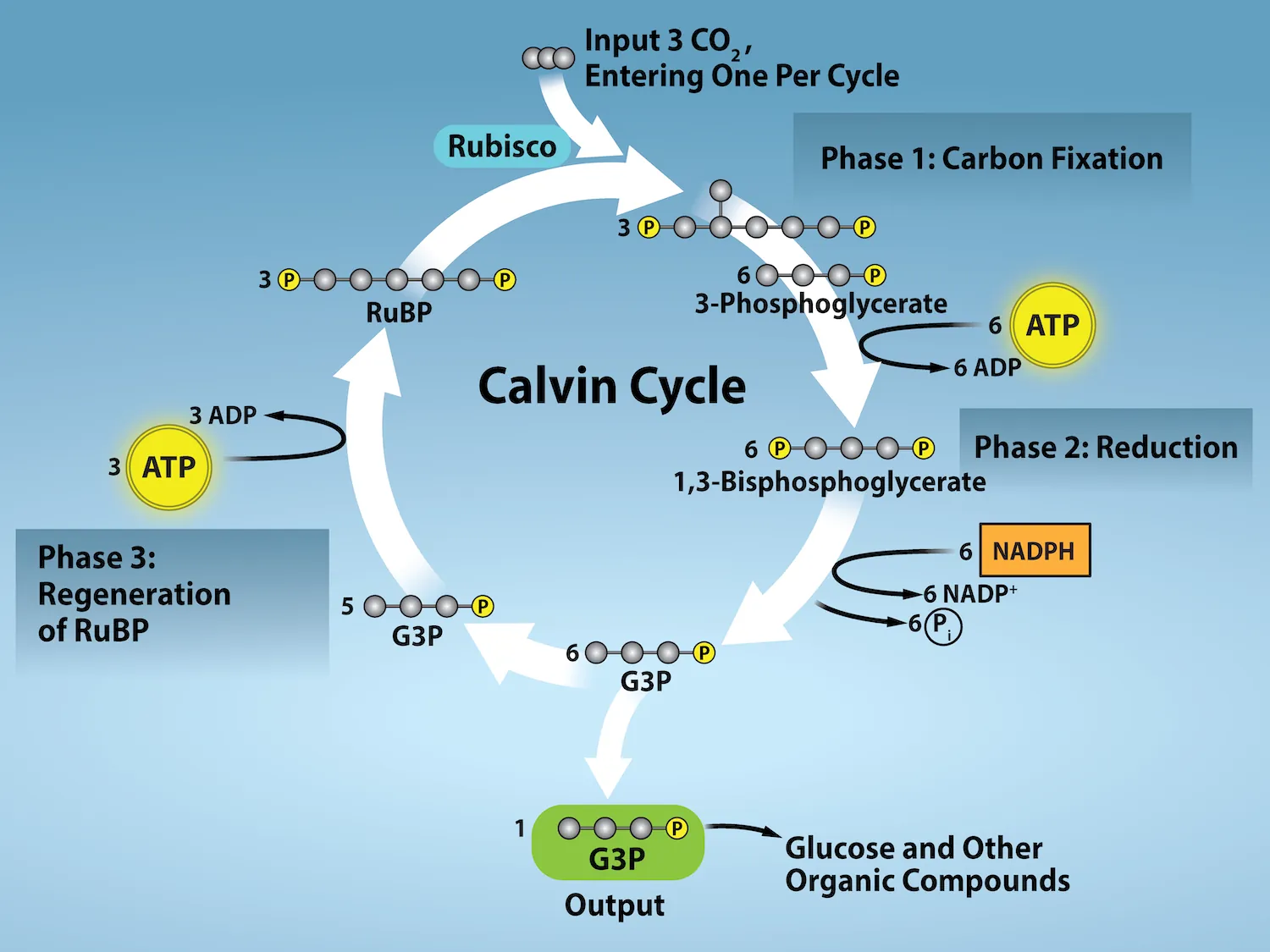
calvin cycle step 1: carbon fixation
-carbon dioxide is transformed into 3-PGA by the enzyme RuBisCO
-6 carbon molecule breaks into two 3 carbon molecules
-called carbon fixation because carbon dioxide is “fixed” from an inorganic form into organic molecules
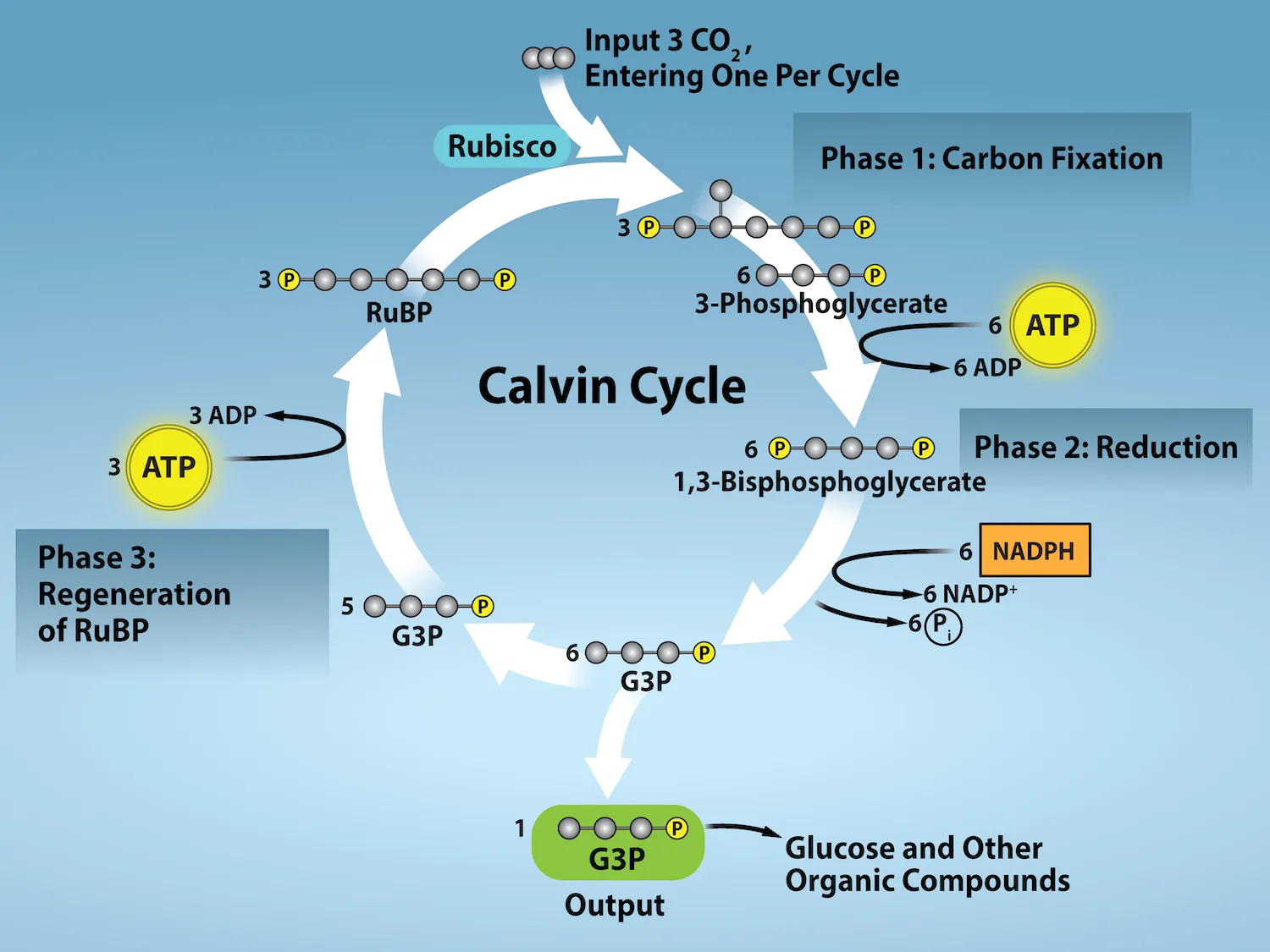
calvin cycle step 2: reduction
-3-PGA is reduced and creates 6 molecules of 1,3-BPG and then ultimately 6 molecules of G3P
-1 molecule of G3P leaves and gives us a ½ molecule of glucose
-the other 5 moleucles of G3P leave to regeneration step
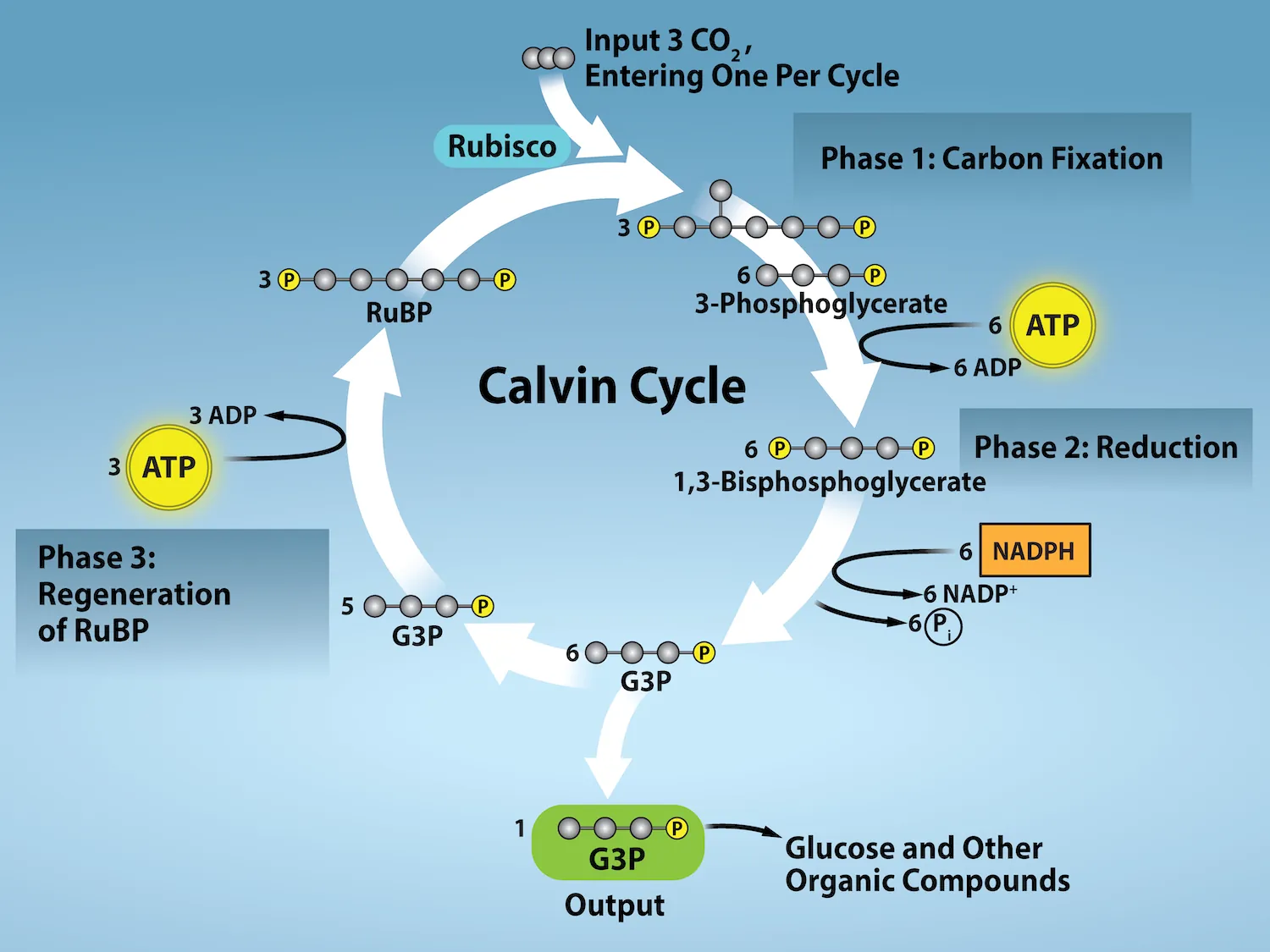
calvin cycle step 3: regeneration of RuBP
-5 molecules of G3P phosphorylated with more ATP to get RuBP molecules and calvin cycle process starts all over again
C3 photosynthesis
-”normal”
-carbon dixoide fixed into RubP to for 3-PGA
C4 photosynthesis
-common for corn, crabgrass, sugarcane (usually hot environments)
-known as space solution because it takes up carbon dioxide in one cell and moves it to another cell for rubisco to do its job properly
-mesophyll cell is where carbon dixoide is combined with pyruvate to form OAA and then malate
-malate is transferred to bundle sheath cells where carbon dioxide is removed from malate by rubisco and sugars are made
-a result of rubisco working improperly
CAM photosynthesis
-common is cactus and pineapple
-time solution
-same OAA and malate intermediate formed
-stomata open at night to take up carbon dioxide when it is cooler and less water loss
-carbon fixation happens during the day (stomata closed)
-uses more ATP
-mostly happens in dry/arid environments and humidity fluctuating areas
genome
a cell’s DNA, packaged as a double-stranded DNA molecule
human body (somatic) cells have 46 chromosomes..
while human gametes (sperm or egg) have 23 chromosomes each
diploid
-a typical body cell contains two matched or homologous sets of chromosomes (one set from each biological parent)
-designed as 2n
haploid
-human cells that contain one set of chromosomes are called gametes or sex cells
-egg and sperm cells
homologous chromosomes
upon fertilization, each gamete contributes one set of chromosomes, creating a diploid cell containing these matched pairs of chromosomes
homologous chromosomes are the same length and have specific nucleotide segments called…
genes in exactly the same location, or locus
genes
-the functional units of chromosomes, determine specific characterstics by codiong for specfic proteins
-traits are the variation of those characteristics
long strands of DNA are condensed into…
compact chromosomes during certain stages of the cell cycle
in the first level of compaction…
short stretches of the DNA double helix wrap around a core of eight histone proteins at regular intervls along the entire length of the chromosome
chromatin
DNA-histone complex
heterochromatin
-visible form of chromatin (highly condensed)
-form in M phase
euchromatin
-not visible to human eye (less condensed)
-form in G1, S, G2
nucleosome
the beadlike, histone complex (histone protein + DNA)
linker DNA
DNA connecting the nucleosome
chromatid
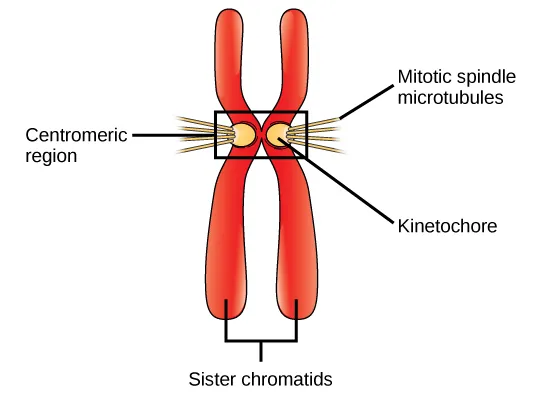
single DNA molecule of two strands of duplicated DNA and associated proteins held together at the centromere
centromere
-region at which sister chromatids are bound together
-a constricted area in condensed chromosomes
eukaryotic cell cycle
G1, S, G2, M
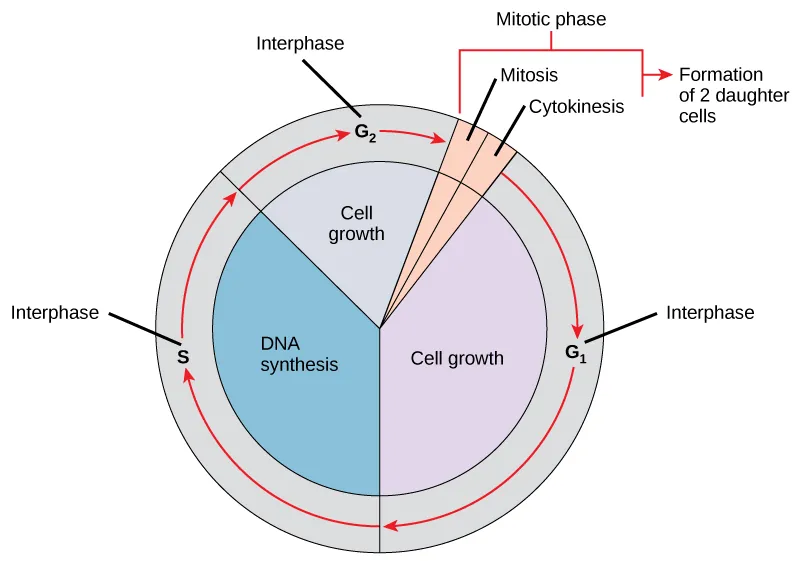
interphase
G1, S, G2
-cell grows and DNA is replicated
mitotic phase
-M phase
-the replicated DNA and cytoplasmic contents are separated, and the cell cytoplasm is typically partioned by a third process of the cell cycle called cytokinesis
G1 phase
-first growth phase and DNA checks
-put energy into growing plasma membrane, cytoplasm, organelles, etc.
S phase
-DNA replication
-result in formation of identical pairs of DNA molecules (sister chromatids) that are firmly attached at the centromeric region
-centrosome is also duplicated during S phase
G2 phase
-replicated DNA is checked
-more cell growth
-cell replenishes its energy stores and synthesizes proteins necessary for chromosome manipulation
-some cell organelles are duplicated
-the cytoskeleton is dismantled to provide resources for the mitotic phase
M phase
-mitosis (2n to 2n)
-duplicated chromosomes are aligned, separated, and move into two new, identical daughter cells
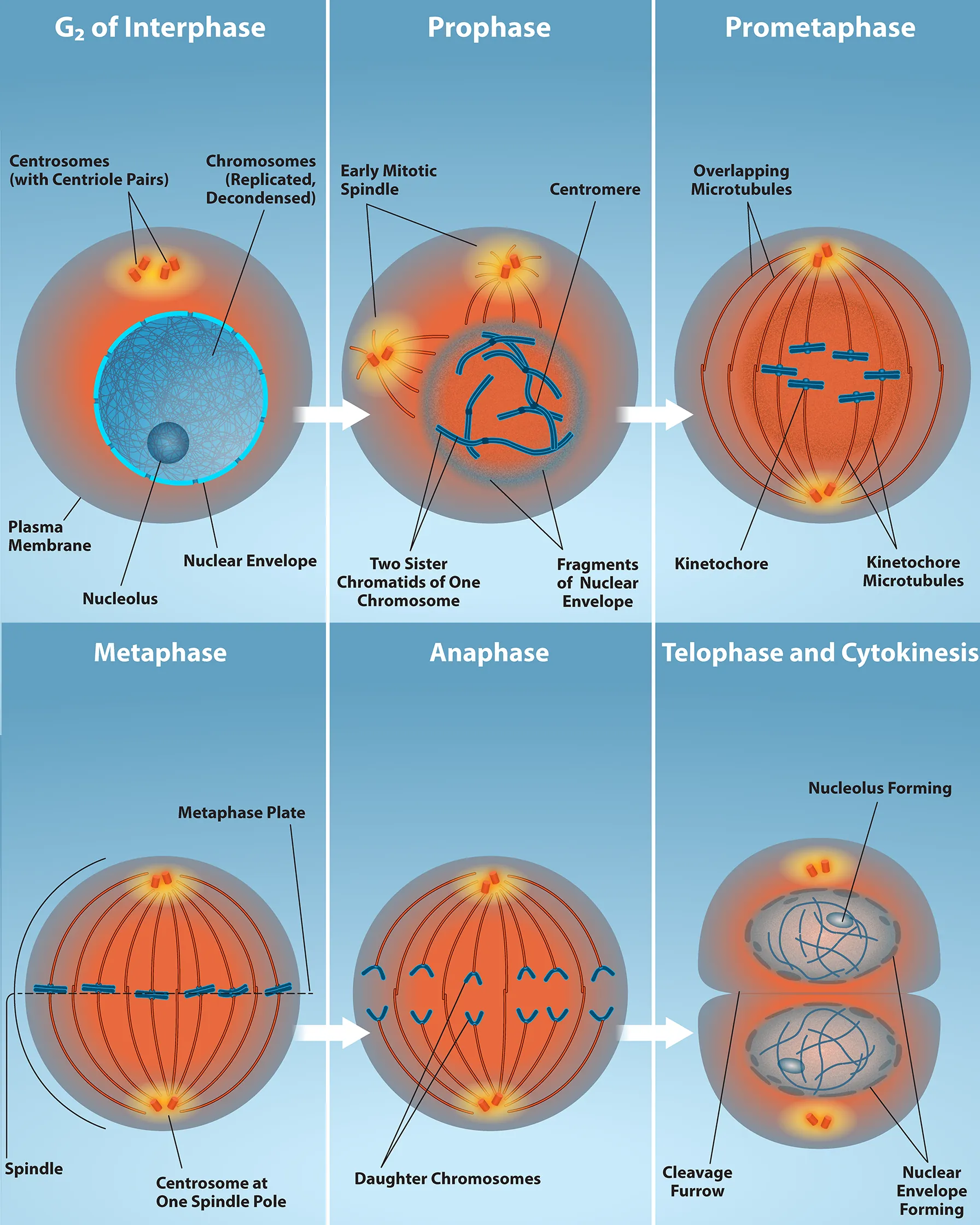
karyokinesis
first portion of mitotic phase
steps include: prophase, prometaphase, metaphase, anaphase, telophase
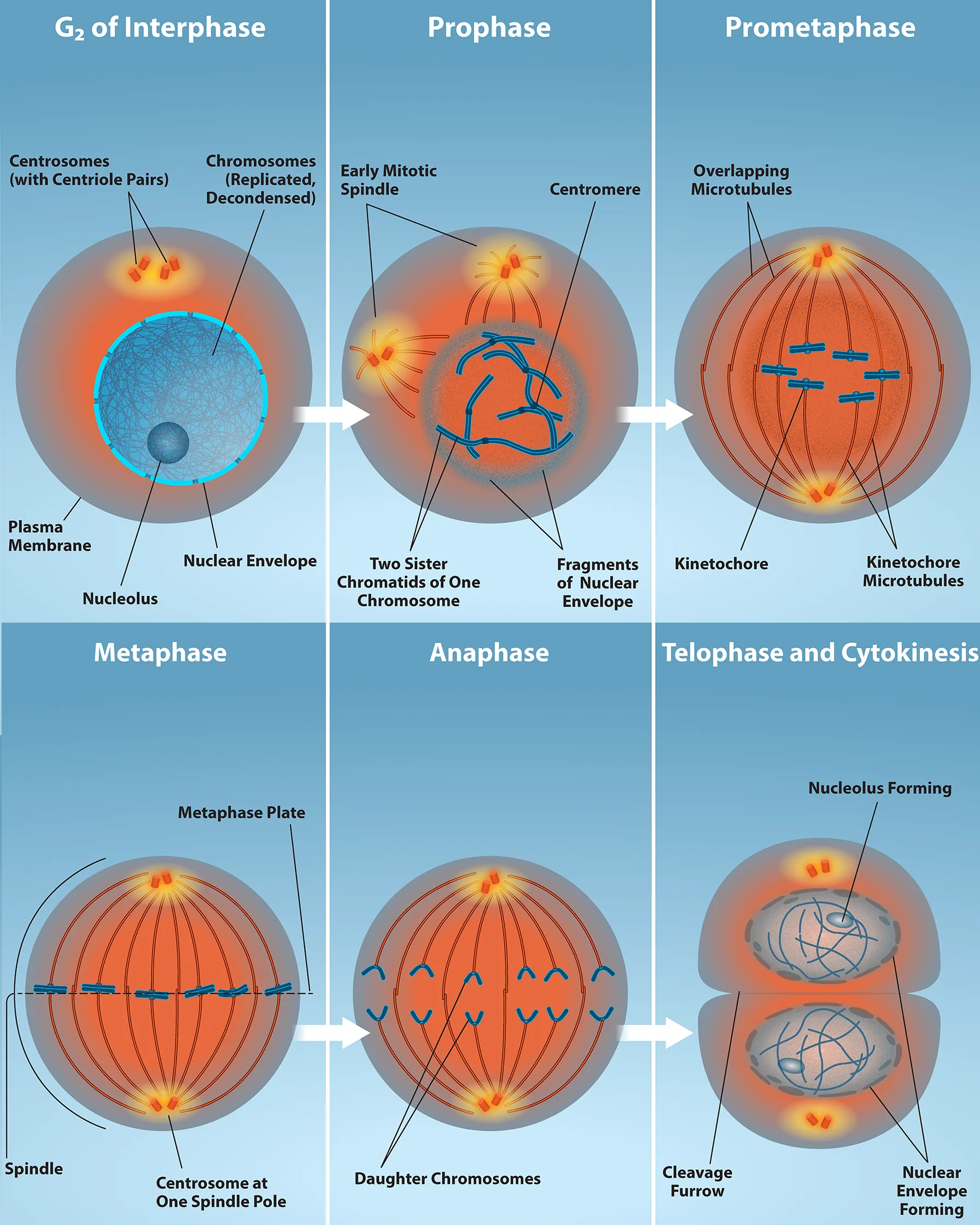
prophase
The nuclear envelope begins to break down and chromosomes condense and are now visible. Spindle fibers start to appear and centrosomes begin to move towards opposite poles.
prometaphase
Chromosomes continue to condense and are more visible. Kinetochores appear at the centromere and kinetochore microtubules attach. Centrosomes continue to move towards opposite poles.
metaphase
The mitotic spindle is fully developed and centrosomes are at opposite poles. Chromosomes are aligned at the metaphase plate (or equatorial plate), and each sister chromatid rests on one side of the plate, with spindle fibers attached to them.
anaphase
Sister chromatids are pulled apart by spindle fibers and are separated from each other. Each chromatid is now a chromosome.
telophase
Chromosomes arrive at opposite poles and start to decondense and become less visible. The nuclear envelope reassembles and begins to surround each new set of chromosomes. The mitotic spindle assembly breaks down and the division of the cytoplasm begins via cytokinesis.
cytokinesis
the physical separation of the cytoplasmic components into the two daughter cells
to prevent a compromised cell from continuing to divide…
there are internal control mechanisms that operate at three main cell cycle checkpoints: end of G1, G2/M transition and during metaphase
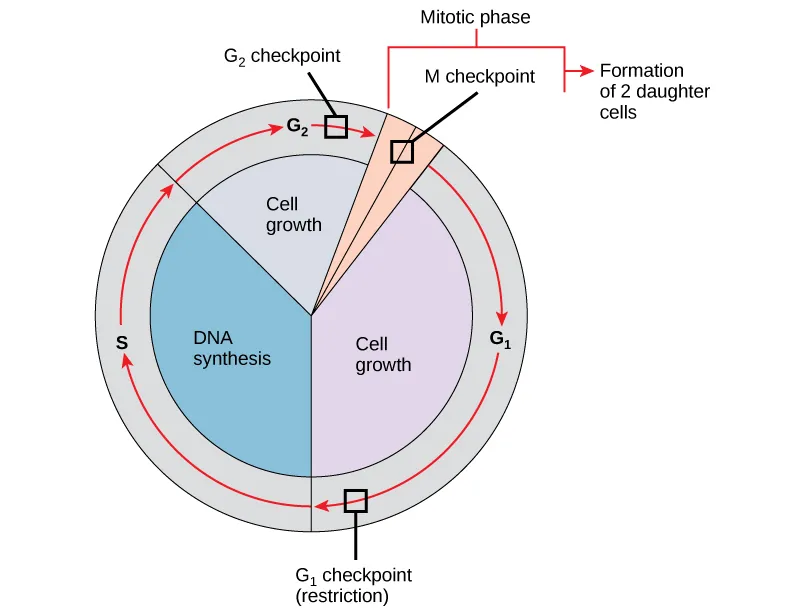
cell cycle control
-cyclin dependent kinase (CDK) and cyclin are main regulators of G1/S checkpoint and responsible for allowing cells to pass
cyclines and cyclin-dependent kinases…
-are termed positive regulators
-responsible for the progress of the cell through the various checkpoints
tumor suppressor genes
segments of DNA that code for negative regulator proteins, the type of regulators that, when activated, can prevent the cell from undergoing uncontrolled division
negative regulators..
stop the cell cycle
the best understood negative regulator molecules are…
retinoblastoma protein (Rb), p53, and p21
retinoblastoma protein (Rb), p53, and p21
a group of tumor suppressor proteins common in many cells
-allows or prevents cell progression by preventing or promoting expression of CDK inhibitor; directs DNA repair
CDK inhibitor proteins…
prohibit damaged DNA from being further replicated in S phase
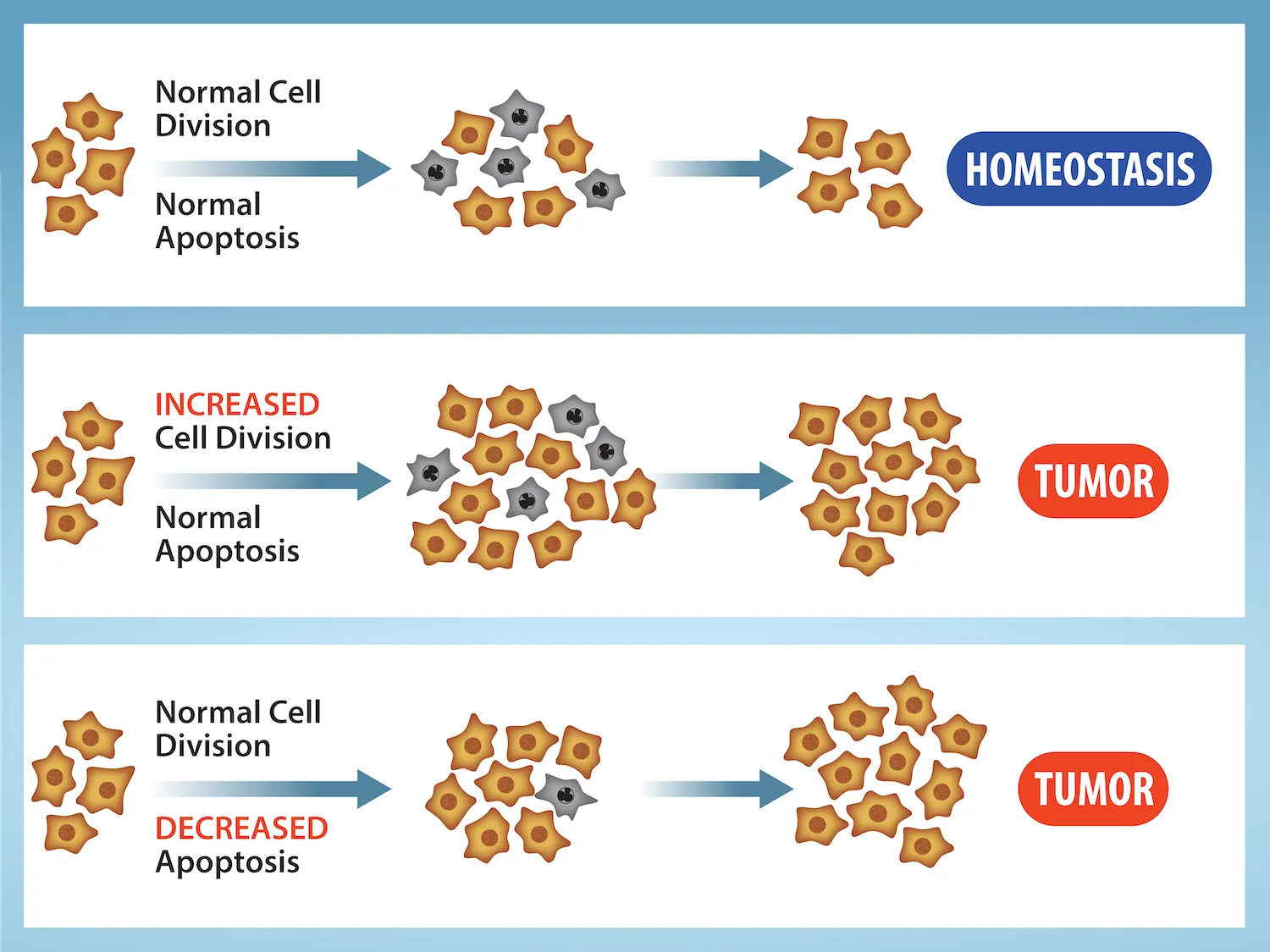
cancers are malfunction of checkpoints in the cell cycle…
typically the G1 checkpoint
cancer happens as a result of damaged proteins not being able to properly check DNA before it undegoes replication..
and incorrect DNA is replicated over and over again and often results in the formation of a tumor
proto-oncogenes
-cell cycle regulators that genes code for
-normal genes that, when mutated in certain ways, become oncogenes (genes that cause a cell to become cancerous)
meiosis
the nuclear division that forms haploid cells from diploid cells, and it employs many of the same cellular mechanisms as mitosis (gamete formation)
-2n —> n (not exact copies)
meiosis I
-2n —> n
-has S-phase
stages of meiosis I
-replicated pairs of homologous chromosomes
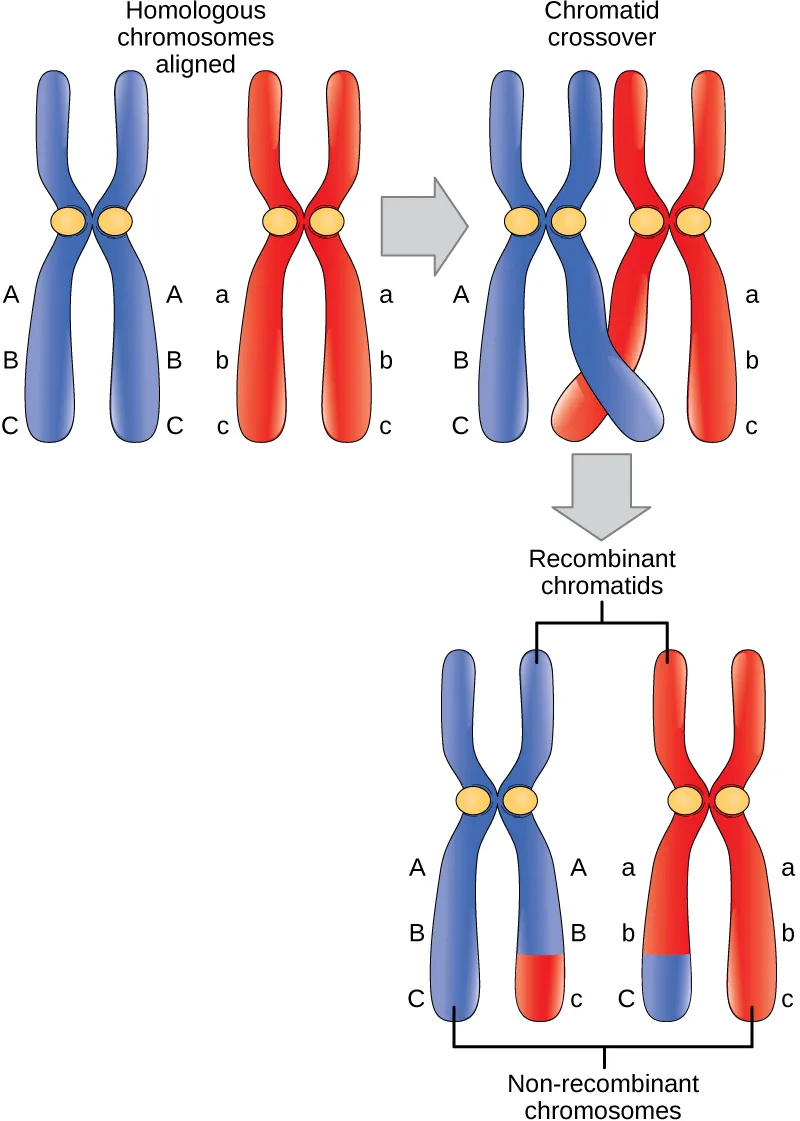
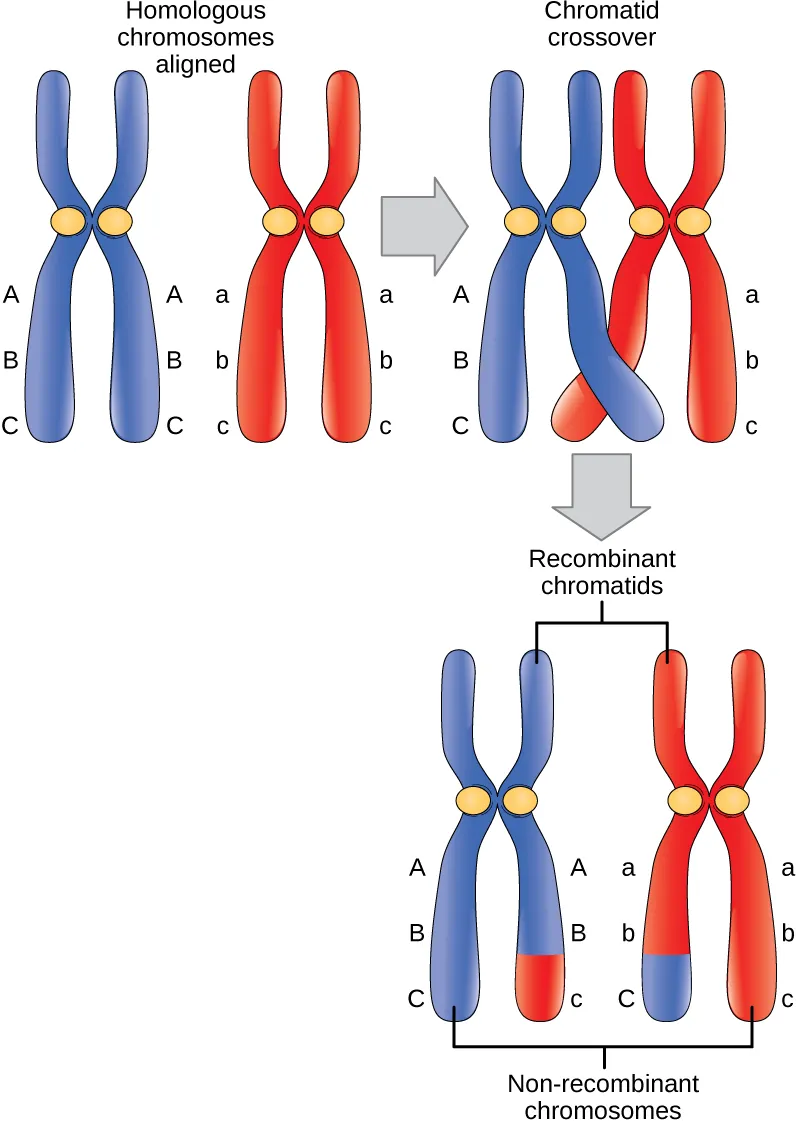
-homologous pairs come in contact and exchange portions to their chromosomes between non-sister chromatides
-the result is an exchange of genetic material between homologous chromosomes
-makes either maternal or paternal cells
-end of meiosis I makes two new haploid cells
meiosis prophase I
-key event is the attachment of the spindle fiber microtubules to the kinetochore proteins at the centromeres
-when crossing over occurs
synapsis
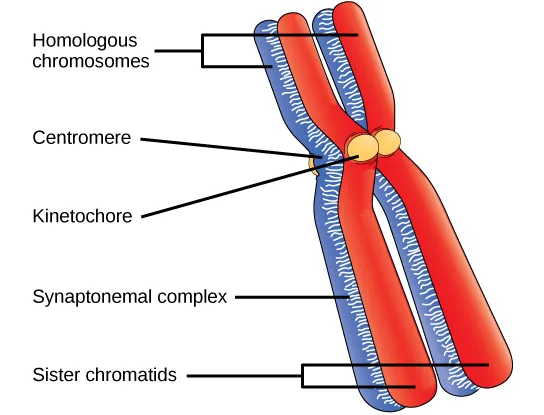
the tight pairing of the homologous chromosomes
-the genes on the chromatids of the homologous chromosomes are aligned precisely with each other
synaptonemal complex
a lattice of proteins between the homologous chromosomes
-first forms at specific locations and then spreads outward to cover the entire length of the chromosomes
-homologues held together by cohesin
crossing over
-synaptonemal complex supports the exchange of genetic material between nonsister chromatids resulting in chromosomes that incorporate genes from both parents of the organism
-increases genetic diversity
meiosis metaphase I
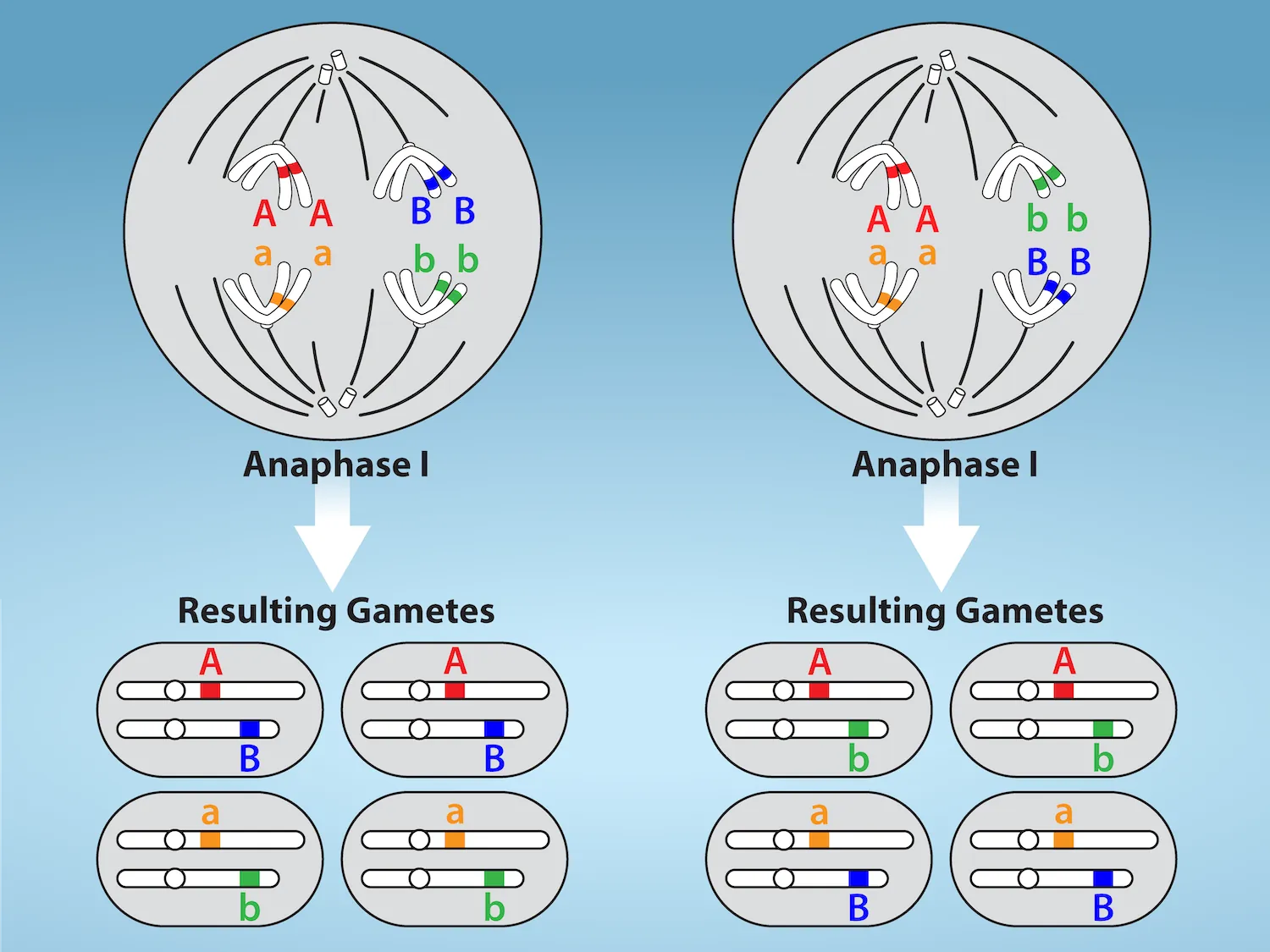
-homologous chromosomes are arranged at the metaphase plate
-each homologous pair is oriented randomly at the equator (randomly assorted)
the randomness in the alignment of the recombined chromosomes at the metaphase plate, coupled with the crossing over events between nonsister chromatids…
are responsible for much of the genetic variation in the offspring
to summarize, meiosis I creates genetically diverse gametes in two ways:
during prophase I, crossover events between the nonsister chromatids of each homologous pair of chromosomes generate recombinant chromatids with new combinations of maternal and paternal genes
the random assortment of tetrads on the metaphase plate produces unique combinations of maternal and paternal chromosomes that will make their way into the gametes
meiosis anaphase I
-microtubules pull the linked chromosomes apart
-the sister chromatids remain tightly bound together at the centromere
-the chiasmata are broken in anaphase I as the microtubules attached to the fused kinetochores pull the homologous chromosomes apart
meiosis telophase I
separated chromosomes arrive at opposite poles
two haploid cells are the result of the first meiotic division of a diploid cell
-the cells are haploid because at each pole, there is just one of each pair of the homologous chromosomes
-therefore, only one full set of the chromosomes is present
meiosis II
-the sister chromatids within the two daughter cells separate, forming four new haploid gametes
-n to n
-no S phase
meiosis prophase II
-if the chromosomes decondensed in telophase I, they condense again
-if the nuclear envelopes were formed, they fragment into vesicles
meiosis metaphase II
the sister chromatids are maximally condensed and aligned at the equator of the cell
meiosis anaphase II
-the sister chromatids are pulled apart by the kinetochore microtubules and move toward oppostie poles
-nonkinetochore microtubules elongate the cell
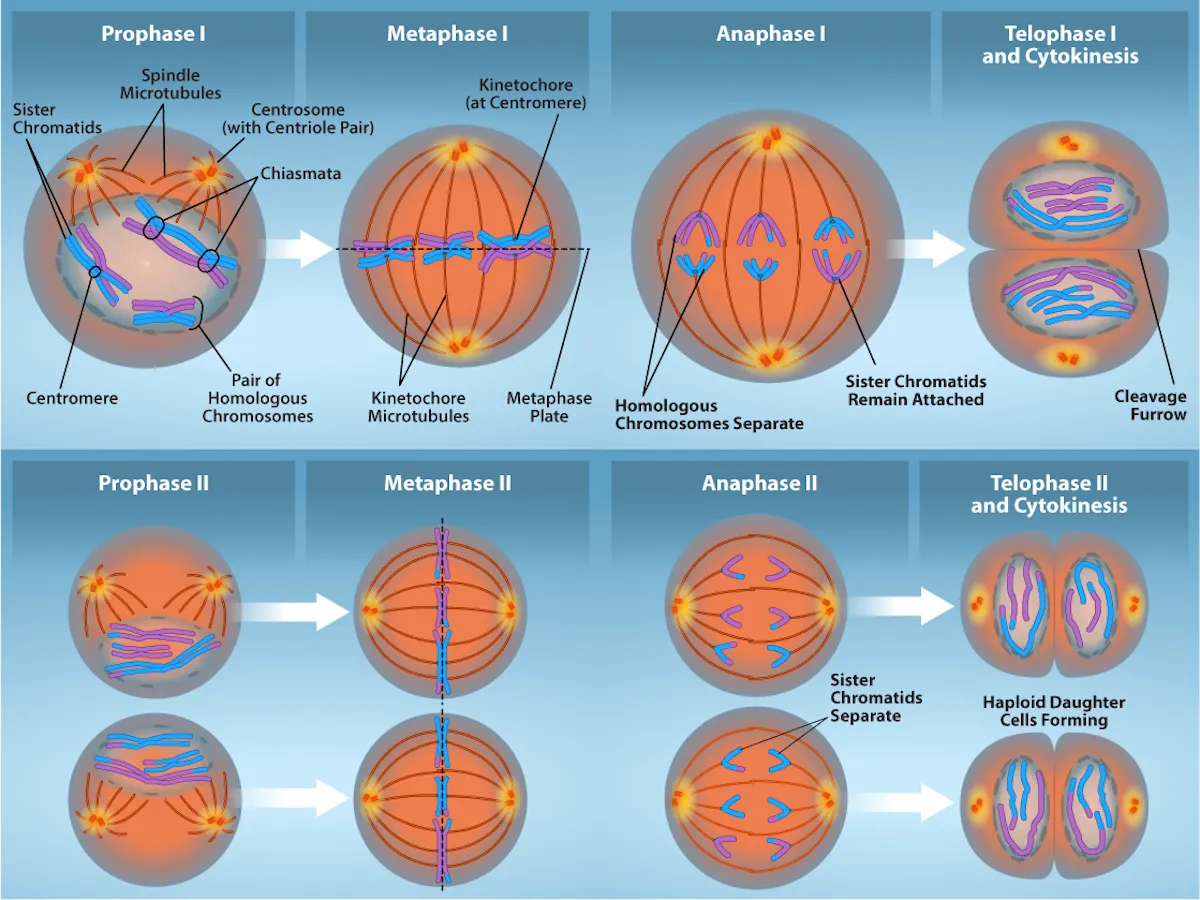
meiosis telophase II
-chromosomes arrive at oppostie poles and begin to decondense
-nuclear envelopes form around the chromosomes