Lecture 4&5 Planetary Biogeochemistry in Climate Regulation
 Call Kai
 Learn
Learn Practice Test
 Spaced Repetition
 Match
Match Flashcards
 Knowt Play
1/28

There's no tags or description
Looks like no tags are added yet.
Name | Mastery | Learn | Test | Matching | Spaced | Call with Kai |
|---|
No analytics yet
Send a link to your students to track their progress
29 Terms
When did life begin?
In the Precambrian Era 3.5 billion years ago
What happend in the Precambrian Era?
4,600 - 590 mya
Mostly unicellular organisms
Absence of O2
Anaerobic metabolism
Very high CO2
What was the Paleozoic Era?
590-250 mya
Life forms adapted to land (395 mya)
When was the first mass extinction event?
65 mya
Cleared way for the rise of mammals
When did cyanobacteria develop?
cya. 3 billion years ago
Performed oxygenic photosynthesis
Lack of predators and large amounts of CO2 allowed it to thrive
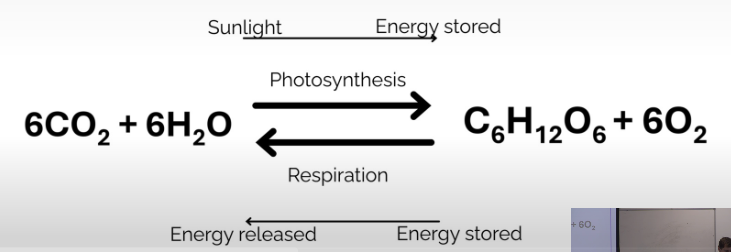
Why is oxygen photosynthesis important?
Organisms take up CO2 to make organic carbon and produce O2 in the process
Removes CO2 from the atmosphere and adds O2 to the atmosphere
Led to life evolving
What happens to cyanobacterial biomass when they die off?
Become buried in the seabed and lock away CO2
What is the Great Oxidation Event?
A significant rise in atmospheric O2, around 2.3 bya (billion years ago)
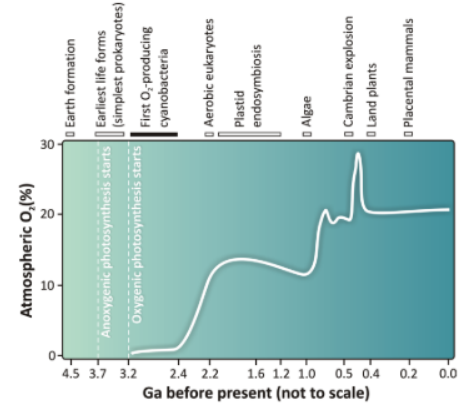
What did the elevated O2 content allow?
Evolution of aerobic metabolism, which produces more energy than anaerobic metabolism, led to an explosion in the diversity of life and gigantism (bigger organisms/mammals) - 200 mya
What eventually engulfed cyanobacteria?
Chloroplasts (descendants), were not detroyed
What makes up the modern day atmospheric concentration?
Nitrogen 78%
Oxygen 21%
Argon 0.9%
Trace gasses (incl Carbon Dioxide) 0.1%
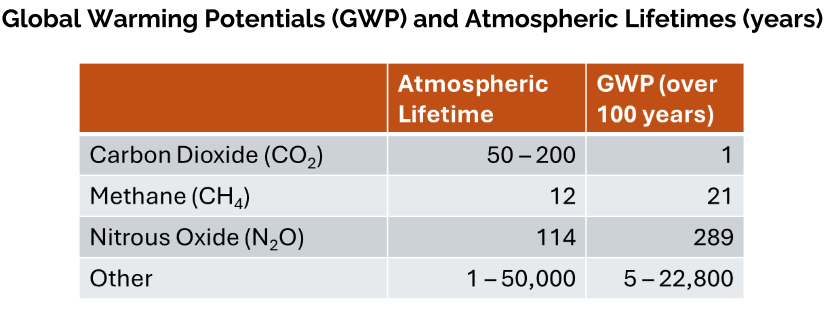
Which greenhouse gas is stronger than CO2?
Methane, despite low concentration (0.442%)
Global Warming Potentials (GWP)
How much heat a gas will trap over a given period of time relative to the same amount of carbon dioxide
Microbial methane production
Organism: Methanogens
Condition: Anoxic (absence of oxygen), e.g. archaea produce it through the reduction of carbon dioxide - uses hydrogen in the reduction process to generate energy
Anoxic conditions, as enzymes are sensitive to oxygen, and the pathways would be reversed
Omitted from methanogenic organisms
What are the pathways in which methane can be created?
Hydrogenotrophic
Methylotrophic
Acetoclastic
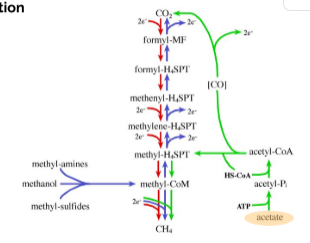
What is methane?
Organic compound, used as “fuel” by organisms

What are Methanotrophs?
Use methane oxidation under oxic conditions to produce energy, which reduces the net amount ommitted, but requires oxygen

What are the other natural sources of atmospheric methane?
Wetlands: tropics (warmer conditions), Northern latitude, and other
Termites
Ocean
Freshwater
Geological
Ruminants from cows
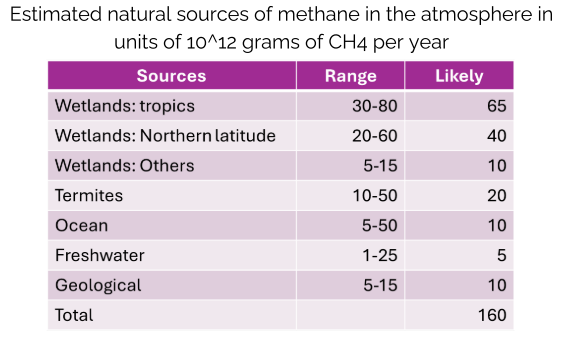
Why are termites producers of methane?
Gut is an ‘organic’ rich and oxygen poor environment
Break down wood and need microorganisms in their gut to do this
Then microorganisms can convert the organic carbon into methane
What are some anthropogenic sources of atmospheric methane?
Coal mines
Natural gas
Petroleum industry
Animal waste
Landfills
Rice paddies - anoxic conditions
Enteric fermentation
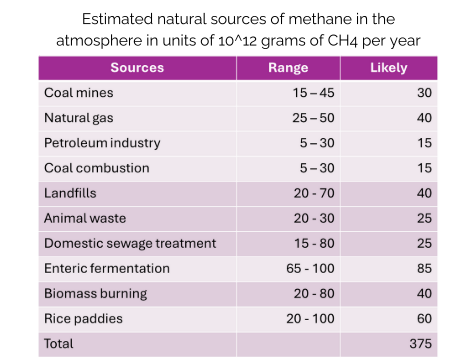
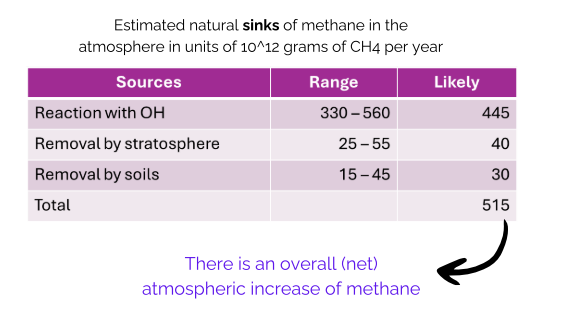
What about sinks of methane?
Reaction with OH
Removal by stratosphere
Removal by soils
Through chemical reactions that take place, overall atmospheric increase of methane
What else does biological productivity need other than carbon?
Phosphorus and Nitrogen (Redfield Ratio)
What is phosphorous for?
DNA, RNA, ATP, cell membranes (phospholipids)
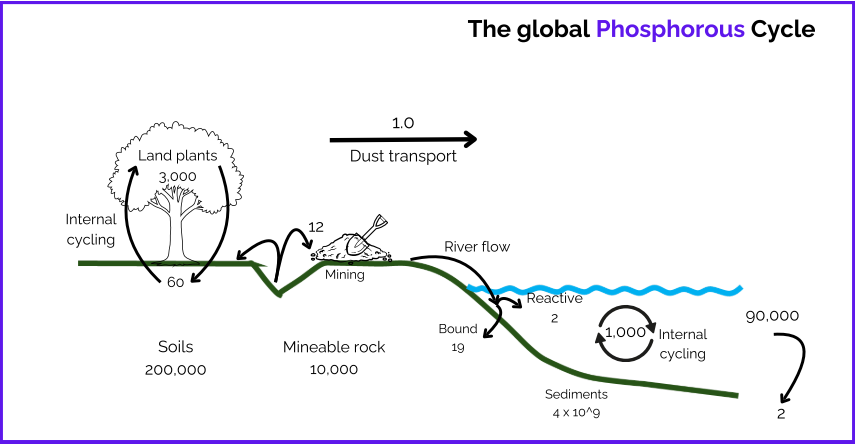
Phosphorous cycle
Tide up in marine sediments
Humans interact through mining for fertilisers
Key limiting nutrient, not evenly distributed
Slow cycle influenced by human activities
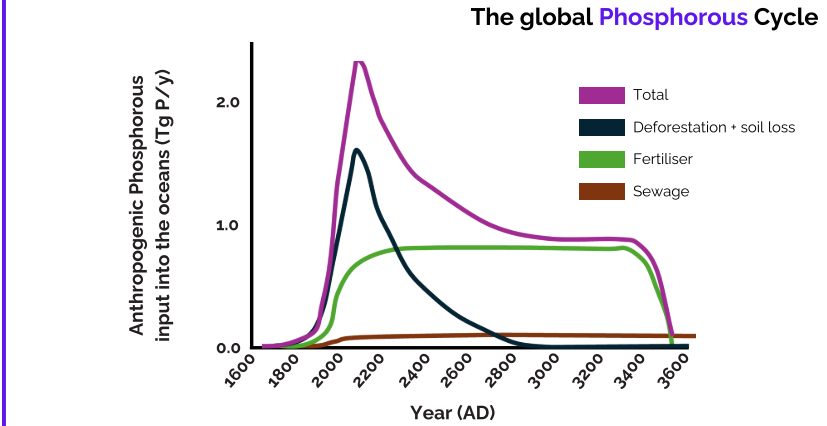
What are the anthropogenic phosphorus inputs into the ocean?
Phosphorus may run out in 1000 years from mining sources
Sewage
Fertiliser
Deforestation + soil loss
What will happen to the marine ecosystem when phosphorus runs out?
Reduced productivity
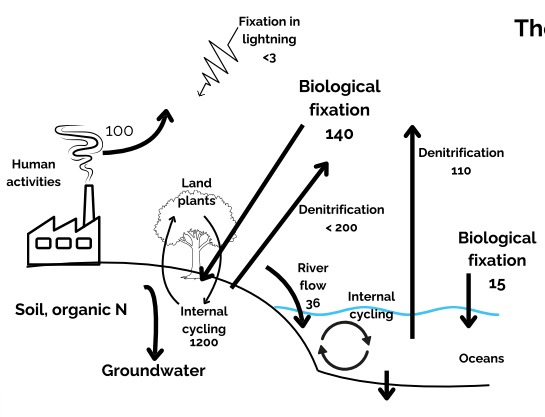
Nitrogen cycle
Abundant in the atmosphere
Influenced by fertiliser use
Biological fixation
Nitrogen gas converted into ammonium
Needed by plants
Transported by river flow
Organisms convert N2 → NH3
Plants need NH4+ or NO3-
How do we produce nitrogen fertilisers?
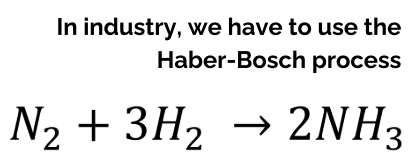
Nature: Nitrogen-fixing organisms convert nitrogen gas to ammonia (Nitrogen fixation by diazotrophs)
Industry: Haber-Bosch process (Nitrogen gas → ammonia = base of fertiliser)
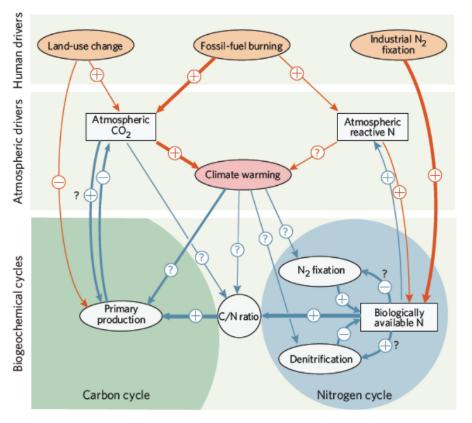
How do carbon, nitrogen and phosphorous effect the climate?
Influence primary productivity
Nitrogenous compounds impact climate warming
How phosphorus and nitrogen cycles respond to climate change is unclear