Marketing Final
 Call Kai
 Learn
Learn Practice Test
 Spaced Repetition
 Match
Match Flashcards
 Knowt Play
1/197

There's no tags or description
Looks like no tags are added yet.
Name | Mastery | Learn | Test | Matching | Spaced | Call with Kai |
|---|
No analytics yet
Send a link to your students to track their progress
198 Terms
Definition of Marketing
(Defined by the four Ps) Marketing can be defined as creating, communicating, delivering, and exchanging offerings that have value for consumers, partners, clients, and the world at large
Common Misconceptions of Marketing
That it’s just advertisement
That it’s a scheme or plot to trick people into purchasing
Goal of Marketing
To provide and OPTIMIZE value to the consumer, company, and world at large > effective marketing satisfies WHAT the customer wants and NEEDS while also creating value for the company at large
Definition of a Market?
A set of actual or potential consumers for a certain product or service > Specifically people with the ability AND desire to buy
Empathic Design
Strategy based on fulfilling the consumers wants or needs > Marketer putting themselves in the shoes of their consumer to identify pain points, needs, or opportunities those consumers did not yet express. Made up of 3 steps:
Observe the customer
Identify pain points or desires
Brainstorm solutions or products
Evolution of Marketing Orientations
Separated into 4 distinct phases:
Product based orientation
Sales based orientation
Market based orientation
Value based orientation
Product Based Orientation
Earliest framework of marketing> basically the idea or orientation that the Products price and quality alone would sell the product itself
Sales Based Orientation
Orientation a little later down the line where the idea was AMOUNT> sell as much as possible to as many people as possible> quantity over quality approach
Market Orientaiton
More recent marketing orientation focused basing all firms actions on the wants and needs of the consumer
Valued Based Orientation
Most recent and current approach to marketing where the firm focused on retaining and keeping the same consumers happy and integrated with the firm over time> building CLV and value > functional integration
Strategic Analysis Framework of Marketing
Basically the 3 things a firm must analyze before taking action
the 3 Cs= consumer, company, competitors
The 3 Cs
The 3 things a firm must consider:
Customer= Satisfying their wants and needs and knowing their CLV
Company= Developing companies UVP (Unique value proposition) and resources
Competitor= Understanding competitive landscape and building positioning around that landscape to maintain competitive advantage > analyzing direct and indirect competitors
SWOT analysis
Part os strategic analysis part of cycle: Used to understand a firms internal and external environments in marketing
Stands for
Strengths = Internal capabilities and unique standpoints
Weaknesses= Internal flaws or limitations
Opportunities External factors allowing a firm to grow
Threats= External factors hindering a firms growth
CD-Step+PESTD frameworks
These are used to assist in external macro-level environmental scanning when trying to evaluate opportunities or threats as part of SWOT analysis CD-Step stands for:
Cultural= Values+beliefs
Demographic= Personal characteristics> diversity, gender
Social = Like culture> social trends
Technological = Innovations
Economic= Growth rates> purchasing factors
Political = laws and regulations
Marketing Plan and Execution
The road-map that specifies the course of action affecting EVERY company and ensures that companies decisions meet their values, mission, and objectives
Built into three phases:
Planning= Defining mission and objectives + SWOT
Implementation = Identify opportunities through STP and implement 4 Ps
Control = look at consumer data and monitor insights for continued growth
STP
Vital part of the marketing plan> part of implementation phase and also part of strategy
Stands for:
Segmentation = dividing up the market into specific groups of consumers
Targeting = picking a group to focus efforts towards
Positioning = developing and defining the product in a way that fills unique territory of the mind int hat target
4 Ps
Definition of marketing and also tactical phase to executor marketing strategy:
Product = creating value through offering
Price = capturing that value in what customer pays
Place distributing and delivering the product
Promotion = communicating value to the customer
Ansoff Matrix
4 quadrant matrix focused on growth strategy: looks at new and existing markets and products to define four strategies:
Marketing penetration: Lowest risk> Selling existing product in existing market (Santa coke)
Market Development: Selling existing product in new market (foreign entry or geographic expansion)
Product Development: Selling new product in existing market (cherry coke)
Diversification: New product in new market (Vitamin Water)
CLV
Stands for customer lifetime value and also hones in on growth strategies
CLV represents the total expected value a customer brings a firm over the entire length of their relationship:
Shows the importance of customer retention as attracting new customers costs 25x more than retaining ones
Explains the existence of CRM Customer relationship management strategies
CRM
Stands for Customer Relationship management
Which is a strategy through which to boost CLV
Examples are loyalty programs that offer incentives for loyal customers
Market segmentation
The process of dividing up a market by identifying unique groups of individuals differentiated by certain traits or buying behaviors
Market Segment
A group within a market predicted to respond the same way to a marketing action and express similar product needs
Why segment
GOAL= Find segment small enough to be able to serve effectively, but large enough to generate profit
Helps firm define who their customers are and what they want
Clarifies marketing objectives and improves resource allocation
Segmentation Strategies
Undifferentiated (mass) marketing
Differentiated (segmented) marketing
Concentrated (niche) marketing
Undifferentiated Marketing
Marketing to the entire market using the same strategy to reach the widest audience> but risks losing appeal for some
Differentiated Marekting
Creating different offerings for different target segments of the market to increase sales> but expensive ad presents challenges
Concentrated (niche) marketing
This is when you only focus on offering to one specific target segment to establish a competitive advantage amongst a minimal but VIABLE audience.
Steps to targeting process
Identify strategy and objectives of the firm
Segment the market
Evaluate the segments (market size and potential)
Select target market
Develop marketing actions> 4 P’s
Criteria for Desirable target
Size of target segment
Potential growth rates
Cost to market to them
Competitive placement in their minds (competitive position)
Positioning
Positioning is essentially how a brand or product fills a unique territory of their target segments mind, it’s the effort to do so.
Positioning Statement and format
A statement brands or products come up with to differentiate and define their value
Our company/product is for (target market/segment) and is unlike other brands/products within (Frame of reference) as it offers (point of difference/competitive advantage).
POD (Point of difference)
The strong favorable and unique associations an individual makes with a product or brand to be relevant and desirable as compared to other offerings
Frame of reference
The other products or options competitors have in the market
Points of Parity
Ex: All grocery stores must have fresh fruit
Points or associations that all brands (competitors alike) must share or have for the consumer to even consider them as part of that category or market
Perceptual (Positioning) maps
Visual tools that utilize x and y axis to plot where consumers visualize and perceive different products or brands on the basis of two key attributes/offerings (ex price and quality).
Repositioning
Ex: Apple Watch having to change positions itself comparing to luxury Swedish watches and luxury consumers to fitness focused individuals
This is when a brand or product changes it’s position in a consumers mind by changing consumer, frame of reference, or competitive point of difference> or often all.
Segmentation Bases
There are 4 primary segmentation bases marketers use to split market into groups:
Geographic
Demographic
Psychographic
Behavioral
Geographic segmentation base
Looking at individuals country, city, urban vs. rural = location
Demographic segmentation base
Looking at a consumers age, family size, gender, race, income= basically census kind stuff
Psychographic segmentation base
Looking at a consumers lifestyle, values, attitudes, or personality types= their persona
Behavioral segmentation base
Looking at a consumers actions and observable behavior such as prior product uses and buying behaviors
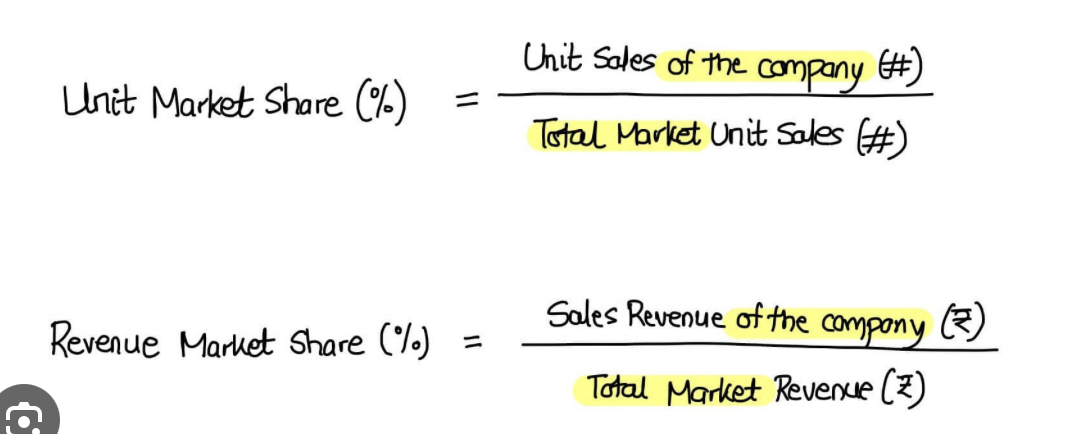
Market Share
The total percent of the total market that your brand controls
Can be calculated in units or sales
Equation for market share
Total units or sales of your company over time period/ total units or sales within whole market over time period
Step-Down Analysis
Used to estimate your market share by collecting market data about proportions to help
Lots of multiplication
Equation or formula for step-down analysis
Series of multiplication o eventually be able to use same market share equation> multiplying national size by specific segmentation base percentages
Costs
How much money a firm/company spends on the creation of unit
Broken into fixed and variable
Revenue
Money that comes back through sales
Profit
What comes from the difference between revenue and costs profit P
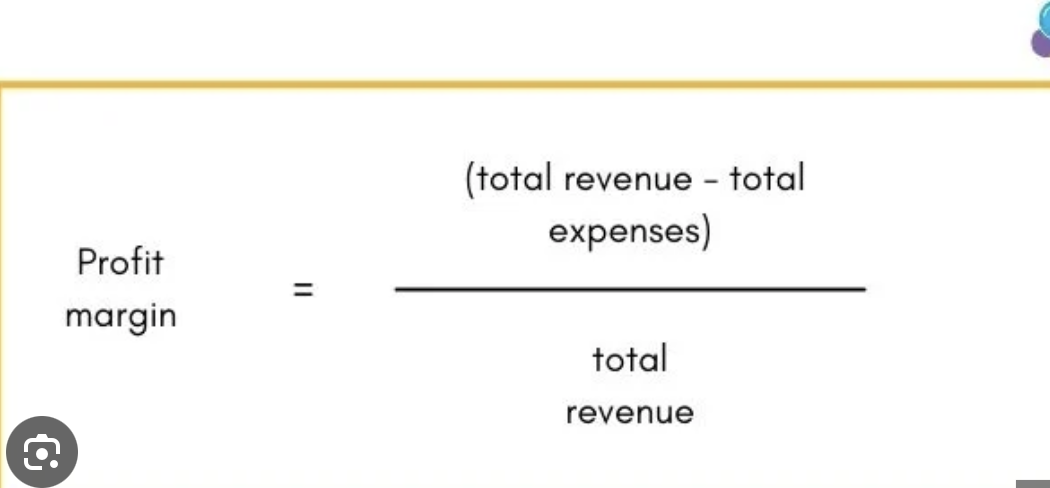
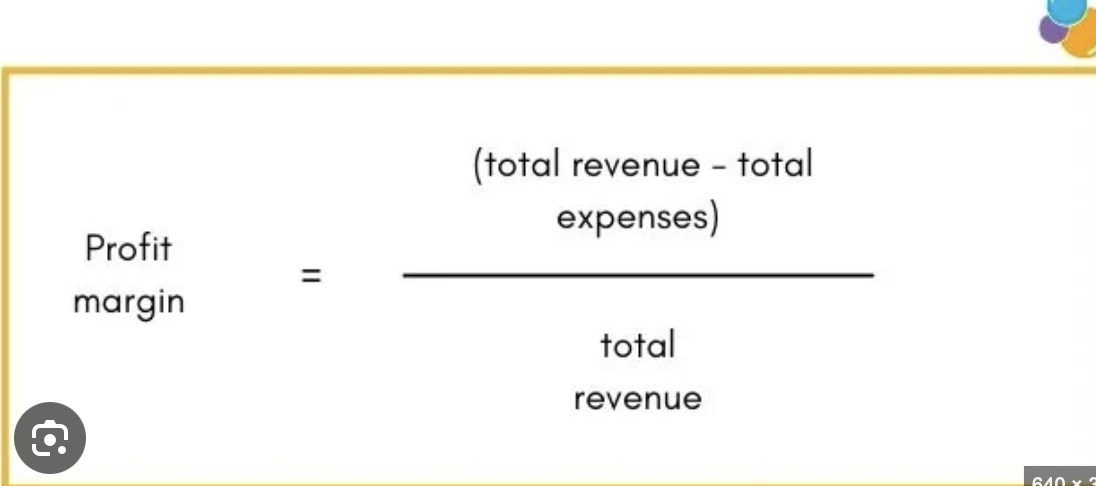
Profit margin
The profit expressed in the form of it’s percentage of the revenue
Profit margin equation
profit (revenue-costs)/ revenue
Unit analysis
Looking at the costs, revenue, and profit/profit margin in relation to a single unit
Fixed Costs
Costs to the firm that do not change varying on how many units a firm sells
Ex: CEO salary, rent for warehouse/factory, etc
Variable Costs
Also referred to as COGS, these are the costs that fluctuate depending on units sold and level of production
Ex: Raw materials, advertising budgets based on growth
Cost equation
Variable cost+fixed cost= total cost
COGS
Also know as variable costs> stands for costs of goods sold
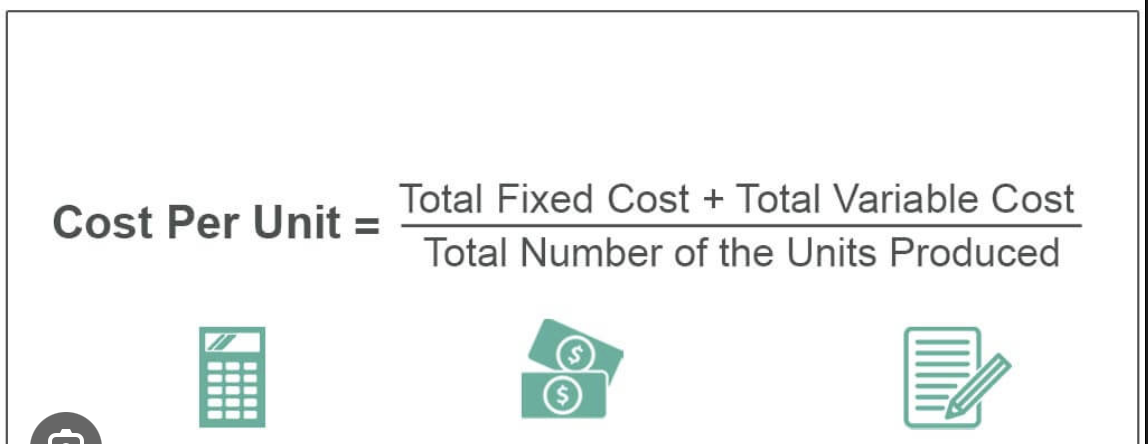
Cost per unit equation
variable cost+ (fixed cost/units sold) or variable cost+fixed cost/units sold
Contribution margin
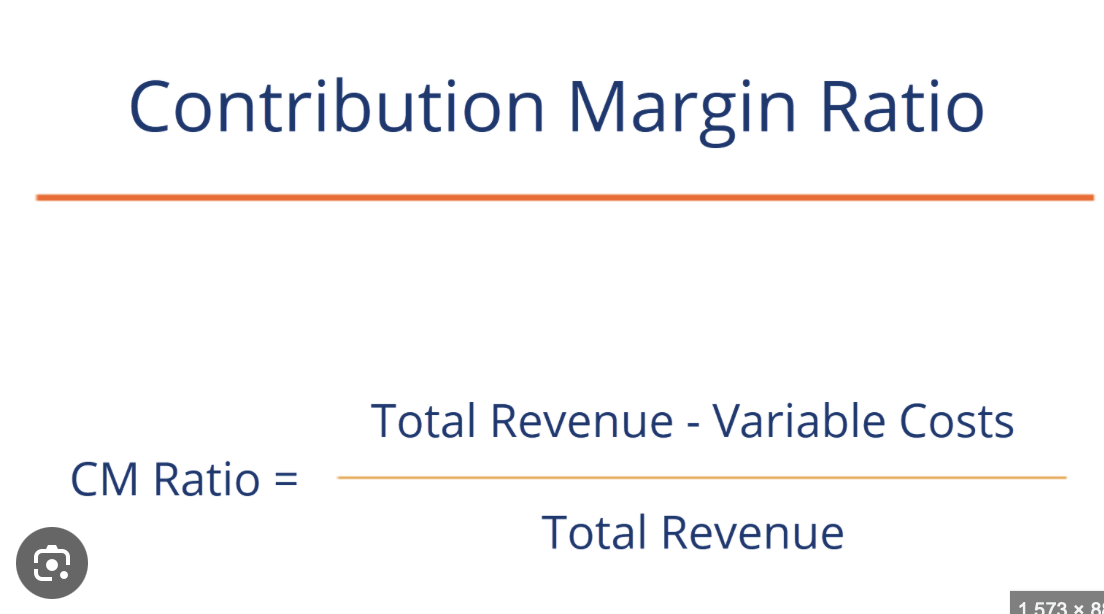
The amount expressed in a percentage, left when you subtract variable costs from the sale price
How much money is left to pay off the fixed costs > Used to contribute to paying off fixed costs previously invested in
Contribution margin equation
Price per unit-variable costs per unit/ Price per unit
Profit Contribution
The money left over after accounting for variable AND fixed costs> What the company/firm is actually making
Also just called profit
Profit contribution equation
Price per unit- fixed costs+variable costs
Profit margin
Profit expressed as a percentage
Profit margin equation
price per unit-fixed+variable costs/ price per unit
Markup on cost
How must a retailer marks up the cost from what they paid the wholesale to account for their own variable costs
Markup on cost equation/formula
price per unit-variable cost per unit/ variable costs per unit
Summary chain of fixed and variable costs
Price per unit-variable costs per unit= contribution margin(contribution per unit)- fixed costs per unit= profit per unit
Break Even analysis
The point at which a firms profit and costs equal each other so 0 profit is made but 0 loss is made
Can be calculated in units or sales
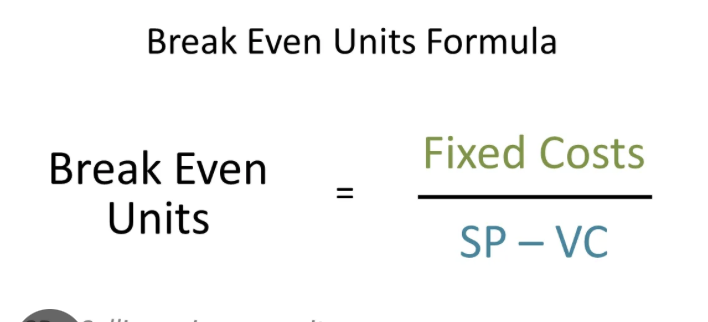
Break even in units formula
Break even units= total fixed cost/ unit price-variable costs
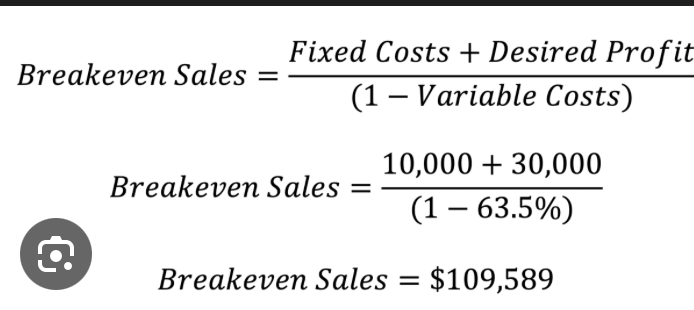
Break even profit equation/formula
Break even profit= total fixed costs/ 1- variable costs/unit price
How to decide what approach to pick when performing a break even to calculate market share
compare market share with other companies
Price Elasticity
When the price in a product changes the demand for that product > measures how responsive a demand is to a change in price
Price Elasticity Equation
% change in demand/% change in price
Equation for finding % change in demand/price
new-old/old Ex; New price-old price/new price
|PE|<1
Price is inelastic meaning that an increase (decrease) in price yields less than proportional decrease(increase) in demand
Ex: Gas, needed items for survival, strong brands
|PE|>1
Price Elastic meaning that the increase (decrease) in price leads to a more than proportional decrease(increase) in demand
Ex: Beef, eggs, weak brands
|PE|= 1
Very rare but this is called unit elasticity and it is when increase (decrease) in price is equal to decrease(increase) in demand
Cross price elasticity
This explains when an increase (decrease)in price for one product leads to an increase (decrease) in demand for a different product
Can be caused in two categories
Substitute products
Complementary products
Cross Price Elasticity equation
% change in demand for P2/%change in price for P1
Substitute products
Showcased by positive CPE number
ex: butter and margarine or beef and pork
Complimentary Products
Showcase by negative CPE number
Ex: razor and blade or hockey stick and pucks
Price Chains
A tool for understanding how prices increase and contribution margins are split as products pass through different intermediaries
Example of price chain
Manufacturer>Distributer>Retailer>Customer
Customer Research Methodologies
Qualitative: In-depth interviews, focus groups (8-10 people) asked about products or ads
Quantitative: Survey data
Observation: Filed study where people are sent into stores to observe customers
Biometrics: Advanced observation technique Measuring eye-tracking, heart rate, Facial EMG, and skin conductance to see attention, stress, and emotions.
Biometric testing
Used to understand consumer responses to products:
Ex:
Eye-tracking= Attention measurement
Heart Rate= Stress and emotional measurement
Facial EMG= Emotional Measurement
Skin Conductance= Stress/Arousal measurement
Research Methods WHY
Marketers use research methods to understand consumer motivations> these methods are how marketers learn
Consumer Decision Making Process
5 step process all consumers go through when purchasing from a market:
Need-recognition
Information Search
Evaluating alternatives
Purchase Decision
Post-Purchase behavior
Need recognition phase
This is the first phase of the consumer decision making process and it can be observed as the consumer drawing a difference between their current and desired state
Information Search Process
second step in the consumer decision making process which can be understood as the consumer seeking internal and external information to aid their purchasing trajectory
Two types of information search
Internal= Scanning memories of past experiences
External= using personal, public, and marketing dominated sources to guide decision
Evaluating alternatives stage
The third stage in the consumer decision making process, this stage is where you assess different options/products based on your list of specific attributes
Purchase Decision phase
This is the fourth stage of the consumer decision process and it is where you buy the chosen product
Post-Purchase Behavior
This happens once you purchase your product and can result in either post-purchase dissonance or customer satisfaction
Forms of post purchase behavior
Consumer satisfaction= the performance of the product meets or exceeds the consumers expectations therefore they continue to buy or promote to their friends
Post-Purchase dissonance= this is when the product disappoints the customer therefore leading to feelings of tension, buyers remorse, and negative reviews and word of mouth
Consumer Involvement Levels Defention
These involvement levels dictate how much time they dedicate and what kind of information search they partake in when buying a product. Three are three recognized levels:
Extended problem solving (high involvement)
Routine problem solving (low involvement)
Limited problem solving
Extended Problem solving
Also know as high involvement
This is when a consumer spends a large portion of time in the information search phase, comparing brands, prices, and options (usually for high price items like a car)
Routine problem solving
also know as low involvement
This is typically used for everyday simple products and most consumers don’t consider the brands, prices, or types and just want to spend limited time searching
Limited problem solving
This is the in between, when a consumer has a moderate information search, considering a few brands and prices but nothing crazy
Motivation
Motivation is the psychological process driving goal-oriented behaviors
Marketors often use Maslow’s hierarchy of needs to explain motivations ( physiological, safety, social, personal, and self-actualization) in order to identify the unmet needs they can fulfill to motivate purchasing
Word-of-Mouth Marketing
A form of purchasing influence> this is when individuals take recommendations from trusted others like family/friends or those they admire as they are seen as reliable and influential MORE SO THAN ADS
Viral Marketing
Used to trigger word-of mouth > this is marketing that leverages social media and building a brand persona to get consumers to spread key messages themselves
Ex: Brands experiment w their voice on twitter and instagram to develop personality and intimacy
Result: Builds conformity and informational influence playing on cognitive shortcuts
Socio-Cultural Influence
This is just when purchasing decisions are driven by culture, family, and reference groups
Conformity= people want to do as others and fit in
Informational trust= people use others information to make decisions easier and avoid time consuming investigation