Animal Health Economics
 Call Kai
 Learn
Learn Practice Test
 Spaced Repetition
 Match
Match Flashcards
 Knowt Play
1/22

There's no tags or description
Looks like no tags are added yet.
Name | Mastery | Learn | Test | Matching | Spaced | Call with Kai |
|---|
No analytics yet
Send a link to your students to track their progress
23 Terms
What is animal health economics?
The “discipline that aims to provide a framework of concepts, procedures and data to support the decision-making process in optimizing health
management.
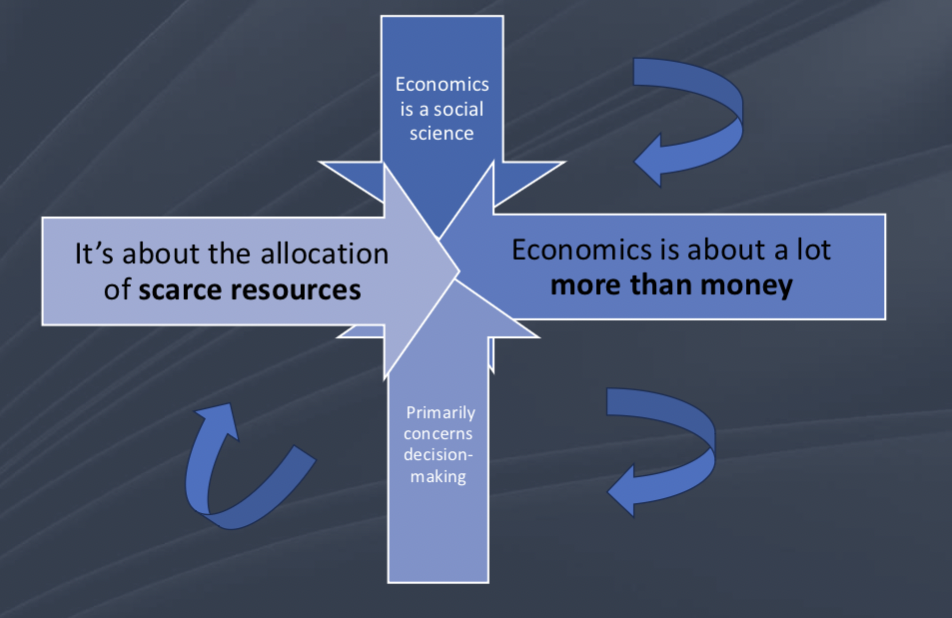
What is the main economic problem?
There are infinite wants and finite resources.
What does international level mean?
Diseases with pandemic/epidemic potential may originate in animals and spread to human
What does national level mean?
Disease outbreaks (e.g. notifiable diseases such as Foot and Mouth Disease) can significantly impact on national freedom to trade, inspection burden and freedom of movement
What does farm level mean?
Diseases (e.g. bTB) can lead to trading restrictions and reduce farm productivity and profit margins
What does individual level mean?
Zoonotic diseases can infect individuals and even spread within families; the stress of dealing with disease burdens in farm livestock negatively affects farmer mental wellbeing and can change farming practices.
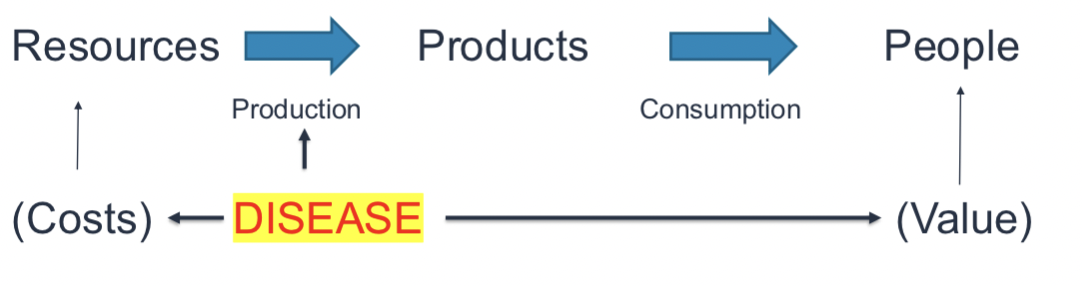
What are the 3 components of economic analysis?
People- They have aims and objectives, make decisions
Products- Goods and services that satisfy wants/needs
Resources- The physical factors that are the basis of generating products
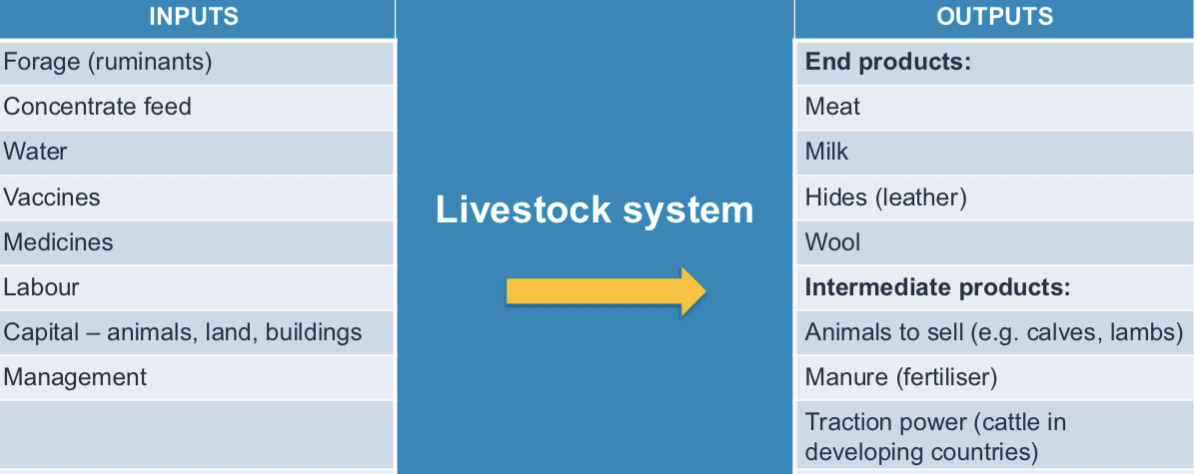
What are the different inputs and outputs of livestock production systems?
What are the three P’s and how do they relate to a livestock farm?
Production= Outputs (Value of milk, meat etc)
Profit= Outputs- Inputs
Productivity= Outputs/Inputs
What is the definition of productivity?
The efficiency of conversion of inputs into outputs on the farm
What is the definition of efficiency?
The rate of output divided by the rate of input – how quickly
can a farm turn inputs into outputs?
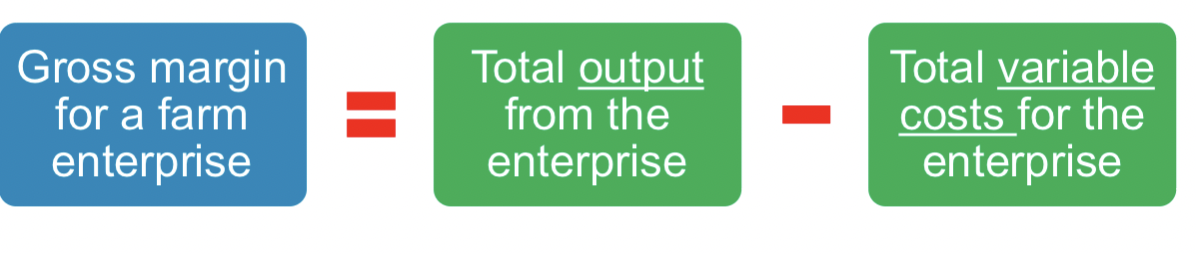
What does variable costs mean?
Short term costs specific to the farm enterprise and according to the scale of production e.g. feed, vet fees, veterinary medicines, fertiliser
What does fixed costs mean?
Vary only in longer term – e.g. labour, depreciation on machinery, maintenance on sheds, land rent – still exist even if no production.
How do you calculate gross margin for an enterprise?
What are the strengths of gross margin analysis?
• Simple representation (model) of a farm enterprise
• Can easily be explained to farmers on a spreadsheet
• Allows identification of the most significant prices, inputs and outputs from a farm livestock enterprise
• Can provide information useful for monitoring and evaluation of the enterprise over time
• Useful for making comparisons between livestock enterprises in different regions/between countries
Give some examples of the economic impacts of disease:
Premature death of breeding and productive animals
Reduction of animal output (e.g. lowered milk yield, fewer eggs produced)
Reduction of production efficiency (e.g. lowered growth rates)
Reduction in quality and value for processing and retail (e.g. sheep livers with fluke)
Direct effects on human health (zoonoses) and welfare considerations
Reduction in value, or restriction, of national and international trade
Therefore, lower outputs for given inputs = efficiency loss
What are the multi scalar costs of animal disease?
- Individual animal level
- Herd or flock level – individual producer
- National
- Global impacts
What is partial budget analysis?
• Tool for identifying and classifying costs and benefits of a proposed project or intervention in a system or business
• Partial because only look at the parts of the production system which would be affected by proposed changes
• Saves time and effort – only looks at relevant parts of the management system
How do you do a partial budget analysis?
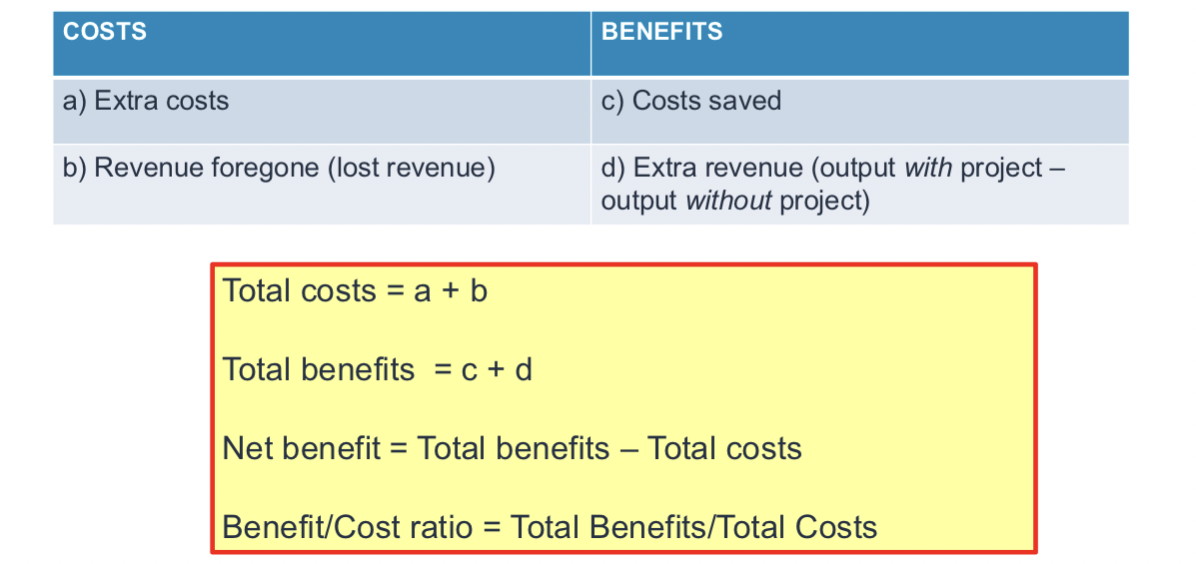
What is a benefit-cost analysis?
A cost-benefit analysis (CBA) is a systematic, data-driven process used to weigh the total expected costs of a project against its projected benefits.
Could be undertaken where proposed intervention programme has more widespread effects, or budgets extending over several years (usually conducted by government)
Costs are capital (things to buy) and recurrent (ongoing input costs)
How can we compare costs and benefits which occur at different points in time? e.g. £5,000 is not worth the same in 5 year’s time as it is today – inflation etc.
Need to use the concepts of present value (PV) and future value (FV)
How do you undertake a benefit-cost analysis?
• Present value – the value in the current year (Year 0)
• Future value – the value in some specified future year (Year 1, 2 , 3 etc.)
• In benefit-cost analysis, the benefits and costs are usually estimated over
several years – the lifetime of the proposed project
• Conversion of a series of future values into their present value is a key
principle of benefit-cost analysis – known as ‘discounting’
• If benefit-cost ratio (BCR) > 1, then project is worth doing
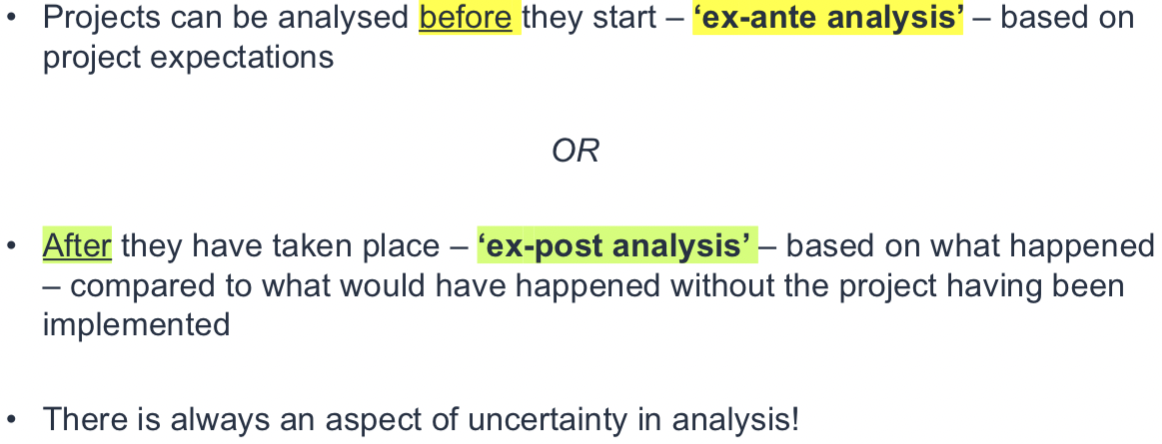
What is decision-tree analysis?
Decision tree analysis is a visual and quantitative risk-assessment tool that maps out choices, their potential consequences, and their probabilities.
• Can be used to elucidate probabilities and outcomes of decision alternatives related to animal disease control options – actions and chance events H
• Need to decide on treatment or intervention strategies, and possible outcomes are estimated
• Calculate different probabilities using expert opinion, published literature or experimental results
• Assign monetary values and multiply by the probabilities
• Calculate economic value at decision node
How do you carry out a decision-tree analysis?
Identification of three main components within the decision-tree:
1. Events/Actions – decision maker can control these e.g. vaccination or treatment option
2. Probability of chance events – use literature or expert opinion to estimate e.g. probability of a virus entering the country based on previous occurrences
3. Value of various outcomes – often in monetary terms e.g. cost of treatment, but may have a non-monetary value assigned
In the decision tree:
• Decision points (nodes) are depicted using squares
• Circles represent chance nodes
• Branches (lines) come out of nodes
• All branches must be labelled
• Calculate net benefit (or loss) of each path through the tree