Ecology Ch.2
 Call Kai
 Learn
Learn Practice Test
 Spaced Repetition
 Match
Match Flashcards
 Knowt Play
1/28

There's no tags or description
Looks like no tags are added yet.
Name | Mastery | Learn | Test | Matching | Spaced | Call with Kai |
|---|
No analytics yet
Send a link to your students to track their progress
29 Terms
What is ecology?
The scientific study of biotic and abiotic factors that determine distribution and abundance of organisms
What are the five components of the Ecological hierarchy?
Organismal
Population
Community
Ecosystem
Biosphere
What is Organismal Ecology?
Behavioral, Physiological, and Morphological ways an individual deals with the environment
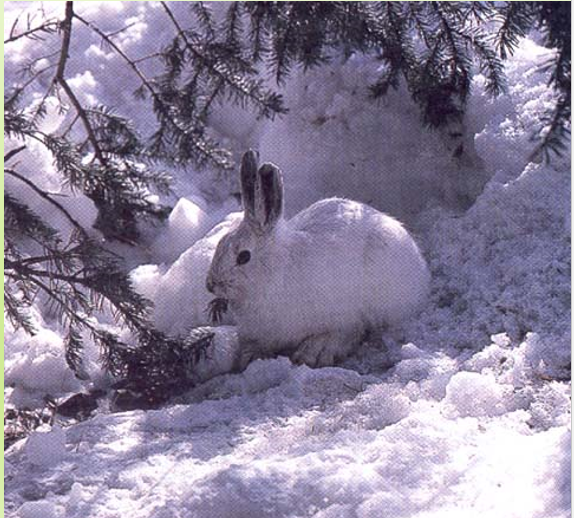
What is Population Ecology?
Group of individuals from a single species at a particular space and time
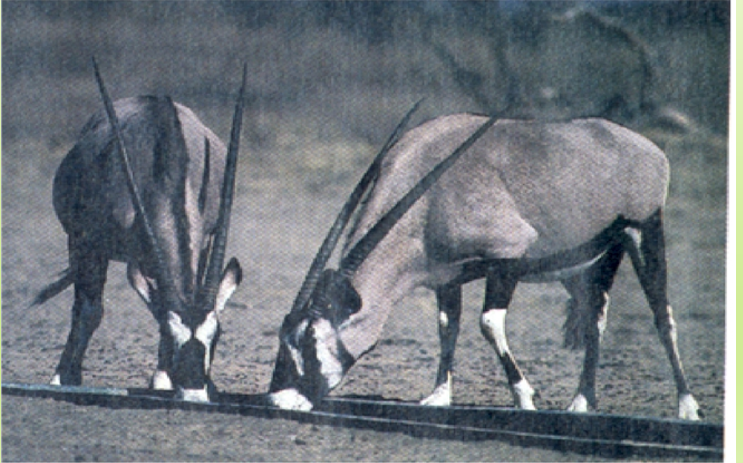
What is Community Ecology?
Group of individuals from a single species at a particular space and time and the interactions that bind them.
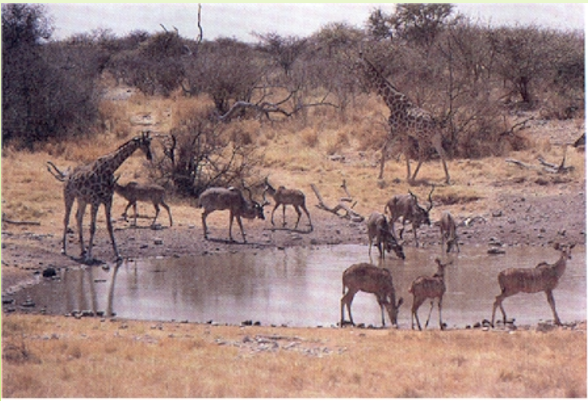
What is a ecosystem?
A set of interacting species and the physical space they occupy.
What is the biosphere?
the whole earth ecosystem
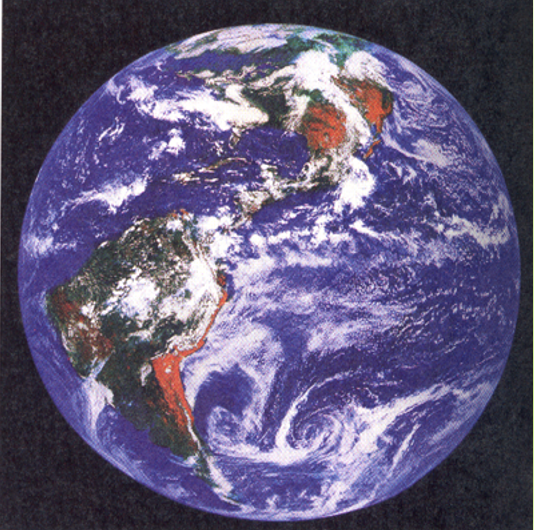
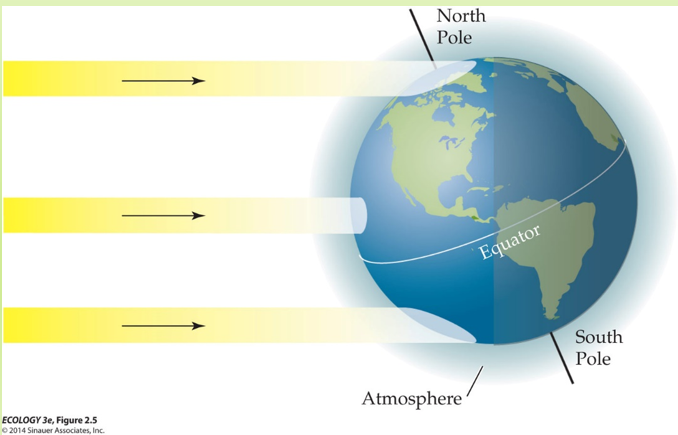
What is Insolation?
Solar Energy Per Area
It decreases towards the poles because of a greater angle of incidence (more area) and greater depth of atmosphere.
This results in an average temperature drop and more variation towards the poles.
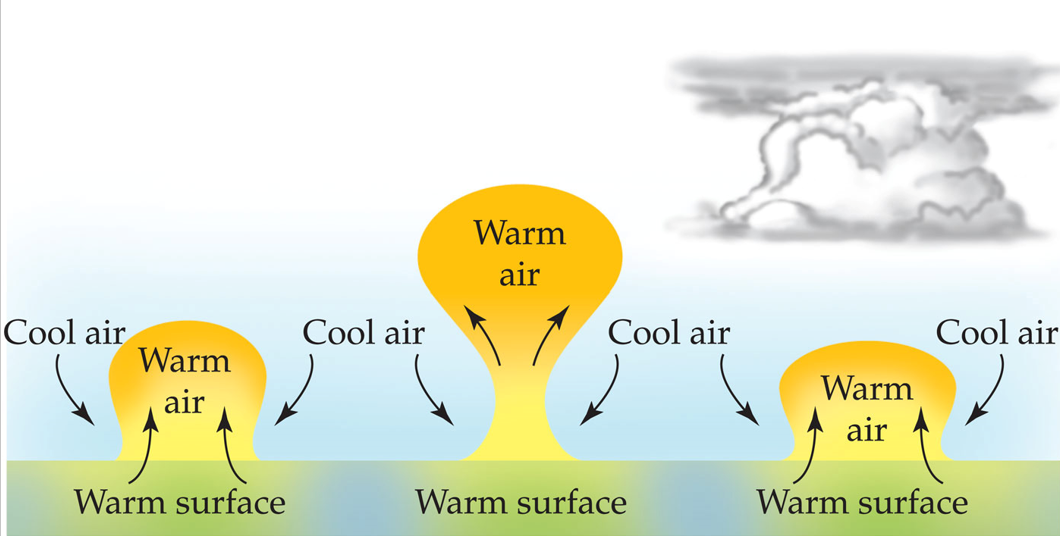
Describe what is happening in this picture
Air comes into contact with a hot surface and is heated
This heated air is less dense and rises
This creates a low-pressure area where higher-pressure cold air can rush in and repeat the cycle
Originally, heated air will cool as it rises and descends somewhere away from the initial heat source.
This is a convection cell
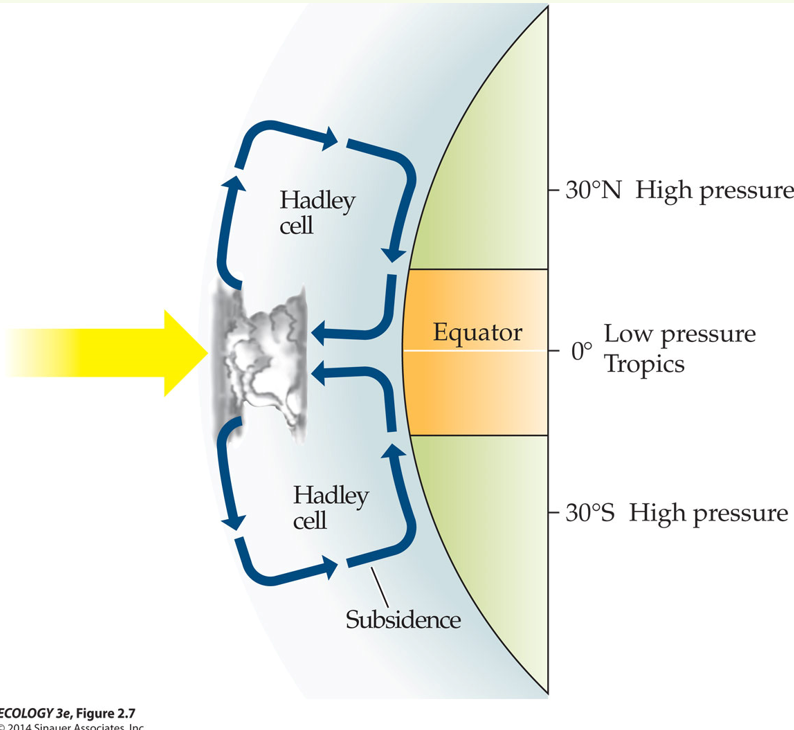
What is a Hadley Cell?
A Hadley Cell is a larger-scale application of a convection cell.
The air near the equation is heated because of the greater isolation and rises.
As it rises, it loses its moisture as rain near the equation
The air moves towards the poles and descends as dry air. This is why there are deserts near 30 degrees North and 30 degrees South.
What are Polar Cells and Ferrell Cells?
Polar Cells are cold air originating from 90 degrees at the poles. The cold air falls towards 60 degrees, but there is still sparse precipitation in all seasons because the air is too cold to hold water.
Ferrell Cells are caused indirectly by Polar Cells and Hadley Cells. Air flows towards 60 degrees and is associated with temperature environments, along with adequate precipitation.
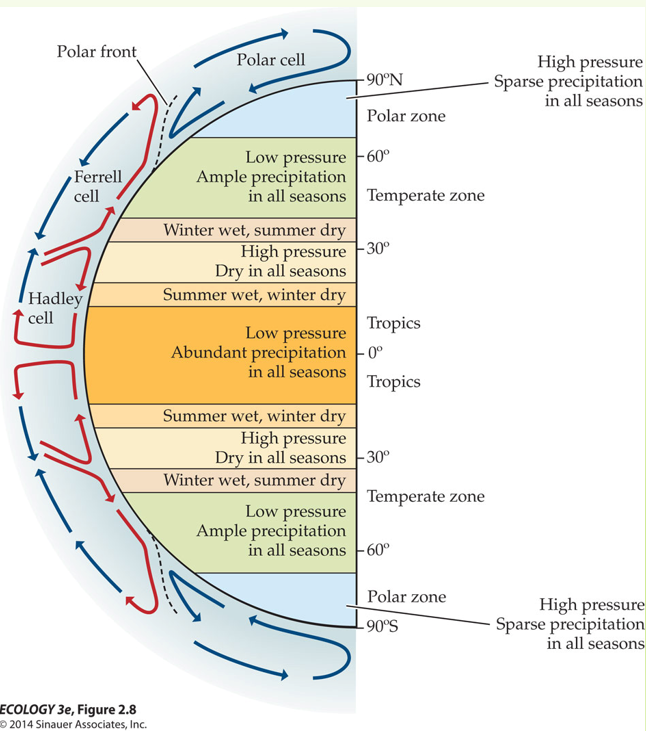
At what latitude what you expect to find deserts?
30 degrees
At what latitudes what you expect to find tropical rainforests?
0 degrees/ the equation and 60 degrees
What are the two ways that the Ocean can influence climate?
Upwelling
Global Ocean Currents
What is upwelling?
On the West side of the continents, winds push warm waters offshore and deeper, colder water comes up to replace it. This cold water chills the air above, and it suppresses rainfall.
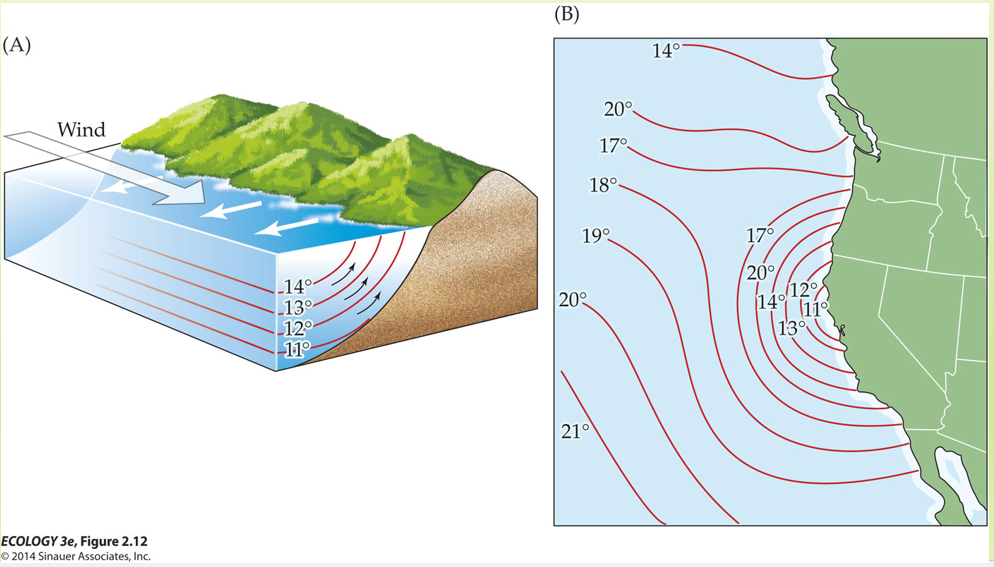
What are Global Ocean Currents and their effect on climate?
Ocean currents flow clockwise in the Northern Hemisphere.
This means that the western side of continents receives cooler water and the eastern side of continents receives warmer water.
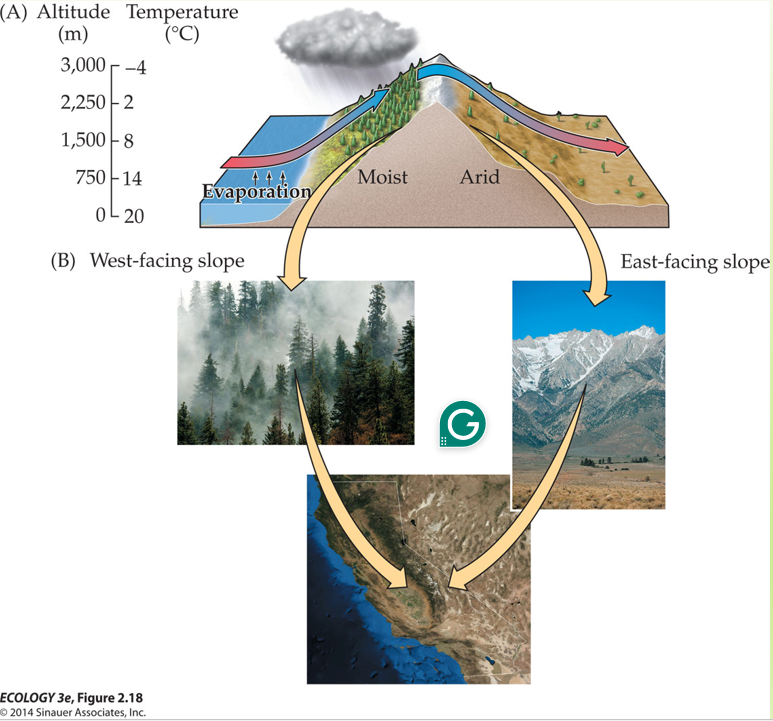
What is a rain shadow and its effect on climate?
A rain shadow is the tendency for the windward side of a mountain to be wet while the leeward side is dry.
This occurs because the air is forced upward as it travels up a mountain. This causes warmed air to cool and release its rain on one side of the mountain. By the time it arrives on the other side of the mountain, it has lost all its moisture.
What drives the difference between the maritime climate and the continental climate?
Maritime Climate tends to be more temperate than continental climate (cooler summers and warmer winters)
It is driven by the high specific heat of water and water’s interaction with air.
During the summer, the water absorbs heat but barely changes temperature. The air above the water is not heated and comes onto the land as cool air.
In the Winter, the water is relatively warm compared to the winter winds and releases its stored heat into the ocean air. This air comes onto land as warm air.
What region of the U.S. are rain forests found in and what causes them?
Rainforests exist mainly in the northwestern U.S. because warm, moist Pacific air hits the Cascades and Olympic ranges, dumping heavy precipitation on the windward western slopes. (Rain shadow effect)
Temperate environment means few deciduous trees
What region of the U.S. are deserts found in and what causes them?
Desert are found in the southwestern U.S. because as Pacific air moves east and rises over the Sierra Nevada and other coastal ranges, it drops its moisture on the California coast. By the time it reaches the interior Southwest, the air has lost all its moisture
What region of the U.S. are temperate grasslands found in and what causes them?
Temperate grasslands are found East of the Rocky mountains and result directly from the Rocky’s rain shadow.
Moist air from the Pacific loses moisture as it climbs the Rockies and descends dry on the eastern side. The gradient from short-grass prairie (just east of the Rockies, very dry) to tall-grass prairie (further east, progressively more moisture from Gulf of Mexico air) reflects how much rainfall increases as you move away from the rain shadow.
What region of the U.S. are temperate forests found in and what causes them?
Temperate forests found on the eastern side of the U.S. They do not have a rain shadow and receive adequate moisture all year round. This level of moisture can support the growth of a forest.
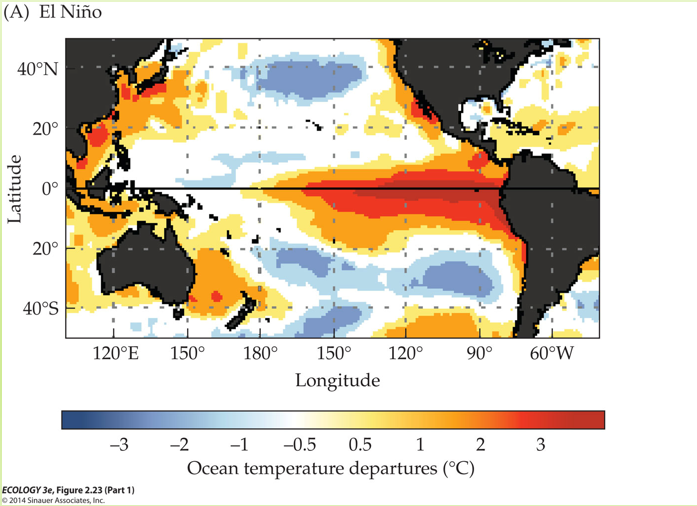
What is El Nino and its effects of climate?
El Niño is a 9-month-long oscillation that occurs once every 2-7 years.
Normally, warm water in the Pacific moves westward towards Asia and Australia.
El Niño reverses causes warm water to move east. This incoming warm water increases the temperature of water on the western coast, resulting in warmer and wetter environments than normal.
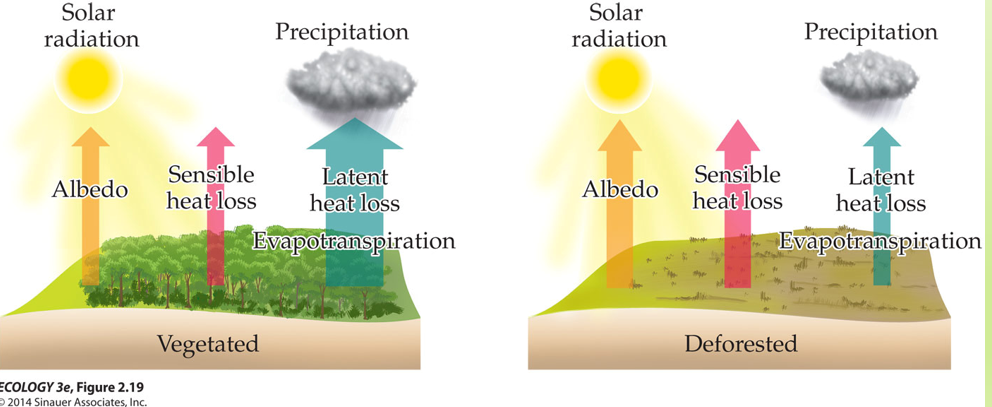
What is albedo?
Albedo is the proportion of incoming solar radiation that a surface reflects rather than absorbs.
Light-colored surfaces (snow, ice, bare sand) have high albedo — they reflect most sunlight.
Dark surfaces (forests, oceans) have low albedo — they absorb most sunlight and convert it to heat.
High albedo → more reflection → less heat absorbed → cooler surface.
Low albedo → more absorption → warmer surface.
What are Milankovitch cycles?
Long-term predictable changes in Earth's orbit and axis that shift how much solar radiation reaches Earth over thousands to hundreds of thousands of years.
What are the three components in the Milankovitch cycle?
Eccentricity
Axial Tilt
Precession
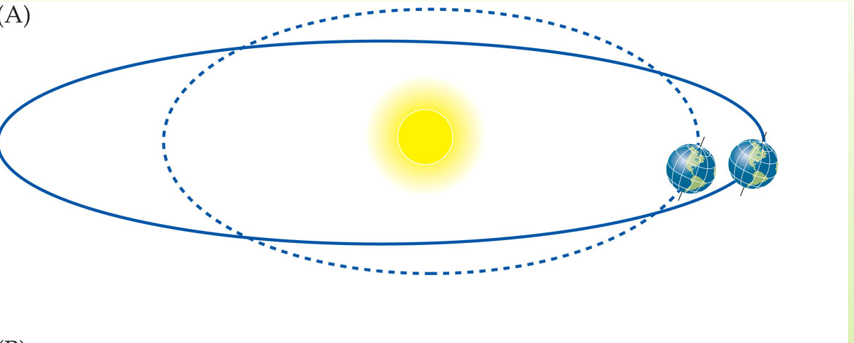
What is eccentricity in Milankovitch cycles?
Earth's orbit shifts between nearly circular and more elliptical. (100,000 year cycle)
When the orbit is more elliptical, there's a meaningful difference in Earth-Sun distance between the closest point and farthest point, meaning Earth receives noticeably more solar energy at one part of its orbit than the other.
What is axial tilt in Milankovitch cycles?
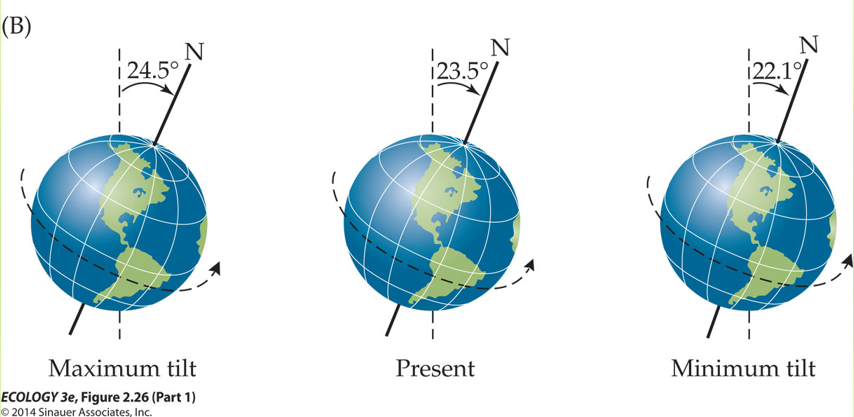
Axial tilt is what causes the seasons. (41,000 year cycle)
The more tilted the axis, the more directly one hemisphere faces the sun in summer and faces away in winter.
Greater tilt means more intense summers AND more intense winters globally. Less tilt means milder, less extreme seasons.
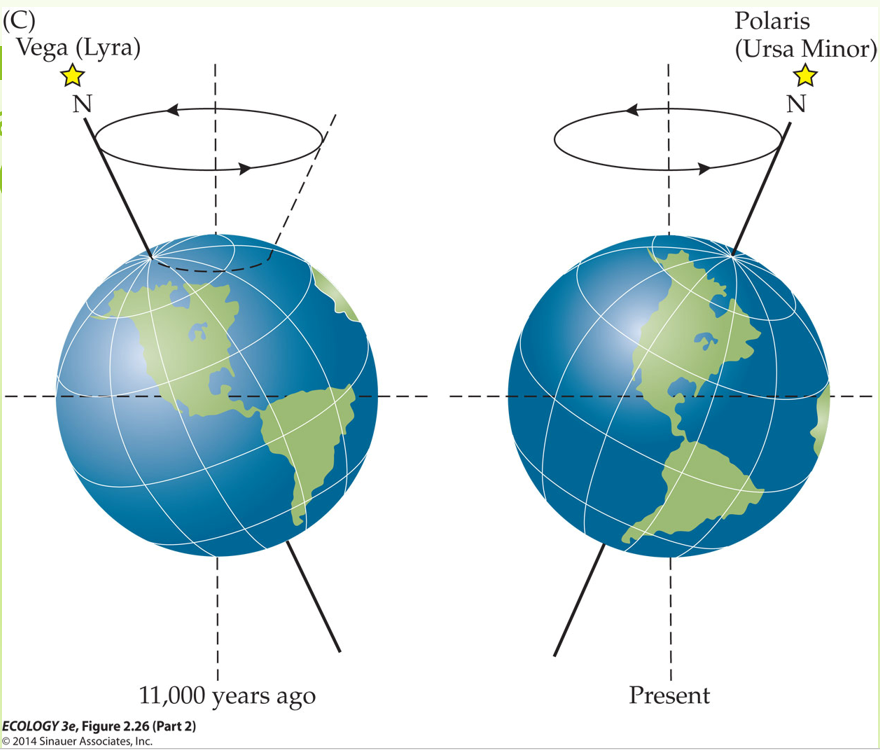
What is precession?
Earth's axis wobbles slowly like a dying top, completing a full wobble every ~26,000 years. This changes what season occurs when Earth is closest to the Sun.