5 - Nematodes
 Call Kai
 Learn
Learn Practice Test
 Spaced Repetition
 Match
Match Flashcards
 Knowt Play
1/129

There's no tags or description
Looks like no tags are added yet.
Name | Mastery | Learn | Test | Matching | Spaced | Call with Kai |
|---|
No analytics yet
Send a link to your students to track their progress
130 Terms
Ascaris lumbricoides
Ancylostoma duodenale
Necator americanus
Trichuris trichiura
Enterobius vermicularis
Strongyloides stercoralis
Wuchereria bancrofti
seven examples of nematodes
intestinal nematode
what type of nematode is Ascaris lumbricoides?
Ascaris lumbricoides
also called giant roundworm
Ascaris lumbricoides
most common and largest nematode
Ascaris lumbricoides
Soil transmitted helminth
small intestine
soil
habitat of Ascaris lumbricoides
oval shaped with a thick chitin shell
characteristics of the egg of an Ascaris lumbricoide
white
elongated
cylindrical
lateral lines on each side
characteristics of the adult worm of an Ascaris lumbricoides
ingestion of food or water contaminated with fecal material that contains ascaris embryonated egg (with larvae)
survives gastric acidity
reaches the duodenum
excystation
penetrate the intestinal wall
reaches the blood circulation
liver via portal circulation
right side of the heart
pulmonary vessels
lung tissues, grow and develop there causes immune response there eventually
cough out and swallowed again
develop into adult worms in the small intestine
adult worms will continue to reproduce and lay eggs, and these eggs/adult worms are seen in stool
life cycle of Ascaris lumbricoides
egg (embryonated)
infective stage of Ascaris lumbricoides
egg (unembryonated-fertilized or unfertilized, embryonated, decorticated)
adult worm
diagnostic stage of Ascaris lumbricoides
man
definitive host of Ascaris lumbricoides
none
intermediate host of Ascaris lumbricoides
fecal oral
mode of transmission of Ascaris lumbricoides
fertilized Ascaris lumbricoides egg
specific type of egg, and nematode
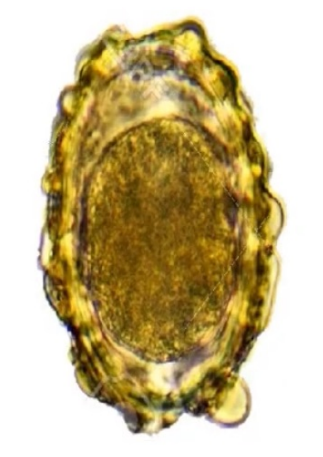
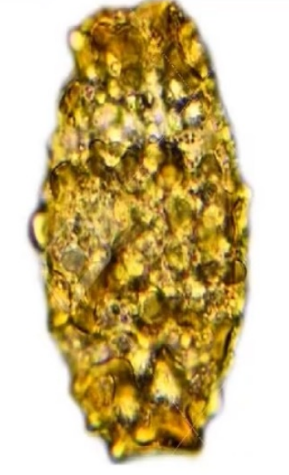
unfertilized Ascaris lumbricoides egg
specific type of egg, and nematode
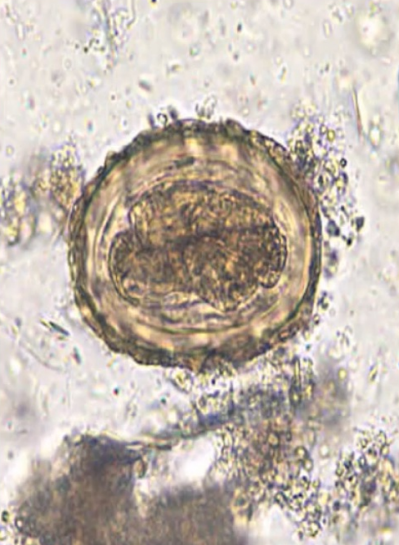
Ascaris lumbricoides
what nematode?
ascariasis
disease caused by Ascaris lumbricoides
Loeffler’s Syndrome
what syndrome is caused by the lung phase of Ascaris lumbricoides?
larval migration
when does the major damage of ascariasis occur?
acute intestinal obstruction
malabsorption → malnutrition
what is caused by the intestinal phase of Ascaris lumbricoides?
wandering worm
what worm of Ascaris lumbricoides causes pancreatitis and appendicitis?
direct fecal smear (egg)
Kato-Katz technique
direct visualization of adult worm
diagnosis of Ascaris lumbricoides
intestinal nematode
what type of nematode is Ancylostoma duodenale and Necator americanus?
Ancylostoma duodenale
Necator americanus
soil-transmitted, blood-sucking helminth
small intestine
soil
habitat of Ancylostoma duodenale and Necator americanus
hookworm
what type of worm is Ancylostoma duodenale and Necator americanus
thin wall and colorless with at least 4-8 blastomeres
characteristics of the eggs of Ancylostoma duodenale and Necator americanus
small
cylindrical
characterisitc mouths
characteristics of the adult worms of Ancylostoma duodenale and Necator americanus
Necator americanus
new world hookworm
Necator americanus
the american murderer
cutting plates
characteristic mouth of Necator americanus
Ancylostoma duodenale
old world hookworm
2 pairs of ventral teeth
characteristic mouth of Ancylostoma duodenale
Ancylostoma duodenale and Necator americanus
what egg
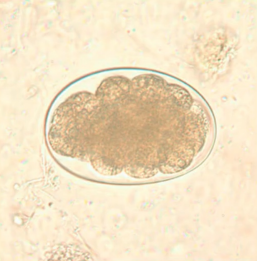
Ancylostoma duodenale and Necator americanus
what worm
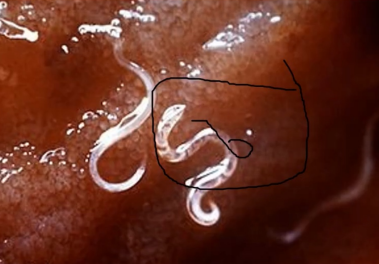
Ancylostoma duodenale
what worm
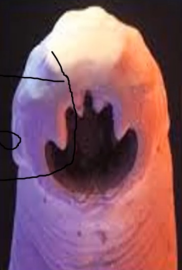
Necator americanus
what worm
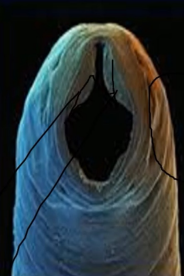
filariform larva found in soil penetrates thru the skin (percutaneous)
blood venous system
right side heart
pulmonary vessels
coughed out and swallowed again
matures in the small intestine
adult worm at mucosa of small intestine attached by means of their teeth, and feed on lymph and plasma
as the adult worm grows, they also reproduce eggs which are eventually passed in feces and deposited in soil
larva rapidly develops in eggs and hatches thereafter
larva lives in the soil (rhabditiform larva)
matures to filariform larva
life cycle of Ancylostoma duodenale and Necator americanus
filarial form (ppt)
filariform larva (google)
infective stage of Ancylostoma duodenale and Necator americanus
man
definitive host of Ancylostoma duodenale and Necator americanus
none
intermediate host of Ancylostoma duodenale and Necator americanus
larval skin penetration
mode of transmission of Ancylostoma duodenale and Necator americanus
small intestine
soil
habitat of Ancylostoma duodenale and Necator americanus
hookworm infection
disease caused by Ancylostoma duodenale and Necator americanus
blood loss at attachment site
major damage of hookworm infection is due to what?
hookwrom infection
major damage if this disease is due to blood loss at attachment site
ascariasis
major damage of this disease occurs during larval migration
ground itch
cutaneous larva migrans
diseases caused by the cutaneous phase of Ancylostoma duodenale and Necator americanus
Loeffler’s Syndrome
diseases caused by the lung phase of Ancylostoma duodenale and Necator americanus
anemia
malnutrition
destroy villi
diseases caused by the intestinal phase of Ancylostoma duodenale and Necator americanus
direct fecal smear (egg)
Kato-Katz technique
diagnosis of Ancylostoma duodenale and Necator americanus
intestinal nematode
what type of nematode is Trichuris trichiura?
whipworm
what type of worm is Trichuris trichiura?
Trichuris trichiura
soil transmitted helminth
large intestine
soil
habitat of Trichuris trichiura
barrel shaped with bipolar mucus plugs
egg of Trichuris trichiura
japanese lantern appearance
appearance of the egg of Trichuris trichiura
anterior 2/3 is attenuated
posterior 1/3 is stout
adult worm of Trichuris trichiura
ingestion of food or water contaminated with fecal material containing trichuris embryonated egg
in the small intestine, one of the bipolar end will open
larva leaves the egg
larva enters the mucosal crypts in the small intestine
transform to adult worm
adult worm attaches to cecum
increase their number in the large intestine
egg passed out in the feces and reaches the soil
life cycle of Trichuris trichiura
embryonated egg
infective stage of Trichuris trichiura
unembryonated egg
diagnostic stage of Trichuris trichiura
man
definitive host of Trichuris trichiura
none
intermediate host of Trichuris trichiura
fecal-oral route
mode of transmission of Trichuris trichiura
whipworm infection
disease caused of Trichuris trichiura
diarrhea
increased peristalsis → rectal prolapse
what is whipworm infection?
Trichuris trichiura
what nematode is this?
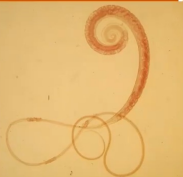
direct fecal smear (egg)
Kato-Katz technique
diagnosis of Trichuris trichiura
intestinal nematode
what type of nematode is Enterobius vermicularis?
pinworm
what type of worm is Enterobius vermicularis?
Enterobius vermicularis
soil trasmitted helminth
large intestine
soil
habitat of Enterobius vermicularis
embryonated egg; Trichuris trichiura
type of egg, and what nematode
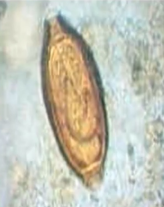
unembryonated egg; Trichuris trichiura
type of egg, and what nematode
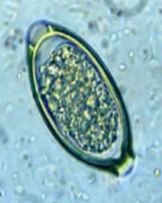
Enterobius vermicularis
egg of what nematode?
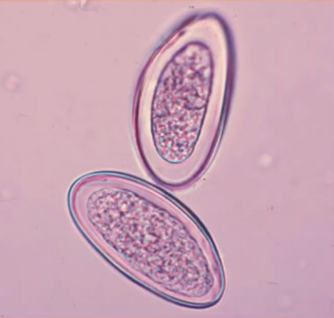
d-shaped ovum with thin colorless cell wall
egg of Enterobius vermicularis
round body with lateral wings or cephalic alae
adult worm of Enterobius vermicularis
cephalic alae
lateral wings
ingestion of food or water contaminated with fecal material containing embryonated egg or inhalation of embryonated egg
larvae hatches in small intestine
adult worm develops
moves to perianal skin to lay eggs at night
female fies after oviposition
eggs laid on perianal area matures within 6 hours
contaminates feces or the hand when scratched
life cycle of Enterobius vermicularis
embryonated egg
infective stage of Enterobius vermicularis
eggs on perianal folds
diagnostic stage of Enterobius vermicularis
man
definitive host of Enterobius vermicularis
none
intermediate host of Enterobius vermicularis
fecal-oral route
inhalation of eggs
mode of transmission of Enterobius vermicularis
enterobiasis
disease caused by Enterobius vermicularis
pruritus ani
symptom of enterobiaisis
autoinfection
what is the risk of enterobiasis?
cellulose tape preparation / scotch tape test (eggs)
diagnosis of Enterobius vermicularis
threadworm
what type of worm is Strongyloides stercoralis?
Enterobius vermicularis
what nematode is this?
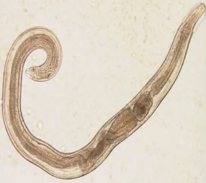
Strongyloides stercoralis
what nematode is this?
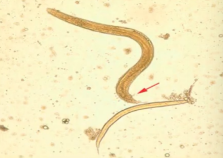
facultative parasite
what type of parasite is Strongyloides stercoralis based on its dependency on a host?
parasitic form
free-living form
what are the two forms of Strongyloides stercoralis
adult - male and female
filariform larvae (infective and non-feeding stage)
rhabditiform larvae (feeding stage)
stages of Strongyloides stercoralis
parasitic female - longer and larger than free-living form and their vulva is longer in their bodies
parasitic male - only free-living form
difference between parasitic female and parasitic male of the Strongyloides stercoralis
ovum
thin shelled partially embryonated
filariform larvae
larva that is slender, longer, and can swim in water
rhabditiform larvae
larva that is stout and shorter
filariform larvae
percutaneous penetration
blood
lymph
small intestine
larva develop into female adult worm
females produce and lay eggs
larva turns into rhabditiform larva
passed out in stools
filariform larva
life cycle of parasitic Strongyloides stercoralis