all labs
 Call Kai
 Learn
Learn Practice Test
 Spaced Repetition
 Match
Match Flashcards
 Knowt Play
1/92

There's no tags or description
Looks like no tags are added yet.
Name | Mastery | Learn | Test | Matching | Spaced | Call with Kai |
|---|
No analytics yet
Send a link to your students to track their progress
93 Terms
stereochemistry
involves the study of molecules in 3D space
stereoisomers
isomers that differ ONLY in spatial arrangement of atoms
bond angles of tetrahedral atom
109.5 degrees
chiral center
carbon atom with 4 different groups bonded to it
chemical and physical properties of enantiomers vs. diastereomers
enantiomers
almost identical chemical and physical properties
differ in stereochemistry
diastereomers
differ in stereochemistry, chemical properties, and physical properties
eclipsed vs. staggered conformers
eclipsed - hydrogens brought as close together as possible
lower energy and more stable
staggered - hydrogens are far away from one another
higher energy and less stable
2 preferred conformations of a cyclohexane
chair and boat
chair is ore stable
in chair conformation, all C-H bonds are either axial or equatorial
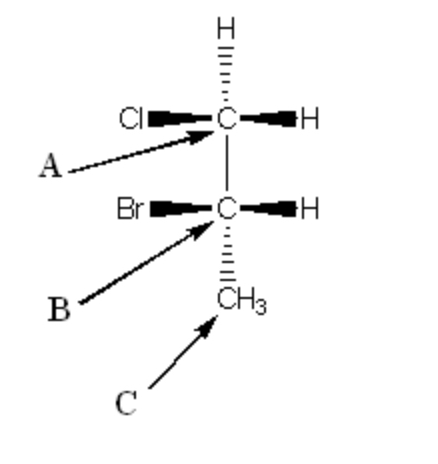
which carbon is achiral
carbon B
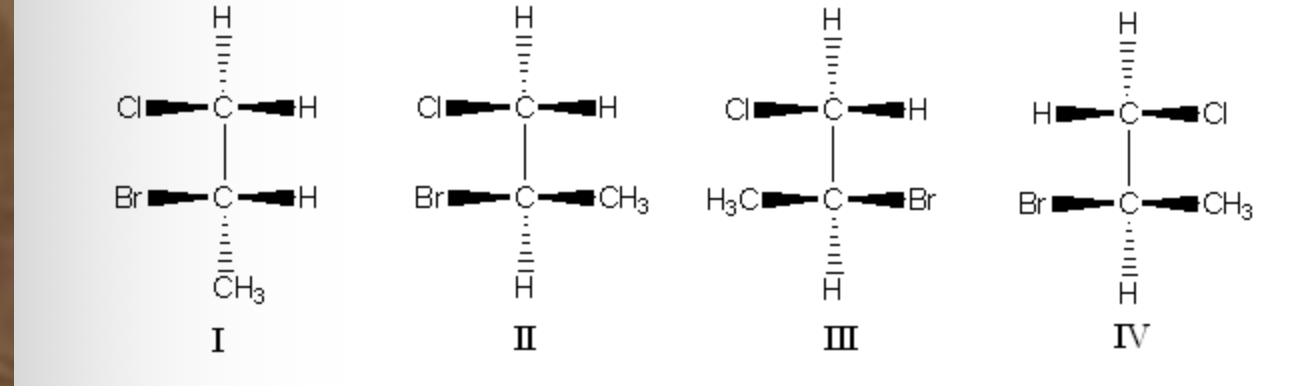
which of the following are the two chiral structures for 1-chloro-2-bromopropane
I and II
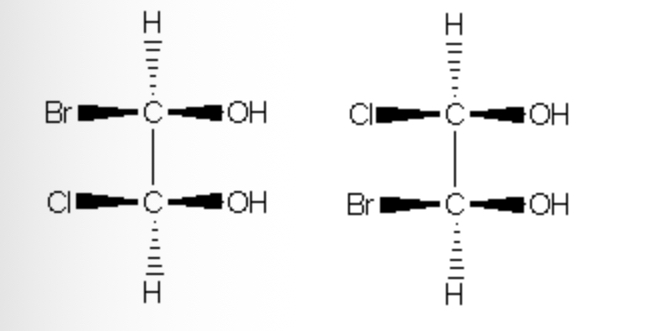
are the two following structures identical, enantiomers, stereoisomers, structural isomers?
stereoisomers and structural isomers
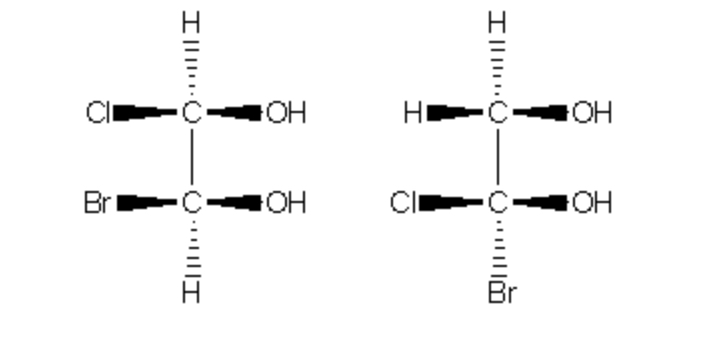
are these identical, enantiomers, stereoisomers, and/or structural isomers?
structural isomers
they show different bonding
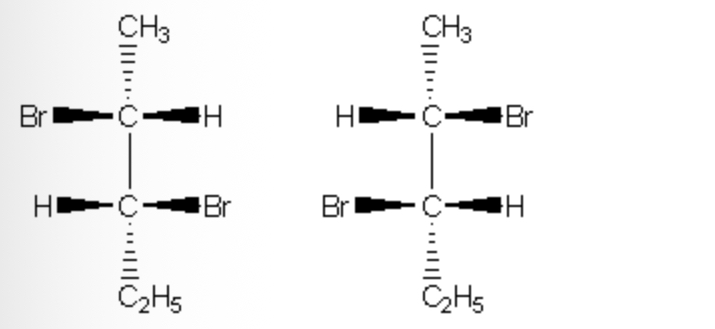
are these structures identical, enantiomers, stereoisomers, and/or structural isomers
enantiomers and stereoisomers
since they are mirror images of each other
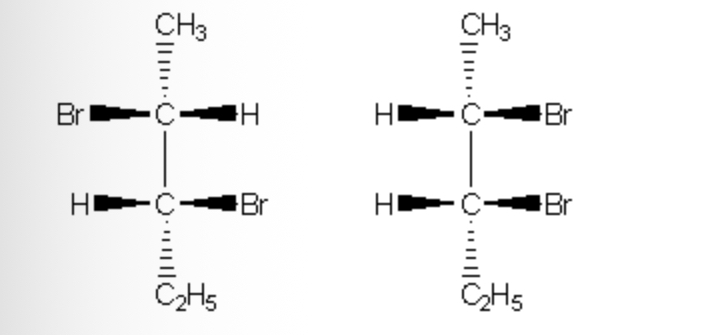
are these structures identical, enantiomers, diastereomers, stereoisomers, and/or structural isomers?
diastereomers and stereoisomers
since they are not superimposable and not mirror images of each other
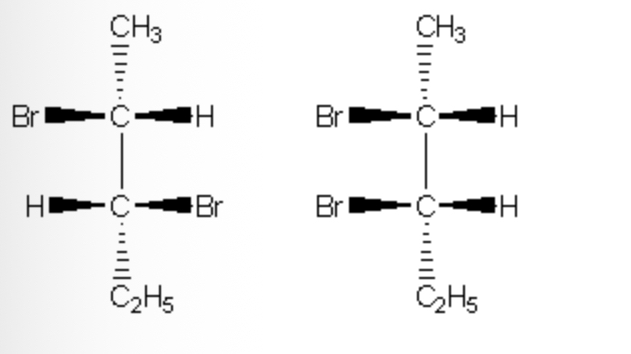
are these structures identical, enantiomers, diastereomers, stereoisomers, and/or structural isomers?
diastereomers and stereoisomers
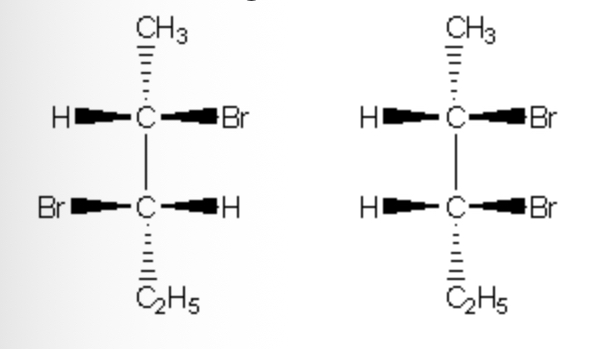
are these structures identical, enantiomers, diastereomers, stereoisomers, and/or structural isomers?
diastereomers and stereoisomers
sincee they are not superimposable and not mirror images
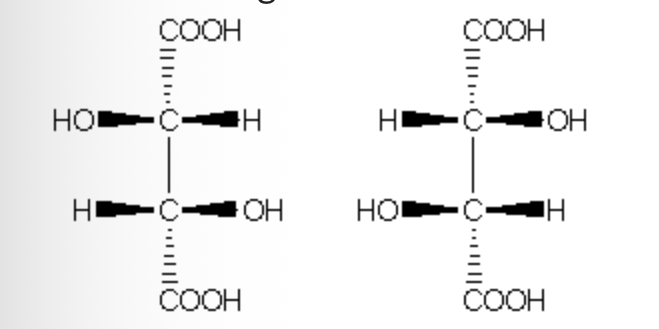
are these structures identical, enantiomers, diastereomers, stereoisomers, and/or structural isomers?
enantiomers and stereoisomers
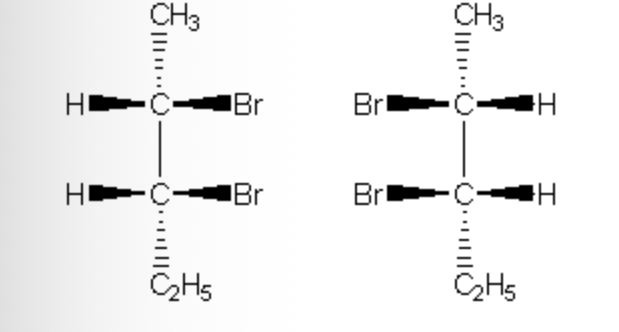
are these structures identical, enantiomers, diastereomers, stereoisomers, and/or structural isomers?
enantiomers and stereoisomers
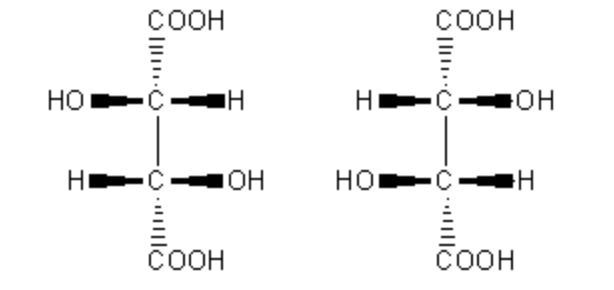
are these structures identical, enantiomers, diastereomers, stereoisomers, and/or structural isomers?
enantiomers and stereoisomers
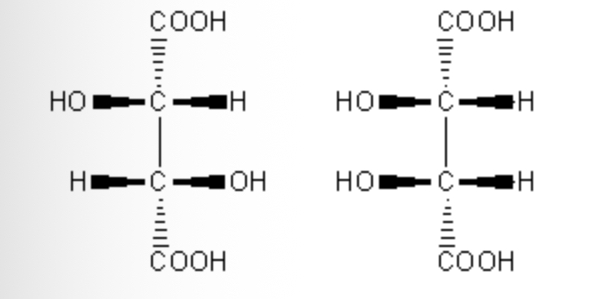
are these structures identical, enantiomers, diastereomers, stereoisomers, and/or structural isomers?
diastereomers and stereoisomers
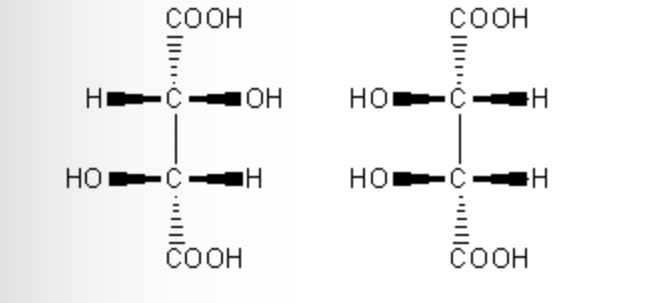
are these structures identical, enantiomers, diastereomers, stereoisomers, and/or structural isomers?
diastereomers and stereoisomers
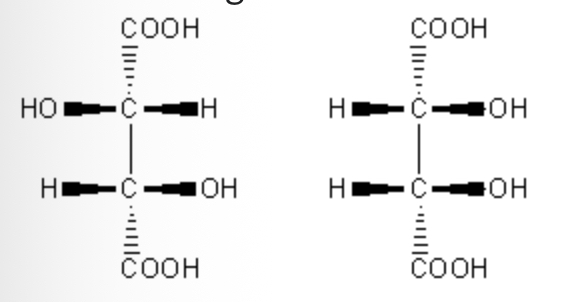
are these structures identical, enantiomers, diastereomers, stereoisomers, and/or structural isomers?
diastereomers and stereoisomers
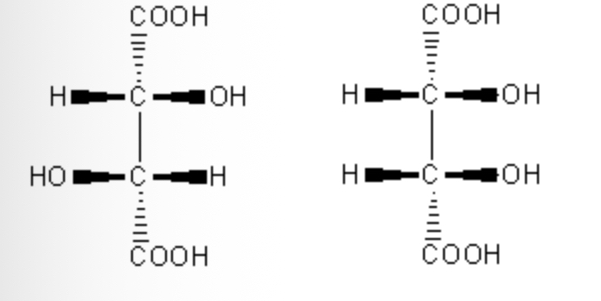
are these structures identical, enantiomers, diastereomers, stereoisomers, and/or structural isomers?
diastereomers and stereoisomers
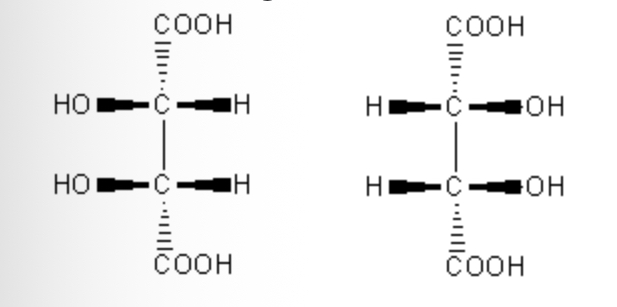
are these structures identical, enantiomers, diastereomers, stereoisomers, and/or structural isomers?
identical

which of the alkenes is in its Z geometric isomer form?
C
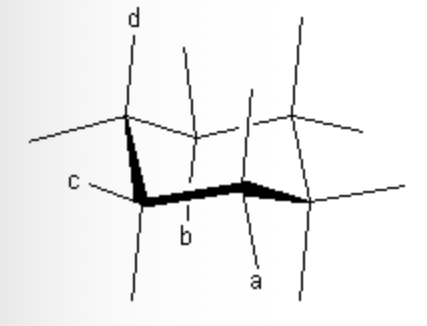
which of the following are axial bonds on the cyclohexane
B and D
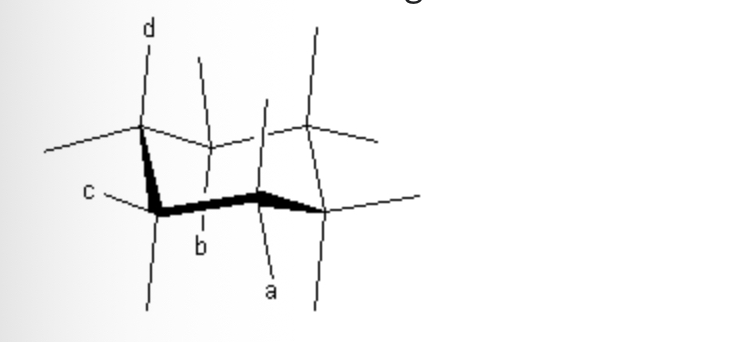
which of the following is a correct statement
bonds A and C are 1,2-cis
bonds A and B are 1,3-cis
bonds C and B are 1,3-cis
bonds A and D are 1,3-trans
bonds C and D are 1,2-trans
bonds A and D are 1,3-trans
why does the crude caffeine isolated from the tea have a yellowish or greenish tinge (colour)?
because the presence of small amounts of flavonoid pigments and chlorophyll (which have a brown colour) are also extracted
There is an alternative procedure for removing the tannins and gallic acid which involves heating the tea leaves in an aqueous mixture containing calcium carbonate. Calcium carbonate reacts with the tannins and gallic acid to form insoluble calcium salts of these acids. If this procedure were used which of the following additional steps would be needed in order to obtain an aqueous tea solution?
filter the extract to isolate an aqueous tea solution from the insoluble salts
because tannis and gallic acid react with calcium carbonate to form insoluble salts
The extraction of 8.0 g of a particular organic compound dissolved in 100 ml of water into diethyl ether proceeds with a distribution coefficient of 5. How much of the compound is extracted after three separate extractions using 50 ml of diethyl ether each time?
7.8 g of solute is extracted from the aqueous phase
The extraction of 8.0 g of a particular organic compound dissolved in 100 ml of water into diethyl ether proceeds with a distribution coefficient of 5. How much of the compound is extracted after one extraction using 150 ml of diethyl ether?
one extraction with 150mL of diethyl ether extracts 7.1 g of solute
tannins (and 2 major types)
a water soluble component of tea leaves
have 2 major types:
group with esters of gallic acid and glucose
group of condensation polymers of catechin of varying sizes
is ethyl acetate a low or high boiling point liquid
low boiling point
why was sodium carbonate added? (give 3 reasons why)
as a base, sodium carbonate converts tannins and gallic acids to salts so they are more soluble in water
caffeine can be extracted into the organic phase in a purer form
a base ensures the caffeine is non-protonated so that it will be more organic soluble for the extraction
salting out
by saturating the aqueous phase with any salt, extraction efficiency of the organic solvent for an organic solute will be increased
formula for calculating for partition (distribution) coefficient
K = C2 / C1
example of calculating distribution coefficient
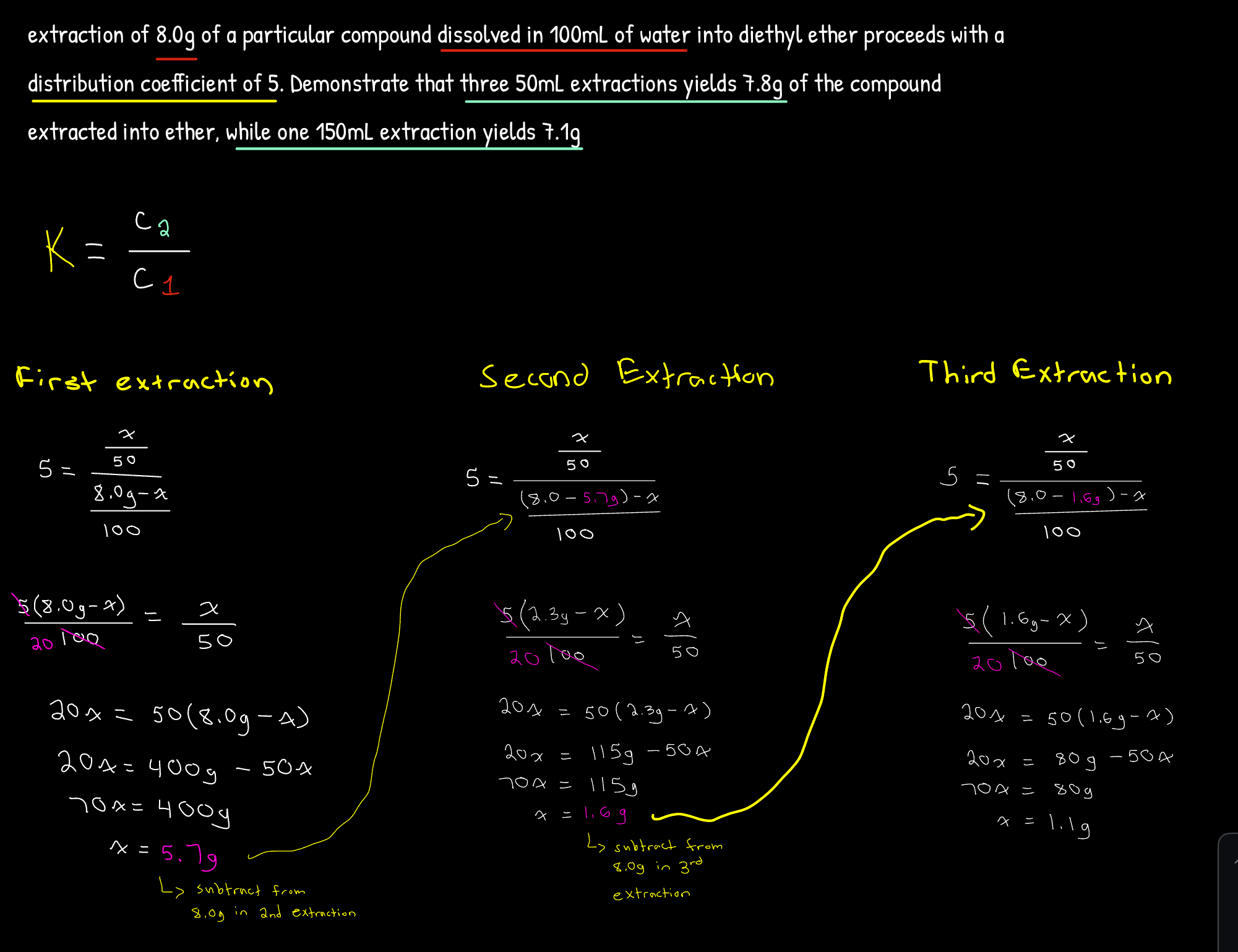
extraction of 8.0g of a particular compound dissolved in 100mL of water into diethyl ether proceeds with a distribution coefficient of 5. Demonstrate that three 50mL extractions yields 7.8g of the compound extracted into ether, while one 150mL extraction yields 7.1g
(FLIP CARD FOR ANSWER)
check photo
general equation for the hydrolysis of the tannins that are esters of gallic acid and glucose
(DONT NEED TO BALANCE THE EQUATION)
indicated reactants and products by structure
check photo

caffeine structure
check photo

draw structure of tannins of esters of gallic acid and glucose (and draw catechin)


what does this graph tell us about extraction of caffeine
shows us that caffeine' is extremely soluble at boiling temp. (100*C)
caffeine’s solubility in water is temp, dependent
which is why we boil the compound in water in order to dissolve caffeine
criteria for successful recrystallization
compound to be purified must be:
soluble in hot solvent
insoluble in cold solvent
impurities must be either:
soluble in cold solvent
so that it will remain in the filtrate during cold filtration while compound to be purified is isolated on the filter paper
OR insoluble in hot solvent
so that it will remain on filter paper during hot filtration while the compound to be purified remains in the filtrate
During hot filtration of a mixture of crude product (acetanilide, sand and salt) dissolved in hot solvent (water) it must be kept warm/hot because:
the desired product (acetanilide) will crystallize before passing through the filter paper if the mixture is cold
How much acetanilide (Solubility of acetanilide is 5.5 g/100 ml water at 90 °C, solubility of acetanilide is 0.53 g/100 ml water at 0 °C) is recovered from 5 g of impure acetanilide (containing 3 g of acetanilide, 1 g of salt and 1 g of sand) when it is heated (dissolving the salt and acetanilide) and filtered to remove the sand and then cooled (recrystallizing the acetanilide and keeping the salt dissolved) and filtered to retrieve the acetanilide? (Assume a constant 100 ml recrystallizing volume)
AND HOW MUCH ACETANILIDE IS DISCARDED?
2.47 g
How much acetanilide (Solubility of acetanilide is 5.5 g/100 ml water at 90 °C, solubility of acetanilide is 0.53 g/100 ml water at 0 °C) is recovered from 8 g of impure acetanilide (containing 6 g of acetanilide, 1 g of salt and 1 g of sand) when it is heated (dissolving the salt and acetanilide) and filtered to remove the sand and then cooled (recrystallizing the acetanilide and keeping the salt dissolved) and filtered to retrieve the acetanilide? (Assume a constant 100 ml recrystallizing volume)
4.97 g
can acetanilide be separated from the impurities (sand, salt, sucrose, and sawdust)
No, salt, sucrose, and acetanilide will all remain in the filtrate
thus, acetanilide will not be separated
does hot or cold filtration removes sand, sawdust, salt, and/or sucrose?
hot filtration removes:
sand, sawdust
cold filtration removes:
salt, sucrose
2 major reasons for measuring melting point
to identify a compound
to give an indication of a compound’s purity
what holds the molecules in a solid organic compound together
intermolecular forces that bind individual molecules into a crystal lattice
why will rinse-water wash away some of the product (from the reaction of p-phenetidine with cyanate)
due to amine solubility
what is the solubility of acetanilide at 90*C and 0*C
at 90*C
5.5 g / (100 mL of water)
at 0*C:
0.53 g / (100 mL of water)
what is the solubility of salt at 0*C
35 g / (100 mL of water)
recrystallization and why its important
used to purify crude solid compounds by removing impurities
describe recrystallization procedure
principle: organic solids are a lot more soluble in hot solvents than in cold solvents
steps:
dissolve impure solid in a small amount of hot solvent
hot filter to isolate from insoluble impurities
cool slowly to room temp. then place on ice to form crystals
pure crystals form while soluble impurities remain in the liquid
cold filter (using a Buchner funnel) to isolate the pure crystals from the liquid
why a lot of dulcin might be lost during recrystallization
2 possible errors:
using excess solvent
keeps too much compound dissolved even when its cold
washing crystals with warm solvent
this redissolves the recovered crystals
how can loss of dulcin from recrystallization be minimized?
remember the 3 most important rules:
dissolved crude solid in minimal volume of hot solvents hot
allow flask to cool SLOWLY at room temp. before icing
wash the final crystals with minimal amount of ice-cold solvent
dulcin is known to be an artificial sweetener but it is not used as one today. Why not?
it is chemically modified in the body to p-aminophenol which is toxic
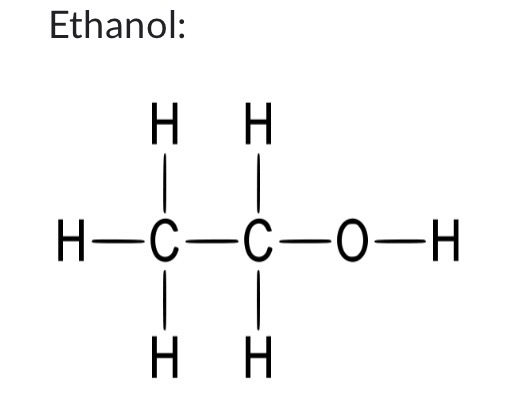
Draw ethanol
What’s the overalll reaction for fermentation to ethanol

What is ethanol best known as (not in lab manual)
A type of alcohol in beverages, solvent for thermometers and as fuel
What are the three fold representations of matter (not on lab manual)
Macroscopic
Microscopic
Symbolic level
In terms of the three folds of matter representation describe ethanol on all levels (not in lab manual)
Macro - bottle of alcohol
Micro - distillation process of ethanol and water
Symbolic - using chemical symbols, formulas and equations to describe the reaction
What occurs when you ferment sugar
Sucrose converts to ethanol and carbon dioxide, carried out by yeast and tap water
What is fermentation to ethanol
Series of reactions, each requiring an enzyme as a catalyst, certain ions and co catalysts
Distillation
Process used for the separation of components of a liquid mixture, exploiting difference in boiling points of the components
boiling liquid and condensing vapours at different temperatures results in seperation of liquids
yields one theoretical plate
2 differences between distillation of a pure vs mixture liquid
pure liquid has constant boiling temperatures while mixture has constantly rising temperature
Pure liquid distillation also gives pure distillate where as mixture has changing composition of the distillate
Fractional distillation
vapour has to rise through a fractioning column before entering the distillation head
The fractionating column has a large internal surface area for the recondensation and redistillation of vapour
Yields a seperation of several theoretical plates
What’s the standard yeast viable that should be resulted from the experiment
12-14%
Formula for % atom economy (AE)
AE% = ( molar mass of product / molar mass of all reactant) 100
Formula for RME
Based on mass
RME = (actual mass of desired product / total mass of reactants) 100
Based on yield and atom economy
RME = atom economy x percent yield / 100
Steps to calculating mols of ethanol and yeast viable
Convert sugar mass → mols
Mols sugar x 4/1 = mols ethanol (mol ratio)
Mols ethanol → grams of ethanol
Yeast viable = (grams of ethanol / vol h2O (mL) ) x 100
The maximum ethanol production possible during fermentation of 55g of sucrose in 250mL of water is…
29.6g
The maximum ethanol production possible during the fermentation of 75 g of sucrose in 250 ml of water is:
30.0g
When making a graph for boiling points, density and ethanol content what is on each axis
X - %ethanol
Y left side - boiling point celcius
Y right side - density g/ml
A 210 ml sample of the original ferment was collected which had a density of 0.979 g/ml. The ethanol content (in grams) of this sample is:
29.4g
A 38.0 ml sample of the simple distillate was collected which had a density of 0.969 g/ml. The ethanol content (in grams) in the simple distillate is:
7.98g
A 6.0 ml sample of the second fraction of fractional distillation was collected which had a density of 0.960 g/ml. The ethanol content (in grams) in the fractional distillate sample is:
1.62g
When is ethanol content highest
First fraction collected from fractional distillation
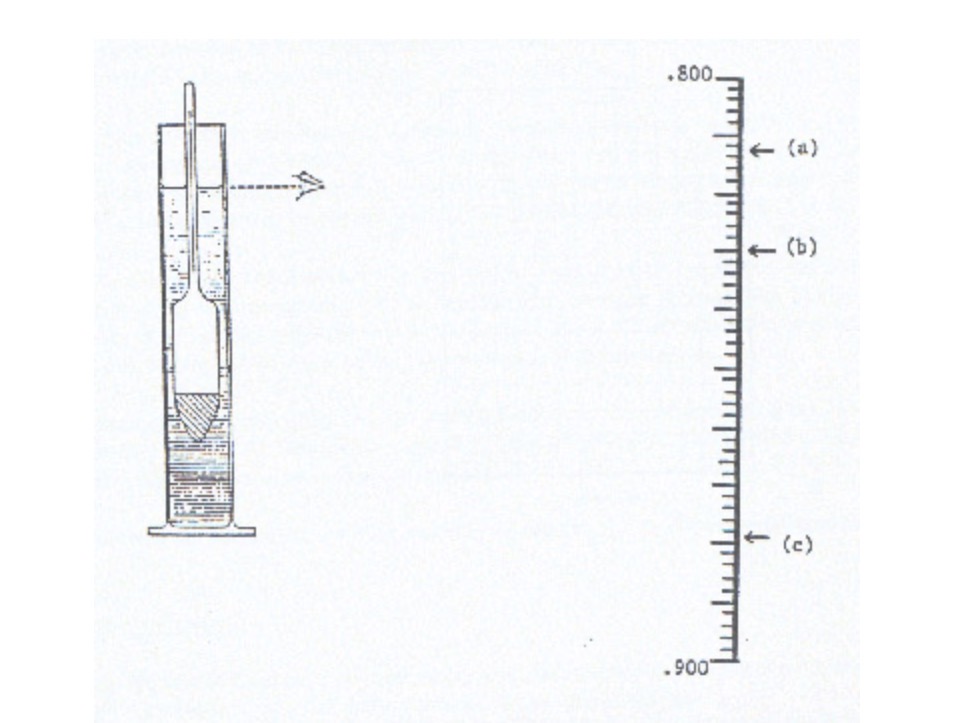
According to the diagram, reading the hygrometer what’re the density indicated at position a, b and c
A- 0.813g/ml
B- 0.830g/ml
C-0.879g/ml
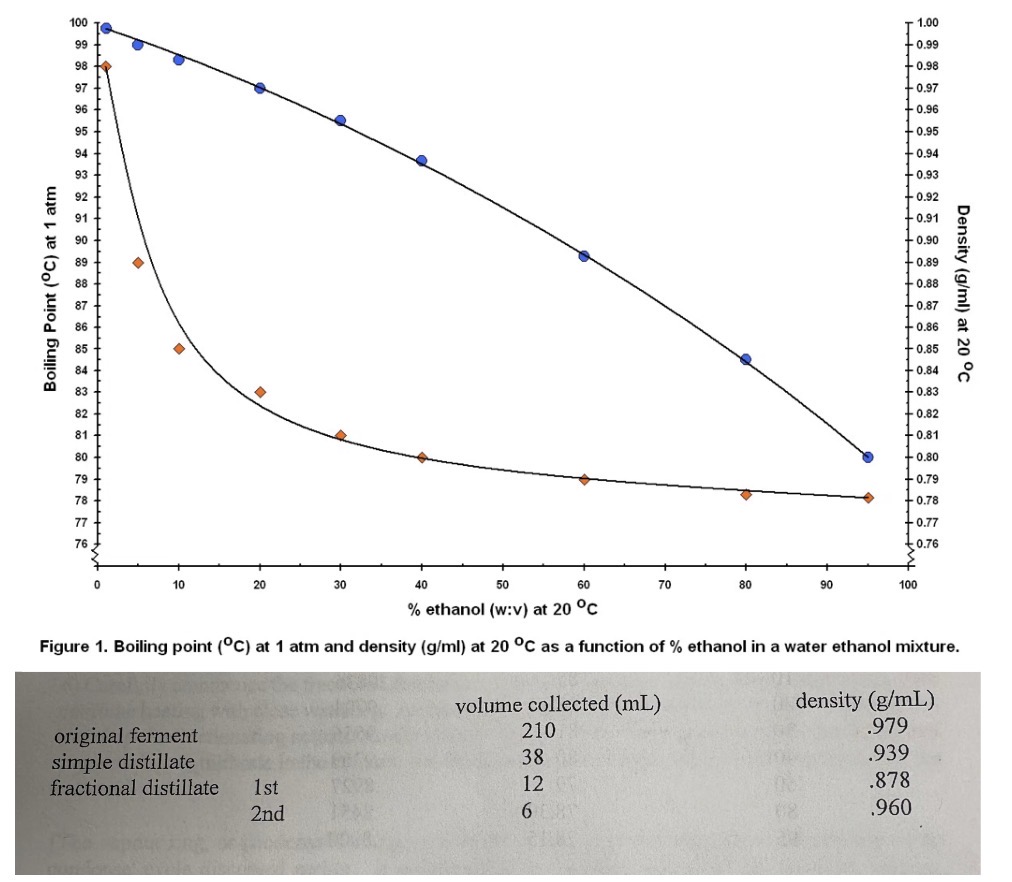
Using the information, determine ethanol content in % and in g for each fraction collected. Assuming starting amount of 55g of sucrose, calculate yield and RME for ethanol in each of the ferment, simple distillate and combined fractional distillates. Also comment on ethanol content as a function of the distillation procedures employed
Idk… let’s figure it out tgt…
Name the alcohols used from lead to most toxic to the lettuce seeds
Methanol <isopropanol < ethanol
ethanol most toxic
Methanol least toxic
Relative to humans, are the toxicity results the same? Using this data how can we estimate human toxicity
No, the least toxic to humans which is ethanol is the MOST toxic for plants and vice versa for methanol
thus to estimate human toxicity we know that if its more toxic to plants than it’s safe for humans
What is the goal for green chemistry
Design of materials and processes that are inherently safer for human health and the environment
Bruh
Chromatography
General term that refers to a number of related techniques used for analyzing, identifying or separating compounds
What do all chromatographic techniques have in common
A liquid or gaseous solution of the sample called the mobile phased that gets moved through a liquid or solid adsorbent called the stationary phase
the greater the tendency of the chemical to remain in the mobile phased, the faster the chemical will move during the chromatographic seperation
Advantages of TLC
Sensitive, fast, simple and inexpensive
What are the similarities and differences between o-nitroaniline and p-nitroanaline
Both have functional groups NH2 and NO2
O-nitroanaline has intramolecular hydrogen bonding due to their functional groups being adjacent to one another thus its less polar compared to p-nitroanaline which are on opposite sides thus is more polar
On the TLC sheet if the dot doesnt move much, is it polar or less polar and why
The closer it is to the origin, the less polar the solvent is because that means it wasnt polar enough to interact with the solute and move it up, the solute is more polar that’s why it interacts with the stationary phase and remains close to the origin
On the column chromatography, does the polar substance come out first or last
Polar substance remains at the top, non polar comes out first
What does the RF value tell us about its polarity
Larger rf value means less polar
Formula for RF value
Rf = distance travelled by solute over distance of solvent
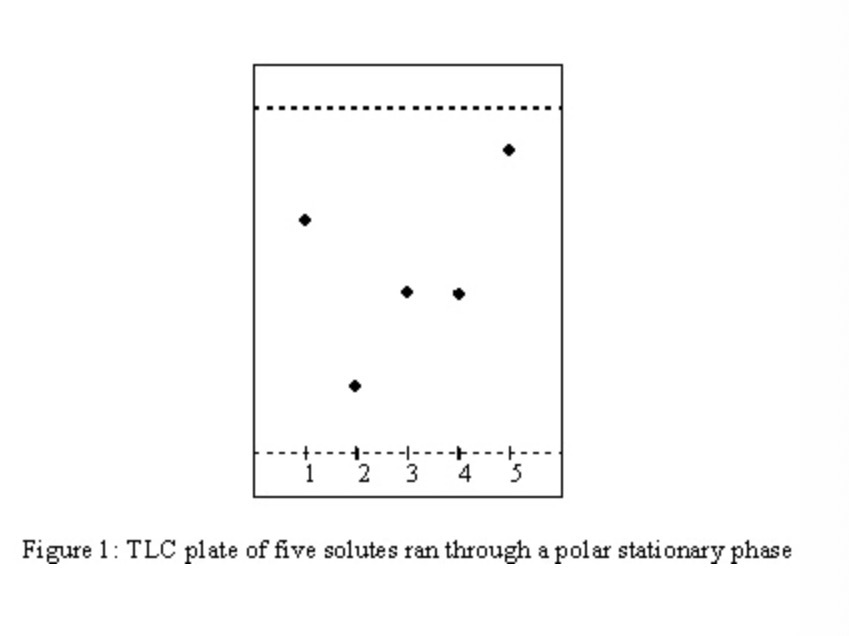
According to the TLC plate, the Rf for solute 2 is
A) 0.19
B) 5.26
C) 0.19 CM
D) 5.26 CM
A) because low Rf means less movement and Rf has no unit
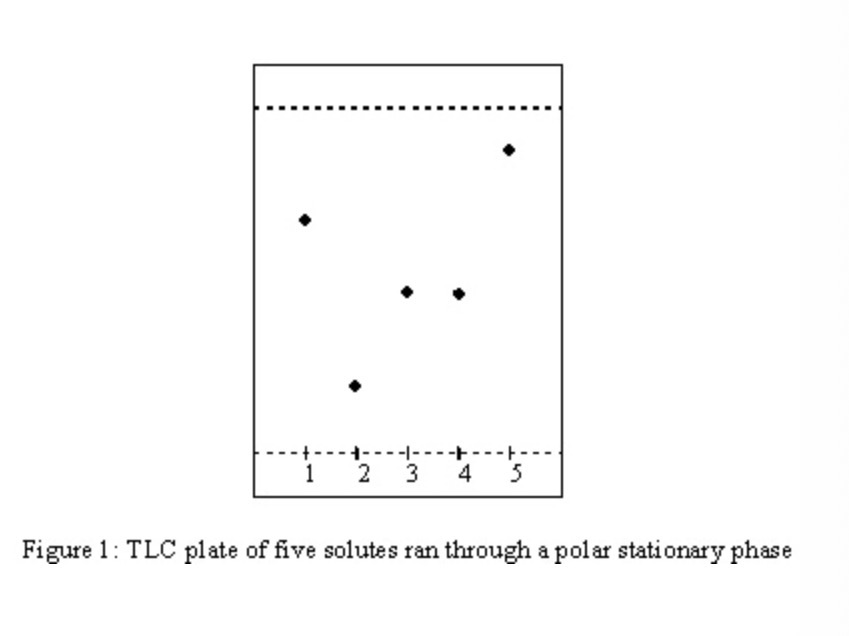
Which of the solutes is least polar
5, because its non polar character decreases its affinity for the polar stationary phase thus making it move up the TLC plate faster
What can be concluded if solutes have different RF values
They are different compounds