ANS 402 Exam 2
 Call Kai
 Learn
Learn Practice Test
 Spaced Repetition
 Match
Match Flashcards
 Knowt Play
1/149

There's no tags or description
Looks like no tags are added yet.
Name | Mastery | Learn | Test | Matching | Spaced | Call with Kai |
|---|
No analytics yet
Send a link to your students to track their progress
150 Terms
Which producer most likely has a better herd health plan...
a. 20 head of cattle, 365 day breeding season, multiple bulls that were not caught and sold, sells calves at auction whenever need some extra cash
b. 40 head of cattle, 2 - 90 day breeding seasons in spring and fall, 1 herd bull shared with neighbor, sells steer calves and heifers to auction 2 times a year
c. 40 head of cattle, 60 day breeding season, 2 breed cross rotation using Artificial Insemination followed by live cover, selling calves in a Preconditioned sale.
C
Which information is accurate for killed vaccines?
a. Killed vaccines are stable and do not need to be mixed within 1 hour of vaccinating the animal
b. Killed vaccines contain an adjuvent to stimulate the immune system which can cause a reaction
c. Killed vaccines are very expensive and cost more per dose than other vaccines
d. Killed vaccines are safe for pregnant cattle
A, B, D
Killed vaccines are very affordable vaccines, typically being the cheapest per dose but may require more doses. They must contain an adjuvent and be given at a higher dose than a modified live vaccine.
What type of digestive system do cattle have?
Ruminant
4 compartments of the ruminant stomach and their functions
Rumen → Largest compartment in mature ruminant, ideally near neutral pH, site of fermentation, site of VFA absorption through papillae
Omasum → Site of mechanical digestion by breaking down feed particles between many layers, site of water absorption
Reticulum → Honeycomb texture for trapping larger feed particles for prolonged fermentation or rumenation
Abomasum → Acidic compartment of the stomach, involved in protein digestion, smooth lining
What is the most important nutrient for beef cattle?
water
Farm X contacted their veterinarian requesting assistance in suing a vaccine company for vaccine failure because 75% of the calves they vaccinated got sick. The veterinarian asked them questions about their procedure because it may not be a bad vaccine. Which questions could be helpful in determining if the vaccine truly failed?
What temperature was it outside when you vaccinated the cattle?, How many total vaccines/diseases did you vaccinate for on the same day?, How long of time did the vaccine sit between mixing and administration to the animals?, What other stressful activities were done on the same day (weaning, castration, dehorning, changing diets)?
Environmental temperature, calf stress, too long between mixing vaccine and dosing, inappropriate vaccines, too many vaccines at once, poor nutrition of animal, drug interactions, etc. can all reduce drug efficacy.
Which are advantages of using a modified live vaccine?
They do not require an adjuvent so create less tissue irritation
The are safest choice for pregnant cattle never been vaccinated before
They are very stable so 1 bottle can be used all day
Can use a smaller dose
Can use a smaller dose, They do not require an adjuvent so create less tissue irritation.
Modified live vaccines are a higher risk and more sensitive after mixing. The virus is capable of replicating in the animal thus it is not recommended for pregnant animals who have not been previously vaccinated but a smaller, less irritating dose can be administered.
What all constitutes a good herd health plan?
a. Nutritional management plan (beyond just pasture available)
b. Utilizing only purebred animals with EPD records
c. Vaccinations and parasite control (based on individual operation)
d. Keeping only heifers with the largest 10% ratio of pelvic area
e. Conducting an annual plan evaluation with a veterinarian
f. A defined production cycle (preferably 60-90 day calving season)
A, C, E, F
What are 3 advantages of microbial fermentation in cattle over simple non-ruminant digestion?
a. Ability to utilize fiber- cellulose and hemicellulose for energy
b. Microbial synthesis of vitamins - particularly the B vitamins and K
c. Conversion of CO2 and CH4 into usable energy forms- VFA's
d. Large increments of heat production during digestion
e. Utilization on non protein nitrogen sources- urea into all amino acids
A, B, E
How can we monitor cow nutrition from a distance?
Gut Fill, Fecal Material, Body Condition Score
Calling a veterinarian only for an absolute emergency situation is cheaper in the long run than establishing an annual veterinary farm visit to go over the herd health plan.
False
No, engaging a veterinarian in the herd health and preventative medicine system as a whole could save a farm a lot of money in the long run. Vaccinating 20 calves for blackleg would cost about $15 add in the veterinary consult at $50 for a total of about $65 as compared to no veterinary consult or vacccines and losing 1 calf to blackleg valued at $750.
Match the phase(s) of production within the cow nutritional cycle with the relative amount of nutrients required.
Stage 1, Stage 2, Stage 3
Stage 3 Weaning to Mid Gestation → Lowest nutrient requirements
Stage 1 Calving to Breeding → Highest nutrient requirements
Stage 2 Breeding to Weaning and Stage 4 Mid Gestation to Calving → Moderate nutrient requirements
BB: B-Vitamin Supplementation & Stress
Researchers at Iowa State University investigated whether B-vitamin diets could mitigate the $900 million annual loss caused by stress-induced illnesses during weaning and transport. The experiment tracked 200 steers over 56 days, comparing a standard market vitamin mix against a new developmental blend. Results showed that the market-available blend was significantly more effective, yielding a 42% reduction in treatment needs. Most benefits occurred within the first 28 days, highlighting that early intervention during the high-risk 14-day post-transport window is key to maintaining immune function and reducing production costs.
BB: Soil Health & Beef Nutrient Density
A study in npj Science of Food explored the link between regenerative soil management and the nutritional quality of grass-finished beef. By analyzing soil minerals and untargeted metabolomics, the team found that healthier soils with higher organic matter supported diverse forage systems with ten times the phytochemical diversity of grain diets. These bioactive compounds, rich in antioxidants, directly transferred to the cattle, resulting in beef with higher levels of vitamins A and E. This reinforces the idea that soil-level management decisions are the foundation for creating a high-value, nutrient-dense final product.
BB: Grazing Rates & Carcass Quality
This 2020–2022 study evaluated how stocking rates and plant diversity affect the stocker phase, specifically looking at steer performance and carcass traits. After harvesting steers at similar body compositions, researchers found that plant diversity had no significant impact on individual meat quality. However, pastures with higher stocking rates generated significantly more beef and higher economic returns per acre because they supported a higher volume of animals. The takeaway for producers is that increasing stocking density can maximize land-use efficiency and profit without compromising the quality of the carcasses produced.
BB: Bale Grazing & Winter Economics
Bale grazing was analyzed as a strategic winter feeding method where hay is placed in pastures and rationed using electric fencing to improve soil fertility and water-holding capacity. For a standard 25-cow herd, the study recommends a density of no more than 4 bales per acre to ensure even nutrient distribution while avoiding soil erosion. Beyond the biological benefits, the system offers major financial perks by reducing labor and fuel expenses. The "nutrient credit" from the hay provides roughly $18 of fertilizer value per bale, effectively lowering the daily feeding cost per cow by 36% to approximately $1.28.
BB: Essential Oils vs. Ionophores
Kansas State University conducted a 625-acre study comparing traditional ionophore antibiotics to a natural essential oil blend (garlic and botanicals). The goal was to see if natural alternatives could achieve the same increase in weight gain in 281 stocker steers. Over a three-month grazing period, the results showed no statistical difference in weight gain or mineral consumption between the two groups. Given that the essential oil treatment was cheaper ($13.09 vs. $14.34 per unit), it presents a cost-effective, antibiotic-free way to improve cattle proficiency and profit.
BB: Direct Marketing & Logistics
This overview explores the shift toward direct-to-consumer beef sales, which grants producers control over pricing and branding but requires intensive management of the supply chain. Success hinges on selecting the right feeding program (forage vs. grain) to meet specific consumer taste preferences and maintaining tight communication with USDA-inspected processors. While the model eliminates middlemen and builds long-term customer loyalty, it demands that producers develop strong marketing skills to educate buyers on meat cuts and processing.
BB: Automated Grazing Technology
The importance of rotational grazing for soil health is often hindered by the high labor costs of moving cattle daily; the PensAgro automated system addresses this by using programmable technology to move fences automatically. The system uses a timer-activated bell to cue cattle before raising a poly-wire, allowing the herd to move into fresh pasture. At a price point of $300 per unit, the technology aims to make high-intensity grazing accessible for operations that cannot afford the manual labor traditionally required, ensuring consistent forage recovery without a constant physical presence.
BB: Feeder Calf Marketing Options
Profitability is heavily influenced by how and when cattle are marketed, with options ranging from weaning-age sales to retained ownership. Traditional auction markets offer convenience but expose producers to price volatility and "shrinkage," whereas private treaty sales offer more price control at the cost of increased marketing effort. Modern tools like video auctions reach a wider buyer base but require high technological accuracy. To mitigate risk, producers should use forward contracts and futures to lock in prices, allowing them to navigate market fluctuations effectively.
BB: Methane Research & Sustainability
Colorado State University is leading efforts to measure and reduce methane produced by cattle burping (25% of annual emissions). Using high-tech hooded feed bunks, researchers tracked 250 steers over six months to see how various feed additives and the cattle microbiome interact during fermentation. The long-term objective is to identify rations and genetics that lower emissions while improving feed efficiency. Eventually, this data could lead to selecting for "low-methane" traits in the same way producers select for milk production or carcass quality.
BB: Holistic Herd Health & Stress
This review emphasizes that modern herd health must transition from basic vaccination to a preventative approach integrating nutrition and genetics. Researchers highlight how "stacked stressors"—such as weaning and transport occurring together—synergistically suppress immune function. Nutrition is the vital foundation, as a cow's body condition at calving dictates colostrum quality and the multi-year productivity of her offspring. By implementing low-stress handling and pain management, producers can work with veterinarians to customize a resilient operation.
BB: Pasture & Supplementation
Research by Philip Lancaster (KSU) emphasizes that forage is the most cost-effective feed source. The study highlights that while overgrazing weakens growth, rotational grazing significantly improves forage utilization. Furthermore, supplementation becomes a biological necessity when forage protein drops below 7%, at which point rumen microbes can no longer effectively digest fiber. By balancing stocking density with strategic energy supplements like distillers' grains, managers can ensure year-round pasture productivity and peak animal performance.
BB: Comprehensive Health Customization
This perspective argues that every ranch possesses unique climates and facilities, making a "one-size-fits-all" health protocol insufficient. It categorizes health challenges into pillars—metabolic issues, toxicities, and environmental stressors—and advocates for customized, cost-effective plans built with veterinary partnership. Prioritizing preventative nutrition and stress reduction creates a robust foundation for animal welfare that directly translates into higher operational profit and long-term sustainability.
Forage Quality & Nutritional Dynamics
This research underscores that forage nutritional value is highly dynamic; as plants mature, lignin increases while crude protein and digestibility drop. To counter this, the study advocates for intensive management, such as grazing between 8–10 and 3–4 inches to conserve soil fertility. By utilizing forage testing to identify specific deficits and employing strategies like stockpiling, producers can optimize microbial protein synthesis and meat yields while minimizing expensive, unnecessary feed purchases.
Nutritional Synchronization
A review of 89 studies analyzed the "synchronization" between nitrogen sources and carbohydrate fermentation speeds. Researchers discovered that pairing controlled-release urea (CRU) with slowly degrading carbohydrates boosted microbial protein production by 28% and slashed nitrogen waste by 24%. Conversely, conventional urea was only efficient when paired with fast-fermenting carbohydrates. Precision feeding tailored to the degradation rates of nutrients can significantly improve feed efficiency and reduce the environmental impact of nitrogen excretion.
Water Quality & Heat Stress
Research from the UT Institute of Agriculture identifies water as the most critical nutrient. During peak heat, water demands spike to 25–30 gallons per day, yet consumption drops if water exceeds 80°F, leading to reduced feed intake. The study emphasizes that quality is as vital as quantity; contaminants such as nitrates and algae act as deterrents. By shading water sources and maintaining cleanliness, producers ensure consistent intake, which is the physiological prerequisite for proper digestion and weight gain.
Direct Marketing & Education
This overview identifies relationship-building and education as the primary drivers of direct-marketing profitability. Success requires a feedback loop where consumer preferences inform management and a strong rapport with processors ensures expectations are met. Leveraging cooperative extensions and educating buyers on management practices or recipes (from reputable sources) adds value that turns "additional work" into a return on investment, particularly for health-conscious modern consumers.
Market Dynamics & Vaccine Efficacy
This analysis links 2026 CattleFax forecasts (70% drought risk in the heartland) to the biological realities of livestock exchanges. "Forced marketings" during drought saturate the market and lower prices while creating high-stress environments that spike cortisol. These levels can suppress immune response, rendering post-sale vaccinations like 7-way less effective. Conversely, rainy weather shifts the supply curve toward a "price pop," yielding calves that are both more valuable and biologically better prepared for vaccine efficacy due to lower stress.
Success in the beef industry is often hard-fought and has to be earned. We need to balance what is good for…
Good for YOUR business
Good for OVERALL industry
Good for YOUR family
Good for someone else’s business
Good for other segment’s industry
Good for someone else’s family
*Good for the animals: most important. even if you dont see the output and it cost you more, need to do whats in best interest of the cattle
Objectives of herd health
Why is health management important?
Role of veterinarian in beef herd management
Herd health plan development
Selected issues around herd health
“One-size fits-all” approaches to beef herd management
do not exist!
Animal Health Costs
Costs associated with beef herd management
Feed
Fuel
Fertilizer
Health/veterinary
Ave less than 5% of total
Direct costs vs. indirect costs
While small, improvements in health costs can dramatically effect overall profitability, efficiency
Managing through a disease outbreak is much more costly than preventing disease outbreak! (prevention cheaper than treatment)
Herd Health: diseases
Disease: any abnormal structure or function of a body tissue
Non-infectious disease (not contagious)
Injury, Genetic Defect, Poisoning, Nutritional Disorder
Infectious disease (contagious)
Virus, Bacteria, Protozoa, Fungi, Parasites
Control of disease
Prevention and/or Treatment
Herd Health Plan
Components:
Work with veterinarian
Defined production cycle
Nutrition plan
Genetic development (choose good animals to prevent certain diseases)
Reproductive Preparation
Preventative health measures
Biosecurity
Vaccinations
Parasite Control
Records
Annual plan evaluation: year in review and year forward
Components of a good herd health plan
Planning with the Veterinarian
Know the diseases and health problems of area
Plan vaccination program
Regular visits
Personal training
Records
Defined Production Calendars
Must have defined goals and expectations
Beef herd = business
Most cost-effective and successful herd health plan manages animals as a GROUP rather than individuals
Breeding Soundness Evaluation
Cows/Heifers
Growth (% mature weight)
Pregnancy evaluation
Assessment of pelvic structures
Ovaries, Uterus, Cervix, Lymph nodes
Review of calving ability and maternal ability
Review of suitability in herd
Production ability
Health and welfare evaluation
Bulls
Breeding soundness exam
Every year
Prior to breeding season
Production evaluation
Health and wellness evaluation
Basic Components of a Biosecurity Plan
Most overlooked component of most beef farms’ health plan.
1. Isolation (From outside herd and From within herd)
2. Traffic control
3. Sanitation
Components of a good herd health plan (facilities, etc)
Facilities
Damage
Overcrowding
Source of Livestock
Purchasing Animals
Isolate Animals
Limit access
Disease Surveillance
Know your herd’s risks!
Test and cull annually for production-limiting, economically important chronic diseases
Trichomoniasis
Johne’s
Bovine Leukosis Virus
Bovine Viral Diarrhea - can pass to calf life long
Anaplasmosis (?) - tickborne infection. high risk in southeast. hot and humid
Herd Certification and Accreditation
USDA and NCDA work in conjunction to administer disease control programs for beef and dairy herds
Brucellosis
Tuberculosis (madantory for state lines)
Johne’s
Anaplasmosis
Voluntary programs: producer driven
Generally require testing every year or two, and immediate culling of positive animals
Value-addition for cattle traveling interstate
Beef Cattle Immunization
Goal of vaccine:
Safe
Creates immune response
Prevents economically important disease
Minimal harm to meat quality
INSURANCE ONLY
One piece of the immunization puzzle!
Vaccination Practices
Only 74.5% of all US cow-calf farms surveyed vaccinated cattle*
vaccinated for something. we don’t know what.
Beef Cattle Immunization
Viral Pathogens
Infectious Bovine Rhinotracheitis (IBR, Herpes virus) * #
Parainfluenza 3 (PI3) * #
Bovine Viral Diarrhea Type 1, Type 2 (BVD, Pestivirus) * #
Bovine Respiratory Synctitial Virus (BRSV, Paramyxovirus) * #
Bovine Papillomavirus (Warts)
Rotavirus *
Coronavirus *
Rabies
Bacterial Pathogens
Clostridial spp. (often killed) * #
Mannheimia haemolytica #
Pasturella multocida #
Histophilus somnus #
E. coli
Salmonella
Moraxella spp.(pinkeye) *
Leptospira spp. *
Campylobacter (Vibrio) *
Fusobacterium necrophorum
Brucella abortus
Mycoplasma bovis #
Anaplamosis *
Most common pathogens cows should regularly be vaccinated against *
calves #
(many vaccines prevent many of these, rather than one.)
Spectrum of Immunization Options
Modified Live: (2 bottles, have to mix)
Viruses from wild-type pathogens and then attenuated in the lab so that no longer cause full disease
Replicate and stimulate animal’s immune system better immunity?
Cell-mediated immunity
stimulates immune response. cant cause disease.
No need for adjuvant
Vaccine not very stable: requires mixing, refrigeration, throw away unused portions (only stable 1 hr)
Risk of abortion in pregnant cattle
Killed:
Inactivated virus particles or bacterial components
Adjuvant added to stimulate immune system
Require second dose
higher dose
Specific antibody response generated (IgG usually) resulting in Short-lived immunity
Longer withdrawal period and potential tissue reactions/damage
Safer?
Cheaper
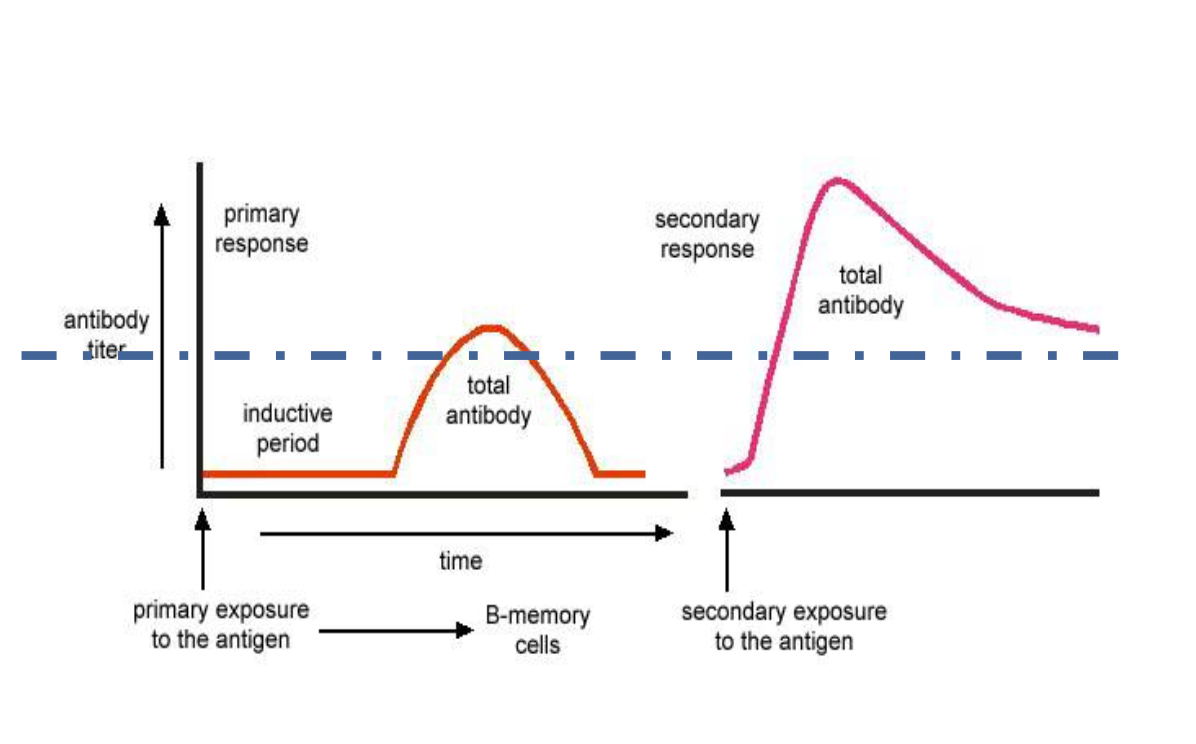
Secondary immune response
secondary exposure: booster
goal: antibody above line so they should be able to fight off
Reasons for immunization failure:
Improper vaccine handling: improper refrigeration, exposure to light, exposure to chemicals, prolonged mixing-to-admin time
Improper route of administration
Inappropriate vaccine used
Improper timing of vaccination
Animal concerns: nutrition, stress
Different strains in environment than those vaccinated for
Drug interactions?
Overwhelm immune system
Too much disinfectant
Who gets the benefit of vaccinating calves?
Calves get the benefit if immunizations are applied in appropriate fashion
Marketing opportunities have to be sought and secured for cow-calf producers to get economic benefit of vaccination
Next operator wants calves vaccinated (risk mitigation)
NC BQA sales
Marketing alliance groups
Special preconditioned feeder calf sales
Key steps to treating sick cattle
Identify sick animals as quickly as possible
Know signs of disease to catch early in disease process (101.5 normal temp)
Correctly identify disease and causative agents
Work with a livestock veterinarian
Administer appropriate therapy
Fluids, nutrients, antibiotics…
Monitor sick animals and continue therapy in timely manner
Prevent spread throughout herd
Never let an animal leave the farm before withdraw period is up!
Components of a good herd health plan
Personnel Training
Recognize illness or prevent
Handling of animals
Strong VCPR (veterinarian, client, patient, relationship)
Ruminant Digestion (mouth, tongue, saliva)
Mouth
Teeth
Only lower incisor teeth
Crushing molars
Critical for chewing
Tongue
Used to grasp, tear, and draw food into mouth (less than 3 inches hard for cow to grab)
Saliva production (recycling water)
~50 gallons per day
98.7% water + 1.3% buffers (sodium bicarbonate)
Rumination
“chewing the cud”
Process where ruminant animal regurgitates a bolus of feed to be re-chewed and then re-swallowed
Buffering
Essential process
Ruminant stomach
Rumen
Microbial fermentation
VFA absorption
pH ~6-6.5 (below 5= rumen acidosis)
Papilla
Reticulum (metal can get trapped here = hardware disease)
Honeycomb texture (catch large particles)
Site of “hardware disease”
Omasum
Many plies
Water absorption
Mechanical digestion
Abomasum
Acidic compartment
(microbes die here. protein digestion of microbes. kills pathogens ie. E coli)
Ruminant Digestion: microbes
Bacteria: highest volume , billions
Protozoa: same mass as bacteria
Fungi
Ruminant Digestion: GI tract other than stomach
Small intestine
Nutrient absorption
Liver
Contributes salts for fat digestion
Pancreas
Enzyme production
Large intestine (don’t want a lot of fermentation here)
Water absorption
Fecal formation
Rumen (Microbial) Fermentation: Adv. vs Disadvantage.
Advantages
Fiber utilization
Forages
High fiber by-products
Utilization of Non- Protein Nitrogen (microbes convert things to beneficial amino acids)
Conversion of low quality protein into high
Vitamin synthesis (by microbes)
Disadvantages
Excess gas production
CO2, Methane (more cellulose = more CH4)
Inefficient nitrogen use
Heat production (more calories in, less calories out)
Digestive problems (ex: bloat, acidosis)
Ruminant digestion: Fermentation
Carbohydrate fermentation
Most energy sources are fermented into volatile fatty acids (VFA’s)
Acetate
Propionate
Butyrate
Byproducts of fermentation
Methane gas and CO2 (more acetate = more CH4)
Expelled via eructation
Ruminant digestion
Microbes are substrate specific
Cellulolytic
Hemicellulolytic
Amylolytic
Proteolytic
Sugar utilizing
Acid utilizing
Ammonia producers
Vitamin synthesizers
Methane producers
Microbes are…
Impacted by animal diet
Lag time to adapt
Need to provide diet that meets microbial needs
Compete with each other for substrate
Young ruminant digestion
Abomasum is important for digestion
Esophageal Groove aka Ventricular Groove
Takes time to develop rumen capable to digesting forages to meet animal’s nutrient requirements
Renin in abomasum for milk digestion
*suckling contracts to bypass rumen, reticulum, omasum
Nutrient Requirements
Water, Energy (not nutrient, Carb/lipid are nutrients), Protein, Minerals, Vitamins
Dry Matter (DM) – Water
Animals tend to eat to satisfy a dry matter intake level
Nutrient requirements are stated on DM basis (DMB)
Feedstuffs should be priced on DMB
Factors that Affect Nutrient Requirements
Class or sex
Size or age
Breed or Breed Type
Growth or gain rate
Body condition score
Stress Level/weather
Health
Presence of Antagonists
Growth Promotants
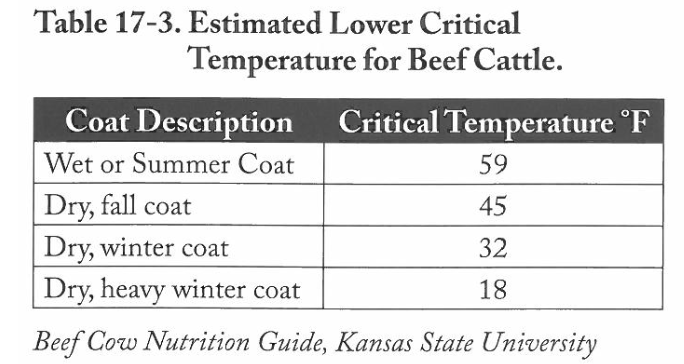
Water
Stage of production (intake varies)
Ambient temperature
Dry matter intake (pasture 70% water, hay 10% water)
Salt consumption (salt inc= water inc)
Breed (indicus: hotter climates, need less water. taurus: more water)
Amount of physical activity
(moving nutrients, removing waste)
an increase in BW= inc. water intake
hotter = inc. intake
lactating v. non-lactating
Energy
Defined as the ability to do work.
Total Digestible Nutrients (TDN)
Percentage of the diet
Assumed level of intake
Net Energy System
NEm– net energy maintenance
NEg– net energy gain
Either system can be used to balance beef cattle diets
Energy Sources
Carbohydrates: sugar, starch, cellulose, hemicellulose and lignin
Grains: corn, oats, barley
Forages: grass, pasture, hay, silage, etc.
Co-products: soy hulls, corn gluten, wheat middlings, corn screenings, whole cottonseed, etc.
Digestible Fiber vs Roughage
Rate and extent of digestion
Lipids: fats and oils (<5% of diet. ruminant microbes inhibited by free fats)
Protein
Protein, composed of chains of amino acids, is the major building blocks of the body. (rumen microbes make amino acids)
Crude protein - % nitrogen x 6.25
Amino acid nitrogen = true protein /natural protein
Other nitrogen = non-protein nitrogen
Urea
Biuret
Site of Digestion
Degradable Intake Protein (DIP) (broken down by rumen microbes)
Undegradable Intake Protein (UIP) (microbes can’t digest, go to abomasum as whole)
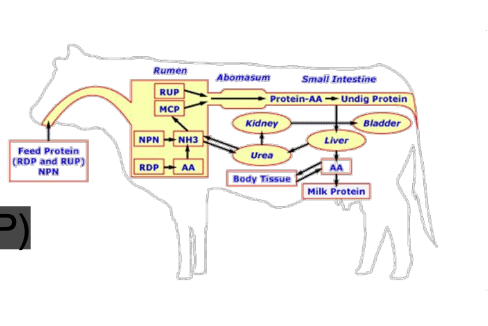
Protein Sources
High protein (40% CP+/-)
Soybean meal, cottonseed meal, commercial supplements (32%-40% CP), etc.
Medium protein (18-22% CP +/-)
Alfalfa hay/pellets, distillers grains, brewers grains, corn gluten, whole cottonseed, etc.
Minerals
Macro-minerals
Calcium
Phosphorus
Magnesium (K can limit intake. important during spring breeding)
Sulfur
Potassium
Sodium
Chlorine
Micro-Minerals
Copper
Zinc
Selenium (NC deficient state)
Cobalt
Manganese
Iodine
Iron
Vitamins
Supplied Daily (fat soluble. get from diet)
Vitamin A
Vitamin D
Vitamin E
Rumen Synthesis
Vitamin B
Vitamin C
Vitamin K
Cow nutrition
Cow feeding
$400-800 per cow per year (based on 1000 lb BW)
Challenge
Decrease costs
Increase performance
Increasing feed costs
Feed resources changes
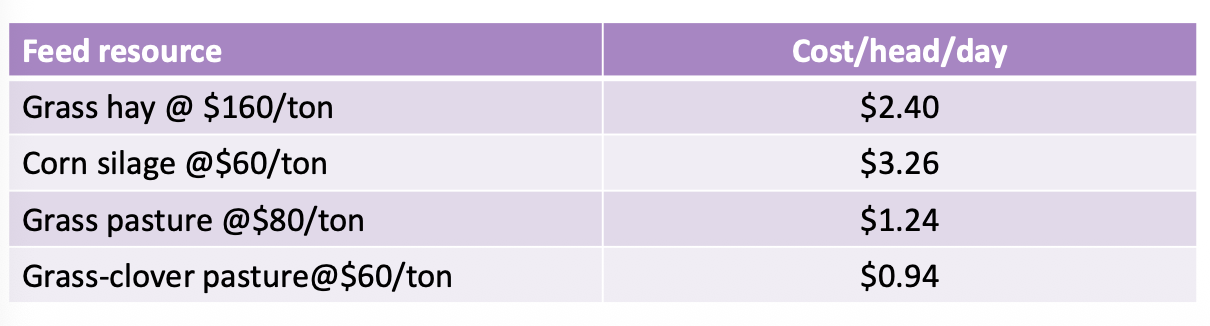
Objectives of Cattle Nutrition
Meet the cow’s nutritional needs at the lowest possible cost.
Maintenance, Growth, Lactation, Reproduction, Reserves
Allow the cow to harvest the feed she needs (grazing).
Use harvested forages as needed.
Supplement nutritional deficiencies in her diet.
Minerals and vitamins
Energy
Protein
Annual Cow Production Cycle
Phase 1 (0-82 d) : Parturition, Post-Partum Interval, Lactation
highest nutrient demand
Phase 2: (83-205 d) : Conception, Early Gestation, Lactation
longest phase. medium nutrient reqs.
Phase 3: (206-315 d): Mid gestation, Lowest Nutrient Requirements
dry. lots of flexibility
Phase 4: (316-365 d) : Late Gestation, Pre-Partum
lots of fetal growth occuring
medium nutrient requirements
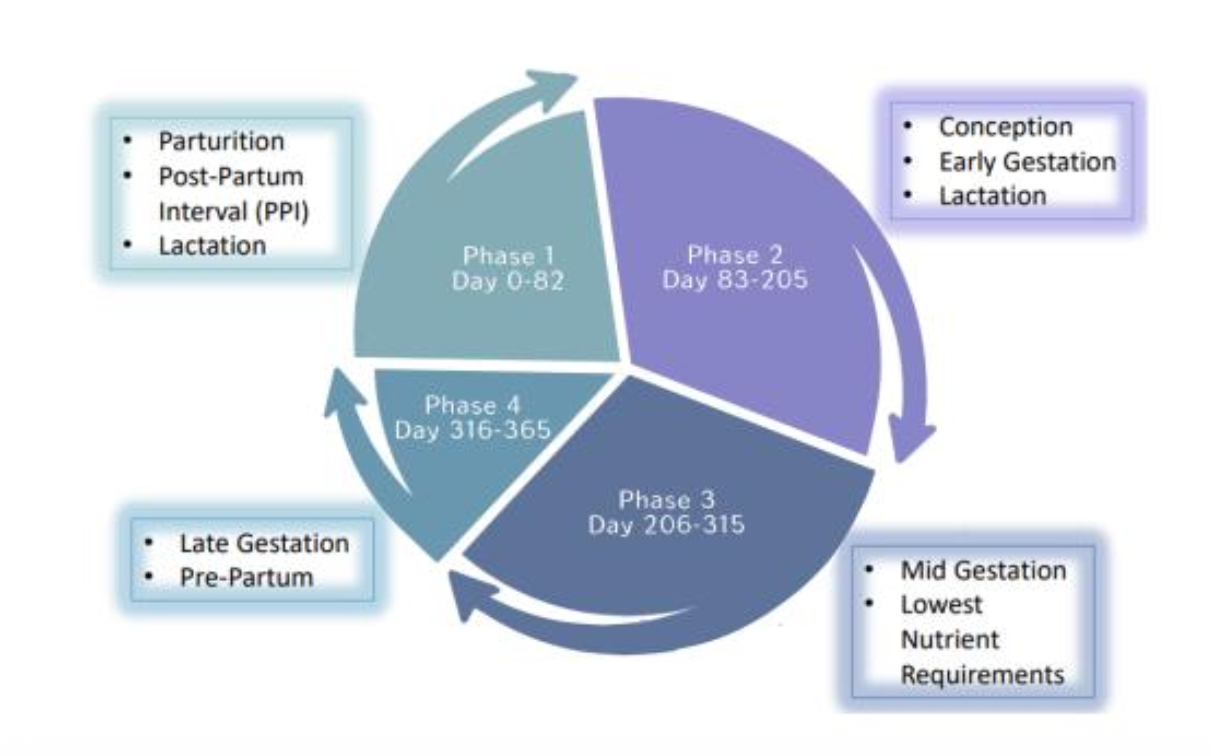
Factors driving feed intake in beef cattle
Stage of production
Gestation vs. Lactation
Growth
Increasing total DMI but at a decreasing % of BW
Feedstuff
Nutrient density (denser= don’t need as much)
Moisture content
Environmental conditions
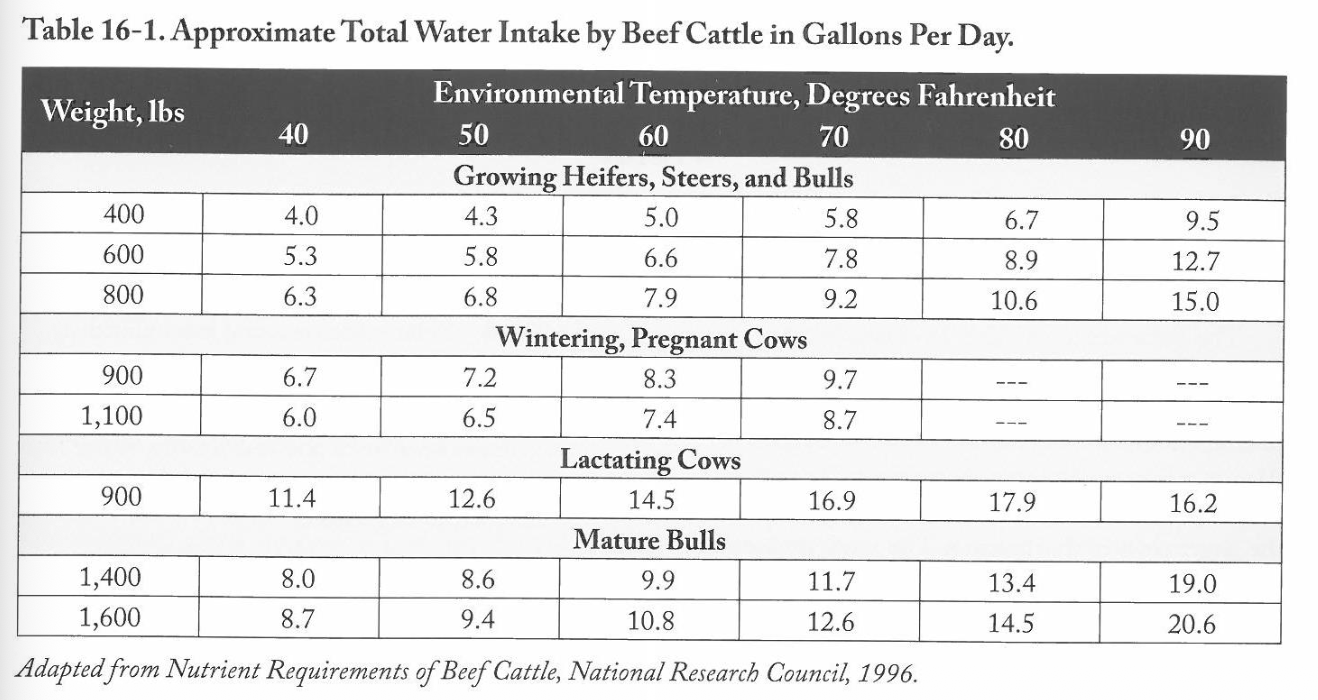
hotter = reduced intake. need energy dense
colder= need energy dense so she can produce heat
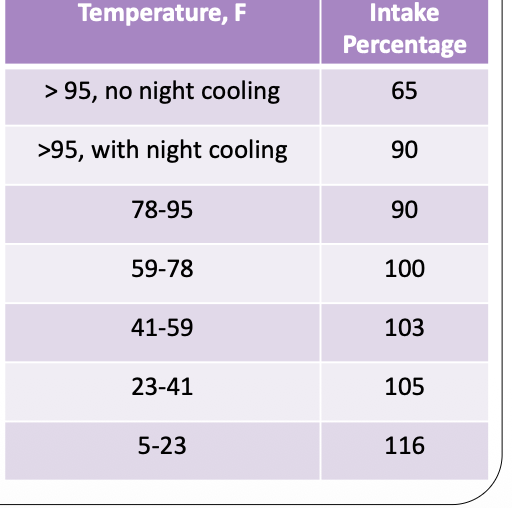
Factors driving nutritional requirements in beef cattle
Stage of production
Gestation vs. Lactation
Growth
Increasing total nutrient needed but at a decreasing % of DMI
Environmental conditions
Temperature, moisture
Cow Characteristics
Age, Weight, BCS, Milk production
Physical activity
Brood Cow Intake
DM intake 1.5-3%
can’t consume as much of the low quality feeds which thye need. This is a challenge.
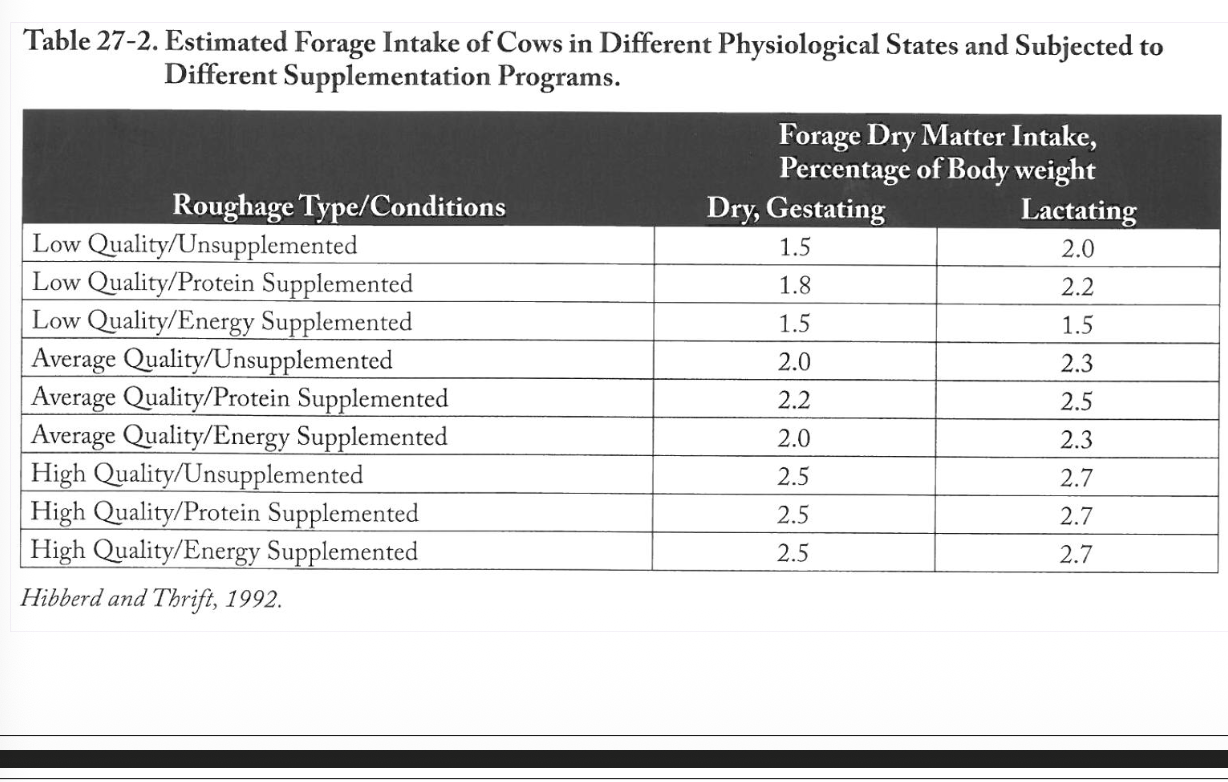
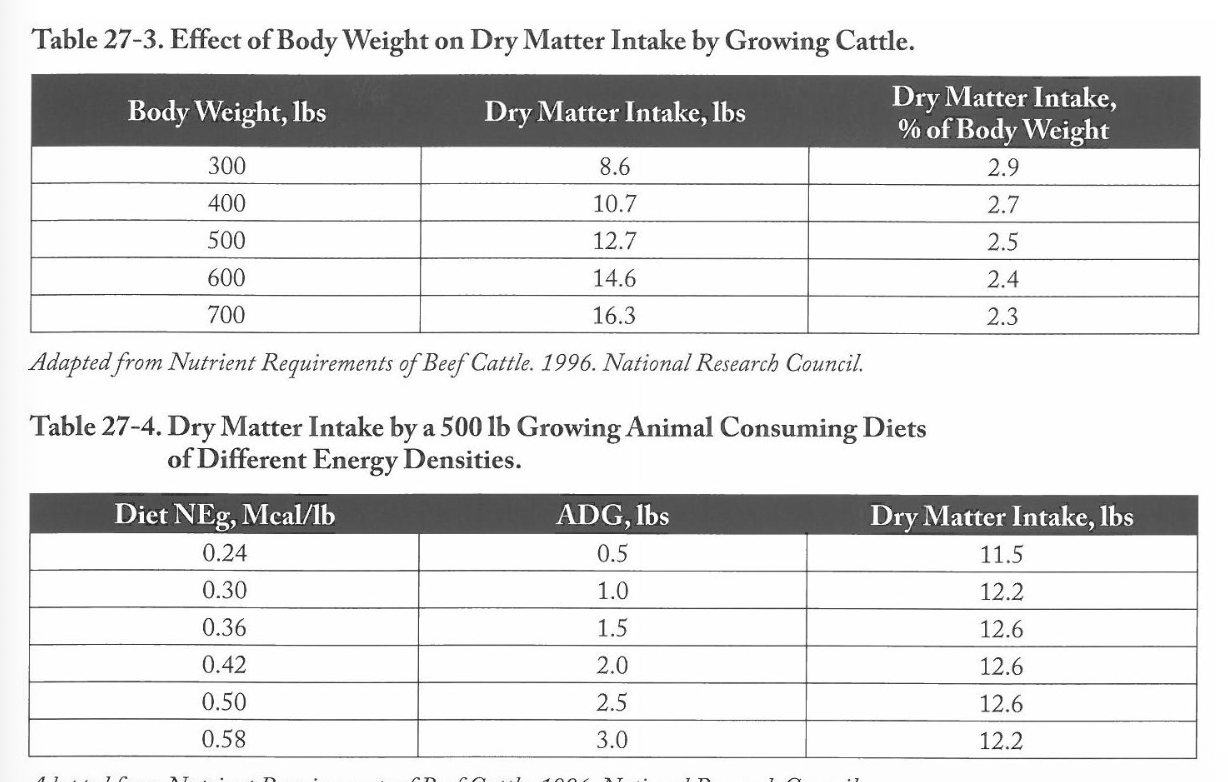
Growing Cattle Intake
as BW inc. total DM inc.
% of DM intake as % of BW decreases
slight adjustments = big oucomes in ADG
Cow Nutrient Needs based on Production Cycle
1= high nutrient requirements, 2 = medium nutrient requirements, 3 = low nutrient requirements, 4= medium nutrient requirements
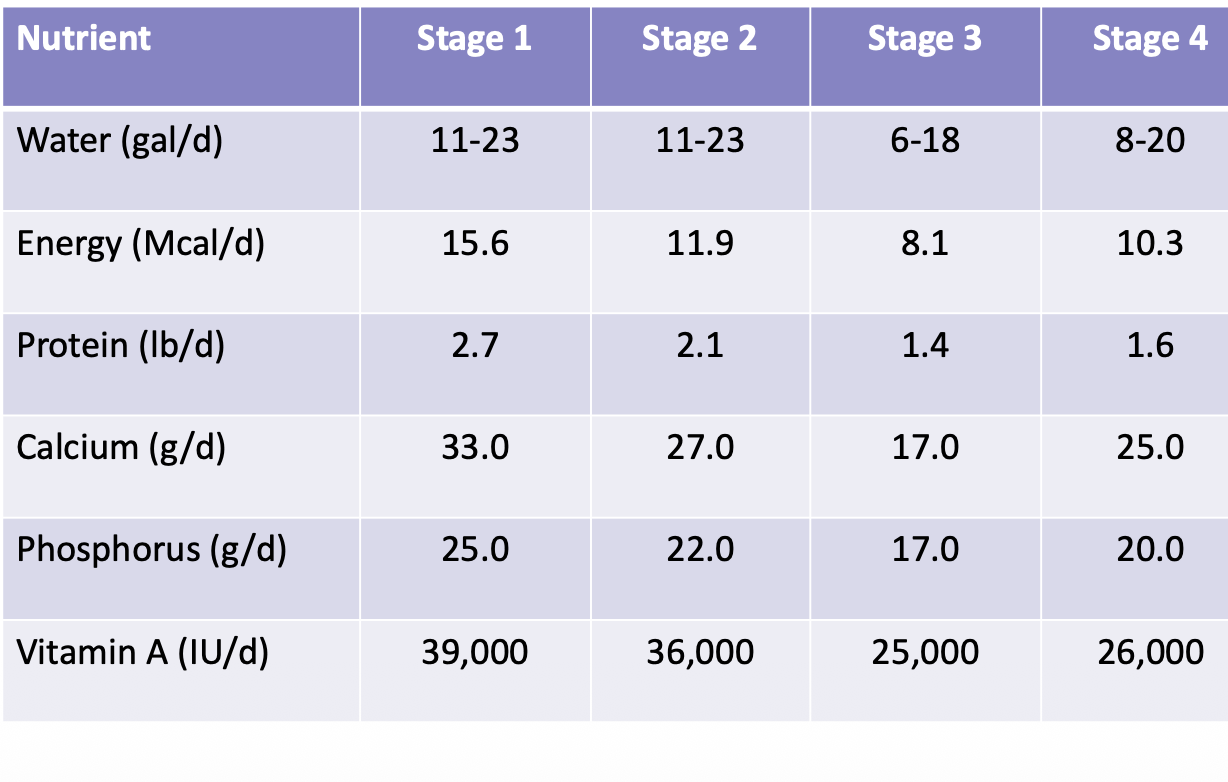
Stage 1 (day 1-82 post-calving) Calving to Breeding
4 basic functions for cow
Lactation, Uterine involution, Ovulation, Conceive
Nutrition → Reproduction → Profit
Highest nutritional requirements
Increase nutrient requirements by 30-40%
Cost of feed is critical
30% increase in forage intake
Try to time this with best pasture growth
Stage 2 (day 83-205 post-calving) Breeding to Weaning
3 basic functions for cow
Lactation, Maintain pregnancy, Put on body weight
Forage use maximized
Several alternatives when forage is limiting
Feed concentrates to cows
Early wean calves
Creep feed calves
Sell cows
Stage 3 (day 206-315 post-calving) Weaning to Mid Gestation
2 basic functions for cow
Maintain herself, Maintain pregnancy
Lowest nutritional demand
Great time to add weight if needed
Maximize forage utilization
Feed poorest quality hay
Great time to increase weight/BCS if needed
Stage 4 (day 316-365 post-calving)
Mid Gestation to Calving
3 basic functions for cow
Fetal nourishment, Prepare for parturition, Prepare for lactation (highest fetal growth, colostrum development)
Affects of limited nutrients
Decreased
Birth weight, Calf survival %, Immune system function, % calf crop weaned, Conception rate, Milk production, Weaning calf weight
Increased
Dystocia, Post partum interval
Creep Feeding
Only calves access feed
Adequate energy and protein
Benefits and Downfalls
Management
Feed and equipment costs
need higher quality feed since stomach not fully developed
Cow does not benefit
Not good for all calves
ex: going to feedlot. don’t want too fat.
Heifer Management
Feed separately from cows for first 2 years
Target gain first year of 1.0-1.5 lbs/d
65% of mature BW at Breeding
Target gain second year of 0.5-1.0 lbs/d
85% mature BW at Calving
Why is BCS Important?
Well managed beef herds need to maintain a 365 day calving interval.
Cow Gestation = 283 days
This leaves 82 days to rebred
*we want her to recycle by 55 d to stay in breeding season
Effect of Postpartum Condition Score
Change on Pregnancy Rate
BCS Status relation to pregancy
Thin (<5) & increasing CS: 100%
Fleshy (>5) & increasing CS: 75%
Thin (<5) & decreasing CS: 69%
Fleshy (>5) & decreasing CS: 94%
Moderate (4.5-5.5) & maintaining: 100
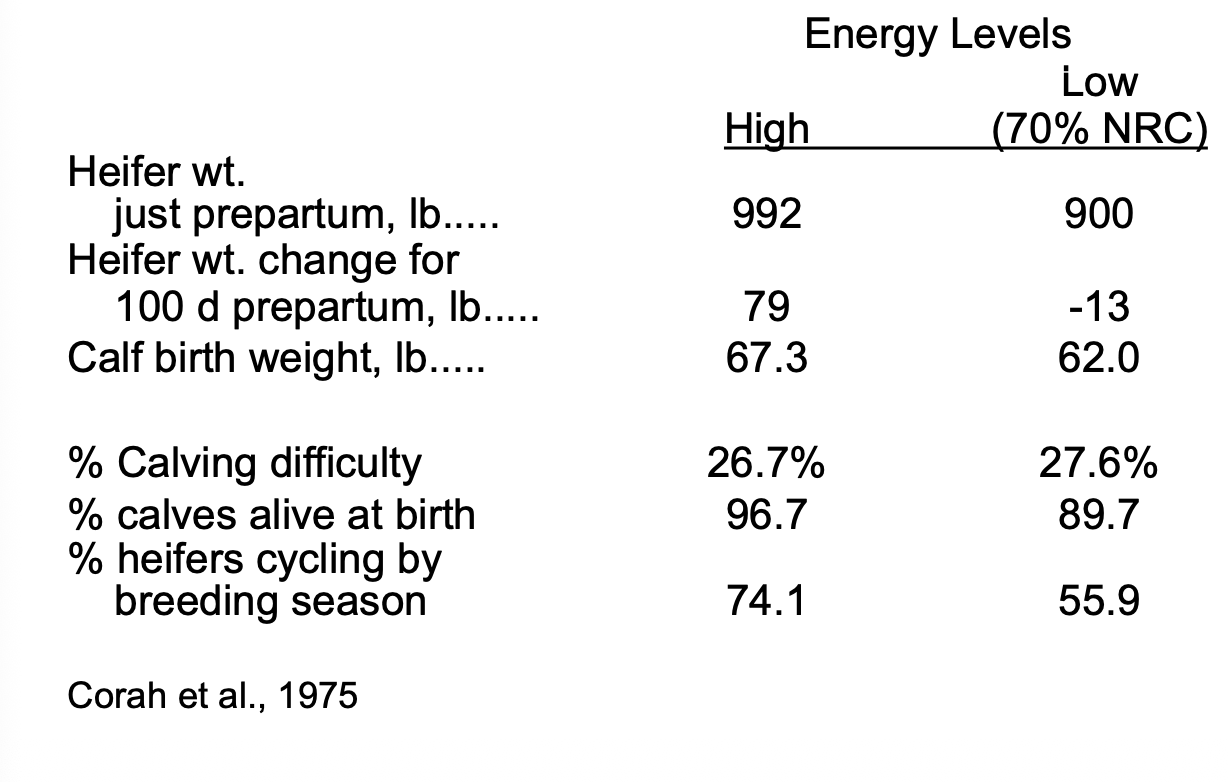
EFFECT OF PREPARTUM ENERGY LEVELS ON CALVING DIFFICULTY AND CALF SURVIVAL
low energy = great decrease in heifer wt change prepartum (100 d)
decrease in heifers cycling by breeding season and slight decrease in calves alive at birth
When should you BCS?
At weaning
45 days after weaning (“bounce back”)
60-90 days before calving
Adjust nutrition program
Separate cows based on BCS
At calving
May have “false” results due to heavy lactation
Could underestimate the actual body condition of your cow
Beginning of the breeding season
Adjust nutrition program
Separate cows based on BCS
Effect of Days to Calving on Proportions of Feedstuffs Necessary to Achieve Desired Daily Gain for an 1100 lb...... Pregnant Cow
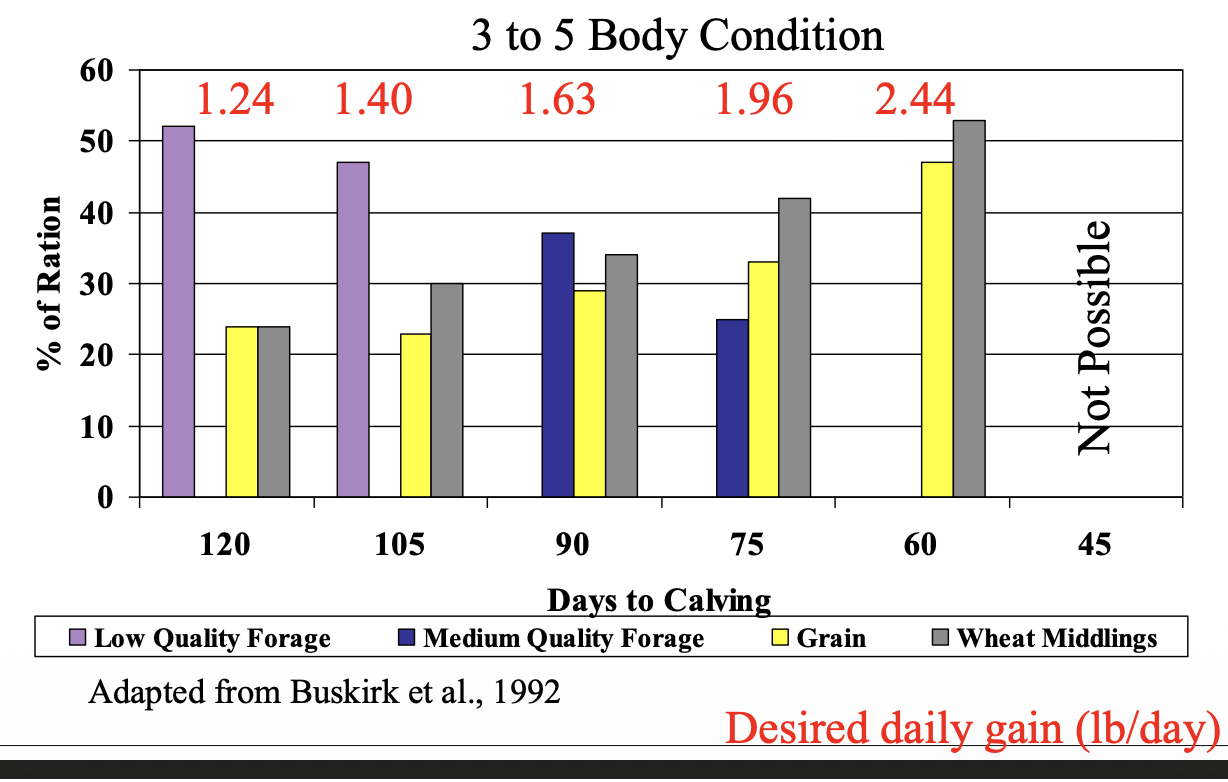
How can we evaluate nutrition from a distance? Feeding behavior
75% Quantity/Availability (stocking rate, grazing managment)
25% Quality (grazing management, species selection)
Beef Cattle Nutrition Goals
Nutrition goals
Maintain healthy animals
Feed to achieve desired production goals
Least cost rations as possible
Brood Cow Feed Economics (Pasture)
Cost/acre = $100-$240/acre??????
$160/acre for example
Land lease/taxes
Fertilizer and lime
Fence and water maintenance
Tall fescue pastures in NC average 3-5 ton yield annually.
8,000 lbs forage DM @ 60% utilization
8,000 x 60% = 4,800 lbs/acre (carrying capacity)
1,200 lb. brood cow needs (stocking rate) @ 2.8% BW DMI
1,200 lbs x 0.028 x 365 days = 12,264 lbs/year
12,264 lbs/ 4800 lbs = 2.6 acres/cow (eating over 10x her BW each year!)
2.6 acres * $160/acre = $416/cow/year for pasture
($1.14 /hd/day) - only pasture. no grain or other cost.
Brood Cow Feed Economics (Hay)
Hay cost
$120-240/ton @ 85-88% DM
Most producers feed 150 days/year
Buying hay considerations
Round bale variation
Dimensions (4x4; 4x5; 5x6)
Weights (450-1500lbs, 500-900lbs most common)
Storage conditions
Determine the price/ton (As fed)
4x5 bales @ $60/bale @ 750 lbs = 160/ton
5x6 bales @ $90.00/bale @ 1200 lbs = 150/ton
2000/1200×90
Minerals
SE forages are typically inadequate
Sodium, Chloride, Magnesium, Copper, Zinc, Selenium
Mineral deficiency symptoms
Rough, discolored hair (Cu)
Low breeding rates (Mg)
Low body condition
Increased health problems
some mineral program better than none
Brood Cow Feed Economics (Minerals)
Mineral cost
Mineral pricing: $25-$60 per 50 lb bag.
Most commercial minerals are 4 oz intake/day with some 2 oz intake available.
$40/bag 4 oz intake mineral
How long with it take for 100 cows to consume one bag?
4 oz/16 oz = 0.25 lbs/cow/d x 100 cows = 25 lbs/d
Two days/bag
What is the cost/head/day?
$40/50 lb/ bag = $0.80/lb x 0.25 lbs/cow/d = $0.20/cow/day
$73/cow/year
Quality Mineral Supplement
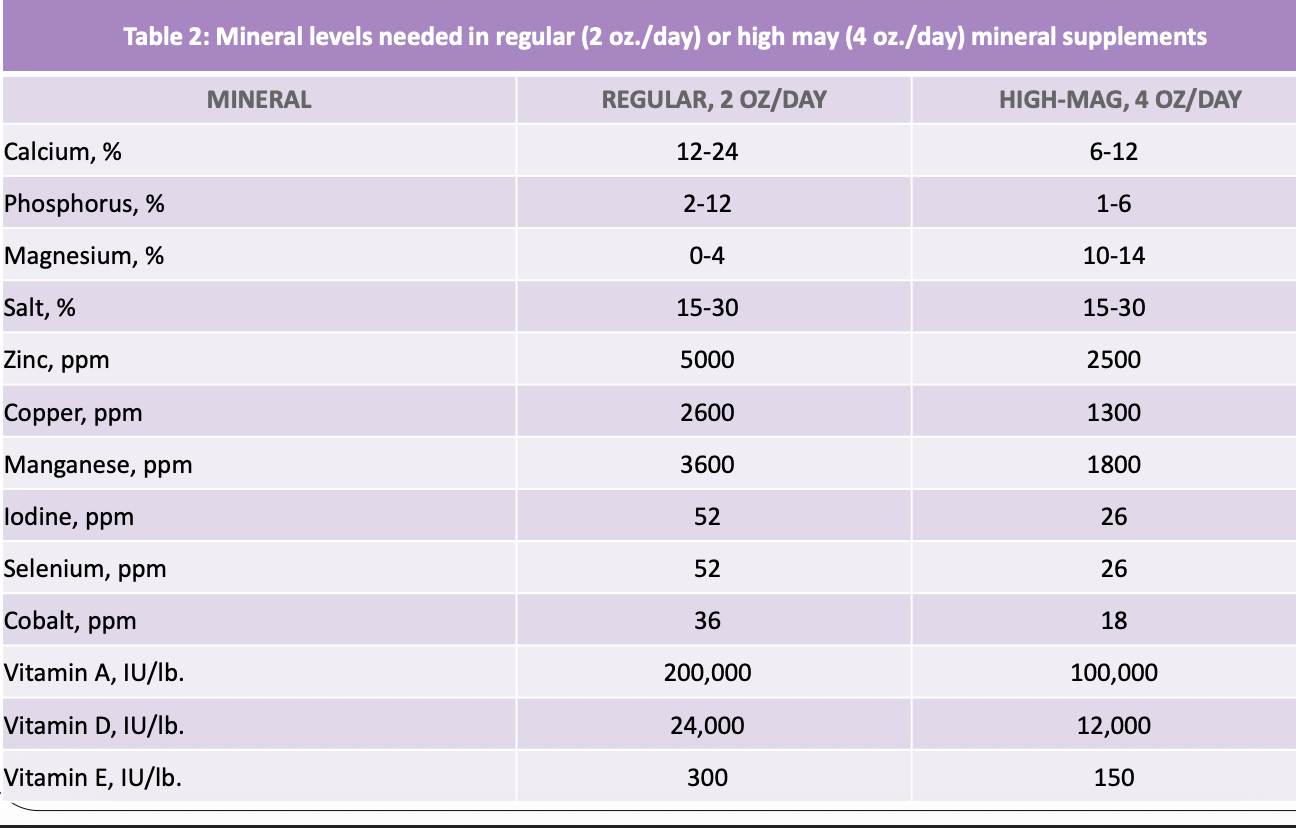
Brood Cow Feed Economics – Supplemental Energy/Protein
24% Protein/Energy Tub
200# @ $90/tub
Expected intake 2 lbs/day
Storage? None
Waste? minimal
Delivery? Convenient
Cattle Access? 24-7
Cost = $0.90 /hd/day
Corn Gluten Pellets (22% CP DMB)
$300/ton (3 ton deliver)
Intake= 2.4 lbs/day (7.2/delivery)
Storage?
Waste? Up to 5%
Delivery? 3x week
Cattle Access? Limited time
Cost = $0.36/cow/day + delivery @ $ 0.20/cow/day =
$0.56 /hd/day
Minimizing Nutritional Costs…
Match cows genetics to your forage resource
Separate groups based on nutrient requirements
Extend the grazing season with stockpiled forages
Body condition scores
Pregnancy check and cull open females
Maximize the use of by-products
Minimize supplement deliver cost
Calve and wean to match forage resources
Minimize storage and feeding loss
Forage Management Considerations
• Time of the year
• Goals for production
• Forage species
• Grazing management
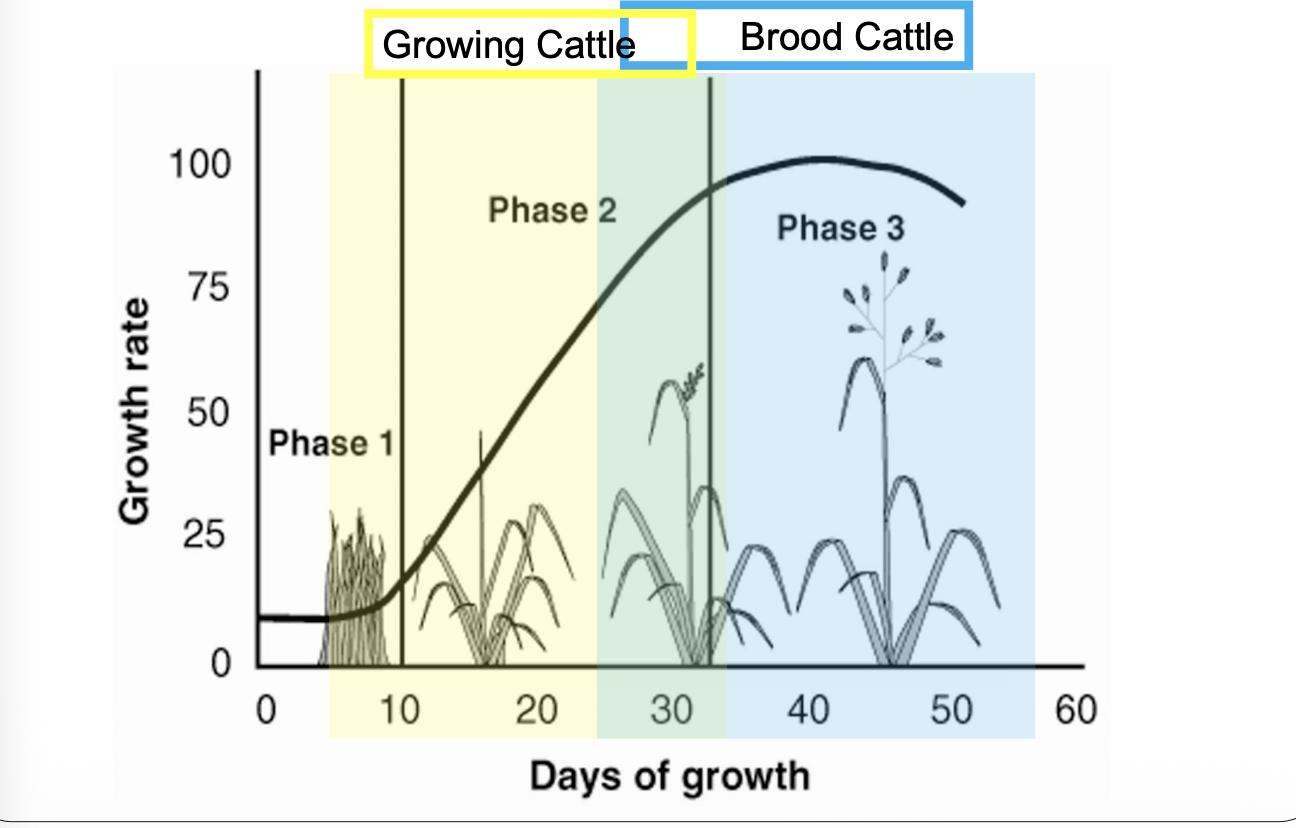
The Quality/Quantity Compromise
Phases of plant maturity: 1, 2, 3
Protein, TDN, palatability decreases
lignin increase
optimum grazing at 2
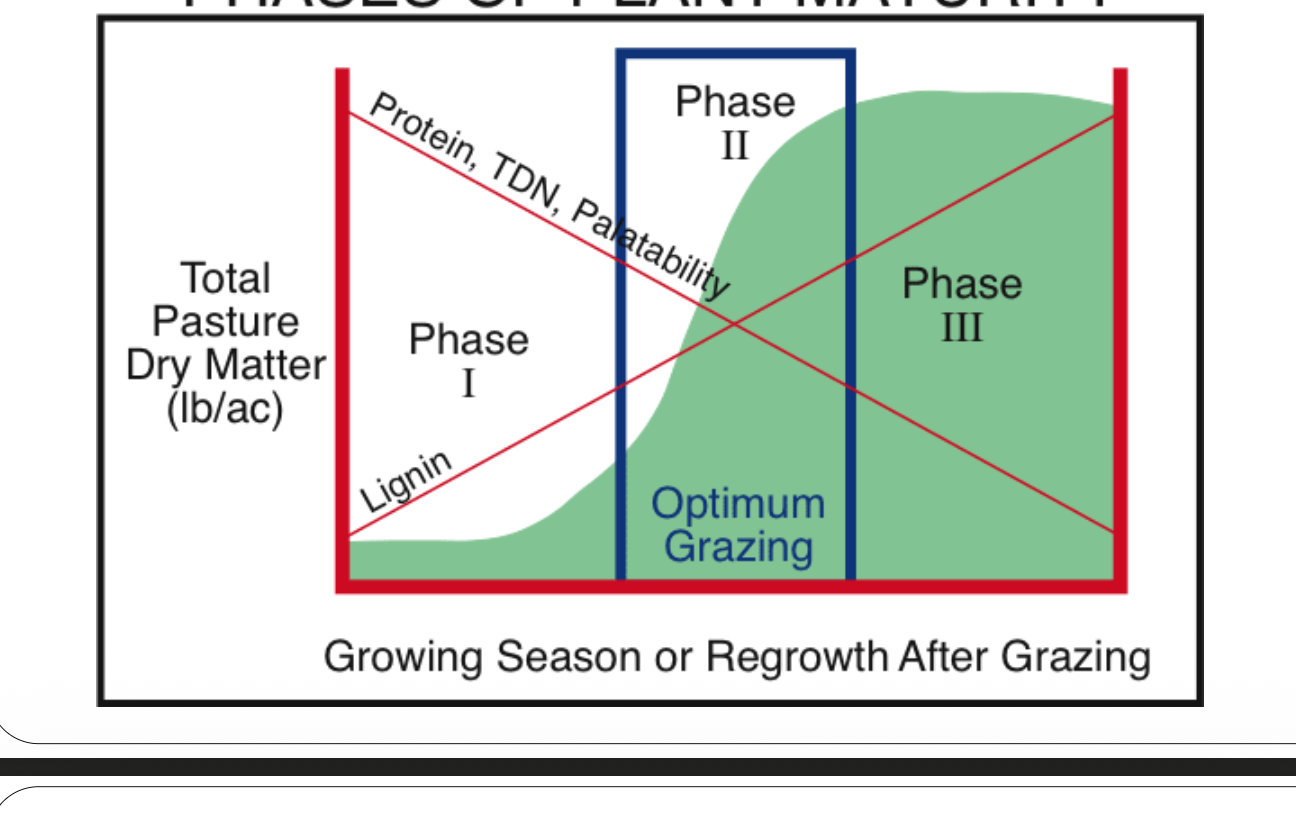
Forage Quality (different goals)
Brood Cows
Dependent on stage of production (4)
Mature, dormant forage
Lower digestibility
Protein supplement to increase intake
Growing Cattle (stocker, weaned, heifers)
Lush, growing forage
Moisture may limit intake
Hay supplementation may increase gain (DMI)
Plant Growth Phases
Growing Cattle: Phase 1 and 2
Brood Cattle: Phase 2 and 3