Robber's Cave Field Experiment and Minimal Group Paradigm
 Call Kai
 Learn
Learn Practice Test
 Spaced Repetition
 Match
Match Flashcards
 Knowt Play
1/16

There's no tags or description
Looks like no tags are added yet.
Name | Mastery | Learn | Test | Matching | Spaced | Call with Kai |
|---|
No analytics yet
Send a link to your students to track their progress
17 Terms
Who by at what was the year focusing on?
Sherif et al, 1961
What was the set up: number, location, map?
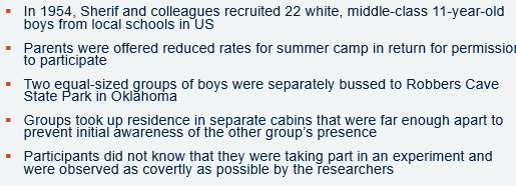
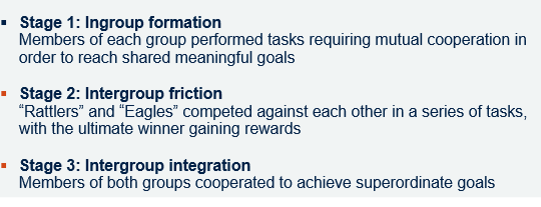
What were the 3 stages?
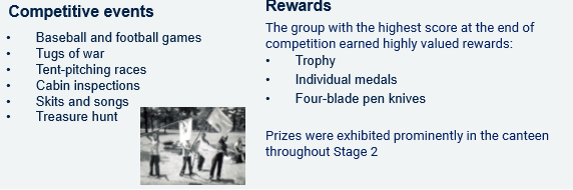
Examples of competitive events and rewards?
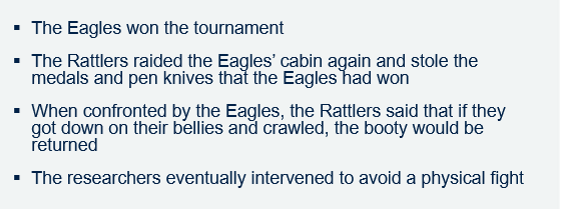
What were some of the escalating hostilities that took place?
flag burning following losing a game of tug-of-war
ransacking cabins in retaliation
How did they judge for intergroup bias?
Limitations:
how they ask and who is present may affect their answers
kinda stupid/pointless task
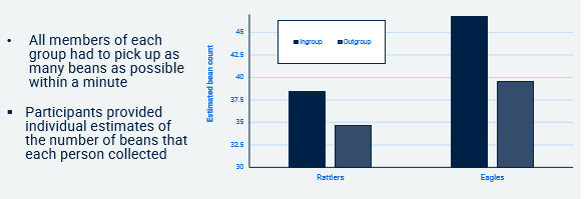
What happened at the end of stage 2?
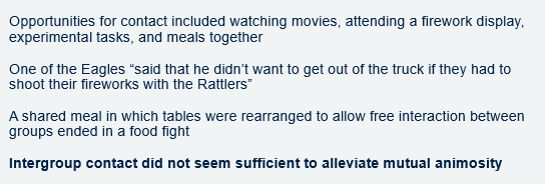
What type of intergroup contact did not work?
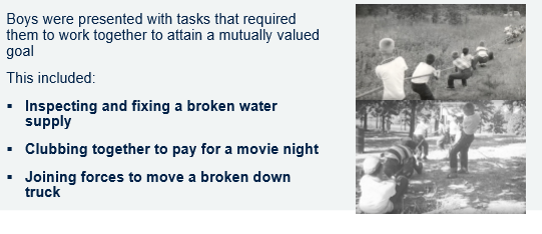
What are some examples of the superordinate goals?
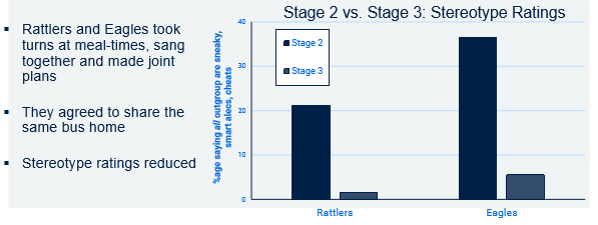
How were the stereotype ratings different at the end of stage 2 and stage 3?
What are some considerations to keep in mind?
sherif conducted two previous studies in which the intergroup conflict didn’t arise
different design - groups together to start
still not compelling though
scout comparison - didn’t work which also shows that the formation of the group method matters
researcher bias as the camp leaders encourgaed intergroup conflict by stealing clothes
also weren’t telling boys off so authority figures set the social norms
ethical issues
2 of the larger boys from Eagles became homesicl and left
other became majority so they rigged it slightly differently
less cohesive groups
Who did the minimal group experiments and when?
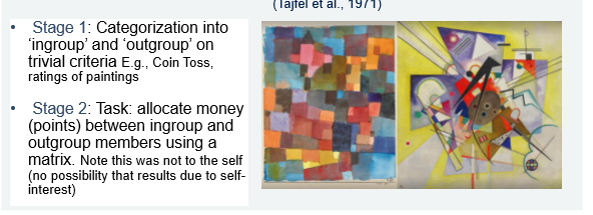
Tajfel et al, 1971
What are the two stages in the experiments?
What does the matrix look like that they were given?
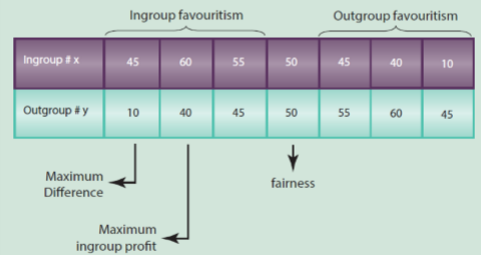
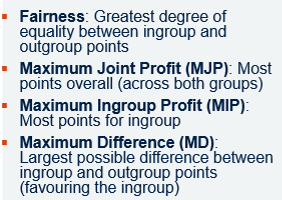
What were the 4 different reward strategies that participants could pick which would say lots about their intergroup thoughts?
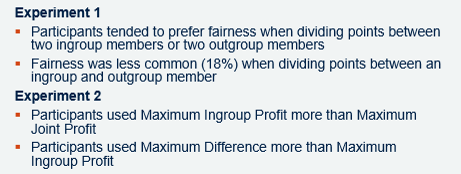
What were the results?
Limitations of minimal groups paradigm?
ingroup favouritsm doesn’t necessarily lead to outgroup hostility - Brewer (1999)
but they did choose difference more than MIP
social identification may not be enough to explain extreme forms of conflict and violence
inidivuals social identity is multi-faceted and can included outgroup members
initial studies with fictitious groups arguably fail to capture complexity of identity in context but do show us implications of basic categorisations
alternative explanations:
demand characteristics
expectations of reciprocity
anticipation of furture interaction
complex matrices
didn’t actually measure conflict - prejudice and discrimination instead
Could you argue that Tajfel produced competition, where having points to allocate signalled scarce resources?